• KZT/USD = 0.00225
  • TJS/USD = 0.10810
  • UZS/USD = 0.00009
  • TMT/USD = 0.29760
  • KZT/USD = 0.00225
  • TJS/USD = 0.10810
  • UZS/USD = 0.00009
  • TMT/USD = 0.29760
  • KZT/USD = 0.00225
  • TJS/USD = 0.10810
  • UZS/USD = 0.00009
  • TMT/USD = 0.29760
  • KZT/USD = 0.00225
  • TJS/USD = 0.10810
  • UZS/USD = 0.00009
  • TMT/USD = 0.29760
  • KZT/USD = 0.00225
  • TJS/USD = 0.10810
  • UZS/USD = 0.00009
  • TMT/USD = 0.29760
  • KZT/USD = 0.00225
  • TJS/USD = 0.10810
  • UZS/USD = 0.00009
  • TMT/USD = 0.29760
  • KZT/USD = 0.00225
  • TJS/USD = 0.10810
  • UZS/USD = 0.00009
  • TMT/USD = 0.29760
  • KZT/USD = 0.00225
  • TJS/USD = 0.10810
  • UZS/USD = 0.00009
  • TMT/USD = 0.29760
24 September 2026

Viewing results 1 - 6 of 64

From Reform to Deals: Central Asia Steps Onto the Global Stage at UNGA-80

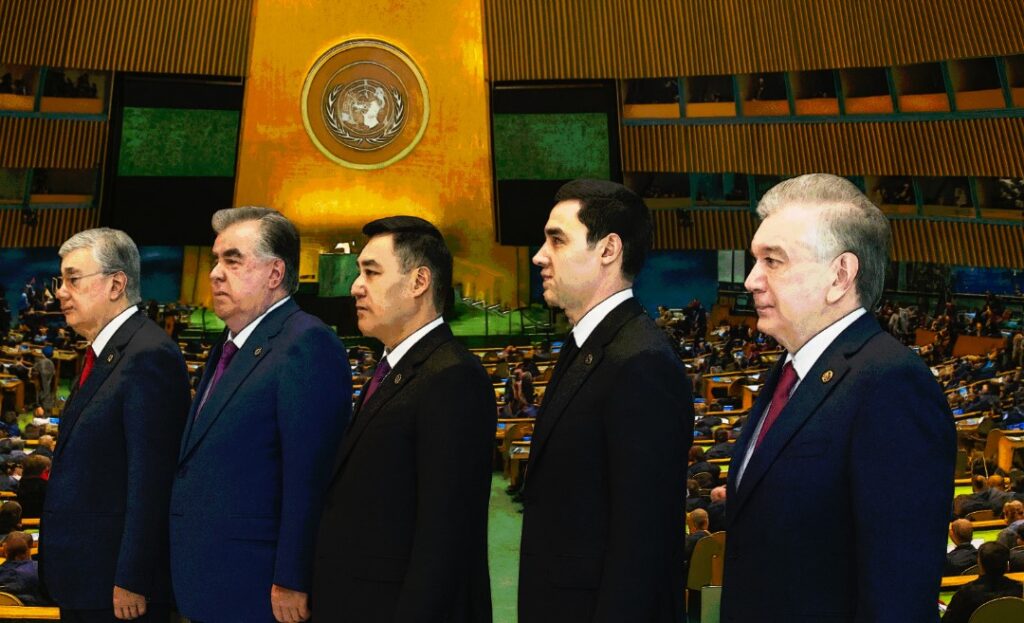
Ecology, global instability, and the need for UN reform dominated the speeches of all five Central Asian presidents at the 80th session of the UN General Assembly. Presenting a united front while emphasizing national priorities, the leaders made clear that Central Asia intends to play a pivotal role in shaping the global future. UN Reform Kazakh President Kassym-Jomart Tokayev was the first among the CIS leaders to address the assembly, speaking of a growing crisis of trust in multilateral institutions and calling for sweeping reforms. Tokayev emphasized the need to expand the UN Security Council, arguing that major powers from Asia, Africa, and Latin America must receive rotational representation, and that the influence of middle powers should be strengthened. “We need to create a new group of like-minded states that will professionally and decisively advance concrete proposals for reforming the UN so that it better responds to today’s challenges and tomorrow’s tasks,” he said, proposing Kazakhstan as a platform for these discussions. Uzbek President Shavkat Mirziyoyev echoed these concerns, highlighting the weakening of international institutions and the proliferation of global conflicts. He endorsed UN Secretary-General António Guterres’ UN-80 initiative and voiced support for the Pact for the Future, which sets out commitments to strengthen multilateral cooperation and address global challenges through 2045, the UN’s centenary. Mirziyoyev also advocated for an expanded Security Council to better represent developing countries. In his address, Kyrgyz President Sadyr Japarov called for a more just and representative Security Council, underscoring Africa’s right to greater participation. He also announced Kyrgyzstan’s candidacy for a non-permanent seat on the Security Council for 2027-2028, noting that his country has never before held such a position. Tajik President Emomali Rahmon warned of growing instability, uncertainty, and complexity in world affairs. Rahmon stressed the UN’s role as a platform for dialogue and cooperation and called for equal partnerships between large and small states to restore adherence to international law. Turkmen President Serdar Berdimuhamedov argued that the current global situation requires a "decisive shift toward coordinated interaction among states and international organizations to maintain peace and security.” He proposed declaring 2028 the Year of International Law to strengthen the legal foundations of global cooperation. Ecology and Finance On environmental issues, the Central Asian leaders focused on national and regional concerns. Tokayev addressed the ongoing shallowing of the Caspian Sea, while both he and Mirziyoyev raised the issue of the Aral Sea crisis, often described as "one of the world’s worst environmental disasters." Rahmon highlighted the rapid disappearance of glaciers, a point supported by Japarov, given the critical dependence of Kyrgyzstan and Tajikistan on mountain water resources. Berdimuhamedov, meanwhile, proposed establishing a regional center for combating desertification in Central Asia. Other initiatives included the proposed Caspian Environmental Forum in 2026 and continued advancement of the Caspian Environmental Initiative, originally introduced by Ashgabat. Financial concerns were also prominent. Rahmon called for reforms to international financial mechanisms, citing the continued suffering of vulnerable developing countries from the impacts of economic crises, poverty, disease, natural disasters,...

Billion-Dollar Agreements and a Boeing Deal: Inside Mirziyoyev’s Visit to New York

On September 20, President of Uzbekistan Shavkat Mirziyoyev arrived in New York to participate in events marking the 80th session of the UN General Assembly. At John F. Kennedy Airport, he was welcomed by Paolo Zampolli, Special Envoy of the U.S. President for Global Partnerships, Carolyn Lamm, Chair of the American-Uzbekistan Chamber of Commerce, and other officials. Finance and Critical Minerals Cooperation On September 22, Mirziyoyev held a series of high-level meetings with executives from leading corporations and international institutions. Uzbekistan is seeking to position itself as a reliable supplier in the global critical minerals chain. With reserves of copper, gold, uranium, and rare earths, officials have prioritized foreign partnerships to accelerate exploration and processing capacity, while also ensuring environmental and governance standards are met. In talks with IMF Managing Director Kristalina Georgieva, the two sides discussed expanding cooperation on monetary policy, statistical reform, and educational programs. Georgieva commended Uzbekistan’s economic reforms and reaffirmed the Fund’s support. A $1 billion package of initiatives was finalized with Traxys, the Colorado School of Mines, FLSmidth, McKinsey, and Go Green Partners. These projects focus on critical minerals mining and processing, alongside the creation of a Competence Center in Uzbekistan. Discussions with BlackRock board member Adebayo Ogunlesi centered on establishing a joint infrastructure fund. With Citigroup Chairman John Dugan, the president addressed IPOs of state-owned enterprises, Eurobond issuance, and trade finance mechanisms. Franklin Templeton CEO Jenny Johnson confirmed agreements related to the transformation of state-owned companies and the development of the Tashkent Stock Exchange. President Brian Friedman of the New York-based global investment banking and capital markets firm, Jefferies, meanwhile, expressed interest in helping attract strategic investors to Uzbekistan’s National Investment Fund. Franklin Templeton’s management of Uzbekistan’s $1.7 billion National Investment Fund signals growing trust in U.S. asset managers. Meanwhile, Jefferies’ potential involvement in attracting strategic investors highlights the rising role of global capital markets in Uzbekistan’s privatization and modernization agenda. NASDAQ CEO Adena Friedman discussed the modernization of the Tashkent Stock Exchange and the introduction of a government bond trading platform. Oppenheimer Holdings CEO Robert Lowenthal pledged support for Uzbekistan’s private sector and participation in Eurobond issuance. [caption id="attachment_36462" align="aligncenter" width="1280"] Image: president.uz[/caption] Strategic Agreements Signed A signing ceremony was held in the presence of President Mirziyoyev and U.S. Presidential Special Envoy Sergio Gor. Agreements were exchanged with Boeing, FLSmidth, Cleveland Clinic, Citigroup, Cargill, Pangea Filtration Technology, SLB, Biologic International, and others. During a meeting with WTO Director-General Ngozi Okonjo-Iweala, Mirziyoyev reaffirmed Uzbekistan’s commitment to aligning its legislation with international standards, with the goal of completing WTO accession by 2026. Uzbekistan’s WTO accession is being closely watched in Central Asia, as its success could set a precedent for other countries still outside the organization. For investors, WTO membership would mean greater legal predictability and integration into global trade frameworks. The president also met with Air Products CEO Eduardo Menezes. The company has already invested over $1 billion in Uzbekistan, with projects at the GTL plant, Ferghana Refinery, and “Navoiazot.” Both parties agreed to...

Trump and Tokayev Secure a Historic $4.2 Billion Locomotive Deal

Washington, D.C. – The United States and Kazakhstan have finalized the largest locomotive agreement in history, a $4.2 billion deal that underscores American industrial strength and deepens ties between the two nations. The announcement came following a call between President Donald Trump and Kazakhstan’s President Kassym-Jomart Tokayev, which officials say directly helped bring the deal across the finish line. The U.S. Department of Commerce confirmed that Pennsylvania-based Wabtec will supply about 300 Evolution Series locomotives, in kit form, to Kazakhstan’s state railway over the next decade. Commerce Secretary Howard Lutnick emphasized the scale of the export package, writing on X that the deal is “more than just a huge success story. It’s about American innovation leading the world, supporting thousands of jobs in TX & PA, and strengthening the U.S.–Kazakhstan partnership.” For Trump, the Pennsylvania tie is notable — the state is both home to Wabtec and a perennial battleground in presidential politics. What Trump and Tokayev said President Trump celebrated the breakthrough personally on Truth Social: “I just concluded a wonderful call with the Highly Respected President of Kazakhstan, Kassym-Jomart Kemeluly Tokayev. They have signed the largest Railroad Equipment Purchase in History, $4 Billion Dollars Worth of United States Locomotives and Rail Equipment”. He continued: “Congratulations to President Tokayev on his great purchase. This Country, and the World, was built on reliable, beautiful Railroads. Now they will be coming back, FAST!” Earlier in September, Trump had told reporters he had a “great conversation” with Tokayev — a remark that signaled improving ties between Washington and Astana ahead of the deal. On Sept. 22, the Commerce Department formally confirmed the $4.2 billion agreement. Commerce Secretary Howard Lutnick, in a separate statement on X, emphasized that the leaders’ engagement helped pave the way and argued the deal strengthens an enhanced strategic partnership while embedding American technology in Eurasian connectivity. President Tokayev, for his part, has emphasized transport and logistics as central to Kazakhstan’s role as a “link between Europe and Asia,” calling for expanded rail infrastructure and modern customs systems. In July, amid tariff tensions, he assured Trump in a letter that Kazakhstan was “ready for constructive dialogue” and was confident a compromise could be reached — a posture that laid groundwork for the closer economic cooperation reflected in this deal. Why It Matters: Unlocking Regional Corridors to the West The locomotives will reinforce capacity along the Trans-Caspian “Middle Corridor,” a trade route carrying goods from Central Asia through the South Caucasus and into Europe—an alternative to Russian and Iranian transit that governments have accelerated since 2022. A critical gap in that chain was addressed through U.S.-brokered diplomacy in August 2025, when President Trump hosted Armenian Prime Minister Nikol Pashinyan and Azerbaijani President Ilham Aliyev at the White House. The two leaders signed a peace declaration after decades of conflict and committed to reopening transport links, most notably a 42-kilometer passage through Armenia’s Syunik province, commonly called the Zangezur corridor or the Trump Route for International Peace and Prosperity (TRIPP). By...

Tokayev at the UN Underscores Kazakhstan’s New Diplomacy

Kazakhstan’s international visibility is reaching a peak this late summer and early autumn of 2025. In August, UN Secretary-General António Guterres visited Astana, praising the country’s role as a stabilizing influence in Central Asia and a supporter of multilateral institutions. In a few days, President Kassym-Jomart Tokayev will address the UN General Assembly in New York, presenting Kazakhstan as a reliable partner in peacekeeping, sustainable development, and nonproliferation. This upcoming UN speech marks a departure from past appearances, signaling Astana’s intent not only to balance powers but also to set global agendas. Together, these events signify the country’s ascent as a state no longer defined solely by the art of survival between great powers, but one that now seeks to set agendas, convene adversaries, and project norms beyond its borders. This dual UN moment illustrates the broader transformation of Kazakhstan’s foreign policy over the past year: the shift from multi-vector balancing, an inheritance of the Nazarbayev era, toward a more assertive mode of multi-actor entrepreneurship. Framed through the UN stage, Kazakhstan’s diplomacy now aspires to translate regional initiatives into a global narrative. Rather than oscillating between Moscow, Beijing, Brussels, and Washington, Astana has begun to use its accumulated diplomatic capital to initiate, mediate, and institutionalize regional and global frameworks. From Balance to Initiative For three decades after independence, Kazakhstan’s “multi-vector” foreign policy served as a model of survival in a region shaped by the clash of external rivalries. The doctrine emphasized equidistance between Russia, China, and the West, with an overlay of pragmatic economic engagement. In practice, this often meant leveraging one relationship to offset pressure from another while securing steady inflows of trade and investment. Today, however, the war in Ukraine, the erosion of European security, and the sharper contest between Beijing and Washington have undermined the viability of simple balancing. In response, Tokayev’s government has shifted its approach, seeking to overlay a more agenda-setting dynamic on multi-vectorism by positioning Kazakhstan as a regional hub for diplomacy and connectivity. At the UN, this shift might be presented as Kazakhstan’s evolution from passive survival to a more proactive approach to international diplomacy. Astana’s task is to transform such declarations into a durable strategy. Central Asia and the South Caucasus The clearest evidence of Kazakhstan’s new role comes from Central Asia itself. Relations with Uzbekistan, once characterized by rivalry, have been recast as a cornerstone of functional regionalism. Over the past twelve months, Astana and Tashkent have concluded demarcation agreements, expanded electricity grid interconnections, and coordinated positions on water resource management. The consultative meetings of Central Asian leaders, which Kazakhstan has championed, now serve as regularized platforms for joint initiatives, from infrastructure to practical economic integration, with attempts to reduce Russian and Chinese influence. At the UN, this shift may be framed as Kazakhstan’s evolution from mere survival to actively pioneering new approaches in international diplomacy. For Kazakhstan, the partnership with Uzbekistan provides buffering against external pressure and multiplies regional influence. Astana has also made use of the UN Regional Centre...

Central Asian Presidents at UNGA-80: All Five Confirmed

New York, Sept 22, 2025 – Central Asia will have a strong presence at the 80th United Nations General Assembly (UNGA-80), with four of the region’s presidents confirmed to attend in person. One leader’s participation, however, remains unannounced. From Kazakhstan, President Kassym-Jomart Tokayev is scheduled to be in New York from September 21 to 23. The Kazakh presidency confirmed that he will deliver his country’s national statement and meet with other heads of state on the sidelines of the high-level week. Kyrgyzstan’s President Sadyr Japarov is officially confirmed to be in New York from September 22 to September 25, where he is scheduled to deliver a speech in the General Debate. Japarov will also join a UN Security Council discussion on AI and a high-level climate event, while holding bilateral meetings with Secretary-General António Guterres and leaders from multiple regions. In Tajikistan, the presidential press service announced on September 21 that President Emomali Rahmon departed Dushanbe for New York to attend UNGA-80. He is accompanied by senior officials and is expected to speak during the General Debate. From Turkmenistan, President Serdar Berdimuhamedov left Ashgabat on September 21 for a working trip to New York. Turkmen state media confirmed his participation in UNGA-80, marking his direct representation of the country at the session. Uzbekistan’s President Shavkat Mirziyoyev arrived in New York on September 20 for a visit lasting through September 24. His agenda includes addressing the General Debate on its opening day and holding bilateral meetings with UN Secretary-General António Guterres and other world leaders. With the General Debate opening on September 23, Central Asia is set to be represented at the highest level by all five of its nations: Kazakhstan, Kyrgyzstan, Tajikistan, Turkmenistan, and Uzbekistan.

Tokayev’s Visit to New York: UN Speech, Investment Talks, Nuclear Power, and Digital Cooperation

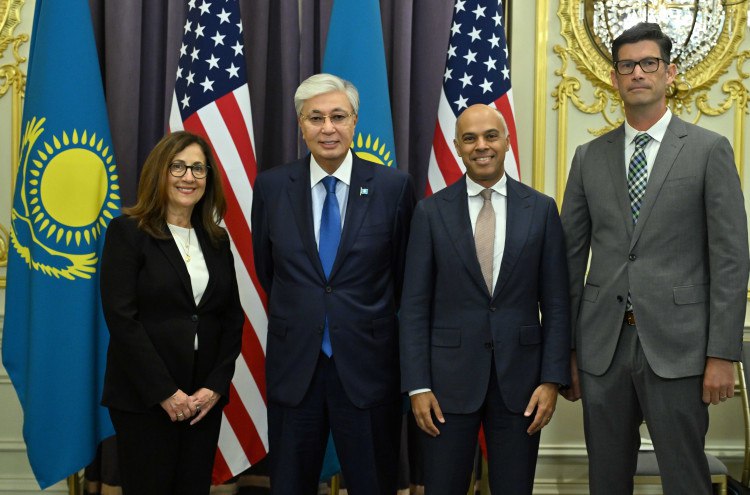
Kazakh President Kassym-Jomart Tokayev arrived in New York on September 21 for a working visit scheduled to last until September 23. Diplomatic and Business Engagements According to the presidential press service, Tokayev is set to deliver a speech during the general debate of the 80th anniversary session of the UN General Assembly. His agenda includes bilateral meetings with foreign leaders and heads of international organizations, as well as a roundtable discussion and a series of engagements with representatives of transnational companies. These meetings aim to highlight Kazakhstan’s investment opportunities. Expanding Cooperation with Cameco Tokayev’s first official meeting was with Tim Gitzel, President and CEO of Canada’s Cameco Corporation. The discussion focused on prospects for expanding cooperation in the uranium sector, particularly through the Inkai joint venture, which has been developing the Inkai deposit in the Turkestan region for over 25 years. The president commended Cameco’s long-standing partnership with Kazatomprom, noting over $500 million in investments and the successful transfer of nuclear technologies. “Kazakhstan is entering a new stage of energy development, with plans to build three nuclear power plants. Our country is interested in the innovative methods used in the nuclear industry,” Tokayev stated. Focus on Education and Testing Reform A major component of the visit centered on human capital development. In talks with Amit Sevak, President of Educational Testing Service (ETS), Kazakhstan expressed interest in updating its national assessment systems. Sevak emphasized the importance of tailoring solutions to Kazakhstan’s specific needs and highlighted the role of artificial intelligence in this transformation. Kazakhstan’s Minister of Science and Higher Education Sayasat Nurbek confirmed the country’s intention to elevate national exams to international standards. “GRE, SAT, and TOEFL are globally recognized, and they were developed in this scientific environment. Our goal is not to replace the Unified National Testing system but to enhance its quality. A large team of ETS researchers will arrive in Kazakhstan next month,” he said. Cultural Cooperation with the Smithsonian Institution Tokayev also met with representatives of the Smithsonian Institution, the largest scientific and cultural complex in the United States. Discussions focused on academic exchanges and the international promotion of Kazakhstan’s cultural heritage. Beginning next year, Kazakh researchers will be able to undertake internships and conduct studies at the institution. Helle Bjetvin, Head of Folk Art Programs, expressed personal admiration for Kazakh applied arts: “I truly admire Kazakh ornaments and design. They beautifully combine tradition and craftsmanship. For me, it’s something very special.” Digital Transformation and Artificial Intelligence Digital development was another key topic of the visit. Joint projects involving data centers, infrastructure expansion, and the establishment of agencies for artificial intelligence implementation were explored. Minister of Digital Development Zhaslan Madiev noted that Kazakhstan is steadily transitioning to a digital state model and seeks robust technological and financial partnerships. “We are discussing major joint projects in digital infrastructure and AI development. Kazakhstan’s market is attractive to global investors, and Goldman Sachs is being considered as a potential partner,” he said.