• KGS/USD = 0.01144 0%
  • KZT/USD = 0.00202 0%
  • TJS/USD = 0.10598 -0.19%
  • UZS/USD = 0.00008 0%
  • TMT/USD = 0.28571 0.28%
  • KGS/USD = 0.01144 0%
  • KZT/USD = 0.00202 0%
  • TJS/USD = 0.10598 -0.19%
  • UZS/USD = 0.00008 0%
  • TMT/USD = 0.28571 0.28%
  • KGS/USD = 0.01144 0%
  • KZT/USD = 0.00202 0%
  • TJS/USD = 0.10598 -0.19%
  • UZS/USD = 0.00008 0%
  • TMT/USD = 0.28571 0.28%
  • KGS/USD = 0.01144 0%
  • KZT/USD = 0.00202 0%
  • TJS/USD = 0.10598 -0.19%
  • UZS/USD = 0.00008 0%
  • TMT/USD = 0.28571 0.28%
  • KGS/USD = 0.01144 0%
  • KZT/USD = 0.00202 0%
  • TJS/USD = 0.10598 -0.19%
  • UZS/USD = 0.00008 0%
  • TMT/USD = 0.28571 0.28%
  • KGS/USD = 0.01144 0%
  • KZT/USD = 0.00202 0%
  • TJS/USD = 0.10598 -0.19%
  • UZS/USD = 0.00008 0%
  • TMT/USD = 0.28571 0.28%
  • KGS/USD = 0.01144 0%
  • KZT/USD = 0.00202 0%
  • TJS/USD = 0.10598 -0.19%
  • UZS/USD = 0.00008 0%
  • TMT/USD = 0.28571 0.28%
  • KGS/USD = 0.01144 0%
  • KZT/USD = 0.00202 0%
  • TJS/USD = 0.10598 -0.19%
  • UZS/USD = 0.00008 0%
  • TMT/USD = 0.28571 0.28%
13 February 2026

Viewing results 1 - 6 of 14

Uzbek Migrants Face Growing Risks in Russia as Tashkent Seeks Probe Into Alleged Abuse

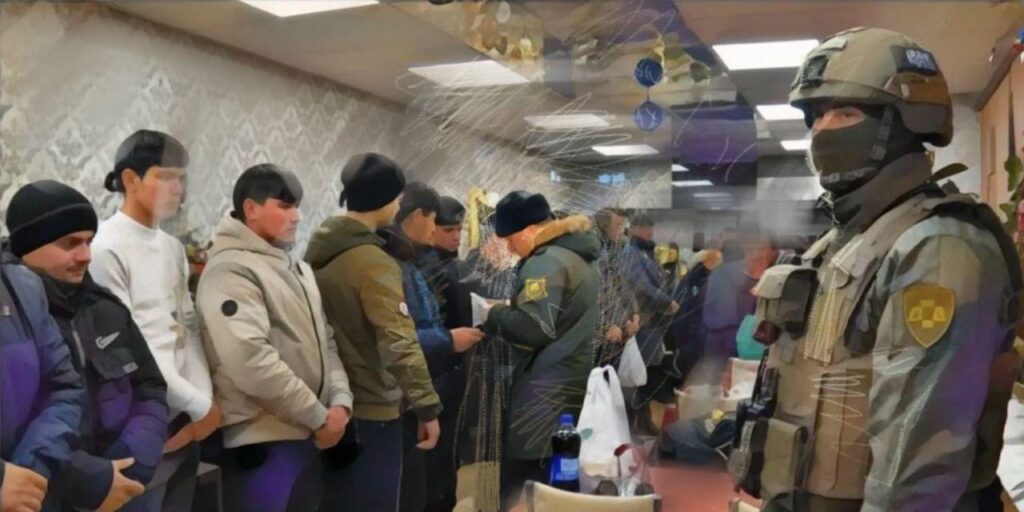
Russian security forces reportedly carried out a raid on a café in Khabarovsk in mid-December 2025, during which several Central Asian migrants were allegedly beaten. According to information circulated on social media, two Uzbek citizens fell into a coma following the incident, and one of them subsequently died. On January 2, Uzbekistan’s Ministry of Foreign Affairs announced it had sent a diplomatic note to Russia requesting an impartial and lawful investigation. The ministry also said steps were being taken to repatriate the deceased’s body. However, it noted that the cause of death has not been officially confirmed, and reports of a second Uzbek in a coma remain unverified. In response to the incident, Alisher Qodirov, member of parliament and leader of the Milliy Tiklanish (National Revival) Democratic Party, issued a stark warning to Uzbek migrants in Russia. “Believe me, the situation will only get worse month by month,” Qodirov wrote on Telegram. “Russian security services see Central Asians as potential participants in future unrest, and they have already given up on any benefit migrants may bring... Use your common sense and leave Russia as soon as possible,” he added. “No income is worth the tears of your parents and children.” As Russia’s war against Ukraine enters its fourth year, labor migrants remain among the most vulnerable and least protected groups affected by the conflict. Central Asian nationals,  particularly Uzbeks, face increasing risks of coercion, legal jeopardy, and systemic abuse. By July 2025, at least 902 Uzbek citizens were reported to have been recruited by Russia to fight in Ukraine. Independent monitors believe the true figure is considerably higher. In October 2025, the ‘I want to live’ project identified 2,715 Uzbek nationals who had participated in the conflict, including those recruited illegally, those who signed contracts, and ethnic Uzbeks already serving in the Russian military. Despite this, Russia remains heavily reliant on migrant labor. As of September 1, 2024, nearly four million citizens from Central Asia were living in Russia. Of these, 1.79 million were from Uzbekistan, followed by significant numbers from Tajikistan, Kazakhstan, Kyrgyzstan, and Turkmenistan. For Uzbekistan, the economic implications of growing pressure on migrants are profound. Remittances remain a cornerstone of the national economy. In the first half of 2025 alone, Uzbekistan received $8.2 billion in cross-border transfers, with 78% originating from Russia. Amid rising xenophobia and labor restrictions, economists warn that this dependence could have severe long-term consequences. Economist Abdulla Abdukadirov, Doctor of Economic Sciences, said total remittances by year-end are expected to approach $20 billion. “This is an extremely large sum,” Abdukadirov said at an offline session of the Fikrat analytical program, responding to a question from The Times of Central Asia. “If the state budget is around $28 billion, then nearly $20 billion in remittances reveals how dependent our economy is becoming on external sources.” Abdukadirov warned that Uzbekistan is developing a dangerous structural dependency. “First, we’re becoming more reliant on external investments and borrowing,” he said. “Second, our dependence on cross-border remittances is deepening.” According...

Nineteen Uzbek Citizens Repatriated from Ukraine After Forced Labor Exploitation

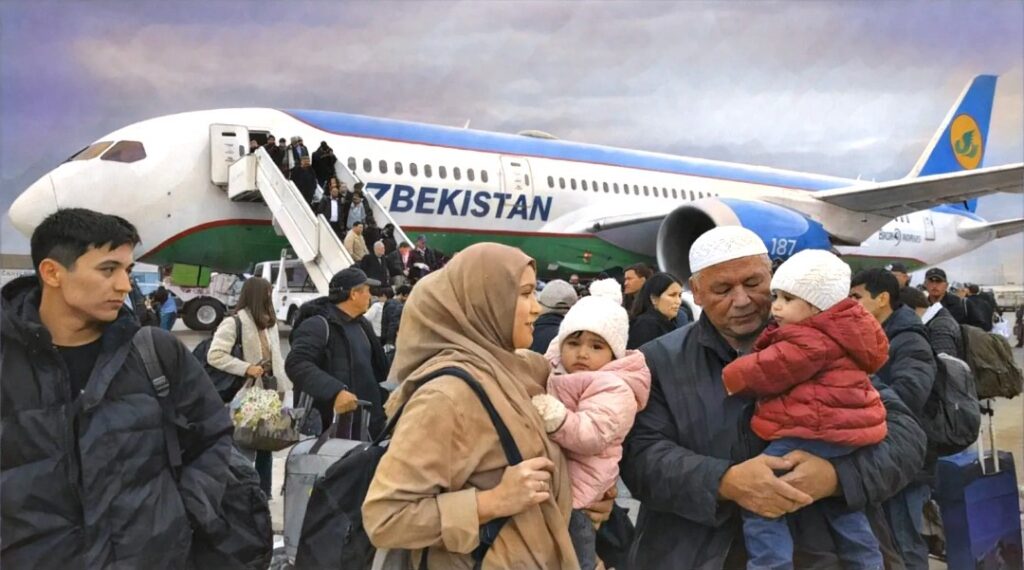
Nineteen Uzbek nationals who were found in exploitative labor conditions in Ukraine’s Kyiv region have been safely repatriated to Uzbekistan, according to the Dunyo news agency. Ukrainian media had previously reported that the group was subjected to forced labor at a greenhouse facility in the region. In response, the Embassy of Uzbekistan in Kyiv, working in coordination with Ukraine’s National Police and the International Organization for Migration (IOM) offices in Ukraine and Moldova, launched an urgent operation to secure their release and safe return. Dunyo reports that the embassy took swift and comprehensive measures to safeguard the victims’ rights, address documentation issues, and facilitate their departure. Following negotiations, all 19 individuals were officially recognized as victims under Ukrainian law, allowing them to avoid legal penalties or administrative charges. On October 28, with financial and logistical support from the IOM, the group was transported by road from Kyiv to Chișinău, Moldova. While in the Moldovan capital, they were provided with food, shelter, and essential services. On November 2 the group flew from Chișinău to Istanbul, arriving in Urgench in Uzbekistan on November 3, accompanied by IOM representatives. The operation was hailed as part of Uzbekistan’s broader commitment to protecting the rights and welfare of its citizens abroad. The Uzbek Embassy in Ukraine continues to monitor the status of its nationals in the country and respond promptly to any reported violations.

Uzbek Migrants Coerced to Fight in Russia’s War

Russia has recruited at least 902 citizens of Uzbekistan to fight in its war against Ukraine since the beginning of 2025, including individuals as young as 19, according to the “I Want to Live” (Хочу жить) project, which cited sources within the Russian armed forces. Despite heightened scrutiny in Uzbekistan following earlier reports of its nationals joining the conflict, recruitment efforts have continued to expand. “These are people who no longer belong to themselves,” the project stated, adding that the recruitment methods remain largely unchanged. The group reported that Uzbek labor migrants arriving in Russia are often lured by promises of lucrative employment, typically in construction or rear-echelon military units. A key incentive remains the promise of expedited Russian citizenship. Meanwhile, Uzbek nationals serving prison terms in Russia are reportedly pressured into enlisting through threats and psychological coercion. The project also highlighted the use of blackmail, especially targeting migrants who recently obtained Russian citizenship. Alexander Bastrykin, head of Russia’s Investigative Committee, recently acknowledged that more than 5,000 raids had been carried out, during which 90,000 people were "caught", a term he used himself. Of those, 30,000 signed contracts and were sent to the front lines, reflecting the coercive nature of the campaign. The report added that prisoners of war from 33 countries are currently held in Ukraine, with Uzbekistan reportedly having the highest number of foreign nationals among them. Separately, on June 5, 2025, a delegation from Uzbekistan’s Defense Ministry, led by Deputy Minister Colonel Alisher Narbaev, visited the “Postoyalye Dvory” military training ground in Russia’s Kursk region. The visit has raised questions amid ongoing concerns about the recruitment of Uzbek citizens into Russia’s war effort. “Every signed contract is a one-way ticket,” the “I Want to Live” project warned, urging the Uzbek government to take a stronger stance in protecting its citizens from being drawn into the conflict. Earlier this year, The Times of Central Asia reported that Ukraine’s Defense Intelligence Service accused Russia of coercing Central Asian citizens, particularly labor migrants from Uzbekistan and Tajikistan, into military service. Many of those recruited under the guise of volunteering are sent directly to high-risk front-line positions, where survival chances are slim.

Most Uzbeks Recognize Human Trafficking Risks, Survey Shows

July 30 marks World Day against Trafficking in Persons, a United Nations-designated observance established in 2013 to raise awareness about one of the most severe human rights violations globally. In conjunction with this date, Uzbekistan’s Ijtimoiy Fikr Center for Public Opinion Research has released the findings of a nationwide survey assessing public awareness of human trafficking and its associated risks. According to the 2025 data, 61.3% of respondents reported being well informed about human trafficking. An additional 29.5% of respondents said they were familiar with the issue but lacked detailed knowledge. Experts caution that such informational gaps can foster misinformation if not addressed through credible sources. Encouragingly, the share of respondents unaware of trafficking risks has declined, reflecting the impact of ongoing awareness initiatives. Television remains the primary source of information for 76.8% of respondents, followed by social media at 54.1%. While digital platforms are increasingly influential, the report underscored the importance of improving media literacy to curb the spread of disinformation. Traditional print media also remains relevant, particularly among older demographics, with 24% citing newspapers or magazines as their main source. When asked how they would respond to a trafficking incident, 78.3% of respondents said they would report it to the police. Other authorities named included the Prosecutor’s Office (47.1%) and the Ombudsman (37.2%), while more than 27% said they would contact an anti-trafficking hotline. Respondents identified the most common forms of trafficking as labor exploitation (68.9%), sexual exploitation (42.1%), illegal organ trade (24.3%), forced begging (23.2%), and child trafficking for adoption (21.3%). Unemployment, economic hardship, and the promise of quick financial gain were cited as the main drivers behind trafficking. Job offers abroad, often made through acquaintances or online platforms, remain the most prevalent method of recruitment. Reassuringly, 91.9% of respondents said they knew of cases where victims had been rescued and successfully reintegrated. Experts view this as a sign that current rescue and rehabilitation programs are making an impact. While 73.1% believe the situation has improved over the past five years, Ijtimoiy Fikr emphasized that human trafficking remains a significant threat in Uzbekistan. The report calls for enhanced legal protections, expanded public education, and deeper international collaboration to maintain momentum. The Center concluded that raising awareness, preventing exploitation, and supporting survivors must remain the core pillars of the national anti-trafficking strategy.

At Least 66 Uzbeks Confirmed Dead Fighting for Russia in Ukraine

A BBC-led investigation has confirmed that dozens of Uzbek citizens have died while fighting for Russia in Ukraine. Journalists from the BBC Russian Service and independent outlet Mediazona have verified 118,139 Russian military deaths in the conflict. Among them were 523 foreign nationals from 28 countries, with Tajiks (72 deaths) and Uzbeks (66 deaths) making up the largest foreign contingents. Investigators caution that the true number of casualties is likely higher. Alexander Bastrykin, head of Russia’s Investigative Committee, has publicly acknowledged that many recently naturalized Central Asians have been conscripted into the Russian military. Speaking at a public forum, Bastrykin stated that authorities had “caught” around 80,000 new Russian citizens, mostly from Uzbekistan, Tajikistan, and Kyrgyzstan, who had attempted to avoid military service. According to him, they were registered for service, and 20,000 were subsequently sent to Ukraine. These remarks have raised fresh concerns that Russia is using Central Asian migrants to bolster its military ranks. Official Neutrality and Subtle Retaliation Central Asian governments have declared neutrality in the Ukraine conflict and have largely abided by Western sanctions. Both Kazakhstan and Uzbekistan have sent humanitarian aid to Ukraine, contributing approximately $2.25 million and $1 million respectively. Kazakhstan has also made it clear that it does not recognize the self-proclaimed Donetsk and Luhansk “people’s republics.” Some analysts believe this neutral stance has triggered retaliatory actions from Moscow. Notably, a Russian court ordered the temporary suspension of operations at the Caspian Pipeline Consortium (CPC), a key route for Kazakh oil exports to the Black Sea. The 30-day halt severely affected Kazakhstan’s economy, as CPC shipments account for roughly 20% of the country's GDP.

Uzbekistan Ranks First Globally for Number of U.S. Green Card Lottery Winners

More than 5,500 Uzbek citizens have been selected in the U.S. Diversity Visa (DV) Lottery for 2025, according to results announced on May 3. With 5,564 winners, Uzbekistan is the leading nation globally, just ahead of Algeria (5,526) and Russia (5,519). The DV program, commonly known as the Green Card lottery, is administered annually by the U.S. State Department under the 1990 Immigration Act. It offers up to 55,000 permanent residency visas each year to individuals from countries with historically low levels of immigration to the United States. For the DV-2025 cycle, approximately 131,000 applicants worldwide were selected, more than double the number of available visas. This over-selection accounts for expected attrition, as not all applicants will proceed with the process. The program corresponds to the U.S. fiscal year, which runs from October 1, 2024, to September 30, 2025. Winners must still pass eligibility screenings and attend visa interviews before receiving a Green Card, which grants them the right to live and work permanently in the United States. In Central Asia, Kyrgyzstan had 3,095 winners, followed by Tajikistan (2,982), Turkmenistan (2,010), and Kazakhstan (2,004). The program remains one of the most accessible and sought-after legal pathways for Central Asians seeking to immigrate to the U.S.