• KGS/USD = 0.01144 0%
  • KZT/USD = 0.00204 0%
  • TJS/USD = 0.10415 -0.19%
  • UZS/USD = 0.00008 0%
  • TMT/USD = 0.28571 0%
  • KGS/USD = 0.01144 0%
  • KZT/USD = 0.00204 0%
  • TJS/USD = 0.10415 -0.19%
  • UZS/USD = 0.00008 0%
  • TMT/USD = 0.28571 0%
  • KGS/USD = 0.01144 0%
  • KZT/USD = 0.00204 0%
  • TJS/USD = 0.10415 -0.19%
  • UZS/USD = 0.00008 0%
  • TMT/USD = 0.28571 0%
  • KGS/USD = 0.01144 0%
  • KZT/USD = 0.00204 0%
  • TJS/USD = 0.10415 -0.19%
  • UZS/USD = 0.00008 0%
  • TMT/USD = 0.28571 0%
  • KGS/USD = 0.01144 0%
  • KZT/USD = 0.00204 0%
  • TJS/USD = 0.10415 -0.19%
  • UZS/USD = 0.00008 0%
  • TMT/USD = 0.28571 0%
  • KGS/USD = 0.01144 0%
  • KZT/USD = 0.00204 0%
  • TJS/USD = 0.10415 -0.19%
  • UZS/USD = 0.00008 0%
  • TMT/USD = 0.28571 0%
  • KGS/USD = 0.01144 0%
  • KZT/USD = 0.00204 0%
  • TJS/USD = 0.10415 -0.19%
  • UZS/USD = 0.00008 0%
  • TMT/USD = 0.28571 0%
  • KGS/USD = 0.01144 0%
  • KZT/USD = 0.00204 0%
  • TJS/USD = 0.10415 -0.19%
  • UZS/USD = 0.00008 0%
  • TMT/USD = 0.28571 0%

Viewing results 1 - 6 of

Women and Girls in Central Asia in Need of Protection from Violence

 Central Asian Countries are seeing a new wave of violence against women and girls, and the fight against their long-standing powerlessness is just beginning. In 2023, the Women, Peace and Security Index (WPS Index), published by the Georgetown Institute for Women, Peace and Security and the PRIO Centre on Gender, Peace and Security, found Kyrgyzstan and Uzbekistan the most dangerous countries in Central Asia for women. Things were deemed slightly better in Kazakhstan, Tajikistan, and Turkmenistan. The challenges faced by women in the region result from a combination of factors: the low number of women in government and law enforcement, women’s lack of financial independence, especially in rural areas, a distorted understanding of traditions across populations, and a mentality in society that often denies or covers up flagrant cases of injustice.   The law is written in blood: the case of Kazakhstan According to WPS experts, Kazakhstan has progressed further than its neighbors toward equality. Still, according to Kazakhstan’s Ministry of Internal Affairs, 69 women and seven children died in 2023 in domestic conflicts alone. It is believed that, on average, at least 80 women die every year at the hands of those they live with; every day, the police receive hundreds of calls, while thousands of women need the help of specialized protection and support centers. According to the Prosecutor General, last year 150 women sustained severe injuries and 200 moderate injuries in marital conflicts, with another 4,000 suffering minor bruises. This year, however, marked a turning point for Kazakhstani society – more and more women are recording videos with marks from beatings, posting the videos on social media, and calling on the police to punish their abusers. Even high-profile domestic abusers can now be exposed. The trigger for these changes was the trial of former Nazarbayev-era Minister of the National Economy, Kuandyk Bishimbayev, who beat his wife, Saltanat Nukenova, to death last November. Following a live-streamed trial, this May, Bishimbayev was sentenced to 24 years in prison for her murder. Even during the Bishimbayev trial, Karina Mamash, the wife of a Kazakh diplomat in the UAE, went public with allegations about systematic abuse, calling on the state to help. The Ministry of Foreign Affairs urgently recalled her husband, Embassy Counselor Saken Mamash, who may be fired. Karina is now at home with her children while a criminal case has been opened against her husband. She has since reported threats from her husband's relatives. Also in May, Akmaral Umbetkalieva, a resident of Atyrau, alleged that her ex-husband, Rinat Ibragimov – the akim (mayor) of Makat District in Atyrau Region – had beaten her for eleven years and taken away their children. Ibragimov called the allegations slander. The month before, former Taldykorgan police chief, Marat Kushtybaev was sentenced to eleven years for raping a girl in his office in November 2023. Another headline from April was that a security guard at an Almaty bar who had been convicted of raping a girl at knifepoint would serve eight years in prison. The...

Protecting Women and Children Helps Preserve, Not Contradict, Traditional Family Values in Kazakhstan

In today's rapidly evolving world, traditional values can sometimes clash with progressive movements advocating for inclusivity and modern perspectives in many areas of life. While these values are often seen as barriers, they can instead serve as a source of stability and continuity when thoughtfully upheld. President Kassym-Jomart Tokayev is aligning legislative reforms with Kazakhstan's family values while integrating them with the society's progressive aspirations. At a recent meeting with young scientists in Almaty, President Tokayev took aim at domestic violence calling it “a manifestation of backwardness and moral degradation.”  He added that “only a society that values ​​and respects women can be considered truly civilized and cultured.”  Regulatory actions In his speech, Tokayev placed “strengthening of the institution of the family” at the center of modernizing Kazakhstani society. “After all, comprehensive protection of the rights of women and children does not at all contradict the preservation of traditional family values ​​and, on the contrary, contributes to their further strengthening”, he said. “From the first days of my presidency, I have been paying great attention to protecting the rights of women and children. We are consistently taking legislative and institutional measures in this direction,” he noted.  This is not a new issue for the President, who in his September 2022 address, had already ordered stricter penalties for domestic violence. His agenda to strengthen protective measures sped up following the high-profile murder of Saltanat Nukenova in November 2023 by her husband, an influential former minister.  The events following this tragedy helped bring about new laws, inspired a culture of zero tolerance for any form of violence, and perhaps even opened the way for further reforms. On April 15, 2024, Tokayev signed a landmark law criminalizing violence against women and children, reversing a 2017 decriminalization. In two weeks, these amendments will be put into effect. The government’s response to the death of Nukenova and to the events following it, including the public reaction, has garnered international praise.  Promoting a values-based society Tokayev in his Almaty speech expressed that “not all problems can be solved by passing or tightening the law,” and adding that “everyone must start with themselves changing for the better”. “Family values ​​should be established in every home”, he said, highlighting the key role of women in raising the new generation.  Tokayev also prescribed enforcing good values in educational institutions while acknowledging that the country’s education system still had shortcomings. This is another example of how the leadership’s rhetoric matters in advancing a society. Tokayev continues to set the tone for his country on women’s rights. As the Washington Post wrote on May 13, 2024, “Kazakhstan’s President Kassym-Jomart Tokayev has repeatedly spoken about strengthening protections for women.”  Tokayev’s messaging of values has indeed been consistent – with a focus on rule of law as a basis for the protection of rights of all citizens.  The future The President’s actions have already begun inculcating a culture of no tolerance for aggression against women. “Today, the problem of domestic violence is widely...

Turkmenistan Restricts Women From Obtaining Driving Licenses

It is becoming more and more difficult for women to drive in Turkmenistan, with requirements for obtaining a driver's license often oppressively strict. Turkmenistan has restricted women's rights for many years, including their freedom to drive a car. In 2017 Turkmen police began revoking women's driving licenses and refusing to issue them with new ones. From the beginning of 2023 women had to be over the age of 41 to learn to drive, and even then driving schools would only accept them if they provided marriage certificates and character references. It is reported that in the country's Mary region it is now almost impossible for women to drive a car. Women who already have a license can only renew it when it expires if they have a vehicle registered in their name. “Often, the cars driven by women are not registered in their name, and they use vehicles registered in the name of their brothers or husbands by power of attorney. Now they have to transfer the cars to their name or buy a new car to get a driver's license; otherwise, they will not be issued a new document,” Radio Azatlyk wrote. According to local sources, police officers are refusing to issue licenses to women under the age of 35. One resident added: “You also need a medical certificate from a psychiatric dispensary to renew your license. They are obtained in local medical institutions. The cost of renewing a driver's license will cost 200 to 400 manats ($57-$114). Mary residents said using a bribe is the easiest way to solve the problem. “Men can get a driver's license by paying a bribe of 4,000 manat ($1141), while a woman will have to pay 6,000 to 7,000 manat ($1712 to $1997),” the resident said. Turkmen officials deny any discrimination against women, and maintain that gender equality is fully respected in the country.

Why Have Women’s Carriages Become So Popular in Kazakhstan?

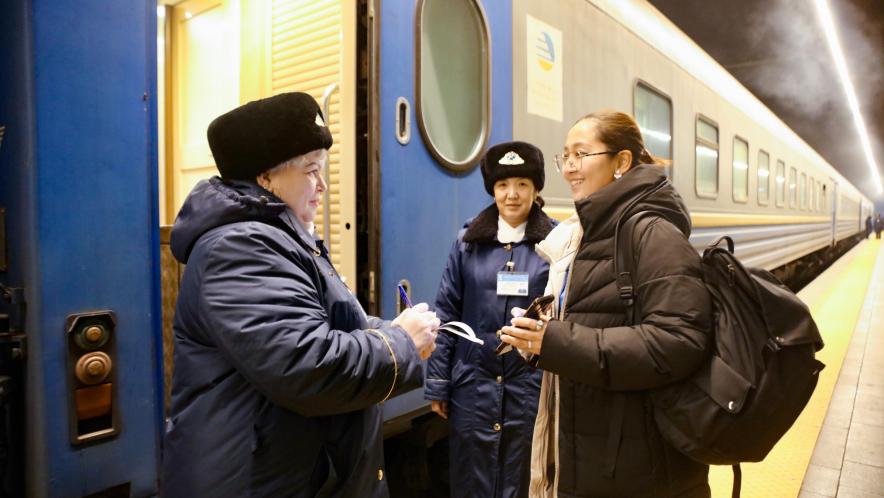
Kazakhstani women have already had time to appreciate women-only cars in trains - an innovation that seemed unthinkable in the secular country a few years ago. However, the special carriages did not appear as an indulgence to traditionalist views. Kazakhstani women now have a choice: they can ride in a regular carriage, or they can ride in a carriage that is practically closed to men - and demand for the latter service is increasing year by year. In May, the statistics of Kazakhstan Temir Zholy (KTZ), a railroad monopoly, were published, which revealed that women twice as often choose women's cars. Since 2021, more than 359,000 women have chosen this option, and since the beginning of 2024 alone, the service has been used by about 70,000 women, whereas in 2023, only 34,000 did so. Today, women's cars run in eight long-distance passenger trains, with only female conductors working in them. Male children up to seven-years-old are allowed, whilst men can go enter for a short period of time, but overnight stays are strictly prohibited. The need to ensure the safety of women in trains began to be discussed after the scandal that broke out in the fall of 2018, when two conductors raped a female passenger on the high-speed train "Talgo" on the Astana-Aktobe route. This crime resonated widely, and led to loud demands for the authorities to take action. Conductors Zhetes Umbetaliev and Kolkanat Kurmaniyazov were found guilty of rape in July 2019 and were sentenced to just 2.3 and 2.5 years, respectively, whilst Kanat Almagambetov, first deputy chairman of KTZ, apologized on behalf of the company. The first women-only cars were launched in October 2021. "This is being done primarily for the safety of women... If demand for the service increases, our company is ready to expand the geography of these routes. Apart from the female conductors, these carriages are no different from the others. They have the same pricing policy," KTZ explained at the time. The current routes were chosen because of their length, company representatives said. Kazakhstan is a large country and a trip from Almaty to Mangistau, for example, takes several days. Ainagul Kasenova, a resident of Mangistau Oblast, travels to see relatives in Almaty several times a year, and for her, women's cars have become a solution. "Now I try to buy tickets only in a separate car. You travel for a long time, so it's much more comfortable if there are only women and children around. I used to encounter men talking to me, paying me unnecessary attention; it was unpleasant. When the news about the rape of a female passenger by conductors broke, my parents didn't even want to let me go to Almaty. Now they let me go without any problem," Kasenova told TCA. According to her, both students and pensioners are comfortable in women's carriages, especially those who have to travel often, which increases the risk. "The women's carriage is always quiet, friendly atmosphere, without drinking and noise," she added....

Tajikistan Doubles Down on Fines for Wearing “Foreign Clothes”

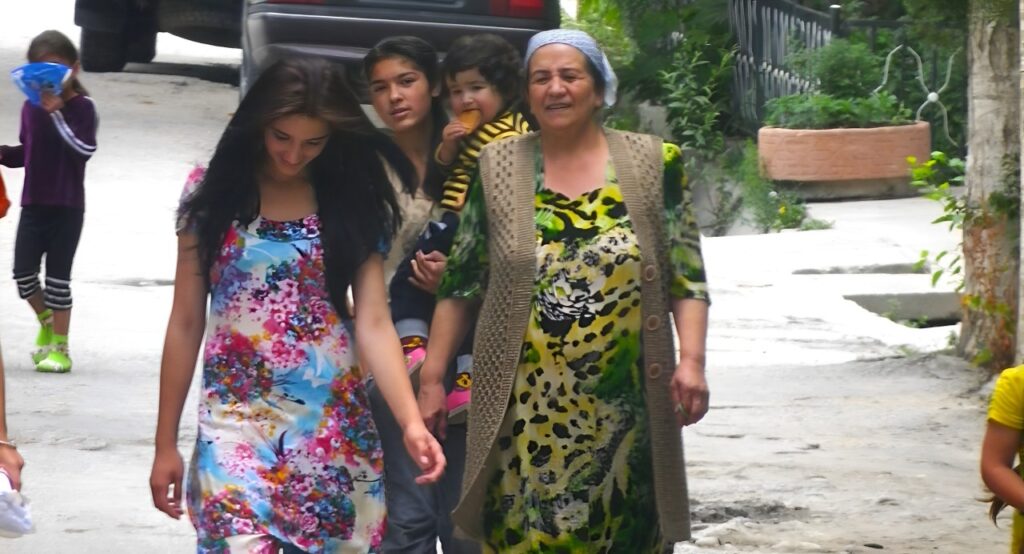
Residents of Tajikistan will face fines ranging from 8,000 to 65,000 somoni for "importing and selling clothes that do not correspond to the national culture" and for wearing such clothes in public places, as reported by Radio Ozodi. These regulations are outlined in Article 18 of the new version of the law "On Regulation of Traditions and Rites" and the Code of Administrative Offenses. The drafts were adopted by parliamentarians on May 8 this year. "In the draft law 'On the Regulation of Traditions and Rites,' a corresponding prohibiting norm is included in part two of Article 18. For its violation, amendments and additions to Article 481 of the Code of Administrative Offenses provide for administrative responsibility," explained Mavludakhon Mirzozoda, a deputy of the lower house of Tajikistan's parliament. Article 481 of the current Code of Administrative Offenses addresses not only Article 18, but also broader non-compliance with the norms of the Law on the Regulation of Traditions and Rites. According to this article: Individuals will be fined 7,920 somoni ($733). Officials will be fined 39,600 somoni ($3,665). Legal entities will be fined 57,600 somoni ($5,333). Individual entrepreneurs, scientists, and religious figures will be fined 54,000 somoni ($4,998). For repeated violations, fines will range from 46,000 to 86,000 somoni. The recent amendments have updated this article, although changes to the fine amounts are yet to be confirmed. The average wage in Tajikistan is approximately $172 a month. According to the current legislation, the amendments to the law come into force upon publication in the official press after approval by the Majlisi Milli (lower house) and the president's signature. However, citizens are already being compelled to comply with these new regulations. The current law does not specify which clothing is considered alien to Tajik national culture. Experts suggest that the law likely pertains to women's national dress, although the text itself does not differentiate between men's and women's clothing. Reactions within Tajik society have been mixed. Some residents of Dushanbe, during a street survey, expressed their opinion that people should have the freedom to choose their own attire without compulsion. Tajik authorities have long campaigned to encourage the wearing of national dress and to discourage the adoption of foreign styles. They prohibit women from wearing black clothing, black headscarves, and hijabs, considering them alien to Tajik culture and traditions. Although mini-skirts, sweaters, dresses with cleavage, tops, and transparent fabrics were also banned at one point, these restrictions were quickly "forgotten."

Why Have Cases of Abduction of Women for Marriage Not Decreased in Kazakhstan?

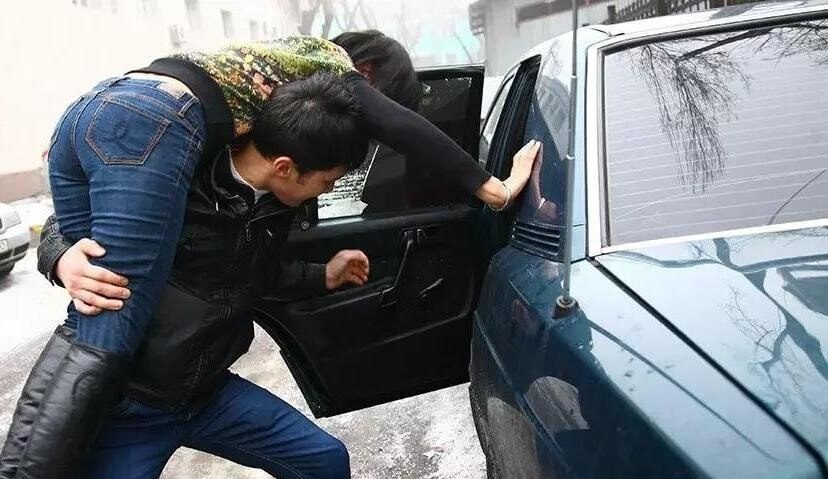
In Kazakhstan, the statistics related to criminal cases regarding the abduction of women as brides does not show material change, a study conducted by analysts at Ranking.kz shows. Referring to the data of the Committee on Legal Statistics and Special Records of the General Prosecutor's Office of Kazakhstan, the authors of the study report that last year, 18 such criminal cases were recorded. Of these, two-thirds (12 cases) were registered in the southern regions, and two cases each in the eastern, western and central parts of the country. The report notes that the problem is characteristic not only of remote rural settlements, but also of large metropolitan areas. Thus, 6 out of 12 ‘southern’ criminal cases of abduction of women were in Almaty, and a single case was registered in Astana. But the number of registered criminal cases on another related criminal offense, namely illegal deprivation of liberty that occurs when a woman is forcibly kept in the house of her fiancé, has noticeably decreased since 2018 from 71 to 13 cases nationwide. It is worth noting that these statistics only partially reflect the situation on the ground as some Kazakhs continue to disguise this criminal offense as the ancient custom of "qyz alyp qashu" (bride kidnapping). According to Artur Lastaev, the Commissioner for Human Rights in Kazakhstan, at least two factors affect the situation. Firstly, Kazakhstan does not have a separate article for abducting women for the purposes of marriage, and therefore all abductions of women are registered under one crime, i.e. Article 125 of the Criminal Code of the Republic of Kazakhstan. Secondly, most of the abductions of women for marriage are not even included in statistical reports as they are often covered up. In his report last year, Lastaev wrote: "We can only guess about the real figures of bride theft. Stereotypes persist in society that do not allow women to report the use of this type of coercion. In most cases, perpetrators and victims are not even aware of the criminal nature of such acts and criminal responsibility for them." According to the data published by the Ombudsman within the framework of the International Scientific and Practical Conference, "Countering domestic violence: problems and solutions", 214 criminal cases have been initiated in Kazakhstan since 2019 for the abduction of women. Of these, 94.3% were terminated due to lack of corpus delicti. Only 10 cases were sent to the courts, and 27 people were brought to bear responsibility for their actions. The Commissioner for Human Rights believes that a separate article for abduction of women for forced marriage should be introduced into the Criminal Code of the Republic of Kazakhstan. According to Lastaev, this should have a preventative effect and reduce the level of crime against women. The General Prosecutor's Office, where the proposal has been sent, supported the initiative, but amendments to the laws have not yet been adopted. More than a year ago, experts from Kazakhstan’s Institute for Social Development conducted a sociological study on gender...