• KZT/USD = 0.00221
  • TJS/USD = 0.10820
  • UZS/USD = 0.00009
  • TMT/USD = 0.29760
  • KZT/USD = 0.00221
  • TJS/USD = 0.10820
  • UZS/USD = 0.00009
  • TMT/USD = 0.29760
  • KZT/USD = 0.00221
  • TJS/USD = 0.10820
  • UZS/USD = 0.00009
  • TMT/USD = 0.29760
  • KZT/USD = 0.00221
  • TJS/USD = 0.10820
  • UZS/USD = 0.00009
  • TMT/USD = 0.29760
  • KZT/USD = 0.00221
  • TJS/USD = 0.10820
  • UZS/USD = 0.00009
  • TMT/USD = 0.29760
  • KZT/USD = 0.00221
  • TJS/USD = 0.10820
  • UZS/USD = 0.00009
  • TMT/USD = 0.29760
  • KZT/USD = 0.00221
  • TJS/USD = 0.10820
  • UZS/USD = 0.00009
  • TMT/USD = 0.29760
  • KZT/USD = 0.00221
  • TJS/USD = 0.10820
  • UZS/USD = 0.00009
  • TMT/USD = 0.29760
11 September 2026

Viewing results 1 - 6 of

Social Researcher: Serious Effort Required for Women’s Representation in Kazakh Politics

According to Gulmira Ileuova, a sociologist and the head of the Strategy Centre for Social and Political Research, gender equality in Kazakhstan has severely deteriorated. In an interview with TCA, she explains how social regression and a depletion of human resources are making it difficult for women to participate in political parties, social movements, and public services. TCA: Sources illustrate that after the 2023 parliamentary elections, the representation of women deputies in the Mazhilis fell from 27% to 18%. In addition, Kazakhstan's performance in the Global Gender Gap Index (GGGI) has deteriorated. This year, the country fell from 62nd to 76th place. This index, which can be used to judge the economy's stability and legal security, has a serious impact on investors.  What, in your opinion, is the reason for this deterioration? First of all, I would like to point out that until 2021, the Labor Code had restrictions on where women could work based on concerns about their health. Now that the restrictions have been lifted, progress is steadily being made in involving women in areas previously inaccessible to them. Some companies have already published data that women have begun operating heavy machinery, such as big trucks, which was not the case before. As for politics and the civil service, it appears that under the spread of influence from the south, the country is reinstating traditional social relations. Independent Kazakhstan has entered a new period where traditional and non-traditional forms of Islam thrive, and hyper-masculine and patriarchal attitudes are on the rise. I emphasize the patriarchal division of life through reinforced gender roles because it is gaining strength and spreading across all regions of the country. Furthermore, this trend is moving into the sphere of politics and civil services. Let's take a look at what preceded these trends. In many regions, primarily in the south, there is a huge number of women who wishing to undertake the important work of reproduction, were receiving TSA (targeted social assistance). According to statistics in 2019, there were 2 million and 221 thousand recipients of TSA (about 12% of the population). Today, their number has decreased six fold to about 350 thousand. These numbers include women who thought they would bypass employment through state support systems. And now these women are in trouble. The state is revising its social policy, but the paternalistic trend has long been developing and a large number of people have abused it. TCA: Are you saying that women, in receipt of child allowances, prefer to stay at home as opposed to actively entering economic relations or aspiring to participate in civil services or politics? Yes, and I am afraid that this trend cannot be overcome by quick measures or be alleviated by even quotas for women. In a 'strategy' study conducted by the Center for Social and Political Research in the Turkestan region, an official working in gender policy said that at some point, the political representation of women fell to 5%. There were actually no women in senior...

Tajikistan Urged to Reconsider Ban on ‘Alien’ Clothing

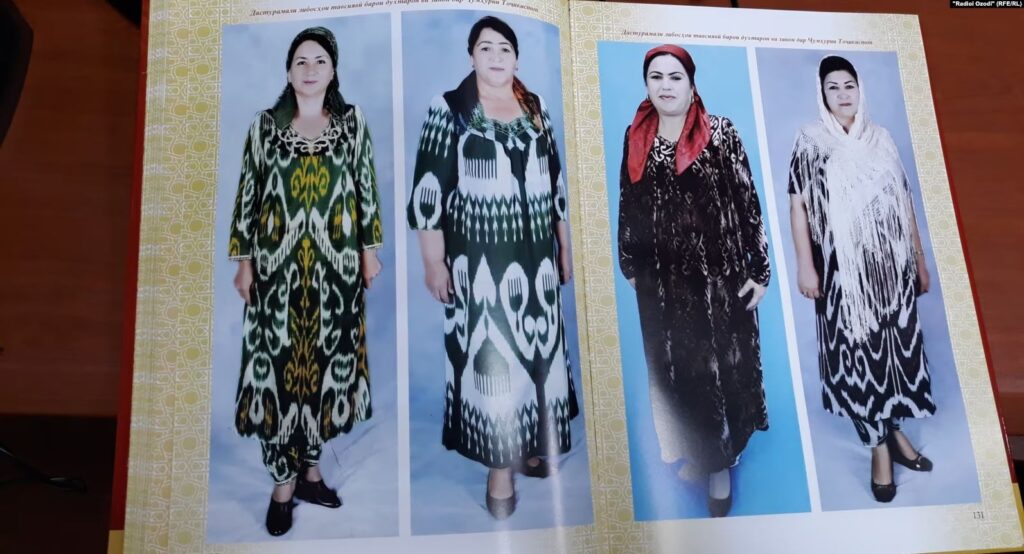
The International Partnership for Human Rights (IPHR) has called on the Tajik authorities to repeal recent amendments to the law imposing restrictions on “foreign” clothing. According to activists, such restrictions violate international human rights, particularly the right to freedom of expression and freedom of religion. In a statement issued on August 19, IPHR emphasized that since clothing is an important element of personal identity as well as religious and cultural beliefs, states have an obligation to protect people's right to choose what they wear. According to amendments to the law “On the Ordering of Traditions, Celebrations and Rites”, enforced in June this year, Tajikistan prohibits “importing, propagandizing and selling clothes that do not correspond to the national culture.” Although a precise definition of such has  yet to be provided, there has been a clear focus by authorities on “Islamic” clothing, and in particular, the issue of a fatwa by Tajikistan's Ulema Council urging women to avoid wearing “tight, black or see-through clothing.” Violations of the law are punishable by heavy fines or imprisonment for up to three years. IPHR continues to stress that restrictions based on religious, cultural, or traditional values cannot justify the violation of human rights The amendments were earlier condemned by The League of Muslim Scholars and other international organizations, and the Taliban even declared “jihad” against Tajikistan. In response to international criticism, Tajik authorities reiterated that the new law aims to protect national values and prevent extremism.

Kyrgyzstan Strengthens Protection From Family, Sexual, and Gender Violence

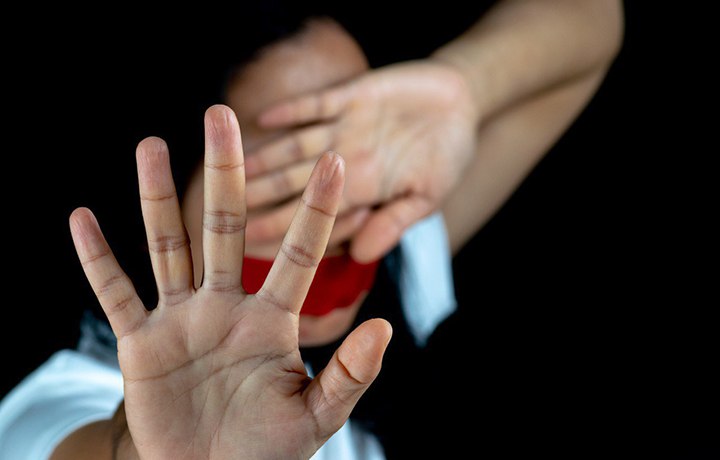
The President of the Kyrgyz Republic, Sadyr Japarov has signed a law aimed at strengthening the protection of its citizens from family, sexual, and gender violence. The law provides for amendments to several legislative acts and aims to provide comprehensive assistance to victims of various forms of violence. A key objective is to ensure victims' access to justice and protect their rights and interests. The law is being adopted due to the alarming situation with the level of family and gender violence in Kyrgyzstan. In 2021, more than 10,000 cases were registered, but only 2.5% of them proceeded to court. In 2023, the number of cases increased to 11,000, and 95% of the victims were women. The increasing number of such incidents and the lack of protection for victims necessitated a review of the relevant legislation. The new law is designed to address gaps in legal protection for victims and create stricter measures to punish perpetrators.

World Bank: Uzbekistan Must Tackle Gender Inequality

The World Bank Uzbekistan has published a new “Country Gender Assessment Report: Uzbekistan” on gender assessment in the country. This report (CGA) was produced with financial support from Great Britain. This report examines gender equality in Uzbekistan in various areas such as education, health, economic activity, protection from gender-based violence, marriage, divorce, and participation in public life. CGA examines social norms, assessing cultural attitudes and practices that affect women’s rights and understandings in Uzbek society. The report makes recommendations to close the gender gap and promote inclusive prosperity. CGA notes that since 2017, significant progress has been made in terms of gender equality in Uzbekistan. Notable achievements include the 2022 Labor Code, which provides for equal pay for women and removes job restrictions. In addition, 2023 amendments to the Criminal Code criminalize domestic violence. Consequently, the “Women, business and Rights” index released annually by the World Bank recognized Uzbekistan as one of the top five countries in terms of gender equality in 2024. Women’s access to education and health services has improved significantly. For example, during the period 2017-2022, the number of admissions to higher education institutions increased significantly, the number of men increased by three times to 29%, and the number of women increased by four times – to 27.4%. Young women face higher unemployment rates than males (15.5% vs 10%), and the share of young women who were not in employment, education, or training (NEET) has reached 42%, compared to 8.8% for males. In addition, the gender pay gap is significant, with women earning 34% less than men, which is more than the global average of 20%. Women’s low wages and employment rates directly hinder economic growth and exacerbate poverty in Uzbekistan. If women participated in the country’s economy on an equal basis with men, the national income in Uzbekistan would increase by 29%. Simply equalizing men’s and women's wages would lift more than 700,000 people out of poverty. However, gender norms, which place women primarily in charge of caregiving and household tasks, hinder progress towards gender equality and inclusive economic growth. The report states that the authorities must address gender inequality to realize Uzbekistan’s full economic potential. These include entrenched social norms that limit women’s economic participation, disparities in access to higher education in STEM fields, health care limitations, deteriorating family planning options, incomplete protection from gender-based violence, and the disparity of women in leadership roles.

Famous Tajik Blogger Subjected to Domestic Violence

In Tajikistan, the husband of famous blogger Rukhshona Rakhmatulloeva has been arrested after she complained of domestic violence, Asia-Plus reports. According to the Dushanbe City Department of Internal Affairs, Rukhshona Rakhmatulloyeva, known on Instagram under the nickname Sofi_1111 where she has more than 400,000 followers, appealed to the authorities through an e-mail in which she complained of beatings and rough treatment by her 32-year-old husband, Umed Rakhmatulloyev. Earlier, followers circulated screenshots of the blogger's post on her page, where she reported that her husband abuses her and threatens her with a knife. In the posts, it is reported that her husband sleeps and sits at home all day while she has to work and support the family. In addition, it is claimed that their children suffer psychologically due to frequent conflicts at home. "The investigation, which included interrogations of the suspect, the victim, and witnesses, confirmed the facts of violence and misunderstanding in the family. The Shohmansur district court sentenced him to administrative arrest for seven days,” the Ministry of Internal Affairs said in a statement. The problem of domestic violence is acute in Tajikistan. According to the Bureau for Human Rights and Rule of Law, 50 to 80% of women and children in the country are subjected to violence. According to the UN, every fifth woman in this country is a victim of domestic violence perpetrated by their husband, mother-in-law, or other family members. Nevertheless, only 1 in 10 women seek help to remedy the situation.

Women and Girls in Central Asia in Need of Protection from Violence

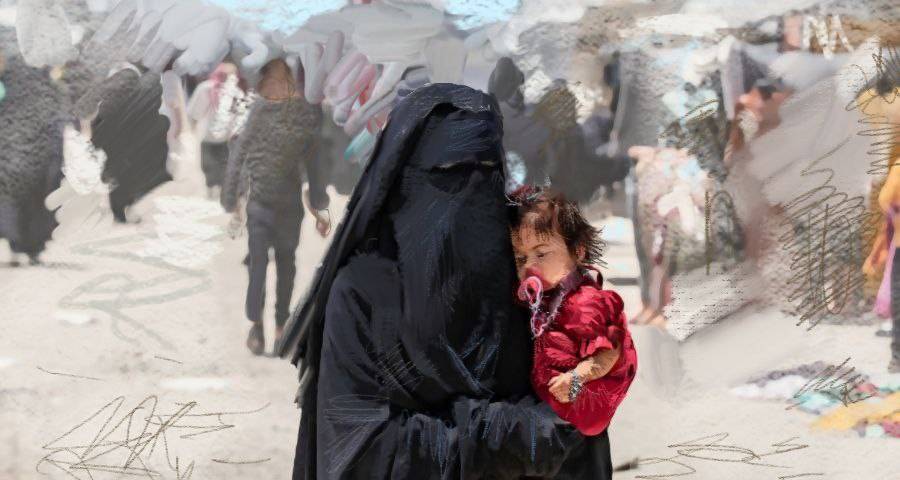
 Central Asian Countries are seeing a new wave of violence against women and girls, and the fight against their long-standing powerlessness is just beginning. In 2023, the Women, Peace and Security Index (WPS Index), published by the Georgetown Institute for Women, Peace and Security and the PRIO Centre on Gender, Peace and Security, found Kyrgyzstan and Uzbekistan the most dangerous countries in Central Asia for women. Things were deemed slightly better in Kazakhstan, Tajikistan, and Turkmenistan. The challenges faced by women in the region result from a combination of factors: the low number of women in government and law enforcement, women’s lack of financial independence, especially in rural areas, a distorted understanding of traditions across populations, and a mentality in society that often denies or covers up flagrant cases of injustice.   The law is written in blood: the case of Kazakhstan According to WPS experts, Kazakhstan has progressed further than its neighbors toward equality. Still, according to Kazakhstan’s Ministry of Internal Affairs, 69 women and seven children died in 2023 in domestic conflicts alone. It is believed that, on average, at least 80 women die every year at the hands of those they live with; every day, the police receive hundreds of calls, while thousands of women need the help of specialized protection and support centers. According to the Prosecutor General, last year 150 women sustained severe injuries and 200 moderate injuries in marital conflicts, with another 4,000 suffering minor bruises. This year, however, marked a turning point for Kazakhstani society – more and more women are recording videos with marks from beatings, posting the videos on social media, and calling on the police to punish their abusers. Even high-profile domestic abusers can now be exposed. The trigger for these changes was the trial of former Nazarbayev-era Minister of the National Economy, Kuandyk Bishimbayev, who beat his wife, Saltanat Nukenova, to death last November. Following a live-streamed trial, this May, Bishimbayev was sentenced to 24 years in prison for her murder. Even during the Bishimbayev trial, Karina Mamash, the wife of a Kazakh diplomat in the UAE, went public with allegations about systematic abuse, calling on the state to help. The Ministry of Foreign Affairs urgently recalled her husband, Embassy Counselor Saken Mamash, who may be fired. Karina is now at home with her children while a criminal case has been opened against her husband. She has since reported threats from her husband's relatives. Also in May, Akmaral Umbetkalieva, a resident of Atyrau, alleged that her ex-husband, Rinat Ibragimov – the akim (mayor) of Makat District in Atyrau Region – had beaten her for eleven years and taken away their children. Ibragimov called the allegations slander. The month before, former Taldykorgan police chief, Marat Kushtybaev was sentenced to eleven years for raping a girl in his office in November 2023. Another headline from April was that a security guard at an Almaty bar who had been convicted of raping a girl at knifepoint would serve eight years in prison. The...