• KGS/USD = 0.01144 0%
  • KZT/USD = 0.00205 0%
  • TJS/USD = 0.10731 0%
  • UZS/USD = 0.00008 0%
  • TMT/USD = 0.28490 0%
  • KGS/USD = 0.01144 0%
  • KZT/USD = 0.00205 0%
  • TJS/USD = 0.10731 0%
  • UZS/USD = 0.00008 0%
  • TMT/USD = 0.28490 0%
  • KGS/USD = 0.01144 0%
  • KZT/USD = 0.00205 0%
  • TJS/USD = 0.10731 0%
  • UZS/USD = 0.00008 0%
  • TMT/USD = 0.28490 0%
  • KGS/USD = 0.01144 0%
  • KZT/USD = 0.00205 0%
  • TJS/USD = 0.10731 0%
  • UZS/USD = 0.00008 0%
  • TMT/USD = 0.28490 0%
  • KGS/USD = 0.01144 0%
  • KZT/USD = 0.00205 0%
  • TJS/USD = 0.10731 0%
  • UZS/USD = 0.00008 0%
  • TMT/USD = 0.28490 0%
  • KGS/USD = 0.01144 0%
  • KZT/USD = 0.00205 0%
  • TJS/USD = 0.10731 0%
  • UZS/USD = 0.00008 0%
  • TMT/USD = 0.28490 0%
  • KGS/USD = 0.01144 0%
  • KZT/USD = 0.00205 0%
  • TJS/USD = 0.10731 0%
  • UZS/USD = 0.00008 0%
  • TMT/USD = 0.28490 0%
  • KGS/USD = 0.01144 0%
  • KZT/USD = 0.00205 0%
  • TJS/USD = 0.10731 0%
  • UZS/USD = 0.00008 0%
  • TMT/USD = 0.28490 0%

Viewing results 1 - 6 of 15

Tajikistan’s Rahmon Seeks Deeper Economic Ties During China Visit

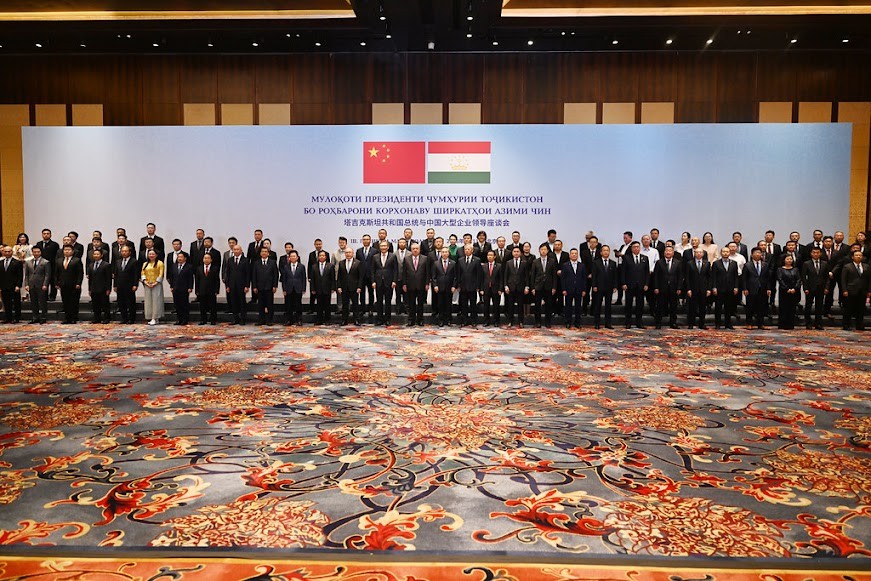
More than 700 companies with Chinese capital are operating in Tajikistan, and about 12.5% of the nearly $7 billion in foreign investment that entered the Central Asian country’s economy last year came from China, according to Tajikistan’s presidency. Tajikistan’s President Emomali Rahmon shared the data after arriving in Beijing on Monday to push for even closer economic ties with China, which surpassed Russia last year to become Tajikistan’s largest trading partner. The Chinese Foreign Ministry said Rahmon was making the May 11-14 trip at the invitation of President Xi Jinping, who will then host U.S. President Donald Trump from May 13 to 15 China is expanding economic projects and investment across Central Asia, and the rapid pace of development is evident in numerous initiatives currently underway in Tajikistan. Last month, government and industry officials from the two countries met in Dushanbe to discuss “green minerals,” the materials – abundant in Tajikistan – that are used in clean energy technologies such as solar power and electric vehicle batteries. In February, the first container train from China arrived in Tajikistan’s capital after passing through Kyrgyzstan and Uzbekistan on what the Chinese embassy said was a new trade route. “The development of modern transport and economic corridors through Tajikistan linking China and South Asian countries with the Middle East was described as another factor promoting cooperation with neighboring China,” Tajikistan’s presidency said in a summary of Rahmon’s speech in Beijing on Monday. More than 50 agreements were signed between Tajik and Chinese companies during the presidential visit. The deals are projected to attract more than $8 billion in investment to Tajikistan, the presidency said. Despite the escalation in trade ties, some economists warn that Tajikistan is becoming more economically dependent on China and that its trade deficit is deepening that vulnerability. China has also expressed concern about the safety of its Tajikistan-based workers after attacks on Chinese installations from the Afghan side of the border in the last year.

Xi Jinping and Berdymuhamedov Sr. Discuss Expansion of China-Turkmenistan Partnership

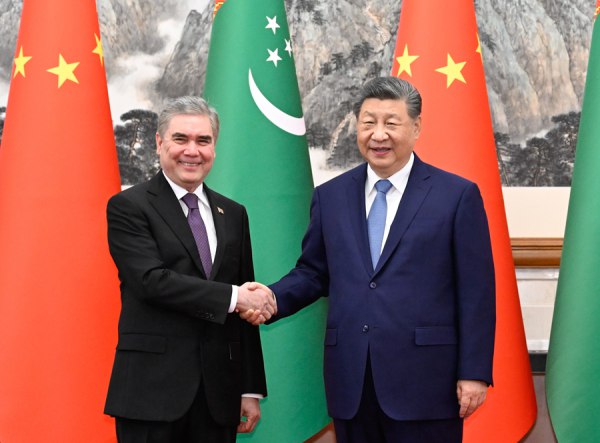
Chinese President Xi Jinping held talks with Gurbanguly Berdymuhamedov, Turkmenistan's former president and leader of its People's Council, during the latter’s official visit to China. The meeting took place on March 18 at the Diaoyutai State Guesthouse in Beijing, according to a statement from China’s Ministry of Foreign Affairs. Xi noted that China had recently completed its annual parliamentary meetings, commonly referred to as the “Two Sessions,” during which key socio-economic priorities were outlined. He said the country’s new development agenda would support modernization efforts and create additional opportunities for international cooperation. The Chinese president said that mutual political support remains central to the comprehensive strategic partnership between Beijing and Ashgabat. He reaffirmed China’s readiness to continue backing Turkmenistan on issues related to sovereignty, territorial integrity, and its internationally recognized policy of permanent neutrality. Xi and Berdymuhamedov discussed expanding cooperation in the energy sector, particularly natural gas supplies, as well as in trade, investment, transport connectivity, agriculture, artificial intelligence, the digital economy, and clean energy. Both leaders also highlighted the importance of aligning China’s Belt and Road Initiative with Turkmenistan’s plans to revitalize historic Silk Road trade routes. Humanitarian cooperation was another focus of the talks, including plans to develop educational and cultural exchanges and establish joint centers. The leaders also discussed coordination on regional security challenges, including efforts to counter terrorism, separatism, and extremism. Berdymuhamedov reaffirmed Turkmenistan’s commitment to the One China principle and expressed readiness to deepen bilateral cooperation in energy, infrastructure, and trade. He said closer ties with China were important for Turkmenistan’s long-term economic development and again noted Beijing’s support for the country’s neutrality policy. Chinese Foreign Minister Wang Yi also attended the meeting. As previously reported by The Times of Central Asia, the visit followed Berdymuhamedov’s trip to the United States in mid-February, the details of which were not fully disclosed. Shortly after his return, Turkmenistan’s President, Gurbanguly's son Serdar Berdymuhamedov, dismissed the country’s ambassador to the U.S. and its permanent representative to the United Nations. No official explanation was provided for the personnel changes.

Trump–Xi Meeting Reshapes Stakes Ahead of C5+1 Summit

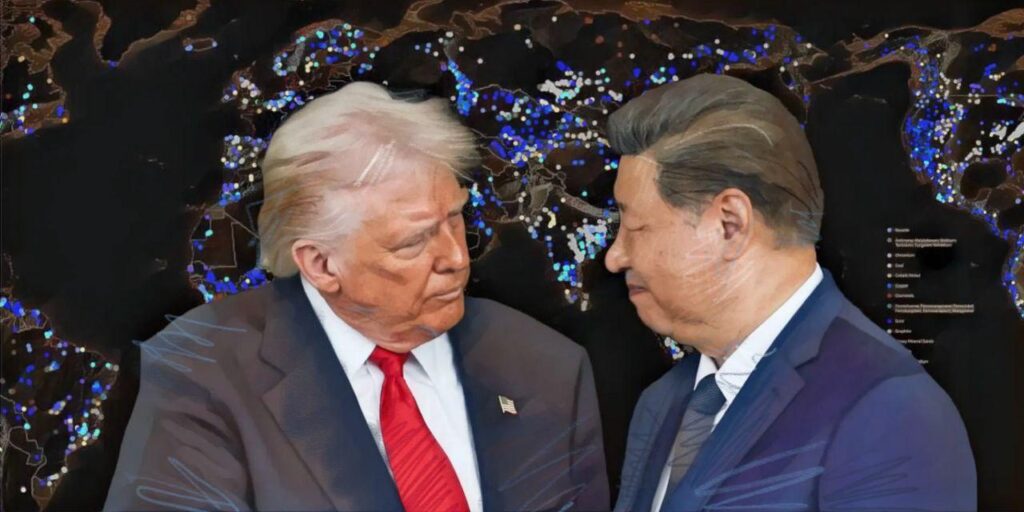
The October 30, 2025, meeting between U.S. President Donald Trump and Chinese President Xi Jinping in Busan, South Korea, marked their first in-person contact since 2019. While framed as a limited reset or tactical pause, the talks carry deeper strategic implications. They occurred just days before the forthcoming C5+1 Leaders’ Summit in Washington on November 6, a gathering with direct consequences for Central Asia’s role in the future of critical mineral supply chains. South Korea Talks: Reset or Recalibration? At the meeting in Busan, Trump and Xi discussed supply chains, tariffs, rare earth trade, and broader trade issues. The U.S. announced that China had agreed to pause certain rare-earth export curbs for a year, with Trump describing the talks as “amazing.” China currently processes roughly 90% of the world’s rare-earth elements and mines around 70%, which are indispensable in the production of electric vehicles, wind turbines, defense technologies, and high-tech manufacturing. Analysts characterized the Busan accord not as a strategic realignment but as a “tactical pause” or a “temporary lull to escalation” between the U.S. and China. For emerging potential U.S. partners in Central Asia, however, the optics matter, as any perceived U.S.–China trade thaw could diminish the urgency behind diversifying rare earth supply chains. Central Asia’s Rare Earth Opportunity As previously reported by The Times of Central Asia, the upcoming C5+1 summit is likely to focus on critical minerals, energy logistics, and investment infrastructure as the U.S. seeks to reduce its reliance on China. Kazakhstan has emerged as a major player in rare earths, with geological surveys in 2024 and 2025 identifying 38 promising solid mineral deposits, including the Kuyrektykol site in the Karaganda region, which contains substantial reserves. Uzbekistan, meanwhile, signed a memorandum of understanding with the U.S. on critical minerals cooperation in September 2024, which represented a major step toward deepening bilateral cooperation on this front. The U.S. International Development Finance Corporation (DFC) has signaled its interest in co-financing midstream mining and processing infrastructure in Central Asia, though projects remain at formative stages. Logistics routes such as the Middle Corridor via Central Asia and the Caspian remain strategically attractive to Western-aligned supply chains seeking to bypass Russia. Trump–Xi Reset Could Blur U.S. Commitments, But the Case for Diversification Remains Strong Should the Trump-Xi meeting diminish the immediate urgency of supply chain diversification, this will be of concern to countries looking to balance their economies with geopolitical neutrality. Kazakhstan has long positioned itself as a multi-vector neutral broker between major powers, meaning fluctuating U.S. policy signals could cause complications. Despite the reset, however, most analysts contend that little has fundamentally changed, with the Busan meeting seen as a temporary rather than a genuine strategic pivot. While structural competition between Washington and Beijing endures, diversification of critical mineral supply chains remains as essential as ever. For Central Asia, this dynamic reinforces the need to continue developing regional value chains and its mid-stream processing capacity. What to Expect in Washington The November 6 C5+1 Leaders’ Summit in Washington will test whether the...

China Steps Into the Central Asian Power Vacuum

China’s footprint in Central Asia is growing rapidly, with the number of joint projects and strategic initiatives expanding across the region. Analysts attribute this shift to the waning influence of both Russia and the United States. Kazakhstan: From Agriculture to Atomic Energy In recent months, China has significantly deepened its cooperation with Kazakhstan. As The Times of Central Asia recently reported, on July 24, the Kazakh Ministry of Finance announced a pilot project with China involving unmanned freight trucks crossing the Bakhty (Kazakhstan) and Pokitu (China) border points. The initiative, known as "Smart Customs," will employ autonomous guided vehicles (AGVs) and implement a unified electronic customs declaration system recognized by both countries. Further institutional cooperation had earlier emerged on July 23, with the launch of the China-Central Asia Poverty Reduction Cooperation Center and the China-Central Asia Education Exchange and Cooperation Center in Urumqi, Xinjiang. These centers aim to deepen collaboration on poverty alleviation and education, priorities reaffirmed during the second China-Central Asia Summit in Astana, where 24 bilateral agreements were signed during President Xi Jinping’s visit. Meanwhile, China is asserting itself in Kazakhstan’s energy sector. On June 14, the China National Nuclear Corporation (CNNC) was announced as the leader of a consortium to build a new nuclear power plant in Kazakhstan. Although Russia's Rosatom is slated to construct the country's first nuclear plant, logistical and financial setbacks at its Akkuyu project in Turkey have led some experts to suggest that CNNC may ultimately be responsible for Kazakhstan’s inaugural facility. Meanwhile, as previously reported by The Times of Central Asia, transit routes through Russia are seeing multiple problems, with Kazakhstan temporarily suspending oil exports via the Black Sea ports of Novorossiysk and Yuzhnaya Ozerovka due to newly enforced Russian regulations. At land borders, new entry procedures for foreign citizens, including Kazakhs, have led to massive traffic jams. China’s Strategic Pivot According to sociologist Gulmira Ileuova, China's assertive role is a response to the diminishing presence of both Russia, distracted by the war in Ukraine, and the United States, which has scaled back developmental efforts. In March, President Donald Trump signed an executive order curtailing the global operations of the United States Agency for International Development (USAID), leading to the suspension of several NGO and media initiatives in Central Asia. “China is rapidly filling the vacuum,” Ileuova noted in an interview with The Times of Central Asia. “Beijing is transitioning from economic engagement to ideological influence, promoting narratives of social harmony and a shared future.” Ileuova anticipates that a broad ideological campaign, comparable to the "One Belt, One Road" infrastructure initiative, may follow, amplifying China’s soft power in the region. Rather than emphasizing democratic values, Chinese cooperation projects often focus on poverty alleviation, which finds greater resonance among Central Asian populations. Xi Jinping’s Repeated Visits Signal Priority As previously stated, Chinese President Xi Jinping visited Kazakhstan on June 16 for the Second China-Central Asia Summit in Astana, during which leaders signed the Astana Declaration and a treaty on “eternal good-neighborliness.” According to political...

XI Jinping’s Five Points: How China Is Looking To Reshape Central Asia

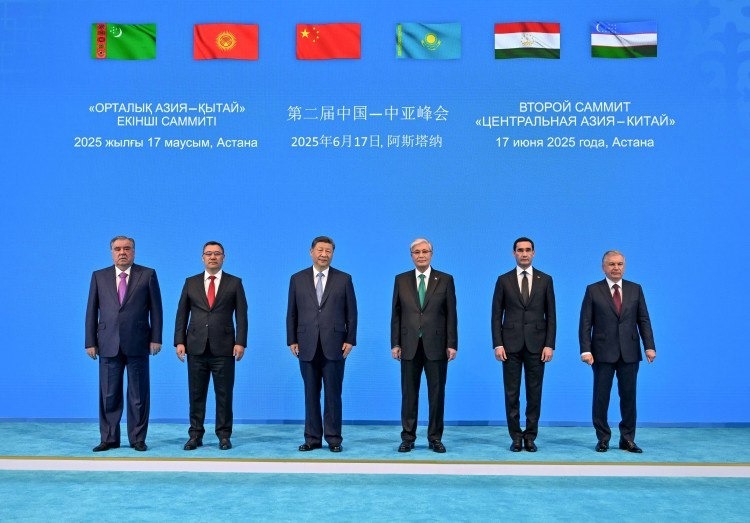
The second China-Central Asia summit on June 17, held in Astana, Kazakhstan, underscored the strengthening ties between China and the region. This event marked a significant milestone in solidifying the China-Central Asia cooperation framework with the signing of the Treaty on Eternal Good-Neighborliness, Friendship, and Cooperation. Experts note that Central Asian countries, once unable to adopt an intra-regional treaty, collectively reached this broader agreement with China. The summit also featured a range of side events, including the Energy Forum “Energy of Central Asia - China,” the Forum on Humanitarian Exchange, the Second Forum on Industrial and Investment Cooperation, and the Central Asia-China Business Council meeting, among others. These gatherings highlighted cooperation in energy, trade, and cultural exchange, reflecting China’s deepening influence in the region. Kazakh President Kassym-Jomart Tokayev praised China’s approach to equal partnership, stating that relations between the two nations are “stable and free from the negative impacts of geopolitical challenges and shocks as well as the international circumstances. China has never imposed any political conditions regarding cooperation with Kazakhstan.” “This is a very important point, Kazakhstani Sinologist Adil Kaukenov explained, “as the head of state, being at the forefront of Kazakhstan's foreign and domestic policies, faces political games, manipulation, and pressure at various levels, which require considerable restraint, experience as a statesman, and popular support to overcome.” During the summit, the heads of the Central Asian states articulated their priorities for cooperation with China. Kazakhstan emphasized projects like the creation of a joint cargo terminal in the port of Kuryk on the Caspian Sea, cooperation in the fields of nuclear energy and artificial intelligence, and counteracting international cybercrime. Kyrgyzstan focused on security, transport, e-commerce, energy, and tourism. Tajikistan prioritized industrial development, trade, food security, and green economy initiatives. Uzbekistan, meanwhile, sought the further integration of Afghanistan into the region, and proposed an “Electronic Silk Road” trade platform, and the development of a long-term strategy called the “Central Asia-China Industrial and Infrastructure Belt.” Chinese President Xi Jinping used his address to outline five key points that shape China’s vision for the future of its relationship with Central Asia. “Our cooperation is rooted in more than two thousand years of friendly relations, consolidated by the solidarity and mutual trust that has been established for 30 years since the establishment of diplomatic relations, and has made great progress thanks to mutually beneficial cooperation in the new era,” Xi stated in his keynote speech. According to Xi, China considers Central Asia one of the priorities of its foreign policy, and this building of peaceful, inclusive partnerships was marked by the historical milestone of the signing of the treaty at the summit. “We will improve the architecture of cooperation, which is characterized by pragmatism, efficiency, and deep integration,” the Chinese president said, adding that 2025–2026 have been declared the Years of High-Quality Development of China-Central Asia Cooperation. This initiative will focus on trade, transport connectivity, green energy, agriculture, and technology. Notably, China pledged 1.5 billion yuan ($208 million) in grants for projects aimed...

China Strengthens Partnerships Across Central Asia at Landmark Summit

Chinese President Xi Jinping’s visit to Astana on June 16, ahead of the Second China-Central Asia Summit, marked a significant milestone in fostering deeper partnerships between China and Central Asia. With all of the region’s nations in attendance, the summit saw agreements signed across sectors such as energy, infrastructure, agriculture, and technology, solidifying China’s growing influence in the strategically vital region. According to Kazinform, China and the Central Asian nations are poised to finalize over 35 memorandums collectively valued at more than $17 billion during the second China-Central Asia Business Council meeting in Astana on June 17. A Lavish Welcome and Key Agreements [caption id="attachment_33021" align="aligncenter" width="2560"] Image: Akorda[/caption] Xi Jinping arrived in Astana amid unprecedented pomp and ceremony, including an honor guard, traditional dances, children in national costumes, and an escort of Kazakh Air Force fighter jets. This grand welcome highlighted the importance of the China-Kazakhstan partnership. During talks with Kazakh President Tokayev, the two leaders oversaw agreements spanning areas such as energy, space, agriculture, intellectual property, tourism, healthcare, science, and the digital economy. Tokayev spoke about Kazakhstan’s plans to build several nuclear power plants, including one with the involvement of China National Nuclear Corporation (CNNC). Characterizing CNNC as a “reliable strategic partner,” he also emphasized Kazakhstan’s role as a supplier of natural uranium and nuclear fuel to China. “CNNC is known worldwide for its high competence, so it will certainly occupy a worthy niche in our market,” Tokayev stated. Infrastructure development under China's Belt and Road Initiative (BRI) also took center stage. Plans to modernize logistics corridors, simplify customs procedures, and build new border facilities were discussed, reinforcing Kazakhstan’s role as a critical transit hub. The bilateral meeting was preceded by joint events, where business leaders from both nations signed dozens of agreements, including a $1 billion loan from the China Development Bank to the Development Bank of Kazakhstan. Another significant agreement saw Kazakhstan partnering with CNNC, Xiamen Wanli Stone, and the Satpayev Institute of Geological Sciences to explore cross-border ore belts and uranium extraction. Kazakhstan’s Role as a Regional Leader Kazakhstan has become central to China’s regional strategy, a focus reinforced during Xi Jinping’s visit, where Tokayev described China as a “close friend and reliable partner.” Kazakh Deputy Prime Minister and Minister of the National Economy, Serik Zhumangarin, meanwhile, highlighted the increasing significance of cooperation in agriculture and logistics within the region. “Central Asia is a key region for the development of dryland farming in the world. Currently, the countries of the region are actively promoting and diversifying the export of organic agricultural products to the Chinese market. Camel milk from Kazakhstan, cherries from Uzbekistan, dried fruits from Tajikistan, honey from the Kyrgyz Republic, and cotton from Turkmenistan are increasingly entering the Chinese market and are highly appreciated by consumers,” he stated. Zhumangarin also stressed the critical role of transport infrastructure in facilitating connectivity. At present, over 80% of land transportation between China and Europe passes through Kazakhstan. “We are interested in further deepening cooperation within China’s...