• KGS/USD = 0.01144 0%
  • KZT/USD = 0.00208 0%
  • TJS/USD = 0.10516 0.77%
  • UZS/USD = 0.00008 0%
  • TMT/USD = 0.28571 0%
  • KGS/USD = 0.01144 0%
  • KZT/USD = 0.00208 0%
  • TJS/USD = 0.10516 0.77%
  • UZS/USD = 0.00008 0%
  • TMT/USD = 0.28571 0%
  • KGS/USD = 0.01144 0%
  • KZT/USD = 0.00208 0%
  • TJS/USD = 0.10516 0.77%
  • UZS/USD = 0.00008 0%
  • TMT/USD = 0.28571 0%
  • KGS/USD = 0.01144 0%
  • KZT/USD = 0.00208 0%
  • TJS/USD = 0.10516 0.77%
  • UZS/USD = 0.00008 0%
  • TMT/USD = 0.28571 0%
  • KGS/USD = 0.01144 0%
  • KZT/USD = 0.00208 0%
  • TJS/USD = 0.10516 0.77%
  • UZS/USD = 0.00008 0%
  • TMT/USD = 0.28571 0%
  • KGS/USD = 0.01144 0%
  • KZT/USD = 0.00208 0%
  • TJS/USD = 0.10516 0.77%
  • UZS/USD = 0.00008 0%
  • TMT/USD = 0.28571 0%
  • KGS/USD = 0.01144 0%
  • KZT/USD = 0.00208 0%
  • TJS/USD = 0.10516 0.77%
  • UZS/USD = 0.00008 0%
  • TMT/USD = 0.28571 0%
  • KGS/USD = 0.01144 0%
  • KZT/USD = 0.00208 0%
  • TJS/USD = 0.10516 0.77%
  • UZS/USD = 0.00008 0%
  • TMT/USD = 0.28571 0%

Viewing results 25 - 30 of 3059

Iran War Quietly Raises the Strategic Value of Central Asian Airspace

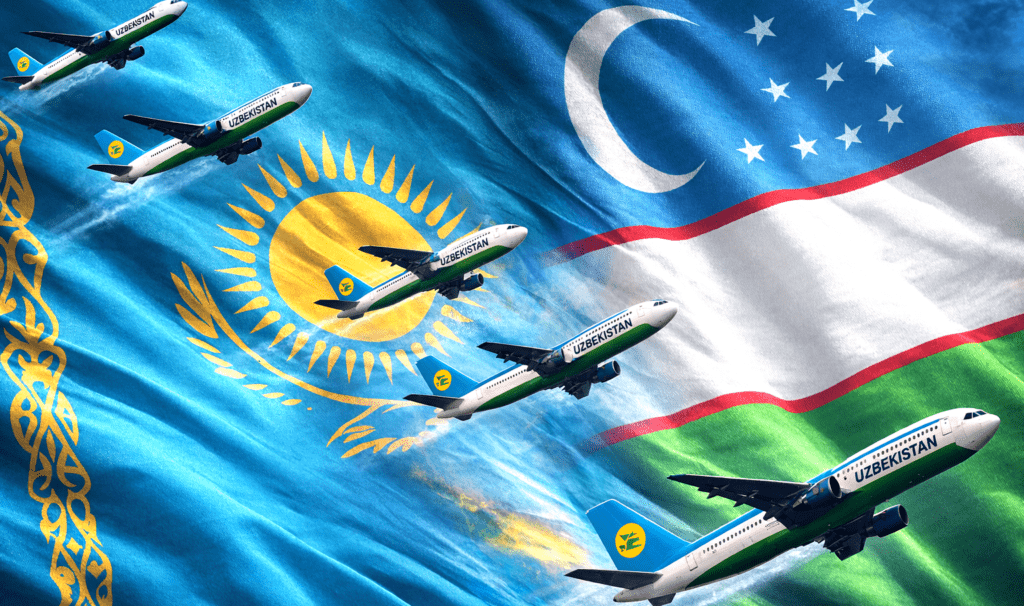
The war in Iran has disrupted one of the main aviation corridors linking Europe and Asia. The European Union Aviation Safety Agency (EASA) has issued safety bulletins warning of high risk to civilian aircraft in Iranian airspace and surrounding regions affected by military activity, missile launches, interceptions, and air defense operations. A separate EASA bulletin covering Iran, valid through March 31, describes a high risk to civil flights at all altitudes within the Tehran flight information region. The consequences reach far beyond the Middle East. Since Russia’s full-scale invasion of Ukraine in 2022, most Western airlines have been unable to use Russian airspace. With Iranian airspace now considered unsafe for normal commercial transit, the map for long-haul traffic between Europe and Asia has become extremely tight. Reuters mapping of global flight paths shows airlines diverting north via the Caucasus or taking longer southern routes through the eastern Mediterranean and the Arabian Peninsula. Many passengers traveling between Europe and Asia still transit through Gulf hubs. However, airports across the region, including Dubai, Abu Dhabi, Doha, Kuwait, and Bahrain, have faced disruption and unstable schedules during the conflict. Central Asia sits just beyond that northern bypass. It is not replacing the Gulf as a passenger hub, and is not suddenly becoming the main bridge between Europe and Asia, but the region’s airspace is increasingly strategically valuable as the number of efficient alternatives shrinks. The war has made Central Asia more important as part of a wider arc stretching from Turkey and the Caucasus across the Caspian basin and onward toward South and East Asia. [caption id="attachment_45218" align="aligncenter" width="1290"] Live flight-tracking map (image taken at 840am EST) showing aircraft routes avoiding Iranian airspace during the crisis. Many flights between Europe, the Middle East, and South Asia are being diverted north over the Caspian Sea and across Central Asia instead of flying over Iran; source: Planes Live[/caption] Kazakhstan is the clearest example. Local airlines had already begun to adjust before the current escalation reached its present level. In January, The Times of Central Asia reported that Air Astana had rerouted flights to Sharm el-Sheikh, Dubai, Doha, and Medina to avoid Iranian airspace. After the conflict widened, Air Astana canceled flights to several Middle Eastern destinations following the closure of Iranian airspace and rising regional tensions. Kazakhstan also imposed a temporary ban on flights over or near the airspace of Iran, Israel, Syria, Iraq, Jordan, and Lebanon. Uzbekistan also moved quickly. As early as October 2024, Kun.uz reported that Uzbekistan Airways was avoiding Iraqi airspace and western Iranian airspace on safety grounds. After the latest escalation, on March 4, Uzbekistan suspended flights to six Middle Eastern countries. The pattern is clear: Central Asian carriers are not immune to the crisis; they are already adjusting networks, schedules, and commercial risk, with the broader economic consequences of the conflict emerging across regional supply chains. However, the region’s aviation systems clearly now carry far greater strategic and economic importance than they did only a few years ago. On its...

Freight Volumes on Middle Corridor Through Kazakhstan Rise Fivefold in Seven Years

Freight volumes transported along the Trans-Caspian International Transport Route (TITR) through Kazakhstan have increased more than fivefold over the past seven years, highlighting the growing importance of the corridor as companies seek alternatives to routes passing through Russia. According to Kazakhstan’s Ministry of Transport, volumes have risen from 0.8 million tons to 4.5 million tons annually. Also known as the Middle Corridor, the TITR is a multimodal transport route linking China and Europe via Central Asia and the South Caucasus. The rapid growth of the route reflects wider shifts in Eurasian logistics since Russia’s full-scale invasion of Ukraine in 2022. With many Western companies seeking alternatives to traditional northern routes through Russia, governments and logistics operators across Central Asia and the South Caucasus have accelerated investment in the Trans-Caspian corridor, hoping to position it as a key artery linking Asian manufacturing hubs with European markets. Container transportation has been one of the fastest-growing segments of the corridor. In 2025, approximately 77,000 TEUs were transported along the TITR. Authorities aim to increase this figure to 300,000 TEUs by 2029. Despite rapid growth, the corridor still carries far less cargo than traditional northern routes through Russia, underscoring both its potential and the scale of investment still required. The expansion reflects ongoing infrastructure development and growing cooperation among participating countries and logistics operators. Key contributing factors include improved conditions for international freight transport, such as simplified customs procedures, as well as significantly shorter delivery times, reduced from roughly 28-32 days to 13-17 days. Demand has also risen for integrated “single-window” logistics services designed to enhance transparency and reliability. Kazakhstan, Azerbaijan, and Georgia continue to coordinate efforts under joint roadmaps to eliminate remaining bottlenecks along the corridor. To ensure year-round navigation and strengthen competitiveness, Kazakhstan is investing in infrastructure on the Caspian Sea coast. Dredging has already been completed at Kuryk Port, while similar work is planned at Aktau Port this year to increase depth and improve vessel access. Construction is also underway at Kuryk on the Sarzha multifunctional terminal, a project being implemented in cooperation with Abu Dhabi Ports Group from the United Arab Emirates. The terminal is expected to have an annual capacity of five million tons. Meanwhile, a container hub has been launched at Aktau Port, further enhancing maritime logistics capacity along the corridor. Kazakhstan has also expanded its transport infrastructure abroad. A Kazakh-operated terminal with a capacity of 120,000 TEUs has been launched at the Georgian port of Poti, improving cargo handling efficiency along the TITR. The European Union is also supporting the corridor’s development. A grant has been allocated for the reconstruction of Berths No. 3 and No. 12 at Aktau Port. The funding will be used to purchase wind-resistant ship-to-shore cranes to ensure stable operations during adverse weather conditions. On the railway side, Kazakhstan is upgrading more than 2,000 kilometres of rail infrastructure connected to the corridor. In 2025, construction and modernisation work were completed on 911 kilometres of railway lines. Key projects include the construction of second...

Flower Production and Exports Grow in Kyrgyzstan

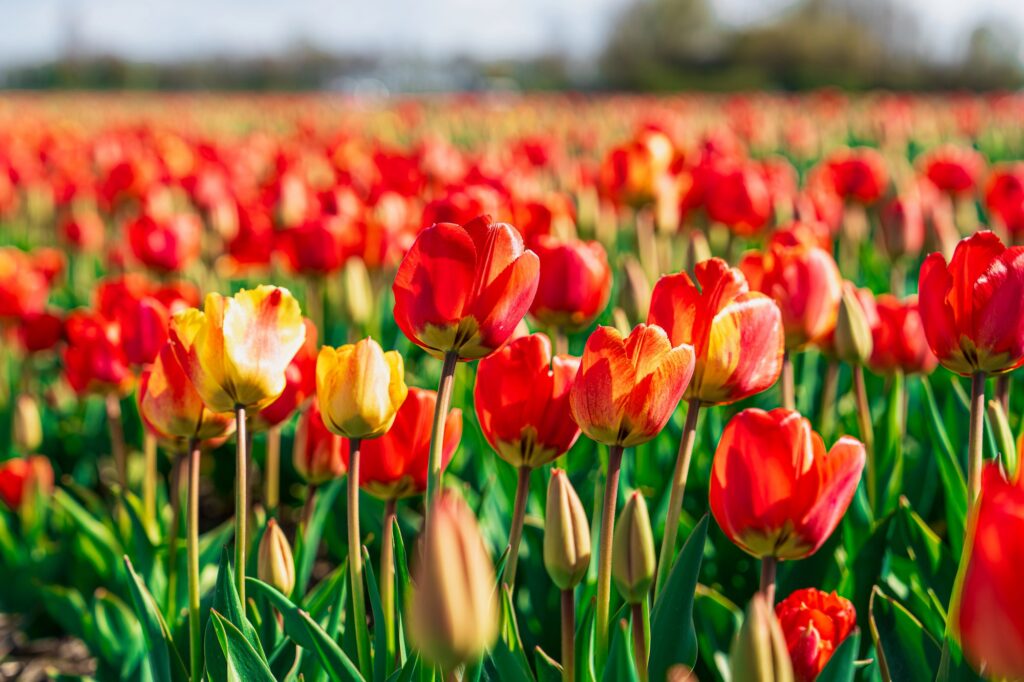
Flower production and exports are continuing to expand in Kyrgyzstan. Since the beginning of the year, the country has exported 17 tons of floral products, according to the Ministry of Water Resources, Agriculture, and Processing Industry. The main importers of Kyrgyz flowers remain Russia, Kazakhstan, Armenia, and Uzbekistan. According to the ministry, demand is particularly strong in the Uzbek market. Kyrgyzstan has been steadily increasing the volume of flower exports in recent years. At the end of 2024, exports totalled 13,049,000 flowers. In 2025, this figure nearly doubled to 24,099,000 flowers. The positive trend has continued this year. “In the first two months of this year alone, 17 tons, or 213,745 flowers, were exported from Kyrgyzstan. Most of the exported flowers were purchased by Uzbekistan, which has become one of the main importers of Kyrgyz floral products,” the ministry said. Experts note that only a few years ago, locally grown flowers were difficult to find even on the domestic market. Most bouquets sold in flower shops were imported from the Netherlands and African countries. However, the situation is gradually changing. According to industry specialists, one of the advantages of locally grown flowers is their stronger natural aroma. Many imported flowers are cultivated with a focus on visual appearance and durability during long-distance transportation. The development of greenhouse floriculture has enabled Kyrgyz producers to gradually secure a significant share of the domestic market. In the run-up to International Women’s Day on March 8, flower prices traditionally rise sharply. However, this year experts observed a different trend, prices remained close to their usual levels. This was largely due to government-supported tulip festivals organised across the country. In the Kyrgyz capital, Bishkek, a flower fair was held on Ala-Too Square until March 10, introducing a new format for holiday trade. At the fair, a fixed retail price of $1.20 per tulip was set, while wholesale buyers could purchase flowers at $0.80 each. In traditional flower shops, prices for similar tulips reached $2.80 per stem, largely because many of the flowers sold there are imported. The main suppliers of imported flowers to Kyrgyzstan are Ecuador, Kenya, and China. The Netherlands ranks fourth among exporting countries, with approximately three million flowers supplied to Kyrgyzstan. At the same time, many local producers purchase tulip bulbs from the Netherlands, enabling them to improve product quality and extend the shelf life of flowers grown domestically.

Can Special Economic Zones Become a Driver of Economic Growth in Kazakhstan?

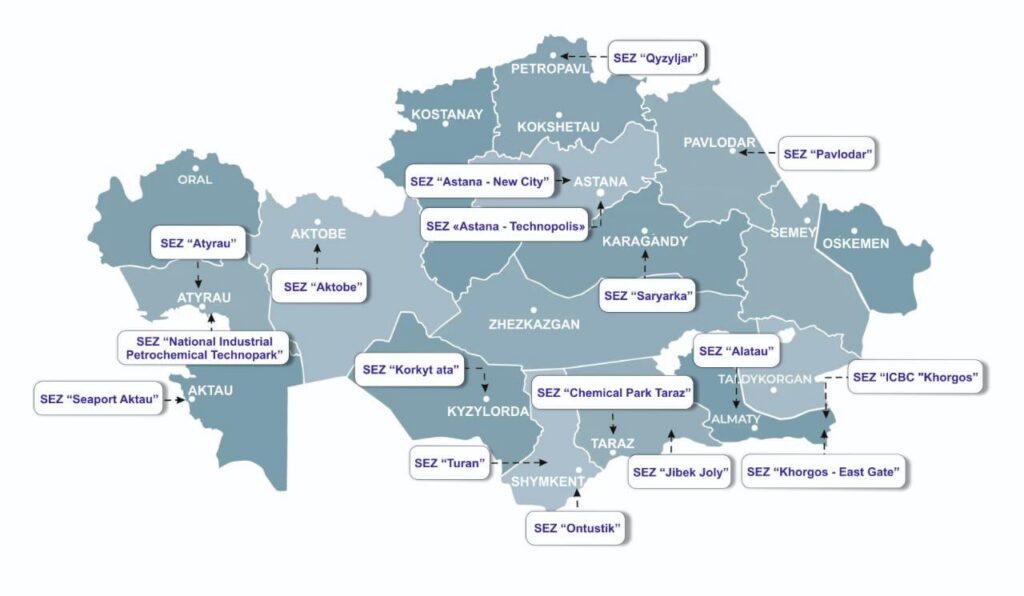
Kazakhstan currently has 17 special economic zones (SEZs) operating across 14 regions, three of which were created in 2025. How effective is this tool for attracting investment, reducing import dependence, and developing exports? And how will the SEZ model evolve within the framework of the Single Coordination Center? Yerlan Kusainov, Deputy Chairman of the Board of JSC Kazakhstan Center for Industry and Export “QazIndustry,” discussed these issues with The Times of Central Asia. TCA: Kazakhstan currently has 17 SEZs. How many companies operate in them, and what is the total volume of production? Kusainov: There are 1,144 participants registered in SEZ territories. Of these, 558 projects are already operational, while another 586 are in the implementation stage. Since the establishment of the zones, enterprises have produced goods worth 13.9 trillion tenge (about $28 billion). The current occupancy rate of the SEZs is 42.4%. This indicator is dynamic and may change as new contracts are signed or as some participants cease operations. TCA: What types of products are manufactured in the SEZs, and how does this contribute to reducing import dependence? Kusainov: The SEZs cover a wide range of industries, including manufacturing, construction, transport and logistics, and tourism. For example, the Aktau Seaport SEZ is implementing projects in the chemical industry, including the production of caustic soda and hydrochloric acid by Topan Chemical Industries. These products are widely used in metallurgy, the oil and gas industry, and water treatment. Previously, a significant portion of such products was imported, but production is now being localized in Kazakhstan. A major petrochemical cluster is being formed in the Jibek Joly SEZ. Projects there include the production of mineral fertilizers, chemical reagents, and polymer products. Participating companies include HIM-plus, KPM Plast, Chemical Engineering, and C9 Technologies. These projects are expected to supply the domestic market while also supporting exports. In the Pavlodar SEZ, projects are being implemented in metallurgy and petrochemicals. These include the production of calcined petroleum coke by UPNC-PV, car wheels by Vector Pavlodar, and aluminum ingots and alloys by LeichtMetall KZ and Unimetals. These products are exported to markets in Europe and Asia. The Ontustik SEZ focuses on the textile industry, where a full cotton-processing cycle has been established, from raw materials to finished products. Enterprises there produce cotton and synthetic yarn, carpets, and other textile goods. Another important site is the Park of Innovative Technologies SEZ, where projects in digital technologies and electronics are being developed. Key participants include the Institute of Physics and Technology, KT Cloud Lab, which is building a data center, and DS Multimedia CA, which manufactures electronic components. Together, these projects contribute to reducing import dependence and building export-oriented industries. TCA: What is the export volume of SEZ enterprises? Kusainov: The total export volume from SEZ enterprises has reached about $2 billion. In 2025 alone, exports amounted to approximately $490 million, compared with $148 million in 2021, an increase of 231%. TCA: How much investment has been attracted through the SEZs? Kusainov: Over the entire period of...

Kazakhstan Discusses Local Production of Nuclear Power Plant Equipment with South Korea

Kazakhstan has discussed the possibility of localizing production of equipment for nuclear power plants (NPPs) with South Korean partners during a working visit to the Republic of Korea by Almasadam Satkaliyev, chairman of Kazakhstan’s Agency for Atomic Energy. According to the agency’s press service, the Kazakh delegation held meetings with officials from South Korea’s Ministry of Climate, Energy and Environment, as well as executives from major Korean companies, including Korea Hydro & Nuclear Power (KHNP) and Doosan Enerbility. The talks focused on strengthening strategic cooperation in the peaceful use of nuclear energy, expanding technological partnerships, and developing industrial and investment collaboration. “Particular attention during the visit was given to cooperation with leading Korean companies that have extensive international experience in nuclear power plant construction and high-tech manufacturing,” the Kazakh agency said in a statement. “The sides discussed the development of industrial cooperation, including the possibility of localizing the production of equipment and individual components in Kazakhstan, as well as involving Kazakh enterprises in the technological and manufacturing chains of nuclear energy projects.” During discussions with South Korean government representatives, Kazakhstan presented its priorities for developing the national nuclear industry, including institutional reforms and the creation of a modern system of state regulation and management of the sector. The parties also exchanged views on nuclear and radiation safety standards and explored opportunities to share regulatory experience and best practices in managing nuclear energy programs. Another key topic was workforce development for the nuclear sector. Discussions covered potential cooperation in training specialists, expanding educational programs, and exchanging professional expertise necessary for the implementation of long-term nuclear energy projects. “The meetings confirmed mutual interest in further strengthening the partnership, expanding institutional dialogue, and deepening practical cooperation between Kazakhstan and the Republic of Korea in the development of the nuclear energy sector,” the agency said. As previously reported by The Times of Central Asia, Kazakhstan has already selected partners for the construction of three nuclear power plants. The first project will be led by Russia’s Rosatom, while the second and third plants are expected to be built by the China National Nuclear Corporation (CNNC). Earlier this year, the authorities also selected the site for the country’s second nuclear power plant in the Zhambyl District of the Almaty Region, close to the location chosen for the first plant near the village of Ulken on Lake Balkhash.

Lukashenko Says Belarus Ready to Help Uzbekistan Build Nuclear Power Plant

Belarus is ready to assist Uzbekistan in building a nuclear power plant and training specialists for the country’s emerging nuclear energy sector, President Alexander Lukashenko said during a meeting with Uzbekistan’s ambassador to Belarus, Rakhmatulla Nazarov. According to the Belarusian president’s press service, the discussion took place on March 9 in Minsk and covered a wide range of issues ahead of a planned visit by Uzbekistan’s President Shavkat Mirziyoyev to Belarus. Lukashenko said relations between the two countries were developing steadily and that the upcoming visit could mark an important stage in expanding bilateral cooperation. “My very good friend Shavkat Miromonovich [Mirziyoyev] and I have much to discuss,” Lukashenko said at the beginning of the meeting. “By the time of his visit, we will update our agenda and develop plans for the near and medium term.” The Belarusian leader noted that both countries are working toward increasing bilateral trade to $2 billion in the coming years. He said such a target was realistic because the two economies complement rather than compete with each other. “Everything we know how to produce, from agriculture to machine building, is needed by the densely populated Uzbek state,” Lukashenko said, according to Belarusian media. Among the areas of potential cooperation, Lukashenko highlighted agriculture, industrial production, and nuclear energy. He said Belarus was prepared to share technologies, provide training, and support joint projects. “We know about your interest in our specialists in building a nuclear power plant,” Lukashenko said during the meeting. “We acquired these competencies thanks to cooperation with Russia. If it suits you, come at any time. Your representatives can meet with our specialists, and we will facilitate the construction of your nuclear power station.” Belarus has gained experience in nuclear energy through its cooperation with Russia on the Astravets nuclear power plant, which began operating in recent years. Lukashenko said Belarusian specialists currently work with Russian partners on nuclear projects in several countries. He emphasized that cooperation in nuclear energy and other sectors would be mutually beneficial, noting the size of Uzbekistan’s market and its rapidly growing economy. Lukashenko also praised Uzbekistan’s recent development efforts. “We see how Uzbekistan is drawing experience and expertise from around the world,” he said, adding that Belarus is ready to contribute to training specialists and developing technology in different sectors. The Belarusian president also said his country remains open to Uzbek workers seeking employment in Belarus, noting that migrant workers are offered access to education and social services on equal terms with local residents. In August last year, officials from Uzbekistan’s Uzatom Atomic Energy Agency met with Belarusian Energy Minister Denis Moroz in Minsk to discuss potential collaboration in nuclear infrastructure development, specialist training, and radioactive waste management. During those talks, Belarus expressed readiness to share its experience as Uzbekistan develops its national nuclear energy program.