• KZT/USD = 0.00221
  • TJS/USD = 0.10830
  • UZS/USD = 0.00008
  • TMT/USD = 0.29760
  • KZT/USD = 0.00221
  • TJS/USD = 0.10830
  • UZS/USD = 0.00008
  • TMT/USD = 0.29760
  • KZT/USD = 0.00221
  • TJS/USD = 0.10830
  • UZS/USD = 0.00008
  • TMT/USD = 0.29760
  • KZT/USD = 0.00221
  • TJS/USD = 0.10830
  • UZS/USD = 0.00008
  • TMT/USD = 0.29760
  • KZT/USD = 0.00221
  • TJS/USD = 0.10830
  • UZS/USD = 0.00008
  • TMT/USD = 0.29760
  • KZT/USD = 0.00221
  • TJS/USD = 0.10830
  • UZS/USD = 0.00008
  • TMT/USD = 0.29760
  • KZT/USD = 0.00221
  • TJS/USD = 0.10830
  • UZS/USD = 0.00008
  • TMT/USD = 0.29760
  • KZT/USD = 0.00221
  • TJS/USD = 0.10830
  • UZS/USD = 0.00008
  • TMT/USD = 0.29760
18 October 2026

Viewing results 43 - 48 of 2773

Central Asia Common Digital Space Proposed at Astana Roundtable

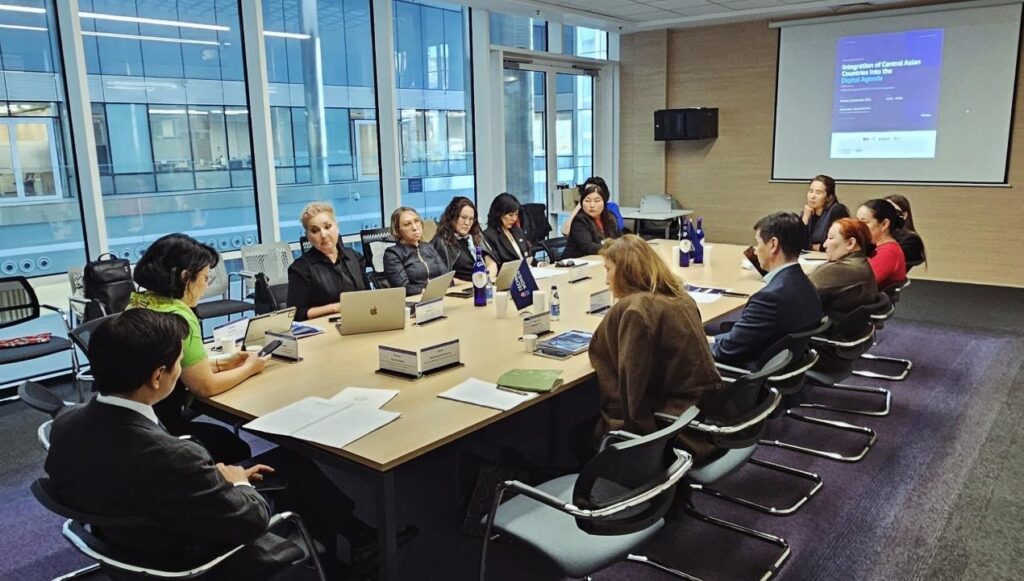
Experts and business representatives from across Central Asia have proposed mutual recognition of electronic documents to make cross-border business easier. Their draft agreement also calls for closer alignment of rules on data and artificial intelligence. The draft Agreement on Cooperation among Central Asian States in Digital Policy and Artificial Intelligence Governance was presented at a regional roundtable in Astana on September 28. The business-led proposal aims to connect the region’s five digital markets, serving more than 80 million people. The initiative is being developed within B5+1, a business cooperation platform linking the United States and the five Central Asian states and designed as a private sector counterpart to the diplomatic C5+1 format. E-commerce and information technology are among its priority areas. Over the past year, the regional IT & AI working group has held consultations with entrepreneurs, industry associations, and experts. In the previous cycle, consultations involved business communities representing more than 60 companies and organizations from Central Asia and the United States, including Meta, Mastercard, and Google. Under the draft, the five countries would retain their own regulations while making their digital systems and laws more compatible. It covers electronic document management, digital identification, personal data protection, cybersecurity, and AI regulation. The proposals would allow electronic documents, electronic signatures, and digital identification tools to be recognized across borders. This could reduce administrative barriers for companies expanding into neighboring markets. “Our task is not to create another layer of regulation. We need to build digital bridges between the countries of Central Asia. If electronic documents, digital identification, data rules, and approaches to AI are mutually compatible, it will become significantly easier for technology companies to scale across the entire region,” said Aziza Shuzheeva, Chair of the Board of the TechnoWomen non-profit organization. A draft Code of Ethics for the Responsible Use of Artificial Intelligence in Central Asia was also presented in Astana. The document is advisory and sets out common ethical principles for the use of AI across the five countries. Its authors propose that decisions significantly affecting a person’s rights and interests should not be left solely to algorithms. Practices identified as unacceptable include harmful manipulation, exploitation of the vulnerabilities of children and other groups, discrimination, unlawful use of personal data, and the creation of synthetic content for fraud or other harmful purposes. Another priority is the development of language resources and datasets for Kazakh, Kyrgyz, Uzbek, Tajik, and Turkmen. The aim is to improve the ability of AI systems to work with the region’s languages. Similar forms of digital integration are already being developed elsewhere. In the European Union, the European Digital Identity framework is designed to allow digital identity wallets to be used across borders to access public and private services. ASEAN, meanwhile, concluded negotiations at the end of May 2026 on its Digital Economy Framework Agreement, or DEFA, covering digital trade, data, cybersecurity, AI, and other areas of regional digital integration. The proposals also overlap with efforts to digitize transport and trade. On September 28, the...

Kazakhstan Grain Harvest Nears 20 Million Tons Despite Dry Weather

Kazakhstan had harvested nearly 20 million metric tons of grain by late September, despite periods of dry and hot weather in parts of the country’s grain belt. The Agriculture Ministry expects the final harvest to exceed the long-term average, while disruption to Russian and Ukrainian exports through the Black Sea has added uncertainty to global wheat supplies. By September 29, farmers had harvested 13.5 million hectares, or 83% of Kazakhstan’s grain-growing area, producing 19.9 million metric tons of grain at an average yield of 14.7 centners per hectare, equivalent to 1.47 metric tons per hectare. Weather conditions varied considerably during the growing season. Parts of northern and central Kazakhstan experienced insufficient rainfall, while high temperatures created additional risks in some areas. However, later assessments by Kazhydromet described spring grain crops across much of the north as generally in good or excellent condition. Deputy Agriculture Minister Azat Sultanov said that under comparable dry conditions in previous years, yields had often fallen to 8-9 centners per hectare. The average recorded by September 29 was considerably higher, although harvesting is still underway in several of the country’s main grain-producing regions. From September 2025 through July 30, 2026, exports of grain and flour in grain equivalent reached 13.9 million metric tons, according to Kazakhstan Temir Zholy data cited by the Agriculture Ministry. That was 12.6% higher than during the same period a year earlier. Uzbekistan remained the largest buyer, importing 5.8 million metric tons, while shipments to Afghanistan reached 2.4 million metric tons. Exports to Kyrgyzstan and Turkmenistan also increased. Attacks on vessels and port infrastructure have severely disrupted Russian and Ukrainian exports through the Black Sea, pushing buyers in parts of Asia, the Middle East, and Africa toward alternative suppliers. That may support demand for grain from other exporters, although Kazakhstan’s landlocked location remains a constraint. Transport costs and the capacity of rail and other export corridors have a direct impact on the competitiveness of Kazakh grain in more distant markets. The structure of Kazakhstan’s agricultural production is changing, with less land devoted to wheat and more acreage allocated to oilseeds and other crops. Farmers had harvested 2.4 million metric tons of oilseeds from 2.4 million hectares by September 29. The Agriculture Ministry forecasts a final crop of more than 5 million metric tons. Official statistics put Kazakhstan’s 2025 oilseed harvest at about 4.95 million metric tons. Cotton harvesting is also continuing in southern Kazakhstan, where water availability remains a major constraint. Sultanov said the area of cotton fields using drip irrigation had increased from about 3,000 hectares to 80,000 hectares over the past two years. By September 29, 70,500 metric tons of raw cotton had been harvested, with an average yield of 32 centners per hectare.

U.S. Links Trusted Digital Infrastructure to Investment at C5+1 Conference

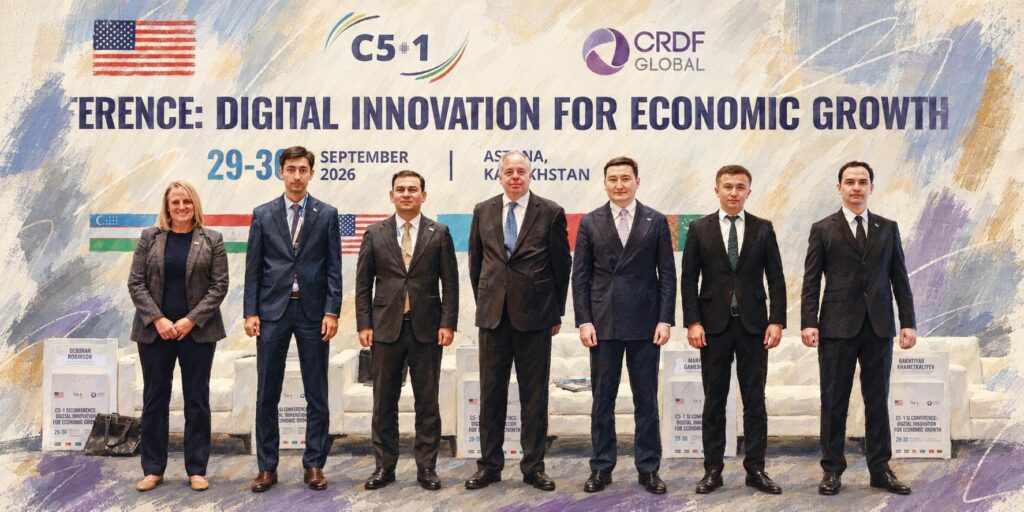
Stronger cybersecurity and trusted digital infrastructure could encourage greater U.S. investment in Central Asia, Mark Cameron said in Astana on September 29. Cameron, deputy assistant secretary in the State Department’s Bureau of South and Central Asian Affairs, was speaking at the C5+1 conference on artificial intelligence. He said data centers and trusted infrastructure would give American companies greater confidence to invest and expand their cooperation across the region. “The strongest house is built on the firmest foundation,” Cameron told reporters, linking cybersecurity to the development of advanced AI. Cameron said Washington sees private companies as central to the process, with government programs helping create conditions for investment and technological cooperation. “The United States has the deep belief that companies, given the opportunity, will find great solutions and new opportunities that many of us have never even considered before,” Cameron said. He said Washington has committed $5 million through CRDF Global for cybersecurity and digital-sector assistance. The support covers incident response, critical infrastructure protection, financial sector security, and cybersecurity policy. The C5+1 format brings together the United States and the five Central Asian countries. The conference comes ahead of Secretary of State Marco Rubio’s planned business delegation to Uzbekistan in mid-October, involving executives from more than 100 American companies alongside talks with the region’s foreign ministers. Kazakhstan Sets Out Its AI Development Model Kazakhstan’s vice minister of artificial intelligence and digital development, Bakhtiyar Mukhametkaliyev, described the development of an AI economy as a five-layer process. Energy comes first, followed by access to chips and graphics processing units (GPUs), information systems, high-quality data, and finally AI agents. Countries that attempt to deploy AI agents before building the infrastructure and data beneath them, Mukhametkaliyev said, are unlikely to realize their full economic value. He also framed data centers as a way for Kazakhstan to convert its energy and resource base into higher-value digital capacity. Mukhametkaliyev stressed that Kazakhstan does not intend to build its emerging AI ecosystem solely for the domestic market. He said the infrastructure should also help neighboring countries develop their AI industries and improve connectivity. He also pointed to drones, space technologies, startups, and workforce reskilling as areas where digitalization could create new markets and occupations. Kazakhstan’s ties with U.S. technology companies are also expanding. NVIDIA CEO Jensen Huang is scheduled to make his first visit to Kazakhstan on October 23, as the country develops data centers and NVIDIA-based computing infrastructure. Regional Plans for AI Development Kyrgyzstan focused on practical AI applications, human oversight, education, and local-language models. Niyazaly Bazarbaev, adviser to the minister of digital development and innovative technologies, said Kyrgyz and other Central Asian languages remain insufficiently represented in existing AI systems. He discussed work involving a Kyrgyz-language corpus of roughly five million words and efforts to prepare the school curriculum for an AI-driven economy. Tajikistan presented AI as a presidential priority. Hakim Ismoilzoda, first deputy director of the Agency for Innovation and Digital Technologies, highlighted Tajikistan’s initiatives at the United Nations on AI and its safe, secure,...

Ashgabat Hosts Turkmenistan Investment Forum This Week

Turkmenistan’s government says it expects more than 800 participants from dozens of countries to attend an investment conference in Ashgabat this week. A diverse group of more than 100 speakers is expected to participate in the Turkmenistan Investment Forum on October 1–2, including Saudi Prince Mansour bin Mohammed Al Saud, Deputy Trade Minister Mahmut Gürcan of Turkey, and Economy Minister Gevorg Papoyan of Armenia. The forum is being organized by Turkmenistan’s finance and foreign ministries, in partnership with Turkmen Congress, a company that organizes international forums and other events. It aims to highlight the country as a place of untapped economic potential, endowed with “the world’s fourth-largest natural gas reserves, a steadily diversifying economy, and major infrastructure modernization underway,” according to conference organizers. Turkmenistan is seeking to expand its role as a transit point on the Middle Corridor, a trade network linking China and Central Asia to Europe via rail and marine infrastructure. Even so, foreign investors have long had concerns about tight government controls, opaque bureaucracy, and other challenges in the Central Asian country. Delegates to the forum at the Yyldyz Hotel in Turkmenistan’s capital will discuss diversification of export routes for oil and gas, development of the Trans-Caspian Transit Corridor, public-private partnerships, agriculture, and the efficient use of natural resources. Representatives from the World Bank, the Asian Development Bank, and other international institutions will participate.

Golden Gate Ventures Plans Two-Year Program for Central Asian Startups in Uzbekistan

Singapore-based venture capital firm Golden Gate Ventures plans to launch a two-year program in Uzbekistan for 20 startup founders from across Central Asia, giving them access to mentors and the fund’s international network. Michael Lints, MENA founding partner at Golden Gate Ventures, announced the initiative during ICT Week Uzbekistan 2026, held in Tashkent from September 22 to 25. The program will be launched with IT Park Uzbekistan, while details of the application and selection process are expected later. Lints told The Times of Central Asia that Golden Gate Ventures had also opened an office in Tashkent in June and now plans to invest in Uzbek startups. “We have strong confidence in the potential of your country, the startup founders we are meeting here, and the companies they are building,” he said. “Last year, IT Park invited us, and one year later, we have our own office here.” The two-year program will connect the selected founders with Golden Gate Ventures’ network in Asia, the Middle East, the United States, and Europe. Lints said the fund sees Uzbekistan developing into an important startup center in Central Asia. Startups featured prominently at ICT Week this year. The event was promoted under the “Land of Startups” concept, with more than 50 startups presenting their products to investors and potential partners. ICT Week’s official program also brought venture investors, including Golden Gate Ventures, Gobi Partners, 500 Global, SparkLabs, and other funds to its Startup & Venture Summit. Farrukh Erkinov, Director of Startup and Venture Ecosystem Development at IT Park Uzbekistan, told TCA that the number of international investors and startup organizations attending events in Tashkent has changed considerably in recent years. “A conversation at a stand can later turn into an order, while a presentation can become an investment partnership,” Erkinov said. “A team that has created a product can meet, right here, the people who can help them develop it.” [caption id="attachment_57199" align="aligncenter" width="1774"] Alif, an international fintech company in Central Asia with projects in Uzbekistan, Tajikistan, and Pakistan, has a banner where visitors write their names or the names of their projects; image: ТСА[/caption] Among the regional participants was AI Academy from Kyrgyzstan. Product manager Emir Satykenov said the academy trains students in data engineering, data analytics, data science, machine learning, and AI engineering. According to Satykenov, more than 1,000 students have studied at the academy, while its wider AI community includes more than 2,500 people. Some courses are free, including programs for women and people who cannot afford tuition, with grants provided by Kyrgyzstan’s High Technology Park. The academy is also connected with Kyrgyz AI Research, whose developers are building open-source AI models for Kyrgyz, Kazakh, and other Central Asian languages. “Our AI model can work in Kazakh, Kyrgyz, and other Central Asian languages,” Satykenov said. “We also have an LLM model for text-to-text and image generation, and we are creating many open-source models in Kyrgyzstan.” [caption id="attachment_57201" align="aligncenter" width="1774"] The Huawei exhibition stand at ICT Week Uzbekistan 2026. Image: TCA[/caption] Elsewhere...

Central Asia Growth Forecasts Remain Strong in Latest ADB Outlook

Four of Central Asia’s five economies are expected to grow faster in 2026 than developing Asia and the Pacific as a whole, according to the Asian Development Bank’s September Asian Development Outlook. ADB forecasts growth of 5% across developing Asia and the Pacific this year, compared with 8.9% in Kyrgyzstan, 7% in Uzbekistan and Tajikistan, and 6.3% in Turkmenistan. Kazakhstan is the exception, with growth forecast at 4.8%. Kyrgyzstan is growing faster than its neighbors but is also facing the highest inflation among the five countries. ADB forecasts inflation at 11.2% this year and 8.5% next year. Growth continues to be supported by domestic demand and sustained investment, while ADB says import dependence and electricity-generation shortfalls are contributing to inflationary pressures. For Uzbekistan, ADB forecasts gross domestic product growth of 7% and inflation of 6.7% in 2026. In 2027, the figures are expected to be 6.8% and 5%, respectively. Stronger-than-expected economic activity prompted ADB to upgrade Uzbekistan’s 2026 growth forecast in its September outlook. Tajikistan is also forecast to grow by 7% in 2026, with inflation at 4.5%. Growth is expected to slow to 6.8% in 2027, while inflation is forecast to edge up to 4.7%. ADB lowered its 2026 growth projection in September, saying the escalation of Russia’s war in Ukraine had disrupted fuel imports and constrained near-term economic activity. Kazakhstan, the region’s largest economy, is growing more slowly than its neighbors. ADB expects growth of 4.8% this year and 4.5% next year, with inflation forecast at 10.4% and 9.5%, respectively. The bank left its growth and inflation forecasts unchanged from its previous outlook, with inflation expected to ease only gradually. For Turkmenistan, ADB forecasts growth of 6.3% in 2026 and 6.2% in 2027, with inflation at 6% in both years. The country’s economic indicators remain more difficult to compare with those of its neighbors because of limited access to reliable and detailed economic data. Its economy also remains heavily dependent on natural gas exports, with China its main gas market. Central Asia’s growth figures look strong against the Asian backdrop, but ADB is warning of energy and climate risks across developing Asia and the Pacific. Prolonged disruption to global energy markets could keep oil and gas prices elevated and volatile. For energy importers, that means higher fuel costs and additional inflationary pressure, while hydrocarbon exporters may benefit from higher prices but remain vulnerable to disruption in production and export routes. Another risk is a very strong El Niño, which ADB expects to persist through the first quarter of 2027. Extreme weather could reduce agricultural production and push up food prices, while a decline in hydropower generation could increase demand for other energy sources. For Kyrgyzstan and Tajikistan, where hydropower supplies most electricity, weather and water availability add another layer of vulnerability. The differences between forecasts for the region remain substantial. In August, The Times of Central Asia compared projections from international financial institutions. The Eurasian Development Bank (EDB) forecast 2026 growth of 10.2% for Kyrgyzstan, 8.3% for Tajikistan,...