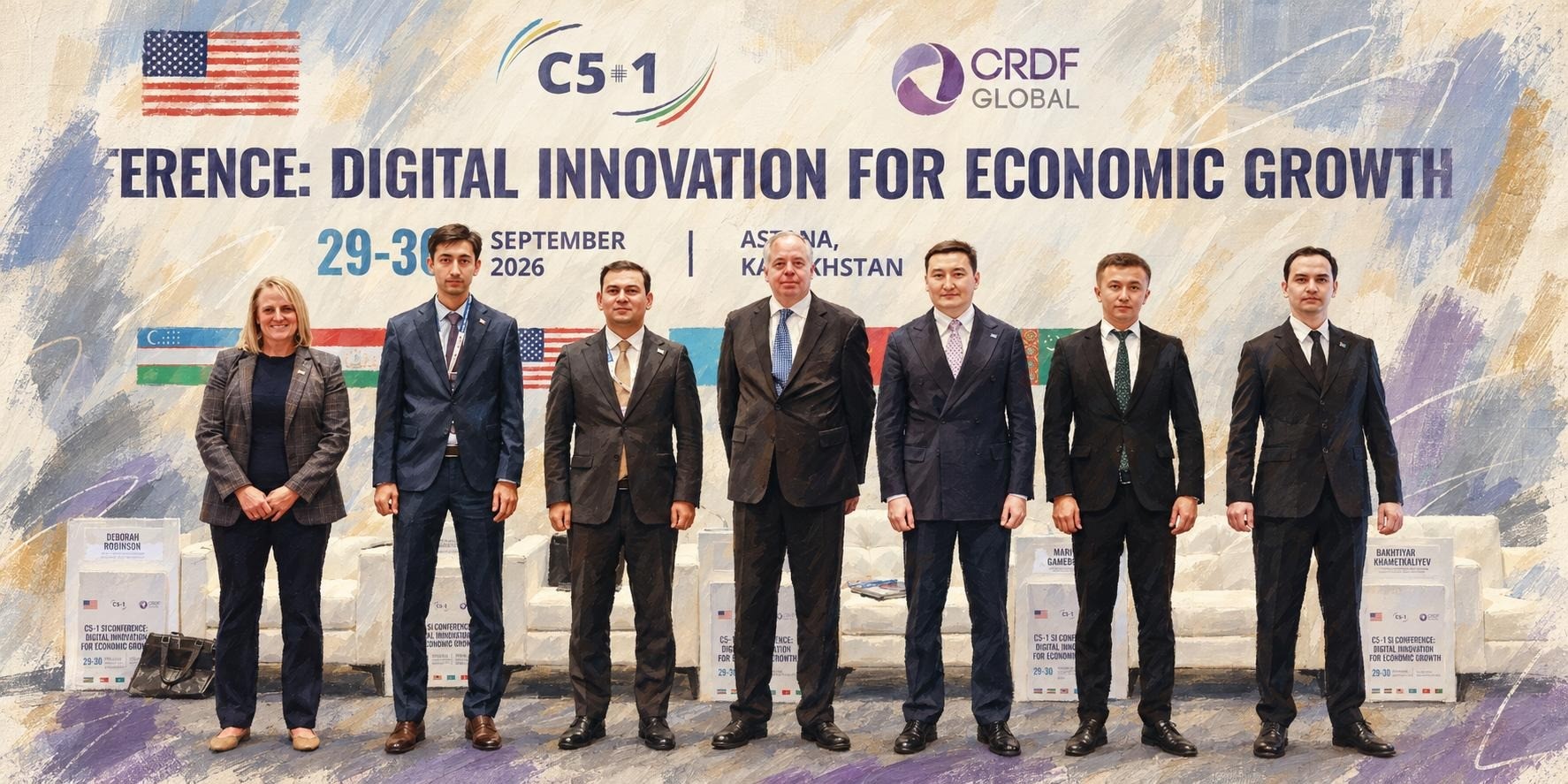
Stronger cybersecurity and trusted digital infrastructure could encourage greater U.S. investment in Central Asia, Mark Cameron said in Astana on September 29.
Cameron, deputy assistant secretary in the State Department’s Bureau of South and Central Asian Affairs, was speaking at the C5+1 conference on artificial intelligence. He said data centers and trusted infrastructure would give American companies greater confidence to invest and expand their cooperation across the region.
“The strongest house is built on the firmest foundation,” Cameron told reporters, linking cybersecurity to the development of advanced AI.
Cameron said Washington sees private companies as central to the process, with government programs helping create conditions for investment and technological cooperation.
“The United States has the deep belief that companies, given the opportunity, will find great solutions and new opportunities that many of us have never even considered before,” Cameron said.
He said Washington has committed $5 million through CRDF Global for cybersecurity and digital-sector assistance. The support covers incident response, critical infrastructure protection, financial sector security, and cybersecurity policy.
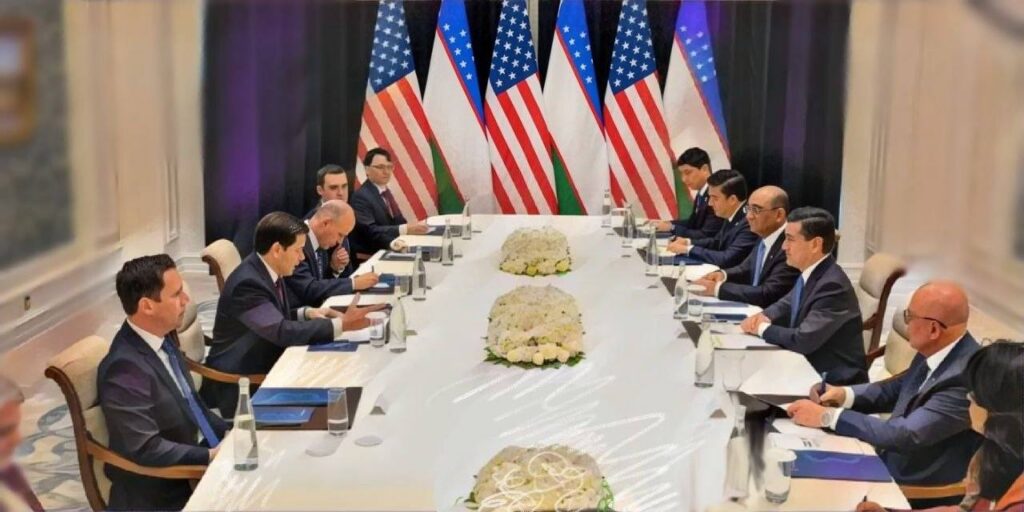
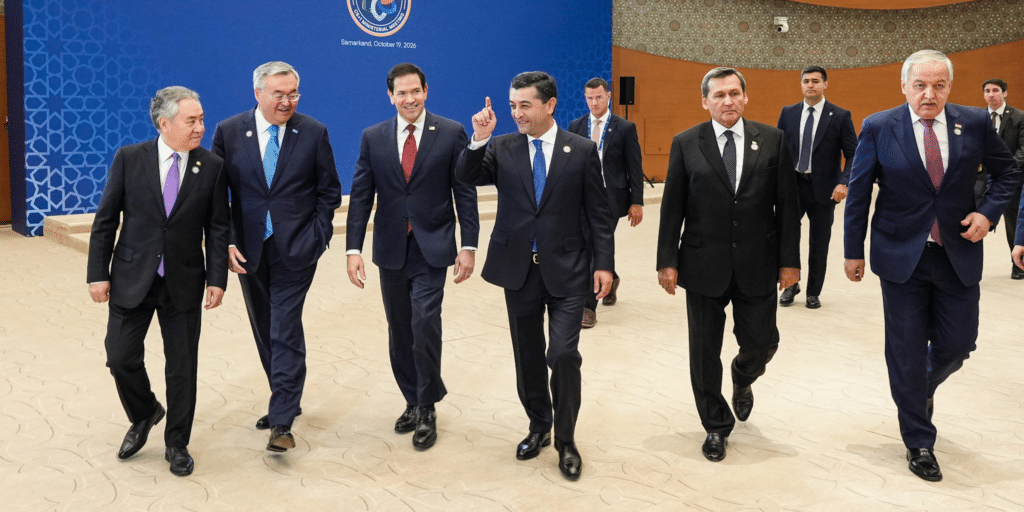
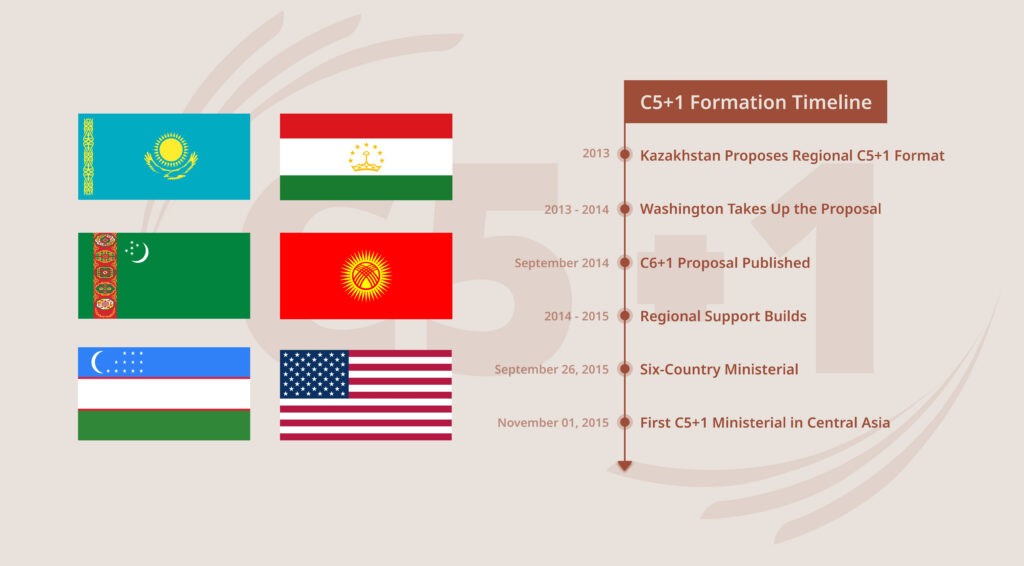
The C5+1 format brings together the United States and the five Central Asian countries. The conference comes ahead of Secretary of State Marco Rubio’s planned business delegation to Uzbekistan in mid-October, involving executives from more than 100 American companies alongside talks with the region’s foreign ministers.
Kazakhstan Sets Out Its AI Development Model
Kazakhstan’s vice minister of artificial intelligence and digital development, Bakhtiyar Mukhametkaliyev, described the development of an AI economy as a five-layer process.
Energy comes first, followed by access to chips and graphics processing units (GPUs), information systems, high-quality data, and finally AI agents. Countries that attempt to deploy AI agents before building the infrastructure and data beneath them, Mukhametkaliyev said, are unlikely to realize their full economic value. He also framed data centers as a way for Kazakhstan to convert its energy and resource base into higher-value digital capacity.
Mukhametkaliyev stressed that Kazakhstan does not intend to build its emerging AI ecosystem solely for the domestic market. He said the infrastructure should also help neighboring countries develop their AI industries and improve connectivity. He also pointed to drones, space technologies, startups, and workforce reskilling as areas where digitalization could create new markets and occupations.
Kazakhstan’s ties with U.S. technology companies are also expanding. NVIDIA CEO Jensen Huang is scheduled to make his first visit to Kazakhstan on October 23, as the country develops data centers and NVIDIA-based computing infrastructure.
Regional Plans for AI Development
Kyrgyzstan focused on practical AI applications, human oversight, education, and local-language models. Niyazaly Bazarbaev, adviser to the minister of digital development and innovative technologies, said Kyrgyz and other Central Asian languages remain insufficiently represented in existing AI systems. He discussed work involving a Kyrgyz-language corpus of roughly five million words and efforts to prepare the school curriculum for an AI-driven economy.
Tajikistan presented AI as a presidential priority. Hakim Ismoilzoda, first deputy director of the Agency for Innovation and Digital Technologies, highlighted Tajikistan’s initiatives at the United Nations on AI and its safe, secure, and trustworthy development.
He said the country’s substantial energy potential could support computing and data center infrastructure serving Central Asia and the wider Eurasian market. During the press conference, Ismoilzoda cited digital public services and financial technologies, including Apple Pay, Visa Direct, and AI-based financial tools, as examples of digitalization already underway.
The UN General Assembly adopted a Tajikistan-initiated resolution on August 31, 2026, establishing an international day dedicated to safe and trustworthy AI. The annual observance will begin in 2027.
Turkmenistan’s deputy minister of communications, Yazmyrat Gulmammedov, said the country is preparing a national AI strategy and implementation plan covering infrastructure, human capital, cybersecurity, regulation, and national language resources.
Uzbekistan’s adviser to the minister of digital technologies, Jakhongir Shukurov, described human capital as the country’s principal resource. He discussed expanding computing capacity, startup development, technology education, and incentives for digital infrastructure investment.
Shukurov also said Uzbekistan and Kazakhstan are working to establish a joint fund to help startups expand beyond their domestic markets into the wider region and internationally.
Several speakers pointed to Central Asia’s roughly 85 million people as the basis for a potentially larger regional digital market.
U.S. Financing Could Support Digital Infrastructure
Cameron also referred to the American AI Exports Program, established in 2025 to support U.S. AI export packages. The program covers the technology needed to build and operate AI systems, from hardware and data center infrastructure to models and applications. It also provides for federal financing tools to support selected projects.
Other U.S. financing programs could support some of the infrastructure discussed in Astana.
In June, the U.S. International Development Finance Corporation (DFC) signed a letter of interest and financing proposal with Power International Holding, the owner of Tele2 Kazakhstan. The proposed partnership would upgrade major telecommunications infrastructure and support a transition to vendors described by DFC as trusted.
DFC said the modernization could strengthen infrastructure supporting 5G, mobile data, e-commerce, digital payments, and other services. The June announcement did not disclose an amount.
The U.S. Export-Import Bank’s ExportAI initiative can support qualifying American exports across the AI technology sector. Eligible equipment includes chips, servers, storage, networking and cooling systems, and data center technologies. The initiative also covers cybersecurity, data systems, and AI applications, with financing tools including guarantees and direct loans.
Cameron called on governments to translate their commitments into “real, actionable developments” and encouraged companies to pursue opportunities across Central Asia.
“We are here to support you, open doors,” he said.