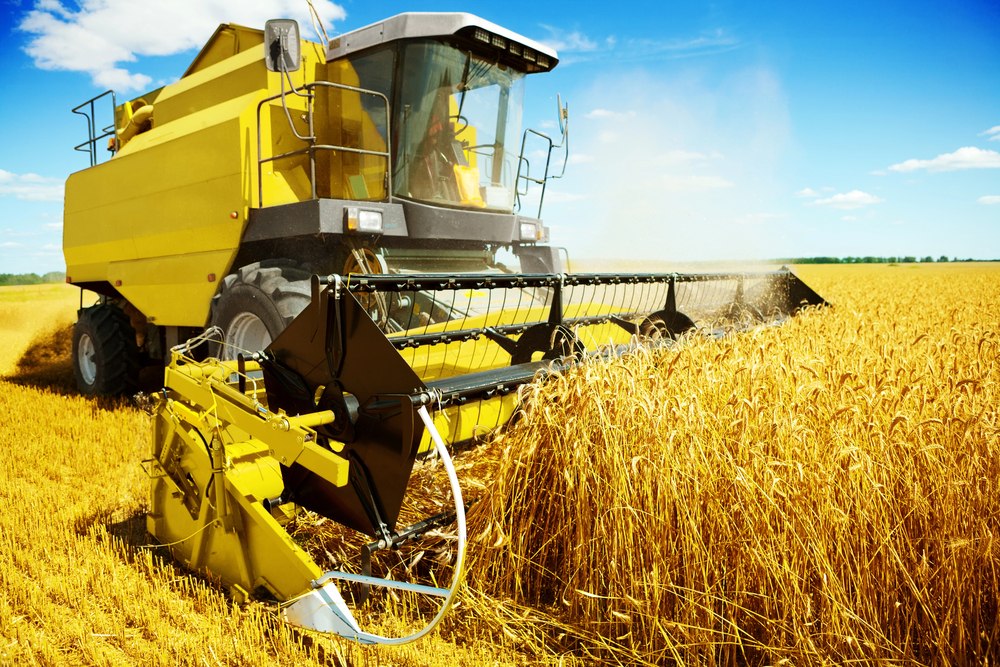
Kazakhstan had harvested nearly 20 million metric tons of grain by late September, despite periods of dry and hot weather in parts of the country’s grain belt. The Agriculture Ministry expects the final harvest to exceed the long-term average, while disruption to Russian and Ukrainian exports through the Black Sea has added uncertainty to global wheat supplies.
By September 29, farmers had harvested 13.5 million hectares, or 83% of Kazakhstan’s grain-growing area, producing 19.9 million metric tons of grain at an average yield of 14.7 centners per hectare, equivalent to 1.47 metric tons per hectare.
Weather conditions varied considerably during the growing season. Parts of northern and central Kazakhstan experienced insufficient rainfall, while high temperatures created additional risks in some areas. However, later assessments by Kazhydromet described spring grain crops across much of the north as generally in good or excellent condition.
Deputy Agriculture Minister Azat Sultanov said that under comparable dry conditions in previous years, yields had often fallen to 8-9 centners per hectare. The average recorded by September 29 was considerably higher, although harvesting is still underway in several of the country’s main grain-producing regions.
From September 2025 through July 30, 2026, exports of grain and flour in grain equivalent reached 13.9 million metric tons, according to Kazakhstan Temir Zholy data cited by the Agriculture Ministry. That was 12.6% higher than during the same period a year earlier.
Uzbekistan remained the largest buyer, importing 5.8 million metric tons, while shipments to Afghanistan reached 2.4 million metric tons. Exports to Kyrgyzstan and Turkmenistan also increased.
Attacks on vessels and port infrastructure have severely disrupted Russian and Ukrainian exports through the Black Sea, pushing buyers in parts of Asia, the Middle East, and Africa toward alternative suppliers.
That may support demand for grain from other exporters, although Kazakhstan’s landlocked location remains a constraint. Transport costs and the capacity of rail and other export corridors have a direct impact on the competitiveness of Kazakh grain in more distant markets.
The structure of Kazakhstan’s agricultural production is changing, with less land devoted to wheat and more acreage allocated to oilseeds and other crops.
Farmers had harvested 2.4 million metric tons of oilseeds from 2.4 million hectares by September 29. The Agriculture Ministry forecasts a final crop of more than 5 million metric tons. Official statistics put Kazakhstan’s 2025 oilseed harvest at about 4.95 million metric tons.
Cotton harvesting is also continuing in southern Kazakhstan, where water availability remains a major constraint. Sultanov said the area of cotton fields using drip irrigation had increased from about 3,000 hectares to 80,000 hectares over the past two years. By September 29, 70,500 metric tons of raw cotton had been harvested, with an average yield of 32 centners per hectare.