• KGS/USD = 0.01144 0%
  • KZT/USD = 0.00212 0%
  • TJS/USD = 0.10456 0.19%
  • UZS/USD = 0.00008 0%
  • TMT/USD = 0.28490 0%
  • KGS/USD = 0.01144 0%
  • KZT/USD = 0.00212 0%
  • TJS/USD = 0.10456 0.19%
  • UZS/USD = 0.00008 0%
  • TMT/USD = 0.28490 0%
  • KGS/USD = 0.01144 0%
  • KZT/USD = 0.00212 0%
  • TJS/USD = 0.10456 0.19%
  • UZS/USD = 0.00008 0%
  • TMT/USD = 0.28490 0%
  • KGS/USD = 0.01144 0%
  • KZT/USD = 0.00212 0%
  • TJS/USD = 0.10456 0.19%
  • UZS/USD = 0.00008 0%
  • TMT/USD = 0.28490 0%
  • KGS/USD = 0.01144 0%
  • KZT/USD = 0.00212 0%
  • TJS/USD = 0.10456 0.19%
  • UZS/USD = 0.00008 0%
  • TMT/USD = 0.28490 0%
  • KGS/USD = 0.01144 0%
  • KZT/USD = 0.00212 0%
  • TJS/USD = 0.10456 0.19%
  • UZS/USD = 0.00008 0%
  • TMT/USD = 0.28490 0%
  • KGS/USD = 0.01144 0%
  • KZT/USD = 0.00212 0%
  • TJS/USD = 0.10456 0.19%
  • UZS/USD = 0.00008 0%
  • TMT/USD = 0.28490 0%
  • KGS/USD = 0.01144 0%
  • KZT/USD = 0.00212 0%
  • TJS/USD = 0.10456 0.19%
  • UZS/USD = 0.00008 0%
  • TMT/USD = 0.28490 0%

Viewing results 1471 - 1476 of 3334

Shaping the Future of Science in Kazakhstan

At Kazakhstan's Nazarbayev University (NU), work is geared toward understanding the intricacies of modern science. TCA spoke to Dr. Aidos Baumuratov, the science director of the NU Collective Use Office, who discussed the importance of scientific collaboration, supported by world-class laboratories, and how Kazakhstan is aiming to nurture the next generation of scientists. TCA: Can you tell me about the work that NU laboratories do? Baumuratov: The laboratories have collected unique, expensive equipment from all over the university. The staff that interprets the results has been selected. In simple words, we help scientists to create science. Unfortunately, Kazakhstan cannot afford the purchase of expensive devices in large quantities, so the model is justified from an economic point of view. The model of a shared office is taken from American and European universities. Today, I manage 23 laboratories with 80 main items of equipment and about 400 additional ones. We are creating a world-class scientific infrastructure, and the laboratories are equipped accordingly. NU scientists win grants, among other things, and consequently, they implement their developments in practice. They come to our laboratories for the missing equipment and perform most of their experiments here. TCA: How much of NU's research is focused on practical applications? Baumuratov: Science is designed to solve global problems. It cannot be considered only from the point of view of immediate return. I can say that in the top global universities, where there are thousands of scientists, only a few startups occur after many years of research, which are eventually taken into development by industrial giants or IT corporations. TCA: What should be done to make the young generation in Kazakhstan more eager to enter science? Baumuratov: I can only express my personal opinion. Attitudes should be learned from childhood. Today, science is undeservedly in the shadows. After the collapse of the USSR, we went through difficult years; we had to fix the economy, and of course, this had an impact on who stayed. If I am not mistaken, 70-80% of scientists left after the collapse. Of those who remained, about the same number went into business, anywhere but science. It takes time to restore the potential, and it should start with schools. When I began working at the university, I proposed an initiative to organize schoolchildren's visits to our laboratories. The initiative was successfully implemented and is still in use today. Children from the 5th and 6th grades visit us; they see aesthetically pleasing, insanely complex equipment at the international level, the finest instruments, and they can talk to those who work here. This is very useful, as it clearly shows schoolchildren what path they can choose. They see and realize that science brings benefits to society and the country. Even the signature of a scientist under an article in a journal, where the university and Kazakhstan are mentioned, already works for the image of the country as a whole. In addition, scientists' general intelligence creates an appropriate environment around children. Ethical norms, the priority of education,...

Kyrgyz Blogger Jailed for Inciting Ethnic Hatred

A video blogger from the Jalal-Abad region of Kyrgyzstan has been sentenced to two years in prison for inciting ethnic hatred and propaganda related to the war in the Middle East after the Supreme Court upheld the verdict of a lower court. According to information provided by Turmush, the blogger's name was not disclosed. The charges were brought under Part 1, Article 330 of the Criminal Code of Kyrgyzstan. The man ran a video channel with an audience of about 400,000 subscribers, where he posted religious instructions and supported the Yakyn Inkar organization, which is banned in the country. In addition, his channel published materials stoking hatred in the Middle East. In particular, on November 1, 2023, he posted an interview with the head of a political party of the Jogorku Kenesh, who made statements calling for violence and the destruction of a specific nationality. The case was classified by the National Security Committee. The detention of the blogger took place on November 25, 2023, and the trial took place on March 27, 2024, in the Pervomaisky District Court of Bishkek. The defense argued that the materials published did not violate the law, but the Supreme Court left the regional court's decision unchanged. Based on the conclusions of experts and reports from staff of the 4th Main Department of the SCNS, the court ruled that the blogger's publications provoked an increase in harmful and radical comments. There have been several cases in Kyrgyzstan involving charges of inciting ethnic and religious hatred. In August 2023, blogger Aizhan Myrsan was fined for posting what the court deemed to be incitement to ethnic hatred. Her lawyers insisted that the video had been taken out of context and edited, but the court upheld the decision. Another famous case is that of Omurbek Babanov, a politician who was accused of inciting ethnic hatred after a speech he delivered in 2017. His remarks at a meeting with voters became the subject of court proceedings, where experts interpreted them as potential calls for violence.

Kazakhstan Listed as a Top Destination by Lonely Planet

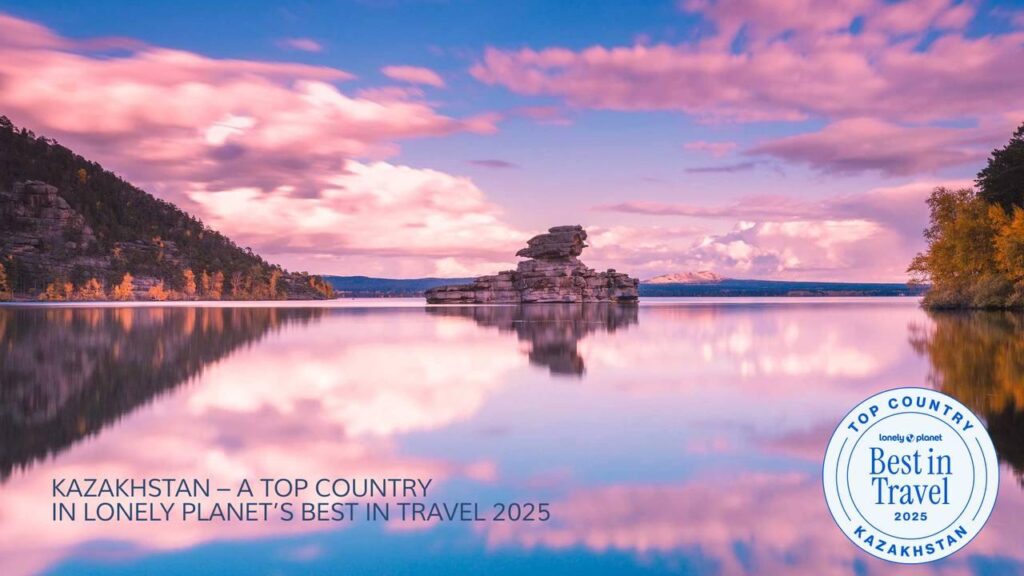
Kazakhstan has been included in Lonely Planet's prestigious "Best in Travel 2025" ranking, earning it recognition as one of the year's best travel destinations. Lonely Planet, a leading international publisher, was established in 1973 and since then, has published comprehensive travel guides in 14 languages, covering 195 countries. Aimed to inspire people to explore the world, the organisation also publishes articles, lists, and rankings of the best places to visit, based on recommendations from experts and travelers and according to their unique cultures and natural diversity. Kazakhstan's high ranking in 'Best in Travel 2025', is largely attributed to its ancient traditions and modern achievements, and especially, its rich history and varied landscapes. Vice Minister of Tourism and Sports of the Republic of Kazakhstan Yerzhan Erkinbayev warmly welcomed the country's inclusion in the list as validation of the growing international interest in Kazakhstan and stated that it emphasised the importance of promoting sustainable tourism. Lonely Planet's executive editor, Nitya Chambers, said the publication is proud of its choice and confident that this list will inspire travelers to make new discoveries. In its description of Kazakhstan, Lonely Planet focuses on the intertwining of ancient traditions and modern culture, hailing  the country a place where every visitor can discover something unique. The publication also mentions echoes of the ancient Silk Road, tangible in the vast steppes. Tourism in Kazakhstan has been actively developing in recent years, and the country is becoming increasingly popular among international travelers. Popular destinations include Almaty, Astana, and national parks. In the first six months of 2024 alone, 566,500 foreign tourists visited Kazakhstan, an increase of almost 10% compared to the same period in 2023. The demographics of foreign tourists is also on the rise. In the first quarter of this year, the average revenue of Kazakh companies working in the tourism sector - tour operators, travel agencies, and other organizations - increased five-fold. For January-March, it exceeded 160.3 billion tenge; the highest quarterly income indicator of tourism companies since the beginning of 2022. Kazakhstan's tourist potential has also been praised by other well-known travel publications. Earlier, “Conde Nast Traveler” and “Wanderlust” included Kazakhstan as one of the top world destinations for travel in 2024, and Almaty was included in a list of the 52 best tourist destinations issued by The New York Times.

Turkmenistan’s Unexplained Shortage of Gasoline

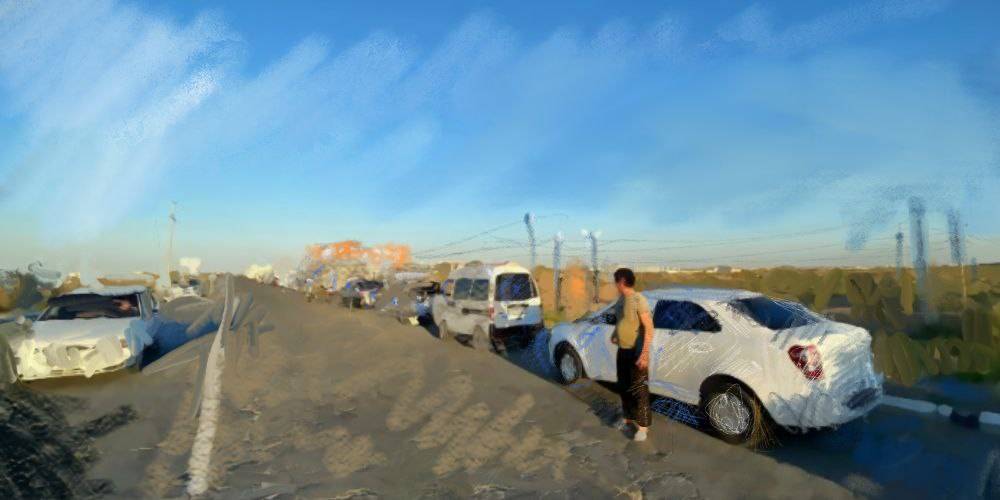
For months now, areas in eastern Turkmenistan have been facing a severe gasoline shortage. The lack of fuel at the pumps is having a knock-on effect that is raising food prices and shutting down public transportation. Turkmen officials have not acknowledged there is any problem, so the people of the affected regions have no idea why this happening or for how long this situation will continue. Gasoline shortages are not new to Turkmenistan. They have been occurring sporadically in recent years, usually during in late summer when harvesting of crops starts. This latest deficit is unprecedented for Turkmenistan in its duration and severity.   Long lines and purchase limits By late June, there reports from Lebap and Mary provinces about lines of cars of waiting at petrol stations. Often there was not enough gasoline for everyone. By mid-July, filling stations in at least five districts and several of the big cities in Lebap Province were often completely out of higher-grade gasoline – A92 and A95. Before the end of July, Lebap authorities imposed a 10-liter limit per customer, per day on gasoline purchases. At the start of July there were areas in the northeastern Dashoguz Province that were totally without gasoline, even the cheapest and most environmentally harmful A-80 grade (which is banned in many countries, including Kyrgyzstan and Tajikistan) was unavailable. In Mary Province, A-92 and A-95 gasoline ran out in July and by early August authorities had limited purchases of A-80 to 20 liters per customer, and even that was unavailable in many areas of the province. In October, Radio Free Europe’s Turkmen service, known locally as Azatlyk, posted a video of a line of vehicles some three kilometers long outside one of the few filling stations operating along the Turkmenabad-Mary highway. Azatlyk’s sources in the region said there were similar lines at filling stations throughout the province and in the provincial capital Turkmenabad. Some people are reportedly arriving at filling stations at 4am to get a place in line as close to the pumps as possible when the stations open. In Mary Province, some car owners said they were phoning family members to bring them food and water while they waited in line.   Prices going up at the pumps and other areas Turkmenistan has some of the least expensive gasoline in the world with an average of $0.428 per liter, roughly a third of the world average of $1.30 per liter. The official rate of Turkmenistan’s national currency, the manat, is 3.5 to $1. The state regulated cost of one liter of gasoline is 1.15 manat for A-80, 1.35 for A-92, 1.5 for A-95, and 1 manat for diesel. There have been incidents where filling station employees have been illegally selling gasoline at 5-6 manat per liter to those who can afford it. The shortage is having an effect on public transportation. Most buses are assigned to bringing people to and from the cotton fields once harvest starts toward the end of August or early September...

Russian Journalist Inessa Papernaya Found Dead in Tashkent Hotel

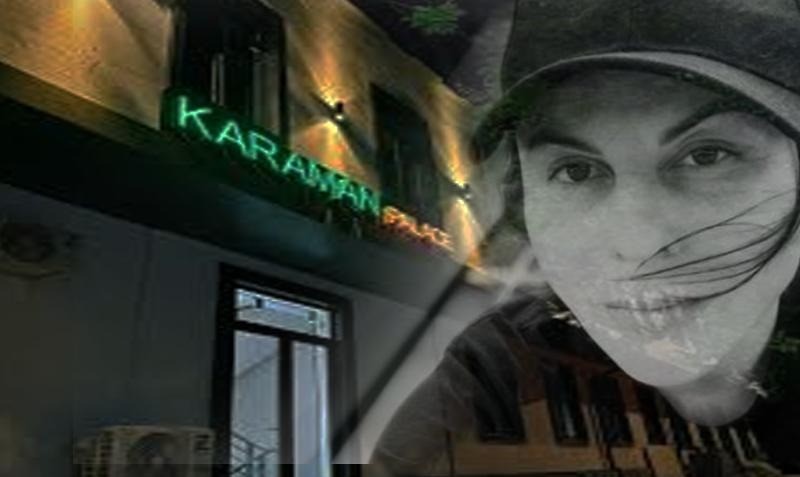
Russian journalist Inessa Papernaya, known for her work with lenta.ru and profile.ru, was tragically found dead in a hotel in Tashkent, Uzbekistan, on October 20. It has been reported that Papernaya was in Uzbekistan on vacation, and was staying at the Karaman Palace Hotel with a companion, Maxim Radchenko, with whom she was in a long-term relationship, and whom she had traveled with in order to meet his relatives. According to reports, hotel staff knocked on the door of her room that evening while delivering a package. After receiving no response, they entered the room and discovered the bodies of Papernaya and Radchenko. An Uzbek citizen was subsequently found dead in the bathroom of another room in the hotel. Preliminary reports attributed the cause of the deaths to poisoning of “unknown origin,” with early suggestions being propagated that gas seeped into the room through the ventilation system after the hotel’s pool was cleaned on October 19-20, leading to the tragic incident. Following the discovery, authorities sealed off the Karaman Palace Hotel. The General Prosecutor’s Office of Uzbekistan has launched an investigation under Article 186 of the Uzbek Criminal Code, which covers the provision of unsafe services, and a forensic examination has been ordered to determine the precise cause of death. Relatives of Radchenko have disputed what they have described as several different versions of the deaths which have been put forward. According to Radchenko's sister, the family were initially told that "he had an epileptic seizure; she ran up to him, slipped, fell, hit herself and died. This is some kind of TV series: how do you fall? What nonsense... Then there was a version about drugs, since their bodies were in the bathroom, that meant they were drug addicts." In a further twist challenging the official narrative regarding gas seepage related to the pool being cleaned, Radchenko's sister has categorically stated that "there is no pool there." Meanwhile, no websites advertising rooms at the Karaman Palace make any mention of a pool, with some stating outright that this facility is not available. Hayat Shamsutdinov, press secretary of the General Prosecutor’s Office of Uzbekistan, has confirmed that the bodies will be transported to Moscow for a joint cremation to be held on October 25.

Kazakhstan’s Strategic Stand: Navigating BRICS Amidst Geopolitical Tensions

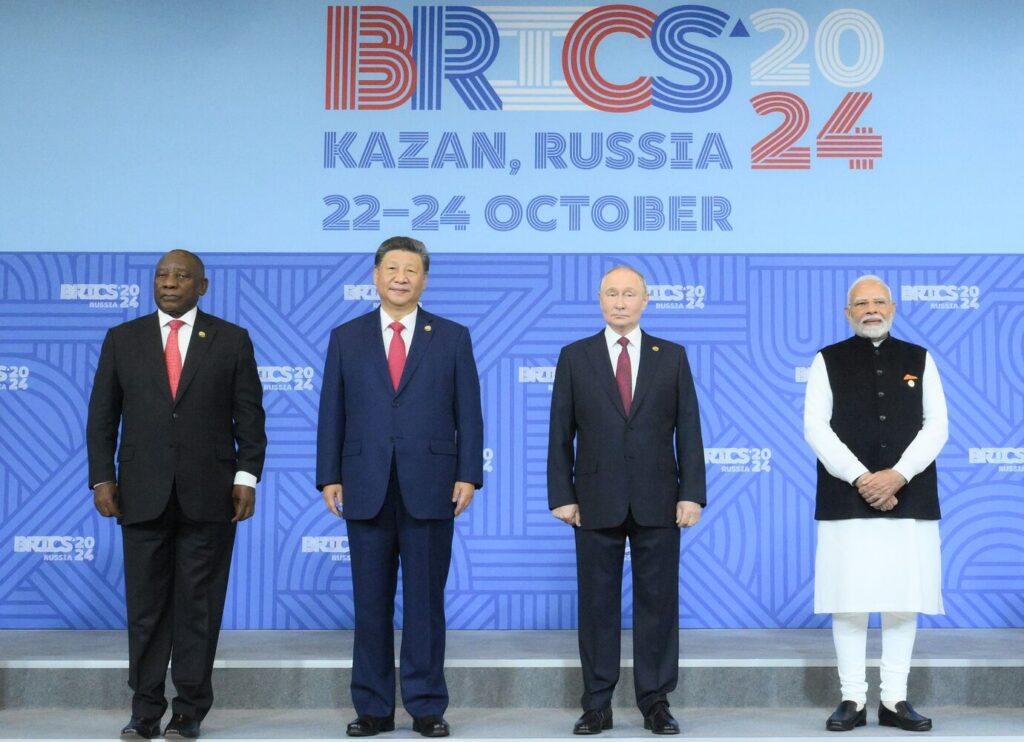
In recent days, BRICS - an intergovernmental organization comprising Brazil, Russia, India, China, South Africa, Iran, Egypt, Ethiopia, and the UAE - has become one of the most critical topics on the Eurasian region's information agenda. Russian propaganda has presented the BRICS summit, which is taking place in Kazan, as a global event. However, the press secretary of Kazakhstan's president, Kassym-Jomart Tokayev, has stated that the republic has no plans to apply for BRICS membership in the foreseeable future, which has caused an adverse reaction in the Russian media, and led to a seemingly retaliatory Russian ban on Kazakhstan's agro-products. The Kazakhstani side, represented by the expert community, has tried to explain that its reasoning is based not only on Astana's national interest, but also on its obligations to its partners in Central Asia. Perhaps the most convincing argument is that the C5+1 mechanism is effective as a format for the region's interactions with the outside world. Therefore, it is not worth breaking this mechanism. No Central Asian country besides Kazakhstan has been invited to join BRICS, but Astana cannot afford to damage the established alliance by creating the conditions for distrust from its neighbors; Central Asia has already gone through a period of distrust. At the same time, rejecting the idea of joining BRICS, where India, Russia, Brazil and China are the founding members, does not unduly affect Kazakhstan's interactions with these powers. Kazakhstan works with China and Russia within the framework of the SCO (Shanghai Cooperation Organisation) and EAEU (Eurasian Economic Union), and has signed multiple partnership and alliance agreements with Beijing and Moscow. In other words, the information hysteria that Kazakhstan will exit Russia's sphere tomorrow and join the "Global West" (a term used in the Russian media) has no basis in reality. At the same time, however, it is evident that most Central Asian countries are trying to distance themselves from Russia as much as possible, maintaining cooperation only along certain economic lines. Even banks in Kyrgyzstan, a republic maximally dependent on Moscow on several essential issues, have stopped working with Russian banks. The Kazakhstan Stock Exchange, meanwhile, recently announced the end of cooperation with the sanctioned Moscow Stock Exchange. Moreover, Rosselkhoznadzor's ban on imports of a wide range of agro-industrial products from Kazakhstan, if not a response to the refusal to join the BRICS, clearly hints that behind the scenes, economic relations between Astana and Moscow are not all that smooth. Another argument against joining BRICS was voiced not just within Kazakhstan, but also by Russian experts. Despite the organization's purportedly representative nature, which includes countries with a combined population of 3.5 billion people (45% of the Earth's population), the association has no structure. Russian analysts opposed to the Kremlin believe that BRICS is a club where one can come, sabre-rattle at the West, conclude bilateral agreements, and forget about everything until the next summit. No coordinating center monitors the implementation of any agreements reached. BRICS was conceived as an intercontinental organization, uniting similar economies in volume and GDP. Thus, it initially included Brazil, representing...