• KZT/USD = 0.00209
  • TJS/USD = 0.10810
  • UZS/USD = 0.00008
  • TMT/USD = 0.29760
  • KZT/USD = 0.00209
  • TJS/USD = 0.10810
  • UZS/USD = 0.00008
  • TMT/USD = 0.29760
  • KZT/USD = 0.00209
  • TJS/USD = 0.10810
  • UZS/USD = 0.00008
  • TMT/USD = 0.29760
  • KZT/USD = 0.00209
  • TJS/USD = 0.10810
  • UZS/USD = 0.00008
  • TMT/USD = 0.29760
  • KZT/USD = 0.00209
  • TJS/USD = 0.10810
  • UZS/USD = 0.00008
  • TMT/USD = 0.29760
  • KZT/USD = 0.00209
  • TJS/USD = 0.10810
  • UZS/USD = 0.00008
  • TMT/USD = 0.29760
  • KZT/USD = 0.00209
  • TJS/USD = 0.10810
  • UZS/USD = 0.00008
  • TMT/USD = 0.29760
  • KZT/USD = 0.00209
  • TJS/USD = 0.10810
  • UZS/USD = 0.00008
  • TMT/USD = 0.29760

Viewing results 31 - 36 of 2559

Kyrgyzstan Fuel Crisis: Bishkek Relaxes Fuel Import Rules to Ease Supply Pressures

Kyrgyzstan has relaxed fuel import rules and extended restrictions on exports as it seeks to mitigate growing pressure on its domestic fuel market amid disruption to Russia’s refining sector. Under a July 13 resolution, the Kyrgyz Cabinet of Ministers suspended, until April 1, 2027, provisions of a 2019 government decree restricting the import of oil and petroleum products by road. The exemption had previously been due to expire on September 30, 2026. The change allows fuel to be delivered into Kyrgyzstan by road tanker, giving importers greater flexibility to obtain supplies through alternative routes. Other requirements governing fuel imports, including transportation safety rules and accompanying documentation, remain in force. The measure comes as Russia, the source of more than 90% of Kyrgyzstan’s imported petroleum products, has imposed temporary restrictions on gasoline exports after Ukrainian drone attacks reduced production at several Russian refineries. At the same time, the Cabinet amended the country’s export rules for petroleum products. The current export ban on crude oil, gasoline, diesel fuel, and other petroleum products transported by road or rail will now remain in effect until Kyrgyzstan’s domestic fuel demand is fully satisfied or until the EAEU’s common oil and petroleum products market becomes operational. According to the government, the changes are intended to stabilize the domestic fuel market and ensure adequate supplies for consumers. The latest measures add to a series of steps taken by Bishkek to address mounting fuel supply challenges. As previously reported by The Times of Central Asia, Kyrgyzstan is also seeking to increase domestic production of the country’s most widely used AI-92 gasoline by upgrading surplus stocks of lower-octane AI-80 fuel. Earlier this month, the government also eased its temporary fuel price controls after shortages emerged. Emergency price regulation introduced on May 25 established benchmark import prices of $860 per metric ton for AI-92 gasoline, $940 for AI-95 gasoline, $950 for diesel fuel, and $575 for liquefied petroleum gas. However, under a separate July 7 resolution signed by Chairman of the Cabinet of Ministers Adylbek Kasymaliev, AI-95 gasoline was removed from the list of socially significant goods subject to state price regulation, and retail price caps were abolished. The government said the changes were necessary to restore uninterrupted fuel supplies after AI-95 gasoline temporarily disappeared from filling stations in Bishkek.  

Tajikistan Prepares for Another Winter Power Shortfall

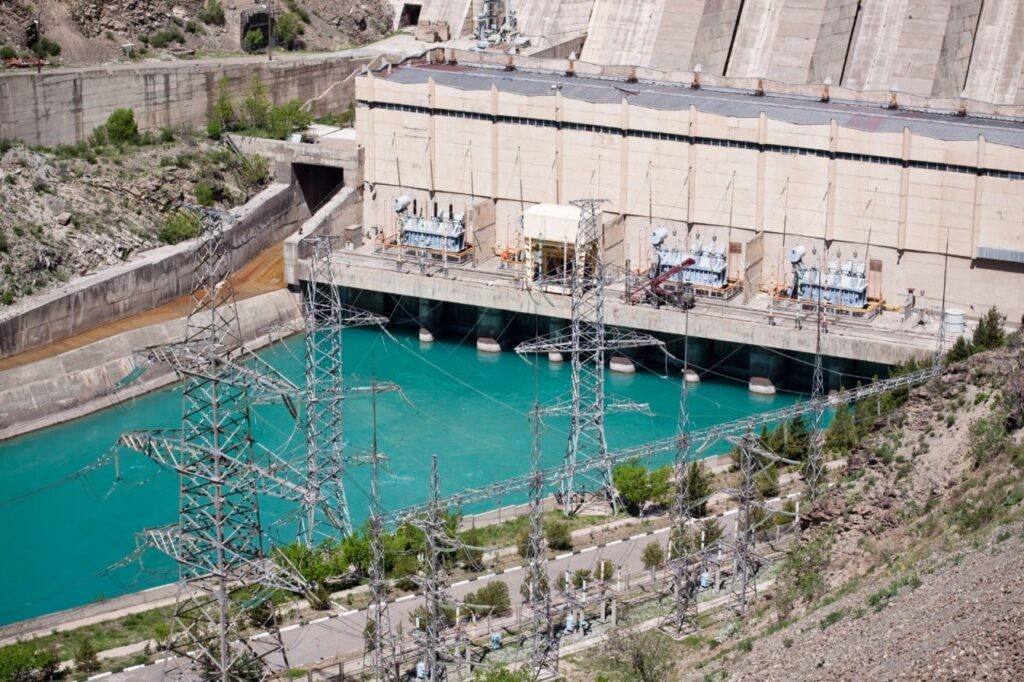
Tajikistan is preparing for another autumn and winter in which electricity demand may outstrip supply. Network losses have fallen, and investment in hydropower continues, but officials say the seasonal imbalance between generation and consumption will persist. Mahmadumar Asozoda, chairman of state-owned power company Barki Tojik, said the imbalance would persist through the colder months. Asked whether electricity rationing would return, he did not rule it out. Tajikistan generates almost all of its electricity from hydropower, leaving supply tied to seasonal river flows. Output rises during the warmer months, when the country can meet domestic demand and export surplus electricity. In winter, river flows decline as electricity use increases for heating, creating a recurring shortfall. To cover part of the winter shortfall, Tajikistan plans to import electricity from Uzbekistan again. The two countries use a seasonal exchange: Uzbekistan supplies power in autumn and winter, and Tajikistan returns an equivalent volume during summer. Tajikistan imported 306 million kilowatt-hours (kWh) last winter, down from 350 million kWh a year earlier. Asozoda said the countries expect to sign a new agreement before the next autumn-winter season. Imports can ease the shortage, but they do not remove Tajikistan's dependence on hydropower or the winter drop in output. The seasonal arrangement with Uzbekistan gives Tajikistan access to power when domestic generation is lowest. As previously reported by The Times of Central Asia, Kazakhstan has signed a 20-year agreement to buy electricity from Tajikistan. Deliveries are expected to depend on additional generating capacity at the Rogun Hydropower Plant. The Nurek Reservoir stood at 888.21 meters on July 13, but Energy and Water Resources Minister Daler Juma said Tajikistan was experiencing low water levels. The country has reduced electricity exports and is retaining more water in its reservoirs for winter. Losses in the electricity system fell during the first half of 2026. At Barki Tojik's generating facilities, losses were 0.32% of output, down 0.07 percentage points from a year earlier. Losses in high-voltage transmission networks fell to 2.96%, while distribution losses dropped from 17.93% to 12.42%. Barki Tojik generated 8.89 billion kWh during the period, 2.7 million kWh less than in the first half of 2025. Hydropower plants supplied 7.93 billion kWh, while thermal plants produced 964 million kWh. The utility also bought 2.7 billion kWh from independent producers in Tajikistan and abroad, with Sangtuda-1 supplying 1.48 billion kWh. Rogun and Sangtuda-2 supplied 667.2 million kWh and 474.2 million kWh, respectively. Demand continues to rise as Tajikistan's population grows and industrial production expands, President Emomali Rahmon said in December 2025. The World Bank expects Rogun to help meet domestic needs and reduce recurring winter cuts. Rahmon has said rationing should end in 2027, when the third generating unit is scheduled to enter service, although the World Bank projects full completion in 2033. For the coming winter, Tajikistan is conserving reservoir water and arranging imports from Uzbekistan, but Asozoda's comments leave open the possibility of renewed rationing.

Opinion: Could Vanadium Be Kazakhstan’s Next Breakout Critical Metals Story?

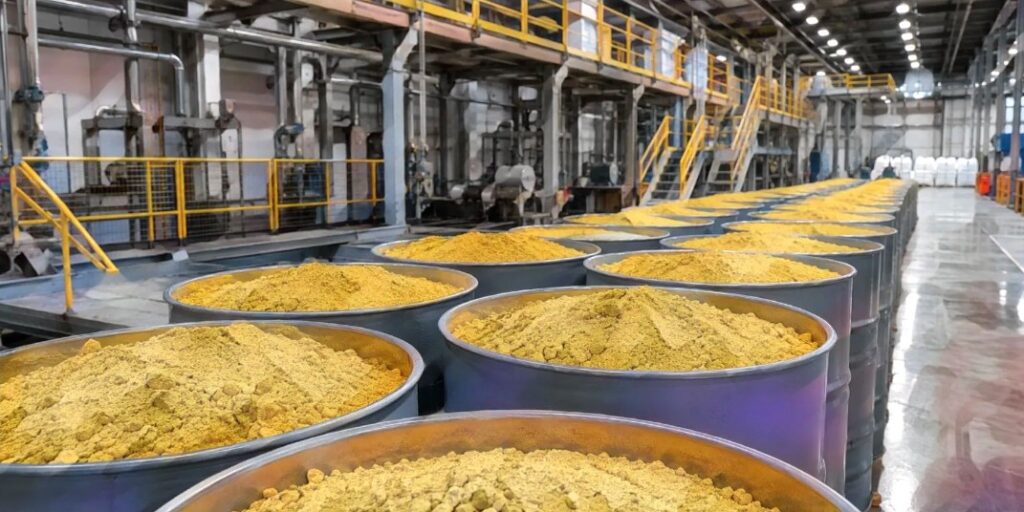
Vanadium is viewed as a critical mineral by the United States, the European Union, Russia, China and many other countries because of its importance to energy storage and industrial alloys. At the Astana Metals & Metallurgy (AMM) Congress, Ferro-Alloy Resources CEO Nicholas Bridgen discussed the company’s assets, strategy, and valuation with The Times of Central Asia, noting that the company appears undervalued amid supply chain disruptions and the rising strategic importance of vanadium. The discussion highlighted vanadium’s emerging demand-supply imbalance and efforts to better align market perception with fundamentals. Of the critical metals that will define the next half-century, vanadium has perhaps the strongest claim to indispensability: it hardens the steel in our infrastructure and defense systems, and it stores the energy that our grids will increasingly depend on. Yet the market has consistently failed to price that future in, and nowhere is that mispricing more visible than in the vanadium deposits of Kazakhstan. In 1941, with the Second World War raging, Soviet geologists fanned out across Central Asia looking for strategic minerals. Around 180 kilometers east of Almaty, in the foothills of the Tian Shan mountain range along the borders with China and Kyrgyzstan, they found tungsten at the Boguty deposit. At roughly the same time, they were delineating what would become the Northern Katpar and Upper Kairakty tungsten deposits. The geology was well understood, and the resource was real, but nothing happened for the better part of 75 years. The deposits sat idle not because tungsten was unimportant, but because there was no pressing reason for, first, the Soviet Union or later the West to develop them. That changed when the scale of China's dominance in critical metals became impossible to ignore. By the early 2020s, China was producing over 75% of the world’s tungsten output, alongside similarly dominant shares of rare earth elements and a range of other strategic minerals. This concentration of supply was not accidental. It was the product of decades of deliberate industrial policy, patient capital, and a willingness to operate at low margins long enough to drive out competitors. The Tungsten Lesson Chinese mining company Jiaxin International Resources Investment Ltd. moved in 2014 to acquire Boguty for an undisclosed sum, almost certainly a modest one. The deal further consolidated China’s grip on global tungsten supply. Jiaxin then spent approximately $300 million developing the deposit and listed on the Hong Kong Stock Exchange at a valuation in excess of $600 million. The investment thesis seemed straightforward enough at the time. In 2025, it looked positively prescient: China imposed export controls on tungsten, and key prices outside China more than doubled. According to the Financial Times, Jiaxin’s market capitalization stands at close to HKD 22.3 billion, equal to $2.84 billion, approximately 9.5 times the stated development expenditure. [caption id="attachment_52262" align="aligncenter" width="1432"] Image: Kaz Resources[/caption] Meanwhile, Skyline Builders Group Holding Ltd. and Cove Kaz Capital Group LLC (“Cove Kaz”) have moved to acquire the two other formerly dormant tungsten deposits in Kazakhstan, Northern Katpar and Upper Kairakty. On this...

Kazakhstan and China Sign Deals Worth Over $15 Billion During Tokayev’s Shanghai Visit

Kazakhstan and China signed more than 70 commercial agreements worth over $15 billion during President Kassym-Jomart Tokayev’s working visit to Shanghai on July 16. The package covers artificial intelligence, digital infrastructure, transport, finance, agriculture, vehicle production, and other high-technology industries. The documents were exchanged after a roundtable with Chinese executives. Akorda did not publish a full project-by-project valuation, and the package includes both agreements and memoranda. The headline figure represents the announced value of the documents rather than money already invested or spent. AI and Industrial Projects Among the main documents was a strategic partnership agreement between Kazakhstan’s Ministry of Artificial Intelligence and Digital Development and Huawei Technologies. The Samruk-Kazyna sovereign wealth fund signed a separate agreement to acquire Huawei technology and equipment. Samruk-Kazyna, Freedom Holding, the Astana city administration, and Geely Auto Group also signed a memorandum on electric-vehicle infrastructure and the use of artificial intelligence in Kazakhstan’s automotive industry. Kazakhtelecom and China’s HV & Submarine Hengtong Group agreed on the basic principles for developing the Data Center Valley project in Ekibastuz. The planned one-gigawatt cluster is intended to combine data centers, cloud services, supercomputing facilities, AI laboratories, research institutions, training programs, and technology startups. Further agreements covered robotics and research. Qazbot Technologies signed a strategic cooperation agreement with Agibot PTE, while the Almaty city administration, NERO Group, and UBTECH Robotics agreed to develop artificial intelligence and robotics in the city. Qazaq AI Research University and the Shanghai Innovation Institute signed a cooperation memorandum. The industrial package includes an agreement between Allur Group and Li Auto to produce Li Auto vehicles in Kazakhstan. Astana Group and Chery Holding signed a technology licensing agreement for OMODA and JAECOO production at the Astana Motors Manufacturing Kazakhstan plant. Qarmet, the Development Bank of Kazakhstan, and a Chinese engineering company also agreed to cooperate on new coke oven batteries and a gas purification system. Transport and Logistics An investment agreement was signed for the first phase of a multifunctional terminal at the Port of Kuryk. Another document covers cooperation on two logistics parks at Khorgos-Eastern Gate, while Kazakhstan’s Ministry of Industry and Construction and NUCTECH agreed to work on inspection systems at border checkpoints and expand local production. Tokayev said around 85% of rail freight between China and Europe passes through Kazakhstan and that the country has invested more than $35 billion in transport and logistics infrastructure over the past 15 years. He also promoted the Smart Cargo platform, which is designed to combine customs, logistics, and commercial services in one digital system. The president also invited Chinese companies to invest in the extraction and deeper processing of critical minerals, agricultural technology, and the development of Alatau City. The government wants the new city to become a regional center for digital finance, asset tokenization, artificial intelligence, and advanced telecommunications. Tokayev said bilateral trade reached a record $49 billion in 2025, cumulative Chinese investment in Kazakhstan exceeded $30 billion, and more than 8,500 companies with Chinese participation operate in the country. Existing joint projects...

Kyrgyzstan to Launch Direct Flight Between Bishkek and Urumqi

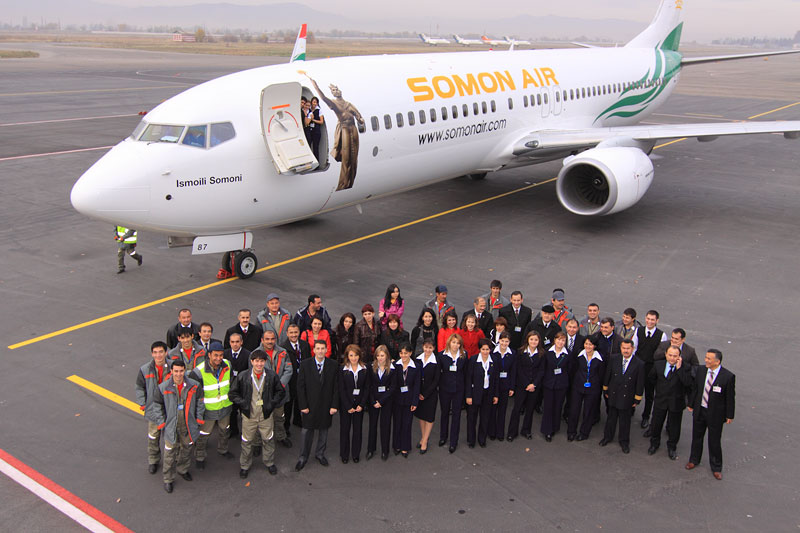
Kyrgyzstan’s Aero Nomad Airlines will launch a new direct route between Bishkek and Urumqi, the capital of China’s Xinjiang Uygur Autonomous Region, further expanding air connectivity between the two neighboring countries. According to the airline, the inaugural flight is scheduled for August 3 and will be operated using an Airbus A320 aircraft. The airline said the route would support trade and investment and encourage tourism and cultural exchanges between Kyrgyzstan and China. Xinjiang already has established air connections with Kyrgyzstan. In November 2025, China Southern Airlines resumed direct flights between Urumqi and Osh, Kyrgyzstan’s second-largest city. Earlier this year, Airports of Kyrgyzstan JSC also announced the launch of a new route between Osh and Kashgar, another major city in Xinjiang, to be operated by Chengdu Airlines. Xinjiang serves as Kyrgyzstan’s principal gateway to China. Most bilateral trade passes through the region via the Torugart and Irkeshtam border crossings, the two fully operational road links between the countries. According to Chinese Ambassador to Kyrgyzstan Liu Jiangping, bilateral trade reached a record $27.2 billion in 2025, representing a 20% increase compared with the previous year. Growing commercial ties have also been supported by institutional cooperation. In June 2024, the Kyrgyzstan-China Trade and Economic Cooperation Center opened in Urumqi, Xinjiang, to facilitate business contacts, promote investment opportunities, and support joint projects between companies from both countries. Kashgar is the Chinese starting point of the China-Kyrgyzstan-Uzbekistan railway, one of the region’s largest infrastructure projects. The planned line would connect western China with Central Asia. The Bishkek-Urumqi service adds another transport link between Kyrgyzstan and China as bilateral trade grows and work continues on the railway.

Digital Tenge Receives Official Legal Status in Kazakhstan

Beginning July 18, the digital tenge will officially become a recognized digital form of Kazakhstan’s national currency. Amendments to the country’s legislation grant the National Bank of Kazakhstan the exclusive authority to issue and circulate the digital currency, establishing a comprehensive legal framework for its wider use across the financial system. Unlike many central bank digital currency (CBDC) projects around the world, which remain at the pilot or experimental stage, Kazakhstan has already moved beyond testing into practical implementation. Rather than replacing cash or bank cards, the digital tenge has been designed primarily to improve transparency in public spending, government procurement, and the monitoring of budget expenditures. By the beginning of 2026, approximately 336.6 billion tenge, or about $640 million, worth of digital tenge had been issued, and the technology had been deployed in more than 100 pilot projects. These include public procurement, the management of National Fund resources, tax administration, government subsidies, and infrastructure financing. Programmable payment technology enables authorities to track the movement of public funds almost in real time while restricting spending according to predefined conditions. The practical use of the digital tenge continues to expand. According to the National Payment Corporation of Kazakhstan, the platform was used throughout 2025 in projects involving infrastructure financing, public procurement, business support programs, and other government initiatives. The experience gained from these projects has laid the foundation for the next stage of the digital tenge’s development. Kazakhstan remains the regional leader in the development of a central bank digital currency. Elsewhere in Central Asia, governments have concentrated on digital payments and the regulation of digital assets. As previously reported by The Times of Central Asia, Kyrgyzstan is promoting the gold-backed USDKG stablecoin for cross-border transactions, while other countries in the region have yet to move toward the practical implementation of national CBDCs. The International Monetary Fund believes the next phase of the project will depend less on further technological development than on strengthening regulation, enhancing cybersecurity, and integrating the digital tenge into Kazakhstan’s existing financial architecture. According to the IMF, these factors will determine whether the project can be successfully scaled nationwide.