• KGS/USD = 0.01143 0%
  • KZT/USD = 0.00213 0%
  • TJS/USD = 0.10593 0.47%
  • UZS/USD = 0.00008 0%
  • TMT/USD = 0.28571 0%
  • KGS/USD = 0.01143 0%
  • KZT/USD = 0.00213 0%
  • TJS/USD = 0.10593 0.47%
  • UZS/USD = 0.00008 0%
  • TMT/USD = 0.28571 0%
  • KGS/USD = 0.01143 0%
  • KZT/USD = 0.00213 0%
  • TJS/USD = 0.10593 0.47%
  • UZS/USD = 0.00008 0%
  • TMT/USD = 0.28571 0%
  • KGS/USD = 0.01143 0%
  • KZT/USD = 0.00213 0%
  • TJS/USD = 0.10593 0.47%
  • UZS/USD = 0.00008 0%
  • TMT/USD = 0.28571 0%
  • KGS/USD = 0.01143 0%
  • KZT/USD = 0.00213 0%
  • TJS/USD = 0.10593 0.47%
  • UZS/USD = 0.00008 0%
  • TMT/USD = 0.28571 0%
  • KGS/USD = 0.01143 0%
  • KZT/USD = 0.00213 0%
  • TJS/USD = 0.10593 0.47%
  • UZS/USD = 0.00008 0%
  • TMT/USD = 0.28571 0%
  • KGS/USD = 0.01143 0%
  • KZT/USD = 0.00213 0%
  • TJS/USD = 0.10593 0.47%
  • UZS/USD = 0.00008 0%
  • TMT/USD = 0.28571 0%
  • KGS/USD = 0.01143 0%
  • KZT/USD = 0.00213 0%
  • TJS/USD = 0.10593 0.47%
  • UZS/USD = 0.00008 0%
  • TMT/USD = 0.28571 0%

Viewing results 25 - 30 of 888

Environmental Damage Assessed at Ritz-Carlton Tashkent Construction Site

More than a dozen valuable trees have been cut down at the construction site of the Ritz-Carlton Tashkent in central Tashkent, according to Rasul Kusherbayev, adviser to the chairman of Uzbekistan’s Ecology and Climate Change Committee. Kusherbayev stated that the trees were removed from an area adjacent to the National Park in Tashkent. According to preliminary information, the felling was carried out in violation of the existing moratorium on cutting valuable tree species. He added that authorities are still determining whether additional trees were cut at the site. The land plot was reportedly allocated to Azerbaijani investors for the project. Kusherbayev also said that representatives of the construction company opposed attempts to film the tree cutting at the location. The project is being implemented by PD Estates, a joint venture linked to Azerbaijan’s Pasha Holding. The company is constructing a five-star, 150-room hotel under the The Ritz-Carlton Hotel Company brand, with an estimated investment of $200 million. In connection with the case, official documentation has been completed, and environmental damage has been assessed at 351,230,000 Uzbek sum (approximately $29,000). According to Uzbekistan’s Unified State Register of Enterprises and Organizations, PD Estates was registered in November 2023. The company has an authorized capital of 251.3 billion Uzbek sum (approximately $20.6 million) and specializes in construction project development. Its founders are Pasha Development, which holds a 99% stake, and Pasha Holding, which owns the remaining 1%. The company is headed by Baris Battal. The Ritz-Carlton is a luxury hospitality brand and a subsidiary of Marriott International, headquartered in Maryland, United States. It operates more than 90 hotels worldwide. According to the publication Uzdiplomat, in August 2024 Uzbekistan and Azerbaijan agreed to implement seven joint projects worth a total of $520 million. Under that framework, Pasha Development planned to build a $200 million Ritz-Carlton hotel and premium residential complex in Tashkent’s Chilanzar district. On February 29, 2024, President Shavkat Mirziyoyev signed a law strengthening penalties for illegal tree cutting. The amendments significantly increased fines for unlawful felling, introduced a mandatory requirement to plant new saplings in areas where trees have been removed, and extended financial liability to legal entities. Previously, only individuals and officials were subject to penalties. Under the new provisions, companies found guilty of illegally cutting valuable tree and shrub species face fines ranging from 100 to 300 times the base calculation amount, equivalent to approximately 34 million to 102 million Uzbek sum (about $2,800 to $8,400).

Central Asia and the Global Water Crisis: A Test of Governance and Cooperation

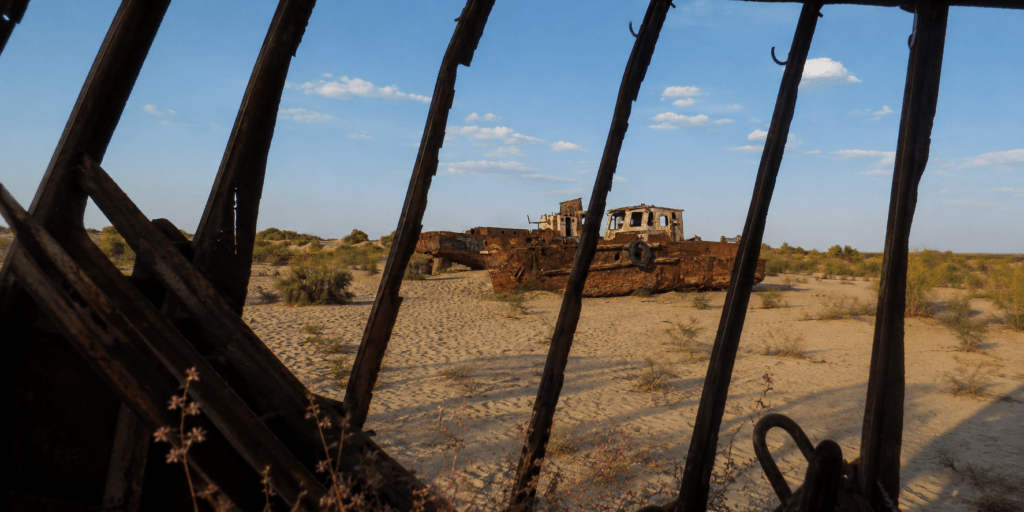
Water scarcity is rapidly transforming from a regional environmental concern into one of the defining global security challenges of the 21st century. UN-linked assessments estimate that around four billion people experience severe water scarcity for at least one month each year, and nearly three-quarters of the global population lives in countries facing water insecurity. Against this backdrop, Central Asia is not an exception but rather a concentrated example of global dynamics: climate pressure, population growth, and inefficient resource management. Regional initiatives, including proposals put forward by Kazakhstan, therefore have the potential to contribute not only to stability in Central Asia but to the development of a more coherent global water governance architecture. The Water Crisis as a Global Reality Water is increasingly regarded as a strategic resource on par with energy and food. Climate change is intensifying droughts, floods, and the degradation of aquatic ecosystems across all regions, from Africa and the Middle East to South Asia, Europe, and North America. Recent mapping and analysis by investigative groups and international media indicate that half of the world’s 100 largest cities experience high levels of water stress, with dozens classified as facing extremely high levels. Major urban centers, including Beijing, New York, Los Angeles, Rio de Janeiro, and Delhi, are among those under acute pressure, while cities such as London, Bangkok, and Jakarta are also categorized as highly stressed. In this context, Central Asia is not an outlier. It is confronting today what may soon become the global norm. Central Asia: Where Global Trends Converge A defining feature of the current environmental situation is that factors beyond natural ones drive the water crisis. Experts increasingly stress that shortages are often less about absolute physical scarcity and more about outdated management systems, infrastructure losses, and inefficient consumption patterns. In this respect, Central Asia can be seen as a testing ground for global water challenges, where multiple stress factors converge. The region, with mountain peaks exceeding 7,000 meters, contains some of the largest ice reserves outside the polar regions. The Pamir and Hindu Kush ranges, together with the Tibetan Plateau, the Himalayas, and the Tien Shan, form part of what is sometimes referred to as the “Third Pole,” the largest concentration of ice after the Arctic and Antarctic. [caption id="attachment_13410" align="aligncenter" width="2560"] The White Horse Pass, Tajikistan; image: TCA, Stephen M. Bland[/caption] However, the pace of change is alarming. By 2030-2040, water scarcity in Central Asia risks becoming chronic. Glaciers in the Western Tien Shan, for example, have reportedly shrunk by roughly 27% over the past two decades and continue to retreat, posing a direct threat to the flow of the Amu Darya and Syr Darya rivers. These rivers increasingly fail to reach the Aral Sea in sufficient volume, while the exposed seabed has become a major source of salt and dust storms. [caption id="attachment_21928" align="aligncenter" width="2560"] Moynaq, Karakalpakstan; image: TCA, Stephen M. Bland[/caption] Infrastructure inefficiencies compound the problem. Estimates suggest that in some systems, 40-50% of water can be lost in deteriorating...

Uzbekistan Strengthens Protection of Argali Sheep and Other Rare Species

Uzbekistan is intensifying conservation efforts in its protected areas, with new data indicating a stable population of its endangered wild sheep, the Kyzylkum argali, in the Nurata State Nature Reserve. According to the National Committee for Ecology and Climate Change, the reserve is currently home to approximately 1,700-1,800 argali, also known as Severtsov’s wild sheep. Monitoring data collected in recent years show that the population has remained stable, highlighting the effectiveness of ongoing conservation and protection measures. The Kyzylkum argali is classified as an endangered species. It is listed in the national Red Book, included in the International Union for Conservation of Nature Red List of Threatened Species, and protected under Appendix II of the Convention on International Trade in Endangered Species of Wild Fauna and Flora, which regulates international trade in vulnerable species. As a result, systematic monitoring of the population remains a priority for environmental authorities. Established in 1973, the Nurata State Nature Reserve is located in the Farish district of the Jizzakh region and plays a key role in preserving biodiversity in the Nurata mountain range. A total of 247 animal species have been recorded in the reserve, 31 of which are included in Uzbekistan’s Red Book. Specialists note that the stable argali population is closely linked to broader ecosystem protection measures, strengthened anti-poaching enforcement, and continuous scientific monitoring. Further progress is expected under the national development strategy “Uzbekistan - 2030,” which prioritizes environmental security, expansion of specially protected natural areas, and long-term conservation of rare plant and animal species. Officials state that protection measures for Red Book species will continue to be reinforced, with the aim of sustaining positive trends observed in Uzbekistan’s reserves, including the Nurata reserve, over the long term. The stable argali population in Nurata is increasingly cited by environmental authorities as an example of how consistent policy implementation and institutional oversight can contribute to preserving the country’s natural heritage.

New Earthquake Jolts Almaty, Highlighting Central Asia’s Seismic Threat

Many residents of Almaty, Kazakhstan’s largest city, have known since childhood what to do in the event of an earthquake. Children are taught to stand near load-bearing walls or structural beams in their homes, as these areas are considered more resistant during tremors. Many households keep an emergency kit with water, food and blankets in an accessible place. Such precautions are not excessive: Almaty experiences regular seismic activity. The latest significant tremor occurred on February 17, with an epicenter located 74 kilometers northeast of the city. The earthquake registered a magnitude of 5.0. City residents left their homes and offices and gathered outside, a familiar reaction in a city long accustomed to seismic risk. National alert system In May 2024, Almaty introduced the Mass Alert system to notify residents of emergencies, including earthquakes, floods, and man-made disasters. The system uses Cell Broadcast technology to send text notifications to all mobile subscribers within a specific geographic area, regardless of their mobile operator. Because messages are transmitted through cell towers rather than individual calls or messages, the system is designed to avoid overloading mobile networks during emergencies. It is integrated with 28 seismic stations. Many experts say the system’s launch followed the January 2024 earthquake, which was felt across southern Kazakhstan. Almaty experienced several tremors measuring up to magnitude 5.0, triggering widespread panic. Traffic jams stretching for kilometers formed on roads leading out of the city. Forty-four people sought medical attention, most of them injured while attempting to exit buildings quickly. Scientists warn that a powerful and destructive earthquake in the region is inevitable, although the timing cannot be predicted. Almaty is located in a zone rated at up to 10 points on the MSK-64 seismic intensity scale. Each year, up to 200 minor tremors are recorded within an 80-kilometer radius of the city. Earthquakes with magnitudes between 2.0 and 4.0 are considered typical. Approximately 30 tectonic faults run through the city and its surroundings, more than 60% of them in mountainous areas. Experts estimate that, given current dense and high-rise construction, as many as 30% of buildings could be destroyed in the event of an earthquake measuring 9-10 points in intensity. During the Soviet period, buildings taller than nine stories were generally prohibited in the city. The notable exception was the 25-story Kazakhstan Hotel, which was constructed with seismic reinforcement measures. Today, high-rise construction has expanded significantly, including in some of the city’s more seismically vulnerable foothill areas. The emergency warning system does not predict earthquakes in advance; it issues alerts only once tremors have already been detected. The system has been activated during several real seismic events. Seismological predictions In Kazakhstan, official forecasts are issued by the Institute of Seismology. At the same time, attempts at earthquake prediction have occasionally emerged outside the scientific mainstream. One of the most prominent figures associated with such efforts is biophysicist Viktor Inyushin. In the 1990s, he appeared in the media describing experiments aimed at predicting earthquakes by observing crushed peas, acorns, barley seeds,...

Kazakhstan May Introduce Traffic Restrictions Based on Beijing Model

Kazakhstan’s Ministry of Ecology and Natural Resources has proposed that city authorities draw on Beijing’s experience in restricting private vehicle traffic on days with unfavorable weather conditions as part of efforts to combat air pollution. Beijing has operated an “even-odd” traffic system since 2011, under which vehicles with even-numbered license plates may drive on even dates, and those with odd-numbered plates on odd dates. While the measure in the Chinese capital was initially introduced to reduce traffic congestion, in Kazakhstan, it is being considered primarily as a tool to improve air quality. After reviewing Beijing’s practice, the ministry has instructed local authorities and regional environmental departments to prepare air protection plans for 2026-2028, including the possible introduction of similar restrictions. The ministry cited data from Kazhydromet indicating that by the end of 2025, eleven cities in Kazakhstan are expected to record persistently high levels of air pollution. The most affected cities remain Almaty, Ust-Kamenogorsk, Karaganda, Temirtau, and Aktobe. Despite the modernization of major industrial facilities and the adoption of best available technologies, a significant share of emissions originates from smaller sources, including motor vehicles, private households, and small businesses. In Almaty, approximately 60% of emissions are attributed to transport, while a further 12% comes from private homes and small boiler houses. A similar pattern is observed in Ust-Kamenogorsk. In response, the Ministry of Ecology has proposed that city authorities not only consider temporary traffic restrictions during periods of unfavorable weather but also accelerate the transition of public transport and taxis to electric and gas-powered vehicles, establish green belts around industrial zones, subsidize the gasification of private homes, promote connections to centralized heating systems, and ban the use of solid fuels in catering establishments and small boiler houses. The Times of Central Asia previously reported that the most severe smog and adverse weather conditions have recently been recorded in Ust-Kamenogorsk.

Choking on Smog: Air Crisis in Öskemen Deepens

Heavy smog and sustained NMU-II adverse meteorological conditions reported by Kazhydromet continue to affect the city of Öskemen (Ust-Kamenogorsk) in eastern Kazakhstan, after authorities moved all students in grades 0–11 to remote learning on February 2. The decision followed several days of windless weather and a temperature inversion that trapped pollutants close to the ground. According to Kazhydromet forecasts, unfavorable meteorological conditions are likely to remain in place, limiting dispersion. Air quality monitoring platforms show persistent spikes in fine particulate matter, raising renewed health concerns among residents. Data from IQAir indicates that PM2.5 concentrations in Öskemen have at times reached levels classified as “hazardous,” significantly exceeding World Health Organization guidelines. Live readings continue to fluctuate depending on wind and temperature shifts, but pollution levels remain elevated compared to recommended norms. Local authorities say the health of students remains the priority. The regional Department of Education confirmed that distance learning was introduced as a precautionary measure during the NMU-II period. Environmental specialists have advised residents to reduce outdoor activity, particularly children, the elderly, and those with respiratory conditions. What’s Behind the Smog? Specialists attribute the pollution to a combination of meteorological and structural factors. A temperature inversion has created what meteorologists describe as a “thermal cap,” with warmer air overlaying colder surface air, preventing pollutants from dispersing. The absence of sustained wind has compounded the buildup. Öskemen is also one of Kazakhstan’s most industrialized cities, home to major metallurgical enterprises, a coal-fired thermal power plant, and titanium-magnesium production facilities. Vehicle emissions and winter heating from coal and firewood in private homes add to the concentration of fine particulate matter. The city’s geography further complicates the situation. Surrounded by mountainous terrain, Öskemen experiences restricted air circulation during stagnant winter conditions, allowing pollution to accumulate. Monitoring and Mitigation The East Kazakhstan Department of Ecology reported that an interagency task force, including Kazhydromet meteorologists and sanitary inspectors, conducted mobile laboratory monitoring during the peak of the episode. Authorities said industrial facilities reduced output under NMU protocols and that transport and municipal services were instructed to limit emissions. Officials stated that monitored pollutants, including carbon monoxide, nitrogen oxides, sulfur compounds, chlorides, and suspended particles, were measured daily. While authorities described overall average indicators as remaining within permissible limits, independent monitoring services recorded significantly higher short-term PM2.5 spikes. Public Reaction Residents have expressed frustration online, posting photos and videos showing the city enveloped in haze. In comments responding to official statements, users described sore throats, headaches, and difficulty breathing. One resident wrote: “It’s impossible to breathe in the city. This isn’t exaggeration, it’s reality. You, your children, your loved ones are breathing this air.” Others questioned the official assessment, asking why schools were closed if pollution posed no threat to public health. What Comes Next? Kazhydromet forecasts suggest that wind and snowfall could help disperse accumulated pollutants in the coming days. However, recurring winter smog episodes have reignited debate over industrial emissions, household coal use, and long-term urban air quality policy. In early February, regional Maslikhat...