• KGS/USD = 0.01143 0%
  • KZT/USD = 0.00202 0%
  • TJS/USD = 0.10661 -0.19%
  • UZS/USD = 0.00008 0%
  • TMT/USD = 0.28575 0%
  • KGS/USD = 0.01143 0%
  • KZT/USD = 0.00202 0%
  • TJS/USD = 0.10661 -0.19%
  • UZS/USD = 0.00008 0%
  • TMT/USD = 0.28575 0%
  • KGS/USD = 0.01143 0%
  • KZT/USD = 0.00202 0%
  • TJS/USD = 0.10661 -0.19%
  • UZS/USD = 0.00008 0%
  • TMT/USD = 0.28575 0%
  • KGS/USD = 0.01143 0%
  • KZT/USD = 0.00202 0%
  • TJS/USD = 0.10661 -0.19%
  • UZS/USD = 0.00008 0%
  • TMT/USD = 0.28575 0%
  • KGS/USD = 0.01143 0%
  • KZT/USD = 0.00202 0%
  • TJS/USD = 0.10661 -0.19%
  • UZS/USD = 0.00008 0%
  • TMT/USD = 0.28575 0%
  • KGS/USD = 0.01143 0%
  • KZT/USD = 0.00202 0%
  • TJS/USD = 0.10661 -0.19%
  • UZS/USD = 0.00008 0%
  • TMT/USD = 0.28575 0%
  • KGS/USD = 0.01143 0%
  • KZT/USD = 0.00202 0%
  • TJS/USD = 0.10661 -0.19%
  • UZS/USD = 0.00008 0%
  • TMT/USD = 0.28575 0%
  • KGS/USD = 0.01143 0%
  • KZT/USD = 0.00202 0%
  • TJS/USD = 0.10661 -0.19%
  • UZS/USD = 0.00008 0%
  • TMT/USD = 0.28575 0%
08 February 2026

Viewing results 1219 - 1224 of 2067

Kazakhstan Ends Litigation With Moldovan Businessmen

After 15 years of litigation worldwide, a long-standing dispute between Kazakhstan and Anatol and Gabriel Stati, businessmen from Moldova, has ended. The Ministry of Justice of Kazakhstan has reported that the government, the National Bank of Kazakhstan, and representatives of Stati have signed a framework agreement. The parties, with the support and consent of leading creditors of Tristan Oil, have concluded a legally binding framework agreement on a peaceful and mutually acceptable resolution of the long dispute over oil and gas assets in Kazakhstan. As reported by the Ministry of Justice, the signatories have reached an agreement on mutually favorable terms that will lead to the termination of all legal proceedings and stop ongoing lawsuits in all jurisdictions. The specific terms of the agreement remain confidential. Daniel Chapman, CEO of Argentem Creek Partners, said, "We support the framework agreement and applaud President Kassym-Jomart Tokayev's decision to build a 'Just Kazakhstan' as part of his admirable reforms. The settlement of this dispute demonstrates Kazakhstan's compliance with international treaty obligations, which opens the door to increased investment and enhances its economic growth potential. We welcome a new era for Kazakhstan.” Argentem Creek Partners is the investment manager of specific funds that became lenders to Tristan Oil Limited, the investment vehicle of the Stati parties. According to Justice Minister Azamat Yeskarayev, "This agreement is made with the public interest in mind and does not involve the expenditure of public funds. We believe that this step will positively impact the attraction of new investments to our country and the economy's growth.” The legal battle between Stati and entities in Kazakhstan started in 2010. Lawsuits have been considered in the Netherlands, Belgium, Luxembourg, Sweden, the UK, and the United States. At one point, the assets of the National Fund of Kazakhstan were even frozen. The episode began in October 2008, when then President of Moldova,Vladimir Voronin, complained to Nursultan Nazarbayev that businessman Anatol Stati was using money received in Kazakhstan to sponsor the opposition in Moldova. Shortly thereafter, Stati's relationship with the authorities in Kazakhstan sharply deteriorated. A series of inspections initiated by state began, during which the unlicensed use of trunk pipelines, tax arrears, violations of license and contractual conditions under subsoil use contracts and other issues were discovered. According to experts familiar with the case against Stati, by that time the Moldovan businessmen had already decided to leave Kazakhstan and were preparing for these inspections, which would result in the termination of contracts. Therefore, by November 2009, they had amassed a lot of materials, which, in the hands of their lawyers could be used to argue that Kazakhstan was in violation of the regime of fair and equal treatment of investors under the Energy Charter Treaty. On July 21, 2010, the Ministry of Oil and Gas of Kazakhstan terminated the subsoil use contracts of the Stati companies Tolkynneftegaz LLP and Kazpolmunai LLP due to non-fulfillment of license and contractual terms. Five days after receiving the termination notice, on July 26, 2010, Stati filed...

Chinese Company Opens Genetic Laboratory in Astana

Kazakh Invest has reported that the opening ceremony of the Astana Genetic Center laboratory of the Chinese company BGI Group took place in Kazakhstan’s capital, Astana, on July 19. BGI Group, a world leader in genome research of living organisms, has over a hundred joint laboratories, medical centers, and production facilities in more than 30 countries. The opening ceremony was attended by Yin Ye, CEO of BGI Group; Kunsulu Zakariya, Advisor to the President of Kazakhstan on Science and Innovation; Akmaral Alnazarova, Kazakhstan’s Minister of Health; and Saule Sabyr, First Secretary of the Investment Committee of the Kazakh Ministry of Foreign Affairs. BGI Group opened the laboratory jointly with a local partner, scientific and production company BIOGEN Technopark LLP. The laboratory will conduct various molecular genetic tests related to reproductive health and diagnosis of hereditary and oncological diseases. The Astana Genetic Center is the only full-cycle laboratory in Kazakhstan capable of conducting all stages of genetic research without taking biomaterial abroad.

Russia Ups Ban on Migrant Employment

Heads of  Russia's Chelyabinsk and Krasnodar regions have announced that this year, migrants are to be  banned from working in over a dozen sectors. In the Chelyabinsk region migrant workers have already been banned from driving cabs and buses. Restrictions will now extend to an additional 19 sectors, including the sale and repair of cars and motorcycles, providing financial services and in particular insurance and pensions, engaging in recruitment, organizing gambling and lotteries, and repairing computers and household appliances. Migrants will also be  prohibited from working in trade, hospitality, catering, and agriculture. They will be unable to work as lawyers, translators, accountants, veterinarians, and fitness trainers, nor conduct creative activities or organize entertainment events. From September 22, citizens of other countries will be prohibited from working as household assistants and employment in agriculture, manufacturing, culture, and the hospitality sector in the Krasnodar region.  Earlier bans in the region applied to trade, catering, education, health care, sports, medical services, courier services, and passenger transportation, including cabs. Employers violating the rules will either be fined up to 1 million roubles for each illegally employed migrant or have their business suspended for up to 90 days. In the Tomsk region, immigrants were previously banned from working in six areas: cabs, hotels, catering, security, education, and sports. In July, it was proposed at the federal level to introduce a ban on migrants working in cab and delivery services across Russia.

Kazakhstan to Export Meat and Live Cattle to China

On July 17, Kazakhstan's minister for agriculture Aidarbek Saparov met with the heads of the Chinese companies CITIC Construction and Beijing Capital Agro. Following this meeting, Kazakh agro-industrial companies have signed three contracts with their Chinese counterparts to export meat and live cattle to China for $75 million. Beijing Capital Agro intends to invest more than $600 million in Kazakhstan’s beef production by 2030. As part of the project, cattle feedlots will be created in Kazakhstan. Emphasizing the importance of the Kazakh-Chinese partnership in agriculture, Saparov said: “China is one of our three largest agricultural trading partners. In 2023, the trade turnover of agricultural products between Kazakhstan and China amounted to $1.3 billion, 67% more than in 2022. Exports of Kazakh agricultural products to China have doubled and reached $1 billion. Grain and oilseeds account for most of the export volume to China, but we see a big potential for increasing export volumes with livestock products.” Kazakhstan has all the conditions for the production of environmentally friendly meat products. This year, the area under fodder crops has been expanded by 314,000 hectares. This contributes to the development of livestock farming, including poultry farming and dairy and beef cattle breeding. In February 2024, China's government lifted restrictions on importing meat products from Kazakhstan. This allowed for the resumption of the export of meat from Kazakhstan, with the first batch of beef exported to China in June.

Kyrgyzstan and Uzbekistan Launch Joint Projects, Seek to Increase Trade

On July 18, Kyrgyzstan's president Sadyr Japarov arrived on a state visit to Uzbekistan and held talks with his compatriot Shavkat Mirziyoyev in Tashkent. Mirziyoyev immediately emphasized that the state visit of the Kyrgyz president opens a new chapter in multifaceted Uzbek-Kyrgyz cooperation. The negotiations centered on measures to increase bilateral trade turnover, primarily through import substitution programs and industrial cooperation projects. The parties agreed to establish trading houses in Bishkek and Tashkent, form a portfolio of export-import contracts aiming to increase bilateral trade to $2 billion in the coming years, and launch a “green-light corridor” for the accelerated transportation of agricultural produce and livestock products. As the portfolio of ongoing industrial cooperation projects has already reached $300 million, the parties agreed to increase the authorized capital of the Uzbek-Kyrgyz Fund to $200 million to boost the financing of such projects. Identifying cooperation in the energy sector as strategically important, the two leaders spoke about an earlier signing of an agreement on joint construction of the Kambarata HPP-1 in Kyrgyzstan. This will allow for the construction of the hydropower plant to begin. Mirziyoyev commented: “We will take measures to speed up the signing of a trilateral [also with the participation of Kazakhstan] agreement on constructing the Kambarata-1 hydroelectric power plant. This megaproject will undoubtedly serve the sustainable development of our entire region.” Japarov emphasized that the key outcome of the negotiations was the signing of a Joint Statement on further deepening and expanding a comprehensive strategic partnership between Kyrgyzstan and Uzbekistan. Japarov also stressed the importance of an earlier start to the construction of the China-Kyrgyzstan-Uzbekistan railway, which will be strategically important for strengthening the transport connectivity between Kyrgyzstan and Uzbekistan, as well as for the entire Central Asia region. Japarov and Mirziyoyev also participated in a video conference ceremony to launch joint Kyrgyz-Uzbek projects. The leaders officially launched the work of a plant for the assembly of cars, trucks, and buses in the Chui region of northern Kyrgyzstan. Construction of the joint Kyrgyz-Uzbek automobile plant to manufacture Chevrolet and Isuzu vehicles began in May 2023, and the first car rolled off its assembly line in May 2024. During the first year of operation, Uzbekistan’s UzAuto Motors will invest $50 million to assemble 10,000 cars. These cars will be the Chevrolet Cobalt, Onix, and Tracker. The presidents also launched a joint factory in Kara-Balta, northern Kyrgyzstan, to produce linen and knitwear products. The factory will produce 17 thousand tons of knitted fabric annually and 7 million pieces of knitted products. Finally, the presidents launched the construction of two photovoltaic power plants, each with a capacity of 200 MW, in Uzbekistan’s Fergana and Namangan regions. The electricity generated by the plants will be supplied to Kyrgyzstan.

Saudi Islamic Development Bank Increasing Its Presence in Central Asia

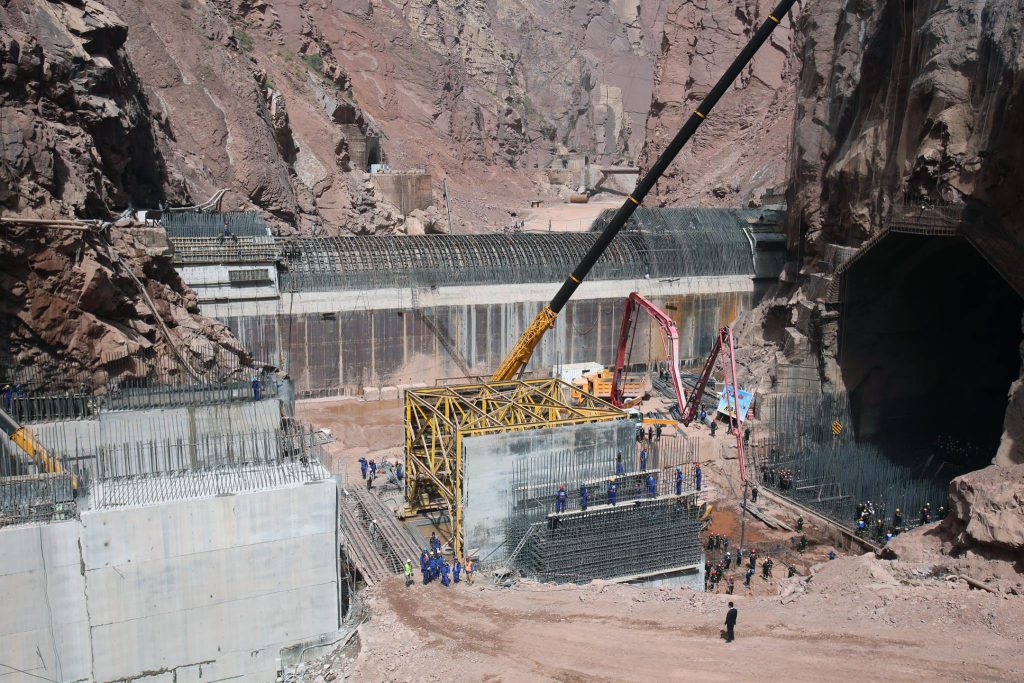
The Saudi-based Islamic Development Bank (IDB) has been particularly active in Central Asia so far in 2024. The growing IDB role is part of Central Asian region’s foreign policy shift toward the Arab world as financial backers to replace Russia, which is devoting huge attention and resources to its war in Ukraine, and China, which is increasingly reluctant to spend large sums of money in Central Asia after pouring in tens of billions of dollars there during the last 25 years. Some of the Central Asian governments owe China substantial amounts of money that they are unlikely to be able to pay for possibly decades. The Central Asian states have been members of the IDB for many years. Kyrgyzstan was first, joining in 1993, followed by Turkmenistan in 1994, Kazakhstan in 1995, Tajikistan in 1996, and Uzbekistan in 2003. One of the IDB’s three regional offices is in Almaty, Kazakhstan (the other two are in Kuala Lumpur, Malaysia and Rabat, Morocco).  The IDB has been dealing individually with the five Central Asian countries on a wide range of projects and programs in recent months. Energy Resources In February, Tajik Minister of Economic Development and Trade Zavqi Zavqizoda announced a deal was reached for the IDB to provide $250 million to Tajikistan. Zavqizoda said $150 million of that would go toward construction of the Rogun hydropower plant (HPP).  The Rogun HPP was a Soviet-era project. Construction started in 1976 but was discontinued shortly after the Soviet Union collapsed. Tajikistan restarted work on the HPP in 2008. Tajik President Emomali Rahmon has repeatedly said that building the HPP with a planned 3600 MW capacity will make the country energy independent and even allow Tajikistan to bring in extra revenue exporting electricity to neighboring countries.  In its 28 years as an IDB member, Tajikistan had received some $620 million from the IDB, so the $250 million announced in February 2024 represents a significant jump in IDB financial help. Not surprisingly, when IDB President Muhammad Al-Jasser visited Kyrgyzstan in June, Kyrgyz President Sadyr Japarov sought IDB investment in the Kambar-Ata-1 HPP, another decades-old project with a multi-billion-dollar price tag that has barely made any progress in being realized during the 33 years Kyrgyzstan has been independent. Al-Jasser did not commit to IDB financing for the Kyrgyz HPP. However, less than a week after Al-Jasser was in Kyrgyzstan, the IDB was one of several international financial organizations that signed on at a conference in Vienna to be a members of a coordination donors’ committee for the Kambar-Ata-1 projects. At a meeting in Istanbul in February, the IDB reaffirmed its support for the Central Asia-South Asia-1000 (CASA-1000) project that aims to export electricity from HPPs in Kyrgyzstan and Tajikistan to Afghanistan and Pakistan. Kyrgyz Energy Minister Taalaybek Ibrayev met with Al-Jasser in June during the latter’s visit to Kyrgyzstan to discuss funding for Kyrgyzstan’s section of CASA-1000. Not Only Energy In June, the IDB pledged up to $2 billion in funding for improvements to water management...