• KGS/USD = 0.01144 0%
  • KZT/USD = 0.00213 0%
  • TJS/USD = 0.10562 0%
  • UZS/USD = 0.00008 0%
  • TMT/USD = 0.28530 0%
  • KGS/USD = 0.01144 0%
  • KZT/USD = 0.00213 0%
  • TJS/USD = 0.10562 0%
  • UZS/USD = 0.00008 0%
  • TMT/USD = 0.28530 0%
  • KGS/USD = 0.01144 0%
  • KZT/USD = 0.00213 0%
  • TJS/USD = 0.10562 0%
  • UZS/USD = 0.00008 0%
  • TMT/USD = 0.28530 0%
  • KGS/USD = 0.01144 0%
  • KZT/USD = 0.00213 0%
  • TJS/USD = 0.10562 0%
  • UZS/USD = 0.00008 0%
  • TMT/USD = 0.28530 0%
  • KGS/USD = 0.01144 0%
  • KZT/USD = 0.00213 0%
  • TJS/USD = 0.10562 0%
  • UZS/USD = 0.00008 0%
  • TMT/USD = 0.28530 0%
  • KGS/USD = 0.01144 0%
  • KZT/USD = 0.00213 0%
  • TJS/USD = 0.10562 0%
  • UZS/USD = 0.00008 0%
  • TMT/USD = 0.28530 0%
  • KGS/USD = 0.01144 0%
  • KZT/USD = 0.00213 0%
  • TJS/USD = 0.10562 0%
  • UZS/USD = 0.00008 0%
  • TMT/USD = 0.28530 0%
  • KGS/USD = 0.01144 0%
  • KZT/USD = 0.00213 0%
  • TJS/USD = 0.10562 0%
  • UZS/USD = 0.00008 0%
  • TMT/USD = 0.28530 0%

Viewing results 343 - 348 of 2438

Kazakhstan Recasts Its Foreign Policy at the United Nations

Several days ago I argued here that Kazakhstan’s diplomacy had begun to try to move from survival-mode balancing into a more entrepreneurial phase, testing its accumulated diplomatic capital on the world stage. President Kassym-Jomart Tokayev’s September 24, 2025, speech to the United Nations General Assembly confirms this. It was a statement of intent, marking a departure from decades of careful multivectorism toward a doctrine of initiative and responsibility. The speech sought to anchor a claim that Kazakhstan is not only balancing among vectors but weaving them into a systemic position of leverage to support active participation in the agenda-setting of global affairs. The multivector line, crafted under Nazarbayev, kept Moscow, Beijing, and Western capitals equidistant during a period when Kazakhstan’s priority was survival and gradual integration. The price of that prudence was that the distinct voice that Astana was trying to cultivate could not be heard. The country appeared more like a venue for great-power competition rather than an autonomous actor in favor of its own interests. On the UNGA stage, Tokayev did not abandon the old formula outright. Instead, he pressed it into service as a platform for what he called “bridge building,” but which looks in practice like a bid to shape the rules of the international order, instead of merely accommodating them. Railways, Corridors, and Diplomacy in Motion Tokayev declared to the Assembly: “Kazakhstan today carries eighty percent of all overland freight between Asia and Europe. By 2029, we will build five thousand kilometers of new railway to strengthen the Middle Corridor.” These words accompanied the announcement, only a few days before, of a multibillion-dollar deal with the American company Wabtec for the purchase of three hundred locomotives over ten years. Timed with his UN appearance itself, the announcement highlighted Tokayev's view of infrastructure as diplomacy. In systems terms, railways are not discrete projects but nodes in a meso-level build-out capable of reconfiguring macro-level flows. By embedding a commercial contract into the theater of UNGA, Tokayev gave it a transformational headline. The “Middle Corridor” now functions in two registers. In one, it is freight tonnage, Caspian ferry capacity, Azerbaijan–Georgia transit. In the other, it is a political instrument. Only weeks before UNGA, Astana hosted talks that facilitated the U.S.-backed Armenia–Azerbaijan declaration. By enabling that dialogue, Kazakhstan projected itself into the South Caucasus as an intermediary claiming credibility with both sides. Hosting the South Caucasus dialogue projected Astana's view of itself as a systems-level creator of interdependence at the infrastructural level. From there, the loop feeds back to the structuration of political behavior. Economically, Kazakhstan remains the only Central Asian state with diversified sources of foreign direct investment (FDI). The Netherlands and the United States together still outpace China and Russia in cumulative FDI. Uzbekistan, despite rising visibility, remains structurally dependent on its two large neighbors. By contrast, Astana uses diversification to demonstrate optionality. The locomotive deal is one example; the C5+1 dialogues with Washington are yet another. Reforming the Global Order Tokayev spoke about a “crisis of...
Uzbek Singer Concert Raided in Krasnoyarsk by Russian Guard

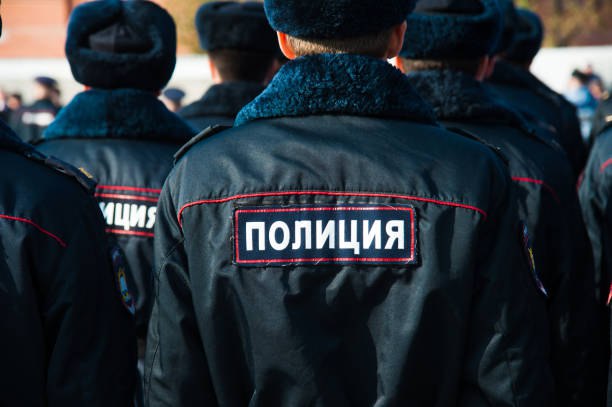
A concert by Uzbek singer Jaloliddin Ahmadaliyev in Russia’s Krasnoyarsk region was abruptly interrupted when officers from the Russian National Guard (Rosgvardiya) raided the venue with sniffer dogs and began conducting mass document checks. According to Russian state media RIA Novosti, the raid took place on September 22 at the Korona banquet hall in the Yemelyanovo district. Authorities said the operation was aimed at identifying foreign nationals in violation of migration laws and individuals potentially linked to drug trafficking. More than 600 people attended the event, and officers reportedly checked the documents of 620 individuals, including 210 foreign citizens. Witnesses said some attendees were forcibly removed from the venue, but no illegal substances or contraband were discovered during the sweep. Uzbekistan’s Ministry of Foreign Affairs confirmed the incident, stating that eight Uzbek nationals were found to be in violation of Russian migration regulations. Four were fined and ordered to be deported, while the remaining four were placed in a temporary detention facility for foreign citizens in Krasnoyarsk. The ministry stated that law enforcement actions must have a legal basis and should not disrupt cultural events. The Consulate General of Uzbekistan in Novosibirsk is providing legal assistance to the detained individuals. In a statement published via its official Telegram channel, the consulate clarified that the concert had not been coordinated with local authorities. In contrast, a previous Ahmadaliyev performance in Novosibirsk was formally approved and took place without incident. The consulate noted that the event in Krasnoyarsk was privately organized by Russian citizens in a venue not designed for large-scale cultural gatherings. While acknowledging that Russian authorities have the right to enforce migration regulations, the consulate urged that such operations not interfere with cultural events. It added that all required documentation has been submitted to local law enforcement in Krasnoyarsk for a legal review of the incident.

Caspian Pipeline Attack After Zelenskyy-Tokayev Meeting Puts Kazakhstan in Delicate Position

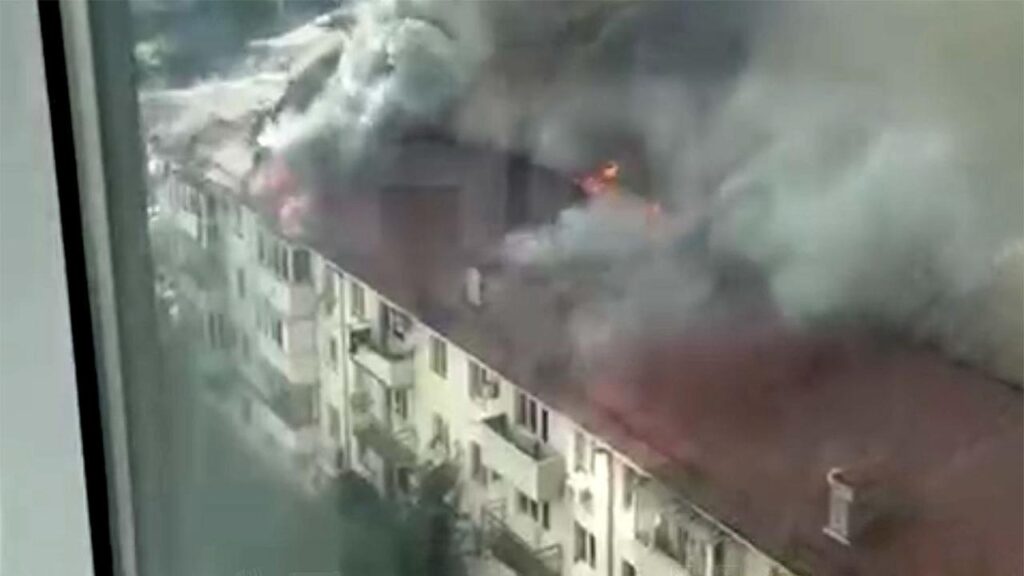
A recent drone strike on the Caspian Pipeline Consortium (CPC) office in Novorossiysk has raised concerns in Kazakhstan, whose oil exports rely heavily on the pipeline route. The attack, which killed two people and damaged nearby infrastructure, occurred just one day after Kazakh President Kassym-Jomart Tokayev met with Ukrainian President Volodymyr Zelenskyy in New York. While there is no official indication that the CPC was a deliberate target, the incident has prompted debate over the implications for Kazakhstan’s economic security and diplomatic neutrality amid the ongoing war. According to CPC, the attack struck its administrative office in central Novorossiysk during the workday. The building sustained damage in addition to nearby residential blocks and a hotel. Two CPC employees were wounded and evacuated; the office’s operations were suspended. The consortium also said others in the building, not employed by CPC, suffered serious injuries.  Authorities in the Krasnodar region confirmed two deaths and seven injuries from the strike, declaring a state of emergency in the city.  Russian media reported extensive damage to residential buildings and a hotel near the CPC office.  In response, Kazakhstan’s Ministry of Energy issued a statement assuring that pipeline operations would continue as normal. The ministry said oil intake from Kazakh shippers remains unaffected, and the transportation and loading of oil via the CPC marine terminal is proceeding without restrictions. The ministry added that it is coordinating with CPC shareholders and monitoring developments in real time.  Notably, the attack followed just 12 hours after Tokayev’s meeting with Zelenskyy in New York. According to the Kazakh presidential press service, Zelenskyy expressed his view of the war’s trajectory while Tokayev emphasized the importance of sustained diplomacy. Ukraine’s version, via its presidential press service, was more expansive: Zelenskyy thanked Tokayev for support on sovereignty, insisted on a leaders’ summit, and said Kazakhstan’s mediation role was welcome. In a later interview, Zelenskyy even floated the possibility of meeting Russian President Vladimir Putin on neutral territory such as Kazakhstan.  When asked about that proposal after the Novorossiysk attack, Tokayev stated firmly that Kazakhstan does not see itself as a mediator in the Russia-Ukraine conflict. He reiterated that both sides should engage directly, while supporting continued talks. “Talks must continue,” he said.  Kazakh political analyst Daniyar Ashimbayev noted that Tokayev’s extended commentary suggested he may feel less enthusiastic about a repeat meeting with Zelenskyy. Oil expert Olzhas Baidildinov stated that around 80 percent of Kazakhstan’s oil exports transit via the CPC; he therefore warned the strike directly threatens Astana’s interests.  Baidildinov also suggested that Kazakhstan may need to consider a range of policy responses to ensure the security of its oil export routes, including enhanced monitoring of trade and transit channels. He noted that international companies operating in Kazakhstan, particularly those using the CPC pipeline, could be indirectly affected by any future disruptions. Kazakhstan’s Foreign Ministry has not issued a public statement on the incident. Meanwhile, diplomatic engagement continues at various levels. During his visit to New York, Tokayev also met with Chevron CEO Michael...

Caspian Pipeline Consortium Workers Among Injured in Ukrainian Attack in Russia

Ukrainian drones struck Russia’s Black Sea port of Novorossiysk on Wednesday, killing at least two people and injuring others, including two employees of the Caspian Pipeline Consortium, according to Russian officials and the consortium.  “The attack targeted the central part of the city, near the Novorossiysk hotel,” said Veniamin Kondratyev, governor of the Krasnodar Krai region in Russia. “Preliminary information reports two dead and three injured. Five residential buildings, including apartment buildings, as well as the hotel building, were damaged.” Tass, the Russian state news agency, later reported that eight people were injured. The Caspian Pipeline Consortium, which is critical to the export of oil from Kazakhstan, said its office was damaged in what it described as a “massive” attack.   “Two company employees sustained injuries of varying severity and were transported to a medical facility. The administrative office's work is temporarily suspended, and the staff has been evacuated,” said the consortium, also known as CPC.     The drone strike also seriously injured people in the building who are not employees of the international crude oil transportation project, according to the CPC.  Russia, Kazakhstan and major international oil and gas companies participate in the CPC project, which primarily delivers crude oil from western Kazakhstan as well as Russian producers to a marine terminal at Novorossiysk. There, it is loaded onto tankers for delivery to international markets.  Ukraine has increasingly targeted Russia’s energy infrastructure with long-range drone attacks, raising concerns about the vulnerability of Kazakhstan’s oil industry to the long-running war.

Kazakhstan and Germany Launch Mining and Metallurgy Consortium

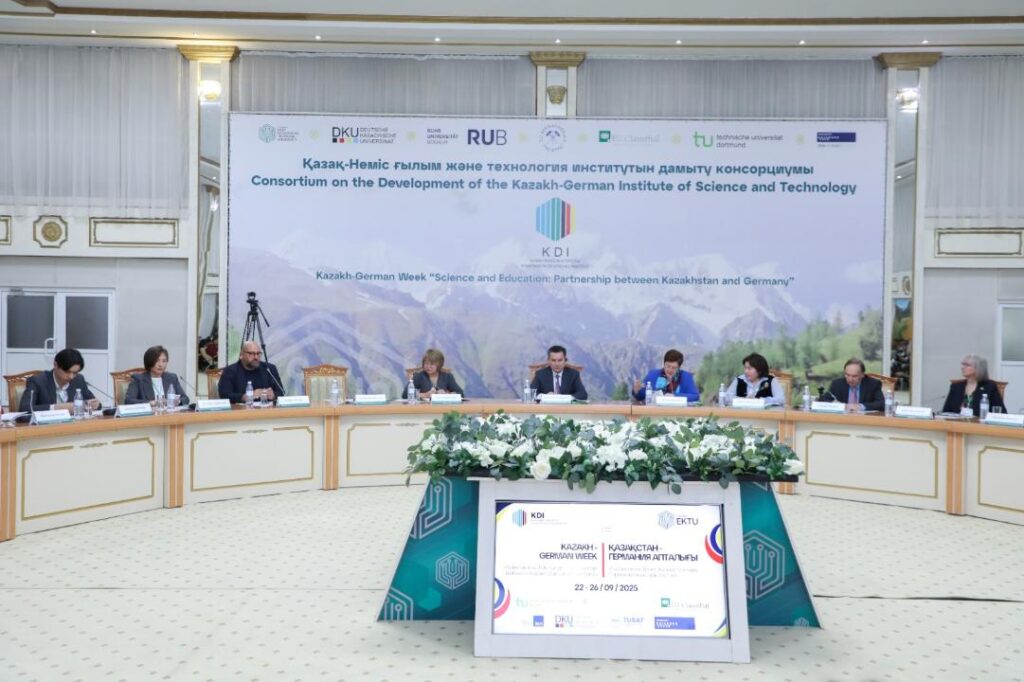
The second Kazakh-German Week, Science and Education: Partnership between Kazakhstan and Germany, opened on September 23 at Serikbayev East Kazakhstan Technical University in Oskemen (Ust-Kamenogorsk), the industrial heart of East Kazakhstan region and a key hub for the country’s mining and metallurgical sector. A major outcome of the opening ceremony was the establishment of the Consortium for the Development of the Kazakh-German Institute of Science and Technology. The institute, launched in 2024 at East Kazakhstan Technical University, focuses on specialized training for professionals in mining and metallurgy. The new Consortium brings together leading academic institutions from both countries, including Serikbayev East Kazakhstan Technical University, Kazakh-German University, Technische Universität Bergakademie Freiberg (Freiberg University of Mining and Technology), Ruhr University Bochum, Clausthal University of Technology, Technical University of Dortmund, and the University of Duisburg-Essen. Its mission is to promote joint research, academic exchange, technology transfer, and applied projects across critical industrial domains such as mining, geology, rare earth metals, energy, and environmental engineering. Key industrial players in East Kazakhstan, including Kazzinc, the Ust-Kamenogorsk Titanium and Magnesium Plant, and the Ulba Metallurgical Plant, are actively supporting the initiative through applied science and innovation partnerships. In a video address, Minister of Science and Higher Education Sayasat Nurbek emphasized that German universities remain strategic partners for Kazakhstan in developing a future-ready workforce. Officials noted that the consortium’s launch holds particular significance for East Kazakhstan, where mining and metallurgy form a cornerstone of the national industrial economy. Long-term sustainability in the sector, they said, will depend on the integration of science, innovation, and high-level technical education.

From Reform to Deals: Central Asia Steps Onto the Global Stage at UNGA-80

Ecology, global instability, and the need for UN reform dominated the speeches of all five Central Asian presidents at the 80th session of the UN General Assembly. Presenting a united front while emphasizing national priorities, the leaders made clear that Central Asia intends to play a pivotal role in shaping the global future. UN Reform Kazakh President Kassym-Jomart Tokayev was the first among the CIS leaders to address the assembly, speaking of a growing crisis of trust in multilateral institutions and calling for sweeping reforms. Tokayev emphasized the need to expand the UN Security Council, arguing that major powers from Asia, Africa, and Latin America must receive rotational representation, and that the influence of middle powers should be strengthened. “We need to create a new group of like-minded states that will professionally and decisively advance concrete proposals for reforming the UN so that it better responds to today’s challenges and tomorrow’s tasks,” he said, proposing Kazakhstan as a platform for these discussions. Uzbek President Shavkat Mirziyoyev echoed these concerns, highlighting the weakening of international institutions and the proliferation of global conflicts. He endorsed UN Secretary-General António Guterres’ UN-80 initiative and voiced support for the Pact for the Future, which sets out commitments to strengthen multilateral cooperation and address global challenges through 2045, the UN’s centenary. Mirziyoyev also advocated for an expanded Security Council to better represent developing countries. In his address, Kyrgyz President Sadyr Japarov called for a more just and representative Security Council, underscoring Africa’s right to greater participation. He also announced Kyrgyzstan’s candidacy for a non-permanent seat on the Security Council for 2027-2028, noting that his country has never before held such a position. Tajik President Emomali Rahmon warned of growing instability, uncertainty, and complexity in world affairs. Rahmon stressed the UN’s role as a platform for dialogue and cooperation and called for equal partnerships between large and small states to restore adherence to international law. Turkmen President Serdar Berdimuhamedov argued that the current global situation requires a "decisive shift toward coordinated interaction among states and international organizations to maintain peace and security.” He proposed declaring 2028 the Year of International Law to strengthen the legal foundations of global cooperation. Ecology and Finance On environmental issues, the Central Asian leaders focused on national and regional concerns. Tokayev addressed the ongoing shallowing of the Caspian Sea, while both he and Mirziyoyev raised the issue of the Aral Sea crisis, often described as "one of the world’s worst environmental disasters." Rahmon highlighted the rapid disappearance of glaciers, a point supported by Japarov, given the critical dependence of Kyrgyzstan and Tajikistan on mountain water resources. Berdimuhamedov, meanwhile, proposed establishing a regional center for combating desertification in Central Asia. Other initiatives included the proposed Caspian Environmental Forum in 2026 and continued advancement of the Caspian Environmental Initiative, originally introduced by Ashgabat. Financial concerns were also prominent. Rahmon called for reforms to international financial mechanisms, citing the continued suffering of vulnerable developing countries from the impacts of economic crises, poverty, disease, natural disasters,...