• KZT/USD = 0.00210
  • TJS/USD = 0.10810
  • UZS/USD = 0.00008
  • TMT/USD = 0.29850
  • KZT/USD = 0.00210
  • TJS/USD = 0.10810
  • UZS/USD = 0.00008
  • TMT/USD = 0.29850
  • KZT/USD = 0.00210
  • TJS/USD = 0.10810
  • UZS/USD = 0.00008
  • TMT/USD = 0.29850
  • KZT/USD = 0.00210
  • TJS/USD = 0.10810
  • UZS/USD = 0.00008
  • TMT/USD = 0.29850
  • KZT/USD = 0.00210
  • TJS/USD = 0.10810
  • UZS/USD = 0.00008
  • TMT/USD = 0.29850
  • KZT/USD = 0.00210
  • TJS/USD = 0.10810
  • UZS/USD = 0.00008
  • TMT/USD = 0.29850
  • KZT/USD = 0.00210
  • TJS/USD = 0.10810
  • UZS/USD = 0.00008
  • TMT/USD = 0.29850
  • KZT/USD = 0.00210
  • TJS/USD = 0.10810
  • UZS/USD = 0.00008
  • TMT/USD = 0.29850

Viewing results 37 - 42 of 1815

New Kyrgyzstan Ship Registry Raises Oversight Questions

Kyrgyzstan is preparing to enter the global ship-registration market despite having no direct access to the sea, a move that could generate revenue but also expose the country to new regulatory and reputational risks. Kyrgyz lawmakers have adopted legislation allowing merchant ships to register under the national flag, giving the landlocked Central Asian country a potential foothold in an industry normally associated with maritime powers. Lawmakers approved the Merchant Shipping Code and related legislation in late June, including provisions for Kyrgyzstan's accession to 14 international conventions developed under the International Maritime Organization (IMO). The Ministry of Economy and Commerce says the code gives Kyrgyzstan the legal tools to regulate merchant shipping and formalizes its right, under international law, to access the seas and participate in maritime trade, despite having no coastline. In practical terms, the legislation allows seagoing vessels to be registered under the Kyrgyz flag and lays the groundwork for an International Ship Register. It also sets out rules on maritime safety, seafarers’ rights, insurance, and shipowner liability. The move follows Kyrgyzstan’s accession to the IMO in 2024, when it became the organization’s 176th member state. Officials have presented the legislation as a way to give Kyrgyz-registered ships international recognition, attract investment, and create opportunities for Kyrgyz companies in global shipping. The more immediate use case is simpler: a ship registry can generate fees by allowing foreign-owned vessels to sail under a national flag. According to 24.kg, ministry officials told parliament that the registry could eventually bring Kyrgyzstan $10 million-$15 million a year, though they said exact calculations were not yet possible because the number and tonnage of future vessels were unknown. That model is legal and not unusual. Mongolia, another landlocked Asian state, operates a ship registry and was cited by Deputy Economy Minister Sultan Akhmatov when he presented the draft code to lawmakers. But several deputies were unconvinced. Dastanbek Dzhumabekov said the government needed to explain the proposal in clearer language, asking what the code would actually give the country and whether it would become another document that “gathers dust.” Another concern is control. In May, Dzhumabekov warned that if a vessel sailing under the Kyrgyz flag carried sanctioned goods, the result could be a damaging international scandal. Another deputy, Bolot Sagynayev, later claimed that open shipping databases already showed more than 100 vessels sailing under the Kyrgyz flag. Akhmatov said Kyrgyzstan had issued no such permissions, because the maritime administration and ship register had not yet been created, and suggested the listings could be fraudulent. The registry could prove attractive to foreign shipowners looking for a new flag jurisdiction. Open ship registries, often described as “flags of convenience,” are widely used in global shipping and are not illegal. But they have also come under scrutiny because vessels involved in sanctions evasion and shadow-fleet activity often change flags, obscure ownership, or rely on weak registry oversight. There is no evidence that Kyrgyzstan’s new registry is intended for sanctions-busting. But if the country builds a fleet on paper rather...

CSTO Says Tajik-Afghan Border Security Remains “Complicated”

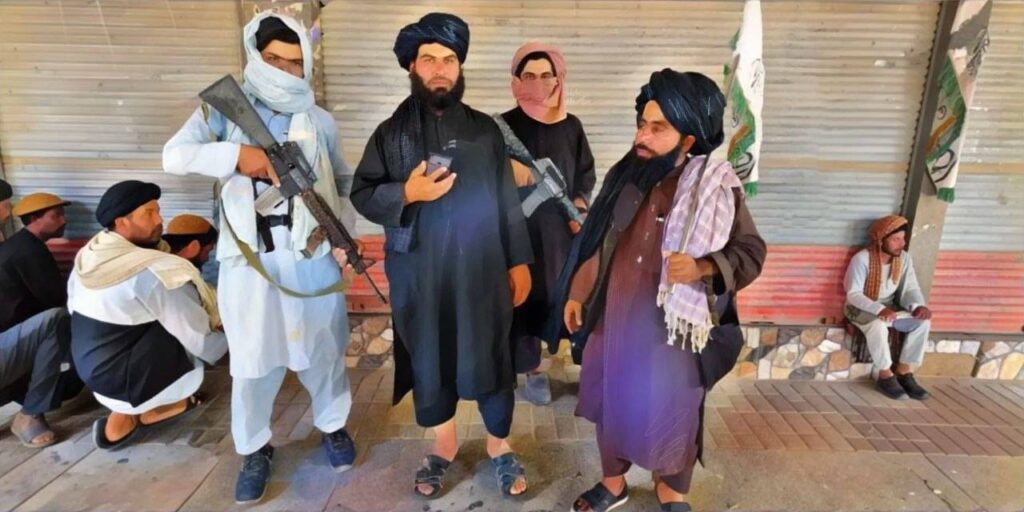
A top official of the Collective Security Treaty Organization, an alliance of some post-Soviet states,says its main challenge in Central Asia continues to be the threat emanating from militants in Afghanistan’s northern border region. Viktor Vasilyev, chairman of the alliance’s Permanent Council, said this week that member countries plan to increase efforts to counter militants who, according to Tajik and Chinese authorities, have attacked Chinese-backed businessinterests and staged other sporadic cross-borderincidents affecting Tajikistan. Afghanistan’s ruling Taliban have expressed regret for the attacks but security remains fragile in the remote, rugged border region. “Despite Russia's and several Central Asian countries' efforts to establish contacts with the current authorities in Kabul, the security situation remains complicated," Vasilyev said at a forum in St. Petersburg, Russia. He described the problem as the CSTO’s “main concern” in the region, according to Russian state news agency Tass. "We plan to increase our joint efforts here, including to neutralize the militants and extremist groups that continue to accumulate on Afghanistan's northern borders," Tass quoted Vasilyev as saying. He described the shelling of Tajikistan's territory by militants in Afghanistan as a “particular concern." The Collective Security Treaty Organization, or CSTO, has previously provided equipment and engaged in joint military exercises aimed at strengthening Tajikistan’s forces on the 1,200-kilometer border with Afghanistan.   Member countries are Russia, Belarus, Kazakhstan, Kyrgyzstan, Tajikistan and Armenia. However, Armenia has suspended its participation in the alliance, reflecting its dissatisfaction with what it says was CSTO inaction during past military conflict between Armenia and Azerbaijan. Additionally, Armenia is pursuing closer ties with Europe and the United States.   At the St. Petersburg forum this week, Vasilyev said top leaders of the security alliance will discuss Armenia’s status in the group. Vasilyev, a longtime Russian Foreign Ministry official, took over the rotating position of chairman at the CSTO in January and will stay in the post until the end of 2026.

Turkmenistan, Azerbaijan Tighten Ties, Supporting Middle Corridor

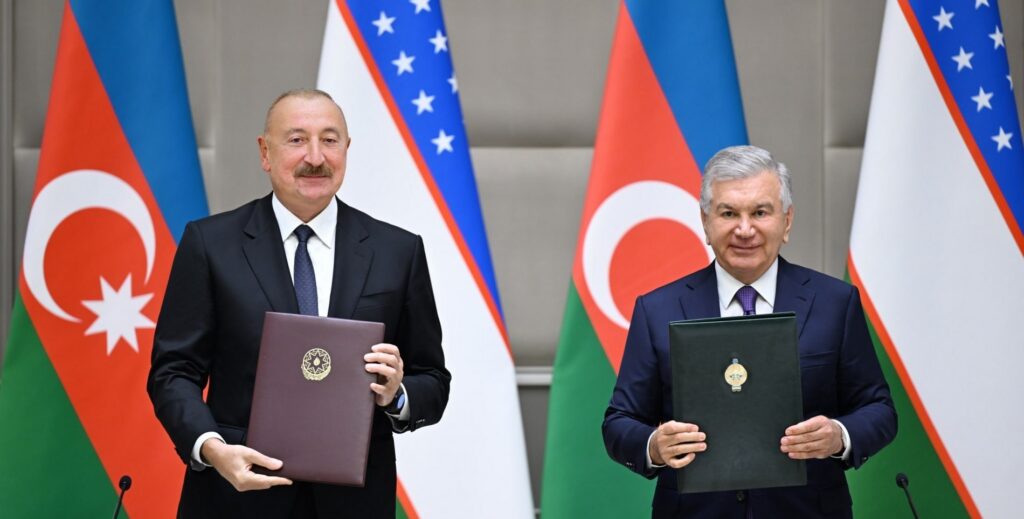
The main maritime route between Turkmenistan and Azerbaijan is about 300 kilometers long, linking the area around the Azerbaijani capital of Baku on the west coast of the Caspian Sea to Turkmenbashi port on the east coast. Now the leaders of the two countries are pursuing a years-long effort to bring their nations closer together – economically and diplomatically. The growing cooperation has broader implications for international trade because the Caspian Sea route is a critical part of a trade network dubbed the Middle Corridor, which connects China and Europe via Central Asia, the Caucasus, and Türkiye. The Middle Corridor has become more important because Russia and Iran, two other countries that have Caspian coastlines, have seen their economies and trade links come under pressure because of war, regional tension, and sanctions. North of Turkmenistan, Kazakhstan also borders the sea and views it as a key alternative to more traditional trade routes through Russia that have become problematic because of Western sanctions aimed at punishing Moscow over its war with Ukraine. President Serdar Berdimuhamedov of Turkmenistan visited Azerbaijan earlier this week and was welcomed by President Ilham Aliyev, who noted the value of their governments’ collaboration on transport and logistics to the wider world. “Of course, cooperation between our countries in this area is already long-term, I would even say that it is of strategic importance not only for us, not only for our neighbors, but also for a wide geography,” Aliyev said on Monday. “Because today in the world there are not so many very reliable, safe transport routes connecting countries that cooperate with each other.” Aliyev thanked Turkmenistan for welcoming Azerbaijan into the Consultative Council of Heads of State of Central Asia, even though the South Caucasus country is not geographically part of Central Asia. The step, the Azerbaijani president said, recognizes cultural and historical ties as well as regional challenges, creating “the prerequisites for the recognition of the great Central Asia as a single geopolitical and geoeconomic region.” Turkmenistan’s state media said upgraded port facilities in Baku and Turkmenbashi were making the transit of cargo between Asia and Europe more efficient. The leaders of Azerbaijan and Turkmenistan signed deals on energy, trade, and agriculture during Berdimuhamedov’s visit. Several years ago, the two countries resolved a dispute over an offshore oil and gas field in the Caspian, agreeing to jointly develop it in a deal that removed a hurdle to warmer relations. There were also personal touches by the two men, both of whom succeeded their fathers as president. Berdimuhamedov laid flowers at the grave of Heydar Aliyev, a former Soviet official who became president of Azerbaijan and was succeeded after his 2003 death by Ilham, his son. The Turkmen president then paid tribute to Zarifa Aliyeva, a prominent ophthalmologist who was Heydar Aliyev’s wife and the mother of the current president. She died in 1985. On Thursday, after Berdimuhamedov´s visit to Azerbaijan, the Turkmen president’s father discussed “priority areas” of the relationship between the two countries in...

Tajikistan and UK Expand Cooperation in Education and Science

Tajikistan and the United Kingdom intend to expand cooperation in education, science, and specialist training. These issues were discussed by Tajikistan’s Minister of Education and Science Rahim Saidzoda and the UK ambassador to Dushanbe, Katherine Smitton, Avesta.tj reported. Representatives of the British Embassy and officials from Tajikistan’s Ministry of Education and Science also attended the meeting. The ministry’s press service described a memorandum of understanding as a key step in expanding the partnership. The agreement is between Tajikistan’s Ministry of Education and Science and the UK Foreign, Commonwealth & Development Office. It was signed in London on February 26, 2026. It provides for cooperation in science and higher education, including English for Specific Purposes. The ministry said the agreement covers student and faculty exchanges and joint research. It also includes English-language teaching and digital technologies in education. The two sides discussed closer ties between universities in Tajikistan and UK institutions. They discussed links with the University of Oxford and the University of Cambridge. Cooperation with the University of Westminster and the British Council was also raised. The participants reviewed Tajikistan’s delegation’s participation in the Education World Forum 2026 in London. The talks also covered opening a branch or representative office of a leading UK university in Tajikistan. They discussed joint educational programs and dual degrees. Other topics included artificial intelligence in education and inclusive education. The participants said they would continue academic exchanges and improve education quality assessment systems. They also discussed research and innovation cooperation. Smitton said the UK was ready to continue supporting joint projects in education and scientific research, including English-language teaching. She also praised education reforms in Tajikistan.

The Fragile U.S.–Iran Truce: What Central Asia Stands to Gain and Lose

The preliminary memorandum signed in mid-June between the United States and Iran, followed by renewed talks between Washington and Tehran, has extended a U.S.–Iran truce and opened a 60-day window for negotiations on a final agreement. The nuclear terms remain unresolved, while Israel’s continued military presence in southern Lebanon, despite U.S. pressure for a withdrawal, underscores how fragile the broader regional de-escalation remains. At the end of this period, the parties may sign a final agreement, return to hostilities, or mutually agree to extend the interim arrangement. Kazakhstan, Uzbekistan, Kyrgyzstan, and Tajikistan, along with neighboring Azerbaijan, have welcomed efforts to de-escalate the conflict between the United States and Iran. The fighting briefly boosted demand for alternative routes through Central Asia, but prolonged instability would disrupt trade, raise transport and insurance costs, and increase security risks. The question now is what the region could gain if the pause holds. Those effects would vary across the region. Turkmenistan and Uzbekistan stand to benefit most directly from safer southern rail access through Iran to the Persian Gulf and Türkiye. Kyrgyzstan and Tajikistan, which are less directly connected to these corridors and less exposed to oil price swings, would feel the consequences mainly through freight costs, fuel prices, and wider regional trade. For Azerbaijan, a sustained pause would reinforce its role as the Caspian link between Central Asia, the South Caucasus, and Türkiye, while renewed instability would push more freight toward Trans-Caspian alternatives. That interest is not merely theoretical. Tajik-Iranian trade reached $119.6 million in the first quarter of 2026, while Tajikistan and Kyrgyzstan are developing access to Iranian maritime infrastructure through Uzbekistan and Turkmenistan. The opportunity, however, is conditional. A truce can reduce military risk, but it does not by itself remove the banking, insurance, and compliance problems that have long complicated trade through Iran. For Central Asian exporters and logistics companies, the question is not only whether routes are physically open, but whether carriers, lenders, insurers, and buyers are prepared to use them during a temporary 60-day window. Analysts interviewed by Deutsche Welle said the framework leaves several important provisions unresolved, making a final agreement uncertain. For Central Asia, the most immediate economic variable is the Strait of Hormuz. Kazakh historian and political analyst Sultan Akimbekov identifies its reopening as the key to easing global supply fears. A durable reopening, combined with the temporary U.S. waiver allowing Iranian oil sales through August 21, could put downward pressure on global energy prices. The effects would vary across Central Asia: weaker prices could strain hydrocarbon revenues, while lower fuel, fertilizer, and freight costs could ease imported inflation in Uzbekistan, Kyrgyzstan, and Tajikistan. For Kazakhstan, lower global oil prices would have significant implications. National Bank Governor Timur Suleimenov has said oil generates more than 50% of the country’s export revenues and over 30% of the state budget and National Fund revenues. That would reverse one of the conflict’s few short-term economic benefits for Kazakhstan. Higher crude prices had briefly improved the outlook for export revenues,...

Tokayev’s Brussels Visit Brings Aviation Pact, Visa Progress and $12 Billion Business Package

President Kassym-Jomart Tokayev left Brussels with a broader package than the transport announcements that opened his two-day visit on June 22-23. Kazakhstan and the European Union signed an aviation agreement, completed talks at negotiators’ level on easier short-stay visas, backed new road and mineral projects, and endorsed an Air Astana aircraft order worth €7.145 billion. Tokayev also said the business program produced commercial agreements and memoranda worth more than $12 billion. Tokayev met with European Council President António Costa and European Commission President Ursula von der Leyen on June 23. Their joint statement placed connectivity, energy security and resilient supply chains at the center of the relationship. Von der Leyen called Kazakhstan “a global gateway” and said the EU was ready to turn it into “a pathway for jobs, business opportunities and common prosperity.” Negotiators completed talks on Visa Facilitation and Readmission Agreements, opening the way for internal approval procedures. The visa agreement would simplify applications for short stays in the EU, though the agreement would not create visa-free travel and has not yet entered into force. The two sides also signed a Horizontal Aviation Agreement after negotiations lasting more than two decades. Once internal procedures are complete, any eligible EU airline will be able to operate between Kazakhstan and 17 member states that already have air service arrangements with Astana. Existing rules generally reserve those rights for airlines owned or controlled by nationals of the country concerned. EU Transport Commissioner Apostolos Tzitzikostas said the pact would bring “our people and economies closer together.” A separate agreement covered up to 50 Airbus A320neo and A321neo aircraft for Air Astana. The joint statement valued the order at €7.145 billion. That transaction formed the largest named item within the more than $12 billion in commercial agreements and memoranda announced during the visit. Tokayev presented the total as evidence of European business confidence in Kazakhstan. Transport and connectivity remained the backbone of the trip. Before the leaders met, Kazakhstan and its European partners unveiled four Middle Corridor agreements worth a combined $462 million. They included airport digitalization work with SITA, an EBRD-backed loan for the 234-kilometer Aktobe-Ulgaisyn road, a KTZ Express project at Romania's Port of Midia, and cooperation with A.P. Moller-Maersk on container traffic across the Trans-Caspian route. The leaders welcomed a European Investment Bank framework agreement of up to €150 million for Kazakh roads along the Trans-Caspian Transport Corridor. An EBRD memorandum will support an internationally accredited chemical-analytical laboratory for critical raw materials. Other documents cover intelligent transport systems, the E-Zholdary road platform and a minerals and metals center of excellence. Brussels also encouraged the EIB to open an office in Astana. These projects connect the visit to the EU's effort to build a reliable route between Central Asia and Europe through the Caspian Sea, Azerbaijan, Georgia and Türkiye. Tokayev said annual freight volumes had risen from 800,000 tons to 4.1 million tons over six years. Kazakhstan aims to raise the corridor’s capacity to 10 million tons, but ports, railways, border...