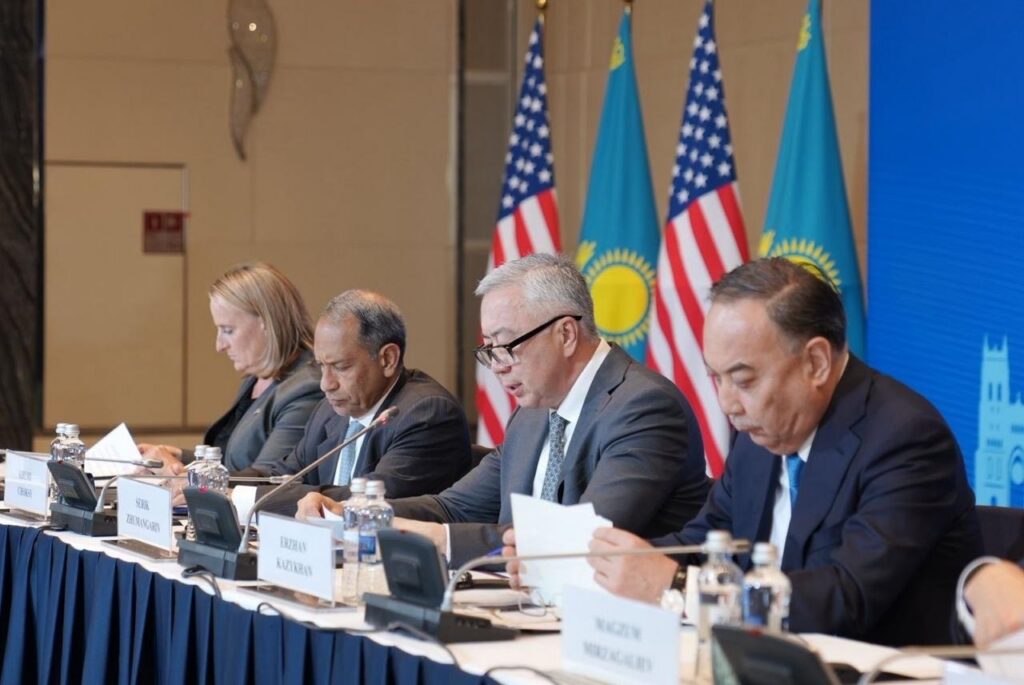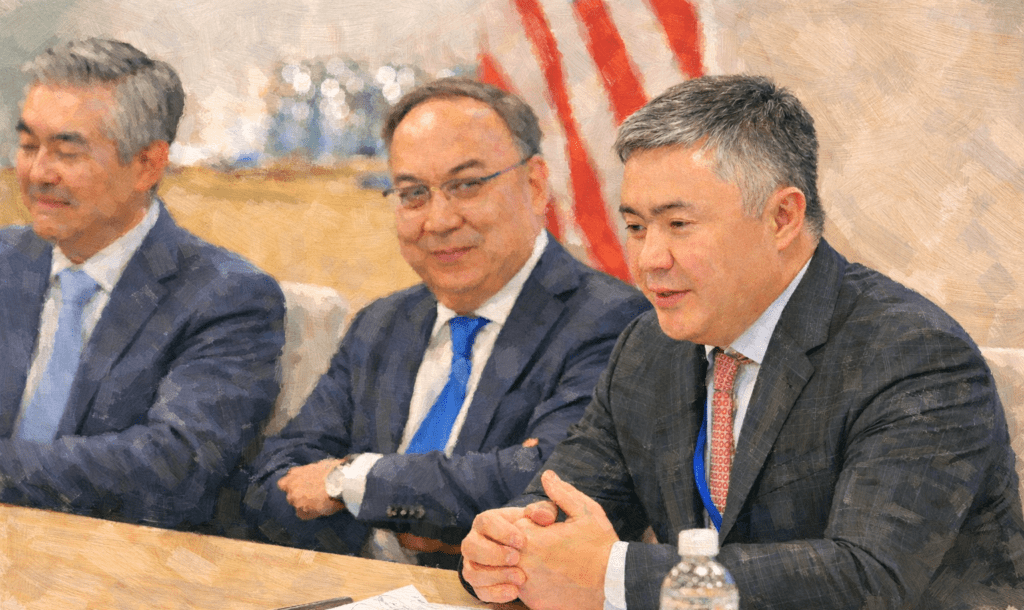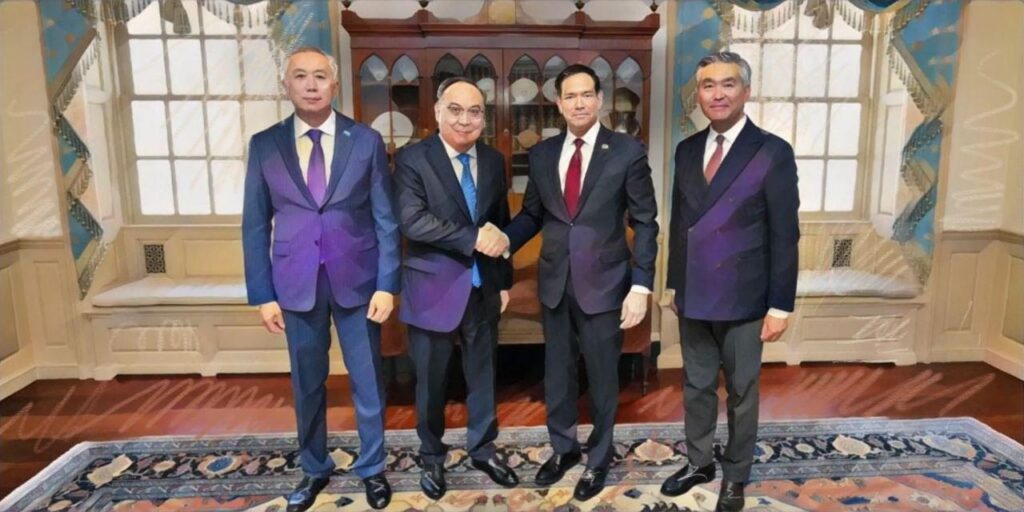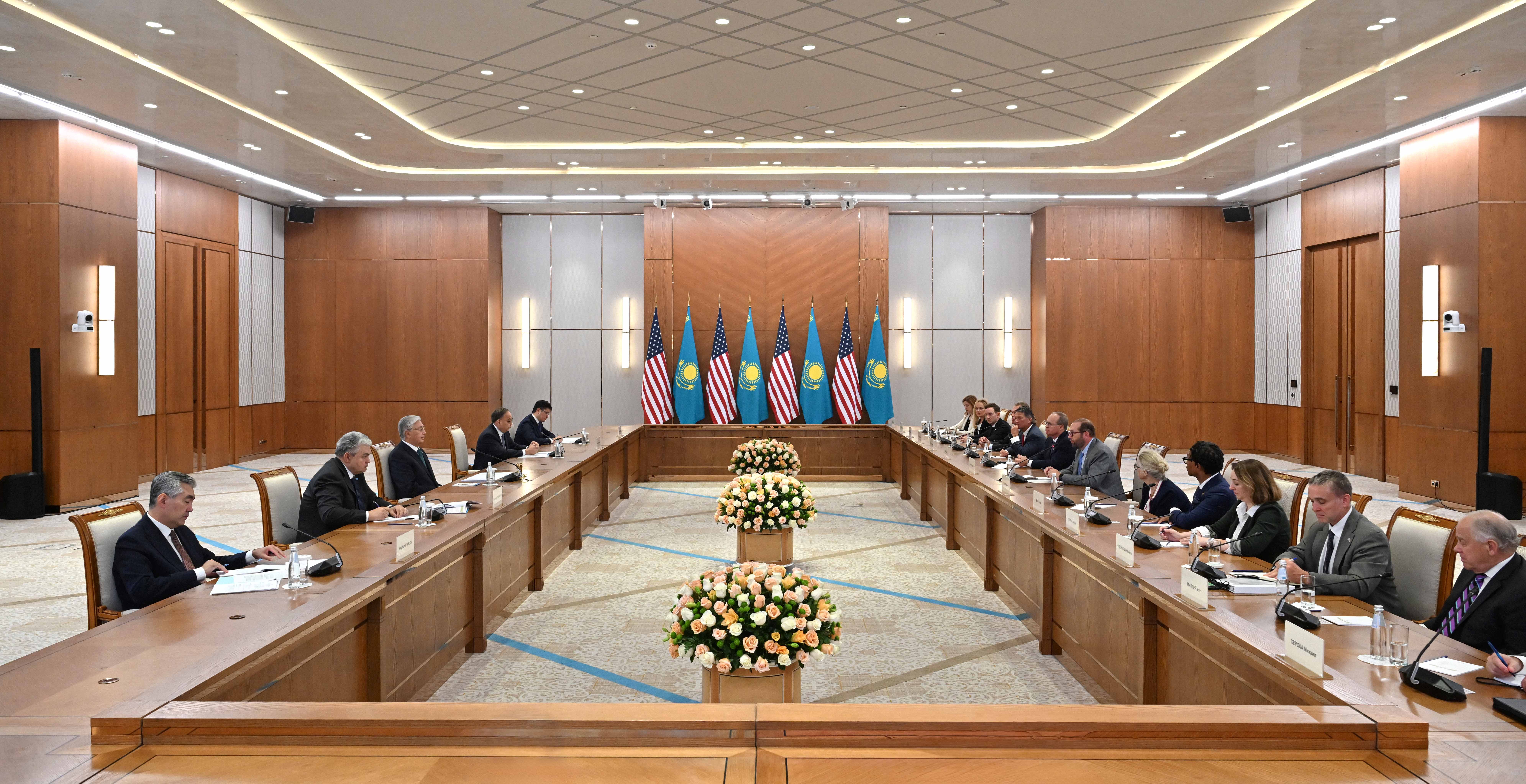
A bipartisan six-member delegation from the U.S. House of Representatives met with President Kassym-Jomart Tokayev in Astana on August 25, two days after Kazakhstan elected the first members of its new unicameral Kurultai. Tokayev called the timing symbolic and proposed closer dialogue between Congress and the new legislature.
The delegation was led by House Ways and Means Committee Chairman Jason Smith and included Greg Murphy, Carol Miller, Ronny Jackson, Wesley Bell, and Ed Case.
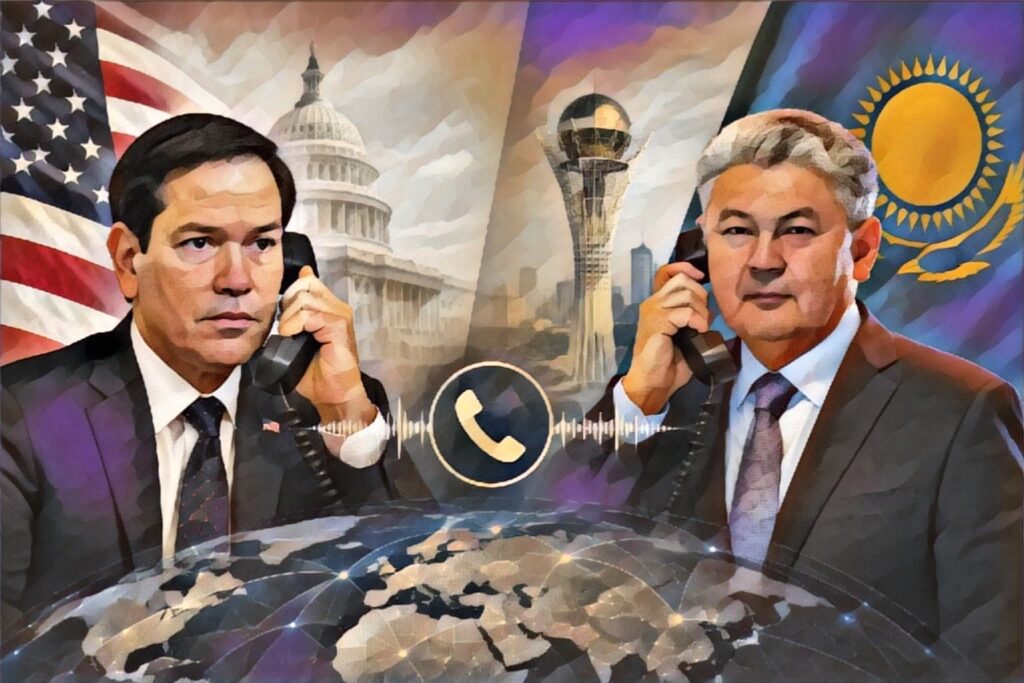
Smith said President Donald Trump had called him at 2 a.m., several hours before the meeting. Trump sent his regards, expressed appreciation for his relationship with Tokayev, and said he looked forward to the Kazakh president’s visit to Miami for the G20 summit. Smith said one purpose of the visit was to explore opportunities to expand economic ties and pursue a substantive bilateral dialogue.
The visit reinforced Congress’s role in a relationship that has recently gained momentum at the presidential level. It also showed the breadth of the emerging agenda, from trade and investment to energy security, strategic supply chains, nonproliferation, and regional stability.
A Delegation With Trade and Security Reach
The delegation’s committee assignments closely matched that agenda.
Smith, Murphy, and Miller serve on the Ways and Means Committee, which oversees trade and tariff legislation. Jackson serves on the Armed Services, Foreign Affairs, Intelligence, and Agriculture committees. Bell serves on the Armed Services, Foreign Affairs, and Oversight and Government Reform committees. Case sits on the Appropriations Committee and its Defense and Homeland Security subcommittees.
That mix places delegation members on committees with jurisdiction over many of the issues now shaping the bilateral relationship. Congress can advance cooperation through trade legislation, appropriations, oversight, and support for American companies entering or expanding in Kazakhstan.
Smith’s committee has jurisdiction over H.R. 1024, the bipartisan U.S.-Kazakhstan Trade Modernization Act, which would authorize the president to end the application of the Cold War-era Jackson-Vanik restrictions and extend permanent normal trade relations to Kazakhstan. Miller was among the bill’s original co-sponsors, although the issue was not mentioned in the public account of the meeting.
Bipartisan congressional engagement could help translate recent presidential momentum into more durable institutional ties.
Kazakhstan Has Made the U.S. Relationship a Priority
From the Kazakh side, Tokayev has treated closer ties with Washington as a presidential priority.
During his November 2025 visit to Washington, the two leaders welcomed commercial agreements worth more than $17 billion. Trump reaffirmed the U.S. commitment to the Enhanced Strategic Partnership, while the two presidents identified new areas for cooperation.
The August 25 meeting also highlighted Kazakhstan’s support for the Abraham Accords and the Board of Peace, as well as the countries’ longstanding work on nuclear security and nonproliferation. Trade, investment, advanced technology, science, education, and culture were also discussed.
Tokayev’s proposal for closer dialogue between Congress and the Kurultai would strengthen the parliamentary channel alongside the relationship’s presidential and executive-level diplomacy.
In January, Tokayev appointed veteran diplomat Erzhan Kazykhan as his representative for negotiations with the United States on priority bilateral issues. Closer ties with Washington have become an increasingly prominent pillar of Kazakhstan’s multi-vector foreign policy, backed by presidential attention, commercial agreements, and support for selected U.S.-led initiatives. Kazakhstan’s ability to deepen cooperation with the United States while maintaining important ties with other partners reflects the strategic autonomy at the core of that policy.
A Practical Agenda for Both Countries
Kazakhstan is Central Asia’s economic anchor. TCA’s Central Asia Balance Sheet shows that it has the region’s largest economy, largest inward foreign investment stock, and strongest sovereign credit rating. That gives U.S. companies a substantial base for business in Kazakhstan and the wider region.
The economic-security agenda is already concrete. Kazakh-origin material accounted for 28% of uranium delivered to U.S. civilian nuclear operators in 2025, making Kazakhstan the second-largest national source after Canada.
The U.S. International Development Finance Corporation has issued letters of interest exploring up to $700 million in debt financing and project-development funding for Cove Kaz Capital Group’s investment in the Severniy Katpar tungsten mine. Kazakhstan also offers further potential in rare earths and other critical minerals needed for energy, defense, and advanced technology.
Kazakhstan accounted for 12.7% of EU petroleum-oil imports in 2025, making it the bloc’s third-largest national supplier. Its position on the Trans-Caspian corridor also supports efforts to diversify east-west trade and transport routes. DFC has described the region as one of the world’s most strategically significant economic corridors and identified infrastructure, energy, critical minerals, and resilient supply chains as shared priorities.
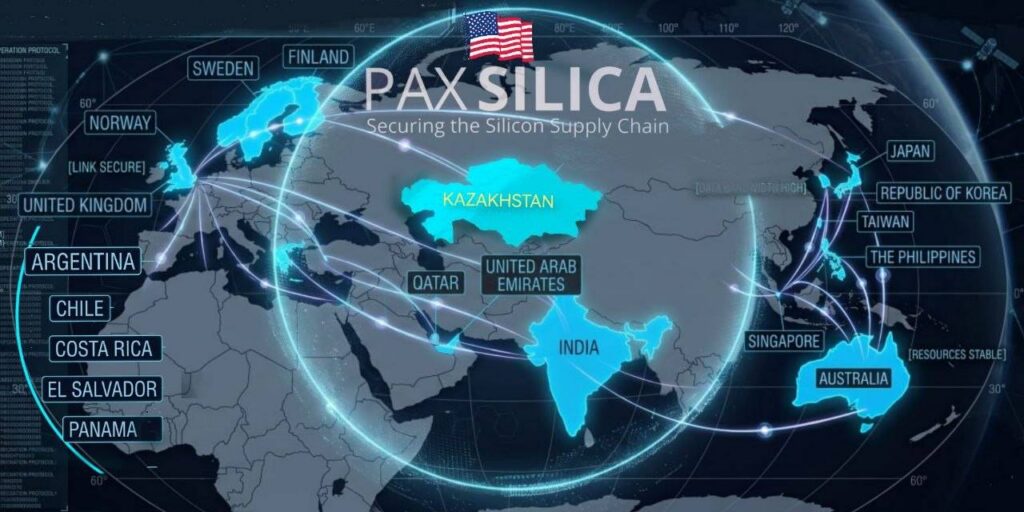
At a time of war, sanctions, infrastructure attacks, and intensifying competition over strategic resources, a strong, stable, and sovereign Kazakhstan is increasingly important to U.S. energy, mineral, nuclear-fuel, and transport supply chains.
The delegation’s regional visit also included a stop in Tashkent. On August 25, Smith, Murphy, Jackson, and Case met Uzbek President Shavkat Mirziyoyev. They discussed the U.S.-Uzbek strategic partnership, interparliamentary ties, and trade and economic cooperation. The Uzbek presidency said bilateral trade had risen by 20% since the beginning of 2026. The two sides also agreed to arrange reciprocal visits by business delegations.
The August 25 meeting in Astana reinforced the congressional dimension of a relationship that has recently gained momentum at the presidential level. Smith’s message from Trump pointed toward Tokayev’s expected participation in the G20 summit in Miami, while the delegation demonstrated bipartisan congressional interest in expanding the partnership.