• KGS/USD = 0.01144 0%
  • KZT/USD = 0.00212 0%
  • TJS/USD = 0.10761 -0.09%
  • UZS/USD = 0.00008 0%
  • TMT/USD = 0.28571 0%
  • KGS/USD = 0.01144 0%
  • KZT/USD = 0.00212 0%
  • TJS/USD = 0.10761 -0.09%
  • UZS/USD = 0.00008 0%
  • TMT/USD = 0.28571 0%
  • KGS/USD = 0.01144 0%
  • KZT/USD = 0.00212 0%
  • TJS/USD = 0.10761 -0.09%
  • UZS/USD = 0.00008 0%
  • TMT/USD = 0.28571 0%
  • KGS/USD = 0.01144 0%
  • KZT/USD = 0.00212 0%
  • TJS/USD = 0.10761 -0.09%
  • UZS/USD = 0.00008 0%
  • TMT/USD = 0.28571 0%
  • KGS/USD = 0.01144 0%
  • KZT/USD = 0.00212 0%
  • TJS/USD = 0.10761 -0.09%
  • UZS/USD = 0.00008 0%
  • TMT/USD = 0.28571 0%
  • KGS/USD = 0.01144 0%
  • KZT/USD = 0.00212 0%
  • TJS/USD = 0.10761 -0.09%
  • UZS/USD = 0.00008 0%
  • TMT/USD = 0.28571 0%
  • KGS/USD = 0.01144 0%
  • KZT/USD = 0.00212 0%
  • TJS/USD = 0.10761 -0.09%
  • UZS/USD = 0.00008 0%
  • TMT/USD = 0.28571 0%
  • KGS/USD = 0.01144 0%
  • KZT/USD = 0.00212 0%
  • TJS/USD = 0.10761 -0.09%
  • UZS/USD = 0.00008 0%
  • TMT/USD = 0.28571 0%

Viewing results 7 - 12 of 2164

Kazakhstan’s Exports Rise Nearly 10% in First Quarter of 2026

Kazakhstan increased its foreign trade turnover to $32.9 billion during the first quarter of 2026, while exports rose by nearly 10% year-on-year, according to the country’s Ministry of Trade and Integration. The ministry stated that Kazakhstan completed the January-March period with a “confident strengthening” of its foreign trade position. Amid continued strong business activity and expanding export potential, total trade turnover reached $32.9 billion, an increase of 10.5% compared to the same period in 2025, when the figure stood at $29.8 billion. “The dynamics confirm the resilience of the country’s foreign economic sector and the gradual strengthening of higher value-added products in the structure of Kazakhstan’s exports,” the ministry said. Total exports for the first quarter of 2026 rose by 9.4% to $18 billion, while imports increased by 11.8% to $14.9 billion compared to the same period last year. According to the ministry, the faster growth in imports was primarily driven by increased purchases of investment and technological goods needed for the modernization of Kazakhstan’s industrial, energy and transport infrastructure. Among the most notable increases was the import of electric generating units, which rose to $416.8 million, more than five times the previous level. Imports of gas turbines and aircraft engines, railway locomotives, and equipment for processing and sorting raw materials also increased significantly. “This structure of imports indicates sustained high investment demand within the economy and the active implementation of infrastructure and industrial projects,” the ministry said. Officials also highlighted the performance of Kazakhstan’s non-commodity trade sector. Foreign trade turnover in non-resource goods reached $20.4 billion during the first quarter of 2026, up 13.5% year-on-year. Non-commodity exports rose by 23.4% to $6.9 billion, becoming one of the main drivers of changes in Kazakhstan’s foreign trade structure. The main non-resource exports included copper and copper cathodes, silver, uranium, ferroalloys, animal feed products, and sunflower oil. Exports of sunflower oil increased by nearly 60% to $277.8 million, reflecting what the ministry described as the growing competitiveness of Kazakhstan’s processed agricultural products. Ferroalloy exports rose by 20.1%, pointing to continued growth in the metallurgical sector and wider export markets for domestically manufactured industrial goods. “Kazakhstan’s foreign trade geography remains steadily diversified,” the ministry stated. “China became the country’s largest trading partner in the first quarter, with trade turnover reaching $7.8 billion and accounting for 23.8% of total foreign trade.” Russia retained second place with bilateral trade totaling $6.5 billion, remaining Kazakhstan’s key market for imports and industrial cooperation. Italy, Turkey, and Uzbekistan also ranked among Kazakhstan’s largest trading partners. The ministry also noted Kazakhstan’s export position in Europe. Trade turnover with Italy exceeded $3.4 billion during the first quarter, with Kazakh exports accounting for more than $3 billion of that total. As previously reported by The Times of Central Asia, Kazakhstan aims to increase non-commodity exports to $52 billion by 2030.

Kazakhstan to Launch Direct Flights to Tokyo and New York Within Next 12 Months

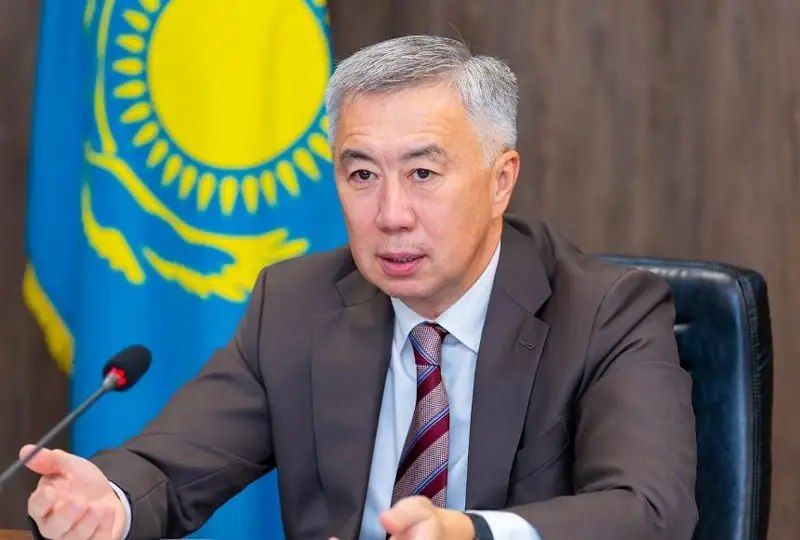
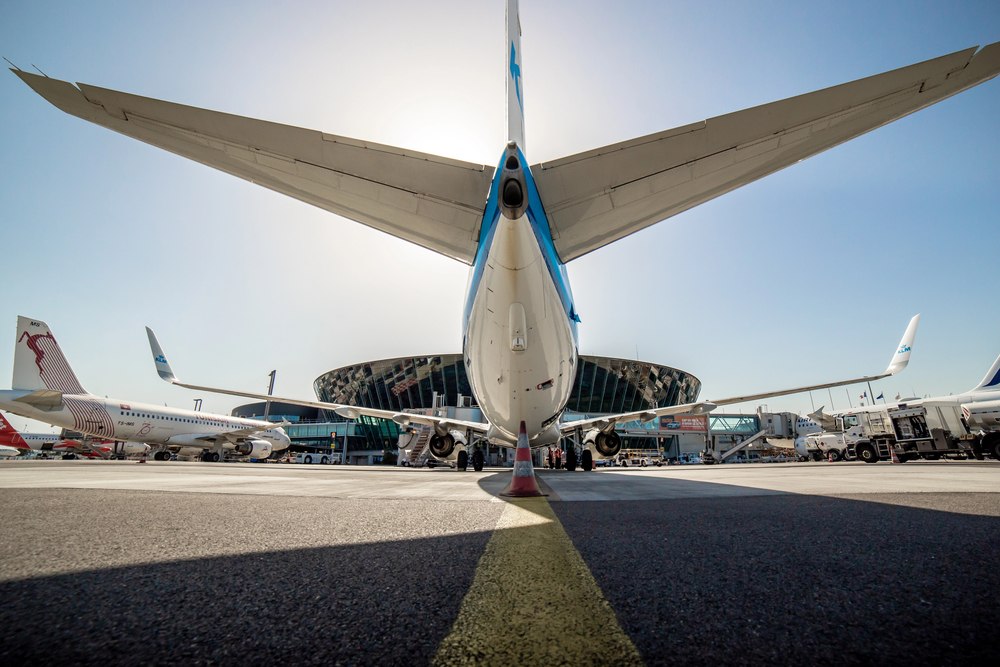
Kazakhstan plans to launch direct flights from Astana to Tokyo and New York within the next 12 months, Transport Minister Nurlan Sauranbayev said during a government meeting on Tuesday. Prime Minister Olzhas Bektenov reminded officials that the Ministry of Transport had previously pledged to open direct air links to Tokyo and New York but had yet to announce concrete results. “In the case of Tokyo, flights will begin in the fourth quarter of 2026, and flights to the United States will begin in the second quarter of 2027,” Sauranbayev said. He added that Astana currently operates 34 international routes. According to the minister, Kazakhstan has already opened four new international routes since the beginning of the year: Almaty-Shanghai, Astana-Yerevan, Atyrau-Tashkent, and Aktau-Yerevan. By the end of 2026, Kazakhstan's aviation authorities plan to open or resume 11 additional international routes, including Astana-Ulaanbaatar, Astana-Guangzhou, Astana-Issyk-Kul, Astana-Larnaca, Astana-Kashgar, Almaty-Tokyo, Almaty-Larnaca, Hanoi-Almaty-Prague, Almaty-Izmir, Almaty-Warsaw, and Kostanay-Tashkent. Meanwhile, Michael Daniel, CEO of the Aviation Administration of Kazakhstan (AAK), said work is ongoing to secure Category 1 status from the U.S. Federal Aviation Administration (FAA) under the International Aviation Safety Assessment (IASA) program, a prerequisite for launching direct flights to the U.S. Daniel said Kazakhstan has been addressing shortcomings identified during an FAA technical assessment conducted in August 2024. “We plan to invite the FAA IASA team to conduct an evaluation in September 2026. The FAA will assess Kazakhstan’s political commitment to complying with international aviation safety standards, including legislation, regulatory oversight, and practical implementation,” he said. “Our primary goal is to obtain FAA Category 1 status in November 2026,” Daniel added. Kazakhstan’s airline fleet is also expected to expand, with six additional aircraft scheduled to enter service by the end of this year. As previously reported by The Times of Central Asia, Kazakhstan’s civil aviation fleet consisted of 104 aircraft last year, with authorities aiming to increase that number to 216 by 2030. The government is also planning a major modernization of airport infrastructure over the next three years. “In accordance with the president’s instructions, work is underway on the construction of airports in the tourist zones of Katon-Karagay, Zaysan, and Kenderli, as well as the restoration of Arkalyk Airport,” Sauranbayev said. He added that aviation hub development is continuing at six major airports: Almaty, Astana, Aktau, Aktobe, Karaganda, and Shymkent. According to the minister, most airport modernization projects are being financed through private investment. As previously reported by The Times of Central Asia, Kazakhstan’s SCAT Airlines, in partnership with Boeing, has begun construction of a major aircraft maintenance, repair, and overhaul center in Shymkent.

Astana Launches First Light Rail Transit Service After Years of Delay

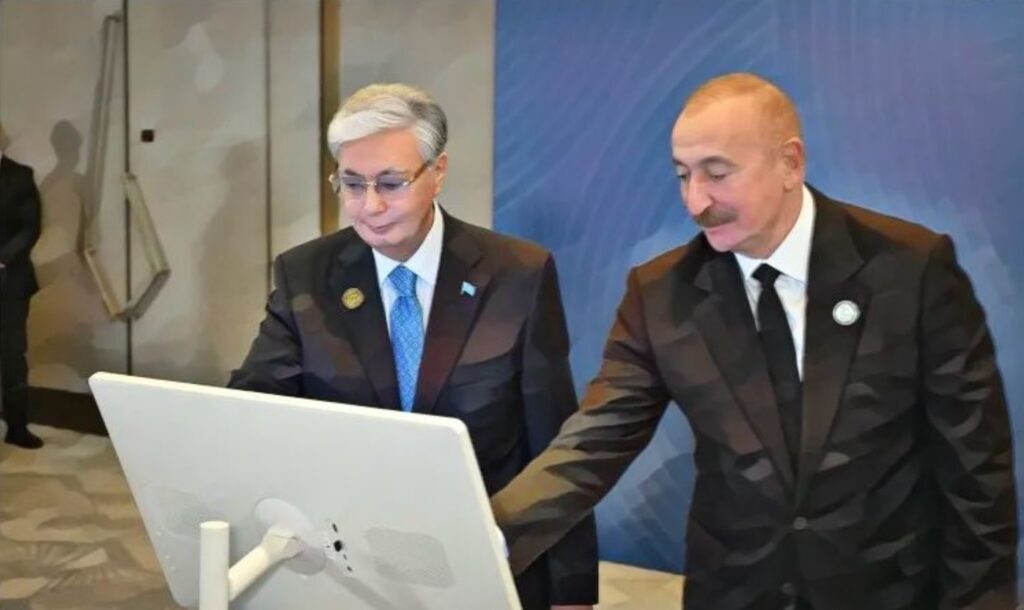
Kazakhstan has officially launched Astana’s long-awaited light rail transit (LRT) system, connecting the capital’s international airport with Nurly Zhol railway station. President Kassym-Jomart Tokayev took part in the inauguration ceremony despite previously expressing doubts about the project’s viability. The Astana LRT project, envisioned as a high-speed elevated transport system designed to bypass road congestion, was first launched in 2011. Authorities initially planned to complete construction by 2017, ahead of the international EXPO exhibition hosted in the capital. However, the project was suspended in 2013 because of rising costs. In 2015, Astana’s city administration attempted to revive the initiative with the participation of a consortium of Chinese companies, China Railway International Group Limited and Beijing State-Owned Assets Management Co., Ltd., but the contractors later withdrew because of financing problems. [caption id="attachment_49015" align="aligncenter" width="2560"] @Akorda[/caption] In 2019, criminal investigations were launched over allegations of inflated project costs and embezzlement of public funds allocated for construction. Former Astana LRT chief Talgat Ardan and former deputy mayor of Astana Kanat Sultanbekov were accused of embezzling nearly 30 billion KZT (approximately $79 million at the exchange rate at the time). In May 2023, both men were sentenced in absentia to seven years in prison. Ardan was detained in Turkey in May 2025 following an extradition request by Kazakhstan. However, to date, he has not been extradited because the legal assistance agreement between Kazakhstan and Turkey does not specify deadlines for extradition procedures. [caption id="attachment_49041" align="aligncenter" width="2560"] @Akorda[/caption] Despite Tokayev’s initial skepticism about the LRT project’s practicality, city authorities ultimately decided to complete construction. The system officially entered service this weekend, with Tokayev personally attending the launch ceremony. During a visit to the Unified Dispatch Center, which is responsible for monitoring and regulating Astana’s public transport system, including the LRT network, Tokayev described the opening as significant not only for Astana but for Kazakhstan as a whole. Tokayev said the capital should eventually become a major transportation hub for Eurasia. [caption id="attachment_49016" align="aligncenter" width="2560"] @Akorda[/caption] After receiving passenger card No. 001, Tokayev became the system’s first official passenger, traveling from the airport to the National Museum station. Astana Mayor Zhenis Kassymbek said a dedicated dispatch service for the LRT system has been established. Twenty-one specialists are involved in monitoring and regulating the city’s public transport network. Each LRT train can carry more than 600 passengers. The 22.4-kilometer line will operate with 15 trains, while four additional trains will remain in reserve. The trains operate in fully automated driverless mode. Train acceleration, braking, door operations, and emergency response systems are entirely automated, although manual control and communication with dispatchers remain available as backup systems. The new infrastructure includes 18 stations and a modern depot facility. Travel time across the entire route is expected to take approximately 40 minutes, with average speeds of 50-60 kilometers per hour. Trains are scheduled to run at intervals of five to six minutes. [caption id="attachment_49017" align="aligncenter" width="2560"] @Akorda[/caption] Authorities are already discussing a second expansion phase of the LRT network. Planned future...

Central Asia Seeks More Local Value From Critical Minerals

Rising demand for critical minerals is drawing Central Asia deeper into global supply chains, but the region’s harder test is not whether it has the deposits. It is whether more value can stay at home. Copper, tungsten, graphite, antimony, rare earths and other metals now sit at the center of battery production, power grids, chips, weapons systems, and renewable energy. Governments across the region want the sector to bring capital, jobs, and technology. The risk is another cycle in which raw materials leave the region, and most of the value is created elsewhere. The scale of the region’s reserves explains why outside interest is rising. An OECD review of critical raw materials in Central Asia says the region holds 39% of global manganese ore reserves, 31% of chromium, 20% of lead, 13% of zinc, 9% of titanium, 6% of aluminum, and 5% each of copper, cobalt, and molybdenum. The same review says Kazakhstan can export 21 of the 34 critical raw materials on the EU list, while Kyrgyzstan has the world’s third-largest antimony reserves, and Uzbekistan has the world’s eleventh-largest copper reserves. Uranium widens the picture: Kazakhstan is the world’s largest uranium producer, accounting for 39% of mined uranium supply in 2024, according to the World Nuclear Association. Kazakhstan has moved fastest in turning this base into policy. The prime minister’s office says the country will spend about $500 million over three years on geological exploration and modernizing infrastructure. The plan includes seismic surveys, new data systems, and a geological cluster in Astana. The government wants to raise geological study coverage to 2.2 million square kilometers. President Kassym-Jomart Tokayev has linked the sector to Kazakhstan’s wider industrial plans. In his 2025 state-of-the-nation address, Tokayev said the mining and metallurgical complex still had “significant growth potential, particularly in the production of high-value-added products.” New discoveries have sharpened that push. Kazakhstan’s industry ministry said in 2025 that geologists had identified the Zhana Kazakhstan rare earth site, with estimated resources of more than 20 million metric tons. The site contains neodymium, cerium, lanthanum, and yttrium. Officials have also cited the Kuirektykol site in the Karaganda Region, where confirmed reserves are estimated at 795,800 tons, with total resources estimated at 935,400 tons. Uzbekistan is making its strongest move in copper and processing capacity. In March, President Shavkat Mirziyoyev launched Copper Concentrator No. 3 at the Almalyk Mining and Metallurgical Complex. The $2.7 billion facility is designed to process 60 million tons of ore and produce about 900,000 tons of copper concentrate per year. Once fully operational, it is expected to raise daily concentrate output at Almalyk from 2,400 tons to 5,000 tons. Uzbekistan’s minerals push has also drawn U.S. support. Uzbekistan and the United States signed a memorandum on critical minerals and rare earth supply chains in February, giving Tashkent a clearer place in Washington’s effort to diversify critical minerals supply chains beyond China. The U.S. International Development Finance Corporation later signed a Joint Investment Framework with Uzbekistan, stating that this would “promote cooperation...

Kazakhstan Begins Vegetable Oil Exports to Iran via Caspian Route

Vegetable oil producers in Kazakhstan have launched a new export route to Iran across the Caspian Sea, completing several trial shipments of rapeseed and sunflower oil in spring 2026, Kazakhstan’s Ministry of Agriculture said. According to Kazakhstan’s National Association of Oilseed Processors (NAOPK), the first shipment, consisting of 5,000 tons of rapeseed oil, departed from the Port of Aktau on April 4. The buyer was the Iranian company Kourosh Food Industry, while the supplier was one of Kazakhstan’s largest oil-processing plants affiliated with the association. On May 13, loading was completed for a second vessel carrying 5,000 tons of sunflower oil. The Agriculture Ministry said the shipments demonstrate strong interest among Iranian importers in products from Kazakhstan and point to the potential of the Caspian export corridor. NAOPK Chairman Yadykar Ibragimov said the Iranian market holds significant potential for exports of Kazakhstan’s oil and fat products. According to Ibragimov, Iran imports around 3.5 million tons of vegetable oils and oilseed meal annually, including approximately 1.5 million tons of vegetable oils. “Our countries share a border across the Caspian Sea and also benefit from a preferential customs regime under the free trade agreement between the Eurasian Economic Union and Iran,” Ibragimov said. He noted that Kazakhstan exported more than 100,000 tons of oil and fat products to Iran over the past three years, with around 94% consisting of oilseed meal. “The launch of vegetable oil transshipment through the Port of Aktau will significantly increase supply volumes,” he added. According to association estimates, the Aktau route could handle three to four shipments per month, allowing annual exports of 150,000-200,000 tons of vegetable oil through the new corridor. In the longer term, exports of vegetable oils and oilseed meal to Iran could exceed 500,000 tons annually. Kazakhstan’s Agriculture Ministry said development of the route will help diversify export destinations and reduce pressure on existing logistics corridors. “The launch of this new supply channel will help move closer to the goal of increasing the sector’s foreign currency revenues to $1 billion, as outlined in the 2026-2028 Road Map,” the ministry said. Kazakhstan previously reported record sunflower oil exports: between January and October 2025, the country exported more than 523,000 tons of sunflower oil worth approximately $532 million. Authorities aim to position Kazakhstan among the world’s top three vegetable oil exporters. At the same time, Deputy Foreign Minister Arman Issetov said in April that several joint projects between Kazakhstan and Iran had been frozen amid military tensions in the region. Despite geopolitical tensions, Astana and Tehran continue expanding trade and economic cooperation. The Times of Central Asia previously reported that Kazakhstan and Iran aim to increase bilateral trade turnover to $1 billion in the coming years, with plans to eventually double that figure.

Kazakhstan Labor Minister Briefs on Kazzinc Explosion and Effects of AI

Kazakhstan’s Ministry of Labor and Social Protection is considering several possible causes behind the explosion at a Kazzinc plant in Ust-Kamenogorsk that killed three people. The incident occurred on the morning of May 5, when a dust collection unit exploded inside one of the plant’s workshops, triggering a fire and the partial collapse of structures. Two employees died at the scene, while another later died in hospital from his injuries. Five more were injured. “We are now determining the exact cause and who is responsible: whether it was non-compliance with safety regulations, failure to properly instruct workers on safety procedures, a technological malfunction at the enterprise, or a failure to replace outdated equipment,” First Vice Minister of Labor Yerbol Tuyaqbayev said during a briefing in the Senate. “We will determine the cause, and believe me, responsibility will follow,” he added. The Kazzinc plant, 70 per cent owned by Anglo-Swiss Commodity giant Glencore, has been operating at reduced capacity since the incident. Last year, Kazzinc produced over 200,000 tonnes of zinc, and more than 500,000 troy ounces of gold. According to the vice minister, large industrial enterprises employing between 5,000 and 10,000 workers in Kazakhstan are classified as high-risk facilities and undergo annual preventive inspections. Tuyaqbayev noted that Kazzinc has previously undergone annual inspections and "the company complied with all orders on time. No fines were imposed.” During the same briefing, the official also commented on the impact of artificial intelligence on Kazakhstan’s labor market. According to estimates by Kazakhstan’s Center for Labor Resources Development, the introduction of AI technologies could eliminate between 300,000 and 400,000 jobs over the next decade. “This primarily concerns secondary support personnel, such as accountants and lawyers, areas where direct human involvement is not always required,” he said. Tuyaqbayev added that the Labor Ministry is already implementing professional retraining programs. Since the beginning of the year, approximately 186,000 people have completed retraining courses. Around 112,000 vacancies are currently registered on Kazakhstan’s Enbek electronic employment platform. The Times of Central Asia previously reported that, according to the Center for Labor Resources Development, artificial intelligence could directly or indirectly affect around 4 million jobs in Kazakhstan over the next decade.