• KGS/USD = 0.01144 0%
  • KZT/USD = 0.00198 -0%
  • TJS/USD = 0.10901 0%
  • UZS/USD = 0.00008 0%
  • TMT/USD = 0.28490 0%
  • KGS/USD = 0.01144 0%
  • KZT/USD = 0.00198 -0%
  • TJS/USD = 0.10901 0%
  • UZS/USD = 0.00008 0%
  • TMT/USD = 0.28490 0%
  • KGS/USD = 0.01144 0%
  • KZT/USD = 0.00198 -0%
  • TJS/USD = 0.10901 0%
  • UZS/USD = 0.00008 0%
  • TMT/USD = 0.28490 0%
  • KGS/USD = 0.01144 0%
  • KZT/USD = 0.00198 -0%
  • TJS/USD = 0.10901 0%
  • UZS/USD = 0.00008 0%
  • TMT/USD = 0.28490 0%
  • KGS/USD = 0.01144 0%
  • KZT/USD = 0.00198 -0%
  • TJS/USD = 0.10901 0%
  • UZS/USD = 0.00008 0%
  • TMT/USD = 0.28490 0%
  • KGS/USD = 0.01144 0%
  • KZT/USD = 0.00198 -0%
  • TJS/USD = 0.10901 0%
  • UZS/USD = 0.00008 0%
  • TMT/USD = 0.28490 0%
  • KGS/USD = 0.01144 0%
  • KZT/USD = 0.00198 -0%
  • TJS/USD = 0.10901 0%
  • UZS/USD = 0.00008 0%
  • TMT/USD = 0.28490 0%
  • KGS/USD = 0.01144 0%
  • KZT/USD = 0.00198 -0%
  • TJS/USD = 0.10901 0%
  • UZS/USD = 0.00008 0%
  • TMT/USD = 0.28490 0%
08 December 2025

Viewing results 793 - 798 of 1312

Embracing the Spirit: An Interview with Nick Willert of the U.S. Team at the World Nomad Games

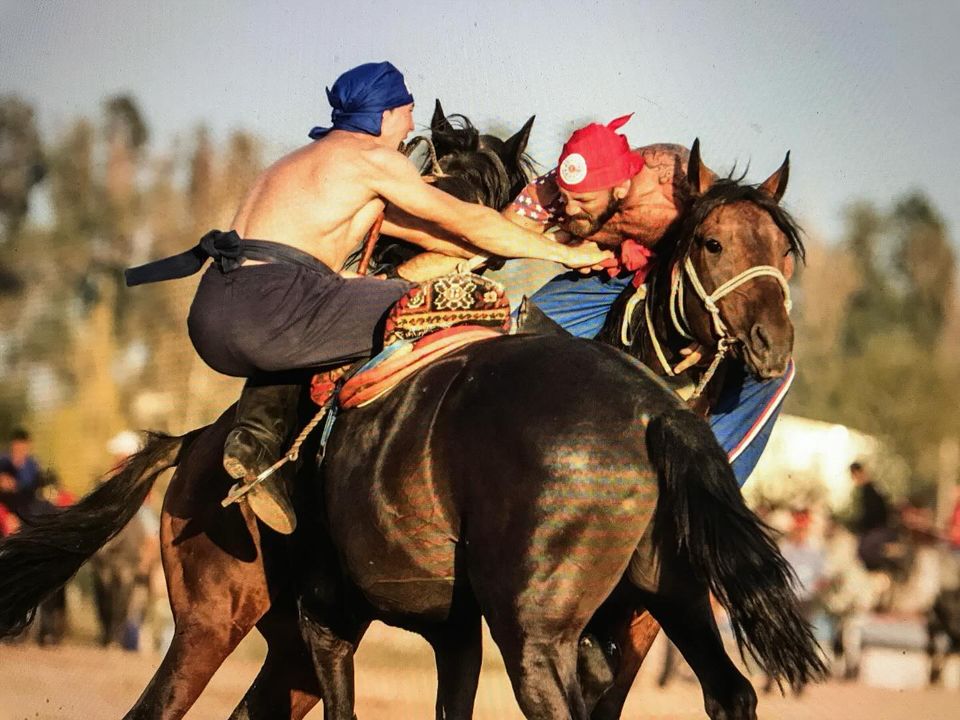
As Kazakhstan gears up to host the 5th World Nomad Games in Astana from September 8-13, a vibrant festive atmosphere is taking over the city with streets adorned with flags and banners celebrating this year's theme, "The Gathering of the Great Steppe." In the build-up to the games, which will host competitors from 89 countries, TCA spoke to Nick Willert, who will be representing the U.S. in kokpar, horseback wrestling, and kok boru. [caption id="attachment_22495" align="aligncenter" width="1080"] Kokpar; image: Nick Willert[/caption] TCA: What is your equestrian background, and when did you first hear about, become interested in, and start competing in kokpar and kok buru? Willert: I grew up on a horse ranch in Wyoming, so I have always been comfortable around horses, but equestrian sports were never my main focus. After I served in the United States Marine Corps, I worked as a professional skier and professional MMA fighter, as well as a surf instructor and salvage diver in California. In 2018, I was recruited by friends that I grew up with to compete in kokpar and kok boru in the World Nomad Games. That is where I also discovered horseback wrestling, and became the first American horseback wrestler. [caption id="attachment_22496" align="aligncenter" width="1080"] Image: Nick Willert[/caption] TCA: Have you traveled much in Central Asia before? Willert: Besides traveling to Central Asia two previous times for horseback wrestling and kokpar par/kok boru, I spent a lot of time in Asia working for a wildlife production company as their animal wrangler and scout locator. That is where I truly developed a deep love and admiration for Asia and Central Asia and the cultures that exist in those regions. [caption id="attachment_22497" align="aligncenter" width="423"] Image: Nick Willert[/caption] TCA: What kind of horses do you use for training? During the competition, what horses will your team use? Willert: Finding horses and having enough time to get to know each horse has always been a big challenge for the American team. However, our Kyrgyzstan colleagues have been a big help in facilitating the procurement of horses for our team. [caption id="attachment_22498" align="aligncenter" width="886"] Image: Nick Willert[/caption] TCA: Does your team try to imitate the Central Asian players, or are there some distinctive ways in which Americans play kokpar? Willert: I think it tends to be an interesting mix of imitation of the techniques that we have seen, as well as combining some western horsemanship skills and bringing those into play as well. [caption id="attachment_22499" align="aligncenter" width="826"] Image: Nick Willert[/caption] TCA: How do you expect your team to fare in the World Nomad Games? Willert: I’m aware that the U.S. team is considered underdogs in this sport, but are ready to play to the best of our ability, without fear, and have a lot of fun doing it!

Silk Road Treasures: The Wild Beauty of Mangistau

Under the banner of "Silk Road Treasures", TCA's people -journalists, editors, authors - share their personal experiences of Central Asia and her people, and by listing their favorite places, literature, films, art, architecture and archaeological sites, alongside encounters and customs, provide pointers for readers wishing to visit the region. Aliya Haidar, Journalist Kazakhstan's Mangistau Peninsula (Mangyshlak) is far from fit for human habitation. Fresh water is scarce, the air is filled with dust raised by searing desert winds, huge waves roll over the turbulent Caspian Sea, and only camels can feed on its vegetation. Mangistau is a symbol of the triumph of nature and, simultaneously, a symbol of victorious industrialization. The balance between the two, however, is very fragile, as events on the peninsula have repeatedly confirmed. In 2000, the peninsula's landscape still retained its wild, natural beauty but just a decade later, it was a place plagued by social conflict. The remains of ancient nomadic sites and necropolises of Sufi missionaries illustrates that people have long been determined to tame and develop this remote and barren land but its explosive growth only occurred with the discovery of oil and uranium.  In the 1960s, geologists settled in the desert. Within ten years, cities appeared and hundreds of enterprises were established, making  Mangistau one of the gems in the Soviet Union's crown. Colossal desalination plants near the regional center of Aktau (former Shevchenko) resembling spaceships, are a legacy of the era of rapid development when the world's first industrial nuclear reactor on fast neutrons, the BN-350, was built on the peninsula. The reactor was shut down after independence in the late 1990s, but conservation is ongoing. Today, few people are allowed into the gloomy catacombs, to the heart of the reactor, but the memory of the power of the atom and the payback has remained. BN-350 is part of the Mangistau Atomic Energy Combine (MAEC), and the giant desalination plants now supply most of the peninsula with water from the Caspian Sea. But there is still insufficient capacity, and the presence of the endless row of desalination plants warns: "Beware, man. You will have to fight for every drop." Even in the regional center of Aktau, water cuts are not uncommon, and intensive farming is out of the question. In the bazaars of Mangistau, most of the products, especially fruit and vegetables, are imported and far more expensive than elsewhere in Kazakhstan where they grow in abundance.  And although salaries in the oil industry are higher than the national average, locals pay triple the price for just about  everything. Irresistibly attracted by the glitter of “black gold," the population in the peninsula continues to rise. Almost 800 thousand people currently live in the Mangistau region, making it the ninth most populous region in the country. The load on the peninsula's natural resources however, is now so disproportionate that it has become the cause of constant conflicts. But outside the cities, it is easy to forget the harsh reality of the industrial...

As Kazakhstan Marks Constitution Day, What Does the Occasion Really Symbolize?

Kazakhstan marks Constitution Day on August 30, an event inaugurated by the country’s second and current president, Kassym-Jomart Tokayev. The day has taken on a new meaning since the events of January 2022, when a violent coup-attempt challenged Tokayev’s authority and caused deadly destruction in the nation. Since then, the country has adopted various democratic and economic reforms. Most significantly, key amendments to the country’s constitution were adopted following a national referendum in 2022. One of the main changes was to limit the president’s time in office to a single seven-year term and banning consecutive terms. In 2022, Tokayev was re-elected under the new rules and his presidential term will now expire in 2029. The first constitution of independent Kazakhstan was adopted in January 1993 and was based on the model of a parliamentary republic. It incorporated laws on sovereignty, the independence of the state, the Kazakh language as the state language, the president as head of state, and identified the country’s judicial bodies as the Supreme Court, Constitutional Court, and Higher Arbitration Court. The current constitution was then adopted on 30 August 1995 through a national referendum. It was amended in 1998, 2007, 2011, 2017, and 2019. The most significant changes, however, took place in the above-mentioned referendum after the mass unrests of January 2022. On May 5, 2022, Tokayev announced a referendum on amendments “to transition to a new state model, a new format of interaction between the state and society … from a super-presidential form of government to a presidential republic with an influential parliament and an accountable government.” The referendum was held on June 5, 2022, and 77% of the people supported the changes. Overall, 33 articles of the current constitution were amended. Today’s celebrations mark this new and improved constitution that represents a significant step in the path forward for Tokayev’s New Kazakhstan

Ecological Limit: Five Year Countdown to Water Scarcity in Central Asia

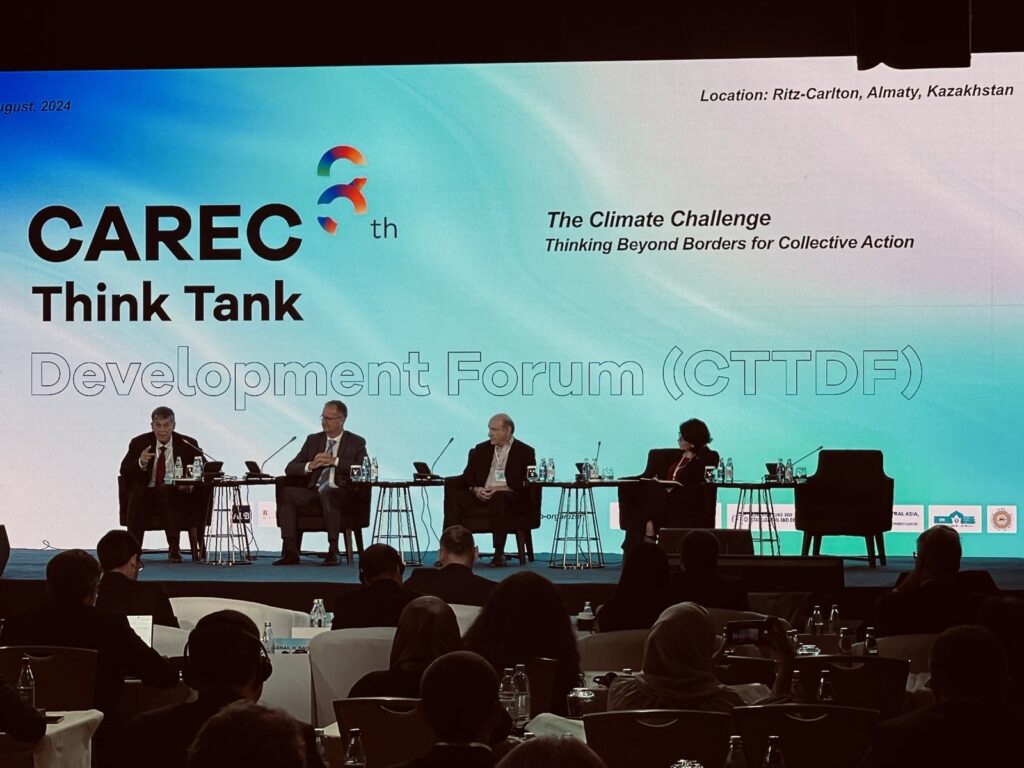
Combating climate change requires collective action by all or a sufficient majority of the world's players supporting global initiatives. Otherwise, it may soon be too late to take any action. To address the issue, the Eurasian Development Bank, the CAREC Think Tank, and the Asian Development Bank organized a two-day forum entitled “The Climate Challenge: Thinking Beyond Borders for Collective Action,” in Almaty, Kazakhstan. Focusing on means of achieving genuine regional cooperation on Asian climate action, the eighth CAREC Think Tank Development Forum was attended by policymakers, experts, and opinion leaders from more than 30 countries. The extensive two-day dialog, consisting of eight sessions, opened with a discussion on the effectiveness of current global initiatives related to climate change: the Paris Agreement, the Global Environment Facility, and the Green Climate Fund. Attention then turned to deepening cooperation among as many stakeholders as possible through multilateral platforms such as the UN Framework Convention on Climate Change. Asia's role in the global fight against climate change, and the difficult balancing act between economic growth and decarbonization efforts were discussed at length. Simply put, the rapid growth of the Asian economy is inevitably accompanied by an increasing consumption of energy, the generation of which leads to increased emissions and pollution. Climate damage due to human impact can be halted and even reversed. However, because this can only be achieved with technological intervention, it poses problems for developing economies unable to afford advanced technologies. Hence, establishing a framework and mechanisms for global technology transfer were key to discussions. Water and finance were also high on the agenda and the subject of a paper presented by Arman Ahunbaev, Head of the Center for Infrastructure and Industrial Research of the Eurasian Development Bank on “Ways to close the investment gap in the drinking water supply and wastewater sector in Central Asia." Ahunbaev reported that 10 million people, or 14% of the population in Central Asia, do not have access to safe drinking water and warned that without intervention, the situation would reach the point of no return in the coming years. To prevent this from happening, he stressed the urgent need for solutions to four problems. The first problem is a twofold increase in the volume of water intake for municipal and domestic needs, based on past figures which showed a growth from 4.2 cubic kilometers in 1994 to 8.6 cubic kilometers in 2020. The second problem is the severe deterioration of water supply infrastructure and treatment equipment, and the third, technological and commercial water losses in distribution networks. The fourth problem is related to the demographic boom and, consequently, the rapid urbanization of Central Asia's population. Cities are expanding and  their infrastructure needs to develop accordingly. According to experts, in 2023, urbanization in Central Asian countries will reach 49%, and by 2050, 61%. By 2030, the urban population will exceed that in rural areas. Ahunbaev noted the need for improvement in financing the water supply and sanitation sector in Central Asia since according to rough...

With the Russian Language Waning in Central Asia, Will Other Languages Replace It?

Russian is still the most widespread foreign language in Kazakhstan, though its role is declining there, and across Central Asia in general. At the same time, the people of the region have been slow to learn other languages, in part due to economic factors such as slowing globalization, according to the Kazakhstani political analyst Zamir Karazhanov, who is head of the Kemel Arna Public Foundation.   The language of cities Since declaring independence in 1991, all the counties of Central Asia have made promoting their national languages a priority. But foreign languages, which link the region with the rest of the world, have also historically been seen as critical. In practice, however, the study and use of foreign languages other than Russian is not widespread. The Russian language is losing its prominence in Kazakhstan as the number of ethnic Russians declines. According to official statistics, as of January 1, 2024, Russians made up 14.89% of the country’s population, down from close to 40% in 1989. Nevertheless, thanks to the education system and Kazakhstan’s proximity to Russia, the level of proficiency in Russian remains high. In Kazakhstan and Kyrgyzstan, Russian is a second official language. In Tajikistan, it is called the “language of interethnic communication”. In Uzbekistan and Turkmenistan, however, it does not have an official status. More than 90% of Kazakhstanis know Russian to some degree, while 20% of the population considers it their native language. Meanwhile, those figures for Turkmenistan are 40% and 12% respectively. In Kyrgyzstan, about 44% know Russian and 5% consider it their native language; in Uzbekistan, it is about 50% and 2.7%; and in Tajikistan, 55% and 0.3%. Kazakhstan's President Kassym-Jomart Tokayev has repeatedly spoken about the need to preserve the Russian language in Kazakhstan, and the unacceptability of language-based discrimination. Last year, he unveiled the International Russian Language Organization, established by the CIS Heads of State Council. “The new organization is open to all countries and, of course, very relevant from the point of view of global humanitarian cooperation,” explained Tokayev, while underlining that measures to promote the Russian language in the Eurasia region and elsewhere are congruous with the trend of strengthening national identities. “Kazakhstan will continue the policy of bolstering the status of the state language of Kazakh,” Tokayev said at the time. Today, Kazakhstan has many Russian-language media, while Russian remains the lingua franca at meetings among post-Soviet countries. Even though Russian is concentrated in big cities, all Kazakhstanis receive a significant amount of western and other foreign news from Russian sources. “Russian is spoken in most of Kazakhstan. In the biggest city, Almaty, communicating in Russian is not a problem. But, if you move 30-50 km outside the city, it gets harder to speak it. Russian is the language of cities and the language of interethnic interaction,” the political analyst Karazhanov told The Times of Central Asia. “Of course, the number of native speakers of the Kazakh language is growing, and the number of Russian speakers is declining, but Kazakh...

Burabay National Park: A Place of Respite, Legends and Cultural Heritage

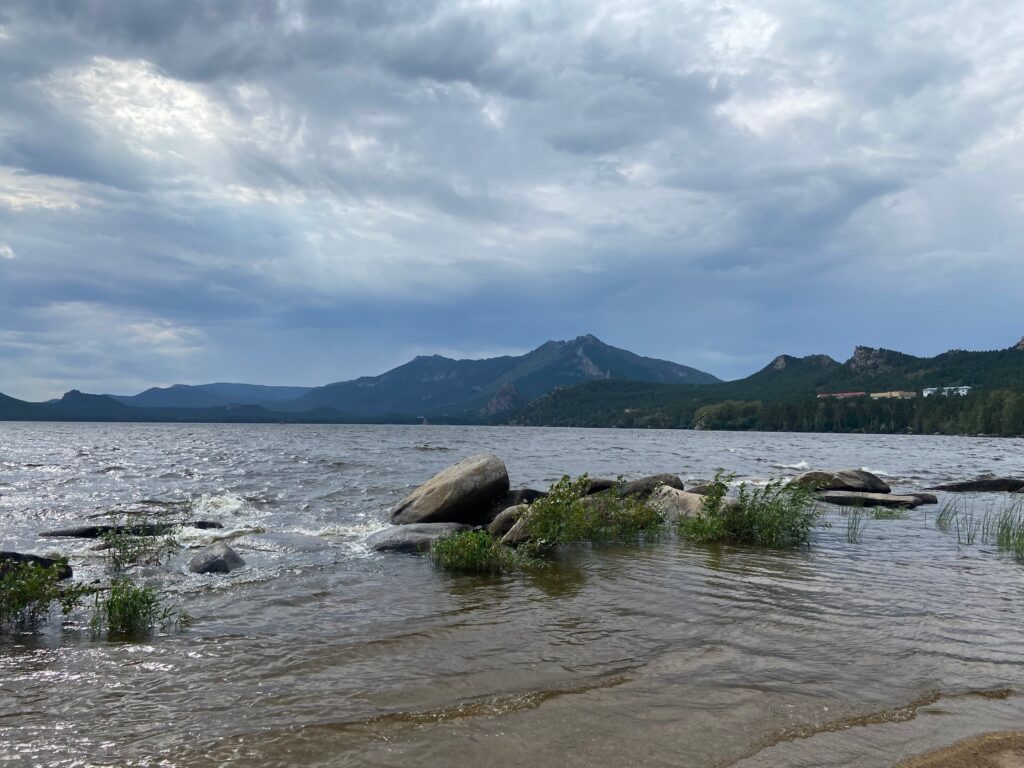
Burabay National Park, located just 250 kilometers from Kazakhstan’s capital Astana, is a place of outstanding natural beauty offering easily accessible respite from the hustle and bustle of city life. Known by its Russian name ‘Borovoye’, from boro meaning pine forest - until 2000, the park spans 85,000 hectares on which visitors can participate in outdoor pursuits from cycling, horseback riding and skiing, to swimming, kayaking, sailing and water skiing, or simply relax and enjoy the fresh clean air and magnificent views of the hills and mountains. [caption id="attachment_22204" align="aligncenter" width="1260"] Photo: Mt Okzhetpes - TCA, Tamila Olzhbaekova[/caption]   Mountaineers can test their skills on Mt Kokshetau, the highest peak standing at 957 meters. For those less experienced, The Three Sisters provide a range of gradients suited to different levels of hikers and climbers, and Mt Bolektau affords panoramic views within an easy 20-minute ascent. For many, the pearls in Burabay’s crown are its crystal-clear lakes. The park boasts no fewer than fourteen, each with its own unique beauty and atmosphere. Amongst the best known are Maloye, Shchuchye, Chebachye, home to 300 species of fish, and the largest, Lake Borovoye, popular for its well-maintained beaches and water sports. Burabay is also a place of great archaeological, cultural, and historic significance and both its origins and natural landmarks are steeped in legends. Origins Different myths tell how disappointed by its barren terrain, either Allah or Tengri decided to enhance the flat Kazakh steppe by scattering it with small mountains, lakes, and forests. The area and its settlers were guarded by a beautiful white camel; a bura in Kazakh, and hence the name, Burabay. Coveting it as a trophy, robbers shot it with an arrow but were instantly flattened when the camel turned into a rock. Today, it is but one of the park’s many legendary landmarks. [caption id="attachment_22211" align="aligncenter" width="752"] Photo: Adobe stock -Zhumbaktas[/caption]   Zhumbaktas In the center of Borovoe Lake stands a rocky outcrop known as ‘Zhumbaktas’ which translates as ‘mysterious stone’ in Kazakh. According to legend, a rich Khan sought a wealthy husband for his beautiful daughter but instead, she fell in love with a talented, roaming musician. The couple fled and pursued by the girl’s brothers, sailed to the middle of the lake. The young man, shot through the chest with an arrow, toppled into the water. The girl appealed Tengri, who granting her wish to join her beloved, turned her into a rock. From one side, the island looks like a boat, from another, a girl with her hair blowing in the wind, and when viewed from a different angle, an old woman. [caption id="attachment_22205" align="aligncenter" width="1200"] Photo: Dancing Birch Grove - TCA, Tamila Olzhbaekova[/caption]   Dancing Birch Grove Amid the park’s vast forests, stands an enchanting grove, where blown by the wind, birch trees sway and intertwine. According to legend, village girls dancing in a clearing froze in fear and turned into trees when they noticed the khan watching them. Mount Okzhetpes According to research...