• KGS/USD = 0.01143 0%
  • KZT/USD = 0.00216 0%
  • TJS/USD = 0.10633 -0.28%
  • UZS/USD = 0.00008 0%
  • TMT/USD = 0.28571 0%
  • KGS/USD = 0.01143 0%
  • KZT/USD = 0.00216 0%
  • TJS/USD = 0.10633 -0.28%
  • UZS/USD = 0.00008 0%
  • TMT/USD = 0.28571 0%
  • KGS/USD = 0.01143 0%
  • KZT/USD = 0.00216 0%
  • TJS/USD = 0.10633 -0.28%
  • UZS/USD = 0.00008 0%
  • TMT/USD = 0.28571 0%
  • KGS/USD = 0.01143 0%
  • KZT/USD = 0.00216 0%
  • TJS/USD = 0.10633 -0.28%
  • UZS/USD = 0.00008 0%
  • TMT/USD = 0.28571 0%
  • KGS/USD = 0.01143 0%
  • KZT/USD = 0.00216 0%
  • TJS/USD = 0.10633 -0.28%
  • UZS/USD = 0.00008 0%
  • TMT/USD = 0.28571 0%
  • KGS/USD = 0.01143 0%
  • KZT/USD = 0.00216 0%
  • TJS/USD = 0.10633 -0.28%
  • UZS/USD = 0.00008 0%
  • TMT/USD = 0.28571 0%
  • KGS/USD = 0.01143 0%
  • KZT/USD = 0.00216 0%
  • TJS/USD = 0.10633 -0.28%
  • UZS/USD = 0.00008 0%
  • TMT/USD = 0.28571 0%
  • KGS/USD = 0.01143 0%
  • KZT/USD = 0.00216 0%
  • TJS/USD = 0.10633 -0.28%
  • UZS/USD = 0.00008 0%
  • TMT/USD = 0.28571 0%

Viewing results 895 - 900 of 2196

In Doha, Central Asian Artists Dismantle Orientalism

Completely covered by a huge textile patchwork piece, softly moved by the wind, the façade of the Mathaf Museum in Doha promises visitors something fascinating and alluring. Coming closer, attendees could read a series of statements in various languages on the fabric. The effect of familiarity and estrangement at once was the purpose of Azerbaijani artist Babi Badalov, who realized the piece. By layering phrases in Arabic, Cyrillic, and Latin with calligraffiti and employing disjointed grammar and syntax, the artist meant to visually disrupt “linguistic imperialism” and show how Europe’s modern civilization owes much to Arab civilization. [caption id="attachment_27513" align="aligncenter" width="2560"] The Mathaf Museum in Doha; image: TCA, Naima Morelli[/caption] This specially commissioned work, called Text Still (2024), is nothing but an appetizer for the show Seeing is Believing: The Art and Influence of Gérôme. Organized by the forthcoming Lusail Museum — an institution under development in northern Doha that will house the largest collection of the so-called Orientalist art — the exhibition features loans from institutions such as the Metropolitan Museum of Art in New York and the Islamic Arts Museum in Malaysia. The main part of the show is dedicated to French artist Jean-Léon Gérôme, who lived and worked in the 19th century and was profoundly influential in his depictions of the Middle East, North Africa, and South Asia. His works shaped Western perceptions of these regions during an era when colonialism and “Oriental Studies” were cementing global power dynamics. The show included a historical and biographical exploration of Gérôme’s life, timed to celebrate the 200th anniversary of his birth, as well as a photographic section curated by Giles Hudson dedicated to visions of the Orient from Gérôme’s time to today. But it is in the third section, centered on contemporary art and called “I Swear I saw That”, that Central Asian artist really enter into a close dialogue with Gérôme’s Orientalism, turning it on its head. Sara Raza, curator of this section, takes Badalov’s textile work as a case in point: “Badalov inverts Edward Said’s mission of examining Western perceptions of the Orient, focusing instead on Eastern perceptions of the Occident, and vice versa,” she told The Times of Central Asia. Edward Said’s concept of Orientalism, as detailed in his groundbreaking 1978 work of the same name, is an institutionalized program of Western knowledge, based mostly on projections, mystification, and imagination - and includes works of art as well as the academy - which is directed to justify a supposed Western superiority and imperialism over Eastern populations. “I Swear I Saw That” interrogates Jean-Leon Gerome’s way of seeing, which Sara Raza recognizes as a “fantastical and highly mythologized vision of the East,” and looks at how artists from both the Middle East, the Arab world and Central Asia fought back. A Central Asia and Caucasus expert who works extensively in the Middle East, Raza has examined the process of the exoticization of Eastern populations for a long time. She coined the term “Punk Orientalism,” which also became the...

KazMunayGaz Looking to Buy Another European Oil Refinery

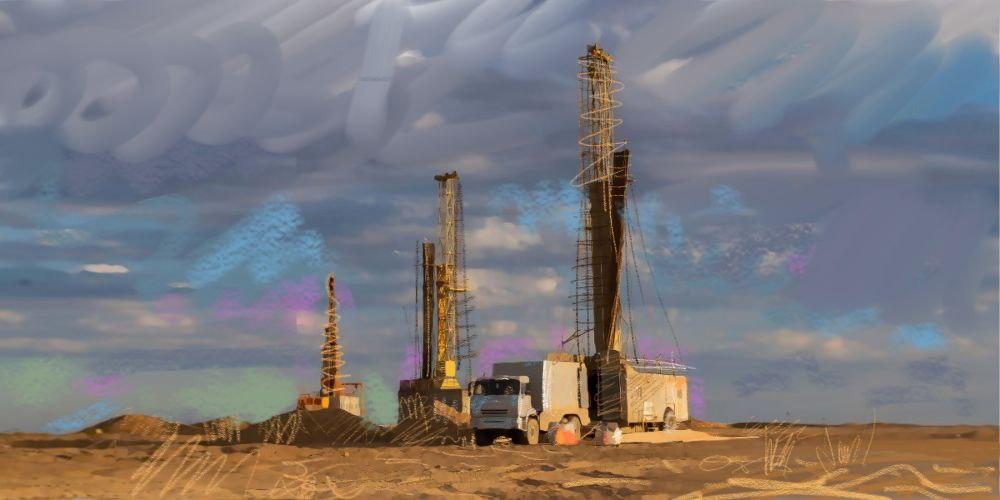
Kazakhstan’s KazMunayGaz (KMG) is seeking to acquire an oil refinery in Bulgaria from Russia’s LUKoil at a bargain price. The purchase of Lukoil Neftohim Burgas, the largest oil refinery in the Balkans, would, according to some media sources, more than double [KMG’s] European refining capacity.” KMG reported a bid of $1 billion for the refinery, which one outlet stated “seems small.”   Pressured Out The Burgas refinery was built in the early 1960s and “joined the LUKoil Group” in 1999. The European Union decision to impose a ban on Russian oil imports after the Kremlin launched its full-scale war on Ukraine deprived Lukoil Nefthohim Burgas of its major source of crude oil. According to a Financial Times report from November 2024, the Bulgarian government pressured LUKoil to sell the refinery, hitting the Russian company “with a 60% tax on profits in an effort to force out its owners” and prohibiting the “export of Russian crude-based products from Lukoil Neftohim Burgas.” In turn, LUKoil complained about “discriminatory laws and other unfair, biased political decisions toward the refinery.” KMG reportedly lost interest in the refinery in late 2024, but BNN Bloomberg reported on January 7 that the Kazakh company was still among the bidders for the Bulgarian refinery.   Advantage KMG When the EU banned Russian oil imports, Lukoil Nefthohim Burgas compensated by purchasing oil from Kazakhstan and the Middle East. If KMG buys the Bulgarian refinery, presumably most or all of the crude processed there will come from Kazakhstan. Kazakhstan exported some 70.5 million tons of oil in 2023, and expects figures will be slightly less in 2024, some 68.8 million tons, due to maintenance at the Tengiz and Kashagan fields. Some 80% of those oil exports are shipped from Kazakhstan through the Caspian Pipeline Consortium (CPC) pipeline to Russia’s Black Sea port at Novorossiysk. Prior to Russia’s full-scale invasion of Ukraine, the EU purchased about 50% of the Kazakh oil shipped through the CPC pipeline, but that amount has risen to 80% since the ban on Russian oil imports was imposed. Kazakhstan is also increasing the amount of oil it exports through Azerbaijan to Georgia’s Black Sea port at Batumi, where KMG subsidiary KazTransOil owns the oil terminal. Kazakhstan has a deal to ship 1.5 million tons of oil annually through Azerbaijan, but Kazakh Energy Minister Abdusalam Satkaliyev said in November 2024 that his country was looking to boost that to 20 million tons. Kazakhstan currently has two Aframax-class oil tankers (deadweight 80,000 tons each) operating in the Black Sea, but plans to bring this number to 12 during the coming years. The Lukoil Nefthohim Burgas refinery has a capacity to process some seven tons of oil annually. KMG International already owns two oil refineries in Romania. The Petromidia refinery, with an annual capacity of some five million tons, is located 20 kilometers from the Black Sea port city of Constanta, and the much smaller and older Vega refinery, north of Bucharest, with an annual capacity of some 350,000 tons....

Russian or Kazakh? Questions, Security Concerns About Man Detained at U.S. Border

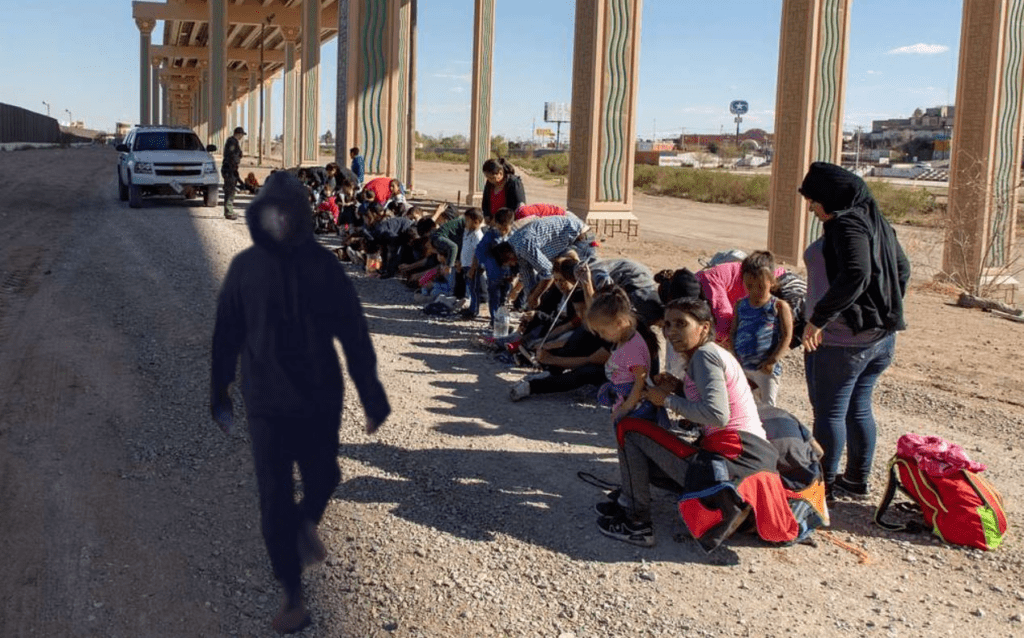
A man who said he is a citizen of Kazakhstan pleaded guilty this week to illegally entering the United States at the southern border with Mexico. But U.S. prosecutors said he was also carrying a Russian passport and that he admitted to being a member of the Wagner Group, a Russia-backed mercenary organization that is a target of U.S. sanctions, according to a media report in Texas. A criminal complaint filed on Jan. 5 against the man, Timur Praliev, says U.S. Border Patrol agents encountered him on the previous day. “When questioned as to his citizenship, defendant stated that he was a citizen and national of Kazakhstan, who had entered the United States illegally on January 4, 2025 by crossing the Rio Grande River near Roma, Texas,” read the complaint, which was filed in federal court in McAllen, Texas. However, the ValleyCentral.com news site, which covers the Rio Grande Valley in south Texas, reported that Praliev was carrying both Russian and Kazakh passports, a total of about $7,000 in U.S. dollars and Mexican pesos and also had a drone in his backpack. The news site attributed information about Praliev to Assistant U.S. Attorney Amanda McColgan. The federal prosecutor requested that Praliev be sentenced to 15 days in prison because of concern about his association with Wagner, which has fought in Western-backed Ukraine and also projected Russian power in Syria and several African countries, with sometimes brutal methods. On Jan. 7, Praliev pleaded guilty to illegal entry into the United States and U.S. Magistrate Judge J. Scott Hacker sentenced him to time served, meaning that he had completed his prison sentence while waiting in detention for the hearing. Dave Hendricks, the journalist who reported on the case for ValleyCentral.com, said on X that “he'll almost certainly remain in federal custody until he's deported.”

Two Weeks After Crash, Russia Closes City Airspace and Azerbaijan Cancels Flight

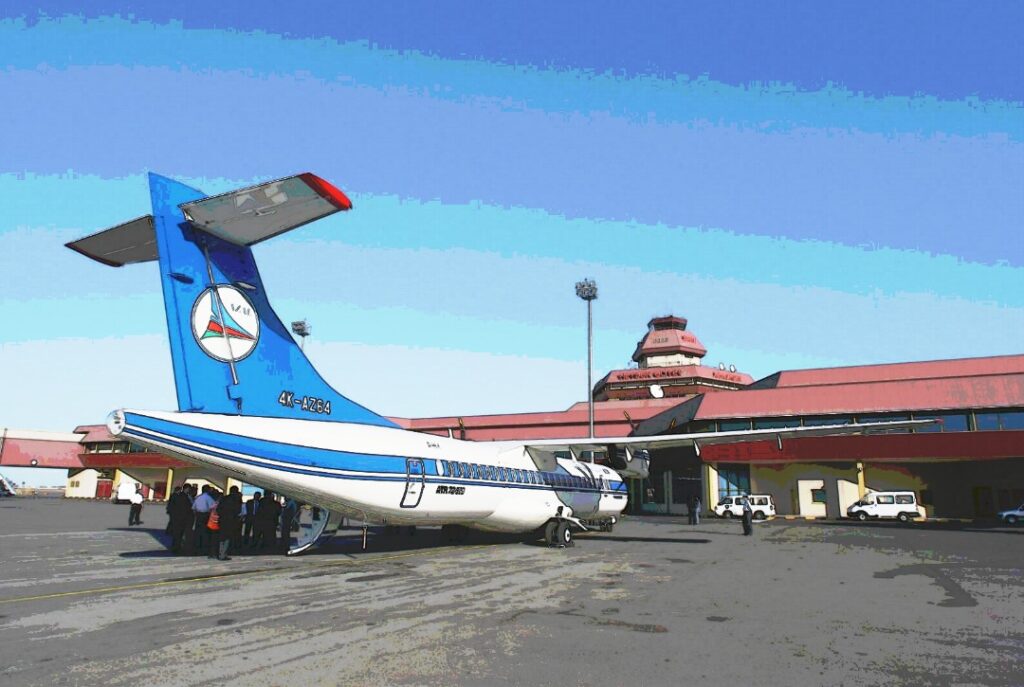
Azerbaijan Airlines canceled a flight to the southwest Russian city of Kazan on Wednesday after the airspace over the city was closed as a security precaution, Azerbaijan’s state media reported. The cancellation of the Baku-Kazan-Baku flight came two weeks after an Azerbaijan Airlines passenger plane crashed in Kazakhstan after, according to Azerbaijan, the aircraft was accidentally hit by Russian ground fire and diverted from a planned landing in Grozny, Chechnya. Russian President Vladimir Putin has not confirmed the Azerbaijani account, though he apologized and said Russian air defenses were repelling Ukrainian drones over Grozny and two other Russian areas at the time. Azertac, an Azerbaijani state news agency, said the cancellation of the Kazan-bound flight came after Russia’s announcement of its so-called “Kovyor,” or “carpet,” operation, in which airspace over an area is closed temporarily because of a perceived threat. Kazan has previously been targeted by long-range Ukrainian drones. The Kovyor protocol came under scrutiny after an Azerbaijani airliner crashed on Dec. 25 in Aktau, Kazakhstan, killing 38 people and leaving 29 survivors. Without naming Putin, President Ilham Aliyev has harshly criticized Russian officials for alleged attempts to cover up what happened by floating false theories about the cause of the crash and said the Kovyor plan was activated after the plane was shot at, indicating criminal liability. “If there was a threat to Russian airspace, the captain of the plane should have been informed about it immediately. The airspace should have been closed immediately and the plane should have turned back,” Aliyev said, according to APA, another Azerbaijani government news agency. “I should also note that about 10 days before the accident, a similar incident occurred near the city of Grozny. An AZAL plane was turned back halfway. Why was the crew not warned about it this time? Naturally, the investigation will show this.” Kazakhstan is leading the investigation team, which includes officials from Azerbaijan and Russia as well as input from Brazilian technicians who have examined the flight data and cockpit voice recorders from the Brazil-produced Embraer 190 plane. Kazakhstan has said a preliminary report is expected within 30 days of the crash. Azerbaijan Airlines suspended flights to some Russian cities after the crash.

Kazakhstan to Train Workforce for Future Nuclear Power Plants

Kazakhstan’s first nuclear power plant (NPP) is expected to create permanent employment for approximately 2,000 people, with an additional 10,000 workers involved during its construction. This announcement was made by Energy Minister Almasadam Satkaliyev during a recent government meeting. The country plans to commission its first NPP by 2035. A shortlist of potential builders includes four international companies: China’s CNNC, Russia’s Rosatom, South Korea’s KHNP, and France’s EDF. Authorities have also suggested the possibility of forming a consortium involving multiple countries to leverage diverse technological solutions. Alongside these efforts, Kazakhstan intends to independently train the specialists required for NPP operations. Minister Satkaliyev highlighted plans to establish specialized training programs in domestic colleges to develop skills for roles such as dosimetrists, steam turbine equipment mechanics, nuclear power plant maintenance and repair specialists, and IT specialists for nuclear facilities. Practical training will be conducted at the National Nuclear Center and the Institute of Nuclear Physics. “By 2030, the NPP construction project will create around 5,000 jobs, peaking at approximately 10,000 jobs in 2032. Once operational, the first plant will provide at least 2,000 permanent positions,” Satkaliyev stated. As previously reported by The Times of Central Asia, Kazakhstan is accelerating the construction timeline for the NPP, located in the Almaty region, and plans to select a contractor in the first half of this year. During the government meeting, which coincided with the “Year of Working Professions” initiative, Satkaliyev also addressed the broader labor demand in Kazakhstan’s energy sector. The industry is expected to require over 16,000 additional workers, including power engineers, welders, fitters, gas cutters, and electricians, by 2030. The country’s energy sector currently employs 303,000 people across 1,600 enterprises, with 99 new projects planned over the next five years. To attract and retain talent, the Ministry of Energy aims to achieve an annual 15% wage increase for production personnel in energy-producing companies. Meanwhile, Talgat Yergaliyev, Chairman of the Union of Builders of Kazakhstan (UBC), has called for simplifying the hiring process for foreign labor to address workforce shortages in Kazakhstan’s construction sector.

Kazakhstan Could Save America’s Energy Future

The energy crisis gripping Europe has made clear for all to see the limits of solar and wind power. Years of investment and unbridled ambition have not created renewable sources that can deliver the consistent, large-scale energy that modern economies need. Nuclear power has emerged as the only viable solution for achieving zero-emissions energy while maintaining reliability. Europe’s urgent need to reduce its dependency on Russian gas has made all that even clearer. Meanwhile, the United States faces its own energy challenges. Its nuclear industry urgently requires a secure and stable uranium supply; yet U.S. foreign policy has largely overlooked Kazakhstan, the world’s largest uranium producer. It gets worse. No sitting U.S. president has ever visited Kazakhstan, which produces over 40% of the world’s natural uranium. Russia and China have filled this diplomatic vacuum, embedding themselves deeply in Kazakhstan’s energy sector. The United States and Europe must act decisively to build stronger ties with Kazakhstan and Central Asia, if they are to achieve energy independence by securing their nuclear futures. Europe’s dependence on Russian natural gas has been its geopolitical Achilles’ heel for decades. Russia's illegal war of aggression against Ukraine, driving home the need to diversify energy sources, has further increased that vulnerability. Nuclear power offers Europe a path to energy independence. This hinges, however, on access to uranium, of which Europe imports 97% of its supply. Moreover, much of that uranium is enriched in Russia, creating a dependency analogous to that on Russian gas. That problem can be solved by deepening cooperation with Kazakhstan, the world’s largest uranium producer. Unfortunately, Europe’s engagement with Kazakhstan has been half-hearted at best; yet the country's reserves are essential for powering Europe’s nuclear plants. Strategic investments and partnerships are needed to unlock Kazakhstan’s role as a reliable uranium supplier to Europe, but logistical hurdles and a lack of political focus have so far stymied efforts to make that happen. Kazakhstan, the world's leading uranium producer, offers the United States a critical opportunity to secure its energy and national-security needs, yet Washington has ignored this and made little effort to deepen its ties with Kazakhstan. By contrast, China sources 60% of its uranium imports from Kazakhstan, supported by investments in mining and nuclear fuel facilities. Likewise, Russia has, through Rosatom, forged strong partnerships with Kazatomprom. These efforts give Beijing and Moscow significant leverage over global uranium markets. The U.S., however, has failed to foster the political and economic relationships necessary for long-term nuclear-energy security. Kazakhstan is a particularly glaring case in point. Over the past two decades, Kazakhstan has come to account for nearly half of global uranium production, giving it a key position in the global uranium supply chain. Neighboring Uzbekistan, the fifth-largest producer, adds another 6%, and Mongolia also has significant undeveloped reserves of future potential. Yet Kazakhstan remains heavily dependent on Russian infrastructure for uranium transport and enrichment. Until the late 2024 signature of an agreement to supply nearly half of its annual uranium ore production to China through the...