• KGS/USD = 0.01144 0%
  • KZT/USD = 0.00201 0%
  • TJS/USD = 0.10468 -0.1%
  • UZS/USD = 0.00008 0%
  • TMT/USD = 0.28571 0%
  • KGS/USD = 0.01144 0%
  • KZT/USD = 0.00201 0%
  • TJS/USD = 0.10468 -0.1%
  • UZS/USD = 0.00008 0%
  • TMT/USD = 0.28571 0%
  • KGS/USD = 0.01144 0%
  • KZT/USD = 0.00201 0%
  • TJS/USD = 0.10468 -0.1%
  • UZS/USD = 0.00008 0%
  • TMT/USD = 0.28571 0%
  • KGS/USD = 0.01144 0%
  • KZT/USD = 0.00201 0%
  • TJS/USD = 0.10468 -0.1%
  • UZS/USD = 0.00008 0%
  • TMT/USD = 0.28571 0%
  • KGS/USD = 0.01144 0%
  • KZT/USD = 0.00201 0%
  • TJS/USD = 0.10468 -0.1%
  • UZS/USD = 0.00008 0%
  • TMT/USD = 0.28571 0%
  • KGS/USD = 0.01144 0%
  • KZT/USD = 0.00201 0%
  • TJS/USD = 0.10468 -0.1%
  • UZS/USD = 0.00008 0%
  • TMT/USD = 0.28571 0%
  • KGS/USD = 0.01144 0%
  • KZT/USD = 0.00201 0%
  • TJS/USD = 0.10468 -0.1%
  • UZS/USD = 0.00008 0%
  • TMT/USD = 0.28571 0%
  • KGS/USD = 0.01144 0%
  • KZT/USD = 0.00201 0%
  • TJS/USD = 0.10468 -0.1%
  • UZS/USD = 0.00008 0%
  • TMT/USD = 0.28571 0%

Viewing results 25 - 30 of 1851

From Denis Ten to Mikhail Shaidorov: Kazakhstan’s Thorny Path to a Gold Medal at the Winter Olympics

The 2026 Winter Olympic Games in Milan, Italy have officially come to a close. At the end of the competition, the Kazakh team won one gold medal and placed 19th in the overall medal standings. This is the country’s best result since 1994, when the team finished 12th at the Lillehammer Olympics, with skier Vladimir Smirnov winning gold. This time, Kazakhstan’s only medal was secured by figure skater Mikhail Shaidorov, who became the first Olympic champion in the history of Kazakh figure skating. It is not the country’s first Olympic medal in the sport, however: in 2014 figure skater Denis Ten won bronze. On February 14, Shaydorov paid tribute to Denis Ten, Kazakhstan's bronze medalist at the 2014 Olympics. “I think Denis Ten influenced not only me but also figure skating in Kazakhstan as a whole. He opened the door for many skaters, including me. And that is incredibly important. I hope that the medal I won today will open new doors for the younger generation, the children of Kazakhstan, who will know that there are no limits,” he said.  Denis Ten, who tragically died at the hands of petty thieves in the center of Almaty, did much to popularize figure skating in Kazakhstan. He dreamed of opening his own school and founding an ice show for this purpose. Shaidorov is one of dozens of boys and girls inspired by the achievements of the Almaty native, who learned to skate at the Ramstor shopping center. The future champion took his first steps on the same rink. As residents often say, Almaty is a big village where everyone knows one another. In fact, there is limited accessible ice in Almaty, which is why Shaidorov was forced to train in the Russian city of Sochi, as Denis Ten had previously trained in Moscow. One of the defining stories behind the young skater’s journey is connected to his training. His father, Stanislav Shaidorov, a former professional figure skater and multiple national champion, helped him pursue his ambitions, including selling a car to invest in his son’s training. Stanislav is acquainted with Russian coach and Olympic champion Alexei Urmanov. In 2017, Urmanov held training camps in Yoshkar-Ola, Russia, where young Mikhail Shaidorov performed his first double axel. “Six months later, we returned to Urmanov. He assessed Misha's progress. Over the course of a year, we learned all the triple jumps, but we had to constantly change rinks. We called every day to arrange a time, which was not always convenient for us. Finally, in the fall of 2018, we were faced with a choice: continue renting ice in Almaty at our own expense or move to Russia to train properly. I called Alexei Evgenievich. He said, ‘Okay, come on over.’ That same day, I sold my car, and the next day we bought tickets and flew to Sochi, where Urmanov works,” recalled Stanislav Shaidorov.  Mikhail, who was 14 at the time, later said in an interview that he had asked his father to leave...
Tokayev’s U.S. Visit Advances Kazakhstan’s Economic Agenda

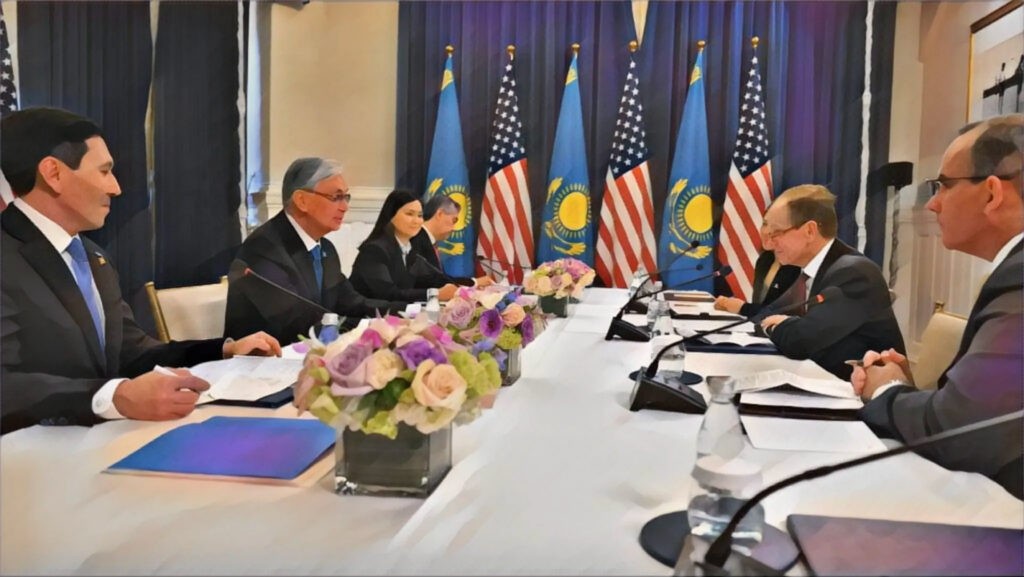
The visit of Kazakh President Kassym-Jomart Tokayev to the United States provided an opportunity for targeted negotiations with major international corporations and financial institutions, centered on long-term investment, production localization, and Kazakhstan’s integration into global value chains. One of the key outcomes was the signing of an investment agreement worth approximately $180 million between Kazakhstan’s Ministry of Agriculture and Mars, Incorporated. The company plans to build a pet food production plant in the city of Alatau. The project will focus on the deep processing of agricultural raw materials and the production of high-value-added goods. Mars CEO Poul Weihrauch noted that the Kazakhstan facility will serve as a base for expanding the company’s presence in Central Asia and neighboring regions. A separate round of negotiations focused on healthcare. During talks with Ashmore Group, discussions centered on a proposal to build an international clinic in partnership with Ashmore Healthcare International and Samruk-Kazyna Invest, with the involvement of the Mount Sinai Health System as the operator. The initiative aligns with Kazakhstan’s strategy to develop medical infrastructure and medical tourism, as well as the Open Investment Partnership program targeting high-tech sectors of the economy. Aviation was another major component of the visit. At a meeting with Boeing executives, Tokayev confirmed the interest of Kazakh carriers Air Astana, SCAT Airlines, and VietJet Qazaqstan in expanding cooperation. Air Astana expects to receive Boeing 787 Dreamliner aircraft in the second half of 2026, which could pave the way for the launch of direct flights between Kazakhstan and the U.S. SCAT, meanwhile, is considering both the acquisition of additional aircraft and the establishment of its first maintenance and repair center at Shymkent Airport in partnership with an American company. The visit concluded with negotiations involving the U.S. International Development Finance Corporation (DFC). Its CEO, Ben Black, said Washington views Kazakhstan as a key partner in Eurasia. The discussions focused on projects in the mining sector and the development of transport and transit infrastructure critical for regional and interregional trade. According to the World Investment Report 2025 (UNCTAD), Kazakhstan overwhelmingly dominates foreign direct investment (FDI) in Central Asia. In 2024, Kazakhstan’s inward FDI stock stood at about $151 billion, far exceeding Turkmenistan (about $45 billion), Uzbekistan (about $17 billion), and Kyrgyzstan and Tajikistan (around $4 billion each). The negotiations in Washington point to Kazakhstan’s focus on building long-term institutional partnerships rather than pursuing isolated investment deals, a signal intended to reassure international investors about the stability and openness of the market. As previously reported by The Times of Central Asia, Tokayev also took part in the inaugural meeting of the Board of Peace in Washington, where Kazakhstan signaled its willingness to contribute to Gaza’s reconstruction and broader stabilization efforts, including potential financial support and participation in peacekeeping initiatives.

Central Asia and the Global Water Crisis: A Test of Governance and Cooperation

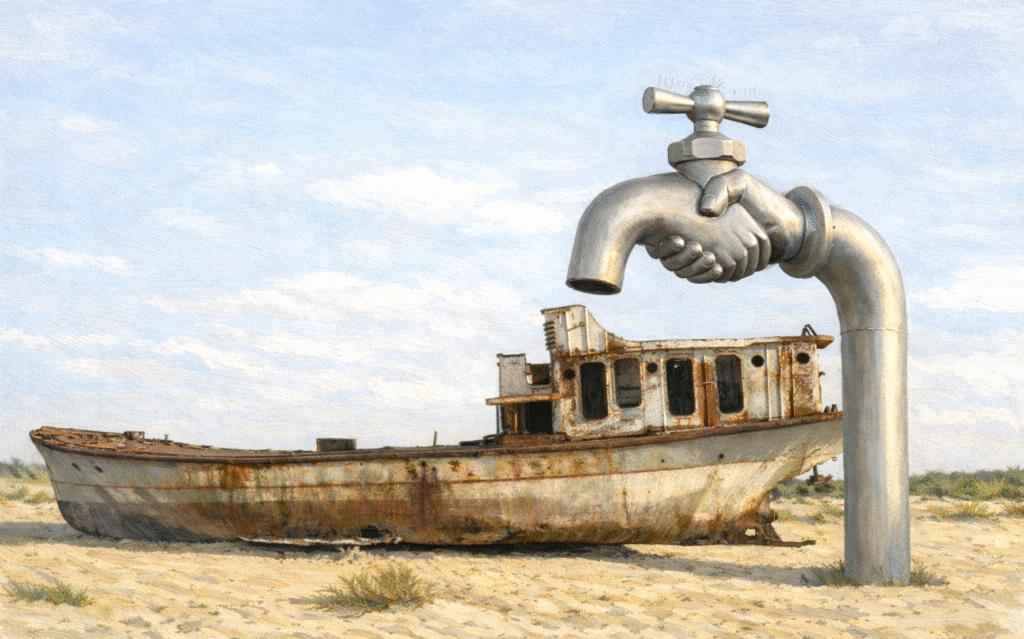
Water scarcity is rapidly transforming from a regional environmental concern into one of the defining global security challenges of the 21st century. UN-linked assessments estimate that around four billion people experience severe water scarcity for at least one month each year, and nearly three-quarters of the global population lives in countries facing water insecurity. Against this backdrop, Central Asia is not an exception but rather a concentrated example of global dynamics: climate pressure, population growth, and inefficient resource management. Regional initiatives, including proposals put forward by Kazakhstan, therefore have the potential to contribute not only to stability in Central Asia but to the development of a more coherent global water governance architecture. The Water Crisis as a Global Reality Water is increasingly regarded as a strategic resource on par with energy and food. Climate change is intensifying droughts, floods, and the degradation of aquatic ecosystems across all regions, from Africa and the Middle East to South Asia, Europe, and North America. Recent mapping and analysis by investigative groups and international media indicate that half of the world’s 100 largest cities experience high levels of water stress, with dozens classified as facing extremely high levels. Major urban centers, including Beijing, New York, Los Angeles, Rio de Janeiro, and Delhi, are among those under acute pressure, while cities such as London, Bangkok, and Jakarta are also categorized as highly stressed. In this context, Central Asia is not an outlier. It is confronting today what may soon become the global norm. Central Asia: Where Global Trends Converge A defining feature of the current environmental situation is that factors beyond natural ones drive the water crisis. Experts increasingly stress that shortages are often less about absolute physical scarcity and more about outdated management systems, infrastructure losses, and inefficient consumption patterns. In this respect, Central Asia can be seen as a testing ground for global water challenges, where multiple stress factors converge. The region, with mountain peaks exceeding 7,000 meters, contains some of the largest ice reserves outside the polar regions. The Pamir and Hindu Kush ranges, together with the Tibetan Plateau, the Himalayas, and the Tien Shan, form part of what is sometimes referred to as the “Third Pole,” the largest concentration of ice after the Arctic and Antarctic. [caption id="attachment_13410" align="aligncenter" width="2560"] The White Horse Pass, Tajikistan; image: TCA, Stephen M. Bland[/caption] However, the pace of change is alarming. By 2030-2040, water scarcity in Central Asia risks becoming chronic. Glaciers in the Western Tien Shan, for example, have reportedly shrunk by roughly 27% over the past two decades and continue to retreat, posing a direct threat to the flow of the Amu Darya and Syr Darya rivers. These rivers increasingly fail to reach the Aral Sea in sufficient volume, while the exposed seabed has become a major source of salt and dust storms. [caption id="attachment_21928" align="aligncenter" width="2560"] Moynaq, Karakalpakstan; image: TCA, Stephen M. Bland[/caption] Infrastructure inefficiencies compound the problem. Estimates suggest that in some systems, 40-50% of water can be lost in deteriorating...

The Language Nobody Wants to Speak About: Russian’s Uneasy Place in Central Asia’s Cultural Conversation

Rhetoric in segments of the Russian media has sharpened debates over sovereignty and influence across Central Asia, pushing these concerns beyond policy circles and into everyday conversations. The region is reassessing not only pipelines and alliances, but language itself. In politics, this shift is visible and symbolic. In culture, it is more difficult to discern. The Russian language still shapes how Central Asian art is funded, circulated, and institutionally processed, even as institutions distance themselves from Moscow’s influence. This contradiction sits at the heart of contemporary cultural life in the region. Artists produce work rooted in Kazakh, Uzbek, Kyrgyz, Tajik, or Turkmen histories. They title exhibitions in local languages. They speak passionately about decolonial futures and cultural sovereignty. But when the catalogue is written, the grant application submitted, or the curatorial text sent abroad, the language quietly shifts. First to Russian, sometimes to English, and only occasionally does it remain in the local language. This is not nostalgia, but a structural inheritance. Russian remains the shared professional language of much of the urban cultural sector. Edward Lemon, President of the Oxus Society for Central Asian Affairs, argues that the language’s endurance reflects both ideology and pragmatism. “While local languages have become much more widespread as the Central Asian republics have strengthened their nationhood and as there has been an increase in anti-Russian sentiments since the invasion of Ukraine, Russian language use remains widespread,” Lemon told TCA. “Despite the ideological imperative to reduce reliance on Russian, there are some pragmatic reasons why it remains prominent. High levels of migration to Russia, particularly from Uzbekistan, Kyrgyzstan, and Kazakhstan, mean that a basic competence in the language is essential to survival for many Central Asians. Russian remains a language of interethnic communication, particularly in Kazakhstan, where ethnic Russians, for the most part, are reluctant to speak Kazakh. While English has become more widespread and some of the Central Asian languages are mutually intelligible, Russian retains a status as a diplomatic, business, and civil society language for those working in multiple countries. Russia also remains a language of education. Over 200,000 Central Asians study in Russia, by far the largest destination in the world. Russian-language schools remain prominent at every level in Central Asia, from kindergarten to graduate schools. In short, while the usage of Russian is in slow decline, its position is relatively entrenched.” For cultural institutions, this reality means that distancing from Moscow politically does not automatically sever the linguistic infrastructure through which grants are written, exhibitions travel, and contracts are signed. Naima Morelli, an arts writer focused on contemporary art across Asia-Pacific and the Middle East, argues that the issue is less about elimination than coexistence. “For me, it makes sense that Russian continues to function as a practical operating language across Central Asia’s cultural infrastructure, as an inherited connective tissue of sorts. In the hypothesis of getting rid of it, the most obvious alternative for a shared language for exchanges across countries in Central Asia is English, which the global...

From Security Threat to Economic Partner: Central Asia’s New ‘View’ of Afghanistan

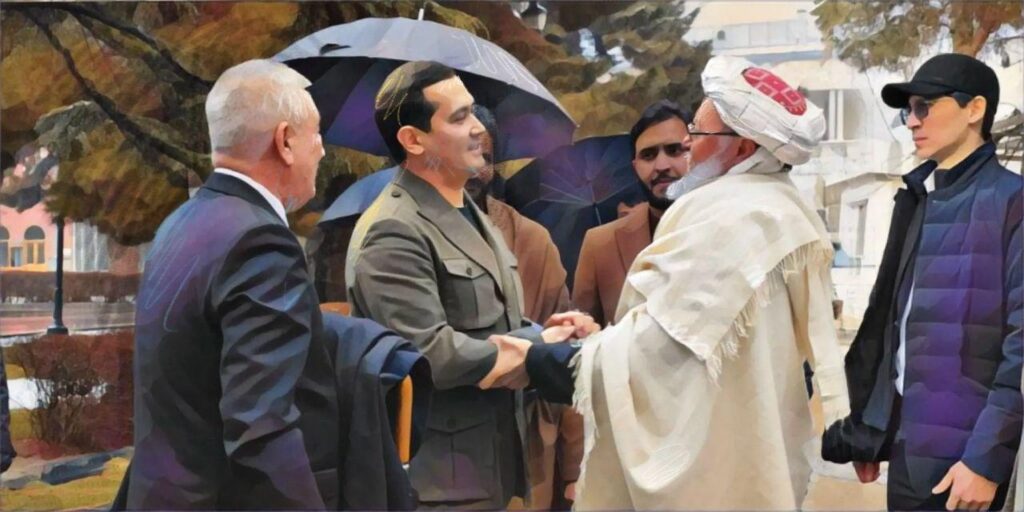
Afghanistan is quickly becoming more important to Central Asia, and the third week of February was filled with meetings that underscored the changing relationship. There was an “extraordinary” meeting of the Regional Contact Group of Special Representatives of Central Asian countries on Afghanistan in the Kazakh capital Astana. Also, a delegation from Uzbekistan’s Syrdarya Province visited Kabul, and separately, Uzbekistan’s Chamber of Commerce organized a business forum in the northern Afghan city of Mazar-i-Sharif. A Peaceful and Stable Future for Afghanistan The meeting in Astana brought together the special representatives of Kazakhstan, Kyrgyzstan, Tajikistan, and Uzbekistan for Afghanistan. The group was formed in August 2025. There was no explanation for why the fifth Central Asian country, Turkmenistan, chose not to participate. The purpose of the Astana meeting was to coordinate a regional approach to Afghanistan. Comments made by the representatives showed Central Asia’s changing assessment of its southern neighbor. Kazakhstan’s special representative, Yerkin Tokumov, said, “In the past [Kazakhstan] viewed Afghanistan solely through the lens of security threats… Today,” Tokumov added, “we also see economic opportunities.” Business is the basis of Central Asia’s relationship with the Taliban authorities. Representatives noted several times that none of the Central Asian states officially recognizes the Taliban government (only Russia officially recognizes that government). But that has not stopped Kazakhstan and Uzbekistan, in particular, from finding a new market for their exports in Afghanistan. Uzbekistan’s special representative, Ismatulla Ergashev, pointed out that his country’s trade with Afghanistan in 2025 amounted to nearly $1.7 billion. Figures for Kazakh-Afghan trade for all of 2025 have not been released, but during the first eight months of that year, trade totaled some $335.9 million, and in 2024, amounted to $545.2 million. In 2022, Kazakh-Afghan trade reached nearly $1 billion ($987.9 million). About 90% of trade with Afghanistan is exports from Kazakhstan and Uzbekistan. For example, Kazakhstan is the major supplier of wheat and other grains to Afghanistan, and Uzbekistan is the biggest exporter of electricity to Afghanistan. Kyrgyzstan’s trade with Afghanistan is significantly less, but from March 2024 to March 2025, it came to some $66 million. To put that into perspective, as a bloc, the Central Asian states are now Afghanistan’s leading trade partner, with more volume than Pakistan, India, or China. Kazakhstan’s representative, Tokumov, highlighted Afghanistan’s strategic value as a transit corridor that could open trade routes between Central Asia and the Indian Ocean. Kyrgyzstan’s representative, Turdakun Sydykov, said the trade, economic, and transport projects the Central Asian countries are implementing or planning are a “key condition for a peaceful and stable future for Afghanistan and the region as a whole.” The group also discussed humanitarian aid for Afghanistan. All four of these Central Asian states have provided humanitarian aid to their neighbor since the Taliban returned to power in August 2021. Regional security was also included on the agenda in Astana, but reports offered little information about these discussions. A few days before the opening of the meeting in Astana, Russian Ambassador to Kyrgyzstan Sergei...

The Board of Peace and the Emerging C6 Regional Ecosystem

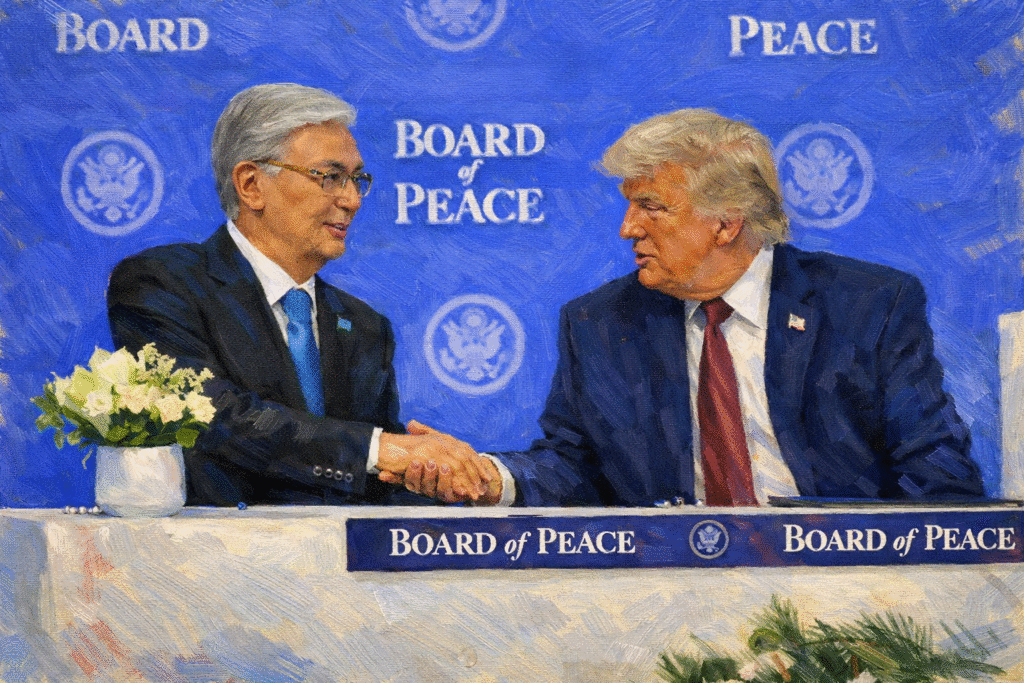
Washington is hosting the first summit of the Board of Peace, an initiative convened by U.S. President Donald Trump. Aircraft carrying leaders from several post-Soviet states have arrived at Joint Base Andrews. While Russia and Belarus have been invited - representation levels vary - the presidents of Kazakhstan, Uzbekistan, and Azerbaijan have traveled to the United States in person. Although each leader has a separate bilateral agenda, Kassym-Jomart Tokayev, Shavkat Mirziyoyev, and Ilham Aliyev share a broader objective: presenting a consolidated regional grouping, informally referred to as the C6, in which Kazakhstan is seen as playing a leading role. Tokayev, a career diplomat who previously served as a senior United Nations official, has developed a consistent approach to foreign visits, which typically includes a meeting with Kazakh citizens residing abroad, particularly students and young professionals, and the publication of an opinion piece in a leading outlet in the host country. During his current visit to the United States, he met members of the Kazakh diaspora and published an article in The National Interest outlining his vision for international stability. [caption id="attachment_44160" align="aligncenter" width="2560"] President Kassym-Jomart Tokayev meets with Kazakh citizens living and studying in the United States; image: Akorda.kz[/caption] According to Kazakh political analyst Andrei Chebotarev, the central theme of Tokayev’s article is the importance of stability amid intensifying geopolitical rivalry and growing international conflicts. Chebotarev emphasized Tokayev’s call for a pragmatic international order grounded in the rule of law, accountability, predictable commitments, and respect for national and cultural identities, arguing that ideologically driven frameworks have proven ineffective. Tokayev described the Board of Peace as “not just another forum for endless discussions,” but as a practical initiative aimed at delivering tangible outcomes, particularly in relation to the Gaza Strip and the broader Middle East. He characterized the White House’s approach as one that views peace “not as a slogan, but as a project” built around infrastructure, investment, employment, and long-term stability. “This initiative deserves respect and international attention,” Tokayev said. During his visit to the United States last November for the C5+1 summit, Tokayev held meetings with senior U.S. officials, including Commerce Secretary Howard Lutnick, as well as executives from major international corporations. A delegation led by Deputy Prime Minister and Minister of National Economy Serik Zhumangarin is also in Washington during the current visit. In addition to promoting investment and technology partnerships, the delegation engaged with members of Congress involved in efforts to repeal the Jackson-Vanik amendment, which continues to complicate trade relations between the United States and certain Central Asian countries. Mirziyoyev has pursued a similar agenda during his current visit, holding meetings with U.S. Commerce Secretary Howard Lutnick and U.S. Trade Representative Jamieson Greer. He also met representatives of American businesses and signed an agreement establishing a new investment platform. [caption id="attachment_44171" align="aligncenter" width="1280"] A set of bilateral agreements on priority areas of Uzbekistan-U.S. cooperation was signed; image: President.uz[/caption] Aliyev, for his part, met in Washington with the leadership of the American Israel Public Affairs Committee, including...