• KGS/USD = 0.01144 0%
  • KZT/USD = 0.00211 0%
  • TJS/USD = 0.10460 0.19%
  • UZS/USD = 0.00008 0%
  • TMT/USD = 0.28490 0%
  • KGS/USD = 0.01144 0%
  • KZT/USD = 0.00211 0%
  • TJS/USD = 0.10460 0.19%
  • UZS/USD = 0.00008 0%
  • TMT/USD = 0.28490 0%
  • KGS/USD = 0.01144 0%
  • KZT/USD = 0.00211 0%
  • TJS/USD = 0.10460 0.19%
  • UZS/USD = 0.00008 0%
  • TMT/USD = 0.28490 0%
  • KGS/USD = 0.01144 0%
  • KZT/USD = 0.00211 0%
  • TJS/USD = 0.10460 0.19%
  • UZS/USD = 0.00008 0%
  • TMT/USD = 0.28490 0%
  • KGS/USD = 0.01144 0%
  • KZT/USD = 0.00211 0%
  • TJS/USD = 0.10460 0.19%
  • UZS/USD = 0.00008 0%
  • TMT/USD = 0.28490 0%
  • KGS/USD = 0.01144 0%
  • KZT/USD = 0.00211 0%
  • TJS/USD = 0.10460 0.19%
  • UZS/USD = 0.00008 0%
  • TMT/USD = 0.28490 0%
  • KGS/USD = 0.01144 0%
  • KZT/USD = 0.00211 0%
  • TJS/USD = 0.10460 0.19%
  • UZS/USD = 0.00008 0%
  • TMT/USD = 0.28490 0%
  • KGS/USD = 0.01144 0%
  • KZT/USD = 0.00211 0%
  • TJS/USD = 0.10460 0.19%
  • UZS/USD = 0.00008 0%
  • TMT/USD = 0.28490 0%

Viewing results 115 - 120 of 1448

Inspired by Golovkin, Young Kazakhstani Skier Heads to Winter Olympics

A 16-year-old Kazakhstani freestyle skier who won silver in the mixed team aerials event at the 2025 Asian Games is among athletes from Central Asia who will compete at the Olympic Games in Italy this month. With a 36-member team, Kazakhstan is sending the largest contingent from the region to the games, which run from February 6 to February 22 in Milan, Cortina d'Ampezzo in the Dolomites and other locations in northern Italy. The youngest member of the team is Asylkhan Assan, who also took tenth place for Kazakhstan at a World Cup event in China a year ago and has competed in other international competitions. “The most important thing is to perform well. To fully demonstrate my potential and not make mistakes during the jump,” Assan said in an interview posted on the the Olympic.kz website. The teen athlete said he got into sports when he was five years old and, with the encouragement of his grandmother, followed his sister into freestyle skiiing. The acrobatic sport features flips, twists and somersaults after skiiing off a steep jump and concludes with a hopefully clean landing on a downhill slope. “I had injuries during my career, but my family always supported me,” he said. “I did not break down physically or psychologically.” Assan said his role model is Gennady Golovkin, the former middleweight world champion from Kazakhstan, and that he used to wake up early to watch the boxer’s fights. Golovkin, head of Kazakhstan’s National Olympic Committee, was named president of World Boxing at the federation’s inaugural congress in Rome in November. Freestyle skiing emerged in the 1960s at a time of social change and a push for “more more freedom of expression, even in sports,” the Olympics organization said. It was “initially called ‘hotdogging’ because it involved a mix of acrobatic moves, aerials, and adrenaline,” it said. The International Ski Federation recognised freestyle as a discipline in 1979, introduced guidelines to make it safer and held the first events in the following year. It made its Olympic debut as a demonstration sport at the games in Calgary, Canada in 1988. The town of Livigno will host the freestyle skiiing and snowboarding events at this year’s Winter Olympics.

Kazakhstan’s Water Ministry Approves Roadmap to Eliminate the “Black Market” for Water

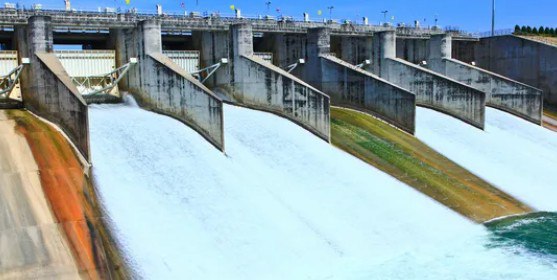
Kazakhstan’s Ministry of Water Resources and Irrigation, in coordination with the General Prosecutor's Office, has unveiled a comprehensive action plan to combat illegal water abstraction, commonly referred to as the “black market” for water. The roadmap was presented at an interdepartmental meeting earlier this week. The plan outlines systematic measures, including a nationwide audit of water resources, the mapping of regions vulnerable to illegal abstraction, and a review of state funding allocated for water infrastructure development. It also calls for the adoption of water-saving technologies and the implementation of anti-corruption mechanisms. Interdepartmental working groups will be established at both national and regional levels, incorporating law enforcement representatives with investigative authority. A central component of the strategy is the digital transformation of irrigation water distribution. This will include the deployment of satellite and digital monitoring systems, centralized accounting tools, and mandatory interdepartmental data-sharing. Special emphasis will be placed on ensuring compliance with water use quotas and promoting crop diversification among farmers. Minister of Water Resources and Irrigation Nurzhan Nurzhigitov emphasized that eradicating the shadow water trade demands coordinated efforts from government institutions and law enforcement, with the prosecutor’s office playing a leading role. “No lawbreaker should escape responsibility,” he said. According to ministry estimates, the black market accounts for 5-10% of Kazakhstan’s agricultural water consumption. The country’s total annual water usage is approximately 25 billion cubic meters, with the agricultural sector consuming about 60%, roughly 15 billion cubic meters. In a recent address to the nation, President Kassym-Jomart Tokayev called for the complete elimination of illegal water trafficking. As previously reported by The Times of Central Asia, Kazakhstan’s water legislation already includes provisions for the gradual tightening of regulations on legal water users. Authorities have stated that immediate action will be taken to dismantle the illicit segment of the market.

Kazakhstan Plans to Attract More Than $60 Billion in Investments in 2026

Kazakhstan aims to attract $62.7 billion in total investment in 2026, including $25.5 billion in foreign capital. The figures were announced during a government meeting on investment strategy chaired by Prime Minister Olzhas Bektenov. According to Bektenov, state authorities have been tasked with increasing the inflow of high-quality investments and ensuring the launch of projects with high added value. In line with this strategic goal, Kazakhstan’s Investment Policy Concept has been updated and extended to 2030. By the end of 2025, investment in fixed capital had reached $45 billion. In 2026, the government plans to implement 475 investment projects worth approximately $32 billion, creating over 1,100 permanent jobs. For comparison, 273 projects valued at $5 billion were launched in 2025. The government is shifting to a proactive investment model focused on sector-specific targeting and the development of a pre-approved portfolio of investment proposals. Major projects underway include the CHN Corporation’s $4 billion coal chemical complex in the Karaganda region, Fufeng Group’s $800 million corn deep processing plant, Shandong Yuwang Industrial’s $250 million soybean processing facility, and additional investments from Roca Group and UBM Group. Investor protection remains a top priority. The investment ombudsman role has been transferred to the Prosecutor General. In addition, the former investment committee has been restructured into the Committee for the Protection of Investors’ Rights. According to the Prosecutor General’s Office; these reforms have led to a 30% reduction in legal disputes involving investors. Despite this progress, Bektenov emphasized that excessive bureaucracy and delays in local procedures continue to hinder investment, resulting in direct economic losses. As previously reported by The Times of Central Asia, Kazakhstan was named as one of the leading investment destinations in the Eurasian region, alongside Uzbekistan.

From Central Asia to the World: How a U.S.-Raised Kazakh Founder Is Using AI to Unlock Global Education

For many talented students across Central Asia, admission to the world’s leading universities remains an elusive goal, not due to a lack of ability, but because of complex application procedures, and expensive consulting services. A new AI platform, yoonee.ai, is working to change that. At the heart of the initiative is a woman bridging continents and reconnecting with her cultural roots. One of the platform’s co-founders is ethic Kazakh Gulmira Sage, who was adopted and raised in the United States. Despite growing up in America, she says her connection to Kazakhstan never waned. Last year, her journey back to Kazakhstan to meet her biological mother captured national attention. Now, she is once again in the spotlight, this time for launching a project that promises to reshape access to global education. “Coming back to my homeland after many years felt like reclaiming a missing part of myself,” she says. That personal journey now underpins the mission behind yoonee.ai: a platform designed to help students from Central Asia navigate international higher education systems with greater ease and confidence. From Aviation to AI Before venturing into the tech sector, Gulmira worked as an analyst at Delta Air Lines, one of the world’s largest carriers. There, she worked with complex datasets, financial models, and global logistics, skills she says sharpened her systems thinking. “My background is actually in aviation. I worked as an analyst at one of the biggest airlines in the world, dealing with complex data, financials, and the global logistics that keep an airline moving,” she explains. “Aviation connects people physically, and IT does the same thing electronically. Technology connects them digitally.” That experience fueled her belief that digital tools, and AI in particular, could help eliminate long-standing educational barriers. Together with her co-founders, Feruza and Aidana, she began building yoonee.ai, drawing on their shared academic and professional experiences in the U.S., France, and Kazakhstan. How the Platform Works Yoonee.ai allows students to upload academic documents directly into the system. Using AI, the platform translates them with academic accuracy and converts grades into internationally recognized formats. For instance, GPA scores from five-point or 100-point systems are standardized to U.S. benchmarks, allowing students to assess how competitive their profiles are for specific universities. The platform also offers a “match score” that estimates a student’s compatibility with selected institutions. According to the founders, many qualified applicants are rejected not for academic shortcomings but due to formatting errors or unmet technical requirements. “Geography Should Not Decide a Student’s Future” The team sees its mission as the democratization of global education. Their goal is to eliminate what they call the “geographic tax” – the added financial and informational burden on students from developing regions. This is especially relevant in rural parts of Kazakhstan and neighboring countries, where access to U.S.-trained admissions consultants is limited and often unaffordable. To improve accessibility, the platform will be available in Kazakh, Russian, and Uzbek, allowing students to explore global university options in their native languages, directly from their smartphones. Cultural...

Kazakhstan-Uzbekistan Jibek Joly Train Tour Extended to Tajikistan

Kazakhstan’s national railway company, Kazakhstan Temir Zholy (KTZ), has announced the expansion of its popular Jibek Joly (Silk Road) tourist train route to include Tajikistan, adding a new stop to one of Central Asia’s flagship railway tourism initiatives. The updated route will now reach the Tajik capital, Dushanbe, extending the tour beyond Kazakhstan and Uzbekistan for the first time. The inaugural journey on the extended route is scheduled to depart from Almaty on March 20, 2026, and return on March 25, passing through a series of historic Silk Road cities: Turkestan (Kazakhstan), Samarkand (Uzbekistan), Dushanbe (Tajikistan) and Tashkent (Uzbekistan). The tour package includes rail travel, guided sightseeing, entrance to cultural and historical sites, and organized transfers. Its launch coincides with Nauryz, the region’s traditional spring holiday, allowing travelers to experience vibrant local celebrations along the way. First introduced in November 2024, the Jibek Joly train originally ran between Almaty, Turkestan, and Tashkent, and has since become a highly visible symbol of the region’s growing tourism sector. The project reflects broader efforts to promote Central Asia as a unified tourist destination. Regional leaders have advocated for a shared visa-free regime for foreign visitors, similar to Europe’s Schengen Zone, to encourage cross-border travel and boost international tourism. Officials say that initiatives like Jibek Joly can help strengthen cultural ties, foster regional integration, and raise Central Asia’s profile on the global tourism map.

Attempting to Build a Litter-Free Kazakhstan: An Interview with Ecologist Kamila Akimbekova

Ten years ago, waste recycling in Almaty was largely the domain of individual enthusiasts. Today, environmental campaigns draw thousands, and conversations about responsible consumption have become part of daily life for many city residents. One of the pioneers of this movement is Kamila Akimbekova, an eco-influencer and co-organizer of environmental initiatives. In an interview with The Times of Central Asia, she reflects on the evolution of Almaty’s eco-community, the principles behind the zero waste concept, and how small, consistent changes can reshape a city. TCA: Kamila, you had a successful career in banking. What prompted your transition to environmental activism?  Kamila: I think my interests evolved. People often think recycling is a new trend, but it actually existed in the USSR: students collected waste paper, and people returned glass for reuse. It was an effective circular economy. When I became a mother for the second time, I began thinking more deeply about my impact on the world. I started researching whether Almaty had recycling facilities. At the time, information was scarce, and it wasn’t easy to locate collection points, but I didn’t give up. TCA: Was access to information more limited 10-15 years ago? Kamila: Absolutely. Social media was less developed, and online information was often outdated or unreliable. I started looking for people who shared my values and eventually connected with Almaty’s early eco-activists. They were scattered individuals with a shared desire for change. Over time, we formed a real community, launched joint projects, and I began sharing what I learned on my blog. That’s how I transitioned to eco-influencing. Today, I have around 30,000 Instagram followers, an engaged audience concerned about the environment. TCA: Is the eco-community large now? Kamila: It’s grown significantly, especially in Almaty, though we’re also connected with activists across Kazakhstan. Participation has multiplied. Our early events drew 20-50 people. Now we see around 2,000. There’s strong interest from students and school-children, I lecture regularly and see growing volunteerism. At our last campaign, electronic sensors showed that 1,900 people attended. TCA: Is it true that women form the core of the eco-community? Kamila: Yes, that’s backed by studies. Women tend to be more environmentally conscious, likely due to traditional roles as caretakers of the home and future generations. TCA: Today, people can recycle much more than just paper, glass, and plastic. How did that expansion come about? Kamila: I wanted a convenient way to dispose of multiple waste types, old medicines, unused items, plastics, metals, e-waste, etc. In 2019, we invited companies like Rocket Plastic and an e-waste recycler to set up at our events. We also partnered with the Almaty Pop-Up Store and expanded through collaborations with the Darmarka project and the Recycle Birge team. TCA: I was surprised to learn you accept unusual items, used cooking oil, expired candy, even food scraps for farmers. Kamila: We follow the zero waste concept, which aims to reduce waste to zero. Many newcomers think sorting is the most important part, but recycling is actually the last...