• KGS/USD = 0.01144 0%
  • KZT/USD = 0.00207 0%
  • TJS/USD = 0.10419 -0.1%
  • UZS/USD = 0.00008 0%
  • TMT/USD = 0.28571 0%
  • KGS/USD = 0.01144 0%
  • KZT/USD = 0.00207 0%
  • TJS/USD = 0.10419 -0.1%
  • UZS/USD = 0.00008 0%
  • TMT/USD = 0.28571 0%
  • KGS/USD = 0.01144 0%
  • KZT/USD = 0.00207 0%
  • TJS/USD = 0.10419 -0.1%
  • UZS/USD = 0.00008 0%
  • TMT/USD = 0.28571 0%
  • KGS/USD = 0.01144 0%
  • KZT/USD = 0.00207 0%
  • TJS/USD = 0.10419 -0.1%
  • UZS/USD = 0.00008 0%
  • TMT/USD = 0.28571 0%
  • KGS/USD = 0.01144 0%
  • KZT/USD = 0.00207 0%
  • TJS/USD = 0.10419 -0.1%
  • UZS/USD = 0.00008 0%
  • TMT/USD = 0.28571 0%
  • KGS/USD = 0.01144 0%
  • KZT/USD = 0.00207 0%
  • TJS/USD = 0.10419 -0.1%
  • UZS/USD = 0.00008 0%
  • TMT/USD = 0.28571 0%
  • KGS/USD = 0.01144 0%
  • KZT/USD = 0.00207 0%
  • TJS/USD = 0.10419 -0.1%
  • UZS/USD = 0.00008 0%
  • TMT/USD = 0.28571 0%
  • KGS/USD = 0.01144 0%
  • KZT/USD = 0.00207 0%
  • TJS/USD = 0.10419 -0.1%
  • UZS/USD = 0.00008 0%
  • TMT/USD = 0.28571 0%

Viewing results 613 - 618 of 1395

200th Container Train from China Arrives in Kazakhstan’s Aktau Port on Middle Corridor

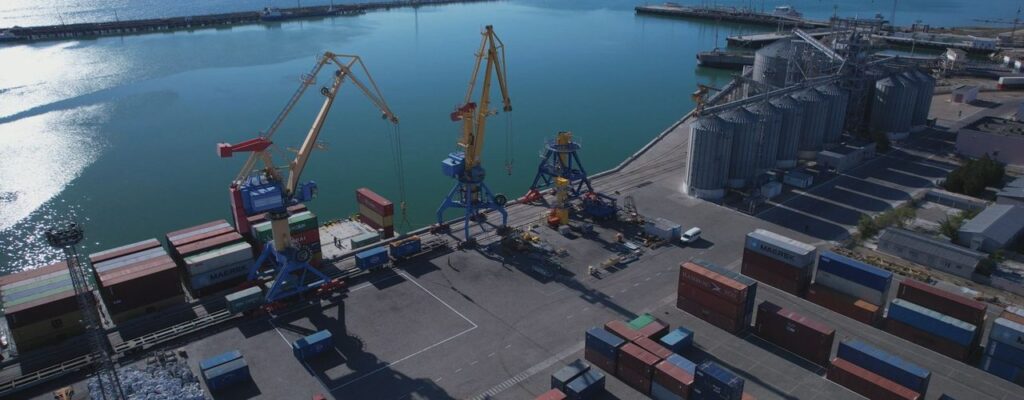
A container train from China arrived last week in the port of Aktau on Kazakhstan’s Caspian coast. Kazakhstan’s national railway company, Kazakhstan Temir Zholy, announced that it was the 200th container train since the beginning of 2024. Last year, 11 container trains went through Aktau Port along the Trans-Caspian International Transport Route (TITR), known as the Middle Corridor. The Middle Corridor is an 11,000-kilometer international multimodal transport corridor that runs from China to Europe via Kazakhstan, the Caspian Sea, Azerbaijan, Georgia, the Black Sea, and Turkey. The container train originally departed from the Kazakhstan terminal in Xi'an (China). From Aktau, it will depart for Azerbaijan on a barge across the Caspian Sea. The Kazakh terminal in Xi'an is an important logistics hub that consolidates cargo from various provinces of China. It has given a new impetus to the development of the TITR. In November 2023, Kazakhstan and China signed a number of agreements to develop the TITR, including a route for China-Europe container trains. Middle Corridor Multimodal Ltd. is a joint venture that was established at the Astana International Financial Center, bringing together the railway administrations of Kazakhstan, Azerbaijan, and Georgia to manage the route on a parity basis. The Kazakhstani terminal in the dry port of Xi'an opened in February 2024. It consolidates 40% of all container trains heading towards Kazakhstan, which has contributed to a significant increase in transit traffic along the TITR. Transportation along the TITR is growing steadily. In 2023, 2.8 million tons of cargo were transported along the route, compared to about 1.7 million tons in 2022. In the first seven months of 2024, the traffic totaled 2.56 million tons. By 2027, the capacity of the TITR is planned to increase to 10 million tons.
A Closer Look: Scholz Trip Shows Europe’s Interest in Central Asia

Energy, trade, climate change, geopolitical conflict. These are some of the big themes surrounding a trip by German Chancellor Olaf Scholz to Central Asia, whose countries seek to expand their range of international partners while securing their autonomy from outside, sometimes competing influences. Joined by German business leaders, Scholz was scheduled to arrive in Uzbekistan on Sunday and also visit Kazakhstan prior to a Central Asia-Germany summit there on Tuesday, the last day of his tour. It is Scholz’s first trip to Central Asia, signaling how important the region has become for Europe as it seeks new energy alternatives to reduce dependence on supplies from Russia since Moscow’s full-scale invasion of Western-backed Ukraine in February 2022. The relationship goes beyond the stopgap purchase of energy and minerals, even though Russian officials has accused Western countries of trying to use Central Asia as a tool in their conflict with Russia. At an inaugural summit last year in Berlin, Germany along with Kazakhstan, Kyr­gyzstan, Tajikistan, Turkmenistan and Uzbekistan agreed to a “strategic regional partnership.” European countries recognize that the Central Asia is deeply bound to Russia and China, the regional powers, and that European and Central Asian goals and priorities won’t always align, according to Western analysts. However, Central Asian countries also recognize that engaging with Europe, the United States and other more distant partners is in their interests because it helps them to maintain strategic autonomy and leverage. “If the Central Asian states want to gain weight and be heard in the emerging multipolar world order, they must strength­en their technological, industrial and geopolitical independence,” analysts said in a commentary posted by the German Institute for International and Security Affairs, which advises the German government and parliament. “This does not necessarily imply decoupling from Russia and China, but rather spreading risk through the addition (not substitution) of partners.” The analysts said Germany should bolster Central Asian autonomy by helping to strengthen the region’s “crisis resilience” via support on issues such as transport routes, electricity infrastructure and water management. They also said European efforts to “win the support of regional states for Western sanctions against Russia must be measured against the realities on the ground” – an apparent reference to the trade with Russia that Central Asia considers vital to its economies. Kazakhstan, which shares a long land border with Russia, has in particular faced a difficult balancing act on sanctions. At a press briefing with Scholz in Berlin in September 2023, Kazakh President Kassym-Jomart Tokayev said his country would comply with Western sanctions against Russia over the Ukraine war while still cooperating with its neighbor. However, Serik Zhumangarin, Kazakhstan’s deputy prime minister and trade minister, told the Bloomberg news agency last month that Kazakhstan won’t always “blindly follow the sanctions” and will be looking out for its own economic interests. Human rights groups want Scholz to bring up freedoms and the rule of law during his trip to Central Asia. They argue that avoiding the topic will only hinder efforts to bring German investment...

Central Asian Countries Hold Second Inter-Parliamentary Forum, Adopt Khiva Declaration

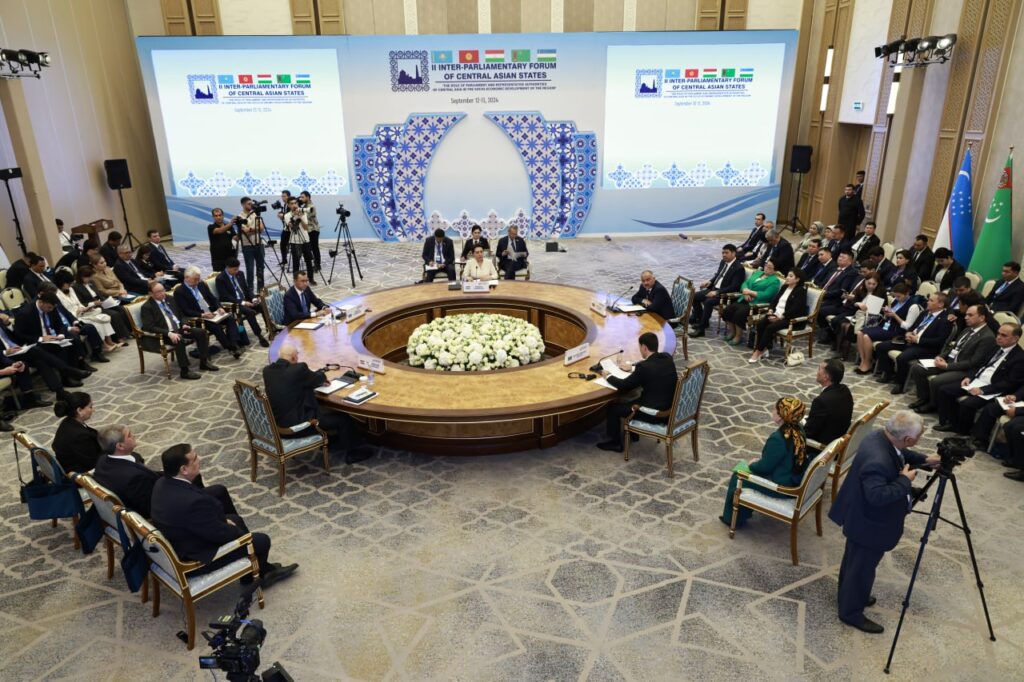
The second inter-parliamentary forum of Central Asian countries was held in Khiva, Uzbekistan on 12 September. It was attended by political representatives from Kazakhstan, Kyrgyzstan, Tajikistan, Turkmenistan, and Uzbekistan, members of youth parliaments, and local and international mass media. Topics addressed at the forum included new forms of interparliamentary cooperation between Central Asian countries, and recommendations for increasing the role of women and young people in the region's socio-economic development. The Special Representative of the United Nations Secretary-General for Central Asia, Kaha Imnadze, commented: “This forum once again confirms Uzbekistan's important role in strengthening regional cooperation, as well as in ensuring peace and security.” Imnadze added that the UN is ready to strengthen cooperation with Central Asia in areas such as the use of transboundary waters, the melting of glaciers, gender equality, and youth activism. The forum's results resulted in the adoption of the Khiva Declaration, which will serve as the basis for the future cooperation of Central Asian countries within the framework of inter-parliamentary initiatives. The first inter-parliamentary forum of Central Asian countries was held last year in Turkestan, Kazakhstan. The event led to the adoption of the Turkestan Declaration.

Kazakhstan’s Longest Road Tunnel Opens on Western Europe – Western China Transport Corridor

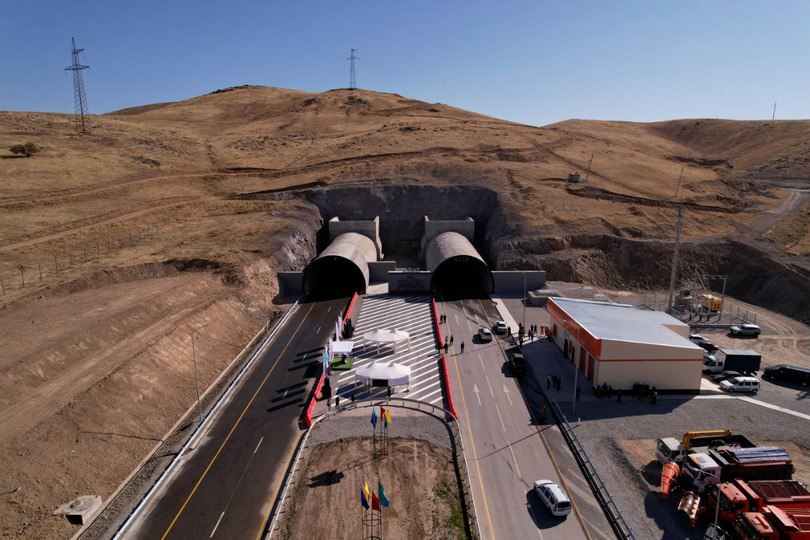
On September 12, a new tunnel was opened at the Shakpak Baba pass in Kazakhstan’s southern Turkestan region. As the Kazakh Ministry of Transport reported, it is the longest automobile tunnel in Kazakhstan. The two-lane tunnel is 840 meters long, 11 meters wide, and 8 meters high. Control centers on both sides of the tunnel monitor lighting, ventilation, and traffic lights. The tunnel's opening will facilitate traveling and cargo transportation during winter. At the tunnel's opening ceremony, Kazakhstan’s Deputy Minister of Transport Satzhan Ablaliyev stated: "The opening of this tunnel is an important event for Kazakhstan's transport infrastructure. It will not only improve the region's year-round transport accessibility but will also significantly increase traffic safety in this difficult section. The tunnel will prevent drivers from being trapped in the snow on the Shakpak Baba pass in winter. In addition, the main traffic flow will now be redirected to bypass the village of Shakpak Baba, increasing safety in the village." The tunnel is part of the Kazakh section of the international road transport corridor Western Europe-Western China. With a total length of 8,445 km, the corridor runs 2,233 km through Russia, 2,787 km through Kazakhstan, and 3,425 km through China. In July, Kazakh Minister of Transport Marat Karabayev announced that in 2024, Kazakhstan planned to repair and construct 12,000 kilometers of road.

Latest Baikonur Space Launch Helps to Set a Record

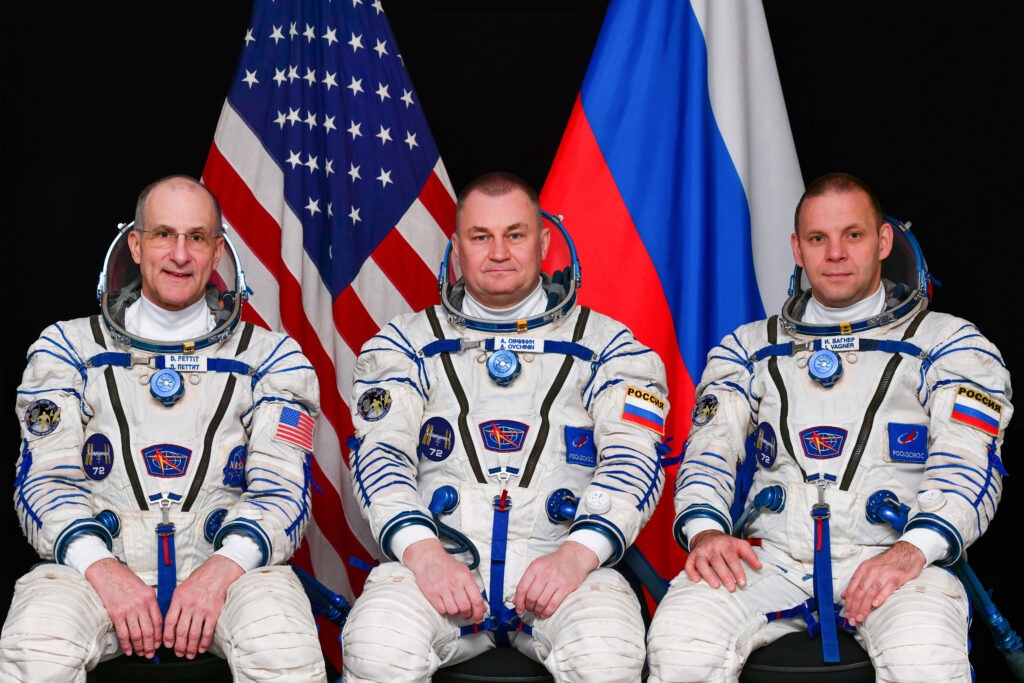
It seemed almost routine: One American astronaut and two Russian cosmonauts traveling to the International Space Station in a Soyuz MS-26 spacecraft from the Baikonur Cosmodrome in Kazakhstan. After all, the Russian-run facility in a remote, barren part of the Central Asian country has been a mainstay of travel to the station for many years. But the three-hour trip on the Soyuz on Wednesday made some space history, increasing the total number of people currently in Earth’s orbit to a record of 19. The previous record of 17 was set last year. The trip brings the number of people currently on the International Space Station to 12, including seven Americans and five Russians, according to NASA. The group will get a little smaller on Sept. 23, when one American and two Russians are scheduled to depart. There are also three people on China’s space station and four people led by billionaire Jared Isaacman on the five-day Polaris Dawn mission, for a total of 19. The new arrivals at the International Space Station are NASA astronaut Don Pettit and Roscosmos cosmonauts Alexey Ovchinin and Ivan Vagner. They’ll spend about six months in space and return to Earth in the spring of 2025. It’s the fourth trip to space for Pettit and Ovchinin and the second for Vagner. NASA and Roscosmos currently have a “cross-flights” deal involving travel to and from the International Space Station for three Russian cosmonauts on the U.S. Crew Dragon spacecraft and three U.S. astronauts on the Russian Soyuz spacecraft. The two space agencies are working on extending the agreement beyond the spring of 2025, the Russian news agency Interfax reported in a story with a Baikonur dateline. It quoted Kenneth Bowersox, NASA associate administrator for space operations. The joint missions are one of the rare areas of collaboration between Russia and the United States at a time of heightened tension over the Ukraine war.

The Subtle Politics of the World Nomad Games

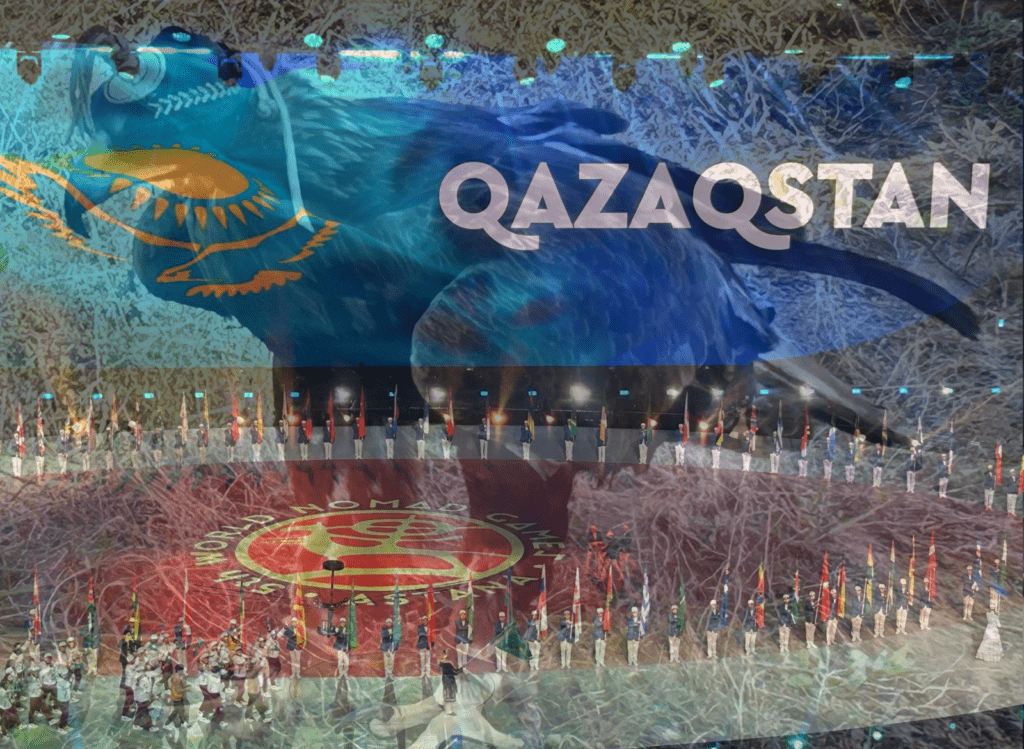
Attending the World Nomad Games in Kazakhstan, one might be tempted to look for a possible political dimension, or the seeming lack thereof. The 5th World Nomad Games have brought  together in Astana more than 3,000 participants from 89 countries competing for 581 medals across 21 sports, with a prize fund of 250 million tenge ($521,000). This dwarfs the 19 nations which participated in the first iteration of the event, hosted in Kyrgyzstan in 2014, where just ten sports were held. Of course, the Games have expanded exponentially since then, and interest from visitors and media alike has also skyrocketed. Kazakhstan's Ministry of Tourism and Sports has stated that over 100,000 foreign tourists will attend the Games, which will “help showcase Kazakhstan's cultural and sports heritage to a global audience, significantly boosting interest in tourism to the country." Also hugely significant is the level of media interest, with outlets from 64 countries applying for accreditation. With competitors, visitors and media from around the globe, clearly the appeal of the Games has expanded far beyond those nations from which the heirs to nomadic civilizations hail. As for its cultural significance, it speaks volumes that the World Nomad Games has been included in the UNESCO list of Intangible Cultural Heritage. The Games, however, are also acting as a semi-official summit, as evinced by the attendance of President Mirziyoyev of Uzbekistan, President Japarov of the Kyrgyz Republic, Gurbanguly Berdimuhamedov, the Chairman of the People’s Council of Turkmenistan, the Rais (Head) of Tatarstan, Rustam Minnikhanov, the Head of the Republic of Sakha (Yakutia), Aisen Nikolayev, the former president of Mongolia, Nambaryn Enkhbayar, the son of Turkey’s President, Bilal Erdogan, and more. Given all this, the World Nomad Games as more than just an event, sporting or otherwise, and have been utilized as part of Kazakhstan's strategic course in pursuit of a balanced and multi-vector foreign policy aimed at ensuring the best interests of the state, whilst positioning the nation as an increasingly important land-bridge between East and West, both in terms of trade and diplomacy. This dynamic neutrality has made the Nomad Games in Astana the first international sporting event since the beginning of Vladimir Putin’s war in Ukraine in which the Russian team has been able to participate under the national flag. Spokeswoman for the Russian Foreign Ministry, Maria Zakharova, stated that the “Russian national team, comprising 150 athletes, was welcomed with applause in Kazakhstan’s capital, accompanied by a rendition of “Katyusha.”  It’s a celebration of sport and friendship! Kazakhstan has reminded the world of what global sports should be: depoliticized, inclusive, and focused on promoting athleticism rather than being tainted by various perversions.” This, however, does not mean that Kazakhstan is cosying-up to Russia in the slightest. Despite disruptions in trade chains and logistical problems, Astana has followed Western sanctions to the letter, much to Putin’s chagrin. In this ever more open and outward looking nation, rallies against Russia’s invasion have been allowed to be staged. Even the death of Alexei Navalny...