• KGS/USD = 0.01144 0%
  • KZT/USD = 0.00211 0%
  • TJS/USD = 0.10515 0.48%
  • UZS/USD = 0.00008 0%
  • TMT/USD = 0.28530 0%
  • KGS/USD = 0.01144 0%
  • KZT/USD = 0.00211 0%
  • TJS/USD = 0.10515 0.48%
  • UZS/USD = 0.00008 0%
  • TMT/USD = 0.28530 0%
  • KGS/USD = 0.01144 0%
  • KZT/USD = 0.00211 0%
  • TJS/USD = 0.10515 0.48%
  • UZS/USD = 0.00008 0%
  • TMT/USD = 0.28530 0%
  • KGS/USD = 0.01144 0%
  • KZT/USD = 0.00211 0%
  • TJS/USD = 0.10515 0.48%
  • UZS/USD = 0.00008 0%
  • TMT/USD = 0.28530 0%
  • KGS/USD = 0.01144 0%
  • KZT/USD = 0.00211 0%
  • TJS/USD = 0.10515 0.48%
  • UZS/USD = 0.00008 0%
  • TMT/USD = 0.28530 0%
  • KGS/USD = 0.01144 0%
  • KZT/USD = 0.00211 0%
  • TJS/USD = 0.10515 0.48%
  • UZS/USD = 0.00008 0%
  • TMT/USD = 0.28530 0%
  • KGS/USD = 0.01144 0%
  • KZT/USD = 0.00211 0%
  • TJS/USD = 0.10515 0.48%
  • UZS/USD = 0.00008 0%
  • TMT/USD = 0.28530 0%
  • KGS/USD = 0.01144 0%
  • KZT/USD = 0.00211 0%
  • TJS/USD = 0.10515 0.48%
  • UZS/USD = 0.00008 0%
  • TMT/USD = 0.28530 0%

Viewing results 955 - 960 of 4749

Melon Pyramids and Empty Pantries: Tajik and Turkmen Feasts Amid Everyday Shortages

Pyramids of various kinds of melons, fruits laid across the ground to form intricate, traditional patterns, as well as an abundance of fruit, dried fruit, nuts, and bread overflowing from tables, and even fountains, surrounding the edible ground arrangement, and grapes hanging from poles. As an advertisement for national products, a background for international events, or a gift for an ally, Tajikistan is gaining fame for elaborate displays of fruit. It is an amazing sight, with fruits and nuts arranged in patterns that cover large areas of the pavilions and gardens where foreign guests are being entertained. However, as good as these lavish presentations look and taste, these cornucopias are being exhibited in some of Central Asia’s poorest countries, and, unsurprisingly, there has been some discontent and some scandals. For Sale On August 16-17, there was an exhibition of Tajikistan’s products and crafts in the Kazakh capital, Astana, with melon pyramids taking center stage in an exhibition that also featured “over a thousand tons of products: fresh fruits and vegetables, nuts, [and] dried fruits.“It was a return performance for the Tajik “masters” who arrange the exhibitions. Astana hosted a fair of Tajik products in August 2023 that drew a big crowd, some of whom were overly anxious to get their hands on the goods. Dozens of people started taking melons and grapes from the pyramids, breaking shelves and decorations in the process. [caption id="attachment_35359" align="aligncenter" width="1597"] Tajik fair in Astana, 2023; image: public domain[/caption] Impress the Guests One of the most memorable grand displays of fruit occurred when Tajikistan hosted the summit of leaders from the Commonwealth of Independent States (CIS) on September 27, 2018. On the eve of the summit, Tajik President Emomali Rahmon walked his guests through a garden flanked by enough food to feed a small town for a month. It was the first time such a spread had been laid out for guests at an international gathering, with Rahmon seeming to appreciate having an agricultural background when hosting a diplomatic event. In July 2019, Rahmon met with then-Kyrgyz President Sooronbai Jeenbekov in the northern Tajik town of Isfara. Conflicts along the Kyrgyz-Tajik border were becoming increasingly deadly, and the two presidents met to discuss ways to ease tensions and resolve the festering problems along the frontier. While the two presidents talked, Rahmon guided Jeenbekov through “6 pyramids… of watermelons and melons, as well as almost 20 types of national breads.“ [caption id="attachment_35360" align="aligncenter" width="960"] Sooronbay Jeenbekov and Emomali Rahmon in Isfara; image: press service of the President of the Republic of Tajikistan[/caption] When Dushanbe hosted the Shanghai Cooperation Organization (SCO) summit in September 2021, the feast on the eve of the summit was every bit the equal of the CIS summit in 2018 and featured “huge pyramids of fragrant melons and watermelons, carpets of fresh fruit, grapes cascading like a waterfall, and even fountains of melons.” Rahmon brought his fruit feast to St. Petersburg in October 2022 when CIS leaders gathered for an informal CIS summit...
‘Orange Angels’: Aviators of Eastern Kazakhstan Fly Daily Rescue Missions

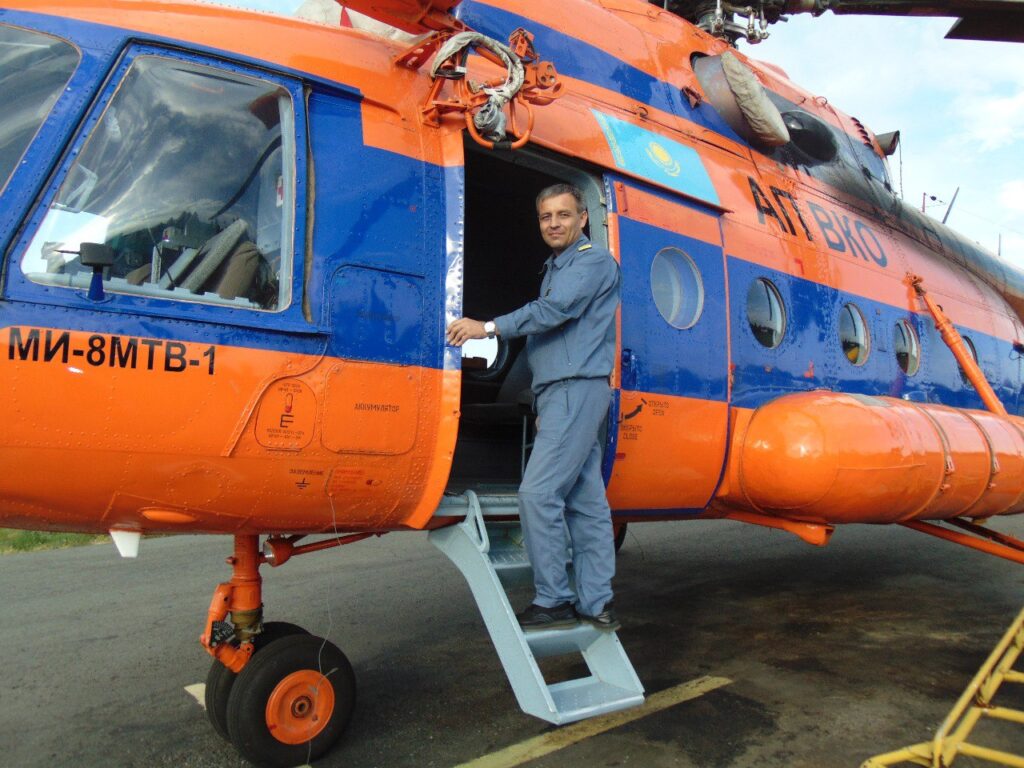
When there is no help left on the ground, they take to the skies: orange fuselages, the roar of propellers, and salvation descending from above. The Aviation Division of the East Kazakhstan Region - the 'Orange Angels' - is more than a state enterprise; it is a vital lifeline, operating when every minute counts. No Margin For Error Since its founding in 2003, the division has become an indispensable part of the region’s emergency response system. Its 114 full-time specialists conduct medical flights, firefighting operations, evacuations, and rescues. Yet staffing remains a challenge. "We are short 12-13 personnel. Ideally, we should have around 120," Kalikan Baigonusov, Director of the East Kazakhstan Aviation Division, told The Times of Central Asia. “Young people prefer big airlines, foreign skies, and big paychecks. Our salaries are decent, between $1,300 and $2,900, but the profession lacks visibility and appeal. It’s a calling, not just a job.” [caption id="attachment_35346" align="aligncenter" width="1280"] Image: TCA[/caption] Baigonusov hopes more young people will be drawn to aviation through education. His division is now organizing practical MI-2 helicopter training for students from the Civil Aviation Academy JSC. There is also close cooperation with the East Kazakhstan Multidisciplinary College, which, with support from the regional governor, launched new specialties in aviation engineering and mechanics on September 1, 2024. Therein, students undergo practical training with the air squadron, learning directly from experienced pilots and engineers. Still, Baigonusov believes Kazakhstan’s personnel training system needs urgent reform. "I’ve knocked on every door, the academy, the rector, the department head," he told TCA. "We need to train our people locally. Sending a student to Russia costs $47,000. That’s simply out of reach. We need to promote dual education here, so people can study and work at home.” Many of the division’s specialists are graduates of now-diminished Soviet-era aviation schools in Kachinsk, Omsk, Kyiv, and Riga. Each year, their ranks grow thinner. Engineering, Maintenance, and a Race Against Time Despite operating from aging facilities built in the 1970s and 1980s, the team is working to modernize and extend the lifespan of its equipment. The aircraft fleet, averaging 35 years in age, has undergone extensive inspections and upgrades. Standardization tests have been passed, and all certifications are in place. Thanks to the expertise of the engineering team, the division recently secured certification for maintaining YAK-40 and YAK-42 aircraft and Mi-8 and Mi-2 helicopters. [caption id="attachment_35348" align="aligncenter" width="1280"] Image: TCA[/caption] “Before, we relied on outside companies for repairs. Now we do everything ourselves,” says Baigonusov. “That saves time and money and makes us more self-reliant.” Deputy for the Engineering and Aviation Service (IAS) Lobanov leads a team dedicated to his work, although he, like many in the unit, is already over 55. Baigonusov is determined to attract the younger generation. “We need to show how important and beautiful this profession is. It's demanding, but it’s also deeply meaningful.” Rescuing the Stranded in Kalbatau Chief pilot Denis Grunsky recalled one of the most dramatic missions of his career to TCA....

Kazakhstan Boosts Air Transport Sector with New Fleet and Airport Revamps

Kazakhstan is set to double its civil aircraft fleet over the next five years, increasing the number of aircraft from 103 to 216 by 2030. According to the Ministry of Transport, in 2025 the country's fleet will add six new Airbus A320s and one Boeing 737 MAX 8. In January 2025, FlyArystan and Air Astana received new aircraft as part of this expansion. The government’s long-term plan aims to boost the number of aircraft operated by Kazakh airlines to 216 by the end of the decade. “This year, 36 new international routes have been launched, and eight foreign airlines have entered the market. There are currently 61 domestic routes with 850 flights per week,” said Deputy Minister of Transport Maksat Kaliakparov. As part of domestic connectivity efforts, 21 subsidized routes are now operating across nine regions, with approximately $12 million allocated for these services in 2025. The government’s priority is to improve air access to tourist destinations such as Usharal, Urdar, Kokshetau, and Turkestan. Airport Infrastructure Development Major investments are also being channeled into the country’s largest airports in Astana, Almaty, Shymkent, and Aktobe, all of which are being developed into multimodal transport hubs. In Astana, a $1.1 billion modernization project for Nursultan Nazarbayev International Airport began in 2025. Plans include the construction of a second runway, a third passenger and cargo terminal, and a multifunctional complex known as the Aerotropolis. The new facility will feature an industrial and logistics zone, business centers, hotels, and retail space. In Almaty, the airport is undergoing modernization in line with a General Development Plan extending to 2050. The initial phase includes reconstructing the domestic terminal, building a taxiway, upgrading the runway and fueling infrastructure, and establishing a cargo apron and maintenance hangar. Future phases envision a hotel and a multi-level parking facility. During the construction phase, more than 1,800 jobs are expected to be created, with an additional 550 jobs during operations. Shymkent opened a new 40,000 square-meter terminal in December 2024, boosting its annual passenger capacity from 800,000 to 6 million. Plans are underway to construct a new 3,500-meter runway and develop a multimodal hub connecting the airport with the Ontustik Special Economic Zone. In Aktobe, a multifunctional logistics center is being implemented at the airport. As part of this effort, the fuel filling complex is being upgraded, and storage capacity will more than double, facilitating an increase in flight operations. Authorities are also considering the construction of a second runway, which would allow the existing runway to undergo major repairs without disrupting service. “In addition, the government has decided to expand the boundaries of special economic zones at the country's largest airports. This will attract investors, develop industry and logistics, and turn Kazakhstan's air hubs into growth points for the national economy,” the government said in a statement. Foreign Investment and Regional Expansion As previously reported by The Times of Central Asia, the German company Skyhansa intends to construct a new cargo and passenger airport in Kazakhstan’s Zhetysu region. The project...

Kazakhstan Develops Water-Efficient Rice Variety to Combat Climate and Irrigation Challenges

The Ibrai Zhakhayev Kazakh Scientific Research Institute of Rice Growing is trialling a new moisture-saving rice variety in the Kyzylorda region. The variety, known as “Syr Sulu,” is designed to mature more quickly and use significantly less water compared to traditional strains. Syr Sulu matures within 105-110 days and offers high yields, up to 80-85 centners per hectare with proper agricultural practices. By comparison, Russian rice varieties typically cultivated in the Kyzylorda region require 120-125 days to reach maturity, resulting in higher water consumption. "The water situation in the southern regions of Kazakhstan makes it necessary to find and develop new ways to save water. Given global climate change, such crop varieties could become a compelling alternative to existing water-intensive varieties. The results of this research will have a positive impact on the development of agriculture and reduce water consumption in rice fields," said a representative of the Kazakh Rice Institute. Moisture Retention Innovations In parallel, the institute is working with the Ministry of Water Resources and Irrigation to continue trials of the Hungarian product Water Retainer, a soil treatment designed to preserve moisture. In 2025, the product is being tested on irrigated land in the Almaty, Zhambyl, Kyzylorda, Karaganda, Akmola, and Zhetysu regions. "The first stage of testing, in which four research institutes participated, showed that the product reduces the growing season of rice and achieves significant water savings. Traditionally, rice is watered for 90 days, but with the use of the preparation, 51 days are sufficient," said Lazzat Dzhusipova, Director of the Ministry's Department of Scientific and Innovative Technologies. Broader Water Challenges As previously reported by The Times of Central Asia, the Eurasian Development Bank (EDB) released a comprehensive assessment of Central Asia’s water and energy challenges in April 2025. The study found that much of the region’s water infrastructure is outdated and inefficient, leading to the loss of 40-55% of available water. The EDB estimates that, without urgent modernization, Central Asia could face an annual water deficit of 5-12 cubic kilometers by 2028.

Jordan’s King Abdullah II Departs for Uzbekistan and Kazakhstan

At the invitation of President Shavkat Mirziyoyev, King Abdullah II departed earlier today for a state visit to Uzbekistan spanning 25–26 August, with the main events to be held in Samarkand. The King will then continue to Kazakhstan for an official visit on 26–27 August. In Samarkand, King Abdullah II and President Mirziyoyev are expected to review political dialogue, trade and investment, agriculture and food security, education, tourism, and transport connectivity. Uzbek media report that several cooperation documents are slated for signature, underscoring Samarkand’s growing role as a diplomatic venue for Central Asia. In Astana, the King will meet President Kassym-Jomart Tokayev and attend events designed to expand commercial ties. The authorities in Astana have announced traffic curbs tied to the visit, a signal that a tightly choreographed official program is imminent. Kazakh media have framed the stop as part of a broader effort to deepen links with Middle Eastern partners at a time when Kazakhstan is diversifying export routes and courting investment from the Levant and Gulf. According to the official website of the President of the Republic of Kazakhstan, “high-level negotiations will be held aimed at further strengthening Kazakh-Jordanian cooperation in the trade, economic, cultural and humanitarian spheres.” The two visits fit into Jordan’s long-running outreach to Central Asia. Diplomatic relations with the region’s states date back to the 1990s, and Amman has increasingly paired political dialogue with practical economic initiatives. For Uzbekistan, officials have been looking to scale up a cordial relationship into more structured cooperation, and the Samarkand setting gives both sides a stage to announce concrete timelines for working groups or ministerial roadmaps. For Kazakhstan, Jordan is positioning itself as a mid-market gateway to the Levant and the Gulf, complementing Astana’s drive to build partnerships that can open new consumer markets, source medical-pharma products, and expand educational and tourism flows. Beyond Uzbekistan and Kazakhstan, Jordan’s engagement with Central Asia has emphasized areas where Amman brings specific comparative advantages. Jordan’s experience in water management and desert agriculture aligns with Central Asian priorities on climate resilience and efficient irrigation; its halal and medical-pharma sectors appeal to governments seeking to diversify imports; and its universities offer English- and Arabic-language programs that can deepen people-to-people links. Following the visits, observers will look for intergovernmental agreements that move beyond generalities, whether in health and pharmaceuticals, food supply chains, tourism promotion, or student exchanges. Aviation and cargo-handling announcements would be early evidence of a more durable commercial bridge, while references to streamlined customs procedures or mutual recognition in standards could make a material difference for small and mid-sized exporters on both sides. As Central Asia is recalibrating connectivity amid sanctions frictions and supply-chain shocks, Middle Eastern partners are seeking new sources of food, energy inputs, and investable projects with predictable regulatory environments. The two-country tour could, therefore, touch upon both sides' requirements, with Jordan’s looking to move its Central Asia policy from exploratory diplomacy to delivery.

Bridges, Not Blocs: Japan’s Central Asia Approach

Japan is one of the countries that has been most active in recent years in terms of deepening political and economic relations with the republics of Central Asia. However, the geopolitical and ideological grounds for Tokyo's activism have received less attention than those of other countries. In early August 2024, then Prime Minister Fumio Kishida was scheduled to visit the region, but the visit was cancelled at the last minute due to the risk of a major earthquake that could have struck Japan at that time. During his visit, Kishida was also expected to announce the launch of an economic aid package for the Central Asian republics. As confirmed by the Ministry of Foreign Affairs in Tokyo, Japanese Foreign Minister Takeshi Iwaya is visiting the region over the coming days, landing in Kazakhstan on August 24, before moving on to Uzbekistan until August 28. In the two countries, he will meet with his Kazakh and Uzbek counterparts, Murat Nurtleu and Bakhtiyor Saidov, respectively, with the aim in both cases of strengthening bilateral relations. Japan's interest in Central Asia is long-standing: the Central Asia Plus Japan Dialogue format was launched back in 2004, a platform that has been emulated by several countries in the following years. From a political point of view, this is a very smooth relationship, as confirmed to The Times of Central Asia by Timur Dadabaev, Professor of International Relations at the University of Tsukuba. “Japan’s engagement with Central Asia is driven less by immediate material gain and more by its pursuit of trust-building diplomacy,” Dadabaev told TCA. “It is a relationship rooted in Japan’s desire to be seen as a reliable, non-imperial partner that supports the sovereignty, stability, and regional agency of Central Asian states. Unlike other powers, Japan positions itself as a ‘distant neighbor without hidden agendas,’ which makes its initiatives particularly well-received. Over the years, this has translated into Japan being perceived not as a competing hegemon, but as a partner that invests in the region’s human capital, infrastructure, and governance in ways that reinforce independence rather than dependence.” The relationship between Japan and the Central Asian republics is based on many concrete elements - cooperation on energy, migrant workers, and connectivity - which, as Tomohiko Uyama, Professor of Modern History and Politics of Central Asia at Slavic-Eurasian Research Center at the Hokkaido University pointed out to TCA, represent the basis for broader diplomatic engagement. “The relationship between Japan and Central Asia is based on geopolitical factors. For Japan, Central Asia is a region that shares troublesome neighbors, Russia and China,” Uyama said. “Increasing Japan's presence in this region is important for curbing the excessive expansion of China and Russia’s global influence. However, strengthening diplomatic relations requires fostering economic and human relations. Therefore, in addition to its traditional technical cooperation, Japan is seeking to promote decarbonization, transportation connectivity, and human resource development.” Professor Dadabaev also stresses that the two dimensions - the one linked more to concrete elements and the one that has more to...