• KGS/USD = 0.01144 0%
  • KZT/USD = 0.00210 0%
  • TJS/USD = 0.10438 0.19%
  • UZS/USD = 0.00008 0%
  • TMT/USD = 0.28571 0%
  • KGS/USD = 0.01144 0%
  • KZT/USD = 0.00210 0%
  • TJS/USD = 0.10438 0.19%
  • UZS/USD = 0.00008 0%
  • TMT/USD = 0.28571 0%
  • KGS/USD = 0.01144 0%
  • KZT/USD = 0.00210 0%
  • TJS/USD = 0.10438 0.19%
  • UZS/USD = 0.00008 0%
  • TMT/USD = 0.28571 0%
  • KGS/USD = 0.01144 0%
  • KZT/USD = 0.00210 0%
  • TJS/USD = 0.10438 0.19%
  • UZS/USD = 0.00008 0%
  • TMT/USD = 0.28571 0%
  • KGS/USD = 0.01144 0%
  • KZT/USD = 0.00210 0%
  • TJS/USD = 0.10438 0.19%
  • UZS/USD = 0.00008 0%
  • TMT/USD = 0.28571 0%
  • KGS/USD = 0.01144 0%
  • KZT/USD = 0.00210 0%
  • TJS/USD = 0.10438 0.19%
  • UZS/USD = 0.00008 0%
  • TMT/USD = 0.28571 0%
  • KGS/USD = 0.01144 0%
  • KZT/USD = 0.00210 0%
  • TJS/USD = 0.10438 0.19%
  • UZS/USD = 0.00008 0%
  • TMT/USD = 0.28571 0%
  • KGS/USD = 0.01144 0%
  • KZT/USD = 0.00210 0%
  • TJS/USD = 0.10438 0.19%
  • UZS/USD = 0.00008 0%
  • TMT/USD = 0.28571 0%

Viewing results 13 - 18 of 4585

EAEU Trade Frictions Deepen Despite Shymkent Integration Push

The Eurasian Economic Union (EAEU) met in Shymkent on March 26-27 with a long agenda and a familiar promise: deeper integration, smoother trade, and a more modern common market. Kazakhstan, which holds the bloc’s 2026 chairmanship, used the meeting to push artificial intelligence, digital logistics, industrial cooperation, and the removal of internal barriers. Twelve documents were signed, covering areas including industrial cooperation, transport, and digital integration. “Kazakhstan aims to become a fully-fledged digital country. We have built a modern ecosystem, including Astana Hub and the Alem.ai AI center, and are ready to share experience with EAEU partners on digital regulation and economic transformation,” Kazakh Prime Minister Olzhas Bektenov stated. That sounds ambitious, but it also highlights the bloc’s central weakness. The EAEU has no shortage of plans; it has a shortage of trust between its members, and that matters more. The dynamics extend across the bloc, but are most visible in Kazakhstan and Kyrgyzstan. The EAEU was built to ensure the free movement of goods, services, capital, and labor across Armenia, Belarus, Kazakhstan, Kyrgyzstan, and Russia. But the reality keeps drifting away from the treaty. Kazakhstan’s chairmanship agenda calls for a barrier-free internal market, yet the bloc is entering a new phase of tighter controls, retaliatory measures, and disputes over who really benefits. Shymkent made that contradiction impossible to miss. Prime Minister Olzhas Bektenov promoted an AI-based system to coordinate cargo flows across the union and speed up transit. He also backed the full electronic handling of veterinary and phytosanitary checks, all of which are practical ideas. Central Asia needs faster, cheaper, and more predictable logistics, but digital tools do not solve a political problem. A system becomes more efficient only if its members want it to be open. When they want leverage instead, technology can only make the controls smarter. [caption id="attachment_46024" align="aligncenter" width="1920"] Image: primeminister.kz[/caption] Kazakhstan’s priorities already show where the friction lies. President Kassym-Jomart Tokayev opened his chairmanship by calling for digital transformation, better transport links, and the elimination of internal trade barriers. He also pushed a stronger external profile for the EAEU, with wider links across Asia, the Arab world, and the Global South. That is a serious agenda for a bloc trying to present itself as a Eurasian logistics hub. That push for external expansion comes at a time when internal frictions are becoming harder to manage. It sits uneasily beside everyday trade practice inside the union, where growing trade disputes have become part of the EAEU’s normal life, not an exception to it. The clearest recent example is Russia’s SPOT import-control system, which takes effect for road shipments from EAEU countries on April 1. Importers must submit shipment information two days before trucks reach the border and receive a QR code. Moscow has presented the change as a tax-compliance and anti-fraud measure, with additional financial guarantees expected in later phases of its implementation. In practice, it adds cost, time, and uncertainty before goods even reach the border, the opposite of what a customs union...

Opinion: Central Asia Through Western Eyes – Misconceptions Among Young People

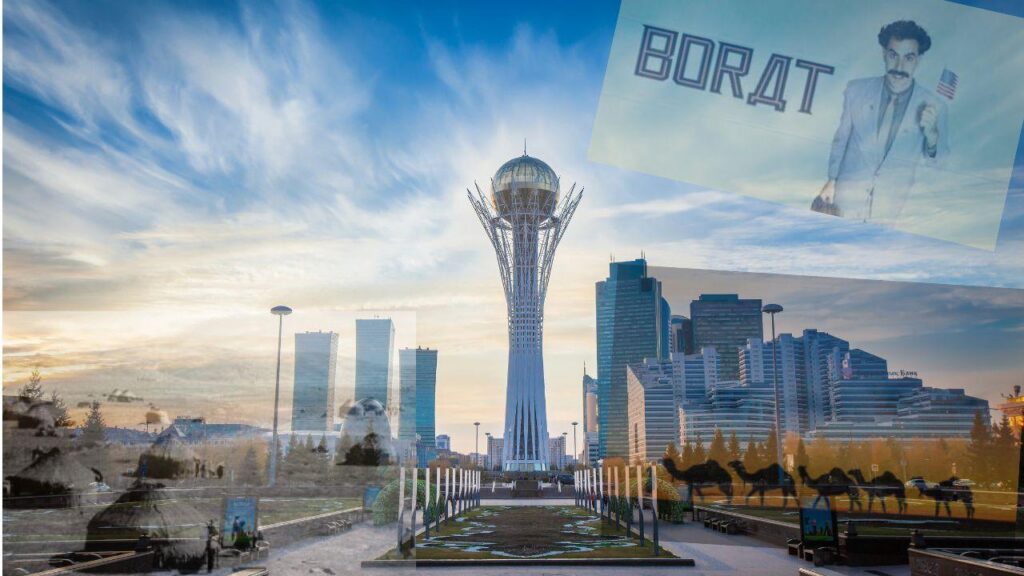
Do you know where Kazakhstan is? Although the question is straightforward, it often causes hesitation on a university campus in Washington, D.C. Some students gesture uncertainly toward Eastern Europe. Others guess the Middle East. Some admit they have never heard of it, often with a nervous laugh. Central Asia remains one of the least understood parts of the world for many young people in the West. It is often defined more by pop culture, history, and imagination than by its diverse reality. “I honestly thought Kazakhstan was somewhere near Afghanistan,” said Michael, a student from Georgetown University. “I didn’t realize it was its own region.” Such knowledge gaps are not unusual. Central Asia is rarely mentioned in Western education systems or media coverage, despite its size, strategic significance, and rich cultural heritage. As a result, assumptions often take the place of understanding and tend to follow similar patterns, which over time may shape Western attitudes toward the region. A Region Reduced to Stereotypes When Western students are asked what comes to mind when they think about Central Asia, their responses often follow a familiar pattern: deserts, nomads, the Soviet Union, and sometimes confusion with other regions. Emily, a student from American University, remarked, “I picture a lot of sand and heat, and perhaps those who ride horses?” Although this image is partial, it is not entirely inaccurate, as the region’s customs and natural surroundings do contribute to its character. However, contemporary cities, academic institutions, businesses, and the region’s cultural diversity are largely absent from these perceptions. Perceptions have also been shaped by pop culture. For some, Kazakhstan is associated less with geography or history than with Borat, the fictional journalist from a Hollywood comedy. Despite being widely recognized as satire, the persona has nevertheless made a lasting impression on viewers unfamiliar with the region. As Sacha Baron Cohen explained, Kazakhstan was chosen precisely because it was largely unknown to Western audiences. According to his explanation, he selected the country because “no one had heard anything about it,” making it a blank canvas onto which Western attitudes about backwardness could be projected. None of the scenes depicting Borat’s “home village” were filmed in Kazakhstan; they were shot in rural Romania. The language Borat speaks is not Kazakh, and the customs he describes bear no relation to everyday life in Kazakhstan. Daniel, a student from George Mason University, asked, half-jokingly, “Is that where Borat is from?” These examples illustrate how humor and media can fill gaps in knowledge. When Kazakhstan first appeared in popular Western media, it was often portrayed through harsh stereotypes, introducing global audiences to a country still defining its image. Between Curiosity and Ignorance However, alongside these misconceptions, there is also genuine interest. “I had no idea it was so multicultural,” said Emma, a student from American University. “We never really learned about it.” This response points to a broader issue: Central Asia is often misunderstood not only because of misinformation, but because of its limited visibility in the...

Repeated Drone Incidents Expose Airspace Risks on Russia–Central Asia Frontier

A new drone-related incident in western Kazakhstan has reinforced a pattern that is becoming harder to dismiss. Police in West Kazakhstan Region confirmed that an object resembling an unmanned aerial vehicle was found in the Akzhayik district near the village of Karaulytobe. Images circulating locally appeared to show a largely intact fixed-wing drone. No casualties or damage were reported. “The object was discovered outside a populated area. All circumstances of the incident are being investigated,” the department said. Reports and images of the object initially circulated on messaging apps before being confirmed by regional authorities. This latest discovery fits a sequence of similar incidents across the same region over the past year. As previously reported by The Times of Central Asia, on March 18, 2025, a drone about three meters long was found near Atameken village in Taskala district, around 60 kilometers from the district center. That case followed another discovery on February 18, 2025, in the Bokeyorda district, where a smaller unidentified object was recovered in a remote area. Within days, further debris was found near the Russian border in Zhanibek district, marking the third such case in a single month. The pattern continued later in the year. On October 23, 2025, a drone of unknown origin exploded near Kyzyltal village in the Burlin district. Residents reported an explosion that damaged rooftops and left a crater near the village, although no casualties were recorded. Authorities opened a criminal case, with the military prosecutor’s office involved alongside police and emergency services. Similar findings have appeared beyond the West Kazakhstan Region. On June 19, 2025, fragments resembling a UAV were found in Mangistau Region near the Bolashak border station. The debris was located in an uninhabited area, and no damage was reported. Taken together, these incidents form a clear geographic cluster along Kazakhstan’s western frontier. Most occurred near the Russian border and in sparsely populated areas. The objects were typically discovered after impact, with no confirmed flight paths or official attribution. Investigations into earlier cases have linked several incidents to areas used for Russian military testing. Western Kazakhstan includes zones connected to long-standing Russian defense activity under bilateral agreements, and parts of the region remain associated with testing operations. This context explains the cautious official response. None of the incidents have been described as attacks, and none have been attributed to a foreign state. At the same time, the repeated discoveries point to a growing exposure that goes beyond routine testing. The wider regional environment has shifted rapidly. The war in Ukraine has driven a sharp expansion in drone use across Eurasia. Both Russia and Ukraine deploy long-range UAVs for reconnaissance and strikes, often over extended distances. Drone activity has already affected infrastructure linked to Kazakhstan’s economy. On February 17, 2025, a drone attack targeted the Caspian Pipeline Consortium’s Kropotkinskaya pumping station in Russia’s Krasnodar region, part of a key export route for Kazakh oil. Further attacks on offshore loading facilities and terminals continued later in the year, with additional incidents...

Despite Growth Plans, Trade Between Kazakhstan and Russia Declined in 2025

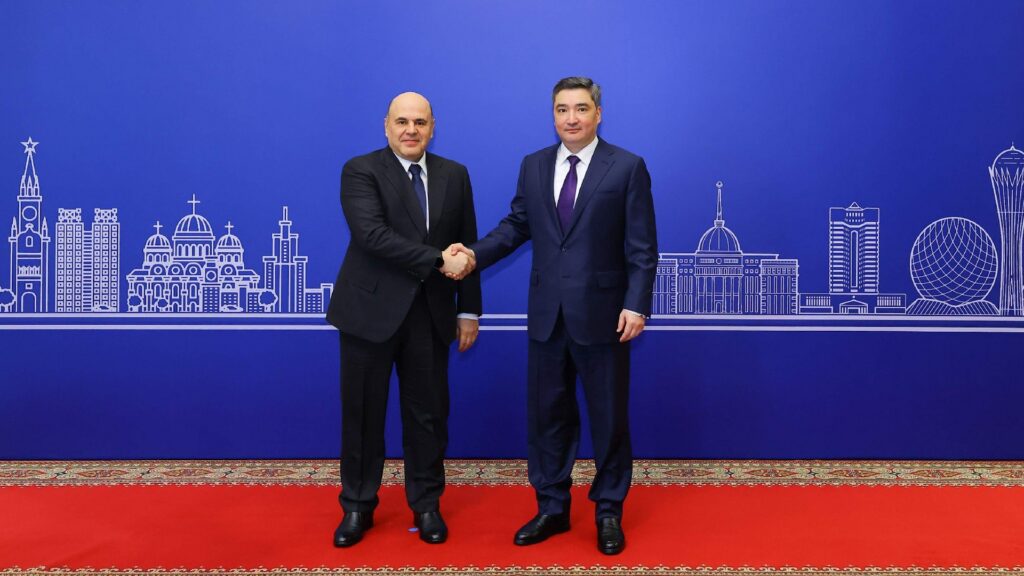
Trade and economic ties between Kazakhstan and Russia showed signs of slowing in 2025. By the end of the year, bilateral trade totaled $27.4 billion, a slight decrease compared with the previous year. The figures were announced by Kazakhstan’s Minister of Trade and Integration, Arman Shakkaliev, following talks in Astana between Prime Minister Olzhas Bektenov and Russian Prime Minister Mikhail Mishustin. A year earlier, bilateral trade had demonstrated growth. In 2024, trade turnover increased by 3% to reach $27.8 billion, largely driven by rising imports of Russian goods into Kazakhstan. At the same time, exports of Kazakhstani products to Russia declined, pointing to a persistent imbalance in the structure of trade. The contraction recorded in 2025 reflects a broader trend, a slowdown in growth while overall trade volumes remain relatively high. Despite the decline, both sides continue to set ambitious targets for expanding economic cooperation. “At the same time, the goal has been set to bring bilateral trade to $30 billion. During the meeting of the heads of government, measures and priority sectors that could generate additional trade growth were discussed. These include energy, commerce, transport and logistics. We also reviewed issues related to the negotiation process and our integration agenda,” Shakkaliev said. Kazakh authorities expect digitalisation measures to help accelerate trade flows. Kazakhstan’s Deputy Minister of Finance, Yerzhan Birzhanov, outlined plans to introduce electronic waybills and modernize 30 checkpoints along the Kazakhstan–Russia border. These steps are expected to reduce transit times and improve operational transparency. Russia remains one of the largest investors in Kazakhstan’s economy. “There is a very significant presence of Russian business in Kazakhstan, and we welcome it. We are ready to explore new areas of cooperation. I am confident that there are ample opportunities for this. The Government of Kazakhstan will make every effort to intensify and enhance our cooperation,” Bektenov said. In turn, Mishustin highlighted prospects for further joint initiatives. “There is considerable potential in bilateral cooperation to launch joint projects in energy, industry, transport infrastructure, agriculture and the digital economy,” he stated. In addition to economic issues, the two sides discussed joint efforts to preserve the ecosystem of the Caspian Sea and implement environmental initiatives. External factors are also influencing trade dynamics. In particular, tighter foreign trade procedures introduced by Russia could reshape logistics routes and alter commodity flows across Central Asia.

Kazakhstan Launches Water Spring Clean-Up Campaign

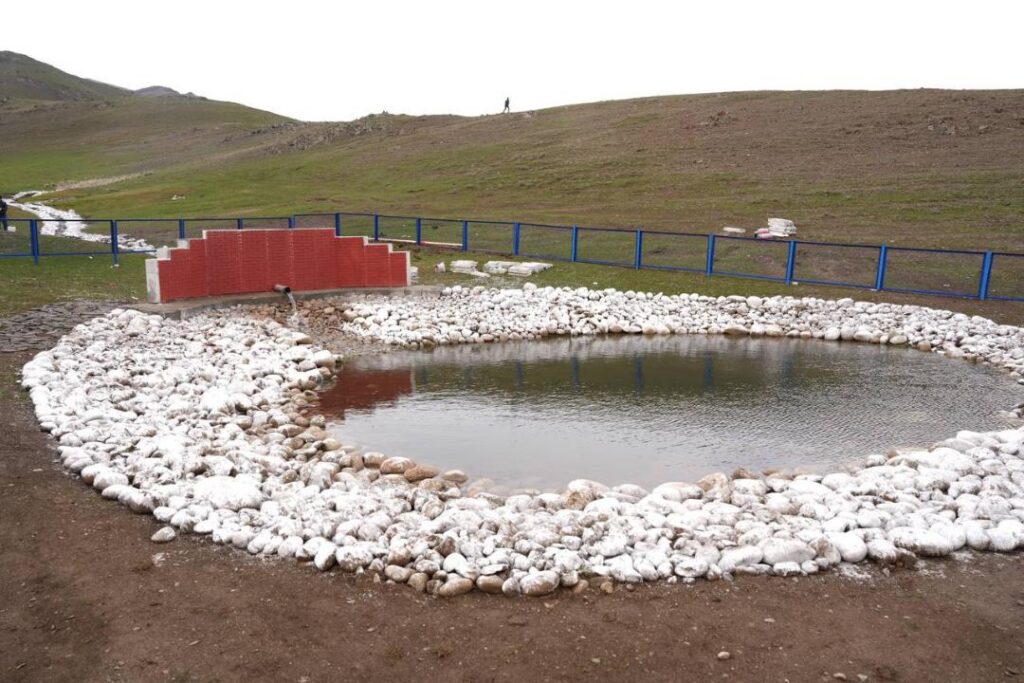
Kazakhstan’s Ministry of Water Resources and Irrigation has launched an environmental campaign titled Möldir Bülak (“Transparent, Clean Spring”) aimed at restoring and protecting water springs across the country. The initiative began with the clean-up of 28 springs in southern regions: Shymkent, Almaty, Zhambyl, Kyzylorda, Turkestan and Zhetisu. Around 3,800 people, including volunteers and students, took part in the effort. Participants cleared debris, restored natural spring outlets, improved surrounding areas and planted tree saplings. At the ministry’s initiative, the first volunteer movement in the water sector, Bolashaktyn Kainary, has been established in the Zhambyl region. It brings together students from the Kazakh National University of Water Management and Irrigation in Taraz. Similar volunteer groups are expected to be formed in other regions. According to officials, the movement will not be limited to environmental campaigns. It is also intended to support long-term efforts to promote water conservation and strengthen environmental awareness. At the same time, the Kaz hydrogeology National Hydrogeological Service is conducting a nationwide inventory of springs. So far, specialists have identified 711 potential springs, while a broader map of 2,772 sites has been compiled using archival materials. Springs are viewed as an additional source of water supply amid growing water shortages. By 2027, the Ministry of Water Resources and Irrigation plans to carry out geological exploration to identify new groundwater sources in five regions: Akmola, West Kazakhstan, Kostanay, Zhetisu and Ulytau. The initiative aims to expand groundwater reserves and provide additional water supplies for settlements, agriculture and economic sectors. Overall, 4,803 groundwater deposits have been explored in Kazakhstan for drinking water supply, irrigation and industrial use. Usable groundwater reserves are estimated at 43.2 million cubic meters per day, while only about 1.5 million cubic meters per day, roughly 3% of the total, is currently being utilised. Of the proven reserves, 21.2 million cubic meters per day could be used for drinking water, 2.4 million cubic meters per day for industrial and technical needs, and 19.6 million cubic meters per day for irrigation. “In the context of increasing water shortages and climate change, developing groundwater potential is considered a key priority for ensuring sustainable water use. Despite the significant potential of groundwater resources, a large portion remains insufficiently studied,” said Deputy Minister of Water Resources and Irrigation Talgat Momyshev.

Kazakhstan’s Auto Market Enters an Era of Industrial Warfare

In 2026, Kazakhstan’s automotive market is undergoing a fundamental transformation. The era of unregulated gray-market imports is coming to an end, while large corporate players are replacing independent importers. The government is deliberately changing the rules of the game by introducing strict tax and administrative barriers to unofficial vehicle imports. Chinese automakers are the main beneficiaries of these changes, rapidly displacing traditional Western brands. For local industrial groups, deep localization is no longer optional but has become a prerequisite for survival, triggering competition for exclusive contracts with Chinese manufacturers and access to government incentives. Legislative Barriers For many years, private imports accounted for a significant share of the market. At their peak in 2023, more than 60% of cars were imported through gray-market schemes. However, new administrative measures are making this model economically unviable. First, a strict quantitative limit has been introduced: an individual may now import only one car per year. Second, importing cars older than three years has become financially prohibitive. The base rate for initial registration has risen to $4,250, while recycling fees have increased and a 15% customs duty applies. Third, technical requirements have been tightened. Vehicles must now comply with the Euro-5 standard, possess a Vehicle Design Safety Certificate (VDS), and be equipped with an emergency call system (EVAK). At the same time, importing vehicles less than three years old is permitted only for legal entities holding a Vehicle Type Approval (VTA) certificate. Additionally, the cancellation of VAT exemptions has stripped independent dealers of their price advantage. As a result, gray imports have declined steadily. They accounted for about 35% of the market in the first half of 2025 and approximately 30% by the end of the year. In 2026, China exerted additional pressure. From January 1, the so-called “180-day rule” took effect: vehicles registered for less than six months cannot be exported without the manufacturer’s permission. This has significantly complicated re-export schemes and slowed capital turnover. Consequently, the gray market has been largely paralysed, and retail sales have shifted under the control of official distributors. The Dominance of Chinese Brands The decline in gray imports has coincided with a broader global realignment of supply chains. Chinese automakers have been the primary beneficiaries. According to the Kazakhstan Automobile Union, by March 2026 Chinese brands had captured more than 40% of the domestic market. Six brands, Chery, Jetour, Changan, Haval, Geely and JAC, now rank among the top ten in sales. They are steadily displacing traditional leaders. A telling example is Toyota, which has fallen to tenth place after losing nearly 60% of its sales year on year. Meanwhile, the electric and hybrid segment is expanding rapidly: sales of China’s BYD have surged by almost 800%. This growth is driven not only by competitive pricing and technological innovation but also by large-scale investment in dealer infrastructure. Under current conditions, Western and Japanese brands appear unlikely to regain their former positions in the near term. Capitalisation in Service and Logistics The shift to a corporate model requires...