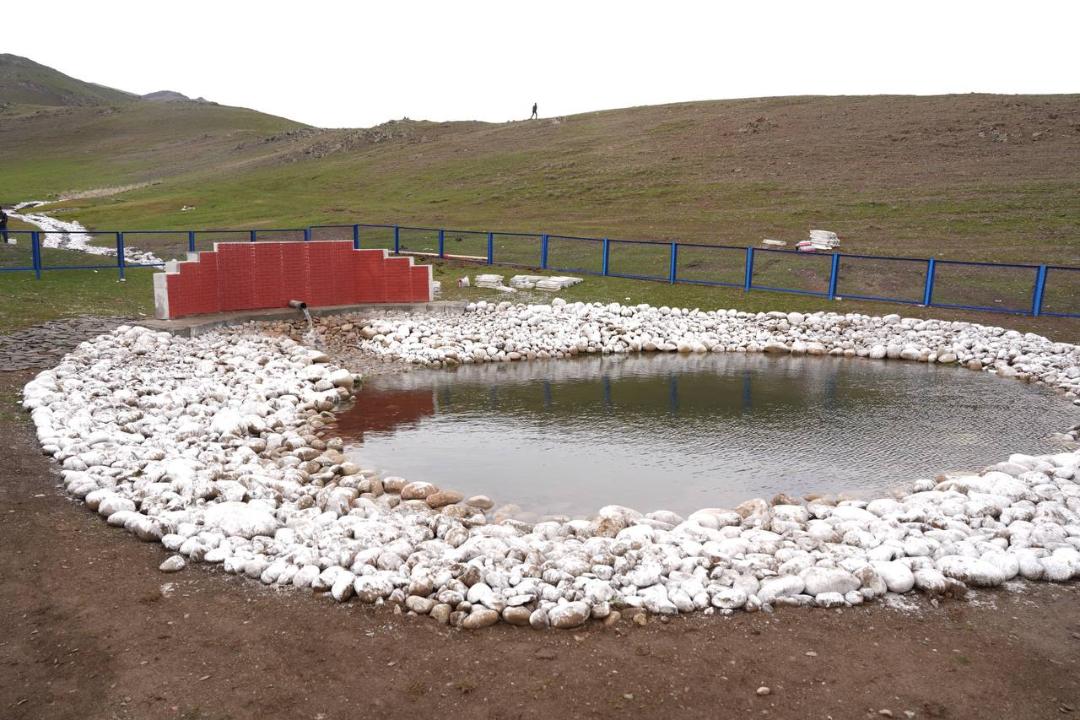
Kazakhstan’s Ministry of Water Resources and Irrigation has launched an environmental campaign titled Möldir Bülak (“Transparent, Clean Spring”) aimed at restoring and protecting water springs across the country.
The initiative began with the clean-up of 28 springs in southern regions: Shymkent, Almaty, Zhambyl, Kyzylorda, Turkestan and Zhetisu. Around 3,800 people, including volunteers and students, took part in the effort. Participants cleared debris, restored natural spring outlets, improved surrounding areas and planted tree saplings.
At the ministry’s initiative, the first volunteer movement in the water sector, Bolashaktyn Kainary, has been established in the Zhambyl region. It brings together students from the Kazakh National University of Water Management and Irrigation in Taraz. Similar volunteer groups are expected to be formed in other regions.
According to officials, the movement will not be limited to environmental campaigns. It is also intended to support long-term efforts to promote water conservation and strengthen environmental awareness.
At the same time, the Kaz hydrogeology National Hydrogeological Service is conducting a nationwide inventory of springs. So far, specialists have identified 711 potential springs, while a broader map of 2,772 sites has been compiled using archival materials. Springs are viewed as an additional source of water supply amid growing water shortages.
By 2027, the Ministry of Water Resources and Irrigation plans to carry out geological exploration to identify new groundwater sources in five regions: Akmola, West Kazakhstan, Kostanay, Zhetisu and Ulytau. The initiative aims to expand groundwater reserves and provide additional water supplies for settlements, agriculture and economic sectors.
Overall, 4,803 groundwater deposits have been explored in Kazakhstan for drinking water supply, irrigation and industrial use. Usable groundwater reserves are estimated at 43.2 million cubic meters per day, while only about 1.5 million cubic meters per day, roughly 3% of the total, is currently being utilised. Of the proven reserves, 21.2 million cubic meters per day could be used for drinking water, 2.4 million cubic meters per day for industrial and technical needs, and 19.6 million cubic meters per day for irrigation.
“In the context of increasing water shortages and climate change, developing groundwater potential is considered a key priority for ensuring sustainable water use. Despite the significant potential of groundwater resources, a large portion remains insufficiently studied,” said Deputy Minister of Water Resources and Irrigation Talgat Momyshev.