• KGS/USD = 0.01144 0%
  • KZT/USD = 0.00212 0%
  • TJS/USD = 0.10761 -0.09%
  • UZS/USD = 0.00008 0%
  • TMT/USD = 0.28571 0%
  • KGS/USD = 0.01144 0%
  • KZT/USD = 0.00212 0%
  • TJS/USD = 0.10761 -0.09%
  • UZS/USD = 0.00008 0%
  • TMT/USD = 0.28571 0%
  • KGS/USD = 0.01144 0%
  • KZT/USD = 0.00212 0%
  • TJS/USD = 0.10761 -0.09%
  • UZS/USD = 0.00008 0%
  • TMT/USD = 0.28571 0%
  • KGS/USD = 0.01144 0%
  • KZT/USD = 0.00212 0%
  • TJS/USD = 0.10761 -0.09%
  • UZS/USD = 0.00008 0%
  • TMT/USD = 0.28571 0%
  • KGS/USD = 0.01144 0%
  • KZT/USD = 0.00212 0%
  • TJS/USD = 0.10761 -0.09%
  • UZS/USD = 0.00008 0%
  • TMT/USD = 0.28571 0%
  • KGS/USD = 0.01144 0%
  • KZT/USD = 0.00212 0%
  • TJS/USD = 0.10761 -0.09%
  • UZS/USD = 0.00008 0%
  • TMT/USD = 0.28571 0%
  • KGS/USD = 0.01144 0%
  • KZT/USD = 0.00212 0%
  • TJS/USD = 0.10761 -0.09%
  • UZS/USD = 0.00008 0%
  • TMT/USD = 0.28571 0%
  • KGS/USD = 0.01144 0%
  • KZT/USD = 0.00212 0%
  • TJS/USD = 0.10761 -0.09%
  • UZS/USD = 0.00008 0%
  • TMT/USD = 0.28571 0%

Viewing results 19 - 24 of 5310

Kazakhstan Reshapes Education System to Meet Industrial and Labor Market Needs

Kazakhstan has begun a large-scale restructuring of its education system in 2025-2026 as authorities attempt to address labor shortages, overloaded school infrastructure, and the growing mismatch between graduates’ qualifications and the needs of the economy. While previous reforms focused primarily on expanding access to education, the government is now shifting toward tighter administrative management of student enrollment, stronger support for technical and vocational training, and the integration of digital technologies into schools. As previously reported by The Times of Central Asia, the reforms are unfolding amid growing pressure on Kazakhstan’s labor market. One of the most pressing issues remains the condition of the country’s school infrastructure. Rapid urbanization and internal migration have created chronic shortages of school places in major cities and southern regions. To address the problem, authorities launched the “Comfortable School” national project, which envisioned the construction of 369 schools with capacity for 740,000 students during 2023-2024. However, implementation has faced delays caused by contractor failures and rising construction material costs. According to project operator Samruk-Kazyna Construction, by the end of 2025 authorities had commissioned 208 schools, creating more than 217,000 new student places. Most of the facilities were built in Astana, Almaty, and Turkistan Region. President Kassym-Jomart Tokayev previously warned that even accelerated school construction would only temporarily alleviate the problem, since at current population growth rates the shortage of school places could reach 400,000 in the medium term. Against this backdrop, authorities are increasingly turning to technological solutions. In May 2026, Tokayev signed a decree introducing artificial intelligence into the secondary education system. Under the initiative, AI technologies are expected to serve as auxiliary tools for personalized learning, identifying gaps in student knowledge, and reducing teachers’ workloads. By August 1, schools participating in the pilot program are expected to be equipped with high-speed internet access, while by September 1 authorities plan to approve national standards governing the use of AI in education. At the same time, Kazakhstan is strengthening support for technical and vocational education. For the 2025-2026 academic year, around 70% of state-funded grants in the technical and vocational education system were allocated to engineering and technical specialties, including metallurgy, mechanical engineering, energy, construction, and information technology. Authorities are also attempting to expand elements of dual education programs involving private businesses. According to official data, more than 4,000 enterprises have established partnerships with colleges. However, full-scale implementation remains largely confined to major industrial regions, while small and medium-sized businesses in other areas remain reluctant to participate in organizing practical training for students. Significant changes are also affecting higher education. Minister of Science and Higher Education Sayasat Nurbek announced a redistribution of state grants toward professions facing the most acute labor shortages, including thermal power engineering, industrial engineering, water management, and materials science. University financing will now depend directly on institutions’ positions in national rankings and on graduate employment rates. For weaker regional universities, this could effectively mean automatic reductions in state funding. Leading universities have also been granted the right to independently raise admission thresholds...

Tokayev Urges Central Asia and China to Strengthen Law Enforcement Cooperation

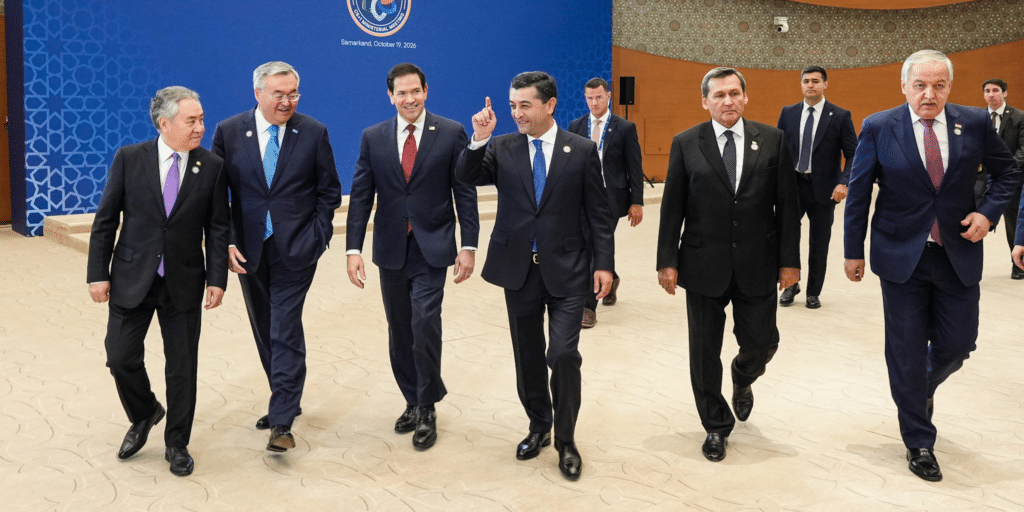
Kazakh President Kassym-Jomart Tokayev hosted the interior and public security ministers of the “Central Asia-China” format in Astana during the second meeting of regional law enforcement agencies. The meeting was attended by Chinese Minister of Public Security Wang Xiaohong, Kyrgyz Interior Minister Ulan Niyazbekov, Tajik Interior Minister Ramazon Rahimzoda, Turkmen Interior Minister Muhammet Hydyrov, and Uzbek Interior Minister Aziz Tashpulatov. Participants discussed transnational crime, drug trafficking, cybercrime, and extremism. Tokayev said strengthening cooperation between the law enforcement agencies of Central Asia and China is essential for maintaining regional stability. “Transnational organized crime is becoming increasingly flexible and interconnected. Cybercrime has evolved into a highly profitable global industry,” the president said. According to Tokayev, criminal groups are increasingly using digital platforms to coordinate activities, launder money, and carry out attacks that transcend national borders. He emphasized that Central Asia’s position at the crossroads of major transport and trade routes leaves the region particularly vulnerable to transnational criminal networks. Tokayev said Kazakhstan considers the rule of law a strategic state priority and is continuing the implementation of its “Law and Order” governance concept. He called for stronger efforts to block the financial flows of criminal organizations, suppress the spread of extremist ideology, and detect preparations for terrorist attacks. The president devoted particular attention to cybersecurity threats. “Artificial intelligence in the hands of destructive actors is becoming an information weapon,” Tokayev said. According to him, illegal content and disinformation are spreading online on an industrial scale, while existing mechanisms of international cooperation require substantial modernization. Tokayev also linked security concerns to the expansion of regional transport infrastructure, including the Trans-Caspian International Transport Route. “The growth of cargo traffic is associated with certain risks, including transnational crime and the trafficking of contraband, drugs, and weapons,” he said. In Tokayev’s view, the “Central Asia-China” format should evolve into a platform for developing coordinated and practical security measures across the region. Participants in the meeting reaffirmed their intention to expand operational information-sharing, strengthen professional cooperation, and introduce modern technologies into law enforcement activities.

Kazakhstan to Launch Direct Flights to Tokyo and New York Within Next 12 Months

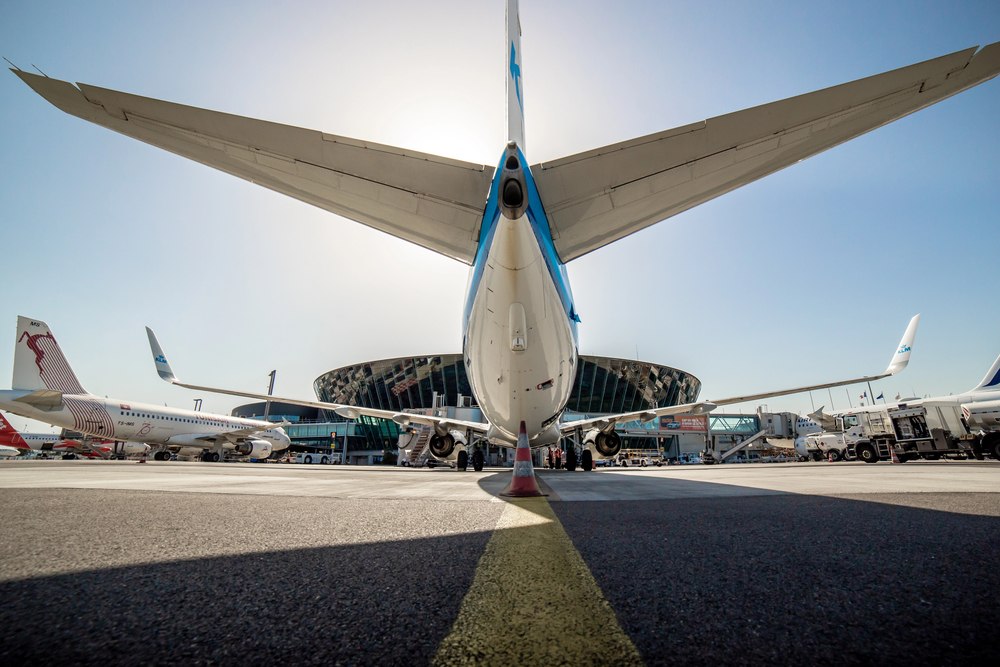
Kazakhstan plans to launch direct flights from Astana to Tokyo and New York within the next 12 months, Transport Minister Nurlan Sauranbayev said during a government meeting on Tuesday. Prime Minister Olzhas Bektenov reminded officials that the Ministry of Transport had previously pledged to open direct air links to Tokyo and New York but had yet to announce concrete results. “In the case of Tokyo, flights will begin in the fourth quarter of 2026, and flights to the United States will begin in the second quarter of 2027,” Sauranbayev said. He added that Astana currently operates 34 international routes. According to the minister, Kazakhstan has already opened four new international routes since the beginning of the year: Almaty-Shanghai, Astana-Yerevan, Atyrau-Tashkent, and Aktau-Yerevan. By the end of 2026, Kazakhstan's aviation authorities plan to open or resume 11 additional international routes, including Astana-Ulaanbaatar, Astana-Guangzhou, Astana-Issyk-Kul, Astana-Larnaca, Astana-Kashgar, Almaty-Tokyo, Almaty-Larnaca, Hanoi-Almaty-Prague, Almaty-Izmir, Almaty-Warsaw, and Kostanay-Tashkent. Meanwhile, Michael Daniel, CEO of the Aviation Administration of Kazakhstan (AAK), said work is ongoing to secure Category 1 status from the U.S. Federal Aviation Administration (FAA) under the International Aviation Safety Assessment (IASA) program, a prerequisite for launching direct flights to the U.S. Daniel said Kazakhstan has been addressing shortcomings identified during an FAA technical assessment conducted in August 2024. “We plan to invite the FAA IASA team to conduct an evaluation in September 2026. The FAA will assess Kazakhstan’s political commitment to complying with international aviation safety standards, including legislation, regulatory oversight, and practical implementation,” he said. “Our primary goal is to obtain FAA Category 1 status in November 2026,” Daniel added. Kazakhstan’s airline fleet is also expected to expand, with six additional aircraft scheduled to enter service by the end of this year. As previously reported by The Times of Central Asia, Kazakhstan’s civil aviation fleet consisted of 104 aircraft last year, with authorities aiming to increase that number to 216 by 2030. The government is also planning a major modernization of airport infrastructure over the next three years. “In accordance with the president’s instructions, work is underway on the construction of airports in the tourist zones of Katon-Karagay, Zaysan, and Kenderli, as well as the restoration of Arkalyk Airport,” Sauranbayev said. He added that aviation hub development is continuing at six major airports: Almaty, Astana, Aktau, Aktobe, Karaganda, and Shymkent. According to the minister, most airport modernization projects are being financed through private investment. As previously reported by The Times of Central Asia, Kazakhstan’s SCAT Airlines, in partnership with Boeing, has begun construction of a major aircraft maintenance, repair, and overhaul center in Shymkent.

Opinion: Middle Powers and the “Voice of the Region” – Is Central Asia Becoming a Coordinated Actor?

Against the backdrop of growing global fragmentation and the weakening of universal international institutions, the role of so-called middle powers is increasing. These are states able to influence regional agendas without possessing great-power status. In this changing system, Central Asia is gradually moving beyond its long-standing image as a geopolitical periphery and is beginning to act more like a region with shared interests. For decades, the region was viewed mainly as a space where the interests of external powers, including Russia, China, the U.S., and others, intersected. Today, that paradigm is beginning to shift. Central Asia is showing greater signs of agency through what may be described as a cluster effect: individually, the countries have limited influence, but collectively they form an important transit hub between Europe and Asia, a growing market, a significant resource base, and a strategic security zone. This creates the conditions for a more coordinated regional position, even if a single regional voice is still emerging rather than fully formed. C5+Azerbaijan as a Foundation for Regional Architecture The institutional foundation of this process is the Central Asian leaders' consultative format, which is now expanding through Azerbaijan's participation. That is turning what was once a C5 dialogue into a looser C5+Azerbaijan, or C6, framework focused on transport, energy, and practical cooperation. Within this framework, the countries of the region are learning to act in a more coordinated manner without supranational pressure. In practice, this process is developing through three main areas. The first is transport and logistics. Azerbaijan's participation has strengthened efforts to make the Middle Corridor more coherent, though the route still faces bottlenecks in capacity, customs coordination, and Caspian crossings. Through tariff coordination, simplified border procedures, and investment in port and rail infrastructure, Central Asia and the Caucasus are increasingly functioning as parts of a single transport artery. That gives the region a faster option for cargo between China and Europe, even if it remains far smaller than traditional maritime routes. Shipping goods via the Suez Canal or the northern route can take between 35 and 45 days, whereas the Middle Corridor can reduce transit times to around 13-21 days under favorable conditions. According to forecasts cited by BCG, shipping volumes along the route could increase three- to fourfold during the current decade. Beyond logistics, the project is creating a new economic framework for the region. Its status as a crossroads is attracting investment in transport hubs and manufacturing facilities along the route, with the potential to turn transit corridors into zones of economic growth. This gives participating countries not only transit revenue but a stronger basis for long-term strategic resilience. The second major area is energy integration, where historical disputes over water and fuel resources are increasingly being supplemented by models of joint development. The Kambarata HPP-1 hydropower project in Kyrgyzstan, being developed with Kazakhstan and Uzbekistan, has created an important precedent for shared management of water and energy interests. The project is expected to support cleaner electricity generation while helping stabilize irrigation flows...

Kazakhstan Signals Nuclear Diplomacy Role as Iran Uranium Dispute Intensifies

Kazakhstan is seeking a place in the next phase of the Iran nuclear dispute, not as a direct mediator between Washington and Tehran, but as a possible technical partner if talks turn to the handling of enriched uranium. President Kassym-Jomart Tokayev has said Kazakhstan is ready to assist if international agreements are reached. The offer reflects Astana’s long effort to turn its Soviet nuclear legacy, disarmament record, and nonproliferation infrastructure into diplomatic capital. The dispute has become more urgent as U.S.-Iran talks come under growing strain. According to Iran’s Fars News Agency, Washington has demanded the transfer of approximately 400 kilograms of enriched uranium and major restrictions on Iran’s nuclear infrastructure. Tehran, in turn, has insisted on sanctions relief, the unfreezing of foreign assets, compensation for wartime damage, and security guarantees. U.S. President Donald Trump has described Iran’s demands as “unacceptable.” He later said he had postponed a possible military strike on Iran following appeals from the leaders of Qatar, Saudi Arabia, and the United Arab Emirates, citing what he called ongoing “serious negotiations.” Against that backdrop, Tokayev said during a May 11 meeting with Brazilian Foreign Minister Mauro Vieira that Kazakhstan was ready, “as a gesture of goodwill,” to help resolve the Iranian nuclear issue. He said any such role would depend on relevant international agreements being reached and carried out in practice. According to Akorda, Tokayev also reiterated Kazakhstan’s commitment to the peaceful use of nuclear energy under International Atomic Energy Agency oversight. The statement did not amount to an offer to mediate directly between Washington and Tehran. It was narrower and more practical. Kazakhstan is presenting itself as a state with broad international trust, technical experience, and nuclear infrastructure to support a settlement should the main parties agree on one. Tokayev placed that argument directly into the Iran debate at the Antalya Diplomacy Forum in April. “The core issue is the proliferation of nuclear technologies and nuclear weapons. This must remain the central subject of negotiations in the context of the situation surrounding Iran,” he said. For Kazakhstan, that distinction is central to the way it presents itself internationally. The country has built much of its post-Soviet foreign policy identity around nuclear nonproliferation. The Times of Central Asia previously reported that Kazakhstan’s anti-nuclear stance is not only a diplomatic position, but part of the country’s modern national identity. The Soviet Union conducted 456 nuclear tests at the Semipalatinsk test site between 1949 and 1989, leaving long-term environmental and public health damage in eastern Kazakhstan. After independence, Kazakhstan transferred its inherited nuclear warheads to Russia and joined the Treaty on the Non-Proliferation of Nuclear Weapons as a non-nuclear-weapon state. Kazakhstan has direct technical experience with sensitive nuclear material. In 1994, under Operation Sapphire, roughly 600 kilograms of highly enriched uranium were removed from the Ulba Metallurgical Plant in Ust-Kamenogorsk and transferred to the United States. TCA previously reported that the operation remains one of the strongest examples of Kazakhstan’s role in practical nonproliferation work. Kazakhstan has been involved...

Central Asian Countries Rank Among World’s Highest Water Consumers

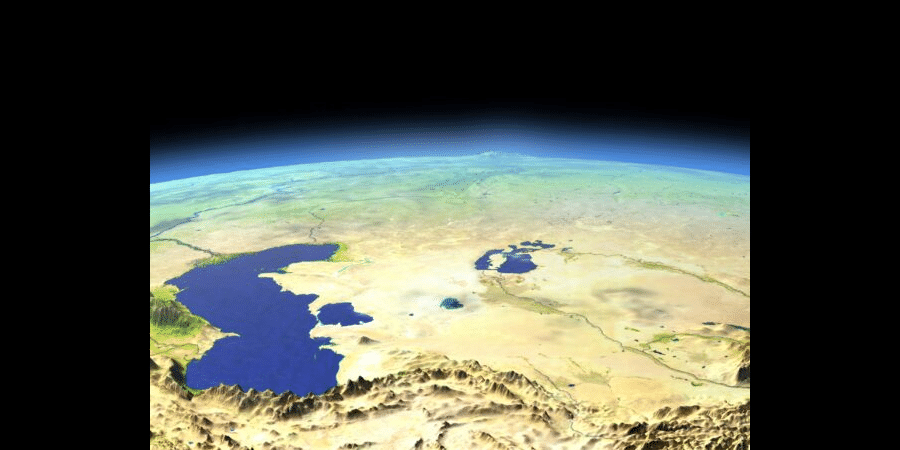
Several Central Asian countries rank among the world’s highest consumers of water per person, according to data compiled by the Worldometer portal. The figures, based on statistics from UN agencies including UNESCO and the UN Food and Agriculture Organization (FAO), place Turkmenistan first globally, with Uzbekistan, Tajikistan, and Kyrgyzstan also in the top ten. The figures highlight a long-standing regional challenge: heavy dependence on water-intensive agriculture combined with aging irrigation systems that lose substantial amounts of water before it reaches fields. Turkmenistan leads the global ranking with daily water consumption of 15,445 liters per person. Uzbekistan ranks fourth worldwide at 4,778 liters per capita per day, followed by Tajikistan with 4,460 liters and Kyrgyzstan with 4,153 liters. Kazakhstan recorded the lowest level among Central Asian states, at 3,397 liters per person daily, though that still places it among relatively high-consuming countries internationally. In terms of total annual water use, Uzbekistan consumes the largest volume in the region at 54.56 billion cubic meters a year. It is followed by Turkmenistan with 27.9 billion cubic meters, Kazakhstan with 22.77 billion, Tajikistan with 11.49 billion, and Kyrgyzstan with around 8 billion cubic meters. Experts say agriculture explains much of the region’s high consumption. Globally, farming accounts for about 70% of freshwater use, compared with 20% for industry and 10% for households. In Central Asia, agriculture represents more than 80% of water consumption, while up to 40% of water is estimated to be lost through deteriorating irrigation infrastructure. The problem has become increasingly significant as freshwater demand rises worldwide. According to UN estimates, freshwater withdrawals have tripled over the past 50 years, while global demand continues to grow by around 64 billion cubic meters annually because of population growth, changing consumption patterns, energy production, and biofuel development. Several Central Asian governments have begun introducing reforms aimed at reducing water losses. In Uzbekistan, authorities joined the World Bank’s Water Forward initiative and announced plans to expand water-saving technologies across 4.1 million hectares of irrigated farmland while reducing irrigation losses by 25%. Kazakhstan has also faced recurring shortages. Seasonal water restrictions are regularly introduced in southern regions, and this year the government approved consumption limits because of expected shortages during the agricultural season. The issue is closely linked to energy production in upstream countries. Studies by the Organization for Economic Co-operation and Development (OECD) indicate that more than 80% of electricity generation in Kyrgyzstan and Tajikistan comes from hydropower, creating a close link between irrigation needs and energy supply. Limited coordination over water releases and electricity generation has contributed to summer shortages in some years. The figures show the scale of the challenge for Central Asian governments seeking to reduce water losses and manage shared rivers more effectively.