• KZT/USD = 0.00223
  • TJS/USD = 0.10820
  • UZS/USD = 0.00009
  • TMT/USD = 0.29760
  • KZT/USD = 0.00223
  • TJS/USD = 0.10820
  • UZS/USD = 0.00009
  • TMT/USD = 0.29760
  • KZT/USD = 0.00223
  • TJS/USD = 0.10820
  • UZS/USD = 0.00009
  • TMT/USD = 0.29760
  • KZT/USD = 0.00223
  • TJS/USD = 0.10820
  • UZS/USD = 0.00009
  • TMT/USD = 0.29760
  • KZT/USD = 0.00223
  • TJS/USD = 0.10820
  • UZS/USD = 0.00009
  • TMT/USD = 0.29760
  • KZT/USD = 0.00223
  • TJS/USD = 0.10820
  • UZS/USD = 0.00009
  • TMT/USD = 0.29760
  • KZT/USD = 0.00223
  • TJS/USD = 0.10820
  • UZS/USD = 0.00009
  • TMT/USD = 0.29760
  • KZT/USD = 0.00223
  • TJS/USD = 0.10820
  • UZS/USD = 0.00009
  • TMT/USD = 0.29760
21 September 2026

Viewing results 25 - 30 of 263

International Donors Commit $172 Million to Upgrade Kyrgyzstan’s Irrigation System

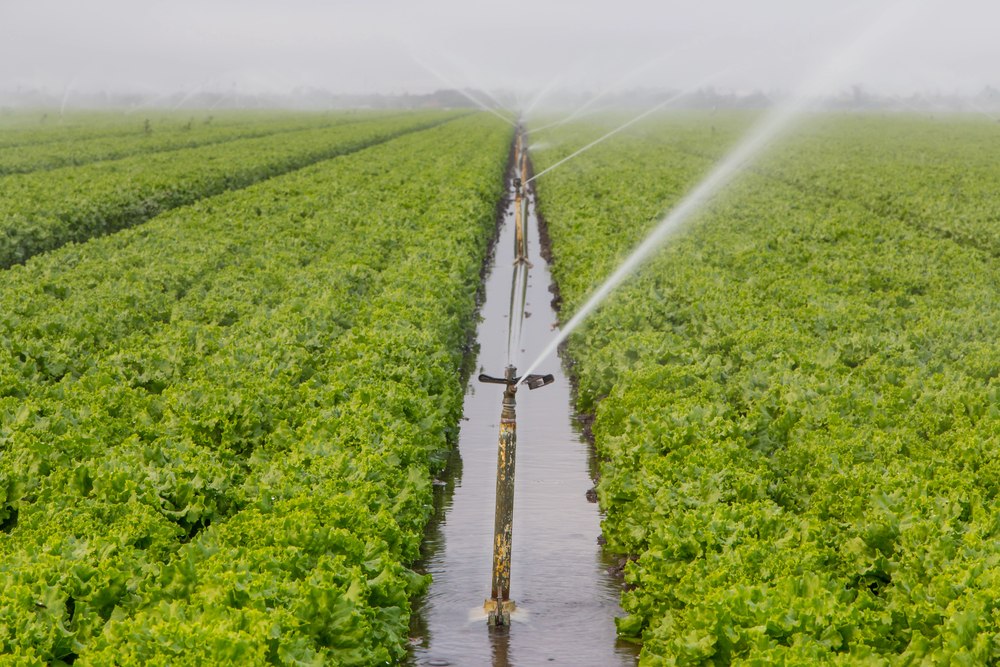
International financial institutions and development partners have committed $172 million to a major irrigation modernization project in Kyrgyzstan, aimed at improving water security and farm productivity as climate pressures grow. The World Bank approved $95.75 million in financing on June 12 for the Kyrgyz Republic National Irrigation Investment Program, which seeks to improve irrigation services in selected areas across the country. The financing package also includes $50 million from the Asian Infrastructure Investment Bank, $20 million from the OPEC Fund for International Development, and a $6.25 million grant from the Swiss Agency for Development and Cooperation. The project is also expected to mobilize an additional $11 million in private capital. “The Kyrgyz Republic has set out a clear vision to modernize irrigation services and make water access more reliable for farmers and rural communities,” said Hugh Riddell, World Bank Group Country Manager for the Kyrgyz Republic. “By bringing together public and private financing, this program helps turn that vision into a long-term investment platform.” Agriculture remains one of Kyrgyzstan’s main economic sectors and a major source of employment, but outdated irrigation systems and high water losses continue to limit productivity. Climate change has added to these pressures, with rising temperatures, more frequent droughts, floods, and sedimentation putting greater strain on water resources. The new investment program aims to address these risks through infrastructure upgrades, institutional reforms, and better irrigation management. Authorities say the project will benefit more than 450,000 people, improve irrigation services across about 82,000 hectares of farmland, and raise water conveyance efficiency from 35% to at least 70%. Improved irrigation services are also expected to support around 85,000 additional jobs across agricultural value chains. The project will modernize irrigation and drainage infrastructure, improve water regulation and storage, and increase dam safety through smart water monitoring systems. It will also improve irrigation service delivery by upgrading operations and maintenance and raising the capacity of national and local institutions. Technical assistance and environmental oversight will support the preparation of future investments. The project will run through 2032 under the Water Resources Service of Kyrgyzstan’s Ministry of Water Resources, Agriculture and Processing Industry. It forms part of a multi-phase government program expected to mobilize $540 million over the next decade. That wider initiative aims to modernize irrigation services on more than 200,000 hectares and benefit nearly one million people. Water-saving technologies remain central to Kyrgyzstan’s irrigation strategy. Earlier this year, the Cabinet of Ministers amended the country’s Medium-Term Electricity Tariff Policy for 2025-2030, freezing electricity tariffs for farmers using drip and sprinkler irrigation systems under state water conservation programs until May 2030. To encourage adoption, the government is also offering concessional loans at a 2% interest rate for farmers investing in water-saving irrigation methods. Although adoption remains relatively limited, it is accelerating. According to the ministry, modern irrigation technologies currently cover around 16,000 hectares, with plans to expand coverage by 30,000-40,000 hectares annually and reach 200,000 hectares under water-saving irrigation by 2030.

Bishkek Launches Second Phase of Waste-to-Energy Plant

Bishkek has begun construction of the second phase of its waste-to-energy plant, a project city officials say will significantly expand waste processing capacity and add to the Kyrgyz capital’s energy supply. The groundbreaking ceremony took place on June 11. The facility, located at Bishkek’s main sanitary landfill, is the first waste-to-energy plant in Central Asia. Its first phase was officially inaugurated in December 2025 and was designed to process 1,000 tons of municipal solid waste per day. The plant was built by China’s Hunan Junxin Environmental Protection Co., Ltd., which invested $95 million in the project. The second phase will include a second production unit with capacity of up to 2,000 tons of waste per day and a 60-megawatt power generation complex. According to Bishkek’s city administration, once the second phase is completed, the facility will generate around 307 million kilowatt-hours of electricity annually, enough to supply roughly 100,000 homes. Officials say the project uses modern thermal waste processing technologies and a multi-stage emissions treatment system that complies with international environmental standards. The expansion is expected to improve waste management in Bishkek, reduce pressure on the city’s overburdened landfill, and improve environmental conditions in the capital. Construction of the second phase is expected to take three years. Once fully completed, the plant will be able to process up to 3,000 tons of municipal solid waste per day and generate up to 90 megawatts of electricity. The launch ceremony was attended by Kyrgyz Prime Minister Adylbek Kasymaliev, Bishkek Mayor Aibek Junushaliev, and Chinese Ambassador to Kyrgyzstan Liu Jiangping. Kasymaliev described the project as strategically important for Bishkek’s environmental future. “The start of the second phase continues a large-scale initiative aimed at radically improving the environmental situation in Bishkek and creating a green, clean and modern metropolis,” he said. Kasymaliev said the project would help solve Bishkek’s waste disposal problem while adding a source of green energy and improving air quality and public health. He also said the second phase is expected to reduce annual carbon dioxide emissions by approximately 312,000 tons. The project forms part of Kyrgyzstan’s efforts to modernize urban infrastructure and address environmental challenges as Bishkek’s population and waste volumes continue to rise.

UNDP Opinion: Central Asia – Shared Wildlife, Shared Landscapes, Shared Responsibility

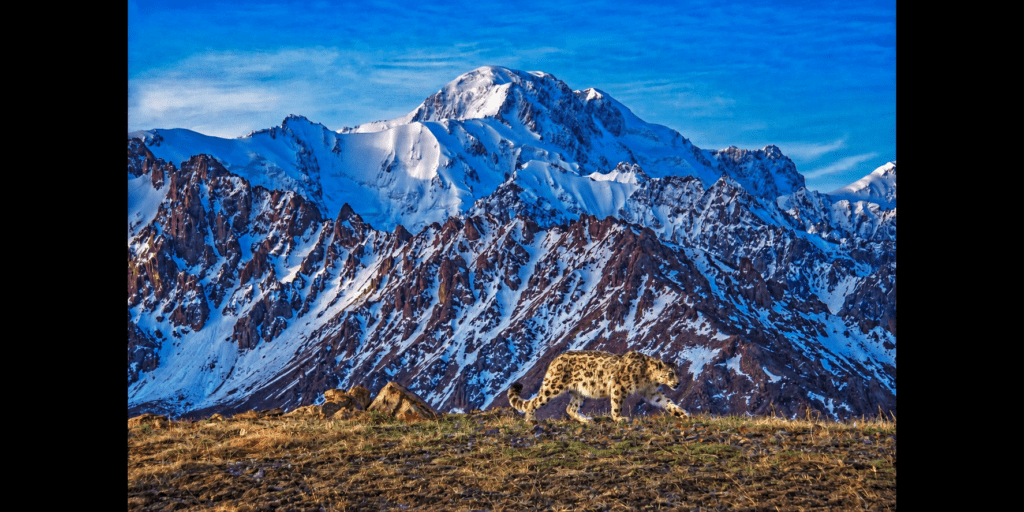
As global leaders gather for the Global Environment Facility (GEF) Assembly in Samarkand, Central Asia has an opportunity to send a clear message to the world: protecting biodiversity is not only about saving species — it is about securing water, livelihoods, resilience and long-term stability for millions of people across our region. From the glaciers of the Tien Shan and Pamir mountains to the deserts, steppes and river basins downstream, Central Asia’s ecosystems are deeply interconnected across borders. Rivers flow between countries. Wildlife migrates through shared landscapes. Mountain ecosystems regulate water systems that sustain agriculture, energy production and communities far beyond the highlands themselves. Among the most powerful symbols of this shared natural heritage is the snow leopard — the silent guardian of Central Asia’s mountains. The snow leopard represents far more than a rare and iconic species. Its survival reflects the health of entire ecosystems that millions of people depend upon every day. Healthy mountain landscapes help secure freshwater resources, reduce disaster risks, sustain pastures and agriculture, preserve biodiversity, and strengthen resilience to climate change across the region. But today, these ecosystems are under growing pressure. Climate change is accelerating glacier melting and intensifying water stress. Land degradation, unsustainable grazing, habitat fragmentation and biodiversity loss are placing increasing pressure on fragile mountain environments and rural livelihoods. Communities living closest to nature are often the first to feel the consequences — through declining water availability, degraded pastures, reduced agricultural productivity and increasing climate-related risks. These challenges do not stop at national borders. And neither can the solutions. Only a coordinated regional response can match the scale of the challenge. Protecting Central Asia’s mountain ecosystems requires countries to work together to conserve ecological corridors, strengthen transboundary protected areas, improve water and land governance, and invest in climate-resilient livelihoods for communities whose futures are closely tied to nature. There are already successful examples of regional agreements. For example, a highly successful transboundary nature conservation agreement in Central Asia protects the Ustyurt Plateau and the Turan Temperate Deserts. Spanning across Kazakhstan, Uzbekistan, and Turkmenistan, this initiative has successfully safeguarded vulnerable ecosystems and migratory species like the saiga antelope and snow leopard. [caption id="attachment_50004" align="aligncenter" width="1774"] Photo: Saiga calf. Kazakhstan/UNDP Kazakhstan[/caption] It is encouraging that transboundary cooperation has already taken shape across the region. Across Central Asia, governments, communities and development partners are already demonstrating that conservation and development can advance together. While each country's experience is unique, the lessons are remarkably similar: when communities benefit from healthy ecosystems, nature and people both thrive. In Kazakhstan, the snow leopard has become one of the clearest examples of how coordinated conservation efforts can help restore fragile ecosystems across borders. The species inhabits mountain systems that extend beyond national boundaries into China, Kyrgyzstan, Russia, and Uzbekistan, making its protection inseparable from regional cooperation. Over the past decade, habitat countries have strengthened efforts to protect the species through national conservation strategies, expanded protected areas, and improved ecosystem monitoring. Supported by cooperation between the Government, UNDP, the Global...

El Niño Could Bring Unusually Heavy Summer Rains to Central Asia, WMO Warns

Central Asia could face unusually heavy rainfall during the summer of 2026 as the climate phenomenon known as El Niño is expected to return in the coming months, according to forecasts from the United Nations’ World Meteorological Organization (WMO). The WMO estimates there is an 80% chance that El Niño conditions will develop between June and August and a near or above 90% chance that they will persist until at least November. The organization says the event could contribute to a rise in extreme weather around the world, including heatwaves, droughts, and intense rainfall. According to the WMO, temperatures in the tropical Pacific Ocean have been steadily increasing and are approaching the thresholds typically associated with El Niño. Scientists have also detected a large reservoir of unusually warm water below the ocean’s surface, with temperatures more than six degrees Celsius above normal in some areas, providing additional energy for the phenomenon to intensify. For Central Asia, El Niño is often associated with higher-than-average precipitation. While the region is better known for its arid and semi-arid climate, past El Niño events have brought increased rainfall to parts of Kazakhstan, Kyrgyzstan, Tajikistan, Turkmenistan, and Uzbekistan. WMO Secretary-General Celeste Saulo said countries should prepare for the possibility of stronger droughts and heavy rains, as well as elevated risks of heatwaves on land and in the oceans. “We need to prepare for a potentially strong El Niño event, which will exacerbate drought and heavy rainfall and increase the risk of heatwaves both on land and in the ocean,” Saulo said. UN Secretary-General António Guterres described the developing conditions as an urgent climate warning, saying El Niño would “pour fuel on the fire” of global warming and could accelerate the impacts of extreme weather worldwide. Seasonal forecasts released by the WMO also indicate that temperatures from June through August are likely to remain above normal across most regions of the world. Scientists note that while there is no evidence that climate change is making El Niño more frequent, a warmer atmosphere and warmer oceans can amplify its effects. The previous major El Niño episode, in 2023-2024, ranked among the five strongest on record and contributed to record global temperatures in 2024. The WMO says improved seasonal forecasting gives governments time to prepare for potential disruptions to agriculture, water resources, and disaster response systems before severe weather develops.

Opinion: Water Without a Guarantor – Central Asia’s Next Security Test

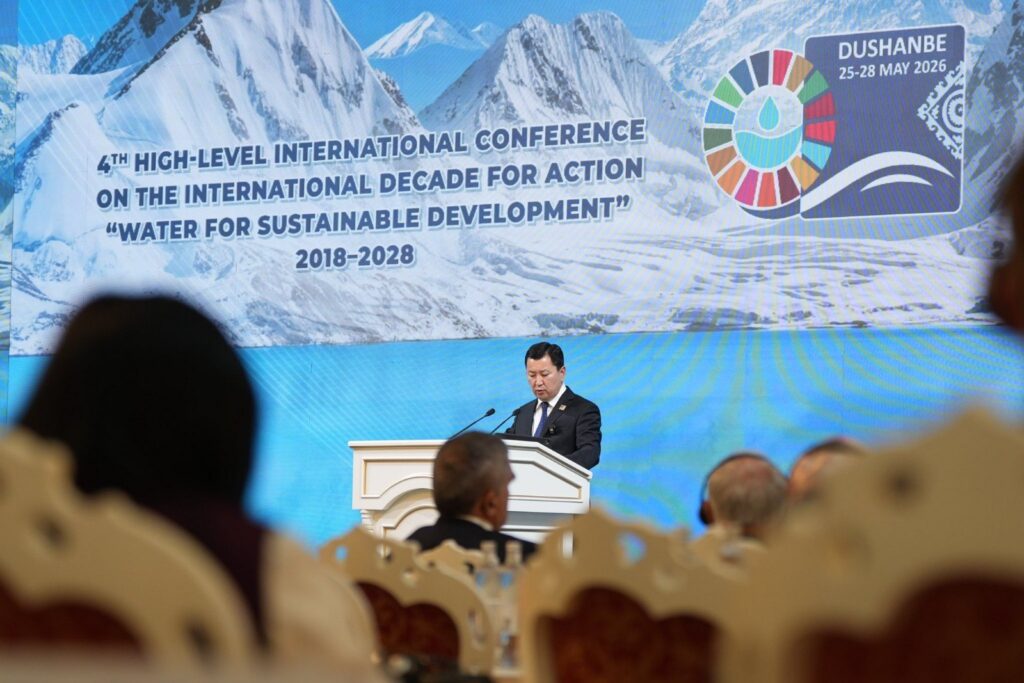
The Fourth High-Level International Conference on the International Decade for Action, “Water for Sustainable Development,“ taking place in Dushanbe on May 25-28, comes at a difficult moment. Central Asia's water problem is no longer only about environmental management; it is moving into the field of regional security. The conference agenda is familiar and necessary: climate, investment, innovation, transboundary cooperation, and the implementation of the Water Action Decade. The harder question is what happens outside the conference hall. Does Central Asia still have a credible way to stop water stress from becoming an interstate crisis? For decades, the region operated in a post-Soviet setting in which Moscow shaped many security calculations, even though it was never a formal water arbiter. That setting has weakened. Russia has not disappeared from Central Asia, and it still retains military, economic, and institutional leverage. But since 2022, its role as the assumed external stabilizer has become less convincing. The result is not a simple vacuum. It is a more awkward reality: a region with many outside actors, but no trusted water-security guarantor. The Old Backdrop Is Weakening Central Asia's water system was built around a Soviet-era division of functions. Upstream republics, Tajikistan and Kyrgyzstan, controlled the mountains, reservoirs, and hydropower potential. Downstream republics, Uzbekistan, Kazakhstan, and Turkmenistan, depended on seasonal water flows for agriculture, food security, and social stability. The Soviet system managed those tensions through central planning. After independence, cooperation became more fragile. Water, energy, borders, electricity, and agriculture were separated into national strategies. The rivers, however, remained transboundary. For many years, Russia remained the largest external power around which regional security calculations were organized. That did not make Moscow an effective water manager, but it helped shape the political environment. Today, that environment has changed. The CSTO did not prevent the Kyrgyz-Tajik border escalations of recent years. Kyrgyzstan and Tajikistan eventually reached a border agreement through direct negotiation rather than outside enforcement. That difference is not academic. Water disputes are rarely settled by conferences alone. They need trusted channels for mediation, compensation, and restraint when pressure builds. Central Asia has plenty of statements about cooperation. It has fewer tools for managing coercion when water becomes scarce. Three Pressure Points The region's water-security stress is already visible in three places. The first is Afghanistan's Qosh-Tepa Canal. The canal draws water from the Amu Darya, a river system critical for Uzbekistan and Turkmenistan. Because Afghanistan was not part of the old Soviet water-allocation arrangements, the Taliban government is creating a new upstream reality outside the inherited regional framework. Estimates of the canal's downstream impact vary widely. Some analyses suggest it could divert between 15 and 30% of the Amu Darya's flow, depending on the completion timeline, irrigation efficiency, and water-management practices. The Times of Central Asia previously reported that reduced Amu Darya flows could indirectly affect Kazakhstan if Uzbekistan compensates by drawing more heavily on the Syr Darya. Carnegie has described the Qosh-Tepa as a serious test for regional water cooperation. The second pressure point...

Kyrgyzstan Calls for Compensation Mechanisms to Maintain Regional Water Infrastructure

Kyrgyzstan is calling for compensation mechanisms with neighboring countries to help finance the maintenance of water infrastructure and glacier preservation. Officials warn that shrinking glaciers and declining precipitation already pose serious risks for Central Asia. The issue was raised by Erlist Akunbekov, Kyrgyzstan’s deputy chairman of the Cabinet of Ministers and minister of water resources, agriculture, and processing industry, during the opening of the Fourth High-Level International Conference on the International Decade for Action “Water for Sustainable Development,” 2018-2028, in Dushanbe on May 26. Akunbekov described the melting of glaciers as a regional challenge, not solely a national problem. “Without glaciers, there will be no water in the rivers, and without water in the rivers, there will be no life in the valleys,” he said. He presented Kyrgyzstan as a critical upstream supplier, saying it is the only country in Central Asia whose water resources are formed entirely within its own territory. On that basis, he called for mutually beneficial and equitable compensation mechanisms in the water and energy sectors. Kyrgyzstan uses only around 30% of its available water resources, while the majority is consumed downstream by neighboring countries, Akunbekov said. At the same time, the country bears substantial costs for maintaining reservoirs, hydraulic infrastructure, and glacier ecosystems that benefit the entire region. “However, we must frankly admit that today our country is not receiving adequate compensation for these efforts,” Akunbekov said. For decades, Kyrgyzstan has also incurred indirect economic losses because land has been used for reservoirs and infrastructure serving regional water needs, he said. “Maintaining hydraulic facilities and preserving glaciers in the mountains of Kyrgyzstan requires enormous expenditures,” he said. Akunbekov added that Kyrgyzstan allocated approximately $80 million to the water sector last year and around $259 million over the past five years. Despite those investments, the resources of a single country are insufficient to fully modernize the aging water infrastructure inherited from the Soviet era. “We need additional consolidated financing to build an effective and modern water management system for all countries in the region,” Akunbekov said, adding that the time has come to introduce compensation mechanisms that would allow upstream countries to maintain water infrastructure for the benefit of all Central Asia. Kyrgyzstan remains one of the principal sources of irrigation water for downstream Kazakhstan and Uzbekistan. Akunbekov also drew attention to environmental risks facing Lake Issyk-Kul, one of Kyrgyzstan’s most important natural landmarks and a a biosphere territory of regional significance. He noted that over the past decade, the number of rivers flowing into the lake has declined from 100 to 30. As previously reported by The Times of Central Asia, Kyrgyzstan has also proposed that international donors and development partners jointly develop and implement a comprehensive program to preserve Lake Issyk-Kul and address climate-related risks affecting the wider region.