• KGS/USD = 0.01144 0%
  • KZT/USD = 0.00216 0%
  • TJS/USD = 0.10663 0%
  • UZS/USD = 0.00008 0%
  • TMT/USD = 0.28530 0%
  • KGS/USD = 0.01144 0%
  • KZT/USD = 0.00216 0%
  • TJS/USD = 0.10663 0%
  • UZS/USD = 0.00008 0%
  • TMT/USD = 0.28530 0%
  • KGS/USD = 0.01144 0%
  • KZT/USD = 0.00216 0%
  • TJS/USD = 0.10663 0%
  • UZS/USD = 0.00008 0%
  • TMT/USD = 0.28530 0%
  • KGS/USD = 0.01144 0%
  • KZT/USD = 0.00216 0%
  • TJS/USD = 0.10663 0%
  • UZS/USD = 0.00008 0%
  • TMT/USD = 0.28530 0%
  • KGS/USD = 0.01144 0%
  • KZT/USD = 0.00216 0%
  • TJS/USD = 0.10663 0%
  • UZS/USD = 0.00008 0%
  • TMT/USD = 0.28530 0%
  • KGS/USD = 0.01144 0%
  • KZT/USD = 0.00216 0%
  • TJS/USD = 0.10663 0%
  • UZS/USD = 0.00008 0%
  • TMT/USD = 0.28530 0%
  • KGS/USD = 0.01144 0%
  • KZT/USD = 0.00216 0%
  • TJS/USD = 0.10663 0%
  • UZS/USD = 0.00008 0%
  • TMT/USD = 0.28530 0%
  • KGS/USD = 0.01144 0%
  • KZT/USD = 0.00216 0%
  • TJS/USD = 0.10663 0%
  • UZS/USD = 0.00008 0%
  • TMT/USD = 0.28530 0%

Viewing results 325 - 330 of 1056

Central Asian Perspectives Take Center Stage in Milan

A pale Milanese dawn draped the city in shifting greys, as visitors crossed the threshold into the space of Fondazione Elpis, a foundation created to promote dialogue with emerging geographies and young artists. This time, it was Central Asian artists who were in the spotlight, claiming a shared history fractured by Soviet rule and global currents. The show YOU ARE HERE: Central Asia redraws a regional map, allowing artists to redraw the borders of their belonging beyond nation-states. At the same time, it invites each visitor to relate to the works by locating its place within these stitched, erased, and reconfigured narratives. Curators Dilda Ramazan and Aida Sulova orchestrated twenty-seven artists into a living constellation: from Munara Abdukakharova’s rolled patchwork, its golden hammer-and-sickle motifs softened by the hand-stitched curves of Kyrgyz kurak korpe, to Vyacheslav Akhunov’s furious erasures of scraped notes, the show reassembled in unexpected patterns stories of resilience, resistance, and reimagined belonging. YOU ARE HERE not only reframed Central Asia for a European audience but asserted that the region’s histories are neither static nor singular, they are stitched, erased, reconfigured, and claimed anew by the very people who live them. The Times of Central Asia spoke with Kazakh curator, Dilda Ramazan. [caption id="attachment_31541" align="aligncenter" width="2560"] "YOU ARE HERE. Central Asia", installation view, primo piano, Fondazione Elpis, Milano © Fabrizio Vatieri Studio[/caption] TCA: Can you tell us about the genesis of the show? The show emerged after the invitation of the Fondazione Elpis, whose founder, Marina Nissim, became interested in the region and its artists after seeing one of the Central Asian pavilions at the Venice Biennale. By presenting the complex Central Asian landscape to a European public who might not know it very well, we wanted to give artists the platform for free expression without framing the region from the stereotypical perspective, as is often the case in the Western context. We wanted the artists to reflect on the idea of space and belonging through the idea of locating oneself. TCA: Do you feel there is a growing awareness of Central Asia in Europe? Yes, I can feel and see it, but it is a natural process one should expect within the logic of globalization. The exhibition addressed the impact of Soviet and post-Soviet transitions on the cultural identities of Central Asian nations by showcasing artists of several generations. Some of them had a direct experience of living under the Soviet regime, so again the artists spoke for themselves and the region’s past through their works. [caption id="attachment_31542" align="aligncenter" width="2560"] Emil Tilekov, Traces and Shadows, 2024 © Fabrizio Vatieri Studio[/caption] TCA: How is the theme of migration explored in the exhibition, particularly concerning its economic and emotional implications for Central Asian communities? Migration was one of the key aspects evoked in the show because it is still an experience lived by the artists and/or their relatives and families. Two Kyrgyz artists, for example, raised this issue in their projects. This was the case in the video by Chingiz...

Kyrgyzstan to Unveil New Air Defense Systems at Military Parade

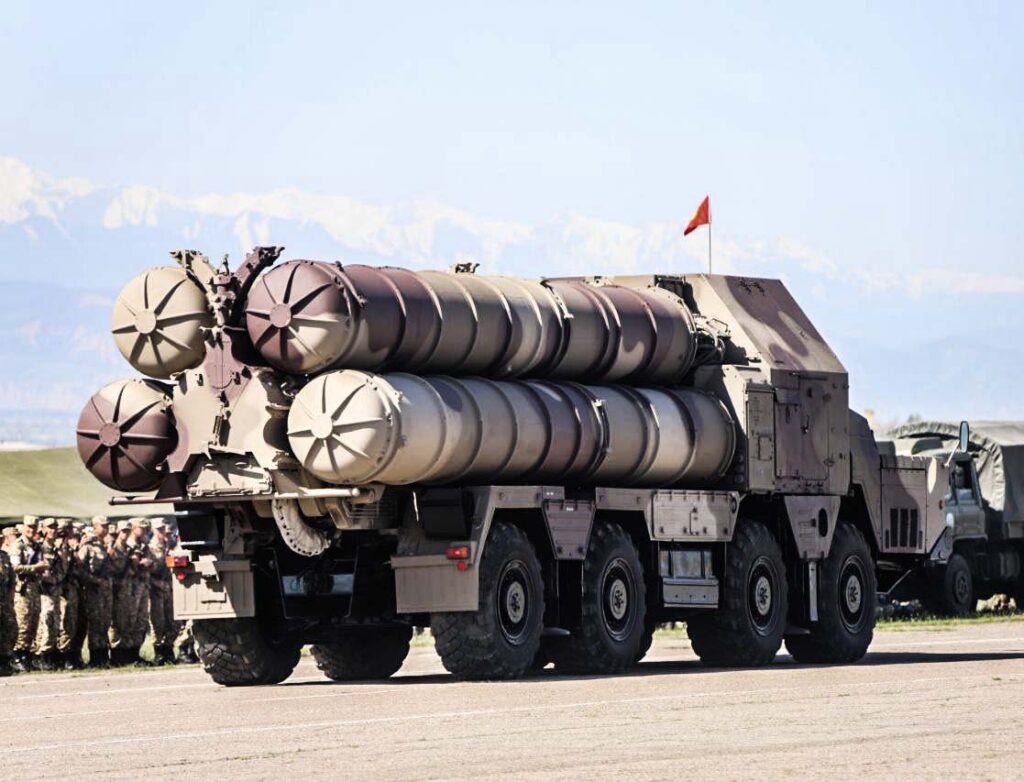
During recent rehearsals in the town of Tokmok, local residents spotted modern Tor-M2KM air defense systems mounted on KamAZ trucks, marking the first public appearance of these advanced missile systems in Kyrgyzstan’s arsenal. According to the General Staff of the Armed Forces of Kyrgyzstan, the country's Victory Day military parade will be held on May 8 in Ala-Too Square in Bishkek. More than 120 military and special-purpose vehicles, including artillery, armored vehicles, and air defense systems, will participate in the event, alongside 8,000 service personnel. The aerial portion of the parade will feature flyovers by both Kyrgyz and Russian aircraft, with the latter based at the Kant airbase. “The technical component of the parade will feature the most modern equipment acquired through the national budget,” the Defense Ministry stated. “For the first time, Tor-M2KM and Pechora-2BM missile systems, as well as S-300PS long-range surface-to-air missile launchers, will be on display in Ala-Too Square.” Residents of Tokmok were the first to capture images of the Tor-M2KM systems during rehearsals. The system, known for its short-range effectiveness, is designed to counter a wide range of aerial threats including aircraft, helicopters, drones, and cruise missiles. The units were painted in the camouflage colors of the Kyrgyz armed forces, indicating their official deployment. Notably, the appearance of the S-300PS systems comes just days after their reported transfer from the Russian armed forces to Kyrgyzstan. These long-range missile systems are designed to provide strategic air defense coverage. The upcoming parade is expected to highlight the rapid modernization of Kyrgyzstan’s military capabilities and will be closely watched both domestically and by regional observers.

Central Asia’s Green Energy Dream: Too Big to Achieve?

Although most Central Asian nations are heavily dependent on fossil fuel production and exports, they are aiming to significantly increase the use of renewable energy, hoping to eventually become crucial suppliers of so-called green electricity to Europe. Achieving such an ambitious goal will be easier said than done, given that developing the green energy sector in the region requires massive investment. What Central Asian states – struggling to attract long-term private capital into clean energy projects – need is financing for projects that modernize power networks, improve grid stability, and enable cross-border electricity flows. These upgrades are essential for large-scale renewable energy deployment and regional trade in power. Most actors in Central Asia seem to have taken major steps in this direction. In November 2024, at the COP29 climate conference held in Baku, Kazakhstan signed several deals worth nearly $3.7 billion with international companies and development institutions to support green energy projects. Neighboring Uzbekistan, according to reports, has attracted more than €22 billion ($23.9) in foreign investment in renewable energy, while Kyrgyzstan, Turkmenistan, and Tajikistan – which is aiming to generate all its electricity from green energy sources by 2032 – have developed strategies to help increase their renewable potential. But to turn their goals into reality, all these nations will need funding – whether from oil-rich Middle Eastern countries, China, the European Union, or various international financial institutions. Presently, the development of the Caspian Green Energy Corridor – which aims to supply green electricity from Central Asia to Azerbaijan and further to Europe – remains the region’s most ambitious project. According to Yevgeniy Zhukov, the Asian Development Bank's (ADB) Director General for Central and West Asia, this initiative is a strategic priority for Kazakhstan, Uzbekistan, and Azerbaijan. “While the prospect of exporting green electricity to Europe is part of the long-term vision, the core goal of the initiative is to accelerate green growth within the region,” Zhukov told The Times of Central Asia. Together with the Asian Infrastructure Investment Bank, the ADB is funding a feasibility study for this proposed transmission corridor. The study will assess the technical and economic viability of such a system, along with the environmental and regulatory requirements. In the meantime, the ABD is expected to continue funding other green energy projects in the region. The financial entity, according to Zhukov, invested $250 million in Uzbekistan in 2023 to support renewable energy development and comprehensive power sector reforms, while in other Central Asian countries, it remains “firmly committed to driving the green energy transition.” “For instance, in Tajikistan we are exploring the potential to co-finance the Rogun Hydropower Project alongside the World Bank and other international partners. In Kyrgyzstan, our focus has been on supporting foundational reforms in the energy sector, including strengthening the policy and regulatory environment to attract private investment in renewables. In Turkmenistan, we’ve launched a total of $1.75 million technical assistance initiative to help lay the groundwork for future renewable energy development,” Zhukov stressed, pointing out that these efforts are part...

Drone Attacks Intensify Security Worries Over Moscow Anniversary Event

Concerns about the security of dignitaries are circulating ahead of Russia’s plans for May 9 celebrations in Moscow of the 80th anniversary of the victory over Nazi Germany, an event that leaders from Central Asia are expected to attend as the Russo-Ukrainian war continues. The unease relates to Ukraine’s growing capacity in drone warfare, a dominant feature of the battlefield after years of war between Ukrainian troops and invading Russian forces. On Sunday, Moscow Mayor Sergei Sobyanin said air defense forces in the urban area of Podolsk, on the outskirts of Moscow, “repelled an attack” by four drones flying toward the capital. “According to preliminary data, there is no damage or casualties at the site of the fall of the debris. Emergency services specialists are working at the scene,” Sobyanin said on Telegram. Overnight, Ukrainian drones targeted Moscow again, disrupting operations at four of the city's airports. Sobyanin announced on Telegram that at least 19 Ukrainian drones were intercepted. Although no significant damage or injuries were immediately reported, debris from the intercepted drones landed on a major highway. On April 28, Russian President Vladimir Putin unilaterally declared a three-day ceasefire in the war with Ukraine from May 8 – 11 to coincide with the celebrations of victory in the Great Patriotic War, as the Soviet experience in World War II is called. But Ukraine rejected the proposal, saying it seems mainly designed to create a safe environment for its guests in Moscow and that a U.S-backed plan for a 30-day unconditional ceasefire would instead represent a serious step toward peace. Ukrainian President Volodymyr Zelenskyy has said Ukraine isn’t responsible for anyone’s safety on Russian territory on the day of the anniversary celebrations. Dmitry Medvedev, deputy chairman of Russia's Security Council, has warned of massive retaliation if Ukraine strikes Moscow during the May 9 event, saying on Telegram that “in the event of a real provocation on Victory Day, no one can guarantee that May 10 will come in Kyiv.” An analyst who tracks drone technology, Russian military weapons development and related issues said Russia’s concern about the May 9 parade stems from Ukraine’s growing expertise in drones. “Ukrainian long-range drones can already strike across the entire [of] Russia's European (west of Urals) territory,” Samuel Bendett, a researcher at the Center for Naval Analyses, said on X. The city of Sevastopol in Russia-controlled Crimea won’t hold a Victory Day parade for security reasons, said city Gov. Mikhail Razvozhayev, according to Russia’s state-run news agency TASS. Sevastopol hasn’t held a parade in the last couple of years because of similar concerns. In 2014, Russian forces occupied and annexed the Ukrainian territory of Crimea, where Ukraine has conducted periodic attacks with drones and other weapons since Russia’s full-scale invasion in 2022. The Kremlin says Chinese President Xi Jinping will visit Russia at Putin’s invitation on May 7-10 and will attend the Victory Day celebrations. Russian state media have reported that the leaders of the Commonwealth of Independent States, or CIS, will also attend....

Despite USAID Funding Cuts, Kyrgyzstan Plans to Reintroduce Goitered Gazelle at Issyk-Kul

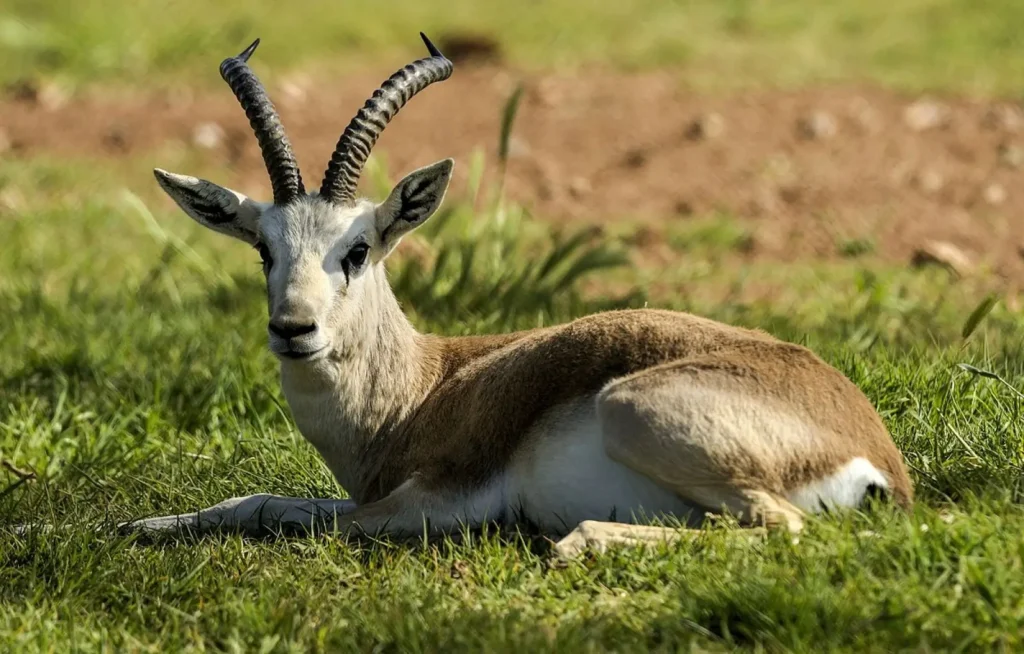
Kyrgyzstan has launched an ambitious project to restore the population and natural habitat of the goitered gazelle on the southern shore of Lake Issyk-Kul, a region once home to these graceful creatures. Led by the Argali Public Fund, Ilbirs Fund, and the Gulistan farm, the reintroduction effort marks a significant step toward reversing the species' decline and restoring balance to the local ecosystem. Reviving a Lost Species The goitered gazelle, an elegant herbivore from the bovid family, was once abundant in the Issyk-Kul region. However, its population collapsed after the 1930s due to widespread poaching and the conversion of natural landscapes for agricultural and economic development. Today, the species is listed in Kyrgyzstan's Red Book of endangered species, making their conservation an urgent priority. Found across Central Asia — from Kazakhstan and Uzbekistan to Iran and beyond — the gazelle is integral to maintaining the balance of steppe and desert ecosystems. On the southern shore of Issyk-Kul, conditions remain favorable for the return of the goitered gazelle. However, decades of human activity and habitat loss have driven them away, leaving reintroduction as the most viable path to restoration. The project employs a “soft release” approach, starting with a semi-free adaptation phase. Animals are first acclimatized and allowed to breed in a controlled environment before being released back into the wild. This method reduces the risks associated with sudden release and ensures a higher survival rate. The Project in Action Currently, the Gulistan farm houses a herd of 43 gazelles. By the end of the year, the number is expected to grow to 60, with the first batch of 25 animals scheduled for release in 2025. Organizers aim to release an additional 15-20 gazelles annually, slowly building a self-sustaining wild population. If conservation measures, particularly anti-poaching efforts, prove successful, the gazelle population in Issyk-Kul could reach 500 within the next decade. Gazelles play an essential role in their environments, feeding on thorny and toxic plants that other species avoid. This behavior helps control invasive vegetation and supports the overall health of the ecosystem. Their presence also benefits predators such as wolves and snow leopards, creating a natural chain of biodiversity. Broader Impact on Biodiversity and Ecotourism The reintroduction of the goitered gazelle represents more than just species preservation; it is a step toward restoring the ecological integrity of the Issyk-Kul landscape. A thriving population of gazelles can boost biodiversity by fostering healthier, more balanced ecosystems. Their grazing patterns promote plant regeneration, which in turn supports a variety of other species, from insects to birds of prey. Furthermore, the project has significant potential to bolster Kyrgyzstan's ecotourism sector. Issyk-Kul is already a popular destination for outdoor enthusiasts, and the presence of rare and protected wildlife like the goitered gazelle could attract even more visitors. Eco-friendly tourism initiatives could offer guided safaris to observe the gazelles in their natural habitat, providing educational opportunities while generating revenue for local communities. President Japarov has underscored the importance of halting illegal hunting, urging communities to see...

Kyrgyzstan Proposes Closure of All Rural Libraries

Kyrgyzstan's Cabinet of Ministers has submitted a draft bill for public consultation that proposes the closure of all rural libraries across the country, citing declining readership and poor infrastructure as the primary reasons behind the move. According to the draft law, the heads of rural administrations are required to assess the operational efficiency and relevance of local libraries within three months. Libraries deemed underutilized or ineffective are to be closed, with their book collections transferred to school libraries in the same regions. The Ministry of Culture reports that Kyrgyzstan currently has 1,050 libraries: 859 rural, 9 regional, 64 district, and 116 urban. Of these, 51 libraries are considered structurally unsound, while 214 require major repairs. “Unfortunately, even those institutions that remain open often suffer from extremely low attendance. Data on the number of visitors and subscribers are often invalid and may be distorted, creating an illusion of library activity. This creates a misconception about the demand for services that do not actually meet the needs of the local population,” reads the bill’s explanatory note. The document’s authors estimate that over half of the country’s libraries are effectively non-operational and argue that functioning cultural institutions lack sufficient material and technical support. With the growth of digital technologies, traditional libraries, particularly in rural areas, are losing popularity, especially among younger generations, according to the proposal’s initiators.