• KGS/USD = 0.01144 0%
  • KZT/USD = 0.00216 0%
  • TJS/USD = 0.10663 0%
  • UZS/USD = 0.00008 0%
  • TMT/USD = 0.28530 0%
  • KGS/USD = 0.01144 0%
  • KZT/USD = 0.00216 0%
  • TJS/USD = 0.10663 0%
  • UZS/USD = 0.00008 0%
  • TMT/USD = 0.28530 0%
  • KGS/USD = 0.01144 0%
  • KZT/USD = 0.00216 0%
  • TJS/USD = 0.10663 0%
  • UZS/USD = 0.00008 0%
  • TMT/USD = 0.28530 0%
  • KGS/USD = 0.01144 0%
  • KZT/USD = 0.00216 0%
  • TJS/USD = 0.10663 0%
  • UZS/USD = 0.00008 0%
  • TMT/USD = 0.28530 0%
  • KGS/USD = 0.01144 0%
  • KZT/USD = 0.00216 0%
  • TJS/USD = 0.10663 0%
  • UZS/USD = 0.00008 0%
  • TMT/USD = 0.28530 0%
  • KGS/USD = 0.01144 0%
  • KZT/USD = 0.00216 0%
  • TJS/USD = 0.10663 0%
  • UZS/USD = 0.00008 0%
  • TMT/USD = 0.28530 0%
  • KGS/USD = 0.01144 0%
  • KZT/USD = 0.00216 0%
  • TJS/USD = 0.10663 0%
  • UZS/USD = 0.00008 0%
  • TMT/USD = 0.28530 0%
  • KGS/USD = 0.01144 0%
  • KZT/USD = 0.00216 0%
  • TJS/USD = 0.10663 0%
  • UZS/USD = 0.00008 0%
  • TMT/USD = 0.28530 0%

Viewing results 337 - 342 of 1056

Altynai Osmo’s New Show in New York: Restoring Female Narratives

In the heart of Tribeca in New York, the Sapar Contemporary Art Gallery has launched a new exhibition, Beneath the Earth and Above the Clouds, which brings Central Asian narratives to the forefront. This dual show – which runs until May 15, 2025 - features Altynai Osmo and Aya Shalkar, two artists who have been devoted to exploring female narratives in the region, and do this through works that are both steeped into tradition, and modern and vibrant at the same time. The Times of Central Asia spoke with Altynai Osmo, a multimedia artist from Kyrgyzstan whose work weaves the threads of nomadic heritage with contemporary expression. Born in Bishkek and nurtured by the serene shores of Lake Issyk-Kul, Osmo's artistic journey is deeply rooted in the traditions of her homeland. A graduate of Central Saint Martins in London, she seamlessly blends mediums — textiles, metals, video, and installation — to explore themes of identity, matriarchy, and the evolving role of women in Central Asian societies. Her works such as Blessing Yurt, a red fringed costume inspired by the Kyrgyz nomadic traditional dwelling, not only pay homage to ancestral practices but also challenges present-day socio-political narratives. Speaking with TCA, Osmo reflects on the layers of meaning in her new series, her enduring engagement with mythology and matriarchy, and how her practice bridges personal memory and collective history. [caption id="attachment_31131" align="aligncenter" width="2231"] Image courtesy of Altynai Osmo/Sapar Contemporary Art Gallery[/caption] TCA: Can you tell me about how your previous practice led to this new series for the show? My previous work has always involved exploring the intersections of feminine identity, cultural memory, and inherited spirituality in Central Asia, particularly in Kyrgyzstan. This new series evolved naturally from that foundation. It reflects a more layered and intentional engagement with Central Asian history, mythology and matriarchal histories — particularly the symbolic and spiritual dimensions that have often been erased, distorted and forgotten. The materials and narratives I use now draw more explicitly from the Kyrgyz epic, Manas, ancestral craftsmanship, and belief systems like Tengrism, allowing me to express deeper reflections on women's roles across time. TCA: Your Kyrk Kyz series reinterprets the legendary warrior women of Central Asia. How does this mythology resonate with contemporary Kyrgyz identity and gender roles? The Kyrk Kyz legend, with its origin in female strength and collective action, presents a striking contrast to the more patriarchal norms that dominate present-day Kyrgyz/Central Asian society. Revisiting these stories reminds us that women were once seen as the protectors of land, lineage, and cultural continuity. By reimagining these warriors through my art, I want to challenge modern gender expectations and inspire a reconnection to a more empowering view of womanhood that is already rooted in our collective past. [caption id="attachment_31132" align="aligncenter" width="2560"] Image courtesy of Altynai Osmo/Sapar Contemporary Art Gallery[/caption] TCA: The use of felt in your masks ties your work to nomadic traditions. How does the choice of materials reinforce the themes of your work? Felt is not just a...

Turkmenistan Steps into the Spotlight with Regional Diplomacy and Economic Reforms

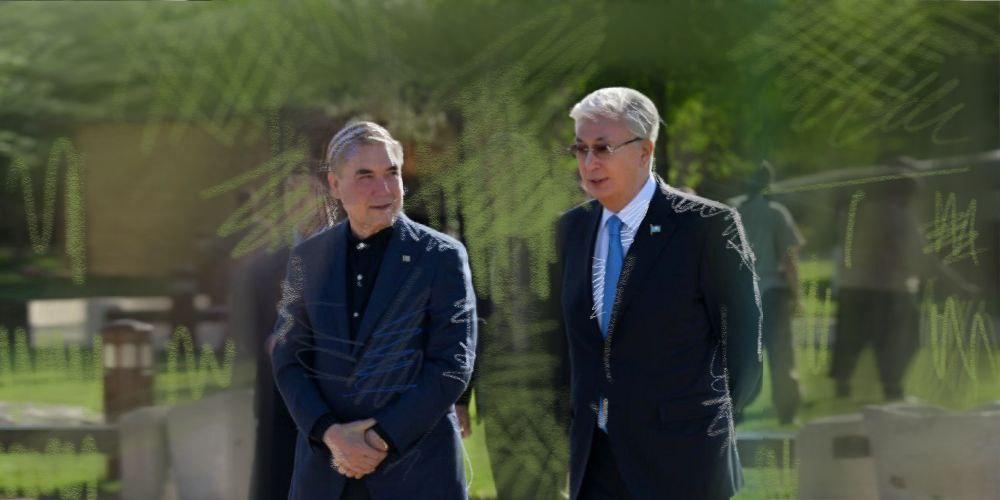
Long known for its isolationist policies, Turkmenistan is gradually opening up to the international community through significant economic and diplomatic initiatives. Recent efforts include diversifying its natural gas exports, engaging in regional infrastructure projects such as the TAPI gas pipeline, and expanding trade partnerships. Additionally, the government has taken steps toward modernization and economic reforms to attract foreign investment, signaling a shift towards enhanced regional cooperation and global integration. This week, these initiatives gathered pace, as Chairman of the Halk Maslahaty of Turkmenistan, Gurbanguly Berdimuhamedov, continued his diplomatic tour of Central Asia with official visits to Kazakhstan and Kyrgyzstan. Berdimuhamedov's meetings focused on strengthening strategic partnerships, expanding trade and economic cooperation, and deepening cultural dialogue. Visit to Kazakhstan: Cultural Diplomacy and Strategic Cooperation On April 21, Berdimuhamedov arrived in the city of Turkestan, where he was welcomed by Kazakh President Kassym-Jomart Tokayev. The leaders held an informal meeting and visited key cultural and infrastructure sites, including the mausoleum of Khoja Ahmed Yassawi, a UNESCO World Heritage Site considered a spiritual center of the Turkic world. The tour also included the “Ethnoaul” ethnographic complex, the Turkistan Visit Centre, and an inspection of ongoing archaeological and restoration work at the ancient settlement of Kultobe. At the SPK Turkistan industrial park, they reviewed six investment projects worth a total of 36.5 billion tenge, encompassing production from tractors to medical equipment, with future expansion plans involving 112 facilities​. During the meeting, Tokayev highlighted growing bilateral ties and discussed joint initiatives in energy, transport, and digitalization. Tokayev reaffirmed Kazakhstan’s interest in participating in the development of Turkmenistan’s Galkynysh gas field and regional infrastructure projects, including the Turgundi-Herat-Kandahar-Spin Buldak railway and various transit highways connecting the two nations. Tokayev also offered support in digital governance and IT training, aligning with broader goals of regional modernization. Speaking to Toppress.kz, political analyst Tair Nigmanov interpreted Berdimuhamedov’s regional tour as a sign of Turkmenistan’s gradual emergence from diplomatic isolation. Nigmanov emphasized the symbolic significance of Turkestan, which Kazakhstan is positioning as a regional diplomatic hub for the Turkic world. Visit to Kyrgyzstan: Tradition and Informal Diplomacy On April 22, Berdimuhamedov arrived in Kyrgyzstan, where he was met at Issyk-Kul Airport by President Sadyr Japarov, who personally drove his guest along the visit route, a gesture that drew public attention. The leaders toured the Rukh-Ordo cultural center in Cholpon-Ata, and held informal discussions. During the visit, Japarov gifted a komuz, a traditional Kyrgyz string instrument, and invited Berdimuhamedov to sample the national kuurma tea. Talks on April 23 focused on enhancing bilateral relations. President Japarov praised the “centuries-old friendship” between the two nations and proposed establishing a Kyrgyz-Turkmen Development Fund, modeled on similar funds with Russia, Hungary, and Uzbekistan. Berdimuhamedov responded positively, expressing a desire to expand cooperation in trade, energy, education, and cultural exchange. Next Stop: Uzbekistan Berdimuhamedov is scheduled to visit Uzbekistan on April 23-24 at the invitation of President Shavkat Mirziyoyev. The agenda includes political, economic, and transportation cooperation, continuing the regional outreach and reinforcing Turkmenistan’s strategic...

Seismic Cities: Is Central Asia Prepared for a Major Earthquake?

The recent 7.7-magnitude earthquake in Myanmar, which claimed over 3,500 lives and caused structural failures more than 1,000 kilometers away in Bangkok, has once again highlighted the precariousness of life in seismically active regions. “Earthquakes happen on geological faults, which are often sited at the edges of mountain ranges.” Richard Walker, Professor of Tectonics at the University of Oxford told The Times of Central Asia. “Sadly, the edges of mountain ranges are often the best places to live, due to the presence of water and of land for farming.” All Central Asian capitals, except for Kazakhstan’s relocated capital Astana, are located on such terrain. This has historically made them vulnerable. The 1948 earthquake in Ashgabat destroyed almost the entire city; Tashkent suffered a similarly destructive event in 1966, and Almaty was wracked by twin blows in 1887 and 1911. Although no such catastrophic event has occurred in the last half century, the earth beneath the region continues to rumble restlessly. Two quakes in early 2024 left the residents of Almaty unnerved. Last week, on April 14, a 5.9 magnitude earthquake in Tajikistan caused the death of a young boy and damage to around thirty homes near the Chinese border. Though moderate, these tremors serve to remind residents of the active tectonics of the region and raise questions about the structural readiness of buildings and infrastructure should a stronger event occur. Botched Building After the 2023 earthquake on the Turkey-Syria border, which killed over 53,000 people in Turkey alone, authorities launched investigations into over a hundred individuals linked to the construction of buildings that did not withstand the tremors. Such stories were familiar to people who grew up in the Soviet Union. In the 1988 Spitak earthquake in Armenia, tens of thousands died in Leninakan (now Gyumri). Many of the casualties were put down to the collapse of identikit 9-storey tower blocks built in the Brezhnev era. These were designed to withstand a magnitude 7 earthquake; in the event, the 6.8 magnitude quake that struck Leninakan caused 72 out of 78 of these buildings to collapse. In a bitter irony, many older, pre-Soviet structures remained intact. One team of international inspectors blamed “very low construction standards and suspect joint details” in Leninakan for the scale of the disaster. Similar precast tower blocks to those that collapsed in Armenia can be seen across the former USSR. According to the Uzbek media, the Cabinet of Ministers estimated in 2023 that approximately 70% of private housing in the country failed to meet current earthquake resistance standards. “The 2023 earthquake in Turkey was a tragic reminder of the importance of strict compliance with building codes and continuous quality control of construction in seismic regions,” Daulet Sarsenbayev, director of the Kazakhstan’s National Scientific Center for Seismological Observations and Research, told TCA. “Such events provide valuable lessons for all countries, including Kazakhstan, in terms of the need to strengthen the regulatory framework, increase transparency in the construction industry, and invest in resilient infrastructure.” In response to the...

Meet the Kyrgyz Woman Behind the Vaccine Revolution

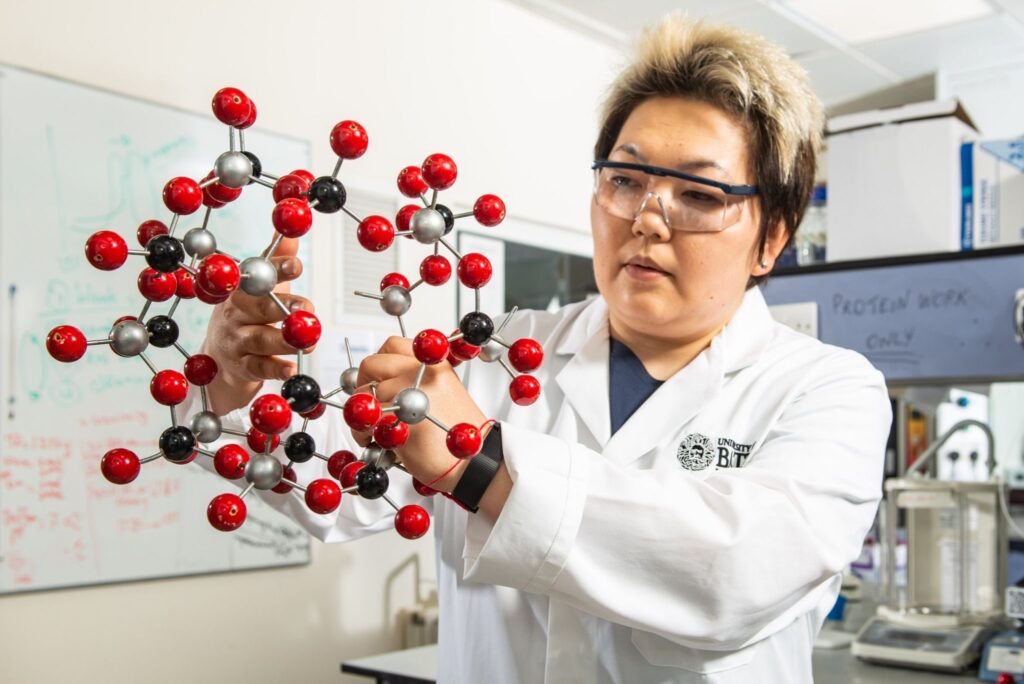
COVID-19 exposed numerous challenges humanity has yet to address, with one of them being directly related to tackling potential future pandemics. A key aspect of this is vaccines, which have to be transported in refrigerated units. This allows them to maintain their effectiveness and safety, the so-called "cold chain infrastructure" saving them from becoming unusable. This complex transportation requirement, however, results in millions of people missing out on potentially life-saving vaccines. But does it have to be this complicated? “Motherhood changes people, irreversibly. For me it was not just becoming a parent, but it also influenced the direction of my research,” Asel Sartbaeva wrote in her 2018 article, ‘Vaccines: The End of the Cold War?’ “When my daughter was only a few days old, I took her to the doctors to be vaccinated with the BCG vaccine (against tuberculosis). The doctor took the vaccine out of the fridge and administered it directly. That’s when I asked: ‘why must vaccines be refrigerated?’ and then the natural follow-up question, ‘can I help to make them stable at room temperatures?’” Born and raised in Kyrgyzstan, Asel Sartbaeva “currently wears several hats”, as her LinkedIn profile says. She is an award-winning interdisciplinary chemist, Reader in Chemistry (Associate Professor) at the University of Bath, and the first Central Asian to obtain a PhD from University of Cambridge. Sartbaeva is also the CEO and Co-Founder of EnsiliTech, a startup with a technology that allows vaccines and other biopharmaceuticals to be stored and transported at room temperature. EnsiliTech was launched in 2022 as a project at the University of Bath, and was built on over a decade of Sartbaeva’s research into ensilication – the technique of fitting vaccine components with a silica coat to stop them from spoiling outside of refrigerated temperatures. In December 2022, EnsiliTech successfully raised £1.2 million in an oversubscribed pre-seed funding round led by Science Angel Syndicate and the Fink Family Office with co-investment from QantX, Elbow Beach Capital, angel investors and Innovate UK. In 2023, the startup won a £1.7 million grant from the British government’s Department of Health and Social Care to develop the first thermally stable mRNA vaccine in the world, to combat Hantavirus, which is found in Asia and South America. In the same year, the new startup attracted their first customer, a Global Top 10 animal vaccine company based in the EU, which paid EnsiliTech to thermally stabilise three of their vaccines. Currently, Ensilitech is planning to licence their ensilcation technology to several customers and internally developing thermally stable vaccines and antibodies. Along with her scientific and business goals, Sartbaeva is also passionate about the wider participation and girls and the women’s empowerment movement. “We need to show girls that science isn’t boring and is a great choice for girls who have a natural passion for science,” she says. In 2021, Sartbaeva became the ambassador for UNICEF’s Girls in Science programme, launched in 2020 to empower 500 girls from new settlements and rural areas so they could excel...

Kyrgyz Prime Minister Kasymaliev in Washington for IMF, World Bank Meetings

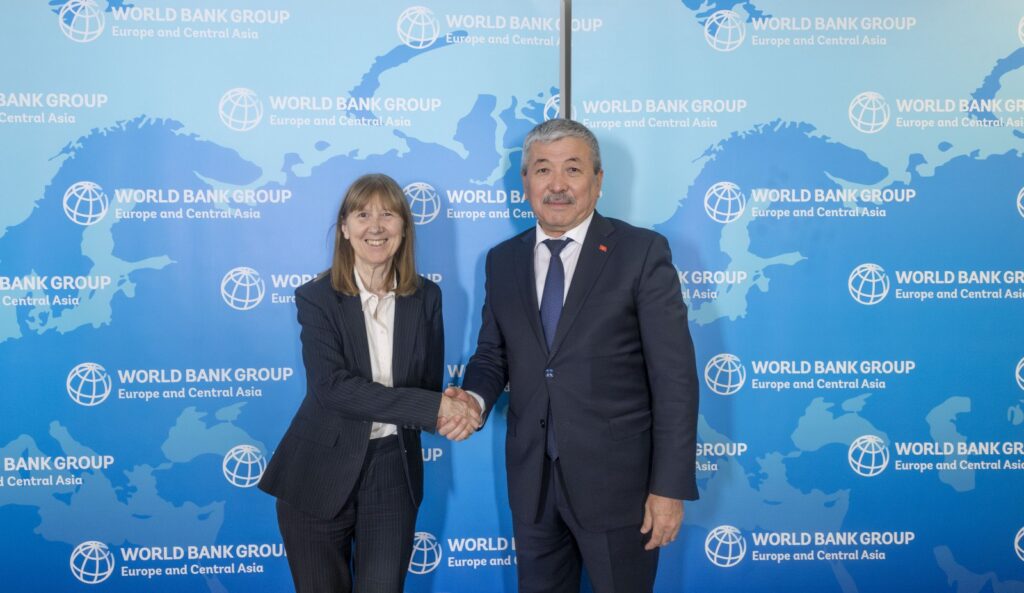
Kyrgyz Prime Minister Adylbek Kasymaliev has arrived in Washington, D.C. to participate in the Spring Meetings of the International Monetary Fund (IMF) and World Bank Group. During his visit, Kasymaliev is expected to meet with senior World Bank officials to discuss ongoing and future investment projects in Kyrgyzstan. Following the IMF and World Bank sessions, Kasymaliev is scheduled to hold high-level talks with Anna Bjerde, the World Bank’s Managing Director for Operations, and Antonella Bassani, Vice President for Europe and Central Asia. A key item on the agenda will be the planned construction of the Kambarata-1 Hydropower Plant (HPP) on the Naryn River. The Kyrgyz government hopes to secure an interest-free loan of $500 million from the World Bank to support the project, which is estimated to cost $3.6 billion in total. Kambarata-1 is seen as a strategic initiative that could make Kyrgyzstan fully self-sufficient in electricity generation. To date, approximately 4 billion Kyrgyz soms (about $46 million) have been allocated from the state budget for preliminary construction works. These funds are being used to build vital infrastructure including roads, a transportation tunnel, a bridge over the Naryn River, power lines, and temporary housing for workers. In addition to his meetings with international financial institutions, Kasymaliev will also engage with executives from leading U.S. corporations. These discussions will not only cover the hydropower sector but will also highlight other government-led investment opportunities in Kyrgyzstan across various industries. The Kyrgyz leadership has intensified efforts to attract foreign partners for its infrastructure and energy projects, as part of a broader strategy to enhance economic independence and modernize the national energy grid.

Kyrgyzstan Establishes Ecological Corridor to Protect Snow Leopards and Biodiversity

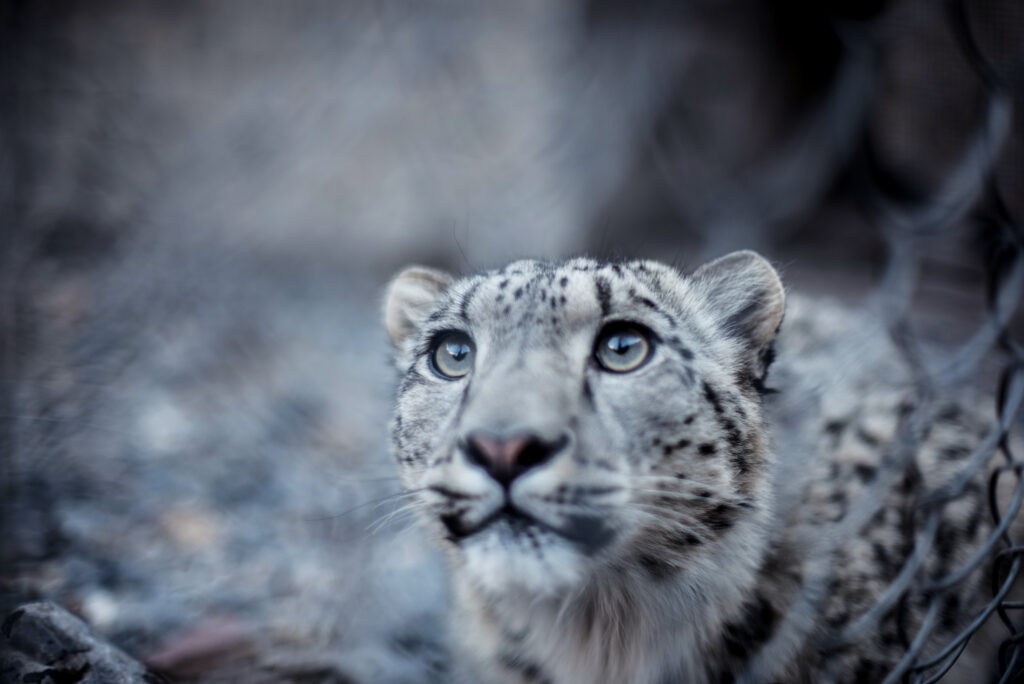
Kyrgyzstan has created the Ak Ilbirs (Snow Leopard) Ecological Corridor in the northeastern Issyk-Kul region, a major step in safeguarding rare wildlife and preserving the country’s rich biodiversity. The corridor encompasses over 792,000 hectares, linking several protected areas: the Khan-Tengri State Nature Park, the Sarychat-Eertash Nature Reserve, and the Naryn Nature Reserve. It is designed to serve as a safe habitat for the snow leopard and other endangered species, while promoting the sustainable management of natural resources. [caption id="attachment_30972" align="aligncenter" width="794"] Image: mnr.gov.kg[/caption] Key Objectives The Ak Ilbirs Ecological Corridor aims to: Conserve wild animal populations, including the endangered snow leopard Protect diverse ecosystems and their biological richness Safeguard rare and threatened plant and animal species To preserve the integrity of the corridor, strict prohibitions have been introduced. These include a ban on the introduction of non-native species, the use of pesticides, radioactive waste disposal, and any other activities that could harm the ecosystem. At the same time, the corridor supports legal and environmentally responsible activities, such as scientific research, reforestation, forest management, and population regulation of certain wildlife species. National and Global Significance The initiative marks a significant advancement in Kyrgyzstan’s environmental policy. Notably, the corridor strengthens efforts to protect the snow leopard, a species regarded as an indicator of the stability and health of mountainous ecosystems. In December 2023, President Sadyr Japarov signed a decree recognizing the snow leopard as a national symbol of the Kyrgyz Republic. The species is classified as rare or endangered across 12 countries. Kyrgyzstan has also played a leading role in international snow leopard conservation. At the 79th session of the UN General Assembly, the country introduced the resolution establishing October 23 as International Snow Leopard Day, backed by other range states including Bhutan, China, India, Nepal, Mongolia, Kazakhstan, Pakistan, Russia, Tajikistan, and Uzbekistan. According to the Population Assessment of the World’s Snow Leopards, conducted between 2020 and 2024 under the Global Snow Leopard and Ecosystem Protection Program (GSLEP), Kyrgyzstan is estimated to have an average snow leopard population of 285.