• KGS/USD = 0.01144 0%
  • KZT/USD = 0.00216 0%
  • TJS/USD = 0.10663 0%
  • UZS/USD = 0.00008 0%
  • TMT/USD = 0.28530 0%
  • KGS/USD = 0.01144 0%
  • KZT/USD = 0.00216 0%
  • TJS/USD = 0.10663 0%
  • UZS/USD = 0.00008 0%
  • TMT/USD = 0.28530 0%
  • KGS/USD = 0.01144 0%
  • KZT/USD = 0.00216 0%
  • TJS/USD = 0.10663 0%
  • UZS/USD = 0.00008 0%
  • TMT/USD = 0.28530 0%
  • KGS/USD = 0.01144 0%
  • KZT/USD = 0.00216 0%
  • TJS/USD = 0.10663 0%
  • UZS/USD = 0.00008 0%
  • TMT/USD = 0.28530 0%
  • KGS/USD = 0.01144 0%
  • KZT/USD = 0.00216 0%
  • TJS/USD = 0.10663 0%
  • UZS/USD = 0.00008 0%
  • TMT/USD = 0.28530 0%
  • KGS/USD = 0.01144 0%
  • KZT/USD = 0.00216 0%
  • TJS/USD = 0.10663 0%
  • UZS/USD = 0.00008 0%
  • TMT/USD = 0.28530 0%
  • KGS/USD = 0.01144 0%
  • KZT/USD = 0.00216 0%
  • TJS/USD = 0.10663 0%
  • UZS/USD = 0.00008 0%
  • TMT/USD = 0.28530 0%
  • KGS/USD = 0.01144 0%
  • KZT/USD = 0.00216 0%
  • TJS/USD = 0.10663 0%
  • UZS/USD = 0.00008 0%
  • TMT/USD = 0.28530 0%

Viewing results 343 - 348 of 1056

Essential but Unwelcome: Central Asian Migrants in Russia

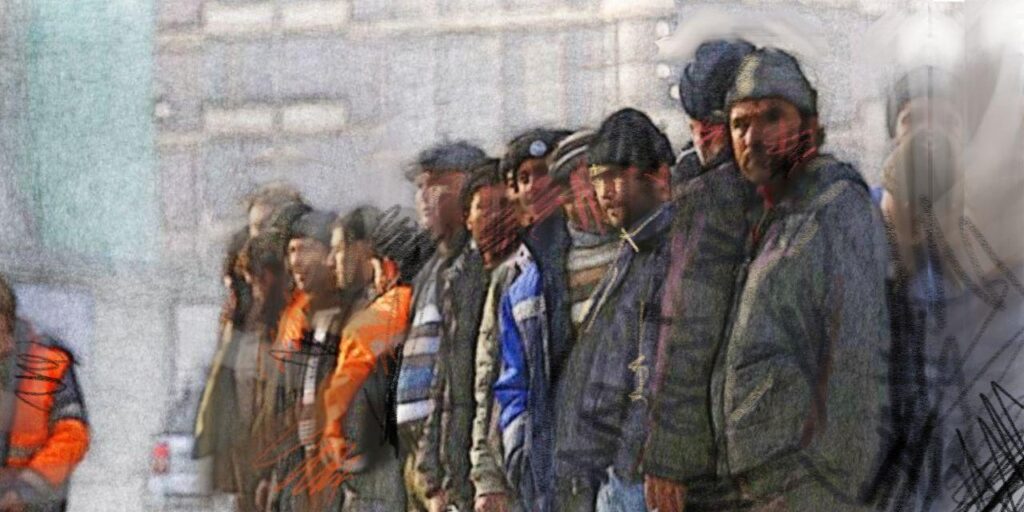
The Crocus City Hall terrorist attack in Moscow on March 22, 2024 triggered strong anti-migrant sentiment in Russian society. Since then, the nation’s authorities have been imposing stricter migration rules. But how does this impact millions of Central Asian labor migrants and their families living and working in Russia? Following the collapse of the Soviet Union in 1991, Russia became a major destination for migrant workers from Central Asia. According to the official Russian statistics, there are currently almost four million citizens of Kazakhstan, Kyrgyzstan, Uzbekistan, Tajikistan, and Turkmenistan living in Russia, along with approximately 670,000 illegal migrants. Rosstat (the Federal State Statistics Service of the Russian Federation) reports that 260,400 migrants arrived in Russia from January to July this year, with 60% (about 156,200) coming from Central Asian countries. The majority of them are citizens of Tajikistan. In 2023, over one million Tajiks have moved to Russia in search of work. With a large community of its citizens in Russia, the Tajik government seems to be working to not only improve their legal status in the Russian Federation, but also to coordinate some of their actions, particularly in the field of culture. On April 9, in Dushanbe, a meeting took place between Tajikistan’s Minister of Labor, Migration, and Employment of the Population, Solekhi Kholmakhmadzoda, and leaders and activists of the Tajik diaspora living in Russia. Tajikistan initiated the summit after Russia began testing migrant children on their knowledge of the Russian language before admitting them to school. Starting April 1, a law came into effect that prevents Russian schools from enrolling migrant children who do not speak Russian or are in Russia illegally. This measure is just the tip of the iceberg in the Kremlin’s plans to regulate the migrant issue in the country. Alexey Nechaev, the leader of the New People party – one of the handful of the so-called systemic opposition parties in Russia – said on March 19 that “artificial intelligence should be made a new tool for monitoring migrants… It is unfair that Russian citizens are digitized from head to toe, while migrants continue to live with paper documents without any problems,” Nechaev stressed, pointing out that monitoring migrants’ activities through AI could “help keep a closer eye on what foreigners are doing and make it easier to track illegal money flows.” Last year, the Liberal Democratic Party – another ‘systemic opposition’ group – proposed restricting the rights of migrant workers to bring their families into Russia. This initiative raised concerns in neighboring Kazakhstan. The ambassador of the largest Central Asian nation expressed unease to Moscow about such ambitions, referring to the Eurasian Economic Union (EAEU), the foundation of which, as he highlighted, is based on ensuring the four freedoms – the movement of goods, services, capital, and labor. Russian reports, however, claim that, as a result of Kazakhstan and Kyrgyzstan’s membership in the EAEU, their citizens living in Russia have a much better status than those from other Central Asian states. Despite that, on...
Kyrgyzstan Reports Strong Economic Growth in Early 2025

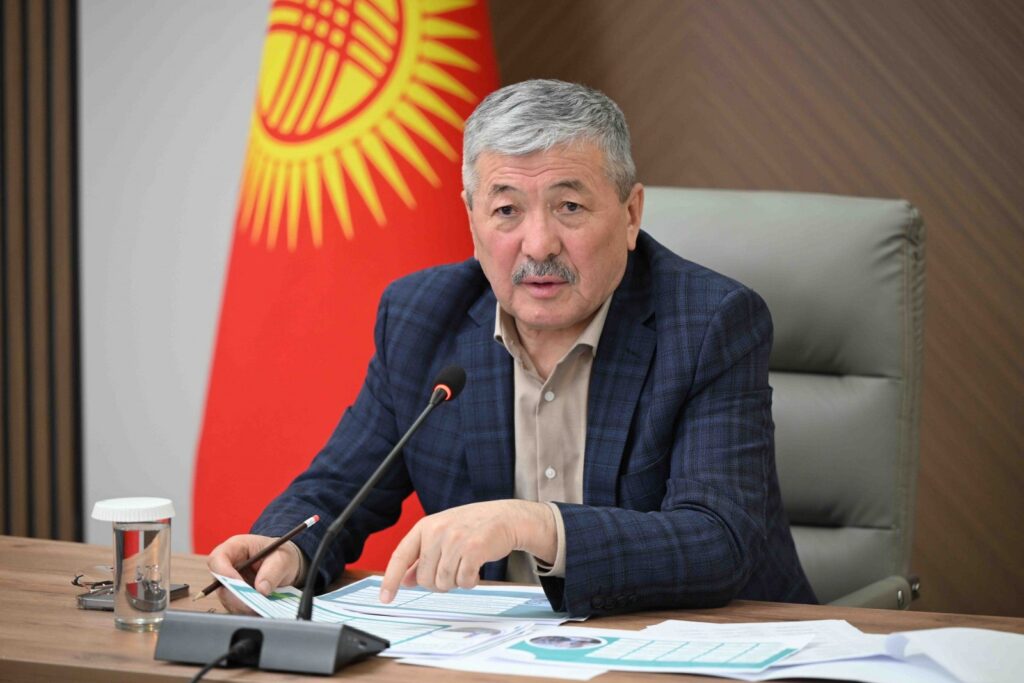
Kyrgyzstan’s economy continued its upward trajectory in the first quarter of 2025, with GDP expanding by 13.1%, according to Prime Minister Akylbek Japarov. He credited the surge to positive developments across all key sectors prioritized by the government. The food industry posted remarkable growth of 71%, while the construction sector expanded by 69%. Investments in fixed capital jumped by 90% during the same period. A detailed economic overview published by the Ministry of Economy and Commerce highlighted that Kyrgyz businesses are adapting rapidly to shifting external conditions. The ministry also pointed to increased domestic demand and investment activity as key drivers of growth. "From January to March 2025, about 93% of total investments were directed toward mining, processing industries, information and communications, electricity and gas supply, and the construction of housing and educational institutions," the ministry stated. The construction sector alone contributed three percentage points to GDP growth. However, services remain the backbone of Kyrgyzstan’s economy, accounting for 4.5 percentage points of overall growth. Within the sector, trade made up 27.4%, transportation services 10.3%, and financial intermediation and insurance services another 10.3%. Annual inflation stood just below 7% in the first quarter, with average prices for consumer goods rising by 3.5% during the reporting period.

Turkish Company Reaffirms Commitment to Kyrgyzstan’s Energy Projects

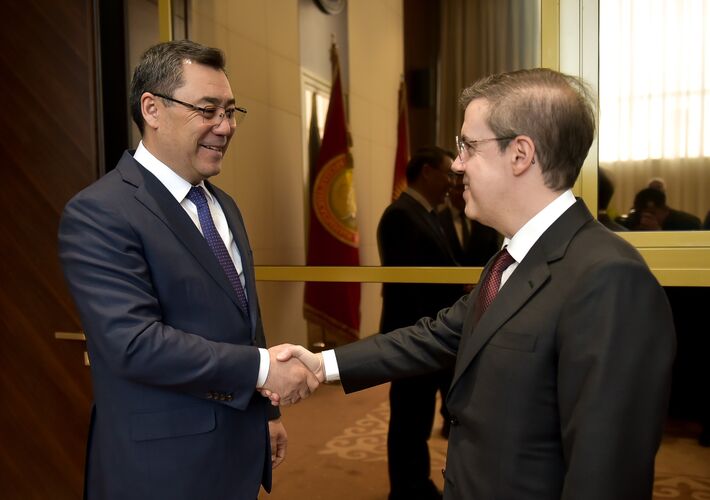
At a meeting on April 16 with Kyrgyz President Sadyr Japarov in Bishkek, Ahmet Mücahid Ören, Chairman of the Board of Directors of Turkey’s İhlas Holding, reaffirmed his company’s commitment to implementing two major energy projects in Kyrgyzstan: the construction of the Kazarman cascade of hydroelectric power plants (HPPs) on the Naryn River, and a 250 MW natural gas-fired combined heat and power plant (CHPP-2) in Bishkek. İhlas Holding has previously established an open joint-stock company, Orta Asya Investment Holding (Central Asian Investment Holding), to facilitate its operations in Kyrgyzstan. “We consider these projects in the fields of hydropower and thermal power generation as strategically important and a priority. We are confident that their implementation will serve as the basis for the sustainable development of the country's energy sector and create conditions for subsequent investment initiatives,” Ören stated, according to the Kyrgyz president’s press service. Japarov noted that preliminary research has been completed at the construction sites for the Kazarman cascade in the Jalal-Abad region. The studies were conducted by Central Asian Investment Holding in cooperation with the Kyrgyzhydroproject Institute. In February 2025, Kyrgyzstan’s Ministry of Energy and Central Asian Investment Holding signed a protocol of intent to build the Kazarman cascade, which will have a total capacity of 912 MW. The Turkish company has committed to constructing three hydropower plants as part of the project: Ala-Buga HPP – 600 MW Kara-Bulun-1 HPP – 149 MW Kara-Bulun-2 HPP – 163 MW Combined, these plants are expected to generate 3.746 billion kWh of electricity annually, significantly bolstering Kyrgyzstan’s power supply. The meeting also addressed the construction of a second thermal power plant in Bishkek. Japarov emphasized that once operational in 2028, the new 250 MW natural gas-fired CHPP-2 will improve not only the capital’s heating and electricity supply but also its environmental conditions. The new facility aims to reduce reliance on the city’s aging coal-fired Thermal Power Plant, which currently serves as the primary source of electricity and heating. Once completed, CHPP-2 is expected to meet Bishkek’s growing heating demands and reduce the risk of energy shortages.

Kyrgyzstan Sets Date for 2027 Presidential Election

Kyrgyz President Sadyr Japarov has submitted a draft law to parliament establishing the official date for the country’s next presidential election. The parliamentary committee on constitutional legislation has approved the proposal in all three readings. According to the newly adopted law, the presidential election will take place on January 24, 2027, in line with amendments that designate the fourth Sunday of January as the official election date in the year the president’s term expires. Under the current Constitution, the president of Kyrgyzstan is elected for a single six-year term, with no possibility of re-election. President Japarov was elected on January 28, 2021, and later initiated constitutional reforms, including a nationwide referendum that expanded presidential powers. Changes to Parliamentary Elections The same parliamentary committee has also approved a second reading of a draft law altering the electoral system for members of the Jogorku Kenesh (parliament). The reforms would eliminate single-mandate constituencies, moving to an entirely majoritarian, multi-member district model. Under the new system, 30 electoral constituencies will be established, with three deputies elected in each, bringing the total to 90 MPs, all elected on a majoritarian basis. Both political parties and self-nominated individuals will be able to field candidates. Notably, 30 of the 90 seats will be reserved for women, aimed at enhancing gender representation. Currently, Kyrgyzstan’s parliament is composed of 54 deputies elected by party lists and 36 by single-mandate districts. If approved in its final reading, the draft law would overhaul the country's mixed electoral model in favor of a purely constituency-based approach.

Kyrgyzstan Among Countries with Highest Number of Measles Cases

The measles virus is spreading in many parts of the world, and Kyrgyzstan is among the nations experiencing a surge in cases as health officials conduct an immunization drive despite vaccine skepticism among some people. A total of 5,168 measles cases had been registered across the Central Asian country as of April 10 this year, in what the Ministry of Health described as an “acute” situation. Some 1,777 vaccination clinics operate across Kyrgyzstan at a primary healthcare level and in maternity hospitals, and mobile teams carry out vaccinations in remote areas as well as among migrants in new settlements in the capital, Bishkek, according to the ministry. One UNICEF-supported nurse has traveled on horseback to deliver measles vaccines on remote farms in the mountainous country. “Every year, up to 20,000 people refuse to get vaccinated. The main reasons for refusal are religious beliefs — 43%, doubts about the safety and effectiveness of vaccines — 45%. This leads to the spread of vaccine-preventable diseases,” the ministry said. It also stated that unvaccinated citizens, mainly preschool children, could be temporarily barred from educational institutions in the event of an epidemic or the threat of one. Health experts say a decline in immunization is contributing to a rise in global measles cases this year. The U.S. Centers for Disease Control and Prevention said that, as of April 10, a total of 712 confirmed cases of the airborne, highly contagious disease had been reported in the United States this year, compared to 285 cases that were reported last year. The greatest concentration of cases this year is in Texas. Officials declared the disease to be eliminated in the U.S. in 2000. Yemen, India, and Pakistan have the world’s highest numbers of reported measles cases in the last six months, according to an April report by the World Health Organization. Kyrgyzstan, which has a population of about seven million, has the seventh highest number of cases in the WHO data. Kyrgyzstan’s healthcare system is likely under a lot of strain because of the surging measles cases, the International Federation of Red Cross and Red Crescent Societies said in March, stating that the deaths of two children had been reported. “Hospitals, clinics, and health professionals are overwhelmed with the high number of patients, leading to longer waiting times, limited resources, and increased workload for medical staff,” the federation said.

Kyrgyz Authorities Arrest Critic of Kyrgyzstan-Tajikistan Border Agreement

Kyrgyzstan and Tajikistan earned international praise last month when they signed a border agreement ending years of tension that had sometimes spilled into deadly violence. A recent arrest in Kyrgyzstan suggests that authorities are sensitive to any criticism of a deal that was widely hailed as a big step for closer ties among Central Asian countries.  Kanyshai Mamyrkulova, who has been described by Kyrgyz media sources as a journalist and an activist, was arrested on March 20, a week after President Sadyr Japarov of Kyrgyzstan and Emomali Rahmon, Tajikistan’s leader, signed the peace agreement following painstaking negotiations over the delineation of the nearly 1,000-kilometer border between the two countries. This week, a court upheld an earlier ruling that Mamyrkulova be held in pre-trial detention until May 19, in one of the latest cases in Kyrgyzstan that pits advocates of free speech against a government that increasingly views unfettered opinions and alleged disinformation as a threat to national stability. While critics warn that Kyrgyzstan is clamping down on free expression, the environment there is relatively looser than in Tajikistan, where the state exercises tighter controls over the media. Mamyrkulova appears to have fallen foul of the authorities for critical posts on social media rather than any journalistic reports.  She spread “false information regarding the Kyrgyzstan–Tajikistan border issue” on Facebook, the Bishkek city police department said last month. “The individual made calls aimed at destabilizing the socio-political situation in the Kyrgyz Republic by inciting mass disorder and promoting interethnic hatred between citizens of Kyrgyzstan and neighboring countries,” the department said. It added that Mamyrkulova had “previously been held accountable for similar actions — spreading misinformation and escalating tensions during past incidents involving border issues between the Kyrgyz and Uzbek republics.”  A review of some of Mamyrkulova’s Facebook posts reveals a stream of comments and barbs about alleged corruption, official wrongdoing, and prosecutions, often delivered with cheeky humor. Some are indirect or use metaphors to make a point. Several that refer to the border agreement suggest the Kyrgyz government was not transparent enough with its citizens and imply that Tajikistan got the better of the deal.   In a letter released last week, Mamyrkulova said she hadn’t done anything wrong.  “I did not kill anyone, did not steal from the state, and did not take bribes. I’ve only posted about legal, political, economic, and social issues affecting the public. Regarding the criminal charges brought against me under Article 278 (part 3) and Article 330 (part 1) of the Criminal Code of the Kyrgyz Republic — I have never committed, nor will I ever commit such crimes,” she said in the statement, which was posted on the Facebook account of supporter Amanbol Babakulov.   “They spun a criminal case from thin air simply because I wrote what the public was thinking, in a way that struck a nerve. I know this well myself — as do the lawyers, the attorneys, and those who work closely with the justice system,” she said.  The Media Action Platform of...