• KGS/USD = 0.01144 0%
  • KZT/USD = 0.00199 0%
  • TJS/USD = 0.10695 -0.09%
  • UZS/USD = 0.00008 0%
  • TMT/USD = 0.28571 0%
  • KGS/USD = 0.01144 0%
  • KZT/USD = 0.00199 0%
  • TJS/USD = 0.10695 -0.09%
  • UZS/USD = 0.00008 0%
  • TMT/USD = 0.28571 0%
  • KGS/USD = 0.01144 0%
  • KZT/USD = 0.00199 0%
  • TJS/USD = 0.10695 -0.09%
  • UZS/USD = 0.00008 0%
  • TMT/USD = 0.28571 0%
  • KGS/USD = 0.01144 0%
  • KZT/USD = 0.00199 0%
  • TJS/USD = 0.10695 -0.09%
  • UZS/USD = 0.00008 0%
  • TMT/USD = 0.28571 0%
  • KGS/USD = 0.01144 0%
  • KZT/USD = 0.00199 0%
  • TJS/USD = 0.10695 -0.09%
  • UZS/USD = 0.00008 0%
  • TMT/USD = 0.28571 0%
  • KGS/USD = 0.01144 0%
  • KZT/USD = 0.00199 0%
  • TJS/USD = 0.10695 -0.09%
  • UZS/USD = 0.00008 0%
  • TMT/USD = 0.28571 0%
  • KGS/USD = 0.01144 0%
  • KZT/USD = 0.00199 0%
  • TJS/USD = 0.10695 -0.09%
  • UZS/USD = 0.00008 0%
  • TMT/USD = 0.28571 0%
  • KGS/USD = 0.01144 0%
  • KZT/USD = 0.00199 0%
  • TJS/USD = 0.10695 -0.09%
  • UZS/USD = 0.00008 0%
  • TMT/USD = 0.28571 0%
29 January 2026

Viewing results 13 - 18 of 628

Kyrgyzstan Signals Possible End to EU Aviation Ban

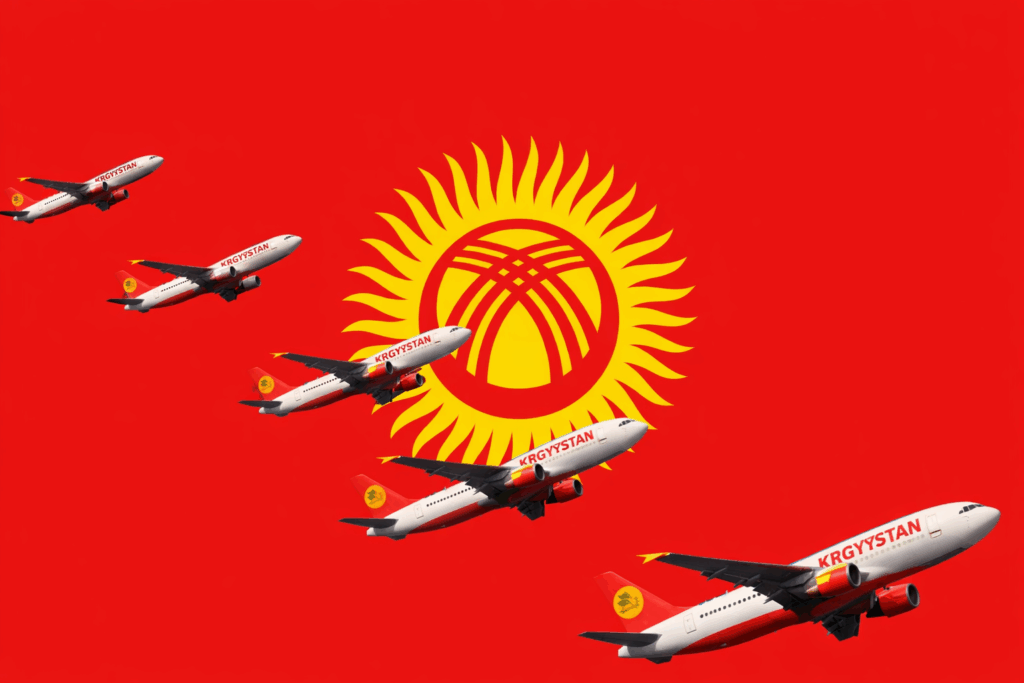
Kyrgyzstan says it is close to ending a near two-decade ban that has kept its airlines off European routes, after President Sadyr Japarov said the country has reached a “critical point” in efforts to leave the European Union’s air safety blacklist. The comments come as Kyrgyz officials push for international recognition of reforms in aviation oversight and airport infrastructure. Japarov said Kyrgyzstan has been developing civil aviation “on its own initiative,” investing “billions of soms,” buying aircraft for domestic and international routes, and building new airports. He described the effort as a state priority and added: “Kyrgyzstan has reached a critical point in its exit from the European Union’s ‘blacklist’… with God’s help, the skies of Europe will open to Kyrgyzstan.” The EU Air Safety List is the bloc’s mechanism for restricting airlines that, in the EU’s assessment, do not meet international safety standards. Airlines on the list are banned from operating “to, in and from the EU,” and the EU can also apply restrictions to all carriers certified in a country if national oversight is deemed inadequate, according to the European Commission’s official Q&A on the EU Air Safety List. Updates are prepared with support from the EU Air Safety Committee and the European Union Aviation Safety Agency (EASA), and are based on standards set through the International Civil Aviation Organization (ICAO), the Commission says. Kyrgyz airlines have been on the EU list since 2006. The EU’s most recent comprehensive update, published on December 8, 2025, still includes Kyrgyzstan among the countries whose airlines are banned because of “a lack of safety oversight by the aviation authorities,” according to the Commission’s December 2025 materials and the linked EU Air Safety List documentation. Kyrgyz airlines would be allowed to apply for operations linked to the European Union if the country is removed from the EU Air Safety List. Any carrier seeking to fly to, from, or within the EU needs to meet European safety requirements, including obtaining Third Country Operator authorization from the European Union Aviation Safety Agency, according to the European Commission’s air safety rules. Kyrgyzstan’s public messaging has framed the potential removal as an economic lever, with Japarov stating it would support tourism, attract investment, and improve the country’s international image. It could also lead to more direct scheduled flights between Kyrgyzstan and EU destinations, rather than relying on connections via third countries. The EU has not announced a decision to remove Kyrgyzstan, and any change would require a formal update to the list after technical review. Past EU updates show that changes can cut both ways. In June 2025, for example, the Commission added all carriers certified in Suriname and Tanzania after identifying serious shortcomings in national oversight, in an official announcement on its Mobility and Transport site. For now, Japarov’s statement signals confidence that Kyrgyzstan believes it has supplied the documentation and reforms the EU expects. Whether that will translate into removal will depend on the EU’s technical findings and the next formal update cycle of...

From GDP to AI: EAEU Leaders Review Integration Milestones in St. Petersburg

The leaders of the Eurasian Economic Union (EAEU) gathered on December 21 at the Yeltsin Presidential Library in St. Petersburg, Russia, to assess the bloc’s progress and outline future integration priorities. The summit was attended by the leaders of EAEU member states, President of Russia, Vladimir Putin, President of Belarus, Aleksandr Lukashenko, Prime Minister of Armenia, Nikol Pashinyan, President of Kazakhstan, Kassym-Jomart Tokayev, President of Kyrgyzstan, Sadyr Zhaparov, and Chairman of the Board of the Eurasian Economic Commission, Bakytzhan Sagintayev. In an expanded format, representatives of Uzbekistan, Indonesia, Iran, and Cuba also participated. The meeting took place against the backdrop of continued global economic fragmentation, as the EAEU looks to position itself as a stable integration platform within an increasingly multipolar economic order. [caption id="attachment_41254" align="aligncenter" width="2560"] Image: Akorda[/caption] Opening the meeting, Vladimir Putin proposed a year-end review and highlighted key decisions aimed at deepening cooperation. He stated that the EAEU has solidified its position as an independent and self-sufficient center within the evolving multipolar world. Putin pointed to rising combined GDP figures and noted that EAEU membership has contributed to economic stability and improved living standards across member states. These assessments framed the EAEU not only as a regional trade bloc but as a long-term economic center adapting to shifting global alignments. [caption id="attachment_41258" align="aligncenter" width="2560"] Image: Akorda[/caption] Putin also cited progress in building the union’s payment infrastructure, removing trade barriers, and enhancing transport connectivity. Among individual economies, Kyrgyzstan stood out with a GDP growth rate of around 10%. Much of the focus, however, remained on translating macroeconomic gains into deeper market integration across energy, finance, and logistics. Belarusian President Alexander Lukashenko, addressing the summit as chair of the EAEU, called for renewed approaches to economic engagement with third countries over the next five years. He endorsed deeper ties with what he termed the “global majority,” while acknowledging existing challenges, such as delays in establishing unified energy markets and hesitancy among member states to form a common financial market. Nonetheless, he described the Union State of Russia and Belarus as the “locomotive of integration” in the post-Soviet region. The discussion highlighted a recurring tension for the bloc: expanding external partnerships while still completing core internal market harmonization. [caption id="attachment_41259" align="aligncenter" width="2560"] Image: Akorda[/caption] Kazakh President Kassym-Jomart Tokayev emphasized the EAEU's milestone year as it entered its second decade. He projected a 2% increase in the union’s combined GDP in 2025 and noted that intra-union direct investment had surpassed $20 billion. Kazakhstan alone saw a nearly sevenfold increase in EAEU-related investment from $600 million in 2015 to $4 billion in 2024. [caption id="attachment_41260" align="aligncenter" width="2560"] Image: Akorda[/caption] Tokayev also proposed the systematic integration of artificial intelligence technologies into EAEU operations, from trade forecasting to customs duties assessment. He highlighted the union’s potential as a global transport and logistics hub and advocated for the swift implementation of the Caspian Sea shipping agreement. Uzbek President Shavkat Mirziyoyev noted that Uzbekistan’s trade with EAEU countries had nearly doubled to $20 billion over its...

Japan Opens First Leaders-Level Summit With Central Asia

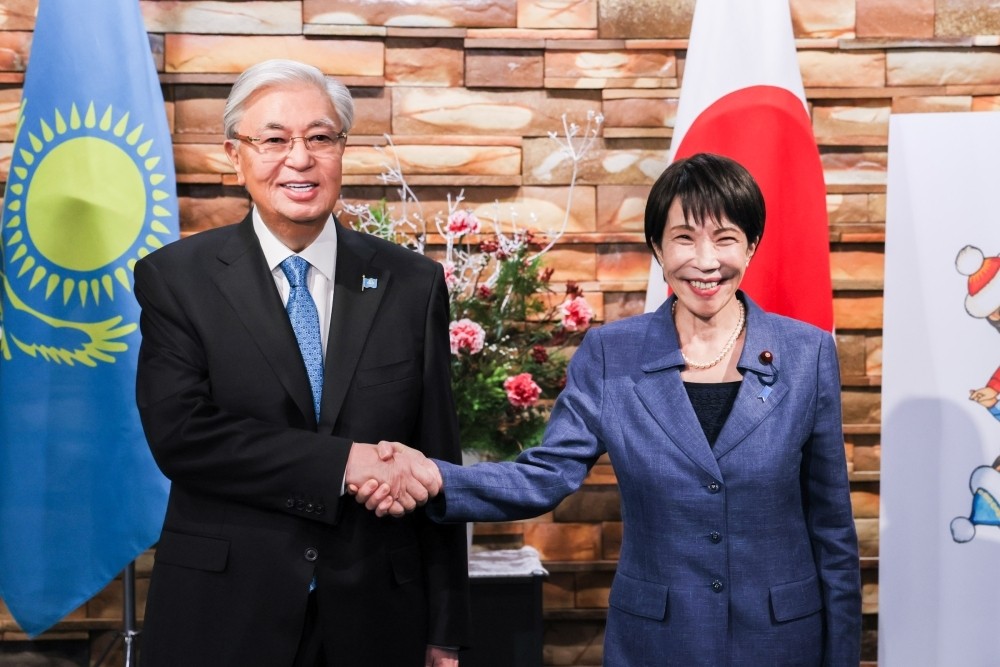
Japan hosted its first leaders-level summit with the five Central Asian republics on Friday, marking a diplomatic advance in a relationship that has existed for more than two decades but has rarely drawn wide attention. Prime Minister Sanae Takaichi opened the “Central Asia + Japan” summit in Tokyo, with discussions set to continue through December 20. The summit elevates a dialogue that until now has been conducted mainly at foreign ministers’ or senior diplomatic levels. Japan launched the original “Central Asia + Japan” initiative in 2004 to build cooperation with the Central Asian states through economic, educational, and political channels. In a bilateral meeting linked to the summit, Japanese Foreign Minister Toshimitsu Motegi met with his Tajik counterpart Sirojiddin Muhriddin, with the two sides agreeing on a cooperation program covering 2026–2028 and an investment treaty. These agreements represent the most concrete, publicly documented outcomes from the summit’s opening day and highlight Japan’s focus on strengthening bilateral ties alongside the broader multilateral dialogue. In parallel with the leaders’ meeting, Japan is hosting a “Central Asia + Japan” business forum organized by the Ministry of Economy, Trade and Industry to promote trade and private-sector cooperation. The leaders’ summit follows high-level bilateral diplomacy earlier in the week. On December 18, Prime Minister Takaichi met Kazakh President Kassym-Jomart Tokayev in Tokyo, where the two leaders signed a strategic partnership statement focused on energy, critical minerals, and expanded cooperation. Central Asia’s geopolitical significance has increased in recent years as its governments pursue multi-vector foreign policies aimed at broadening their external partnerships beyond traditional ties with Russia and China. Japan’s decision to elevate its dialogue with the region reflects this shift and Tokyo’s effort to remain an active partner amid growing engagement from the European Union, the United States, South Korea, and others. For Friday, the summit’s significance lies less in headline announcements than in its symbolism and early bilateral outcomes. The opening confirmed Japan’s intent to engage Central Asia at the highest political level, with broader commitments expected once the leaders conclude their talks and release a joint statement or action plan.

Kyrgyzstan Expands Trade Access to Afghan Market

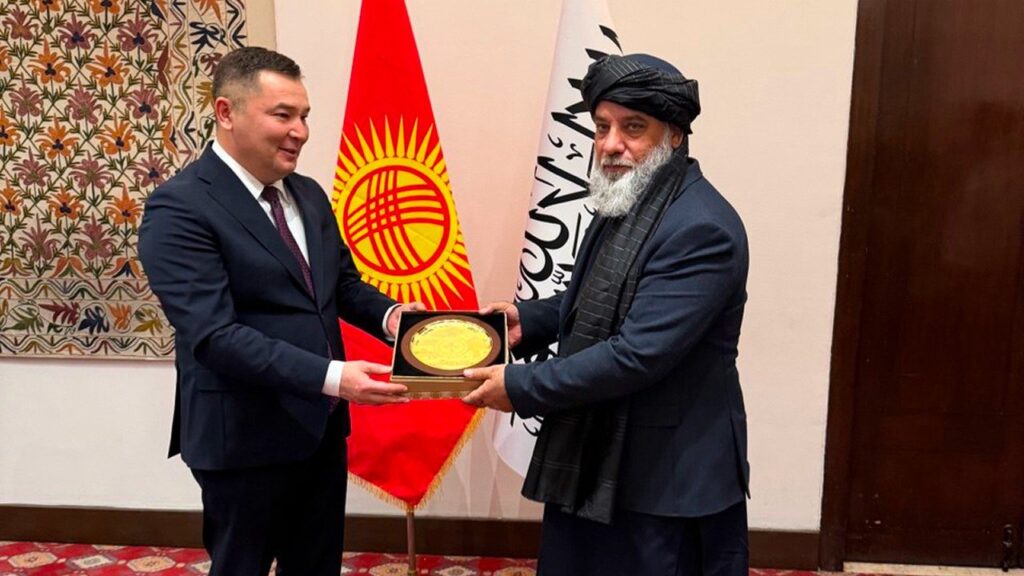
Kyrgyzstan and Afghanistan have taken a significant step toward deepening economic ties with the opening of the Trade House of the Kyrgyz Republic in Kabul on December 16. The launch ceremony was attended by Kyrgyz Minister of Economy and Commerce Bakyt Sydykov and Afghan Minister of Industry and Commerce Nooruddin Azizi. According to the Kyrgyz Ministry of Economy and Commerce, the new Trade House is intended to serve as a platform for promoting Kyrgyz exports, facilitating direct business connections between entrepreneurs from both countries, and expanding bilateral trade. The Kyrgyz delegation also participated in a Kyrgyz-Afghan business conference on December 17 in Kabul, organized by the Afghanistan Chamber of Commerce and Investment. Speaking at the event, Azizi announced Afghanistan’s intention to open its own Trade House in Bishkek, describing Afghanistan and Kyrgyzstan as “interconnected countries” with complementary positions in regional trade. He characterized Kyrgyzstan as a gateway to Central Asia and the Eurasian Economic Union, and Afghanistan as a strategic hub linking South and West Asia. The conference concluded with the signing of commercial contracts worth $157 million between Kyrgyz and Afghan companies. Bilateral trade has gained momentum since Kyrgyzstan removed the Taliban from its list of prohibited organizations in September 2024. At the time, the Kyrgyz Ministry of Foreign Affairs stated that the decision was intended to support regional stability and constructive dialogue. According to Afghanistan’s Ministry of Industry and Commerce, bilateral trade reached $66 million in the most recent solar year (March 2024-March 2025), with Afghan exports totaling $7 million. Key Afghan exports to Kyrgyzstan include aluminum and copper utensils, pressure cookers, carpets, fruits, and vegetables. Kyrgyzstan is a significant supplier of petroleum products to the Afghan market. In a further move to strengthen its regional trade presence, Kyrgyzstan secured a pavilion at the Termez International Trade Center in November 2024. Located in Termez, Uzbekistan, near the Afghan border, the Center serves as a key node in regional trade routes, particularly between Uzbekistan and Afghanistan. The Kyrgyz pavilion offers a strategic foothold to further expand access to the Afghan market.

Japan Steps Out of the Shadows With First Central Asia Leaders’ Summit

On December 19-20, Tokyo will host a landmark summit poised to reshape Eurasian cooperation. For the first time in the 20-year history of the “Central Asia + Japan” format, the dialogue is being elevated to the level of heads of state. For Japan, this represents more than a diplomatic gesture; it signals a shift from what analysts often describe as cautious “silk diplomacy” to a more substantive political and economic partnership with a region increasingly central to global competition over resources and trade routes. The summit will be chaired by Japanese Prime Minister Sanae Takaichi. The leaders of all five Central Asian states, Kazakhstan, Kyrgyzstan, Tajikistan, Turkmenistan, and Uzbekistan, have confirmed their participation. Alongside the plenary session, bilateral meetings and a parallel business forum are scheduled to take place. Why Now? Established in 2004, the “Central Asia + Japan” format has largely functioned as a platform for foreign ministers and technical cooperation. According to Esbul Sartayev, assistant professor at the Center for Global Risks at Nagasaki University, raising the dialogue to the head-of-state level marks a deliberate step by Japan to abandon its traditionally “secondary” role in a region historically dominated by Russia and China. This shift comes amid a changing geopolitical context: disrupted global supply chains, intensifying competition for critical and rare earth resources, and a growing U.S. and EU presence in Central Asia. In this environment, Tokyo is promoting a coordinated approach to global order “based on the rule of law”, a neutral-sounding phrase with clear geopolitical resonance. Unlike other external actors in Central Asia, Japan has historically emphasized long-term development financing, technology transfer, and institutional capacity-building rather than security alliances or resource extraction. Japanese engagement has focused on infrastructure quality, human capital, and governance standards, allowing Tokyo to position itself as a complementary partner rather than a rival power in the region. Economy, Logistics, and AI The summit agenda encompasses a range of priorities: sustainable development, trade and investment expansion, infrastructure and logistics, and digital technology. Notably, the summit is expected to include a new framework for artificial intelligence cooperation aimed at strengthening economic security and supply chain development. It is also likely to reference expanded infrastructure cooperation, including transport routes linking Central Asia to Europe. As a resource-dependent country, Japan sees Central Asia as part of its evolving “resource and technological realism” strategy. For the Central Asian states, this presents a chance to integrate into new global value chains without being relegated to the role of raw material suppliers. Kazakhstan: Deals Worth Billions The summit coincides with Kazakh President Kassym-Jomart Tokayev’s official visit to Japan from December 18-20. During the visit, more than 40 agreements totaling over $3.7 billion are expected to be signed. These span energy, renewables, digitalization, mining, and transport. Participants include Samruk-Kazyna, KEGOC, Kazatomprom, KTZ, and major Japanese corporations such as Marubeni, Mitsubishi Heavy Industries, Toshiba, and JOGMEC. Japan’s ambassador to Kazakhstan, Yasumasa Iijima, has referred to Kazakhstan as a future Eurasian transport and logistics hub, highlighting its strategic role in developing the Trans-Caspian...

Bishkek to Host Second B5+1 Forum of Central Asia and the U.S.

Kyrgyzstan is preparing to host the second B5+1 Forum of Central Asia and the United States, scheduled for February 4-5, 2026, in Bishkek. On December 12, Kyrgyzstan’s Ministry of Foreign Affairs and Ministry of Economy and Commerce held a joint briefing for ambassadors from Central Asian countries and the United States to outline preparations for the event. The B5+1 platform serves as the business counterpart to the C5+1 diplomatic initiative, which unites the five countries of Central Asia – Kazakhstan, Kyrgyzstan, Tajikistan, Turkmenistan, and Uzbekistan – with the United States. Launched by the Center for International Private Enterprise (CIPE) under its Improving the Business Environment in Central Asia (IBECA) program, B5+1 is supported by the U.S. Department of State and aims to foster high-level engagement between business leaders and policymakers. The upcoming forum in Bishkek builds on the outcomes of the C5+1 Summit held in Washington on November 6 this year. Its objective is to deepen U.S.-Central Asia economic cooperation and highlight the private sector’s pivotal role in advancing economic reform across the region. The event is co-hosted by CIPE and the Kyrgyz government. According to organizers, the forum’s agenda will focus on key sectors including agriculture, e-commerce, information technology, transport and logistics, tourism, banking, and critical minerals. These thematic areas reflect emerging regional priorities and shared interests in enhancing sustainable growth and economic resilience. The B5+1 Forum aims to create a platform for sustained dialogue between governments and private sector actors, encouraging the development of long-term partnerships and policy coordination. The inaugural B5+1 Forum was held in Almaty in March 2024, and brought together over 250 stakeholders from all five Central Asian countries and the United States. The first event centered on regional cooperation and connectivity, with a strong emphasis on empowering the private sector to support the objectives of the C5+1 Economic and Energy Corridors.