• KGS/USD = 0.01144 0%
  • KZT/USD = 0.00211 0%
  • TJS/USD = 0.10515 0.48%
  • UZS/USD = 0.00008 0%
  • TMT/USD = 0.28530 0%
  • KGS/USD = 0.01144 0%
  • KZT/USD = 0.00211 0%
  • TJS/USD = 0.10515 0.48%
  • UZS/USD = 0.00008 0%
  • TMT/USD = 0.28530 0%
  • KGS/USD = 0.01144 0%
  • KZT/USD = 0.00211 0%
  • TJS/USD = 0.10515 0.48%
  • UZS/USD = 0.00008 0%
  • TMT/USD = 0.28530 0%
  • KGS/USD = 0.01144 0%
  • KZT/USD = 0.00211 0%
  • TJS/USD = 0.10515 0.48%
  • UZS/USD = 0.00008 0%
  • TMT/USD = 0.28530 0%
  • KGS/USD = 0.01144 0%
  • KZT/USD = 0.00211 0%
  • TJS/USD = 0.10515 0.48%
  • UZS/USD = 0.00008 0%
  • TMT/USD = 0.28530 0%
  • KGS/USD = 0.01144 0%
  • KZT/USD = 0.00211 0%
  • TJS/USD = 0.10515 0.48%
  • UZS/USD = 0.00008 0%
  • TMT/USD = 0.28530 0%
  • KGS/USD = 0.01144 0%
  • KZT/USD = 0.00211 0%
  • TJS/USD = 0.10515 0.48%
  • UZS/USD = 0.00008 0%
  • TMT/USD = 0.28530 0%
  • KGS/USD = 0.01144 0%
  • KZT/USD = 0.00211 0%
  • TJS/USD = 0.10515 0.48%
  • UZS/USD = 0.00008 0%
  • TMT/USD = 0.28530 0%

Viewing results 301 - 306 of 748

Kyrgyzstan Reports Growing Return Migration

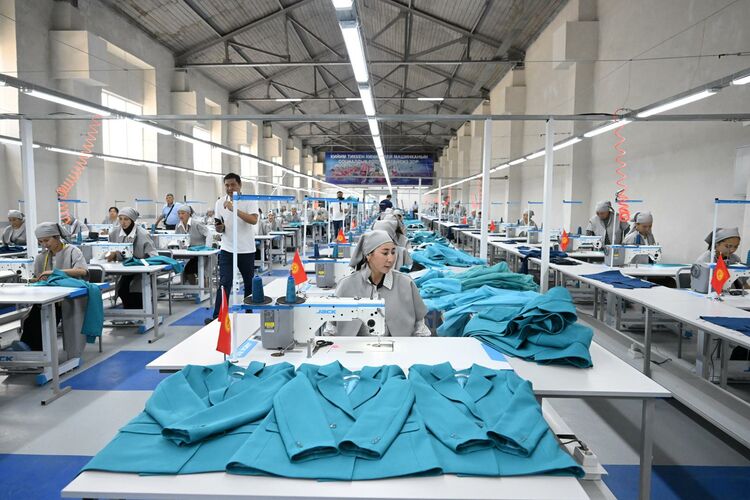
Kyrgyzstan’s Ministry of Labor, Social Security and Migration and the International Organization for Migration (IOM) announced the results of their assessment of the country’s migration trends on October 15. The statistics show that return migration increased from 2020 to April 2024, and the number of migrants returning to Kyrgyzstan is continuing to grow. The number of returning migrants increased by 85% in 2023 compared to the previous year. Kyrgyzstan’s southern Osh and Batken regions and the northern Chui region lead the figures in the number of returning labor migrants. According to the report, the number of Kyrgyz citizens who plan to migrate once again to the country from which they have just returned has decreased by half. In June, the Speaker of the Kyrgyz Parliament, Nurlanbek Shakiyev said that more Kyrgyz people are returning from abroad, and over the past two years, the numbers have reached 241,000. Shakiyev cited the opening of many new industrial enterprises in Kyrgyzstan in recent years as a reason for growing return migration, emphasizing that Kyrgyz citizens can now earn more at home. Over the past 30 years, hundreds of thousands of Kyrgyz citizens have left their homeland as labor migrants, mainly for Russia. In the last couple of years, however, there has been a growing trend of return migration largely caused by Russia's deteriorating economic situation, depreciation of the ruble, stricter rules and harsher attitudes toward Central Asian immigrants, and increasing attempts by the Russian authorities to recruit Central Asian immigrants (with or without Russian passports) to join Russian troops fighting in Ukraine. According to a 2022 census by Kyrgyzstan’s National Statistics Committee, more than 876,000 Kyrgyz citizens (close to 15% of the country’s population) migrated abroad. The top five destination countries for Kyrgyz migrants were Russia (870,304), Kazakhstan (2,158), Turkey (1,828), Germany (336), and South Korea (240). The IOM report states that 328,458 Kyrgyz nationals have lived abroad since 2020. As of 2023, 79% live in Russia, 4.5% in Kazakhstan, and 4% in Turkey. According to the report, the primary drivers of migration were dissatisfaction with wages in Kyrgyzstan (26%), lack of job opportunities (17%), financial difficulties and debts (16%), and a perceived lack of prosperity in their homeland (10%). According to the National Bank of the Kyrgyz Republic, in 2023, remittances from Kyrgyz labor migrants totaled $2.144 billion, compared to $1.873 billion in 2022.

Tajikistan’s Acute Hunger Issue

Tajikistan has been recognized as the hungriest country among the former Soviet republics. According to the Global Hunger Index prepared by the International Food Policy Institute, 8.7% of the country's population faces food shortages, and ranked 65th out of 127 countries in the world, is on par with countries such as Nicaragua and Ghana. Lower index scores equal less food problems. Assessments of hunger are based on child mortality, stunting, and wasting and in recent years, Tajikistan has consistently ranked lowest among post-Soviet countries in the Global Hunger Index. Despite attempts to improve the situation, the country remains one of the most vulnerable in the region. Today, 18.4% of children under five are stunted due to malnutrition, 5.1% are wasted, and 3% of children do not survive to the age of five; all indicative of  serious food security problems in the country. According to the Global Hunger Index, malnutrition varies widely across the former Soviet Union. The best results are demonstrated by Uzbekistan, which ranks first among countries with minimal hunger issues. In the republic, less than 2.5% of the population faces food shortages. Stunting affects 6.5% of children; wasting ,2.4% of children, and infant mortality does not exceed 3.1%. Uzbekistan was the only Central Asian country to rank highly among the 22 former Soviet republics with the lowest hunger rates, including Belarus, Estonia, Latvia, Lithuania, Russia, and Georgia. Belarus and Lithuania consistently demonstrate a high level of food security, making them among the leaders of the former Soviet republics. Armenia and Kazakhstan, in contrast, rank 23rd and 25th, respectively, demonstrating moderate nutritional problems among the population. Moldova, ranked 26th, has a similar situation: malnutrition remains relatively low but requires attention. Kyrgyzstan ranks 36th and Ukraine 46th, indicating average hunger levels. Turkmenistan was ranked 50th. The situation is particularly dire in Africa, which tops the list of countries with the most significant hunger problems. South Sudan, Burundi, Somalia, Yemen, and Chad, recognized as the hungriest countries in the world, experience extremely high rates of child mortality and malnutrition among their populations.

Kazakhstan, Kyrgyzstan and Uzbekistan Determine Operating Mode for Toktogul Reservoir

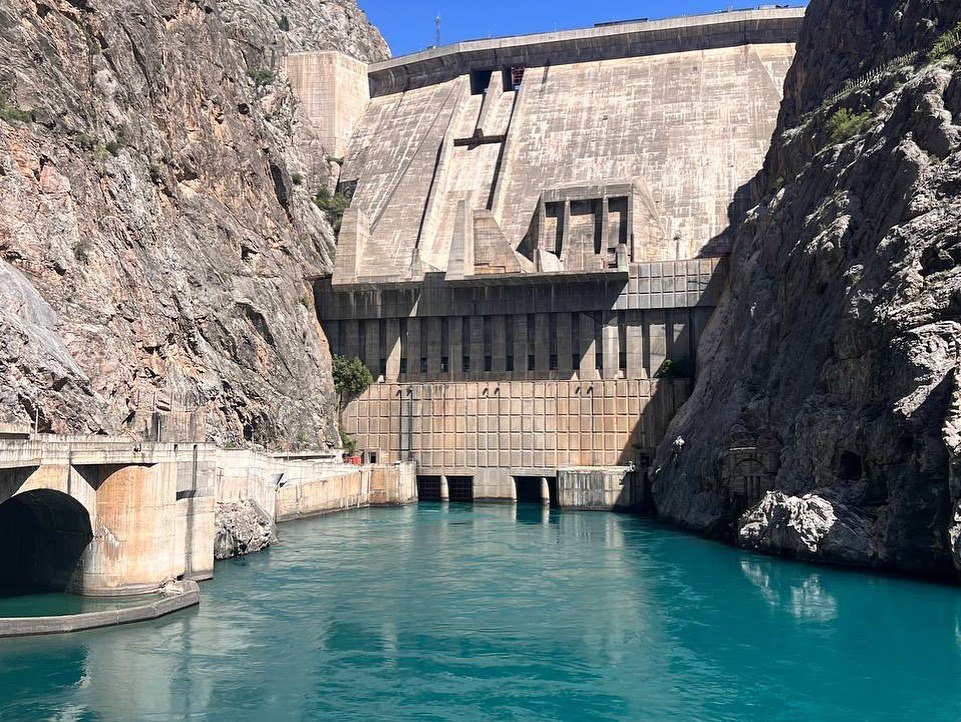
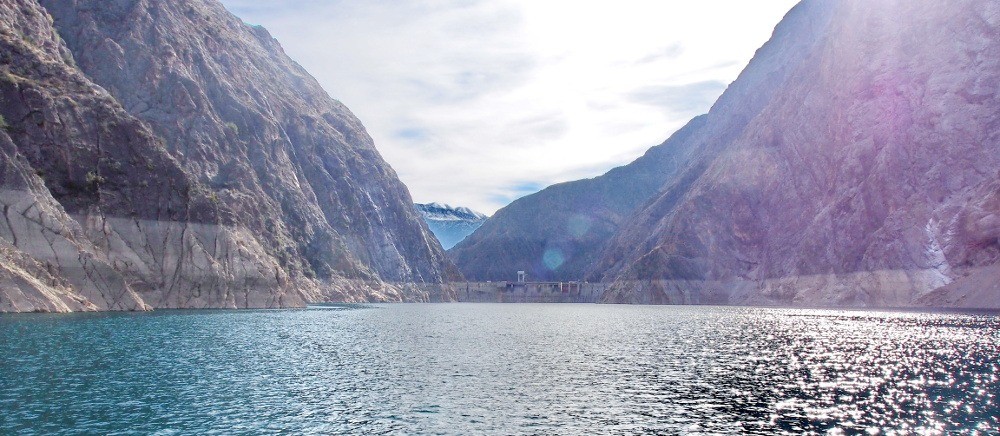
Following a meeting in Tashkent to coordinate the region's water and energy balance, ministers from Kazakhstan, Kyrgyzstan, and Uzbekistan determined a preliminary operating mode for Kyrgyzstan’s Toktogul reservoir for the autumn-winter period. Kyrgyzstan’s largest Toktogul hydroelectric power plant (HPP) reservoir on the Naryn River releases water downstream to Kazakhstan and Uzbekistan providing essential irrigation for fields in Kazakhstan's dry southern regions. In winter, the plant which produces around 40% of Kyrgyzstan’s electricity, releases more water to generate electricity to meet the country’s power shortages. Kazakhstan and Uzbekistan are now interested in helping Kyrgyzstan maintain a sufficient volume of water in the Toktogul reservoir for use during the 2025 irrigation season; a goal which could be achieved by exporting Kazakh and Uzbek electricity to Kyrgyzstan during the winter months. Commenting on the proposal, Kazakhstan’s Minister of Water Resources and Irrigation Nurzhan Nurzhigitov, stated: "An important area of cooperation for our countries is the water and energy sector. This year has become a vivid example of deepening such regional cooperation. We [Kazakhstan] have met our water needs thanks to the joint measures. For a downstream country, this is extremely important. First, it is used to fill the North Aral Sea. We will continue to adhere to the agreements reached for the autumn-winter period to provide farmers with irrigation water next year." The Kazakh Ministry of Water Resources and Irrigation announced on October 14 that the irrigation season had ended in all regions of the country and during the growing season, from April 1,  the Ministry supplied Kazakhstan's farmers with about 11.2 billion cubic meters of water.  Nurzhigitov also drew attention to the vital role of water diplomacy in preventing a shortage of irrigation water this year, with  Kyrgyzstan, Tajikistan, and Uzbekistan sending more water to Kazakhstan than planned. As previously  reported by The Times of Central Asia the Toktogul reservoir accumulated more water this year than last.

Donor Delegation Visits Kyrgyzstan to Assess Progress on Kambarata-1 HPP

As reported by the Kyrgyz Ministry of Energy, on October 7-11 Kyrgyzstan received a delegation from the Donor Coordination Committee for the construction of the flagship Kambarata-1 Hydropower Plant (HPP) comprising representatives of the World Bank, the Asian Development Bank, the Islamic Development Bank, the European Union, the European Investment Bank, the United States Agency for International Development, and the UK Foreign, Commonwealth & Development Office. The Committee, established at the Kyrgyz Republic International Energy Investment Forum, in Vienna on June 10, 2024, comprises major international financial institutions and development partners, including the World Bank, the OPEC Fund, the Asian Development Bank, the Asian Infrastructure Investment Bank, the Islamic Development Bank, and the European Bank for Reconstruction and Development. The Kambarata-1 HPP, with a projected capacity of  1,860 megawatts and an average annual generation of 5.6 billion kilowatt-hours of electricity, is to be constructed at preliminary  cost exceeding $4 billion in the upper reaches of the Naryn River in Kyrgyzstan. Once completed, the largest hydropower plant in Kyrgyzstan is expected to end the country’s electricity shortages. In addition, the ambitious project, jointly implemented with Kazakhstan and Uzbekistan, aims to strengthen cooperation within Central Asia in water and energy resource management. During their visit, delegates reviewed progress on the Kambarata-1 HPP and in addition, met Kyrgyz Minister of Energy Taalaibek Ibrayev and representatives of Kazakhstan and Uzbekistan to discuss and establish a mechanism for regular consultations and data exchange to ensure effective cooperation on the project. Last month, Minister Ibrayev reported significant progress on the development of the HPP construction and said that all preparatory stages will be completed by next May. Early in September, Kyrgyzstan’s Cabinet of Ministers and the World Bank organized a roundtable on the selection of a dam for the Kambarata-1 HPP. The Swiss engineering company AFRY proposed various options for the project, and based on the type of dam chosen, the Kyrgyz Ministry of Energy stated that a feasibility study would be prepared by May 2025.

Ambassador of Taliban-led Afghanistan Starts Work in Uzbekistan

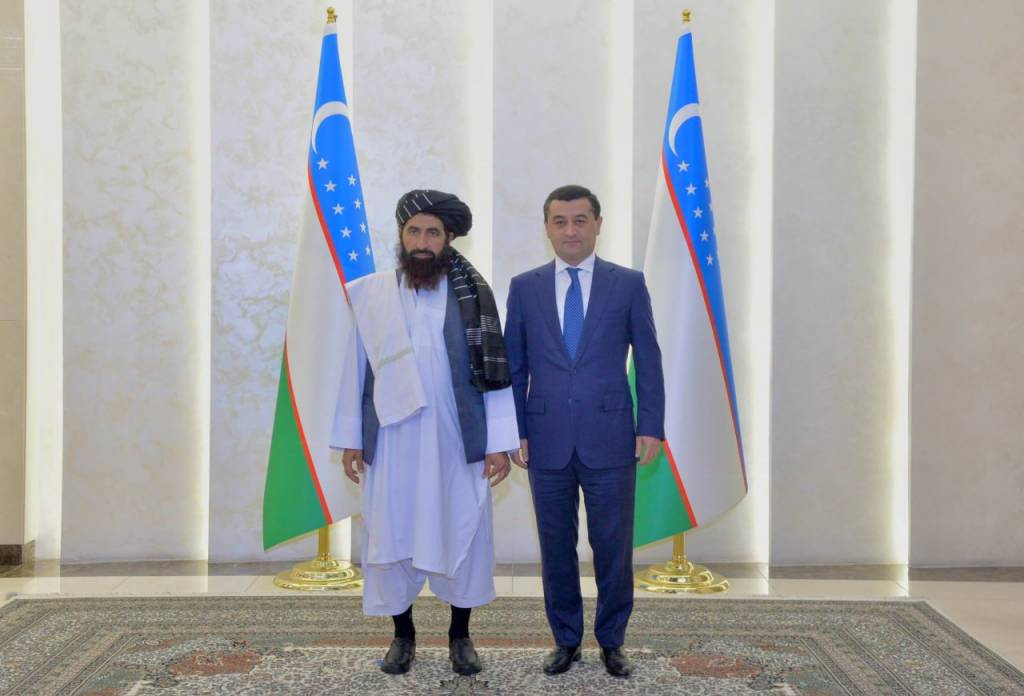
Uzbekistan’s Ministry of Foreign Affairs has reported that on October 9, Foreign Minister Bakhtiyor Saidov received Abdul Ghafar Terawi, the new head of Afghanistan’s diplomatic mission to Uzbekistan, in Tashkent. During talks, both parties emphasized the need to enhance relations between Uzbekistan and Afghanistan, realize the untapped potential of cooperation, and develop new projects to serve the interests of their people. The ambassador expressed gratitude on behalf of Afghanistan for the ongoing assistance provided by Uzbekistan. Speaking at the 79th session of the United Nations General Assembly late in September, Uzbek Foreign Minister Saidov stated that Afghanistan is an integral part of Central Asia and addressing the Afghan problem is  key to ensuring stability and sustainable development in the region. “Uzbekistan is pursuing a pragmatic policy towards Afghanistan. We will continue to contribute to Afghanistan’s economic reconstruction and the development of its transport and energy infrastructure,” announced the Uzbek foreign minister. He also commended Uzbekistan's implementation of the ambitious construction of the Trans-Afghan railway,  which by providing  access to global ports, will have a positive impact on the economic development of the vast region. The minister emphasized that the International Trade Center, recently established in the Uzbek city of Termez on the Afghan border, was designed to foster a favorable business environment and enhance logistics, and added that Uzbekistan is ready to expand the Educational Center for Afghan citizens in Termez into a global training center. Afghanistan’s TOLOnews earlier reported that China and the United Arab Emirates had also officially accepted ambassadors from the Taliban-led Afghan government. Early in September, Kyrgyzstan’s Ministry of Foreign Affairs announced a decision to remove the Taliban from the list of prohibited organizations within the territory of the Kyrgyz Republic. The Ministry emphasized that the removal of the Taliban, the unrecognized group that effectively controls Afghanistan, from the list of banned terrorist organizations aims to enhance regional stability and support ongoing dialogue. Early in June, Kazakhstan’s President Kassym-Jomart Tokayev announced that his country had removed the Taliban from its list of terrorist organizations, stressing that the move was made to develop trade and economic ties with Taliban-led Afghanistan, and in late August, Kazakhstan’s Foreign Ministry accredited a chargé d’affaires of Taliban-led Afghanistan to expand trade, economic, and humanitarian cooperation between the two countries.

Kyrgyzstan Encourages German Investment in Raw Materials Extraction and Logistics

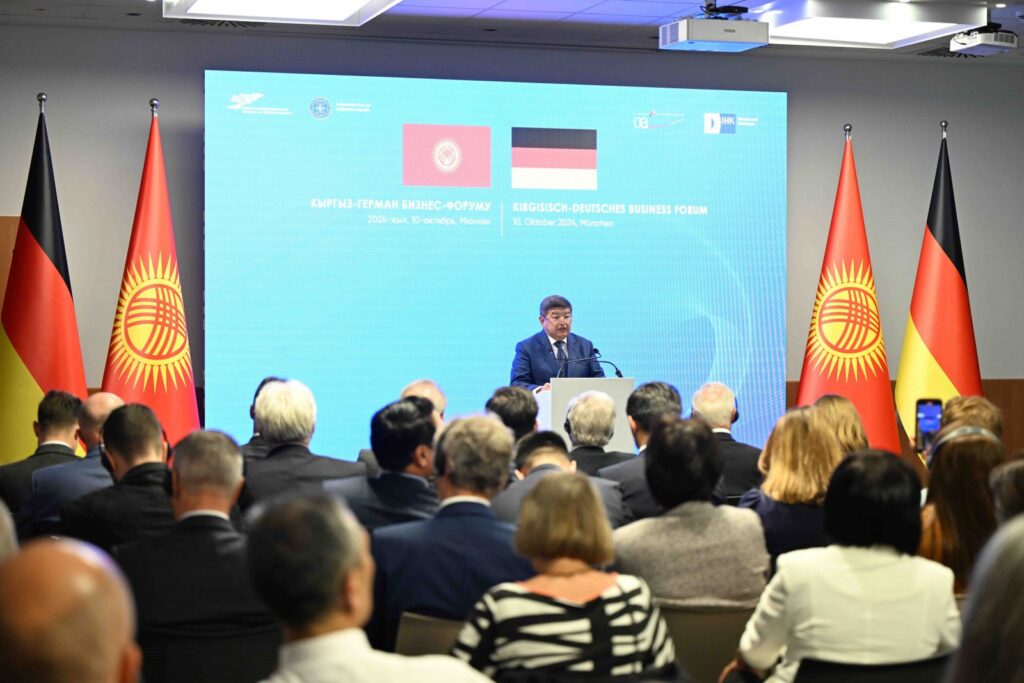
During a Kyrgyz-German Business Forum in Munich on October 10, Kyrgyzstan’s Chairman of the Cabinet of Ministers, Akylbek Japarov, stated that  following the first Kyrgyz-German Business Forum in Hamburg over a year ago, bilateral relations between the two countries had strengthened alongside a mutual interest in deepening cooperation. Japarov cited the fact that 180 joint Kyrgyz-German enterprises are currently engaged in Kyrgyzstan’s trade, industry, agriculture, tourism, energy, education, and services sectors, and to encourage further  German investment and  participation in implementing the government’s ambitious economic development plans, invited businesses to attend the ‘Day of German Economy in Kyrgyzstan.’ Scheduled for summer 2025, the event follows three 'Days of Kyrgyz Economy' in Hamburg, Frankfurt am Main, and Munich. Addressing the forum, Kyrgyz Minister of Economy and Commerce Daniyar Amangeldiev spoke of Kyrgyzstan's interest in developing cooperation with Germany on raw materials, with reference to the presence of  100 raw material deposits in Kyrgyzstan. In addition, he proposed that German investors participate in auctions to gain the right to use the subsoil in Kyrgyzstan and develop deposits using modern technologies that comply with environmental standards. The minister also touched upon the development of transport and logistics infrastructure and invited German companies to collaborate in the development of Kyrgyzstan's logistics system, stating: "Kyrgyzstan, located in the heart of Central Asia, is  ‘landlocked’. At the same time, the Great Silk Road — a trade route between West and East, North and South — has been passing through our country since ancient times. Therefore, our country should rightfully be called ‘land connecting,’”