• KZT/USD = 0.00219
  • TJS/USD = 0.10800
  • UZS/USD = 0.00009
  • TMT/USD = 0.29850
  • KZT/USD = 0.00219
  • TJS/USD = 0.10800
  • UZS/USD = 0.00009
  • TMT/USD = 0.29850
  • KZT/USD = 0.00219
  • TJS/USD = 0.10800
  • UZS/USD = 0.00009
  • TMT/USD = 0.29850
  • KZT/USD = 0.00219
  • TJS/USD = 0.10800
  • UZS/USD = 0.00009
  • TMT/USD = 0.29850
  • KZT/USD = 0.00219
  • TJS/USD = 0.10800
  • UZS/USD = 0.00009
  • TMT/USD = 0.29850
  • KZT/USD = 0.00219
  • TJS/USD = 0.10800
  • UZS/USD = 0.00009
  • TMT/USD = 0.29850
  • KZT/USD = 0.00219
  • TJS/USD = 0.10800
  • UZS/USD = 0.00009
  • TMT/USD = 0.29850
  • KZT/USD = 0.00219
  • TJS/USD = 0.10800
  • UZS/USD = 0.00009
  • TMT/USD = 0.29850
07 September 2026

Viewing results 13 - 18 of 407

Kyrgyzstan Opens New Border Post Near Uzbekistan in Batken Region

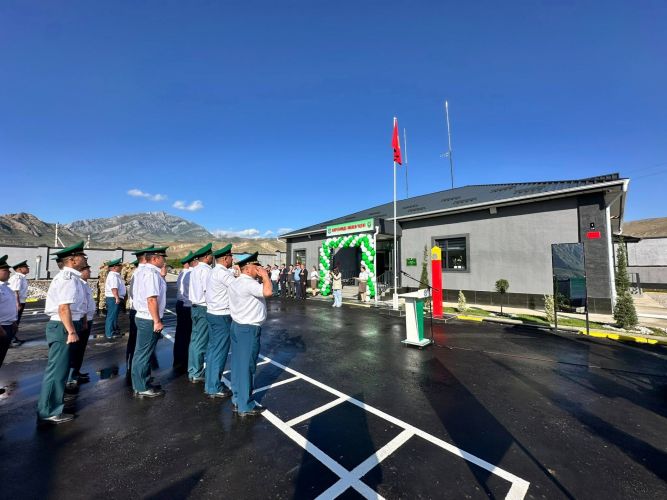
A new border post has opened in Kyrgyzstan’s Batken region near the border with Uzbekistan, as authorities continue efforts to improve security infrastructure in sensitive frontier areas, according to 24.kg news agency. The opening ceremony for the Sogment border post took place in the village of Sogment in Batken district. The facility is part of the Charbak border outpost under the Batken regional department of Kyrgyzstan’s State Border Service. The presidential representative’s office in Batken region said the ceremony was attended online by Abdikarim Alimbaev, chairman of Kyrgyzstan’s State Border Service, while local officials, border guards, and regional authorities gathered at the site. Among those present was Mamyrzhan Rakhimov, the presidential representative in Batken region. Officials congratulated border guards on Border Guards’ Day, which is marked in Kyrgyzstan on May 28, and described the opening of the new facility as an important step toward improving national security and maintaining stability in border areas. According to local authorities, the post includes modern barracks and other facilities designed to support border personnel stationed in the area. Border guards assigned to the sector are responsible for monitoring more than 12 kilometers of the Kyrgyzstan-Uzbekistan state border. The report noted that several additional border facilities were also inaugurated across Kyrgyzstan on the same day. The opening comes amid broader efforts by Central Asian states to improve border cooperation following years of tensions and unresolved territorial disputes in the region. On March 31, 2025, the presidents of Kyrgyzstan, Tajikistan, and Uzbekistan signed a landmark agreement defining the junction point of the three countries’ borders during a summit in Khujand, Tajikistan. The agreement was signed by Sadyr Japarov, Emomali Rahmon, and Shavkat Mirziyoyev. In May this year, Japarov also visited the newly established Dostuk, or Friendship, Stele in Batken region near the tri-border area. The monument symbolizes the settlement of long-standing border issues and a new phase of regional cooperation among the three neighboring states. During that visit, Kyrgyz authorities also presented plans for the proposed Dostuk International Trade and Economic Park, a cross-border development project intended to strengthen trade, logistics, and investment ties in the region.
Kyrgyzstan Seeks Foreign Teachers to Ease Education Staff Shortage

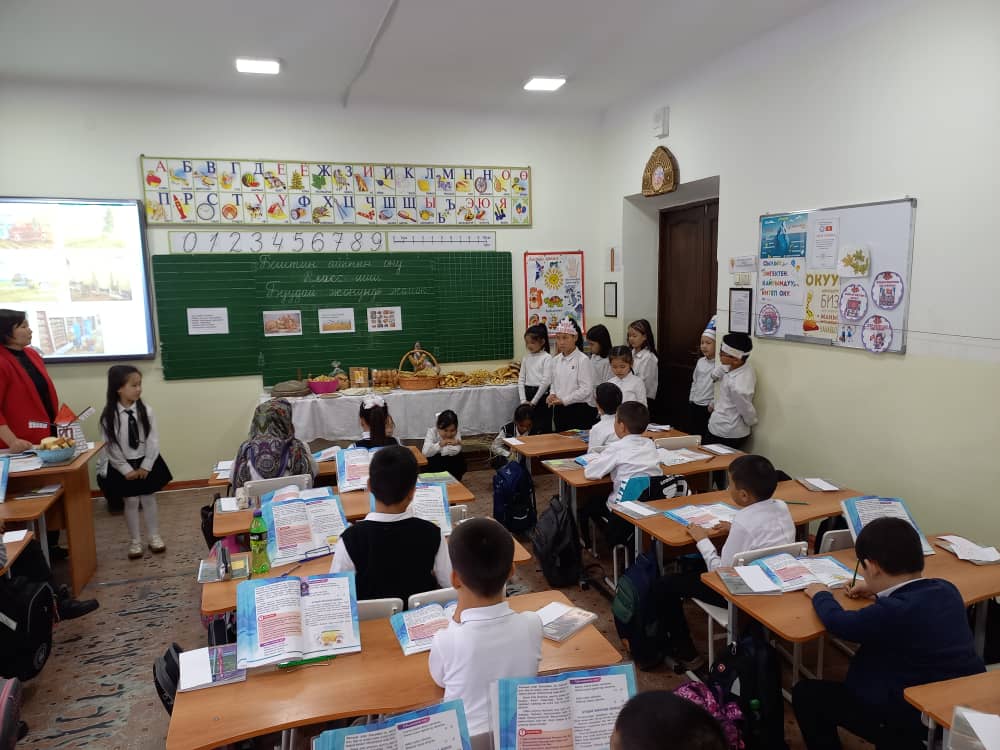
A group of deputies in Kyrgyzstan’s Jogorku Kenesh, the national parliament, has drafted legislative amendments aimed at attracting foreign teachers and modernizing the country’s educational infrastructure through new legal and economic incentives. The proposed amendments were submitted for parliamentary consideration. Under the draft legislation, foreign teachers working in Kyrgyzstan would be exempt from income tax and mandatory social security payments. The bill would also grant foreign educators the right to obtain temporary residence permits. Additional measures include tax incentives for educational institutions and exemptions from value-added tax (VAT) on imported educational equipment. The authors of the amendments argue that modernizing Kyrgyzstan’s education system will require the introduction of international teaching standards, digital technologies, and updated educational programs. They say the process will also require the involvement of highly qualified specialists, including foreign teachers with international experience. According to the lawmakers, the proposed legislation is intended to help implement advanced teaching methods and global educational practices, improve student training, create a more competitive academic environment, and strengthen the intellectual potential of younger generations without requiring students to study abroad. The bill’s explanatory note states that a shortage of qualified teachers in schools and universities remains one of the key challenges facing Kyrgyzstan’s education system. The shortage comes as the country experiences a steady increase in student numbers and mounting pressure on educational infrastructure. According to official figures cited in the draft legislation, Kyrgyzstan had 2,175 public schools and 219 private schools in 2025, serving a total of 1,526,800 students with 108,006 teaching staff. The country also has 32 public universities and 41 private universities.

Tashiyev Charged as Kyrgyzstan’s Elite Rift Deepens

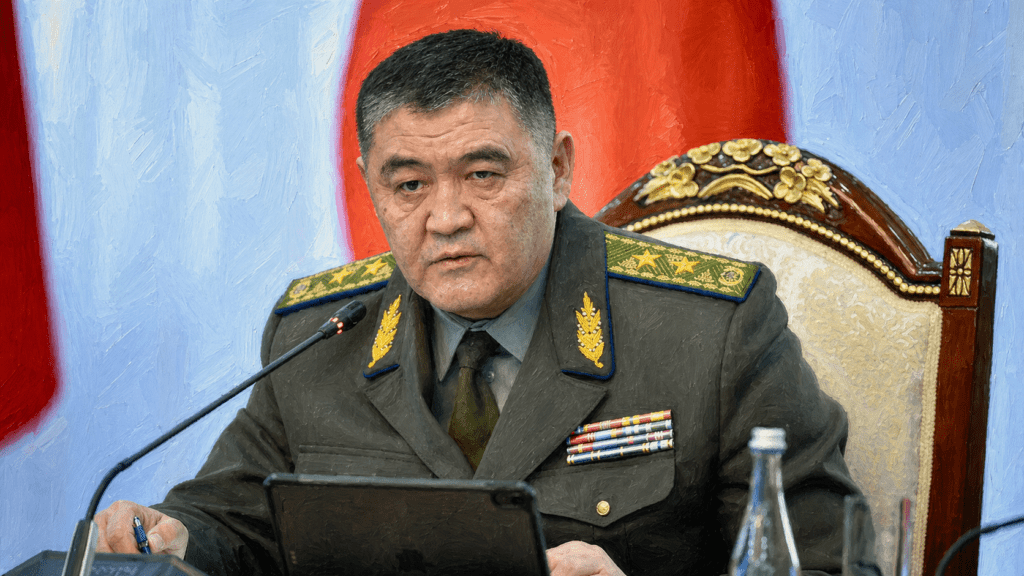
Former head of Kyrgyzstan’s State Committee for National Security (GKNB), Kamchybek Tashiyev, has been charged under two articles of the criminal code, his lawyer said, amid signs of escalating political tension in the country. According to defense attorney Ikramidin Aitkulov, Tashiyev faces charges under Article 326, concerning forcible seizure or retention of power and actions aimed at forcibly changing the constitutional order, and Article 337, concerning abuse of office. The latter charge relates to alleged actions carried out for personal gain or for the benefit of others, and to conduct by a senior public official. A restraint measure has been imposed on Tashiyev in the form of a written undertaking not to leave his place of residence. After questioning at the Interior Ministry, he left the building late on April 29. His lawyer said the former official denies all charges. Tashiyev said he intends to defend himself through legal means. “I am innocent and, God willing, I will be acquitted,” he said in a statement. He also urged his supporters to remain calm and act within the law. Media reports suggest that former Prosecutor General Kurmankul Zulushev and former parliamentary speaker Nurlanbek Turgunbek uulu may also be linked to the same case, though their legal status remains unclear. The Interior Ministry has not publicly confirmed or denied reports that they were questioned. President Sadyr Japarov has previously said that any potential involvement by Tashiyev in the so-called “Letter of 75” should be determined by investigators and the courts. The letter, made public in February, urged Japarov and parliament to initiate an early presidential election, citing ambiguity over whether his current term should be treated under the six-year term in force at the time of his 2021 election or the five-year term introduced by the constitution adopted later that year. Tashiyev’s fall has been one of Kyrgyzstan’s most significant political ruptures since Japarov came to power after the 2020 upheaval. The two men had long been seen as the central tandem in Kyrgyz politics, with Japarov controlling the presidency and Tashiyev heading the security apparatus. That arrangement ended on February 10, when Japarov dismissed Tashiyev as GKNB chairman and deputy chairman of the Cabinet of Ministers. The official explanation was that the decision had been taken “in the interests of the state” and to prevent a split in society. The move was followed by a wider reshuffle inside the security services and parliament, where figures seen as close to Tashiyev came under pressure. The Times of Central Asia previously reported that Japarov’s decision appeared to have broken the Japarov-Tashiyev tandem that had shaped the country’s power structure since 2020. The political pressure on Tashiyev’s network intensified in March and April. Tashiyev returned to Kyrgyzstan in March after more than a month abroad and was questioned by the Interior Ministry in connection with Kyrgyzneftegaz, the state oil company. TCA previously reported that the State Tax Service had revived allegations involving the company and private entities linked to Tashiyev’s relatives or associates, while...

Japarov, Tashiyev, and the Kompromat War

Kyrgyzstan has seen three revolutions since 2005. It has been a politically active country since becoming independent in late 1991, when the Soviet Union collapsed. But since the current President Sadyr Japarov came to power after the 2020 revolution, he and his long-time friend and security chief, Kamchybek Tashiyev, have stifled expressions of public discontent. For the last five years, Kyrgyzstan’s political scene has been uncharacteristically quiet. But events since Japarov sacked Tashiyev on February 10 have raised speculation that a fierce political battle between the two powerful men now looms ahead for the country. Japarov has already fired the first shots. Accusations of corruption against Tashiyev and his family have led to arrests. But two can play at that game, and the former security likely has compromising information about Japarov and his family. “You Can't Cook Two Sheep's Heads in One Cauldron” The February 10 announcement of Tashiyev’s firing was arguably Kyrgyzstan’s biggest political shock since the October 2020 revolution that saw Japarov go from a prison cell to simultaneously occupying the posts of prime minister and president within ten days. The two had been friends for decades, they started their political careers about the same time, and both quickly rose through the ranks of government during the presidency of Kurmanbek Bakiyev, who was ousted in the 2010 revolution. The day after he was confirmed as president, Japarov appointed Tashiyev to be head of the State Committee for National Security (GKNB). The day before Tashiyev was sacked, a group of 75 prominent figures, who included former government officials, released an open letter to President Japarov and the speaker of parliament calling for an early presidential election. The group pointed to the discrepancy over whether Japarov was serving the six-year presidential term mandated in the 2010 constitution or the five-year term stipulated in the constitution adopted in April 2021, three months after the snap presidential election that Japarov won. It quickly became apparent that Tashiyev’s dismissal and the letter were connected. The same day Tashiyev was fired, so were several top GKNB officials, with the sacking of officials said to be close to Tashiyev continuing for days. Japarov’s spokesman said it was necessary to “prevent a split in society.” However, Japarov has avoided any detailed explanation of the reasons for the many changes and repeatedly described Tashiyev as a friend. Member of Parliament Elvira Surabaldiyeva, in an April 24 interview with a Kazakh journalist, said Tashiyev was dismissed because he was planning a coup and had been preparing it for a long time. “The president is going through a very difficult time right now, because his longtime friend tried to remove him from office,” Surabaldiyeva said, and added, “There's a saying: ‘You can't cook two sheep's heads in one cauldron.’ This seems to be exactly the case.” Kompromat Tashiyev was out of Kyrgyzstan when the news broke that he had been fired. He briefly returned on February 13, leaving again on February 17. He returned on March 19 and the...

Kazakhstan’s Regional Ecological Summit 2026: What It Is and Why It Matters

Kazakhstan’s Regional Ecological Summit 2026 in Astana on April 22-24 is aiming to turn Central Asia’s environmental strain into a regional political agenda. Organized in partnership with the United Nations, the summit is built around the theme, “Shared Vision for a Resilient Future.” Its stated purpose is to bring together governments, international organizations, lenders, businesses, researchers, and civil society to push for joint and practical responses to climate and ecological pressures across the region. President Kassym-Jomart Tokayev first proposed hosting a regional climate summit in Kazakhstan under UN auspices during his 2023 speech at the 78th session of the UN General Assembly. By 2026, that idea had broadened into a wider environmental summit covering climate transition, adaptation, food security, natural resource management, air pollution, waste, finance, and environmental skills. The official key thematic directions show that this is no longer a narrowly framed climate conference. It is being presented as a broader Central Asian platform for ecological cooperation. In Central Asia, ecological stress now shapes core state concerns, from farming and energy to public health and cross-border cooperation. That gives the Astana summit a broader role than a standard environment conference. That shift reflects real regional pressures. Central Asia faces chronic water stress, glacier retreat, desertification, air pollution, and growing strain on ecosystems. The summit’s organizers say the meeting is meant to produce joint solutions rather than another round of abstract pledges. The UN in Kazakhstan says the summit is expected to advance shared regional responses and identify green financing needs, while a second UN page states that one planned outcome is a Joint Declaration by the heads of state of Central Asia, alongside a 2026-2030 Programme of Action developed with the United Nations. Tokayev’s own language explains the summit’s pitch. On August 5, 2025, speaking at the Third United Nations Conference on Landlocked Developing Countries in Awaza, Turkmenistan, he said, “Many developing countries without access to the sea are facing water scarcity, glacier melt, desertification, and other extreme weather events. Addressing these challenges requires coordinated regional efforts and strong international support. At the same time, I believe that measures to combat climate change must remain balanced and inclusive, and respond to the legitimate development needs of countries. To strengthen our joint efforts in addressing climate change, I invite you to the Regional Ecological Summit, which will be held in Astana in partnership with the United Nations.” The wording shows how Kazakhstan wants to frame the event. Central Asia’s environmental problems cross borders, but the response, in Tokayev’s view, must also accommodate growth, infrastructure, and development. That is why the summit is being presented not just as a climate gathering, but as a forum linking ecological policy, investment, technology, and state planning. The EXPO component is part of that design. Government and investment-promotion pages say the parallel exhibition will focus on green technologies, ESG tools, and practical climate solutions, linking diplomacy to project finance and implementation. The summit’s speaker list underlines its international reach. The official RES 2026 page includes...

AI Will Help the Kyrgyz Parliament Speed Up the Legislative Process

The Jogorku Kenesh (Parliament of Kyrgyzstan) is introducing the e-Kenesh digital platform, which is intended to move parliamentary committee work into an electronic format and use artificial intelligence to help analyze draft legislation. According to the parliament’s press service, the platform is designed to replace paper-based workflows and provide lawmakers with access to all agenda materials via tablets already distributed to deputies. The software was developed by local specialists in cooperation with parliamentary staff. The e-Kenesh system will also allow civil servants and experts to participate in committee meetings remotely, joining discussions from their workplaces or while on official travel. Parliament says this should make participation easier for officials and experts and improve coordination around committee work. At the same time, key speakers will continue to attend meetings in person to respond to lawmakers’ questions. The platform is intended to make committee work and legislative tracking more transparent. Users will be able to track the history of each issue, including deliberations, decisions, authorship of legislative initiatives, and voting records. One of e-Kenesh’s new features is an AI module that can analyze draft laws and generate short summaries. This will help deputies quickly navigate documents and better understand the objectives of proposed legislation. “You will be able to see which issue was considered and when, as well as what decisions were made. It will also show which MP submitted a proposal and how they voted. Additionally, the app will provide a brief summary of each bill. Artificial intelligence is also being implemented to analyze bills and explain their content and objectives,” said Parliament Speaker Marlen Mamataliev. According to the Speaker, starting next week, all parliamentary committees are expected to fully abandon paper documents and transition to electronic document management. The shift reflects Kyrgyzstan’s broader push to digitize public administration and streamline legislative work. Developers noted that the system will continue to be refined during implementation, with any technical issues addressed as they arise.