• KZT/USD = 0.00220
  • TJS/USD = 0.10850
  • UZS/USD = 0.00008
  • TMT/USD = 0.29760
  • KZT/USD = 0.00220
  • TJS/USD = 0.10850
  • UZS/USD = 0.00008
  • TMT/USD = 0.29760
  • KZT/USD = 0.00220
  • TJS/USD = 0.10850
  • UZS/USD = 0.00008
  • TMT/USD = 0.29760
  • KZT/USD = 0.00220
  • TJS/USD = 0.10850
  • UZS/USD = 0.00008
  • TMT/USD = 0.29760
  • KZT/USD = 0.00220
  • TJS/USD = 0.10850
  • UZS/USD = 0.00008
  • TMT/USD = 0.29760
  • KZT/USD = 0.00220
  • TJS/USD = 0.10850
  • UZS/USD = 0.00008
  • TMT/USD = 0.29760
  • KZT/USD = 0.00220
  • TJS/USD = 0.10850
  • UZS/USD = 0.00008
  • TMT/USD = 0.29760
  • KZT/USD = 0.00220
  • TJS/USD = 0.10850
  • UZS/USD = 0.00008
  • TMT/USD = 0.29760
29 October 2026

Viewing results 49 - 54 of 2015

Opinion: The 2026 CAMCA Regional Forum Concludes – What’s Next?

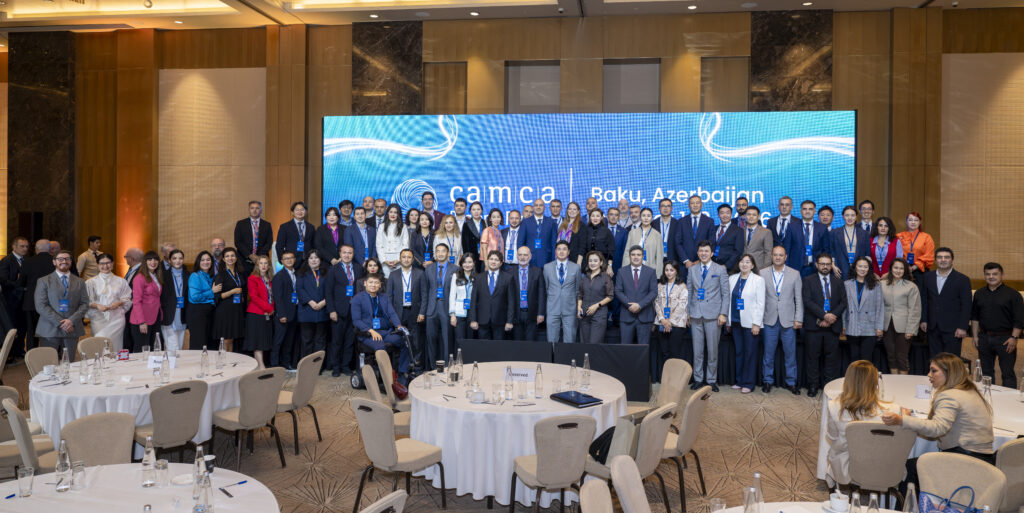
The 2026 CAMCA Regional Forum has concluded in Baku after two full days of conversation on a range of topics shaping the future of the region.  The closing ceremony included an official announcement that next year’s Forum will take place in Uzbekistan in June of 2027.  The question now is: in the lead-up to next year’s convening, how do we build on the connections, ideas and momentum built in Baku to truly advance regional cooperation in the months ahead?  How do we turn conversation into action?  The mechanism and catalyst for this will be the CAMCA Network – the dynamic collection of more than 300 talented leaders spread throughout the entire region and beyond – united by a common conviction that a successful future of the CAMCA region lies in intraregional cooperation and collaboration.  Through existing initiatives, such as CAMCA Talking magazine, and forthcoming projects – CAMCA TV and the CAMCA Conversations podcast – the network will utilize these innovative platforms to raise awareness around the important developments taking place within the CAMCA region, and, most importantly, to highlight where regional cooperation is well underway, where more is needed, and how leaders across sectors can do their part to drive tangible collaboration to the next level.  While the CAMCA Network can serve as an important stimulus of this effort, it is critical that we continue to expand the CAMCA community across all sectors and build partnerships with individuals, organizations and companies that share our vision for CAMCA’s connected, collaborative and prosperous future.  This is the charge we take from Baku and will be an integral part of CAMCA’s next chapter.  From his time in public service and at the outset of the Rumsfeld Foundation’s work with rising leaders from the region, Secretary Rumsfeld believed in the incredible potential of the CAMCA region, predicated on the ten countries themselves recognizing the benefit of their enhanced cooperation.  20 years ago, there were few who shared his vision or his optimism.    Today, on the heels of the 12th annual CAMCA Forum, this vision has come to life, and global interest and momentum are in CAMCA’s favor.  As we look towards the 2027 CAMCA convening in Uzbekistan, we are eager to invite partners from within the region and across the globe to join us in building CAMCA’s next chapter.  The groundwork has been laid, and a dedicated and energetic network of regional trailblazers now exists – let’s put it to work and bring CAMCA to a new level.  The CAMCA Regional Forum is an annual, non-partisan event dedicated to promoting dialogue, cooperation, and sustainable economic growth across Central Asia, Mongolia, the Caucasus, and Afghanistan. Established as a premier platform for high-level engagement, the Forum convenes diverse stakeholders from government, business, academia, civil society, and beyond.  The Forum is co-organized by the Rumsfeld Foundation, Central Asia-Caucasus Institute, and the CAMCA Network. Learn more at www.camcaforum.org.   The views expressed in this article are those of the author and do not necessarily reflect the official policy...

Reports of Suspected Plague in Russia Prompt Central Asian Health Checks

Reports surrounding the death of an employee at an anti-plague research institute in Russia’s Irkutsk region have prompted health authorities across Central Asia to tighten sanitary controls and review preparedness measures. Russian officials have not confirmed that the employee contracted plague or that a laboratory accident occurred. Kazakhstan, Kyrgyzstan, Tajikistan, and Uzbekistan have nevertheless announced additional checks or heightened readiness in response. Officials across the region say there is no cause for alarm, but the response reflects the sensitivity that remains around cross-border infectious disease threats after the COVID-19 pandemic. What Is Known Russian authorities have released few details, but reports say an employee at the anti-plague institute in Shelekhov, near Irkutsk, accidentally broke a test tube containing live bacteria. That employee, a female aged 27 or 28, was hospitalized on September 29, but she died on October 2. The hospital where she was treated was reportedly placed under quarantine, and nearly 200 people who might have come into contact with her are under medical observation. There are also reports that four more hospitals are under quarantine, with some 100 people hospitalized as a precaution. Russian officials deny these reports and say health specialists are on the ground in the area investigating and have urged the public to wait for an official assessment of the situation and not spread rumors. The Response in Central Asia Kazakhstan shares a 7,800-kilometer border with Russia; the distance from far northeastern Kazakhstan to Irkutsk is more than 1,500 kilometers. While that is comforting, the distance from Kazakhstan to Wuhan, China, is some 3,600 kilometers, and the coronavirus that originated in Wuhan in 2019 eventually reached Kazakhstan and everywhere else in the world. On October 5, Kazakhstan’s Health Ministry said it was aware of the reports from Irkutsk, was following the situation closely, and had ordered closer checks at border crossings and other entry points. “Sanitary and quarantine controls are being conducted at state border crossing points,” a Health Ministry statement said, “No individuals with elevated temperatures, signs of illness, or suspected highly dangerous infections have been detected across any mode of transport.” The Health Ministry said the chances of plague, or “pneumonia of undetermined etiology” crossing Kazakhstan’s borders were low. Kyrgyzstan’s Health Ministry also said it had ordered close checks of people entering the country in response to reports about the situation in Irkutsk. “Specialists monitor individuals, vehicles, and cargo crossing the border to prevent the importation and spread of infectious diseases, including highly dangerous infections,” the Health Ministry said. The same measures are being implemented in Tajikistan. Said Davlatzoda, the head of the Health Ministry’s Department of Sanitary-Epidemiological Safety, Emergency Situations and Emergency Medical Care, said orders went out that every person crossing into Tajikistan must have their body temperature measured. Workers from the department have been instructed to ask people arriving whether they are experiencing symptoms such as nausea and vomiting, headache, weakness, and muscle and joint pain. Personnel from the Sanitary-Epidemiological Safety Department have also been told to wear disposable hazmat...

Opinion: Central Asia’s Old Water Bargain Was Built for Cotton

Central Asia inherited a water bargain built for another economy. In the Soviet system, upstream republics stored water and released it for summer irrigation. Downstream republics used that flow for cotton and other crops. The cost of the exchange stayed inside one plan. Water releases, electricity, fuel, and crop quotas were part of the same political economy. After 1991, the dependence survived, but the plan that balanced it did not. The 1998 Syr Darya agreement already tied reservoir operation to irrigation releases and set compensation for the winter power Kyrgyzstan gave up. The 2000 Chu-Talas agreement went on to share the cost of operating and maintaining shared water infrastructure between Kazakhstan and Kyrgyzstan. Those agreements were important, and they show why today’s dispute is not new. Central Asia has long known that water regulation carries a cost. What it has not built is a wider settlement that prices storage and seasonal regulation under today’s climate, energy, and market conditions. That question is now open again. In January 2026, Kyrgyzstan’s new Water Code came into force. It recognizes water as a commodity and introduces fees for domestic and external users. Kazakhstan and Uzbekistan have rejected payment for transboundary river water, saying existing agreements do not provide for it. Downstream governments fear an open-ended bill and a precedent that could turn every dry season into a financial dispute. The old model rested on cotton and central planning. Several conditions have changed. The climate is less stable, energy demand keeps rising, and national economies now want more from water than a cotton plan once did. Uzbekistan’s own reform language has turned against the old cotton model. At the UN General Assembly in 2023, President Shavkat Mirziyoyev said “millions of people were forced to pick cotton” in Uzbekistan over a century. In August 2026, he called the old system one that left Uzbeks “slaves to cotton.” That history shapes the water argument. Uzbekistan is not abolishing cotton. It still grows the crop and continues to reform the sector. But as Tashkent moves away from the old cotton-centered model, the regional water logic built around that model also needs revising. The same pressure runs through the Amu Darya, where agricultural adaptation has become an economic and political issue rather than a purely hydrological one. Less predictable river flows make seasonal storage more valuable. Water is also becoming scarcer in parts of the region. Kyrgyzstan sits at the center of that question. It is the only country in Central Asia whose water resources are almost entirely formed within its own territory, and Kyrgyz officials argue that it carries the upkeep for infrastructure that serves its neighbors. They say the country spent about $80 million on the water sector last year and around $259 million over five years. That spending covers the water sector as a whole, including infrastructure whose benefits reach beyond Kyrgyzstan’s borders. Kazakhstan and Uzbekistan reject paying for river water, saying existing agreements do not require it. But storing that water and releasing it...

The Filmmakers Behind Kanjar on Action and Cultural Heritage

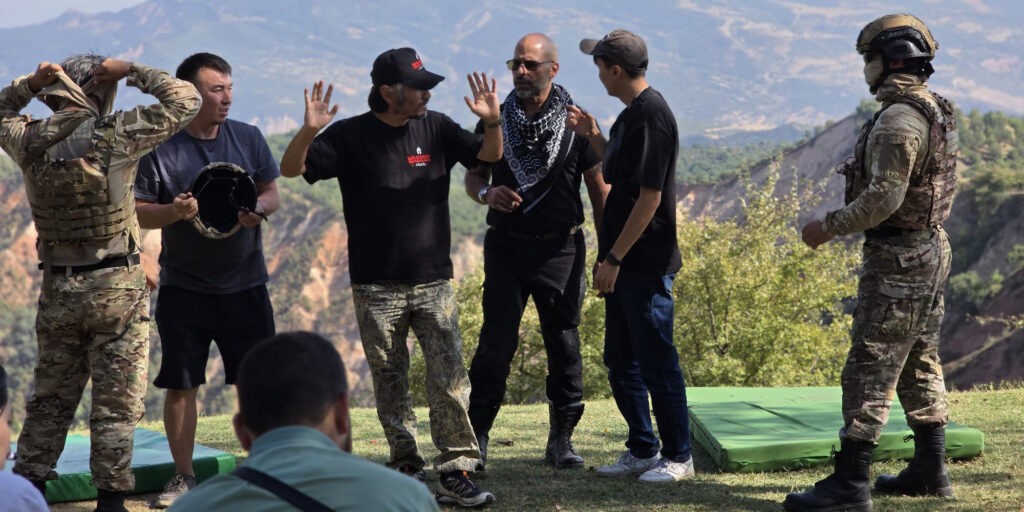
A stolen dagger drives the action in Kanjar, a Kyrgyz thriller that explores the loss of cultural heritage. Director and screenwriter Adilet Akmatov draws on his experience as a stunt performer and fight choreographer to bring the story to the screen. Co-producer and actor Mohamed Hamad Haymour took a different route into the project. Born in Canada to Lebanese parents, he moved to Kyrgyzstan with his wife intending to open a restaurant. A meeting with Akmatov led him into filmmaking and his first feature-film role, playing a villain. Following a preview screening, Akmatov and Haymour spoke to Shahsanem Murray about the film and their work together. TCA: Adilet, what drew you to make this film? Adilet Akmatov: Now a director and screenwriter, I have hands-on experience as a stunt performer, choreographing fight scenes, operating cameras, and editing. For me, a movie never starts with a genre; it starts with a story and an emotion. I love genre cinema, but a human theme should always remain at the core of the action, adventure, or thriller. This film is exactly that kind of film. It is an action thriller, but it also addresses memory, responsibility, and human choice. TCA: What inspired your screenplay? Adilet Akmatov: First and foremost, I was intrigued by the concept of a historical artifact. More than a mere object, it represents a fragment of a nation’s heritage. At one point in the script, one of my characters says: “This dagger has outlasted dynasties, wars, and migrations, absorbing the memory of several generations.” I was fascinated to see how I could develop a story that would prompt audiences to question the significance of such ancient objects in their understanding of the world and their place in it. In the plot, a dagger is stolen and, against all odds, must be retrieved. But beneath the surface, I wanted to explore what happens to people and, indeed, society at large, when memory is treated as a commodity to be bought and sold. That is the root of the conflict that runs through the film. TCA: How did you approach working with the cast? Adilet Akmatov: On my set, there is no division between stars and lesser-known actors. There is only a shared objective. Trust is paramount, especially in an action movie. Action is not just about thrilling movements; it requires precision, discipline, and a deep understanding of your partner. If one person slips up for even a second, it can directly impact someone else. Therefore, I always try to find common ground with the actors first, to understand their personalities and capabilities, and only then do I choreograph the scene. It is imperative that when an actor executes a staged movement, they truly understand why their character is doing it. Each of the male characters in the film is an individual in his own right. I did not want to create a generic mass of ‘bad guys’. Each has his own perspective on the situation and his own limit of how...

China Accounts for Nearly Half of Foreign Direct Investment in Kyrgyzstan in 2025

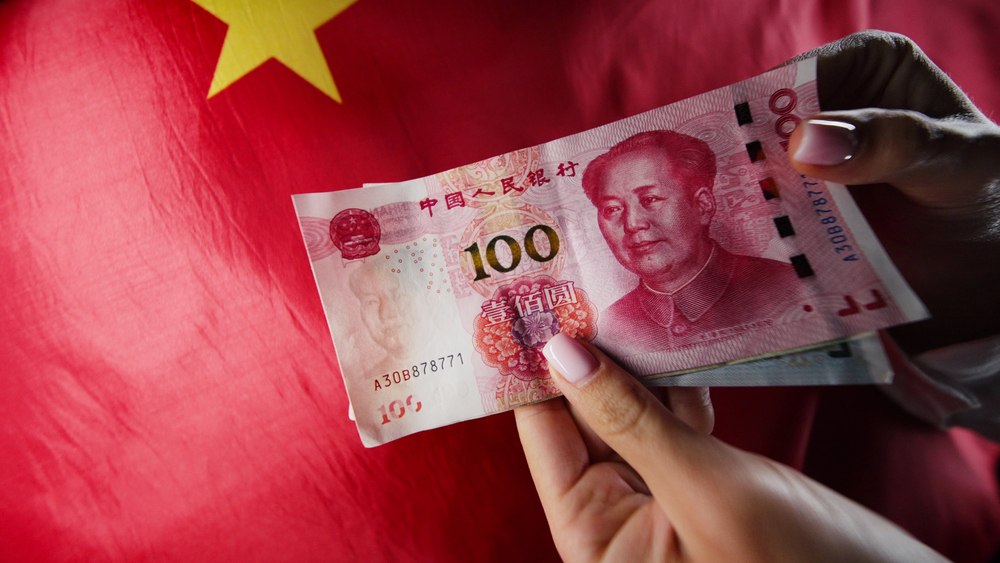
Kyrgyzstan received $1.31 billion in foreign direct investment (FDI) in 2025, up 27.3% from the previous year. Nearly half came from China, according to a new report from the country's National Statistical Committee entitled Investments in the Kyrgyz Republic 2021-2025. The figures are for gross FDI inflows, meaning they measure investment entering Kyrgyzstan without subtracting money flowing back out. China accounted for 47.5% of gross FDI, followed by Russia with 13.9%, Kazakhstan with 9.3%, Turkey with 9.1%, and the Netherlands with 5.4%. Together, these five countries accounted for more than 85% of the total. The sources of foreign capital shifted significantly over the year. FDI from Commonwealth of Independent States (CIS) countries fell by 25.2%, mainly because of lower investment from Russia, Azerbaijan, and Uzbekistan. Russian investment fell particularly sharply, from $279.3 million in 2024 to about $182 million in 2025, a drop of around 35%. Manufacturing attracted $618.8 million, or 47.2% of total FDI, while mining received $246.3 million, or 18.8%. Compared with 2024, investment in manufacturing rose 1.8-fold and investment in mining more than doubled, while investment in finance and insurance fell by 21.3%. Foreign investment was also concentrated geographically. About 86% went to businesses in Bishkek and the Chuy, Jalal-Abad, and Naryn regions. Investment growth has continued in 2026. Kyrgyzstan received $386.7 million in FDI in the first quarter, up 34% from the same period a year earlier. The Times of Central Asia previously reported on the results for the first three months of the year.

Central Asia and Azerbaijan Head to Avaza for First Formal Summit

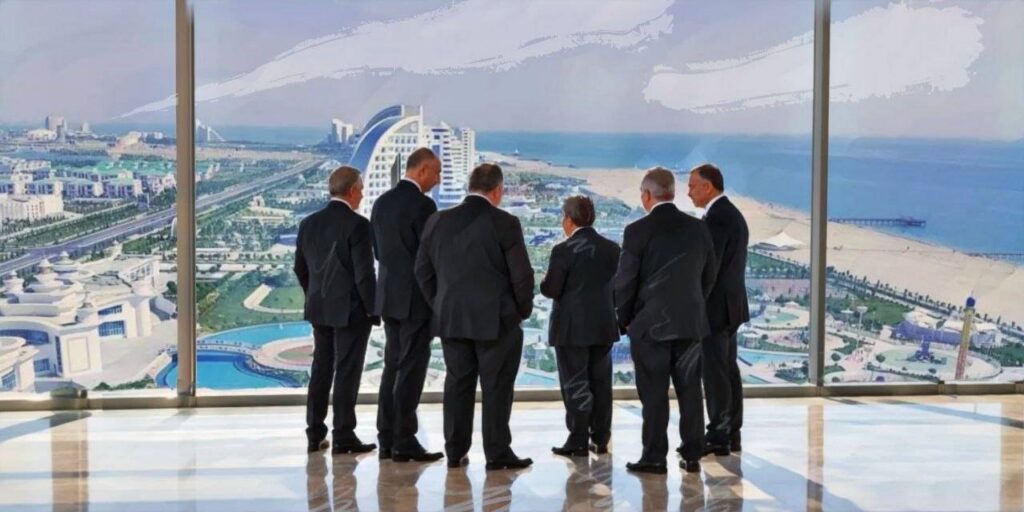
On Thursday, Turkmen President Serdar Berdimuhamedov is due to receive Kassym-Jomart Tokayev, Sadyr Japarov, Emomali Rahmon, Shavkat Mirziyoyev, and Ilham Aliyev in a place built to impress visitors. Thursday’s meeting will be the first formal consultative summit since Azerbaijan joined the format as a full participant in November 2025. The six presidents have already met once in the new configuration, at an informal gathering in Cholpon Ata on July 31, where they signed a declaration covering closer cooperation on transport, energy, trade, and security. Construction of Avaza began in late 2007, as Turkmenistan sought to create a national showcase on its Caspian coast. The resort’s hotels and sanatoria sit among parks and entertainment complexes, while eleven road and foot bridges span a seven-kilometer artificial canal. According to official figures, its hotels and recreation facilities can accommodate more than 10,000 vacationers. State institutions send employees there for summer holidays, echoing the Soviet tradition of workplace-organized vacations. These holidays help fill a resort where the seasonal rhythms differ sharply from everyday life in neighboring Turkmenbashi. Officially, Avaza is a district of Turkmenbashi, a city of around 90,000 residents located 580 kilometers west of Ashgabat across the Karakum Desert. The working city's economy is built around oil refining, the port, and transport. The Turkmenbashi International Seaport traces its history to 1896 and was rebuilt on a large scale before reopening in its current form in 2018. The Turkmenbashi refinery complex was founded in 1943 and remains one of the country's main oil-processing centers. The city itself was known as Krasnovodsk until 1993, when it was renamed Turkmenbashi after the title used by then-President Saparmurat Niyazov. The sea that was supposed to be Avaza's main attraction is now retreating from it. In 2024, one visitor told RFE/RL that the shoreline was 25-30 meters farther away than when his family had swum there three years earlier. A correspondent found hotels creating new beach areas farther out, while dredging was underway near the port. By September 2026, shallower water was forcing some ferries to carry lighter loads and pushing ports around the sea into costly dredging and berth work. The effects are already visible along the coast where the leaders will meet. [caption id="attachment_57713" align="aligncenter" width="1774"] The Avaza resort on Turkmenistan’s Caspian coast, where the five Central Asian presidents and Azerbaijan’s Ilham Aliyev are due to meet on October 8.[/caption] Turkmenistan is also hosting Caspian-focused meetings around the leaders' gathering, while the October 8 agenda includes climate, water, trade, energy, transport, and regional security. At the November 2025 summit in Tashkent, the five Central Asian presidents unanimously approved Azerbaijan’s admission as a full participant, extending the grouping across the Caspian into the South Caucasus. Aliyev has been careful to mark the change. At the informal meeting in Cholpon Ata on July 31, he said: "I previously participated as a guest of honor, but today I am taking part as a full member of the team." The format dates to 2018 and was deliberately light on bureaucracy....