• KGS/USD = 0.01144 0%
  • KZT/USD = 0.00210 0%
  • TJS/USD = 0.10528 0%
  • UZS/USD = 0.00008 0%
  • TMT/USD = 0.28571 0%
  • KGS/USD = 0.01144 0%
  • KZT/USD = 0.00210 0%
  • TJS/USD = 0.10528 0%
  • UZS/USD = 0.00008 0%
  • TMT/USD = 0.28571 0%
  • KGS/USD = 0.01144 0%
  • KZT/USD = 0.00210 0%
  • TJS/USD = 0.10528 0%
  • UZS/USD = 0.00008 0%
  • TMT/USD = 0.28571 0%
  • KGS/USD = 0.01144 0%
  • KZT/USD = 0.00210 0%
  • TJS/USD = 0.10528 0%
  • UZS/USD = 0.00008 0%
  • TMT/USD = 0.28571 0%
  • KGS/USD = 0.01144 0%
  • KZT/USD = 0.00210 0%
  • TJS/USD = 0.10528 0%
  • UZS/USD = 0.00008 0%
  • TMT/USD = 0.28571 0%
  • KGS/USD = 0.01144 0%
  • KZT/USD = 0.00210 0%
  • TJS/USD = 0.10528 0%
  • UZS/USD = 0.00008 0%
  • TMT/USD = 0.28571 0%
  • KGS/USD = 0.01144 0%
  • KZT/USD = 0.00210 0%
  • TJS/USD = 0.10528 0%
  • UZS/USD = 0.00008 0%
  • TMT/USD = 0.28571 0%
  • KGS/USD = 0.01144 0%
  • KZT/USD = 0.00210 0%
  • TJS/USD = 0.10528 0%
  • UZS/USD = 0.00008 0%
  • TMT/USD = 0.28571 0%

Viewing results 571 - 576 of 1298

Donor Delegation Visits Kyrgyzstan to Assess Progress on Kambarata-1 HPP

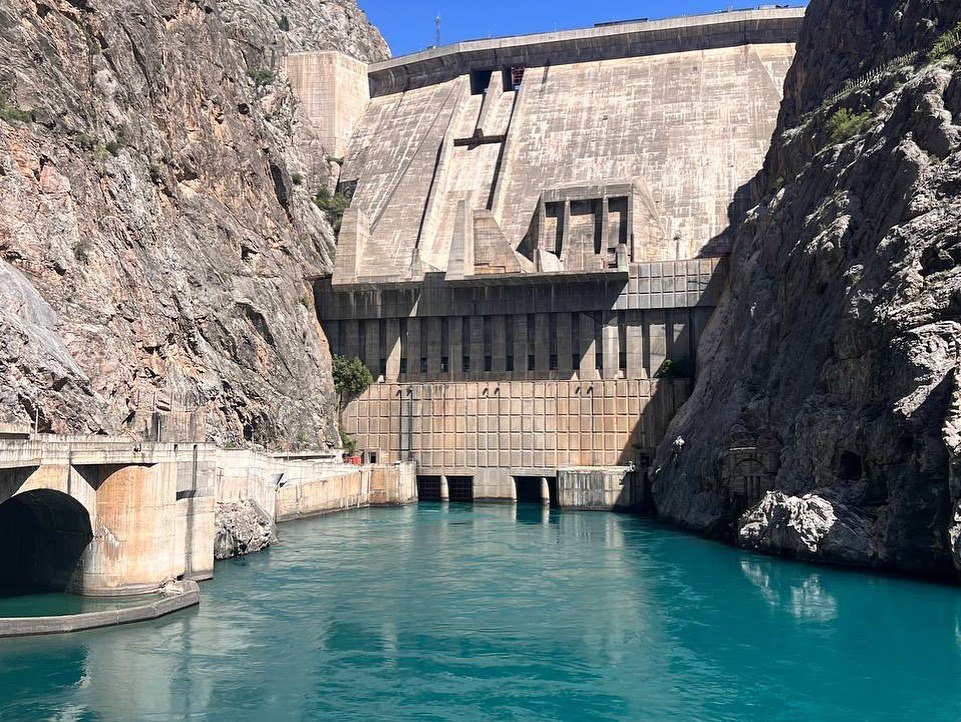
As reported by the Kyrgyz Ministry of Energy, on October 7-11 Kyrgyzstan received a delegation from the Donor Coordination Committee for the construction of the flagship Kambarata-1 Hydropower Plant (HPP) comprising representatives of the World Bank, the Asian Development Bank, the Islamic Development Bank, the European Union, the European Investment Bank, the United States Agency for International Development, and the UK Foreign, Commonwealth & Development Office. The Committee, established at the Kyrgyz Republic International Energy Investment Forum, in Vienna on June 10, 2024, comprises major international financial institutions and development partners, including the World Bank, the OPEC Fund, the Asian Development Bank, the Asian Infrastructure Investment Bank, the Islamic Development Bank, and the European Bank for Reconstruction and Development. The Kambarata-1 HPP, with a projected capacity of  1,860 megawatts and an average annual generation of 5.6 billion kilowatt-hours of electricity, is to be constructed at preliminary  cost exceeding $4 billion in the upper reaches of the Naryn River in Kyrgyzstan. Once completed, the largest hydropower plant in Kyrgyzstan is expected to end the country’s electricity shortages. In addition, the ambitious project, jointly implemented with Kazakhstan and Uzbekistan, aims to strengthen cooperation within Central Asia in water and energy resource management. During their visit, delegates reviewed progress on the Kambarata-1 HPP and in addition, met Kyrgyz Minister of Energy Taalaibek Ibrayev and representatives of Kazakhstan and Uzbekistan to discuss and establish a mechanism for regular consultations and data exchange to ensure effective cooperation on the project. Last month, Minister Ibrayev reported significant progress on the development of the HPP construction and said that all preparatory stages will be completed by next May. Early in September, Kyrgyzstan’s Cabinet of Ministers and the World Bank organized a roundtable on the selection of a dam for the Kambarata-1 HPP. The Swiss engineering company AFRY proposed various options for the project, and based on the type of dam chosen, the Kyrgyz Ministry of Energy stated that a feasibility study would be prepared by May 2025.

Kazakhstan Reinstates Kulans in Wild Natural Habitats

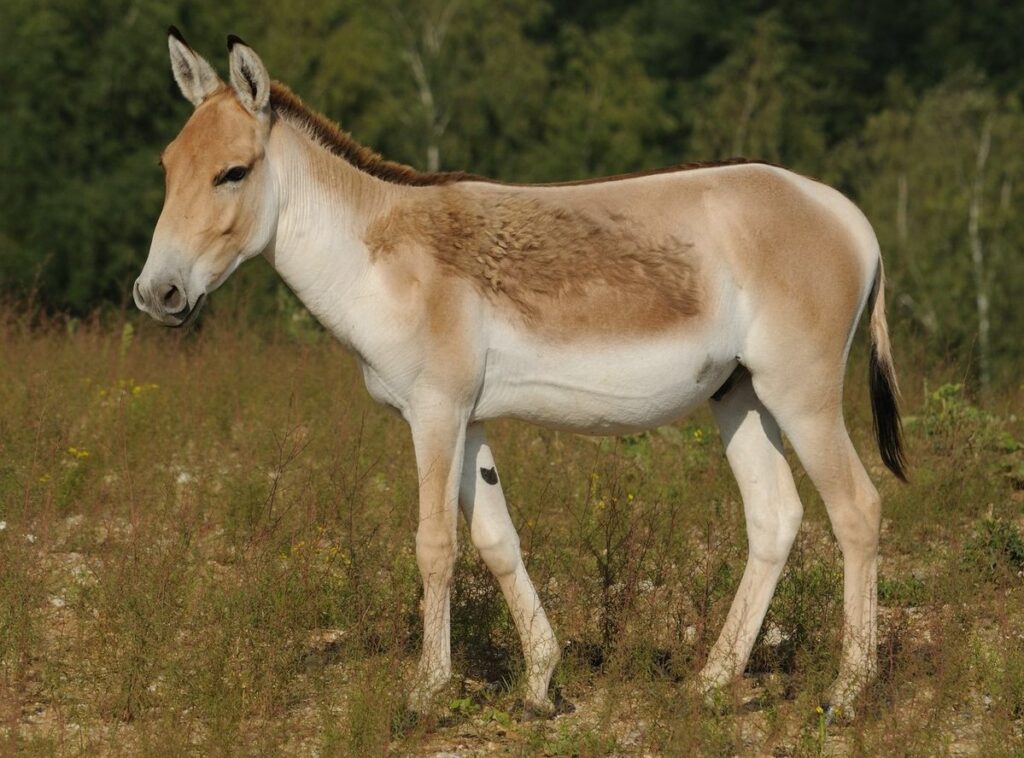
Kazakhstan’s Ministry of Ecology and Natural Resources has announced the successful reintroduction of  kulans — Asiatic wild asses — to the country’s Ile-Balkhash and Altyn Dala nature reserves. As a result of overhunting and competition for grazing with other livestock, wild kulans became extinct in Kazakhstan in the 1930s. To restore the species' population, long-term projects were implemented. Between 1953 and 1961, 14 kulans were transported from Turkmenistan to Barsakelmes Island in Kazakhstan and in 1982, when their number reached 200, the animals were transferred to the mainland Altyn-Emel National Park. Today, the country boasts two large herds of kulans in the Barsakelmes Reserve and the Altyn-Emel National Park, with that in the latter, numbering 3,965, representing the largest in Kazakhstan. The steady growth of the kulan population has also made it possible to resettle the animals in other historical habitats. On September 28-30, 43 kulans were transported from the Altyn-Emel National Park to the Ile-Balkhash Reserve in southern Kazakhstan and a further 24 kulans were released into temporary enclosures on the Altyn Dala Reserve in the central Kostanay region. In a move to reintegrate other indigenous species in the region, Kazakhstan has also reintroduced Przewalski's horses and Turan tigers to their historical habitats this year.

UN Rights Body Criticizes Prison Sentences for Kyrgyz Journalists

The human rights office of the United Nations and other international groups are expressing concern that two journalists in Kyrgyzstan were convicted of inciting mass unrest and sentenced to years in prison. Journalists Azamat Ishenbekov and Makhabat Tazhibek kyzy of the Temirov Live media outlet were sentenced on Thursday to five and six years in jail respectively and plan to appeal. Two other media workers in the same case were placed on three years’ probation and released. Another seven were acquitted. The investigation and trial were “marred by due process and fair trial concerns” and Kyrgyz authorities should review the cases of those who were sentenced, the Office of the United Nations High Commissioner for Human Rights said in a statement on Friday. “While seven others were acquitted, it is problematic that 11 journalists and media workers, all former or current staff of the investigative outlet Temirov Live, were arbitrarily arrested and detained for simply doing their job,” the U.N. human rights office said. “We urge the authorities to review vague provisions of the Criminal Code that expose journalists and others to potential liability for exercise of their fundamental rights, including freedom of expression.” The New York-based Committee to Protect Journalists said the prison terms amounted to retaliation for reporting on alleged corruption and that “Kyrgyzstan has forfeited its reputation as a relative haven of press freedom in Central Asia.” Top officials in Kyrgyzstan have previously dismissed such international criticism, saying the case against the workers affiliated with Temirov Live was not politically motivated and that the people being prosecuted were masquerading as journalists and publishing false information. Temirov Live is a YouTube-based outlet that has broadcast reports on alleged graft at high levels of government. It was founded in 2020 by Bolot Temirov, who was expelled from Kyrgyzstan in 2022. His wife is Tazhibek kyzy, director of Temirov Live and one of the two journalists who was sentenced to jail last week.

Uzbek Blogger Prosecuted for Post about Daughter’s Birth

A criminal case has been opened against Kashkadarya-based blogger Sardor Safarboyev, aka 'Sardor Gangster', on account of his statement on TikTok that he does not want to have a daughter. “I'm not having a daughter. If a daughter is born, I'll throw my wife out. I don't need a daughter... if it's a girl, I'll throw it straight into the dustbin. I don't need a daughter. Even if I go to hell, I will [have] a son,” Safarboyev said on air. Following heavy criticism from social media users and activists, the blogger apologized, saying that his words had been provoked by live comments on air. A girl who participated in the broadcast also spoke in Safarboyev's defense, stating that users of the site had deliberately provoked him. Iroda Rasulova, head of the press service of the Kashkadarya Oblast Department of Internal Affairs, announced that the Nishan District Department of Internal Affairs had opened a case under Article 140, Part 2 of the Uzbek Criminal Code. This article deals with insults published in the media or on the internet and provides for punishments such as a fine, community service, or correctional labor.  Investigative work into the case is ongoing. Prior to TikTok being blocked in Uzbekistan, Safarboyev had over 700,000 followers on the platform and over 500,000 on Instagram. This recent incident is not the first time the blogger has been condemned. As recently as February, Safarboyev was arrested for ten days after being found guilty of petty hooliganism and manufacturing, possession, or distribution of materials propagandizing national, racial, ethnic, or religious hatred. In Uzbekistan, the preference for the birth of sons persists due to traditional attitudes and gender stereotypes. This problem, characteristic of many Asian countries, is deeply rooted in cultural and social norms. According to reports by international organizations such as UNFPA, the preference for sons leads to gender imbalance, limits women's rights, and is an issue frequently raised in international forums concerning the combating of gender discrimination.

Death in Peacetime: Navigating Challenges and Responses in Kazakhstan’s Armed Forces

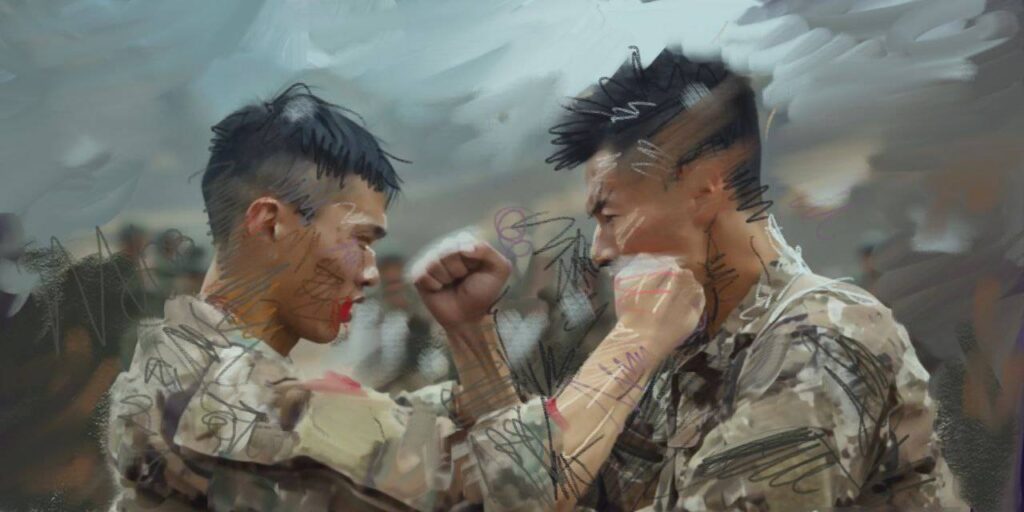
Deputies in the Mazhilis have raised the issue of violent deaths and suicides in the armed forces, whilst sections of the public have also called for the army to be converted to a contract basis and the draft age to be raised.   Alarming statistics In late September, Konstantin Avershin, a member of the Mazhilis Committee on International Affairs, Defense, and Security, spoke about the results of an investigation into suicides in law enforcement and security agencies. Over the past four years, 86 suicides have occurred in across said agencies, Avershin stated, with this data pertaining to the Ministry of Defense, the National Guard of the Interior Ministry, the Border Service of the National Security Committee, the State Protection Service, and the Ministry of Emergency Situations. “In four years, 40 suicides have been registered in the Armed Forces. In 2021 - 10, 2022 - 7, 2023 - 12, and 2024 - 11. By category these were: officers - 7, contract servicemen - 22, cadets - 4, conscript soldiers - 7. Pretrial investigations have been completed in 34 cases, and final procedural decisions have been made. In none of them were signs found of 'leading' to suicide,” according to Avershin. The proceedings in these cases were terminated due to a lack of corpus delicti. Despite this, based on the results of official investigations, disciplinary measures were taken against 180 persons: eleven were relieved of their posts, two were demoted, and 167 service personnel received various disciplinary sanctions in line with their rank. On October 8, Avershin raised another problem: the poor quality of food being provided to service personnel. According to his data, the funds allotted for rations per soldier is 2,250 tenge ($4.6) per day. By comparison, chess players, sport fishermen, ship modelers, and players of togyzumalak (a national board game) and checkers are entitled to 6,276.4 tenge ($12.9) per day, according to the Ministry of Tourism and Sport's regulations for 2024. “A soldier cannot be fed almost three times worse than a checkers player,” Avershin stated. Earlier, MP Nartai Sarsengaliyev asked Defense Minister Ruslan Zhaksylykov about the current situation in Kazakhstan's army. The deputy highlighted numerous high-profile cases, stating that over the past three years, 270 servicemen have died in Kazakhstan. “In August 2023, a commanding officer beat a recruit with a chair in a military unit. The case was closed after the parties reconciled. In June 2024, in one of the military units in the Zhambyl region, a soldier who had been in the army for only one month was admitted to intensive care in an unconscious state. The situation caused shocked society. National Guard soldier Yerbayan Mukhtar has been unconscious for five months after suffering a head injury. Those in charge say that 'Yerbayan 'fell in the bathroom and sustained a head injury.' Who would believe this? As a result of the injury, half of the soldier's skull was removed. Now, he needs constant care. Now his parents are taking Yerbayan abroad for treatment,” Sarsengaliyev stated. In...

USAID Delivers Food Aid to Vulnerable Groups in Uzbekistan

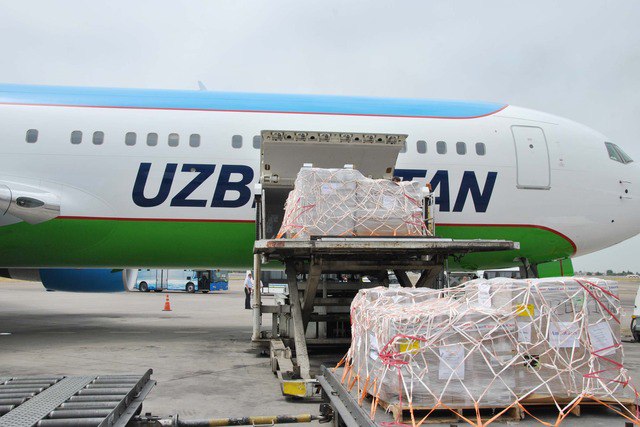
On October 9, the United States, through its Agency for International Development (USAID), announced it had sent 131 tons of food aid to Uzbekistan, worth over $435,000. The shipment includes a nutritious mix of vegetables and legumes for distribution to over 33,000 people in 145 facilities, including centers for long-term tuberculosis patients, orphanages, and psychiatric institutions. “At USAID, we collaborate with our partners to deliver life-saving food assistance to the most vulnerable communities in Uzbekistan. By addressing malnutrition and ensuring access to adequate, safe, and nutritious food, we are empowering individuals to lead healthy, productive lives and building a more stable and resilient world for everyone,” said Anjali Kaur, USAID’s Deputy Assistant Administrator of the Bureau for Asia. Since 2010, USAID’s International Food Relief Partnership program has provided 1,560 tons of food aid to Uzbekistan, worth about $4.5 million. The donated food will be distributed by the American non-profit organization Resource and Policy Exchange in collaboration with the international charitable foundation Sog’lom Avlod Uchun. USAID’s International Food Relief Partnership is part of a more extensive U.S. government program called 'Food for Peace'. Initiated in 1954 by President Dwight Eisenhower, the program illustrates USAID’s commitment to reducing hunger and malnutrition. In addition to providing food, USAID has allocated $6.1 million to expand educational programs in Uzbekistan.