• KGS/USD = 0.01144 0%
  • KZT/USD = 0.00216 0%
  • TJS/USD = 0.10456 0%
  • UZS/USD = 0.00008 0%
  • TMT/USD = 0.28490 0%
  • KGS/USD = 0.01144 0%
  • KZT/USD = 0.00216 0%
  • TJS/USD = 0.10456 0%
  • UZS/USD = 0.00008 0%
  • TMT/USD = 0.28490 0%
  • KGS/USD = 0.01144 0%
  • KZT/USD = 0.00216 0%
  • TJS/USD = 0.10456 0%
  • UZS/USD = 0.00008 0%
  • TMT/USD = 0.28490 0%
  • KGS/USD = 0.01144 0%
  • KZT/USD = 0.00216 0%
  • TJS/USD = 0.10456 0%
  • UZS/USD = 0.00008 0%
  • TMT/USD = 0.28490 0%
  • KGS/USD = 0.01144 0%
  • KZT/USD = 0.00216 0%
  • TJS/USD = 0.10456 0%
  • UZS/USD = 0.00008 0%
  • TMT/USD = 0.28490 0%
  • KGS/USD = 0.01144 0%
  • KZT/USD = 0.00216 0%
  • TJS/USD = 0.10456 0%
  • UZS/USD = 0.00008 0%
  • TMT/USD = 0.28490 0%
  • KGS/USD = 0.01144 0%
  • KZT/USD = 0.00216 0%
  • TJS/USD = 0.10456 0%
  • UZS/USD = 0.00008 0%
  • TMT/USD = 0.28490 0%
  • KGS/USD = 0.01144 0%
  • KZT/USD = 0.00216 0%
  • TJS/USD = 0.10456 0%
  • UZS/USD = 0.00008 0%
  • TMT/USD = 0.28490 0%

Viewing results 79 - 84 of 1504

Rogun Dam’s Cross-Border Environmental Impact Draws Scrutiny

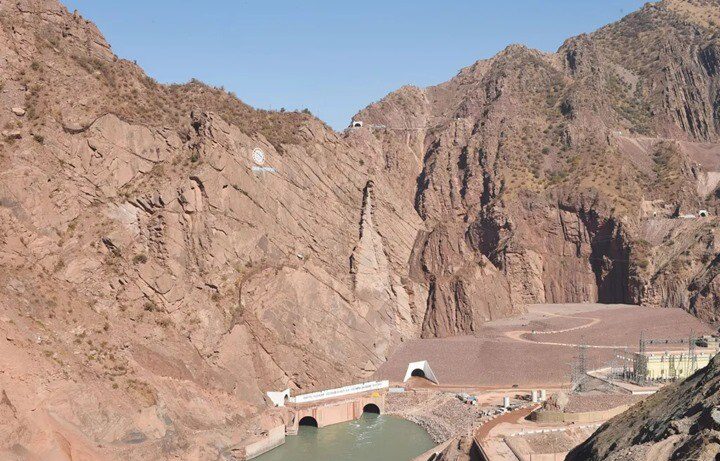
An international environmental coalition has raised new concerns about the environmental assessment of Tajikistan’s Rogun Hydropower Plant, warning that its potential cross-border and cumulative impacts on downstream countries are being underestimated. The group, Rivers without Boundaries, presented its latest report, Eyes Wide Shut: Ignoring the Transboundary and Cumulative Impacts of the Rogun Hydropower Plant, highlighting what it describes as serious shortcomings in the project’s environmental and social review. According to the report, the current assessment of Rogun’s transboundary effects does not fully comply with the environmental and social standards of the World Bank. Experts argue the analysis relies on outdated data from 2014 and uses static modeling scenarios that fail to reflect climate change trends and the current hydrological realities of the Amu Darya basin. Rivers without Boundaries contends that this approach prevents a realistic understanding of how the project could affect downstream water availability and ecosystems. The coalition also criticizes what it describes as a failure to account for key external factors, particularly the construction of Afghanistan’s Qosh Tepa canal, which is expected to significantly alter regional water balances. Rather than applying a basin-wide and cumulative assessment, the developers have labeled Rogun’s impact as “neutral”, a claim environmental experts deem misleading. “The authors of the impact assessment preferred to act with their eyes wide shut, excluding the most sensitive and uncomfortable scenarios,” said Evgeny Simonov, international coordinator of Rivers without Boundaries. He added that portraying the world’s tallest dam as environmentally neutral contradicts the very premise of cumulative impact assessment. Without binding commitments on environmental water releases and artificial floods, Simonov warned, the project risks prolonging ecological degradation in downstream areas for decades. The report flags particular threats to biodiversity and wetlands in the Amu Darya delta, many of which are protected under the Ramsar Convention. It notes that the Rogun assessment lacks clear mechanisms to guarantee water flows to these critical habitats during dry periods. The coalition also points to significant gaps in public consultation processes, especially in downstream countries, raising questions about the legitimacy of conclusions drawn regarding the project’s social acceptability. Alexander Kolotov, the coalition’s Central Asia regional coordinator, said consultations were not conducted in affected areas of Uzbekistan and Turkmenistan. “The risks linked to seasonal water redistribution and the launch of the Qosh Tepa canal were effectively left out of the analysis,” he said, calling this a dangerous precedent for a project of regional significance. Rivers without Boundaries is calling for a full Strategic Environmental Assessment of the entire Amu Darya basin, along with the development of legally binding water management plans that include climate adaptation strategies and biodiversity protection measures. Without a fundamental revision of the current approach, the coalition warns, Rogun could become a long-term source of environmental and social tension in Central Asia. At the heart of the concern is the filling of the Rogun reservoir, which experts say could reduce water flows to the Amu Darya delta by 25% or more, accelerating desertification and threatening the livelihoods of up to 10...

Tajikistan Seeks to Expand the Geography of Labor Migration

Tajikistan has stepped up efforts to expand destinations for labor migration, including countries in Europe and East Asia. The announcement was made by Minister of Labor, Migration and Employment Soleha Kholmahmadzoda at a press conference summarizing the ministry’s work in 2025. According to the Kholmahmadzoda, a memorandum of cooperation with relevant agencies of the Kingdom of Belgium was signed in November last year and is currently undergoing internal approval procedures. The agreement provides for the possibility of organized employment for Tajik citizens in the Benelux countries, namely Belgium, the Netherlands, and Luxembourg. The most in-demand sectors include agriculture, construction, social services, and healthcare. The Ministry of Labor said the initiative is intended to create transparent and legal employment channels, enhancing protection for migrant workers and reducing the risks associated with illegal employment. Cooperation with Japan is also advancing. The ministry has established a special working group and developed a mechanism to attract Tajik citizens as “specially qualified” workers. Relevant documents have been sent to the Tajik Embassy in Japan for publication on the website of the Japan International Training Cooperation Organization (JITCO). In addition, the Agency for Employment Abroad has prepared a draft agreement with Japanese employers. As a result, the first 10 citizens of the republic have already secured jobs. Special attention is also being given to cooperation with South Korea. In 2025, the Korean side allocated 800 quotas for labor migrants from Tajikistan. After completing professional training and passing the EPS-TOPIK exam, 21 people were employed through the Korean job portal, while documentation is still being processed for 12 additional candidates. Despite the expansion of destinations, Russia remains the primary labor market for Tajik citizens. According to the Ministry of Labor, in 2025, 30 licensed entities sent 35,747 citizens abroad through organized channels, an increase of 18,805 compared with the previous year. Of these, more than 31,000 were employed in Russia, Deputy Minister of Labor, Migration and Employment Norzoda Sharif Sanginmurod said. These figures broadly correspond with estimates from the Russian side. Official data indicate that more than 1 million Tajik citizens are currently working in Russia, mainly in construction, housing and utilities, transport, and logistics.

What the U.S. Really Wants in Central Asia: Behind the B5+1 Forums

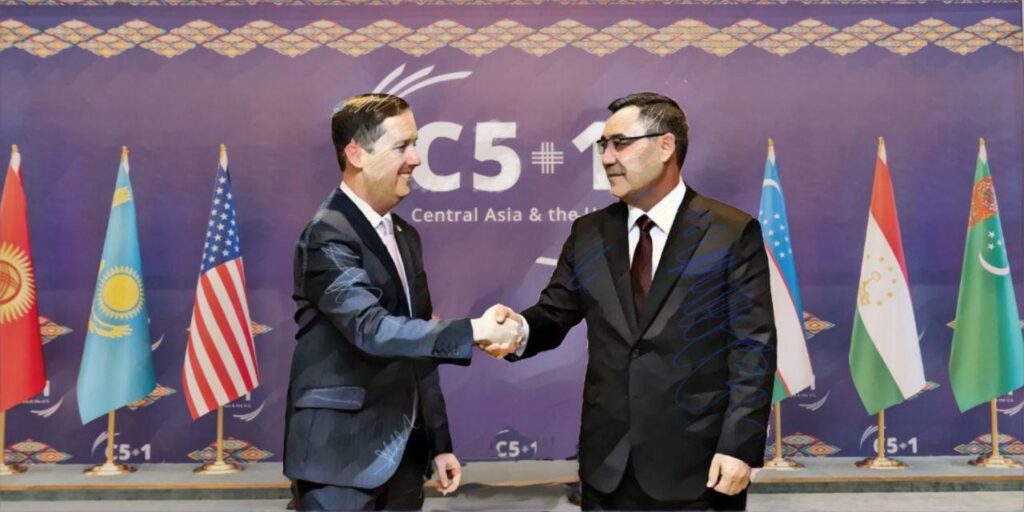
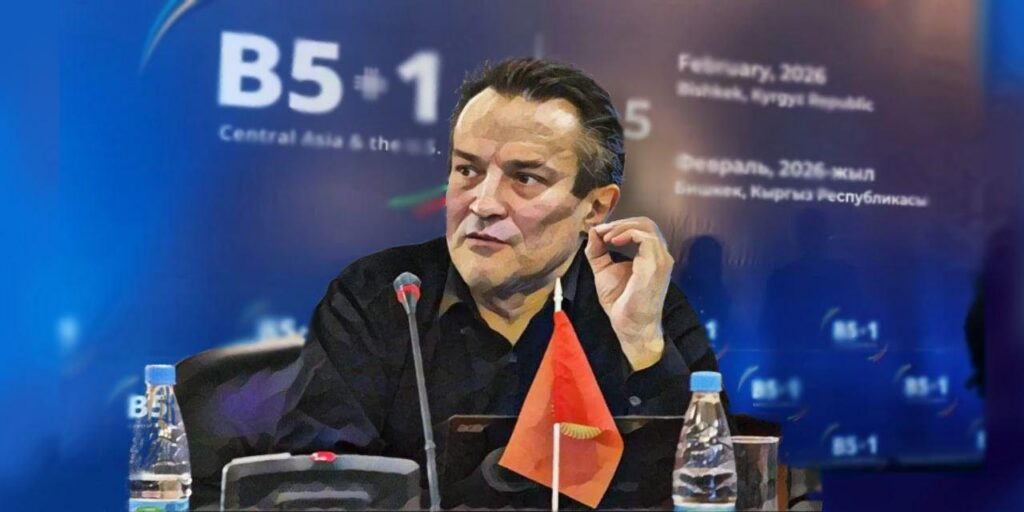
The B5+1 business forum continued in Kyrgyzstan’s capital on February 5, as government officials, regional business leaders, and a sizable U.S. delegation met to discuss trade, investment, and regulatory barriers shaping economic ties between Central Asia and the United States. As Washington signals a more pragmatic, commercially driven approach to the region, questions persist over why U.S. investment has lagged behind political engagement and which markets are truly seen as priorities. The Times of Central Asia spoke with Dmitry Orlov, director of the Strategy: East–West analytical center, about the structural obstacles deterring American capital, the shift in U.S. policy thinking, and how Central Asian states are positioned within Washington’s evolving economic calculus. TCA: What serious U.S. capital investments in Central Asia can we talk about today? ORLOV: It is important to understand the main point. Talk of large investments, the arrival of American business, and long-term economic cooperation only makes sense in one case: if the U.S. repeals the Jackson-Vanik amendment, which was adopted back in the 1970s and extended to all former Soviet republics after the collapse of the USSR. Today, it remains a formal and, in many ways, psychological obstacle to a fully-fledged business partnership. At the same time, it is necessary to establish contacts at a business level right now. This is because if the amendment is repealed - and such statements are regularly heard in Washington - it is difficult to predict which countries in the region will receive investment flows and in what volumes. Recent international forums, including Davos, have shown that Kazakhstan and Uzbekistan are of the greatest interest to the U.S. in Central Asia. Their economies are developing more dynamically, and they can offer large-scale projects and a clear export base. The other countries in the region, Kyrgyzstan, Tajikistan, and Turkmenistan, are still perceived by investors as lower priorities. TCA: Previously, the U.S. actively promoted a political agenda in the region, including human rights and freedom of speech. Now these are rarely mentioned. Why do you think this is the case? ORLOV: The approach has become more pragmatic. The history of U.S. foreign policy shows that strategic and economic interests have always taken precedence. If a territory is attractive in terms of resources or transit routes, a format for cooperation will be found. In Europe, relatively speaking, the rule of law prevails. In Asia, the situation is different, and the Americans understand this perfectly well. Issues of ideology and human rights can move to the background if economic expediency comes first. This is especially true in Central Asia, where many issues are resolved through personal agreements and informal connections. Washington understands this. TCA: What exactly can Central Asia offer the U.S.? ORLOV: In terms of individual countries, Kazakhstan and Uzbekistan are again in the lead. They offer oil, gas, and, no less importantly, control over transit routes. There is currently a lot of discussion about rare earths and critical minerals, but their development is always long and expensive. As a result, interest in...

B5+1 Forum Opens as U.S. Companies Expand Economic Footprint in Central Asia

Business leaders and government officials from Central Asia and the United States gathered in Kyrgyzstan’s capital on February 4 for the start of the second B5+1 Business Forum. Co-organized by the Kyrgyz government and the Center for International Private Enterprise (CIPE), the event is intended to bring together private companies, business associations, officials, and experts interested in expanding U.S.–Central Asia commercial ties. More than 50 U.S. companies are participating in the event. The B5+1 is the business-track counterpart to the C5+1 diplomatic format that links the United States with Kazakhstan, Kyrgyzstan, Tajikistan, Turkmenistan, and Uzbekistan. The B5+1 brings companies and policymakers together to identify barriers to investment and propose cross-border regulatory changes. This week’s meeting in Bishkek follows the inaugural B5+1 forum held in Almaty on March 14–15, 2024, which drew more than 250 stakeholders from across Central Asia and the United States. It produced 21 private-sector recommendations aimed at easing trade, improving regulations, and building regional economic integration. The Bishkek agenda is built around reviewing progress on those recommendations and setting priorities for the next phase of work. Central Asian officials have used the event to signal interest in region-wide coordination rather than country-by-country deals. In comments made in Bishkek, Kazakhstan’s Minister of Industry and Construction, Ersaiyn Nagaspaev, emphasized that foreign investors increasingly assess Central Asia as a single market, reflecting a push to align regulations and investment conditions across borders. Nagaspaev noted that more than 600 U.S. companies currently operate in Kazakhstan. Kyrgyzstan, meanwhile, used the forum to highlight domestic economic performance within that regional context. In a speech at the forum, Kyrgyzstan’s First Deputy Chairman of the Cabinet of Ministers, Daniyar Amangeldiev, said Kyrgyzstan’s economy grew by 11.1% in 2025, which he described as one of the highest growth rates in the region. Addressing the forum, U.S. Special Envoy for South and Central Asia Sergio Gor stated that the United States intends to expand its economic engagement with Central Asia. “The private sector, not intergovernmental agreements, will become the key instrument of interaction," he told those in attendance, identifying electronic commerce, artificial intelligence, critical minerals, agriculture, and transport infrastructure as priority areas. Gor noted that the American companies present at the forum represent the largest and most comprehensive U.S. commercial delegation ever to visit Central Asia. The U.S. recognizes the importance of Central Asia in global trade and connectivity, he stated. "The United States is open for business. We're open for peace. We're opening to strengthen our ties around the world. So that’s why it's fitting that the first C5 event in 2026 is this B5 + 1 forum,” Gor said, linking the Bishkek discussions to economic commitments made at the C5+1 summit in Washington in November 2025. “The Transport Corridor for Peace and Prosperity will provide reliable connectivity from Central Asia through the South Caucasus to global markets,” Gor said. “This is a historic opportunity to strengthen economic integration and long-term prosperity across the region.” During his visit to Bishkek, Gor also met with Kyrgyz President...

The “Central Asia 2030” Roundtable in Astana: From External Interest to Regional Choice

Discussions about Central Asia’s long-term strategic future are increasingly shifting from a focus on external attention to one of growing regional agency. On Monday, Astana International University hosted the first roundtable in the series Central Asia 2030: Strategic Horizons and Regional Choices. Speakers included Andrew D’Anieri, Deputy Director of the Atlantic Council’s Eurasia Center; Yerkin Tukumov, Special Representative of the President of Kazakhstan; Ambassador-at-Large Zulfiya Suleimenova; and Dauren Aben, Deputy Director of the Kazakhstan Institute for Strategic Studies under the President of Kazakhstan. Pragmatism, Regional Choice, and the Logic of the “Grand Bargain” In his remarks, Andrew D’Anieri emphasized that Central Asia is increasingly viewed in the U.S. not as a peripheral zone but as an independent strategic partner. He noted that “environmental, water, and climate issues considered within a regional framework are fully supported by the U.S.” However, he added that “long-term commercial and investment projects are impossible without long-term stability, which in turn requires coordination between neighbors, engagement on sensitive issues, and pragmatic regional cooperation.” D’Anieri also pointed to Afghanistan as “an integral part of regional logic,” and described formats such as C5+1 as evidence of Central Asia’s growing subjectivity. He highlighted the first-ever C5+1 summit at the presidential level in Washington as a landmark event, especially under the administration of Donald Trump, known for its preference for bilateral over multilateral formats. Trump and the Possibility of a Visit: Only with a “Big Deal” When asked whether a visit by President Trump to Central Asia is realistic, D’Anieri offered a candid assessment: “Such a visit is only possible if there is a large, symbolically and economically significant deal.” Whether in aviation, technology, or infrastructure, these high-visibility projects are typically what draw Trump’s engagement. He added that “the region has work to do in developing a package of initiatives that could interest the U.S. president and justify a high-level visit.” Potential areas include mining, transport, and logistics. Reframing Afghanistan’s Role in the Region Special Representative Yerkin Tukumov focused on the importance of reframing the region’s relationship with Afghanistan. For too long, he said, Afghanistan has been viewed primarily “through the prism of security threats,” resulting in a narrow and often misleading approach. Tukumov argued for a broader, more pragmatic view that considers economic, humanitarian, and cross-border dimensions. He described the C5+1 format not as a replacement for bilateral diplomacy, but as “an additional level of coordination where Central Asia can speak with a more consolidated voice without losing national autonomy in foreign policy.” He stressed the need to move beyond “ideological and declarative approaches,” toward practical, interest-based mechanisms of cooperation. Ecology, Water, and the Case for a Global Water Agency Ambassador-at-Large Zulfiya Suleimenova addressed the strategic urgency of regional coordination on water and climate. She emphasized that “water issues are transboundary in nature,” and that efforts to resolve them solely within national frameworks are bound to fall short. “Regional coordination in Central Asia is not a political slogan, but a functional necessity,” she said. Suleimenova argued that jointly promoting...

B5+1 in Bishkek: Business at the Center of Regional Integration Strategy

A two-day B5+1 business forum is underway in Bishkek, bringing together government officials from Central Asian countries, regional business leaders, and a U.S. delegation. Once viewed as a business extension of the C5+1 diplomatic dialogue, participants now describe the format as evolving into an independent and pragmatic economic platform. The forum is organized by the Center for International Private Enterprise (CIPE), in cooperation with the Cabinet of Ministers of Kyrgyzstan, under the IBECA program supported by the U.S. Department of State. A defining feature of this year’s forum is the size and prominence of the U.S. business delegation. More than 50 representatives from major corporations, which, according to official documents, include Boeing, GE Healthcare, Nasdaq, Abbott, Pfizer, Honeywell, Coca-Cola Company, Mastercard, FedEx, Apple, Wabtec, and Franklin Templeton, have convened in Bishkek. Discussions are structured around panel sessions and working groups focusing on key sectors: transport and logistics, agriculture, e-commerce, information technology, and critical mineral extraction. U.S. Special Envoy for South and Central Asia Sergio Gor stated he has arrived in Bishkek with a “clear message from Donald Trump.” He emphasized that Central Asia is among the top foreign policy priorities of the current U.S. administration. At a press conference, Gor underlined a strategic shift away from traditional intergovernmental agreements toward support for private enterprise and the development of commercially viable projects. “The U.S. government is ready to expand its tools for supporting investment cooperation, and today's discussion is only the first step toward further joint development,” he said. Focus on Regional Connectivity Transport infrastructure and regional connectivity were major themes on the opening day of the forum. Gor highlighted the U.S.-backed TRIPP initiative, which aims to establish a transport corridor through the South Caucasus linking Central Asia to Western markets. He argued that expanding alternative trade routes would support deeper economic integration within the region and boost its position in global trade networks. Forum participants echoed this sentiment, stressing that major international investors are increasingly evaluating Central Asia not as isolated national markets but as a single economic space. Representatives from Central Asian governments noted that the region’s aggregated potential, in logistics, natural resources, and consumer demand, is what attracts large multinationals. Kazakhstan’s Minister of Industry, Yersayin Nagaspayev, said over 600 American companies are currently operating in Kazakhstan, with many managing regional operations from within the country. “Our shared goal is to position Central Asia as a reliable, competitive, and attractive region for long-term business cooperation,” he stated. Redefining the Role of Business in Governance Kyrgyzstan’s Minister of Economy, Bakyt Sydykov, emphasized that the B5+1 platform is reshaping the nature of business-state interaction. “Today, business is not just a participant in the process, but a full-fledged co-author of economic reforms,” he said. He noted that the working groups had proposed recommendations in line with Kyrgyzstan’s ongoing reform agenda. These include reducing administrative barriers, digitizing public services, and improving access to finance for small and medium-sized enterprises. Toward a New Geopolitical Self-Image The forum in Bishkek also reflected a broader regional...