• KGS/USD = 0.01144 0%
  • KZT/USD = 0.00212 0%
  • TJS/USD = 0.10456 0.19%
  • UZS/USD = 0.00008 0%
  • TMT/USD = 0.28490 0%
  • KGS/USD = 0.01144 0%
  • KZT/USD = 0.00212 0%
  • TJS/USD = 0.10456 0.19%
  • UZS/USD = 0.00008 0%
  • TMT/USD = 0.28490 0%
  • KGS/USD = 0.01144 0%
  • KZT/USD = 0.00212 0%
  • TJS/USD = 0.10456 0.19%
  • UZS/USD = 0.00008 0%
  • TMT/USD = 0.28490 0%
  • KGS/USD = 0.01144 0%
  • KZT/USD = 0.00212 0%
  • TJS/USD = 0.10456 0.19%
  • UZS/USD = 0.00008 0%
  • TMT/USD = 0.28490 0%
  • KGS/USD = 0.01144 0%
  • KZT/USD = 0.00212 0%
  • TJS/USD = 0.10456 0.19%
  • UZS/USD = 0.00008 0%
  • TMT/USD = 0.28490 0%
  • KGS/USD = 0.01144 0%
  • KZT/USD = 0.00212 0%
  • TJS/USD = 0.10456 0.19%
  • UZS/USD = 0.00008 0%
  • TMT/USD = 0.28490 0%
  • KGS/USD = 0.01144 0%
  • KZT/USD = 0.00212 0%
  • TJS/USD = 0.10456 0.19%
  • UZS/USD = 0.00008 0%
  • TMT/USD = 0.28490 0%
  • KGS/USD = 0.01144 0%
  • KZT/USD = 0.00212 0%
  • TJS/USD = 0.10456 0.19%
  • UZS/USD = 0.00008 0%
  • TMT/USD = 0.28490 0%

Viewing results 73 - 78 of 1498

Up to 300 Tajik Women and Children Remain in Syria and Iraq

An estimated 250 to 300 Tajik women and children remain in Syria and Iraq, according to Suhaili Kodiri Abduhafizzoda, Head of the Department for State Protection of Children's Rights at the Office of the Human Rights Commissioner of Tajikistan. Abduhafizzoda stated that the repatriation process, previously overseen by a dedicated Tajik working group, has stalled since the change of government in Syria. At its peak, approximately 800 Tajik nationals, mainly women and children, were believed to be in the two countries. While more than half have returned home, hundreds remain stranded. Four Repatriation Waves Since 2019 Tajikistan has conducted four formal repatriation missions since 2019, resulting in the return of 382 individuals. These included: 2019: 84 children repatriated 2022: 144 women and children 2023: 104 individuals 2024: 47 women and children In addition, roughly 90 Tajik citizens returned independently, although their exact routes and methods of escape from conflict zones have not been officially disclosed. Final Stage Falls Short Officials had hoped the 2024 operation would mark the final stage of the repatriation effort. However, Abduhafizzoda confirmed that not all remaining women and children agreed to return. “We planned to return all remaining women and children, but this was not possible, primarily because they themselves refused,” he explained. Fear of legal consequences was the most commonly cited reason. Many of the women expressed concern that they would face criminal prosecution upon returning to Tajikistan. However, authorities insist these fears are largely unfounded. According to the ombudsman’s office, none of the women previously repatriated have been charged or prosecuted. Instead, they were reportedly met with state support and reintegration programs. “Some of the women who had already returned had similar fears. But once they came back, they saw that no criminal cases were initiated, and they were all forgiven,” Abduhafizzoda noted. Children Reunited With Families Officials report that all repatriated children have been reunited with relatives and received assistance in resuming their education and adjusting to civilian life. Nonetheless, the fate of those still in Syria and Iraq remains unclear. Legacy of the Islamic State According to official figures, more than 2,500 Tajik citizens joined the Islamic State group after 2013. Many men took their families with them to Syria and Iraq. By 2017, most of the men were reported killed or missing, and some women and children are also believed to have died during the conflict. With no current framework for further repatriation, the future of the remaining Tajik women and children in the region remains uncertain.

New Rail Tour Launched Across Silk Road Routes in Central Asia

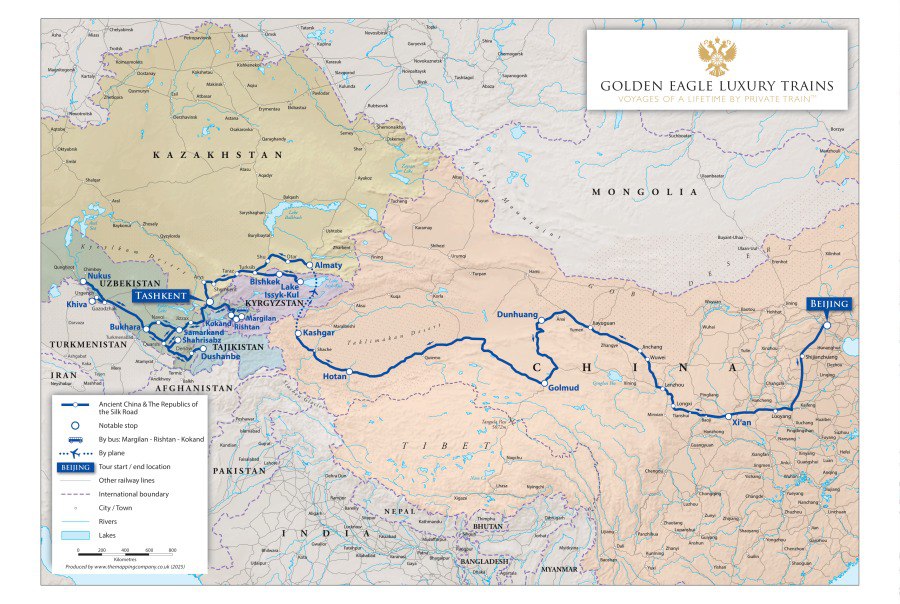
Rail tourism is gaining traction in Central Asia, offering travelers a slower yet more immersive way to experience the region’s historic Silk Road cities. Kazakhstan and Uzbekistan have recently expanded their joint Jibek Joly tourist train route to include Dushanbe, the capital of Tajikistan, an initiative that further strengthens regional railway tourism. A new high-end offering has now entered the market. British operator Golden Eagle Luxury Trains has launched The Grand Silk Road, a 22-day luxury rail journey traversing key cultural and historical landmarks along the ancient Silk Road corridor. Spanning approximately 3,862 kilometers, the route begins in Beijing and concludes in Tashkent. It passes through northwest China and four Central Asian countries: Kazakhstan, Kyrgyzstan, Tajikistan, and Uzbekistan. Notable stops include Almaty, Bishkek, Lake Issyk-Kul, Dushanbe, and Uzbekistan’s major heritage cities, Samarkand, Bukhara, Khiva, Kokand, and Nukus. The inaugural departure is scheduled for September 21 to October 12, 2026. The route is expected to increase high-end tourism to Central Asia. Due to the absence of a direct railway link between China and Kyrgyzstan, a segment of the journey, between Kashgar and Almaty, will be completed by air. Kyrgyzstan’s existing rail network connects to Kazakhstan, extending to Bishkek and Balykchi, near Lake Issyk-Kul. Meanwhile, China, Kyrgyzstan, and Uzbekistan are advancing the construction of a new cross-border railway that will directly link the three countries. Once operational, the line is expected to facilitate both freight transit and tourism, providing a critical new artery for regional connectivity.

EBRD Invested Over $100 Million in Tajikistan’s Economy in 2025

The European Bank for Reconstruction and Development (EBRD) invested nearly $103 million in Tajikistan’s economy in 2025, signing 19 agreements over the course of the year. The funding targeted key sectors including energy, transport, municipal infrastructure, and private sector development. According to the bank, 83% of its 2025 loan portfolio in Tajikistan supported sustainable infrastructure projects. Another 14% of resources were channelled through local banks to finance small and medium-sized enterprises (SMEs), women’s and youth entrepreneurship initiatives, and programs focused on climate adaptation and resource efficiency. The public sector received the majority of financing, accounting for 83% of the EBRD’s annual activity in the country. Of the total lending volume, approximately 58% was directed toward green economy development. One of the year’s largest initiatives was a financing package of up to €43 million for the state-owned power distribution company, Shabakahoi Taqsimoti Barq. The package includes an EBRD sovereign loan of up to €28 million and a €15 million grant from the European Union. These funds are being used to modernize electricity metering and billing systems across nine cities in the Khatlon and Sughd regions. Significant investment also went into road infrastructure. An EBRD sovereign loan of up to €38 million, combined with an $86.7 million grant from the Asian Development Bank, will fund the reconstruction of the Danghara-Guliston highway. The route connects the north and south of the Khatlon region, which produces over half of Tajikistan’s agricultural output and is home to more than one-third of the population. A major energy milestone was achieved in 2025 with the completion of the Kayrokkum hydropower plant’s modernization. The plant’s installed capacity increased from 126 MW to 174 MW after all six units were brought online. Serving around 500,000 people in the Sughd region, the project, initiated in 2019, was financed with $196 million arranged by the EBRD. The bank also issued three sovereign loans totaling over €12 million for water supply system upgrades in Kulyab and Yavan, and for the modernization of Dushanbe’s centralized heating system. Alongside infrastructure projects, the EBRD expanded its support for the private sector. In 2025, more than 500 small enterprises across Tajikistan received various forms of assistance from the bank.

Starlink Satellite Internet Now Available in Tajikistan

Starlink, the satellite internet service operated by SpaceX, has officially launched in Tajikistan, the company announced on February 5. “Starlink’s high-speed, low-latency internet is now available in Tajikistan,” the company posted on X. The rollout expands Starlink’s coverage in Central Asia, a region where mountainous terrain and remote settlements have long made stable internet access difficult. Starlink is operated by Starlink Services LLC, a global telecommunications provider and wholly owned subsidiary of the U.S. aerospace company SpaceX, founded by Elon Musk. The service operates via a constellation of low-Earth orbit satellites, delivering broadband internet to areas underserved by traditional infrastructure. It is now active in approximately 130 countries and territories worldwide. The expansion into Tajikistan follows Starlink’s earlier rollout in Kazakhstan. On June 12, 2025, Kazakhstan’s Ministry of Digital Development, Innovation, and Aerospace Industry signed a formal agreement with Starlink, requiring the company to adhere to national telecommunications and information security regulations. This agreement paved the way for official use of the service by citizens, businesses, and government agencies, including in rural and hard-to-reach areas. In Kazakhstan, Starlink’s pricing is publicly listed on the company’s website. The most basic home internet plan starts at 23,000 tenge (around $46) per month with speed limitations. Unlimited plans begin at 31,000 tenge (approximately $62), while mobile and travel packages are available at higher price points. Starlink also plans to begin operations in Uzbekistan in 2026, although service has not yet launched there.

Rogun Dam’s Cross-Border Environmental Impact Draws Scrutiny

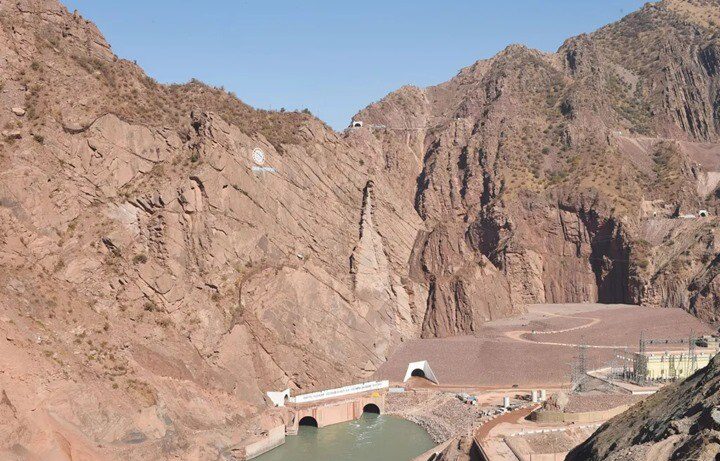
An international environmental coalition has raised new concerns about the environmental assessment of Tajikistan’s Rogun Hydropower Plant, warning that its potential cross-border and cumulative impacts on downstream countries are being underestimated. The group, Rivers without Boundaries, presented its latest report, Eyes Wide Shut: Ignoring the Transboundary and Cumulative Impacts of the Rogun Hydropower Plant, highlighting what it describes as serious shortcomings in the project’s environmental and social review. According to the report, the current assessment of Rogun’s transboundary effects does not fully comply with the environmental and social standards of the World Bank. Experts argue the analysis relies on outdated data from 2014 and uses static modeling scenarios that fail to reflect climate change trends and the current hydrological realities of the Amu Darya basin. Rivers without Boundaries contends that this approach prevents a realistic understanding of how the project could affect downstream water availability and ecosystems. The coalition also criticizes what it describes as a failure to account for key external factors, particularly the construction of Afghanistan’s Qosh Tepa canal, which is expected to significantly alter regional water balances. Rather than applying a basin-wide and cumulative assessment, the developers have labeled Rogun’s impact as “neutral”, a claim environmental experts deem misleading. “The authors of the impact assessment preferred to act with their eyes wide shut, excluding the most sensitive and uncomfortable scenarios,” said Evgeny Simonov, international coordinator of Rivers without Boundaries. He added that portraying the world’s tallest dam as environmentally neutral contradicts the very premise of cumulative impact assessment. Without binding commitments on environmental water releases and artificial floods, Simonov warned, the project risks prolonging ecological degradation in downstream areas for decades. The report flags particular threats to biodiversity and wetlands in the Amu Darya delta, many of which are protected under the Ramsar Convention. It notes that the Rogun assessment lacks clear mechanisms to guarantee water flows to these critical habitats during dry periods. The coalition also points to significant gaps in public consultation processes, especially in downstream countries, raising questions about the legitimacy of conclusions drawn regarding the project’s social acceptability. Alexander Kolotov, the coalition’s Central Asia regional coordinator, said consultations were not conducted in affected areas of Uzbekistan and Turkmenistan. “The risks linked to seasonal water redistribution and the launch of the Qosh Tepa canal were effectively left out of the analysis,” he said, calling this a dangerous precedent for a project of regional significance. Rivers without Boundaries is calling for a full Strategic Environmental Assessment of the entire Amu Darya basin, along with the development of legally binding water management plans that include climate adaptation strategies and biodiversity protection measures. Without a fundamental revision of the current approach, the coalition warns, Rogun could become a long-term source of environmental and social tension in Central Asia. At the heart of the concern is the filling of the Rogun reservoir, which experts say could reduce water flows to the Amu Darya delta by 25% or more, accelerating desertification and threatening the livelihoods of up to 10...

Tajikistan Seeks to Expand the Geography of Labor Migration

Tajikistan has stepped up efforts to expand destinations for labor migration, including countries in Europe and East Asia. The announcement was made by Minister of Labor, Migration and Employment Soleha Kholmahmadzoda at a press conference summarizing the ministry’s work in 2025. According to the Kholmahmadzoda, a memorandum of cooperation with relevant agencies of the Kingdom of Belgium was signed in November last year and is currently undergoing internal approval procedures. The agreement provides for the possibility of organized employment for Tajik citizens in the Benelux countries, namely Belgium, the Netherlands, and Luxembourg. The most in-demand sectors include agriculture, construction, social services, and healthcare. The Ministry of Labor said the initiative is intended to create transparent and legal employment channels, enhancing protection for migrant workers and reducing the risks associated with illegal employment. Cooperation with Japan is also advancing. The ministry has established a special working group and developed a mechanism to attract Tajik citizens as “specially qualified” workers. Relevant documents have been sent to the Tajik Embassy in Japan for publication on the website of the Japan International Training Cooperation Organization (JITCO). In addition, the Agency for Employment Abroad has prepared a draft agreement with Japanese employers. As a result, the first 10 citizens of the republic have already secured jobs. Special attention is also being given to cooperation with South Korea. In 2025, the Korean side allocated 800 quotas for labor migrants from Tajikistan. After completing professional training and passing the EPS-TOPIK exam, 21 people were employed through the Korean job portal, while documentation is still being processed for 12 additional candidates. Despite the expansion of destinations, Russia remains the primary labor market for Tajik citizens. According to the Ministry of Labor, in 2025, 30 licensed entities sent 35,747 citizens abroad through organized channels, an increase of 18,805 compared with the previous year. Of these, more than 31,000 were employed in Russia, Deputy Minister of Labor, Migration and Employment Norzoda Sharif Sanginmurod said. These figures broadly correspond with estimates from the Russian side. Official data indicate that more than 1 million Tajik citizens are currently working in Russia, mainly in construction, housing and utilities, transport, and logistics.