• KGS/USD = 0.01144 0%
  • KZT/USD = 0.00212 0%
  • TJS/USD = 0.10456 0.19%
  • UZS/USD = 0.00008 0%
  • TMT/USD = 0.28490 0%
  • KGS/USD = 0.01144 0%
  • KZT/USD = 0.00212 0%
  • TJS/USD = 0.10456 0.19%
  • UZS/USD = 0.00008 0%
  • TMT/USD = 0.28490 0%
  • KGS/USD = 0.01144 0%
  • KZT/USD = 0.00212 0%
  • TJS/USD = 0.10456 0.19%
  • UZS/USD = 0.00008 0%
  • TMT/USD = 0.28490 0%
  • KGS/USD = 0.01144 0%
  • KZT/USD = 0.00212 0%
  • TJS/USD = 0.10456 0.19%
  • UZS/USD = 0.00008 0%
  • TMT/USD = 0.28490 0%
  • KGS/USD = 0.01144 0%
  • KZT/USD = 0.00212 0%
  • TJS/USD = 0.10456 0.19%
  • UZS/USD = 0.00008 0%
  • TMT/USD = 0.28490 0%
  • KGS/USD = 0.01144 0%
  • KZT/USD = 0.00212 0%
  • TJS/USD = 0.10456 0.19%
  • UZS/USD = 0.00008 0%
  • TMT/USD = 0.28490 0%
  • KGS/USD = 0.01144 0%
  • KZT/USD = 0.00212 0%
  • TJS/USD = 0.10456 0.19%
  • UZS/USD = 0.00008 0%
  • TMT/USD = 0.28490 0%
  • KGS/USD = 0.01144 0%
  • KZT/USD = 0.00212 0%
  • TJS/USD = 0.10456 0.19%
  • UZS/USD = 0.00008 0%
  • TMT/USD = 0.28490 0%

Viewing results 241 - 246 of 1492

Learning About Glaciers: Scientists Extract Ice Cores in Tajikistan

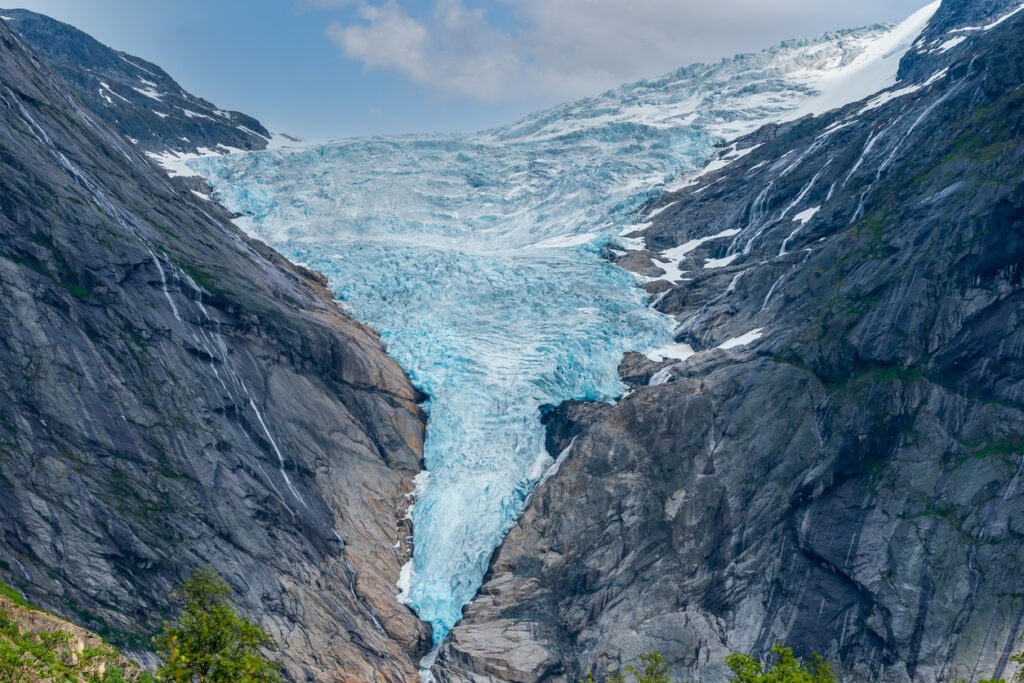
A group of international scientists is on a complex, arduous expedition to learn more about the glaciers of the Pamir Mountains in Tajikistan, drilling and extracting two deep ice cores in what the team descibes as a race against the impact of global warming.  Scientists from the Swiss-funded PAMIR Project and their Tajik partners are working at an altitude of 5,800 meters on the Kon Chukurbashi ice cap, taking ice samples down to the bedrock at an estimated depth of just over 100 meters.   “The Pamirs remain to date one of the last major high-altitude regions where no deep ice core has ever been retrieved,” the PAMIR Project said in a statement. “If many glaciers in the Pamir Mountains of Tajikistan still seem resilient in the face of global warming, scientists do not know how long this will last.” The two-week expedition began on September 24. If successful, it will secure environmental information from air bubbles and chemical trace concentrations and isotopes, and possibly organisms trapped in the ice, and help future generations anticipate and adapt to changes in Earth’s climate and ecosystems, the project said.  The expedition is being coordinated by the University of Fribourg in Switzerland and conducted by the National Academy of Sciences of Tajikistan along with Swiss, Japanese, and American universities. Because of the extreme altitude, team members had prepared for gradual acclimatization with a plan for a base camp and a camp at higher altitude. Logistical difficulties and the challenges of site access have prevented such an expedition in the past.  The Pamir glaciers are a riddle to scientists who have observed both health and decay in the reaction of the high-altitude ecosystems to climate change. Various theories, including more wind-induced precipitation at high elevations and summertime cooling, have been put forward. But field measurements are lacking and the theories have not been tested against scientific data.  At an international conference on glacier preservation in Dushanbe this year, President Emomali Rahmon of Tajikistan called for the establishment of a regional lab to study the topic. Most of Central Asia’s glaciers are in Tajikistan.   The United Nations said last month that some 1,000 glaciers out of the total number of 14,000 that have existed in Tajikistan in recent decades have disappeared and many small ones are expected to vanish in the next 30-40 years.  A recent study published in the Communications Earth & Environment journal noted the relative stability of some glaciers in Central Asia, but said there had been a recent drop in glacier health in the Northwestern Pamirs following significantly lower snowfall and snow depth since 2018.  One of the authors of that study is Evan Miles, a Switzerland-based glaciologist who is leading the current PAMIR Project expedition. “This ice holds hundreds and possibly even thousands of years of physical records of snowfall, temperature, dust, and atmospheric chemistry,” Miles said, according to the project statement. “We are racing against time to retrieve it before climate-change induced melt damages these natural archives forever.”  Of the two ice...

Afghanistan’s Qosh Tepa Canal Raises Water Security Fears

Water has long been one of Central Asia’s most contested resources, shaping agriculture, energy policy, and diplomacy across the region. Recently, Afghanistan’s Qosh Tepa Canal project has emerged as a central point in this debate. Promoted by the Taliban as a vital step toward achieving food security and economic growth, the canal also raises alarm bells among downstream neighbors who heavily depend on the Amu Darya River. Now, according to Islamic Emirate spokesman Zabihullah Mujahid, the second phase of the project is expected to be completed within five months, raising further concerns among downstream countries about its potential impact on regional water security. Progress on the Ground In August, the Afghan authorities stated that 93% of the second phase had been completed. Videos show the canal lined with concrete and stone in some sections, alongside the construction of large and medium-sized bridges to link surrounding settlements. The project spans 128 kilometers from Dawlatabad district in Balkh province to Andkhoy district in Faryab province and involves over 60 contractors, making it one of Afghanistan’s largest infrastructure projects. Origins and International Support The canal’s roots trace back to earlier international efforts. While some sources attribute its conceptual origins to Soviet or British engineers in the 1960s, significant development began in 2018 under President Ashraf Ghani. The project was supported by the U.S. Agency for International Development (USAID) and Indian engineering firms. According to the Scientific-Information Center of the Interstate Commission for Water Coordination (SIC ICWC), a $3.6 million feasibility study was launched in Kabul in December 2018, funded by USAID and conducted by AACS Consulting and BETS Consulting Services Ltd. The study was coordinated with several Afghan ministries, but has not been published. Following the Taliban’s takeover, the Islamic Emirate held an official inauguration ceremony on March 30, 2022. The full canal is designed to stretch 285 kilometers, measuring 100 meters wide and 8.5 meters deep, and is expected to divert an estimated six to ten cubic kilometers of water annually from the Amu Darya. Afghan media have quoted water management expert Najibullah Sadid, who projected the canal could generate between $470 million and $550 million in annual revenue. Regional Concerns and Environmental Risks The project has raised alarm in Uzbekistan, Turkmenistan, and Tajikistan, countries that depend heavily on the Amu Darya for irrigation. Experts at SIC ICWC point out that no environmental impact assessment was conducted for downstream states, nor were they formally notified of the construction, as required by international water conventions. In December 2022, Uzbek President Shavkat Mirziyoyev called for practical dialogue with Afghanistan and the international community to strengthen regional water security. Adroit Associates estimates that the canal could eventually divert up to 13 billion cubic meters annually, nearly one-quarter of the Amu Darya’s average flow. Environmental risks are also mounting. Analysts warn that Uzbekistan, which relies heavily on the river for agriculture, could face soil degradation and declining crop yields. Turkmenistan, where agriculture accounts for 12% of GDP, may also suffer severe disruptions. Some studies suggest Uzbekistan and...

Teacher’s Assault on Student Sparks Debate on School Violence in Tajikistan

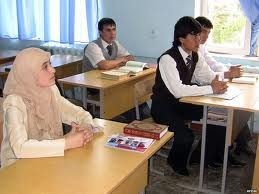
An alleged case of school violence in Tajikistan has reignited public concern after an 11th-grade student accused a teacher of assault in the southern city of Levakant. The incident, which has generated conflicting accounts from authorities and the student’s family, is now under investigation by law enforcement. Conflicting Accounts The case surfaced on September 30, when a video circulated on social media showing the student unconscious. Radio Ozodi reported that the boy had received “a strong blow to the back of the head from his teacher.” According to the student, Mehmed Bozorov, the incident occurred on September 6 at School No. 4 in the village of Bohturobod. He said he had stepped out during a break to borrow a pen and was struck by the teacher upon returning. Bozorov claims he lost consciousness and was hospitalized for 15 days. The Levakant Education Department offered a different version of events. It stated that Bozorov had shown disrespect toward the teacher, who “lost his temper and slapped him.” Officials said the student did not suffer serious injuries. Hospitalization and Family Response Bozorov’s uncle, Jamol Bozorov, a medical professional, was called to the school after the student complained of feeling unwell. The boy collapsed shortly afterward. His uncle recorded the incident and later shared the footage with local media. Bozorov was admitted to the central hospital in Levakant. A private lab, Aksi Shifo, found no signs of serious trauma, but his mother insisted on continued treatment. He remained hospitalized for 13 days. The Education Department stated that the teacher covered all medical costs. Bozorov has since returned to school. Official Response The Ministry of Education and Science of Tajikistan has met with both parties involved. “Farhod Nazarov is a young teacher; he should not have resorted to violence, but the student also showed disrespect. Responsibility lies with both,” the ministry said in a statement. Law enforcement is conducting a preliminary investigation. The student and his family have not commented on the ministry’s statement. A Broader Issue Violence in Tajik schools is not uncommon. Last year alone, three separate incidents involving physical altercations between teachers and students were reported, in the town of Bokhtar and twice in Khovaling district. Following previous complaints about bullying, Tajik authorities introduced a methodological guide aimed at helping teachers prevent bullying and cyberbullying. However, the Levakant case underscores that school violence remains a persistent and unresolved issue.

Afghanistan Absent, Not Forgotten – Central Asia’s UNGA Strategy

From September 23–29, 2025, the UN General Assembly’s general debate unfolded without an Afghan delegation addressing those assembled amid the unresolved UN seat issue. Yet Afghanistan was hardly absent. Central Asian presidents used their platform to project a collective stance that stopped short of recognition while rejecting isolation. Their message reflected a regional doctrine of managed engagement: keep the neighbor connected enough to limit collapse, through corridors, energy grids, and humanitarian channels. President Shavkat Mirziyoyev of Uzbekistan offered the clearest blueprint, urging the international community to “prevent [Afghanistan’s] isolation,” and calling for support to develop transport and energy corridors across Afghan territory. That language aligns with initiatives already underway: a multilateral framework signed in Kabul on July 17 to move the Trans-Afghan railway toward feasibility, and fresh agreements on the 500 kV Surkhan–Pul-i-Khumri line designed to stabilize Afghanistan’s power supply while linking it to a regional grid. Mirziyoyev’s message was a bid to convert geography into risk management. Kazakhstan struck a technocratic note. Kassym-Jomart Tokayev told the Assembly that “inclusive development in Afghanistan” is the basis for long-term regional peace and stability. This phrasing matches Almaty’s UN-backed hub for the Sustainable Development Goals and Astana’s self-image as the region’s administrative center. The goal is to stabilize the weakest link so trade and transit do not fracture. Kyrgyz President Sadyr Japarov used part of his brief UN address to demand that roughly $9 billion in Afghan central-bank assets frozen in Western jurisdictions be returned to “the Afghan people,” and called isolation “unacceptable.” In a remittance-dependent economy like Kyrgyzstan’s, collapse next door risks hunger, displacement, and crime. His remarks were both moral and practical, and marked the sharpest public challenge to Western policy voiced by any Central Asian leader this week. Traditionally, Tajikistan has taken the hardest line on the Taliban. This time, Emomali Rahmon emphasized humanitarian assistance, citing drought-hit regions and areas devastated by the August 31 eastern Afghanistan earthquake, and said Dushanbe supports peace, stability, and socio-economic development next door. The quake killed more than 2,000 people and destroyed thousands of homes across Kunar, Nangarhar, and Laghman just as aid budgets were shrinking. Turkmenistan took a different approach. President Serdar Berdimuhamedov did not mention Afghanistan, instead promoting Ashgabat’s permanent neutrality as a proposed UN agenda item, “Neutrality for Peace and Security,” along with broad transport and energy initiatives. This approach preserved flexibility on projects like TAPI without committing to specifics in New York. What makes these speeches consequential is how closely they mirror work on the ground. The Trans-Afghan railway, long dismissed as only a plan, now has a political framework and a declared security pledge from Kabul. Whether it moves forward depends on both capital and security, but for Tashkent, a southern outlet to Pakistani ports is the difference between landlocked and land-linked. The Surkhan–Pul-i-Khumri line is more conventional and urgent: a 200-kilometer fix to keep the lights on and the revenues flowing. The long-troubled CASA-1000 power corridor is also inching back into view after being paused post-2021, with...

Tajikistan Debates Social Media Ban for Children Under 14

A controversial proposal in Tajikistan to ban social media use for children under the age of 14 has sparked public and expert debate. While many agree that the issue requires urgent attention, critics argue that education, digital literacy, and parental involvement offer more effective solutions than blanket prohibitions. Parliamentary Push for Stricter Controls The initiative was introduced by lawmaker Dilnoza Ahmadzoda in an article in Narodnaya Gazeta. She proposed banning access to social media for children under 14 and requiring written parental consent for adolescents aged 14 to 17. Ahmadzoda pointed out that amendments to the Law on the Protection of Children’s Rights were already passed earlier this year, targeting false and harmful content. However, she contends that these changes do not go far enough. “It is necessary to introduce further changes to ensure that children’s and teenagers’ use of social media is under control,” Ahmadzoda said. Expert Concerns: "A Ban Is Not the Solution" Experts caution that an outright ban may do more harm than good. Media literacy specialist Rustam Gulov warned that prohibitions often increase curiosity and drive youth online behavior underground. “A ban is not the solution. If you forbid it, interest will only grow, and young people will find ways to hide their activity. Such measures push them backward in terms of technological development. Control is more effective,” Gulov said. He noted that while platforms already impose age restrictions, children frequently bypass them using false birthdates or by accessing accounts through their parents’ devices. Gulov recommended closer collaboration with companies such as Meta to establish more effective content controls. He also advocated for the inclusion of media literacy education in school programs. “Children should learn from an early age how to use the internet and social networks responsibly and how to distinguish false or harmful information,” he said. Another major concern, according to Gulov, is the lack of quality digital content in literary Tajik. As a result, many young users switch to Russian-language platforms. “Social networks can serve as an educational tool, if there is enough quality content in Tajik,” he added. Public Opinion in Dushanbe Reactions among residents of the capital are mixed. Some favor tight restrictions, while others emphasize the potential benefits of social media in education and personal development. Psychologist Nigina Mamadjonova opposes a complete ban but underscores the importance of parental responsibility. “This is primarily the responsibility of parents. Unfortunately, most of them do not take it seriously,” she said. Mamadjonova criticized the widespread practice of giving smartphones to children “for quick peace and quiet” without supervising their activity. She warned that this leaves children vulnerable to cyberbullying, manipulation, and online predators. She also argued that preschoolers should not use phones at all, as screen time isolates them from physical activity and social interaction. For older children, she supports promoting digital literacy and steering them toward constructive online content. Mixed Results Abroad Other countries have implemented similar restrictions with varying degrees of success. In Australia, minors under 16 are prohibited from using platforms...

Tourism in Tajikistan: Five Years of Progress and Persistent Barriers

Five years ago, Canadian researcher Christian Bleuer identified 25 key obstacles hindering the growth of Tajikistan’s tourism sector. Since then, the industry has made measurable progress but many challenges remain unresolved. Digitalization and Initial Progress Significant strides have been made in digital infrastructure. The introduction of electronic visas, online services, and the availability of eSIM cards has improved access for international travelers. Dushanbe has witnessed the opening of new hotels and restaurants, an expansion of taxi services in major cities, and the reconstruction of sections of the M41 highway. Other positive steps include training programs for tour guides, the creation of tourist information centers in Dushanbe, Khorog, and other cities, and growing competition in the hospitality and restaurant industries. Experts also note that travel bloggers and social media have, in some cases, done more to improve the country’s image than official marketing campaigns. Partial Improvements While services have improved in urban areas, regional disparities persist. Tourists can now find decent hotels and cafes in major cities, but service quality outside these hubs remains inconsistent. The e-visa system has streamlined entry procedures, although public awareness of the platform is still low. Digital tools such as Google Maps and mobile apps assist navigation in urban centers, but coverage remains sparse outside Dushanbe and Khujand. Financial infrastructure has also improved, with more ATMs available in the capital. However, access to foreign currency remains a barrier. Aviation has seen some progress under the "Open Skies" policy, with new routes to China and Uzbekistan launched, though high airfares continue to deter potential visitors. Ongoing Challenges Several systemic issues continue to hamper tourism development. Connectivity remains weak: Tajikistan ranks 117th globally for fixed internet speed and lags behind regional peers in mobile data performance, averaging under 24 Mbps. Environmental concerns also diminish the visitor experience. Litter is visible not only in rural areas but even in Dushanbe. Transport remains problematic, with the Jirgatal border crossing closed to foreigners and the Pamir Highway via the Khaburabad Pass largely inaccessible during winter months. A national ban on drones restricts opportunities for photo and video tourism. Additionally, poor coordination among tour operators, taxi drivers, and hoteliers prevents the formation of a unified tourism strategy. Structural Constraints Some limitations are more difficult to overcome. Tajikistan’s geography, landlocked and bordering Afghanistan, poses accessibility challenges. The country also lacks the architectural heritage that makes neighboring Uzbekistan a dominant player in regional cultural tourism. Urban development trends further complicate matters. The demolition of historical buildings and widespread tree-cutting in Dushanbe have eroded the capital’s aesthetic appeal. Tajikistan’s Tourism Development Strategy to 2030 acknowledges the sector’s underperformance. Its contribution to the global tourism market remains modest, constrained by low investment, weak infrastructure, and uneven service quality. Nevertheless, experts believe the sector holds untapped potential. Tourism could create employment opportunities for young people and help reduce labor migration. Realizing this potential will require stronger private sector involvement, upgraded services, and more effective international promotion.