• KGS/USD = 0.01144 0%
  • KZT/USD = 0.00207 0%
  • TJS/USD = 0.10407 -0.29%
  • UZS/USD = 0.00008 0%
  • TMT/USD = 0.28571 0%
  • KGS/USD = 0.01144 0%
  • KZT/USD = 0.00207 0%
  • TJS/USD = 0.10407 -0.29%
  • UZS/USD = 0.00008 0%
  • TMT/USD = 0.28571 0%
  • KGS/USD = 0.01144 0%
  • KZT/USD = 0.00207 0%
  • TJS/USD = 0.10407 -0.29%
  • UZS/USD = 0.00008 0%
  • TMT/USD = 0.28571 0%
  • KGS/USD = 0.01144 0%
  • KZT/USD = 0.00207 0%
  • TJS/USD = 0.10407 -0.29%
  • UZS/USD = 0.00008 0%
  • TMT/USD = 0.28571 0%
  • KGS/USD = 0.01144 0%
  • KZT/USD = 0.00207 0%
  • TJS/USD = 0.10407 -0.29%
  • UZS/USD = 0.00008 0%
  • TMT/USD = 0.28571 0%
  • KGS/USD = 0.01144 0%
  • KZT/USD = 0.00207 0%
  • TJS/USD = 0.10407 -0.29%
  • UZS/USD = 0.00008 0%
  • TMT/USD = 0.28571 0%
  • KGS/USD = 0.01144 0%
  • KZT/USD = 0.00207 0%
  • TJS/USD = 0.10407 -0.29%
  • UZS/USD = 0.00008 0%
  • TMT/USD = 0.28571 0%
  • KGS/USD = 0.01144 0%
  • KZT/USD = 0.00207 0%
  • TJS/USD = 0.10407 -0.29%
  • UZS/USD = 0.00008 0%
  • TMT/USD = 0.28571 0%

Viewing results 445 - 450 of 1456

Kyrgyzstan and Tajikistan Move Closer to Electricity Exports to South Asia

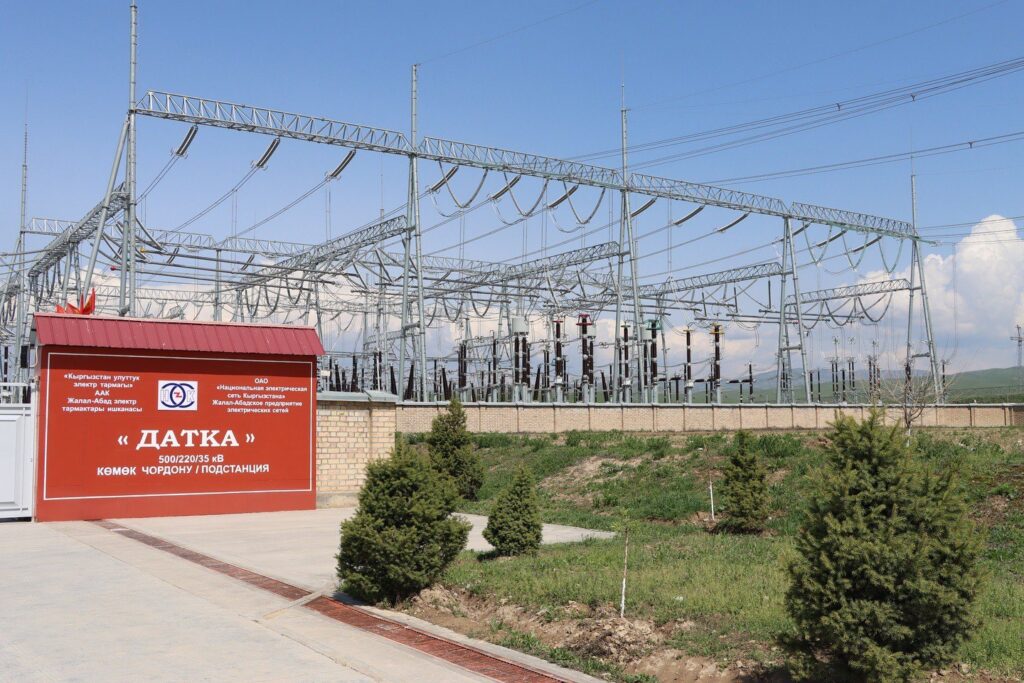
Kyrgyzstan and Tajikistan have officially launched the 500 kV Datka-Sughd overhead power transmission line, a key component of the CASA-1000 (Central Asia-South Asia) electricity transmission project. The initiative is designed to export surplus summer electricity from the two Central Asian countries to Afghanistan and Pakistan. The 485-kilometer line, which connects the Datka substation in Kyrgyzstan with the Sughd substation in Tajikistan, was inaugurated on March 31 during Kyrgyz President Sadyr Japarov’s visit to the Tajik city of Khujand. Tajik President Emomali Rahmon also attended the ceremony. The new line enables bidirectional power flows, significantly enhancing the resilience and stability of Central Asia’s power grid. According to Kyrgyzstan’s Ministry of Energy, both Kyrgyzstan and Tajikistan have completed their respective infrastructure components of the CASA-1000 project. Project Progress and Timeline In Pakistan, construction is expected to be completed by August 2025. In Afghanistan, where work had stalled, construction has now resumed. Over 95% of the necessary materials have already been delivered to the country. Full completion of the Afghan section and the start of commercial operations are expected in 2027. The CASA-1000 project, with a total cost exceeding $1.2 billion, is financed by the World Bank, the European Investment Bank, the European Bank for Reconstruction and Development, the Islamic Development Bank, and other international partners. The Kyrgyz and Tajik sections alone accounted for approximately $544 million, or 45.3% of the total project budget. Once fully operational, CASA-1000 will have the capacity to transmit up to 11 billion kilowatt-hours of electricity per year. Economic and Regional Impact Tajikistan and Kyrgyzstan are expected to jointly export up to 5 billion kilowatt-hours of green electricity annually to Pakistan, roughly 5% of Pakistan’s total electricity consumption. The projected revenue from these exports is over $250 million per year for the two countries. The successful implementation of CASA-1000 not only promises economic benefits for Central Asia but also marks a significant step in regional energy cooperation, renewable energy deployment, and cross-border infrastructure integration.

Tajikistan’s Green Deal: EBRD Launches Sustainability Pilot Projects

On April 1, the European Bank for Reconstruction and Development (EBRD) inaugurated two demonstration sites under the Tajikistan Green Economy Financing Facility (GEFF II) in the town of Bokhtar. The initiative promotes innovation in sustainable energy and agriculture, backed by funding from South Korea, Austria, and the Green Climate Fund. The total program budget is $50 million. Bringing Energy Efficiency to Life The first site, located at the MoDO Khumo branch in Bokhtar, features a hybrid solar photovoltaic system combining solar panels with energy storage. This technology ensures a stable power supply even during periods of low solar activity. Real-time data on electricity generation and consumption is displayed in the customer area, helping to raise public awareness of sustainable energy practices. The second site, at the Tanzila dekhkan farm in Vakhsh district, showcases how green technologies can boost crop yields and reduce environmental impact. The installation includes: Drip irrigation systems that save up to 70% of water; Solar panels for off-grid electricity; Biogas units using organic waste; Vertical farming in compact spaces. These solutions aim to enhance agricultural productivity and improve farmers' incomes. Strategic Development with the EBRD GEFF II also prioritizes gender equality, offering targeted support to women entrepreneurs seeking green financing for sustainable business ventures. The demonstration sites form part of the EBRD’s broader strategy to promote sustainable development across Tajikistan. Additional pilot locations are planned to showcase further environmentally friendly technologies. EBRD’s Broader Footprint in Tajikistan Established in 1991, the EBRD provides financial and technical support to nearly 40 countries for economic and structural reforms. In Tajikistan, the bank remains a key investor, having committed over €1 billion across 183 projects. Notable EBRD-supported initiatives include: Dushanbe Infrastructure Modernization - €28.45 million to improve roads and a bridge over the Varzob River; Dangara-Guliston Road Upgrade - €38 million for roadworks and infrastructure for electric vehicles; CLIMADAPT - $10 million to help farmers and businesses adopt climate-resilient technologies; Kayrakkum Hydroelectric Plant Modernization - $88 million to boost energy efficiency and support climate adaptation. These investments are helping Tajikistan build climate resilience, modernize infrastructure, and create sustainable pathways for regional development.

Controversies and Rejections: What Future Awaits the CSTO?

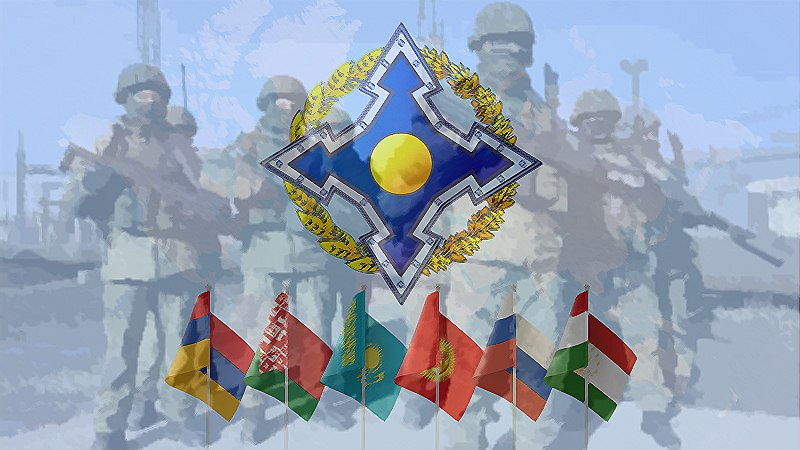
Armenia has officially refused to contribute financially to the Collective Security Treaty Organization (CSTO), a bloc tasked with ensuring the independence, territorial integrity, and sovereignty of its member states. Meanwhile, the organization’s Secretary General, Imangali Tasmagambetov, has come under scrutiny for remarks he made related to the ongoing conflict between Russia and Ukraine. Shifting Alliances and Regional Tensions Founded in 1992, the CSTO comprises Russia, Kazakhstan, Kyrgyzstan, Belarus, Tajikistan, and Armenia. Georgia, Azerbaijan, and Uzbekistan have withdrawn from the organization at various times. While the CSTO regularly conducts joint military exercises and cooperates on counter-terrorism and anti-narcotics efforts, the war in Ukraine has exposed internal divisions and challenged the bloc’s cohesion. Tasmagambetov Responds to Criticism In March, Secretary General Tasmagambetov raised eyebrows in an interview with a Russian outlet, warning that any deployment of EU troops to Ukraine could escalate regional tensions. He stated that the CSTO would be ready to provide assistance “within the framework of the organization’s charter and subject to approval by all member states.” The remarks sparked a backlash, particularly on social media in Kazakhstan, where some users accused Tasmagambetov, the former prime minister, of adopting a pro-Russian stance. Responding in late March, Tasmagambetov recorded a rare video message clarifying his position. “How can one calmly react to baseless claims that I would send my compatriots to war?” he asked. “There will always be those who distort my words. I have always remained loyal to my people; the interests of our country have always come first.” Tasmagambetov went on to urge viewers to think critically about information shared online. This controversy follows an earlier statement by Aibek Smadiarov, spokesperson for Kazakhstan’s Ministry of Foreign Affairs, who said in October 2022 that the CSTO had no plans to involve itself in the Ukraine conflict. “The CSTO's jurisdiction is limited to the internationally recognized territories of its member states,” Smadiarov stated. Kazakhstan, meanwhile, is reviewing a report by a Ukrainian institution that said about 661 Kazakh citizens have fought for Russia since it launched a full-scale invasion of Ukraine in February 2022. The I Want To Live center, which is run by the Ukrainian security services and assists with surrender requests from soldiers fighting for Russia, published a list of what it said were the Kazakh nationals. Of the 661, at least 78 have been killed, according to the center. Without providing details, it said it received the list from its own sources within the Russian military. Kazakh media quoted Igor Lepekha, Kazakhstan’s deputy interior minister of internal affairs, as saying the numbers have to be checked because it is unclear whether they are reliable. Kazakhstan bans mercenary activities in foreign conflicts and has opened a number of related investigations in the last few years. Last year, a court in Kazakhstan sentenced a Kazakh national to more than six years in jail for fighting with Russia’s Wagner Group in Ukraine. Armenia Pulls Back Adding to the bloc’s instability, Armenia recently announced that it would no longer finance the...

Exposing the Cracks: Asem Tokayeva on the Decline of RFE/RL and Central Asia’s Media Future

Speaking to The Times of Central Asia, Asem Tokayeva, a seasoned journalist with years of experience at Radio Azattyq - Radio Free Europe/Radio Liberty, offers a compelling critique of RFE/RL's challenges, from internal corruption allegations to its declining relevance in Central Asia's evolving media landscape. Tokayeva started her career with Express K and other publications in Astana before joining Radio Azattyq as a freelancer in 2004 and contributing to the groundbreaking Russian-language program, Паровоз ("locomotive"). In 2008, she played a pivotal role in launching Radio Azattyq’s Russian-language website, a platform recognized for tackling sensitive issues and fostering free discussion. Her work contributed to the site's recognition by the Online News Association in 2009 for "Protecting Citizens' Rights to Information." After nearly 14 years at Azattyq, including over seven at its Prague office, Tokayeva left in late 2017 to further her academic pursuits, earning a Master's degree from Charles University in Prague, where her dissertation focused on Media Framing: Transformation of Nursultan Nazarbayev's Image in the U.S. Media. TCA: How do you feel about the funding cuts to the U.S. Agency for Global Media (USAGM), which oversees projects like RFE/RL and Voice of America? I have always advocated for the reform of Radio Free Europe/Radio Liberty, and now the new U.S. administration has simply cut its funding in one fell swoop. However, I don't see this as just Trump's whim. The work of this media outlet had long been criticized in Washington, and not only during his tenure. During Barack Obama’s and Joe Biden’s presidencies, American media published investigations into abuses, including the infiltration of pro-Kremlin agents, within international broadcasting corporations funded through USAGM. When Hillary Clinton was Secretary of State, she called the entire U.S. international broadcasting structure, which includes Radio Azattyq, "practically defunct." Even during Bill Clinton’s presidency, there were serious discussions in Washington about shutting down these radio stations, as they were considered outdated following the collapse of the USSR and the end of the Cold War. By the 1990s, it was already difficult to claim that Radio Liberty was the sole source of alternative information. During the August 1991 coup in Moscow, other radio stations provided more timely and comprehensive field reports. For instance, Echo of Moscow became one of the most listened-to stations at the time. Today's media landscape has different challenges, such as media literacy and combating fake news, rather than a shortage of news organizations. While the mission and goals of Radio Liberty have renewed significance, given the persistence of authoritarianism in many former Soviet countries, the U.S. administration no longer sees value in its international broadcasting system. They simply decided to shut down another bloated bureaucratic structure, one that had also been plagued by corruption. For example, its parent agency had been overpaying exorbitant amounts for office space in downtown Washington D.C. for 15 years. Radio Azattyq destroyed its uniqueness when it completely shut down shortwave broadcasting in 2012 at the insistence of its then-editor, Yedige Magauin. Yet, in 2011, during the protests...

Inside the EU’s New Power Play in Eurasia

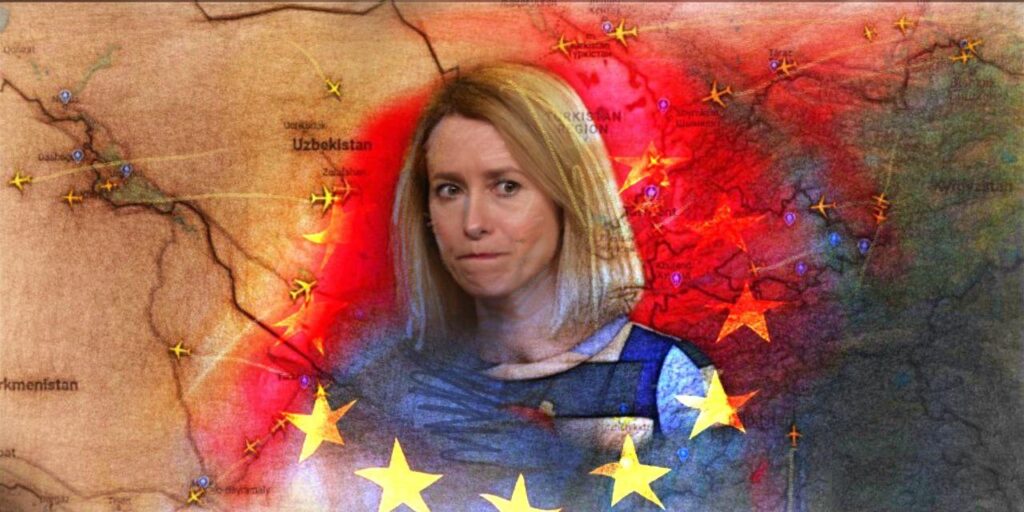
Kaja Kallas’s late-March 2025 tour of Central Asia, in her role as the European Union’s High Representative for Foreign Affairs and Security Policy, was a high-signal intervention in structural terms. It indicates a major re-evaluation of the EU’s posture toward a region historically treated as a far-flung, liminal borderland. As the inaugural EU–Central Asia Summit in Samarkand on April 3–4 approaches, her visible diplomatic activity was less about spectacle than about configuring a new field of co-adaptive engagement. Not only the European Union but also, separately, the United Kingdom are both seeking new regional footholds for building durable alignments. Central Asia, for decades considered through a lens of post-Soviet dependency or one of Chinese infrastructural absorption, is now increasingly recognized as a network node of emergent geopolitical agency. No longer just a space "between" other spaces, it is becoming a strategic space in its own right. Kallas’s mission and the UK’s parallel outreach signify a turn toward a negotiated interdependence that does not dissolve classical interest-based diplomacy but rather "complexifies" it by embedding it in a landscape of developmental trajectories and overlapping power centers. The arc of Kallas’s visit traced a deliberate sequence: Ashgabat, Tashkent, Almaty, Bishkek. In Ashgabat, she chaired the 20th EU–Central Asia Ministerial Meeting, a session nominally bureaucratic but substantively strategic. Discussions reaffirmed the 2023 EU–Central Asia Roadmap and activated the Global Gateway as an organizing frame for infrastructural, digital, and energy cooperation. Bilateral exchanges with officials in Turkmenistan brought the sensitive issue of sanctions circumvention into the open: Turkmenistan, though nominally neutral, remains enmeshed in logistics corridors proximate to Russian interest. From there, Kallas moved to Uzbekistan, where preparations for the April 3–4 Samarkand summit took clearer shape. Talks with President Shavkat Mirziyoyev and Foreign Minister Bakhtiyor Saidov in Tashkent widened the terrain of diplomatic discourse to include the energy transition, educational exchange, and regional transport integration. By hosting summits and fostering cooperation, Uzbekistan is seeking to establish for itself a profile as a key facilitator in Eurasian affairs. In Kazakhstan, her final significant stop, the meetings with President Kassym-Jomart Tokayev and Foreign Minister Murat Nurtleu emphasized macroeconomic diversification and critical raw material supply chains. These are areas in which the EU is not merely a partner but a principal stakeholder. And yet, it is not only the EU that has begun this strategic deepening. The United Kingdom, post-Brexit and still actively reconfiguring its global engagements, has moved in parallel. April 2025 marked the first anniversary of the UK–Kazakhstan Strategic Partnership and Cooperation Agreement. Foreign Office Minister Stephen Doughty’s recent hosting of the Kazakhstan–UK Strategic Dialogue marked 33 years of formal relations. These diplomatic celebrations, beyond their performativity, represent the UK’s recognition that Kazakhstan, and Central Asia more broadly, is a region where its strategic, commercial, and normative interests intersect. In this broader convergence, Kazakhstan plays a central structural role of a balancing nature. It shares long borders with both Russia and China; it hosts a significant Russian-speaking population; and it has maintained a political posture...

EU’s Kaja Kallas: Russia Must Not Use Central Asia to Bypass Sanctions

European Union sanctions against Russia are affecting Central Asian economies, but the EU remains determined to prevent the region from being used to circumvent those measures. This was emphasized by EU High Representative for Foreign Affairs Kaja Kallas during the 20th EU-Central Asia Ministerial Meeting held in Turkmenistan's capital, Ashgabat. “The EU has introduced 16 sanctions packages to weaken Russia’s military machine, and we are working on the 17th,” Kallas stated. “I understand these sanctions impact your economy, but we all want this war to end. Russian companies must not use Central Asia to bypass these restrictions.” The ministerial meeting on March 27 brought together the foreign ministers of Kazakhstan, Kyrgyzstan, Tajikistan, Turkmenistan, and Uzbekistan. Discussions centered on preparations for the upcoming EU-Central Asia Summit, scheduled for April 2025 in Samarkand. Strengthening U.S.-Uzbekistan Ties In a parallel development, U.S.-Uzbekistan relations are showing signs of deeper engagement. On March 26, Ambassador Furkat Sidikov hosted a Congressional Breakfast with U.S. Representative Trent Kelly, focused on trade and investment opportunities. Congressman Kelly praised Uzbekistan’s ongoing reforms and expressed support for lifting the Jackson-Vanik Amendment, a Cold War-era restriction on trade. A Shift in U.S. Strategy Toward Kazakhstan Meanwhile, experts are calling for a more nuanced U.S. approach to Kazakhstan. Dr. Robert M. Cutler, Times of Central Asia correspondent, noted that Kazakhstan’s close ties with Russia and China stem from geopolitical necessity rather than ideological alignment. He urged Washington to maintain consistent engagement with Kazakhstan and prioritize economic and strategic cooperation over political pressure.