• KGS/USD = 0.01144 0%
  • KZT/USD = 0.00213 0%
  • TJS/USD = 0.10607 0.57%
  • UZS/USD = 0.00008 0%
  • TMT/USD = 0.28530 0%
  • KGS/USD = 0.01144 0%
  • KZT/USD = 0.00213 0%
  • TJS/USD = 0.10607 0.57%
  • UZS/USD = 0.00008 0%
  • TMT/USD = 0.28530 0%
  • KGS/USD = 0.01144 0%
  • KZT/USD = 0.00213 0%
  • TJS/USD = 0.10607 0.57%
  • UZS/USD = 0.00008 0%
  • TMT/USD = 0.28530 0%
  • KGS/USD = 0.01144 0%
  • KZT/USD = 0.00213 0%
  • TJS/USD = 0.10607 0.57%
  • UZS/USD = 0.00008 0%
  • TMT/USD = 0.28530 0%
  • KGS/USD = 0.01144 0%
  • KZT/USD = 0.00213 0%
  • TJS/USD = 0.10607 0.57%
  • UZS/USD = 0.00008 0%
  • TMT/USD = 0.28530 0%
  • KGS/USD = 0.01144 0%
  • KZT/USD = 0.00213 0%
  • TJS/USD = 0.10607 0.57%
  • UZS/USD = 0.00008 0%
  • TMT/USD = 0.28530 0%
  • KGS/USD = 0.01144 0%
  • KZT/USD = 0.00213 0%
  • TJS/USD = 0.10607 0.57%
  • UZS/USD = 0.00008 0%
  • TMT/USD = 0.28530 0%
  • KGS/USD = 0.01144 0%
  • KZT/USD = 0.00213 0%
  • TJS/USD = 0.10607 0.57%
  • UZS/USD = 0.00008 0%
  • TMT/USD = 0.28530 0%

Viewing results 493 - 498 of 1561

Opinion: In Central Asia, the EU Defies Its “Geopolitical Dwarf” Label

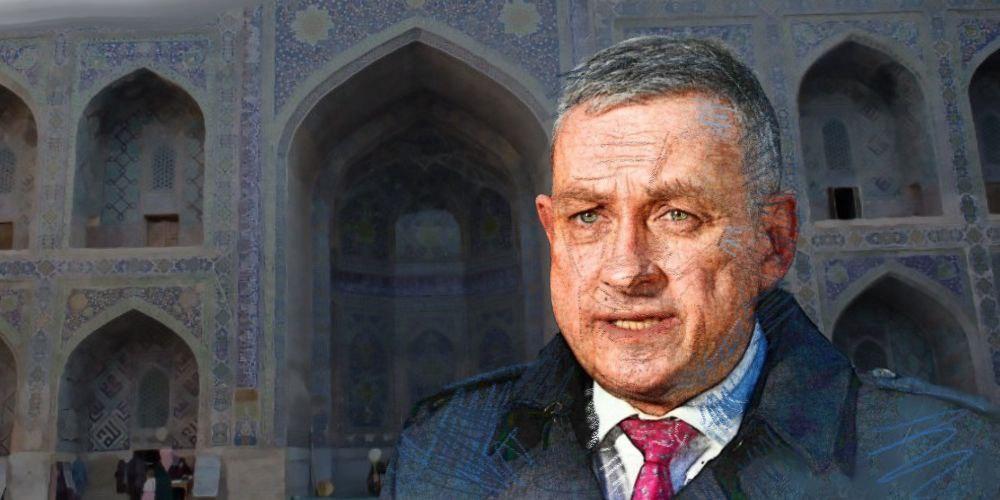
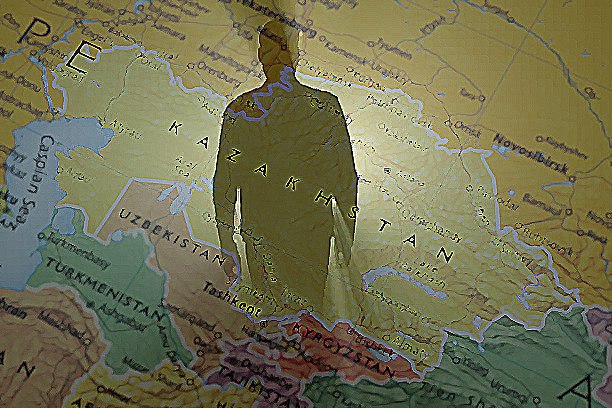
As the United States and Russia reportedly aim to create a new global security architecture, other major actors in the international arena are working to improve their positions in the redefined world order. Often underestimated in terms of its geopolitical influence, the European Union has actively focused its attention on the post-Soviet space, particularly the strategically important Central Asian region. The EU, despite Russia’s and the United States' attempts to undermine its role in the settlement of the Ukraine War and to portray it as a “geopolitical dwarf”, is seeking to increase its presence in global affairs. In Central Asia, the 27-nation bloc is often viewed as a key actor that Kazakhstan, Uzbekistan, Kyrgyzstan, Tajikistan, and Turkmenistan can rely on to balance China’s growing dominance, as well as their security and dependence on Moscow. The EU's desire to strengthen cooperation with Central Asia can be seen as Brussels’ attempt to reduce Russia's influence in the region. Indeed, bogged down in Ukraine, Moscow is slowly but surely being pushed out of Central Asia – a region that has traditionally been within the Kremlin’s geopolitical orbit. As a result, China has managed to significantly increase its economic presence in all five Central Asian nations. The EU is now attempting to do the same. The recent visit of the European Commissioner for International Partnerships Jozef Síkela to Central Asia, as well as the upcoming EU-Central Asia summit scheduled for April 3-4, 2025 in Samarkand, clearly indicates the intensifying geopolitical competition between the EU and China over the region. One of Síkela’s major goals was to expand the scope of the EU's investment strategy, Global Gateway, in Central Asia. The project, launched in 2021, is often viewed as the EU’s version of China’s Belt and Road Initiative (BRI). As part of its strategy to increase its economic presence in Central Asia, the European Union seems to have four priorities: the development of transport infrastructure (particularly the Trans-Caspian International Transport Route, also known as the Middle Corridor), cooperation in raw materials, digital connectivity, and the development of the water resources, energy, and climate sectors. The problem for Brussels is that China, due to its proximity to Central Asia and the lack of bureaucratic procedures, is ahead of the EU in most, if not all of these areas. Beijing has had 12 years to strengthen economic ties with the region through the BRI. As a result, in 2024, China’s overall turnover with Central Asia reached $94.8 billion, nearly double the EU's trade volume with the region in 2022, which stood at $47 billion. Last year, the world’s second-largest economy replaced Russia as Kazakhstan's biggest trade partner. In neighboring Uzbekistan, it remains the top trading partner, while in Tajikistan, over the past 18 years, China has become the major investor in the landlocked nation’s economy. The same applies to Tajikistan and China’s neighbor Kyrgyzstan. The European Union, however, is now intensifying its efforts to position itself as a major foreign power operating in Central Asia. According to...
Tajik Entrepreneurs Return to Kyrgyz Markets

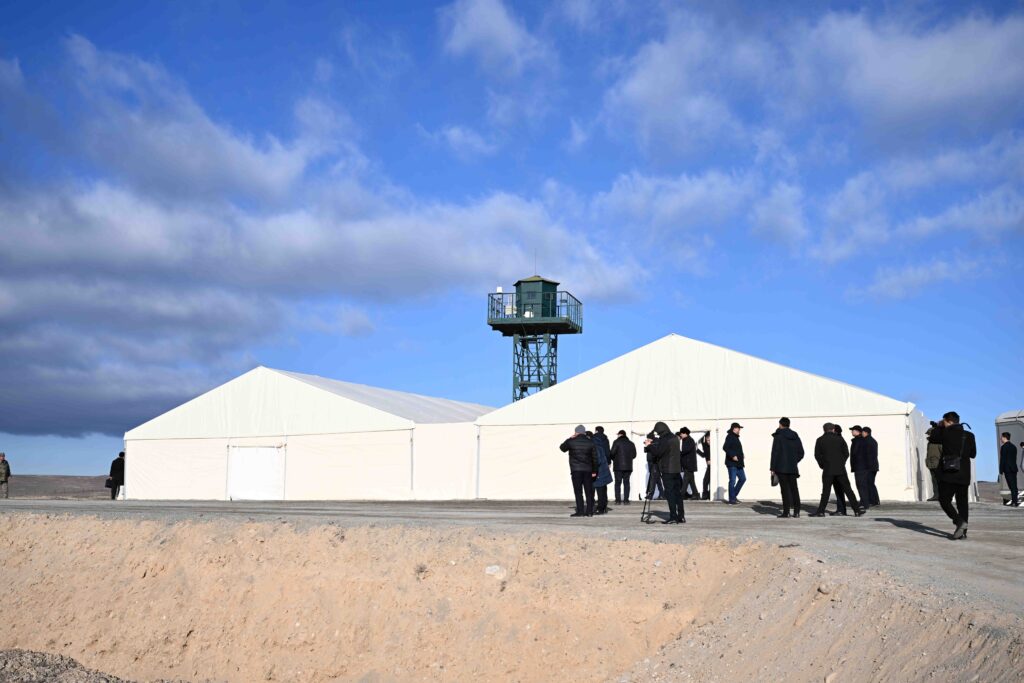
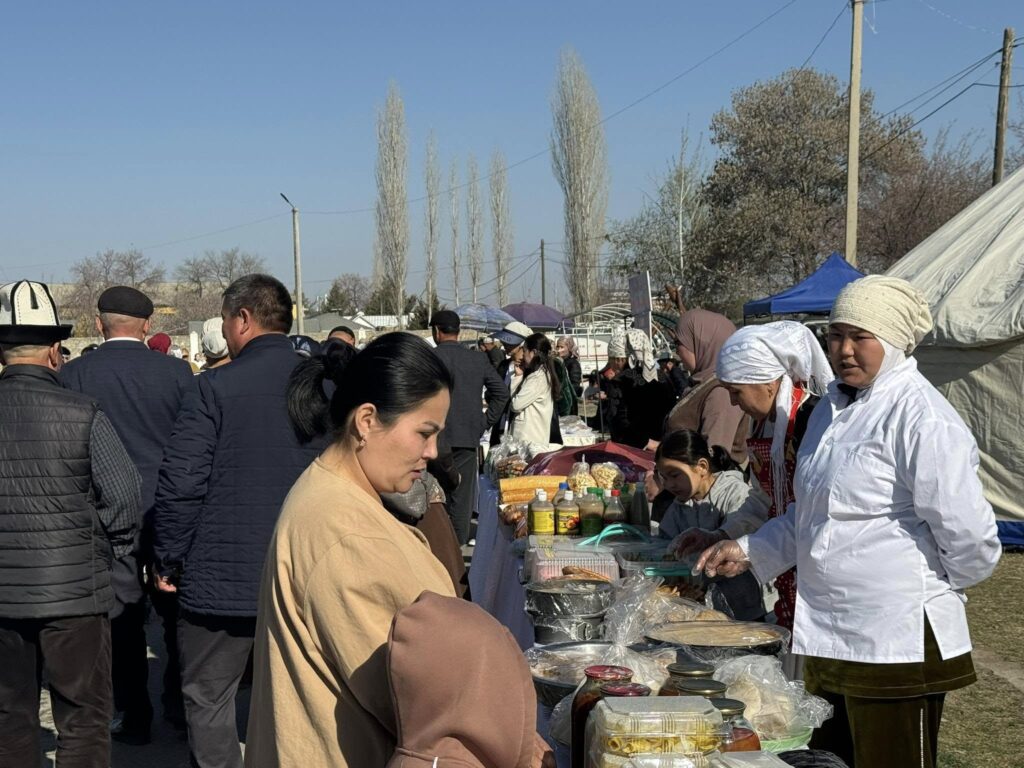
Following the reopening of the Kyrgyz-Tajik border, Tajik entrepreneurs have resumed visits to markets in Batken Oblast, Kyrgyzstan. Local media report that residents are welcoming the return of their southern neighbors​. Once a week, the market in Ak-Turpak village becomes a hub of activity, drawing sellers and buyers from across the region and neighboring countries. A major draw is Batken rice, which resellers purchase in bulk for export to Uzbekistan and Russia. According to local vendors, the market can sell up to 200 tons of rice on a busy day. Rice is cultivated across 3,000 hectares in this border region and remains a vital source of income for many farmers. With the border now open and economic ties restored, buyers from Isfara, Tajikistan, have begun frequenting the Ak-Turpak market, offering a welcome boost to Kyrgyz vendors. As previously reported by The Times of Central Asia, residents of Batken’s border districts also benefit from cross-border trade, often finding it more economical to purchase certain fruits and vegetables in Tajikistan than in Kyrgyzstan’s oblast centers. On March 13, 2025, following the signing of bilateral agreements, the Kairagach and Kyzyl-Bel border checkpoints in Batken Oblast officially reopened. According to Kyrgyzstan’s Border Guard Service, approximately 5,000 people crossed the Kyrgyz-Tajik border between March 13 and 17. An additional 500 individuals crossed by air. Prior to the agreement, all crossings had remained closed since 2021.

Power Shifts in Central Asia: The Unpredictable Path of Leadership

European Union Commissioner for International Partnerships Josef Sikela has concluded his tour of Central Asia, a visit conducted against the backdrop of global geopolitical turbulence. Unlike previous engagements, where European officials often criticized the region’s leadership for a lack of democratic progress, Sikela refrained from making demands on local governments. Historically, Europe has accused Central Asian states of authoritarianism and the entrenchment of long-serving leaders. However, the idea that power is uniquely permanent in the region is increasingly questioned. Critics point to Western examples, such as Angela Merkel’s 16-year tenure as Germany’s chancellor, and alleged electoral manipulation within the EU, such as in Romania, where elections were annulled after an undesired candidate’s victory. Meanwhile, in Central Asia, even presidents once considered “eternal” have eventually left office, sometimes peacefully, sometimes under turbulent conditions. Kyrgyzstan: The Unpredictable Outlier Kyrgyzstan is often described as a "democratic exception" within Central Asia, yet its history is marked by political instability and frequent leadership changes, arguably more so than in many of the world’s most conflict-prone regions. The country’s first president, Askar Akayev, held power from 1990 to 2005. Though re-elected three times, his rule ended in March 2005 when protests erupted over parliamentary election results that heavily favored pro-government candidates. Demonstrators stormed the Government House in Bishkek, prompting Akayev to flee. Reports, though unverified, claimed he was smuggled out wrapped in a carpet. Following Akayev’s ouster, Kurmanbek Bakiyev took power, but his rule ended in 2010 after violent unrest. His downfall was allegedly facilitated by Kazakhstan’s intelligence services, and he later found political asylum in Belarus under President Alexander Lukashenko. Since Bakiyev’s departure, Kyrgyzstan has continued to experience political turbulence. Presidents Almazbek Atambayev (2010-2017) and Sooronbai Jeenbekov (2017-2020) both left office under pressure. Atambayev’s tenure saw a diplomatic fallout with Kazakhstan, while Jeenbekov resigned in 2020 amid protests over parliamentary elections. His successor, Sadyr Japarov, remains in office, but whether he will complete his term is an open question. Uzbekistan: Reform Within Limits Islam Karimov, Uzbekistan’s first post-Soviet leader, ruled for over 26 years before his death in 2016. While he maintained a strictly centralized government, his tenure was also marked by violent crackdowns, most notably the Andijan uprising in 2005, which resulted in a Western diplomatic fallout​. His successor, Shavkat Mirziyoyev, has introduced some reforms, loosening restrictions on civil liberties and the economy. However, the fundamental structure of state control remains intact, with opposition movements still tightly monitored. Kazakhstan: From Nazarbayev to Tokayev Kazakhstan’s transition from Nursultan Nazarbayev to Kassym-Jomart Tokayev is often described as managed succession rather than a genuine power shift. Nazarbayev, who led Kazakhstan for nearly three decades, officially stepped down in 2019, yet retained significant influence until the January 2022 unrest, which forced him to relinquish much of his remaining power. These protests, initially sparked by fuel price hikes, rapidly escalated into anti-government riots. While official accounts describe the unrest as an attempted coup orchestrated by figures within Nazarbayev’s inner circle, critics suggest Tokayev used the crisis to consolidate power....

A New Chapter of Peace and Cooperation in Central Asia: The Kyrgyz-Tajik Border Agreement

On March 13, 2025, a historic milestone was achieved with the signing of the Kyrgyz-Tajik border agreement. This long-anticipated treaty, signed by Kyrgyzstan's President Sadyr Japarov and Tajikistan’s President Emomali Rahmon, resolved a long-running dispute over the 984-kilometer boundary between the two nations. Clashes in 2021 and 2022 left scores dead, hundreds wounded, and thousands displaced. The resolution marked not only the end of an enduring source of regional tension but also the beginning of a prospective era of peace and collaboration. The significance of this agreement is substantial and far-reaching. For decades, the unresolved Kyrgyz-Tajik border remained a flashpoint for clashes, occasionally escalating into violence between communities living in border regions such as Batken. The new treaty now promises a peaceful future, with both leaders showing their commitment to long-term regional stability. A Diplomatic Achievement The path to this agreement was anything but straightforward, with Kyrgyz President Japarov characterizing the land exchanges involved in the treaty as a “tough but necessary decision.” During Nauryz celebrations in Osh, Japarov praised the expert teams who worked for four years to reach a settlement that balanced the interests of both sides. Japarov emphasized the benefits of the treaty for border-area communities, specifically in Batken, where tensions have been acute. The “lives of our citizens in border areas of the Batken region will be peaceful from now on,” he stated, promising new homes for residents displaced during past conflicts. The treaty aims to bring not only peace but also economic development, as secure frontiers pave the way for cross-border trade and infrastructure investment. For Tajikistan's President Rahmon, the agreement not only resolved a geopolitical challenge but reinforced the shared value of cooperation in the region. His message during Nauryz to President Japarov symbolized the optimism underpinning their new relationship. “I am confident that our countries, relying on the high universal values of this ancient holiday, will continue their joint efforts to enrich the content of their multifaceted relations,” Rahmon wrote. Messages of Support on a Symbol of Renewal The signing of the treaty aligned closely with Nauryz, the ancient festival that symbolizes renewal, prosperity, and unity across Central Asia. World leaders also viewed the timing as auspicious, with U.S. President Donald Trump extending his congratulations to President Rahmon in a message of goodwill on the occasion of Nauryz. “This is a major achievement that will bring great economic benefits and security to both countries," Trump wrote, highlighting the agreement's potential to stabilize the region. Trump also reaffirmed America's support for Tajikistan’s sovereignty, underscoring the importance of ongoing cooperation. His words echoed a broad international sentiment celebrating the Kyrgyz-Tajik agreement as a step toward enhanced regional partnerships. Regional Cooperation on the Rise The Kyrgyz-Tajik border agreement forms part of a broader trend of strengthening ties among Central Asian nations. Recently, Kyrgyzstan resolved a similar border issue with Uzbekistan, setting a precedent for peaceful dispute resolution. Now, Japarov has suggested taking the next step by creating a visa-free travel regime and even a unified regional...

Celebrating Nauryz: A Timeless Tradition of Unity, Renewal, and Heritage in Central Asia

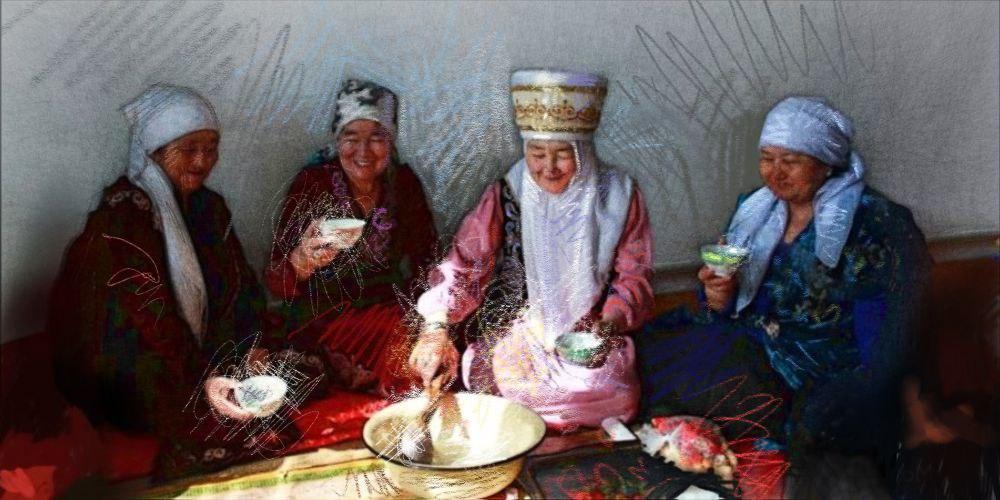
Nauryz is more than just a holiday - it is a symbol of spring renewal, harmony, and unity that has been celebrated by the peoples of Central Asia for centuries. Marking the arrival of the spring equinox, Turkic communities welcome the New Year with purification rituals, festive gatherings, and traditional games. While the holiday shares common roots across the region, each country celebrates it uniquely, reflecting its distinct cultural heritage. Nauryz has survived through the centuries, and despite the evolution of the celebration in the modern era, it continues to unite people through traditions. Kazakhstan In Kazakhstan, Nauryz is celebrated on a large scale, transforming cities and villages into festival grounds filled with folk rituals, sporting events, and cultural performances. The holiday begins with blessings from elders and family visits. At the heart of the festive table is Nauryz-kozhe, a traditional soup made from seven ingredients, each symbolizing key values in life. “Nauryz without Nauryz-kozhe is not Nauryz," Daniyar, 29, from Almaty, told The Times of Central Asia. "When I was a child, my grandmother told me that eating it would bring luck for the year. That’s why the whole family gathers around the table.” Beyond feasting, Nauryz is a time for competitions. Among the most popular are kokpar, an equestrian contest where riders traditionally competed for a goat carcass - now often replaced with a dummy version (serke), asyk atu, a traditional game of precision using sheep bones, and kazaksha kures, a national wrestling competition. “As a child, I always looked forward to this day because it was when I could see adults displaying strength and skill," Sanzhar, 25, from Taraz, told TCA. "These traditions are passed down through generations and strengthen our culture.” Ancient customs also come to life during the festival. People wear traditional Kazakh attire, exchange gifts, and partake in purification rituals. “When I put on a [traditional] Kazakh costume, I feel a deep connection with my ancestors. There’s something magical about this holiday - the aroma of freshly cooked kozhe, the sound of the dombra, the folk dances, and the spirit of unity. It’s a day to remember who we are and take pride in our culture,” said Aizhan, 40, from Astana. [caption id="attachment_29953" align="aligncenter" width="1200"] Nauryz celebration in Almaty; image: TCA[/caption] Kyrgyzstan In Kyrgyzstan, Nauryz represents renewal and rebirth. The celebrations begin with a cleansing ritual, where people clean their homes, courtyards, and even their minds, symbolizing a fresh start. Hospitality plays a central role, as it is customary to host and visit seven guests, symbolizing openness and strong social bonds. Like in Kazakhstan, Nauryz-kozhe is a staple of the festive table. However, Kyrgyz cuisine also features kuurdak, fried meat with potatoes and onions, and osh - also known as plov or palov - emphasizing the tradition of generous feasting. The holiday is further enriched by national sporting competitions, including horse races, wrestling (kuresh), ordo, a traditional strategy game, and arkan tartysh, a tug-of-war contest. “For us, Nauryz is more than just a holiday....

Kyrgyzstan, Tajikistan, and Uzbekistan Reach Border Agreement After Years of Negotiations

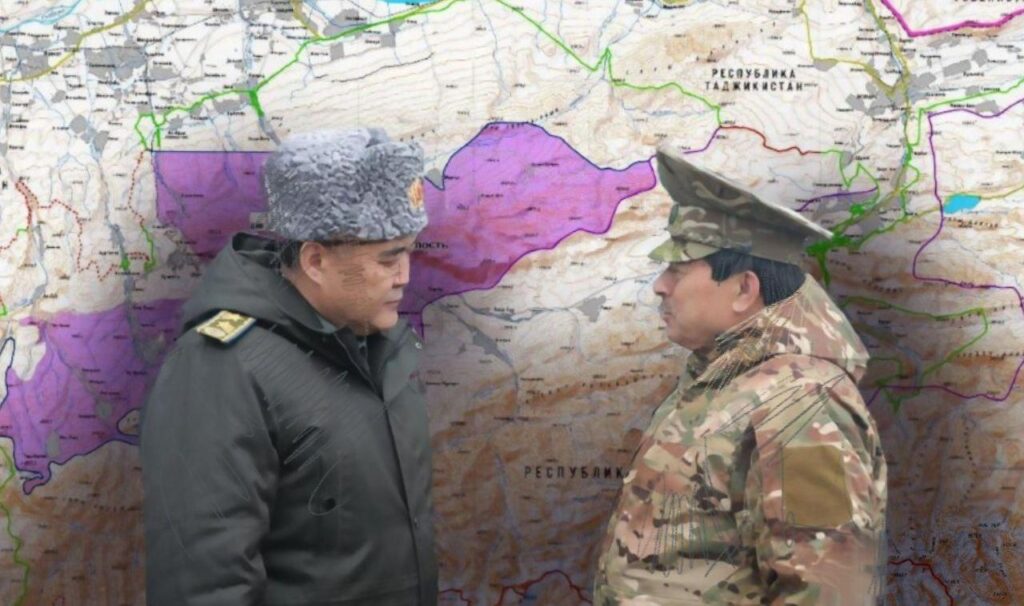
After nearly two decades of discussions, Kyrgyzstan, Tajikistan, and Uzbekistan have officially determined the junction point of their shared borders. Kamchibek Tashiyev, head of the Kyrgyz National Security Committee, presented the final border demarcation to Kyrgyz lawmakers, AKIpress reported. On March 19, Tashiyev stated that trilateral negotiations on this issue had been ongoing since 2007. Government delegations from the three countries held six meetings before reaching an agreement. The dispute over the exact location of the border junction remained unresolved until a March 2025 meeting in Dushanbe, where representatives of Kyrgyzstan, Tajikistan, and Uzbekistan finalized the demarcation. During the meeting, Tashiyev displayed a map marking the agreed border point in blue. He noted that Uzbekistan had previously suggested a location marked in green, while Tajikistan proposed a spot marked in red. Accepting these alternative proposals would have left key roads outside Kyrgyzstan's territory. Under the final agreement, Kyrgyzstan retains approximately 100 hectares of land, which, although uninhabited, includes an important road. This breakthrough follows a March 13 border agreement between Kyrgyzstan and Tajikistan, aimed at ending long-standing tensions that had made their shared border the most volatile in Central Asia for over a decade. The deal was underscored by Tajik President Emomali Rahmon’s first visit to Bishkek in nearly 12 years, highlighting its importance. As part of the agreement, the two countries also agreed to reopen the Kairagach (Leilek district) and Kyzyl-Bel (Batken district) border checkpoints, which had been closed for nearly four years. Both checkpoints resumed operations on March 13.