• KGS/USD = 0.01144 0%
  • KZT/USD = 0.00207 0%
  • TJS/USD = 0.10463 0%
  • UZS/USD = 0.00008 0%
  • TMT/USD = 0.28490 0%
  • KGS/USD = 0.01144 0%
  • KZT/USD = 0.00207 0%
  • TJS/USD = 0.10463 0%
  • UZS/USD = 0.00008 0%
  • TMT/USD = 0.28490 0%
  • KGS/USD = 0.01144 0%
  • KZT/USD = 0.00207 0%
  • TJS/USD = 0.10463 0%
  • UZS/USD = 0.00008 0%
  • TMT/USD = 0.28490 0%
  • KGS/USD = 0.01144 0%
  • KZT/USD = 0.00207 0%
  • TJS/USD = 0.10463 0%
  • UZS/USD = 0.00008 0%
  • TMT/USD = 0.28490 0%
  • KGS/USD = 0.01144 0%
  • KZT/USD = 0.00207 0%
  • TJS/USD = 0.10463 0%
  • UZS/USD = 0.00008 0%
  • TMT/USD = 0.28490 0%
  • KGS/USD = 0.01144 0%
  • KZT/USD = 0.00207 0%
  • TJS/USD = 0.10463 0%
  • UZS/USD = 0.00008 0%
  • TMT/USD = 0.28490 0%
  • KGS/USD = 0.01144 0%
  • KZT/USD = 0.00207 0%
  • TJS/USD = 0.10463 0%
  • UZS/USD = 0.00008 0%
  • TMT/USD = 0.28490 0%
  • KGS/USD = 0.01144 0%
  • KZT/USD = 0.00207 0%
  • TJS/USD = 0.10463 0%
  • UZS/USD = 0.00008 0%
  • TMT/USD = 0.28490 0%

Viewing results 25 - 30 of 166

Tajikistan’s Rogun Dam to Triple Forests Under No Net Loss Plan

The construction of Tajikistan’s massive Rogun Hydropower Plant (HPP) will proceed under strict environmental conditions, guided by what experts describe as a "No Net Loss" (NNL) approach to nature. According to Asia-Plus, the updated Environmental and Social Impact Assessment (ESIA) for the project outlines a series of measures to offset ecological damage, including large-scale forest restoration. The report states that 262 hectares of land, including 185 hectares of juniper forest and 77 hectares of floodplain, will be lost due to construction. To compensate, authorities plan to restore 786 hectares of new forest, tripling the area impacted. The reforestation effort will prioritize juniper, riverside, and fruit and nut forests, while also establishing new protected areas to reinforce local ecosystems. Tajikistan’s Forestry Agency has already allocated nearly 7,600 hectares of land for these efforts. Reforestation is expected to cost over $7.5 million, with annual maintenance costs projected at approximately $10,500. The ESIA outlines a phased strategy. From 2025 to 2030, specific restoration sites will be identified. Practical implementation, including planting and ecosystem protection, is scheduled to begin in 2031. The NNL principle aims to ensure that long-term ecological gains outweigh short-term environmental disruptions. Once completed, the Rogun HPP will have an installed capacity of 3,780 megawatts, making it the largest hydropower facility in Central Asia. Its six turbines, each with a capacity of 630 MW, are expected to generate over 14.5 billion kilowatt-hours of electricity annually once the plant becomes fully operational in 2029. Two units, launched in 2018 and 2019, are already producing power at reduced capacity. In 2024, the plant generated 1.22 billion kWh, accounting for 5.5 percent of Tajikistan’s total electricity output. However, the project has not escaped controversy. The World Bank’s Inspection Panel recently agreed to review a formal complaint filed by residents of Uzbekistan and Turkmenistan, supported by the regional coalition Rivers Without Boundaries. The complaint questions the adequacy of the project's environmental assessments, which critics argue fail to fully account for downstream impacts on communities and ecosystems along the Amu Darya basin. Despite these concerns, Tajik officials maintain that Rogun will enhance national energy independence while also helping position Central Asia as a hub for renewable energy.
Learning About Glaciers: Scientists Extract Ice Cores in Tajikistan

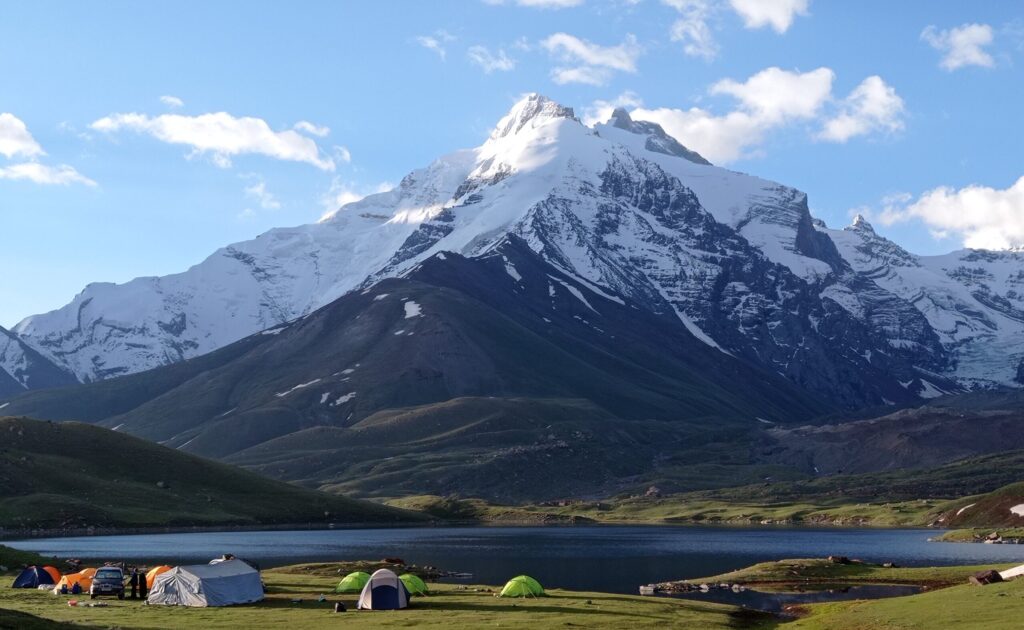
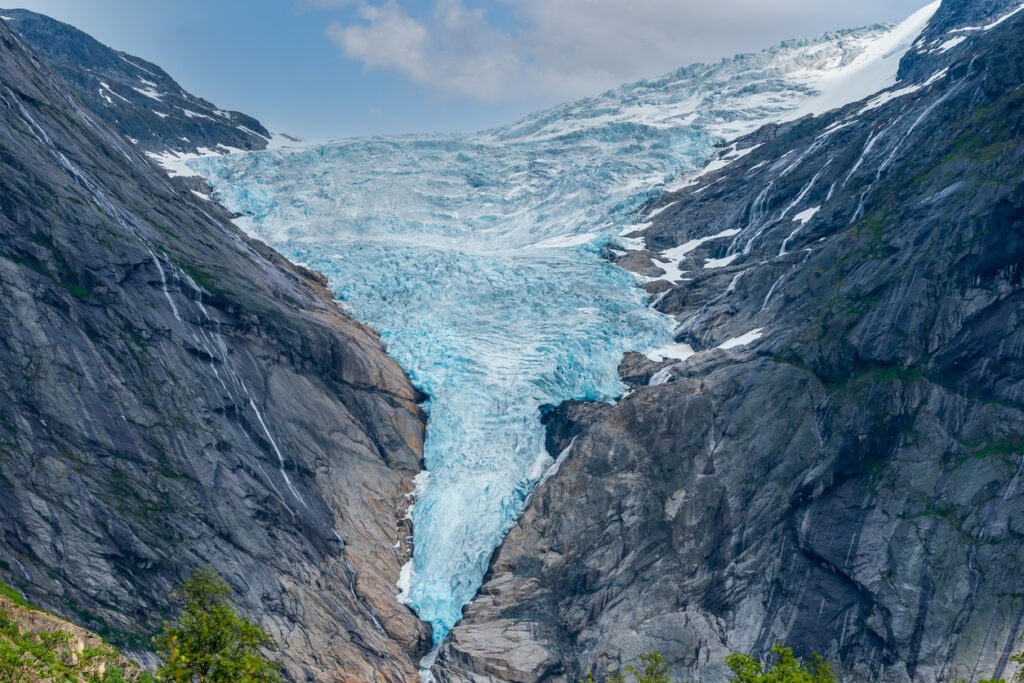
A group of international scientists is on a complex, arduous expedition to learn more about the glaciers of the Pamir Mountains in Tajikistan, drilling and extracting two deep ice cores in what the team descibes as a race against the impact of global warming.  Scientists from the Swiss-funded PAMIR Project and their Tajik partners are working at an altitude of 5,800 meters on the Kon Chukurbashi ice cap, taking ice samples down to the bedrock at an estimated depth of just over 100 meters.   “The Pamirs remain to date one of the last major high-altitude regions where no deep ice core has ever been retrieved,” the PAMIR Project said in a statement. “If many glaciers in the Pamir Mountains of Tajikistan still seem resilient in the face of global warming, scientists do not know how long this will last.” The two-week expedition began on September 24. If successful, it will secure environmental information from air bubbles and chemical trace concentrations and isotopes, and possibly organisms trapped in the ice, and help future generations anticipate and adapt to changes in Earth’s climate and ecosystems, the project said.  The expedition is being coordinated by the University of Fribourg in Switzerland and conducted by the National Academy of Sciences of Tajikistan along with Swiss, Japanese, and American universities. Because of the extreme altitude, team members had prepared for gradual acclimatization with a plan for a base camp and a camp at higher altitude. Logistical difficulties and the challenges of site access have prevented such an expedition in the past.  The Pamir glaciers are a riddle to scientists who have observed both health and decay in the reaction of the high-altitude ecosystems to climate change. Various theories, including more wind-induced precipitation at high elevations and summertime cooling, have been put forward. But field measurements are lacking and the theories have not been tested against scientific data.  At an international conference on glacier preservation in Dushanbe this year, President Emomali Rahmon of Tajikistan called for the establishment of a regional lab to study the topic. Most of Central Asia’s glaciers are in Tajikistan.   The United Nations said last month that some 1,000 glaciers out of the total number of 14,000 that have existed in Tajikistan in recent decades have disappeared and many small ones are expected to vanish in the next 30-40 years.  A recent study published in the Communications Earth & Environment journal noted the relative stability of some glaciers in Central Asia, but said there had been a recent drop in glacier health in the Northwestern Pamirs following significantly lower snowfall and snow depth since 2018.  One of the authors of that study is Evan Miles, a Switzerland-based glaciologist who is leading the current PAMIR Project expedition. “This ice holds hundreds and possibly even thousands of years of physical records of snowfall, temperature, dust, and atmospheric chemistry,” Miles said, according to the project statement. “We are racing against time to retrieve it before climate-change induced melt damages these natural archives forever.”  Of the two ice...

Afghanistan’s Qosh Tepa Canal Raises Water Security Fears

Water has long been one of Central Asia’s most contested resources, shaping agriculture, energy policy, and diplomacy across the region. Recently, Afghanistan’s Qosh Tepa Canal project has emerged as a central point in this debate. Promoted by the Taliban as a vital step toward achieving food security and economic growth, the canal also raises alarm bells among downstream neighbors who heavily depend on the Amu Darya River. Now, according to Islamic Emirate spokesman Zabihullah Mujahid, the second phase of the project is expected to be completed within five months, raising further concerns among downstream countries about its potential impact on regional water security. Progress on the Ground In August, the Afghan authorities stated that 93% of the second phase had been completed. Videos show the canal lined with concrete and stone in some sections, alongside the construction of large and medium-sized bridges to link surrounding settlements. The project spans 128 kilometers from Dawlatabad district in Balkh province to Andkhoy district in Faryab province and involves over 60 contractors, making it one of Afghanistan’s largest infrastructure projects. Origins and International Support The canal’s roots trace back to earlier international efforts. While some sources attribute its conceptual origins to Soviet or British engineers in the 1960s, significant development began in 2018 under President Ashraf Ghani. The project was supported by the U.S. Agency for International Development (USAID) and Indian engineering firms. According to the Scientific-Information Center of the Interstate Commission for Water Coordination (SIC ICWC), a $3.6 million feasibility study was launched in Kabul in December 2018, funded by USAID and conducted by AACS Consulting and BETS Consulting Services Ltd. The study was coordinated with several Afghan ministries, but has not been published. Following the Taliban’s takeover, the Islamic Emirate held an official inauguration ceremony on March 30, 2022. The full canal is designed to stretch 285 kilometers, measuring 100 meters wide and 8.5 meters deep, and is expected to divert an estimated six to ten cubic kilometers of water annually from the Amu Darya. Afghan media have quoted water management expert Najibullah Sadid, who projected the canal could generate between $470 million and $550 million in annual revenue. Regional Concerns and Environmental Risks The project has raised alarm in Uzbekistan, Turkmenistan, and Tajikistan, countries that depend heavily on the Amu Darya for irrigation. Experts at SIC ICWC point out that no environmental impact assessment was conducted for downstream states, nor were they formally notified of the construction, as required by international water conventions. In December 2022, Uzbek President Shavkat Mirziyoyev called for practical dialogue with Afghanistan and the international community to strengthen regional water security. Adroit Associates estimates that the canal could eventually divert up to 13 billion cubic meters annually, nearly one-quarter of the Amu Darya’s average flow. Environmental risks are also mounting. Analysts warn that Uzbekistan, which relies heavily on the river for agriculture, could face soil degradation and declining crop yields. Turkmenistan, where agriculture accounts for 12% of GDP, may also suffer severe disruptions. Some studies suggest Uzbekistan and...

Melting Glaciers Threaten Tajik Agriculture

Climate change in Tajikistan is no longer a future concern, it is an immediate crisis. Farmers across the country are grappling with the effects of melting glaciers, prolonged heatwaves, and dust storms that are disrupting traditional agricultural cycles. In Vahdat district, the Usto Murod farm has adopted a dual-harvest strategy to mitigate risk. “If one crop fails, the second helps cover the costs,” says farmer Galatmo Alieva. But increasingly rapid glacier melt has doubled irrigation needs from three rounds per season to six. Heatwaves and dust storms have further damaged crops, while honey yields have plummeted from 25 kilograms per hive to just five. To cope, Alieva’s family installed a biogas plant with support from the United Nations Development Programme (UNDP), saving between $550 and $1,100 annually. However, broader adaptation measures remain financially out of reach. Loan interest rates hover around 31%, and water-efficient drip irrigation is used only in greenhouses. Unequal Access, Dwindling Resources Other farmers face even harsher realities. Rain-fed plots deliver meager returns, pastures are drying up, and water distribution remains inequitable. “Those at the canal head take all the water,” laments farmer Bakhtiyor. Engineer Alexander Pirov warns that accelerating glacier melt threatens not only agriculture but also the country’s hydropower sector. By 2080, Tajikistan is expected to experience 12 additional days per year with temperatures exceeding 40°C, compared to the 1986-2005 average. Already, 70% of Tajikistan’s arable land is considered degraded. High Costs, Limited Support Water-saving technologies could significantly improve crop yields and farmer incomes, yet the upfront costs, estimated at $5,000 or more, remain prohibitive for most rural families. As climate risks intensify, Tajikistan’s rural population is increasingly vulnerable. Without targeted investments in adaptation, infrastructure, and equitable resource distribution, the country’s agricultural backbone may begin to fracture under the weight of a rapidly changing environment.

Tajikistan Sends Large Convoy with Quake Aid to Afghanistan

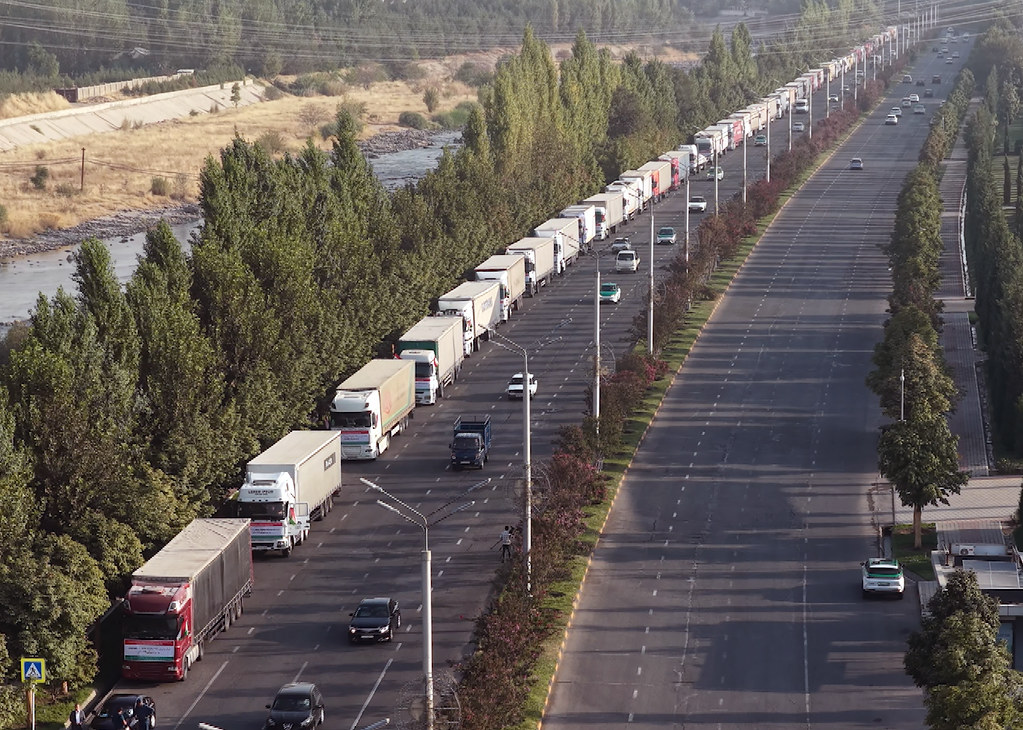
Tajikistan has said it has sent more than 3,000 tons of humanitarian aid to Afghanistan, one of the biggest dispatches of supplies from another country since a devastating earthquake in eastern Afghan provinces on August 31. Photographs released by the office of President Emomali Rahmon show a long line of trucks on a highway, apparently headed to the border with Afghanistan on Monday. The delivery came as the United States and other countries congratulated Tajikistan ahead of the 34th anniversary of its Sept. 9, 1991 independence from the collapsing Soviet Union. “The aid loaded on a caravan of trucks consists of 24 types of necessary products and materials, including flour, oil, sugar, rice, bedding, clothing and footwear for children, adolescents and adults, tents, building materials, reinforcement, boards, slate, cement, and other goods and products,” Tajikistan’s presidential office said. It said the aid exemplified Tajikistan’s “humane and good-neighborly policy.” Tajikistan retains security concerns about its border with Afghanistan. Tajik border guards and fighters with Afghanistan’s Taliban government exchanged fire in an area along the border on August 24, though the two sides later met to reduce tensions. Tajikistan’s aid convoy traveled to Afghanistan two days after Uzbekistan handed over 256 tons of aid in the Afghan border city of Hairatan. Afghanistan’s Ministry of Foreign Affairs has also thanked Turkmenistan, Kazakhstan, and Kyrgyzstan for assistance following the quake, which killed at least 2,200 people. It expressed gratitude in a post on X that listed dozens of countries that have sent help. Central Asian countries in particular have been building ties with Afghanistan as they seek to expand trade routes. The quake destroyed thousands of homes, and humanitarian workers are still struggling to reach affected communities in remote, mountainous areas. Shannon O’Hara, a senior United Nations aid coordination official in Afghanistan, said on Monday that emergency responders are prioritizing aid to women, children, and people with disabilities. “In Afghanistan, in recent years, women and girls have been pushed to the very margins of society and survival,” O’Hara said, according to a U.N. statement. “We know from previous earthquakes and other crises that women and girls always bear the heaviest burden.”

Pamir Loses Its “Ice Shield”: Scientists Confirm End of Glacier Stability Anomaly

For years, the Pamir-Karakoram anomaly stood as a rare outlier in global climate trends: a region where glaciers remained relatively stable despite accelerating global warming. Now, new research from the Institute of Science and Technology Austria (ISTA) confirms that even these “last strongholds” have begun to lose mass at an alarming rate. Snow Deficit and Rising Heat Data collected from a climate monitoring station on the Kyzylsu glacier in the northwestern Pamirs, active from 1999 to 2023, reveals a sharp shift. According to an international research team led by Francesca Pelliccotti, the tipping point came in 2018, when a significant decline in snow cover and precipitation irreversibly altered the glaciers’ mass balance. Once past this "point of no return," glaciers began rapidly depleting their own reserves to compensate for the lack of new snowfall, a process accelerating their melt. Since 2018, the region has experienced a persistent snow deficit. Snow depth has fallen by approximately 40 cm, and annual precipitation has declined by 328 mm, about one-third of the historical average. Seasonal snow melts earlier, is less stable in spring, and is no longer sufficient to replenish glacier mass. July 2022 was the hottest month on record, and during this period, the Kyzylsu glacier recorded unprecedented mass loss, melting at a rate eight times faster than the 1999-2018 average. Scientists identify increasingly hot summers and a lack of precipitation as the primary causes. Even the intensified ice melt has not made up for reduced snowfall: water inflow into rivers dropped by roughly 189 mm in water equivalent. The contribution of glacial runoff to total river flow rose from 19% to 31%, but this increase was still insufficient to offset the overall decline in water volume. The situation is most severe at altitudes above 4,000 meters, where solid precipitation has declined sharply. Snow from avalanches, which previously helped sustain the glaciers, has dropped nearly threefold from 0.21 to 0.08 m per year. Implications for Central Asia Experts warn that this is not a localized issue. The Pamir and Karakoram glaciers feed the Amu Darya and Syr Darya rivers, lifelines for millions across Central Asia. Diminishing glacial mass threatens freshwater availability, agriculture, hydropower generation, and overall socio-economic stability. “Due to the lack of accurate forecasts, we cannot yet say definitively whether the Pamir glaciers have passed the point of no return. However, since 2018, the processes have changed dramatically, and the reduction in precipitation has had a critical impact on their stability,” said ISTA researcher Achille Joubert. Data Gaps and New Monitoring Efforts Following the collapse of the Soviet Union, glacier monitoring in the region was largely suspended for nearly two decades. Systematic observations resumed only in 2021, when international researchers reinstalled instruments on the Kyzylsu glacier, one of the Vakhsh River’s primary sources. These new measurements confirmed a drastic drop in precipitation and snow thickness starting in 2018, with consistently unfavorable conditions persisting since. Compared to the late 1990s, spring and summer snow now melts much faster, and the "cold reserves"...