• KZT/USD = 0.00215
  • TJS/USD = 0.10810
  • UZS/USD = 0.00009
  • TMT/USD = 0.29760
  • KZT/USD = 0.00215
  • TJS/USD = 0.10810
  • UZS/USD = 0.00009
  • TMT/USD = 0.29760
  • KZT/USD = 0.00215
  • TJS/USD = 0.10810
  • UZS/USD = 0.00009
  • TMT/USD = 0.29760
  • KZT/USD = 0.00215
  • TJS/USD = 0.10810
  • UZS/USD = 0.00009
  • TMT/USD = 0.29760
  • KZT/USD = 0.00215
  • TJS/USD = 0.10810
  • UZS/USD = 0.00009
  • TMT/USD = 0.29760
  • KZT/USD = 0.00215
  • TJS/USD = 0.10810
  • UZS/USD = 0.00009
  • TMT/USD = 0.29760
  • KZT/USD = 0.00215
  • TJS/USD = 0.10810
  • UZS/USD = 0.00009
  • TMT/USD = 0.29760
  • KZT/USD = 0.00215
  • TJS/USD = 0.10810
  • UZS/USD = 0.00009
  • TMT/USD = 0.29760
27 August 2026

Viewing results 19 - 24 of 145

Opinion: Water Without a Guarantor – Central Asia’s Next Security Test

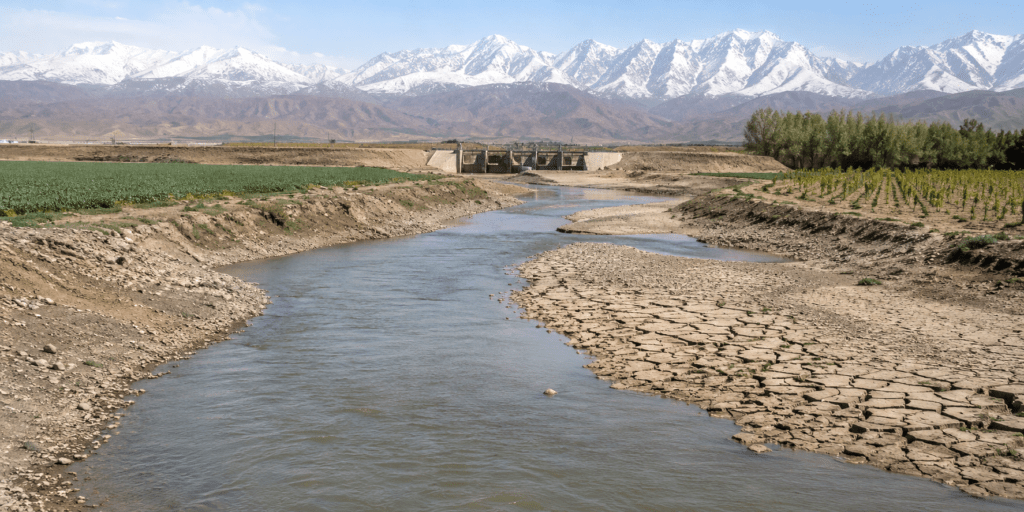
The Fourth High-Level International Conference on the International Decade for Action, “Water for Sustainable Development,“ taking place in Dushanbe on May 25-28, comes at a difficult moment. Central Asia's water problem is no longer only about environmental management; it is moving into the field of regional security. The conference agenda is familiar and necessary: climate, investment, innovation, transboundary cooperation, and the implementation of the Water Action Decade. The harder question is what happens outside the conference hall. Does Central Asia still have a credible way to stop water stress from becoming an interstate crisis? For decades, the region operated in a post-Soviet setting in which Moscow shaped many security calculations, even though it was never a formal water arbiter. That setting has weakened. Russia has not disappeared from Central Asia, and it still retains military, economic, and institutional leverage. But since 2022, its role as the assumed external stabilizer has become less convincing. The result is not a simple vacuum. It is a more awkward reality: a region with many outside actors, but no trusted water-security guarantor. The Old Backdrop Is Weakening Central Asia's water system was built around a Soviet-era division of functions. Upstream republics, Tajikistan and Kyrgyzstan, controlled the mountains, reservoirs, and hydropower potential. Downstream republics, Uzbekistan, Kazakhstan, and Turkmenistan, depended on seasonal water flows for agriculture, food security, and social stability. The Soviet system managed those tensions through central planning. After independence, cooperation became more fragile. Water, energy, borders, electricity, and agriculture were separated into national strategies. The rivers, however, remained transboundary. For many years, Russia remained the largest external power around which regional security calculations were organized. That did not make Moscow an effective water manager, but it helped shape the political environment. Today, that environment has changed. The CSTO did not prevent the Kyrgyz-Tajik border escalations of recent years. Kyrgyzstan and Tajikistan eventually reached a border agreement through direct negotiation rather than outside enforcement. That difference is not academic. Water disputes are rarely settled by conferences alone. They need trusted channels for mediation, compensation, and restraint when pressure builds. Central Asia has plenty of statements about cooperation. It has fewer tools for managing coercion when water becomes scarce. Three Pressure Points The region's water-security stress is already visible in three places. The first is Afghanistan's Qosh-Tepa Canal. The canal draws water from the Amu Darya, a river system critical for Uzbekistan and Turkmenistan. Because Afghanistan was not part of the old Soviet water-allocation arrangements, the Taliban government is creating a new upstream reality outside the inherited regional framework. Estimates of the canal's downstream impact vary widely. Some analyses suggest it could divert between 15 and 30% of the Amu Darya's flow, depending on the completion timeline, irrigation efficiency, and water-management practices. The Times of Central Asia previously reported that reduced Amu Darya flows could indirectly affect Kazakhstan if Uzbekistan compensates by drawing more heavily on the Syr Darya. Carnegie has described the Qosh-Tepa as a serious test for regional water cooperation. The second pressure point...

Kazakhstan, Tajikistan, and Uzbekistan Agree on Summer Water Releases from Bahri Tojik Reservoir

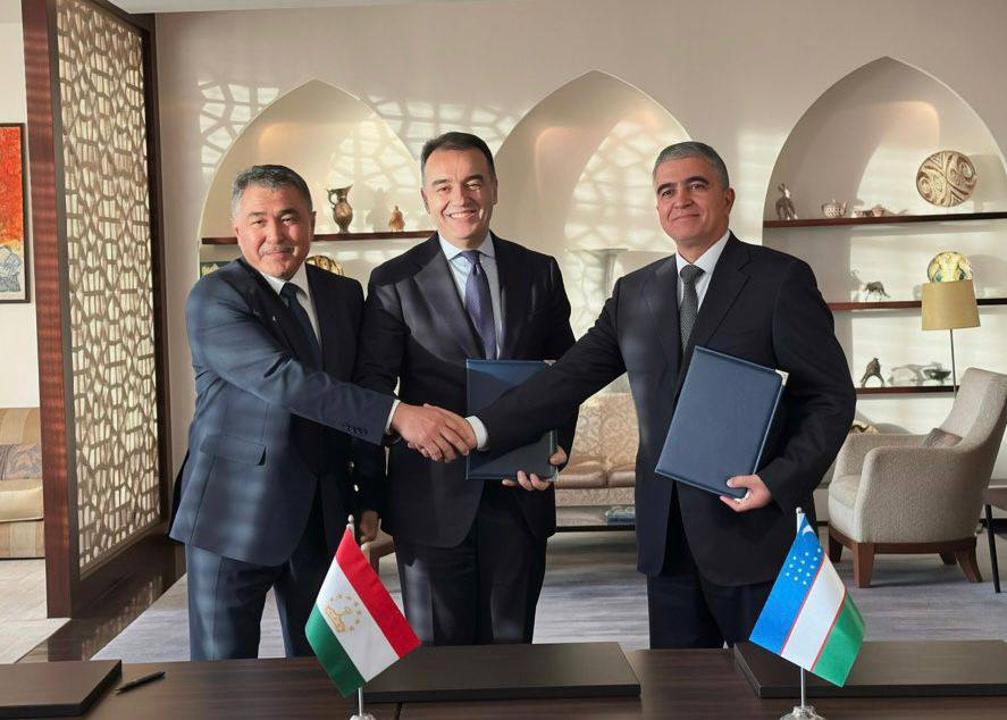
Kazakhstan, Tajikistan, and Uzbekistan have agreed on water releases from Tajikistan’s Bahri Tojik reservoir for the June-August 2026 irrigation period, Kazakhstan’s Ministry of Water Resources and Irrigation has announced. The agreement was formalized in a trilateral protocol signed by Kazakhstan’s Minister of Water Resources and Irrigation Nurzhan Nurzhigitov, Tajikistan’s Minister of Energy and Water Resources Juma Daler, and Uzbekistan’s Minister of Water Resources Shavkat Khamrayev. Under the agreed schedule, water from the Bahri Tojik reservoir will be released during the summer to support agricultural producers in Kazakhstan’s Turkestan region, particularly in the Maktaaral and Zhetysai districts, where irrigation demand rises sharply during the growing season. “The issue of supplying irrigation water to the southern regions remains under special control,” Nurzhigitov said in comments released by Kazakhstan's ministry. “The agreements reached are the result of constructive interaction and mutual support between Central Asian countries. The measures taken will help ensure a stable growing season and support domestic farmers.” The ministers also reaffirmed their intention to strengthen regional cooperation on the rational and mutually beneficial use of shared water resources, a longstanding challenge in Central Asia, where agriculture depends heavily on transboundary rivers and reservoirs. The Bahri Tojik reservoir, formerly known as the Kairakkum reservoir before being renamed in 2016, is one of Tajikistan’s largest artificial water bodies. Located in the northern Sughd region on the Syr Darya River, it has operated since 1959 and plays an important role in seasonal water distribution across the region. The latest agreement follows a similar arrangement reached in June 2025, when the three countries approved the coordinated use of reservoir water during the summer irrigation season. At the time, Kazakhstan expected to receive 491 million cubic meters of water to help offset shortages in southern farming areas.

Tajikistan Announces Water Infrastructure Drive, Urges Central Asia Cooperation

Tajikistan plans to provide at least 90% of its population with access to a centralized water supply by 2040, in a long-term infrastructure project that would reduce disparities in water services for urban and rural residents. President Emomali Rahmon spoke about Tajikistan’s water goals as well as wider collaboration in Central Asia during a speech at a Dushanbe conference that has drawn delegates from around the world for discussions on water scarcity. Tajikistan and the United Nations are co-hosting the four-day event, which ends on Thursday and is a prelude to a U.N. water conference in the United Arab Emirates in December. In 2023, the World Bank noted that Tajikistan has significant water resources, but said its infrastructure needed large-scale investment and about 55% of its population had access to “safely managed” water supplies. Only 24% of the Central Asian country’s rural population had piped water services, reflecting the big difference between urban and rural areas, according to the World Bank. It also said Tajikistan allocated a far smaller percentage of its annual budget to water supply and sanitation than in other countries in Europe and Central Asia. In his speech on Tuesday, Rahmon said “we are committed to ensuring access” to centralized water supply — a system that can promote quality of service quality and lower costs — for 90% of people in Tajikistan by 2040. “Through this measure, we are determined to guarantee access to clean drinking water for every citizen,” said the president, who has led the country for more than three decades. Tajikistan has more than 10 million people. Rahmon also described “transboundary cooperation in the water sector” as a priority and said Tajikistan will push for more dialogue in Central Asia on addressing critical water challenges. The International Fund for Saving the Aral Sea is an effective platform for promoting the “sustainable development” of water resources, according to the president. Other leaders in Central Asia have made similar comments about the fund, a collective effort to address the ecological disaster that followed the collapse of what was once one of the largest lakes in the world. The Aral Sea started shrinking decades ago after Soviet engineers diverted rivers for irrigation. Regional cooperation on water management has gained momentum in recent years, though some officials and analysts are still concerned that water shortages could stir tension between upstream and downstream countries in Central Asia.

Tajikistan Waste Recycling Plant Put on Hold After Iranian Investors Withdraw

A planned Tajik-Iranian waste recycling plant in Tajikistan’s northern Sughd Region has been put on hold after Iranian investors were unable to travel to the country amid the conflict U.S.-Israeli war with Iran. The facility was to be built in the Sughd Free Economic Zone in Khujand and had been promoted by local officials as the region’s first large-scale modern waste processing plant. Muhammad Muhammadzoda, head of the free economic zone, told Asia-Plus that the project was to be jointly financed by Tajikistan and Iran, with the Iranian side covering 40% of the costs and the Tajik side financing the remaining 60%. The first phase of construction was expected to require $5 million in investment and create between 30 and 50 permanent jobs. The plant was expected to convert waste into petroleum products and lubricants, with projected annual output of around 200 tons. Muhammadzoda said that Iranian investors had visited Khujand, inspected the proposed site in the city’s third microdistrict, and approved the plan. He said they had delivered one container of equipment and asked municipal authorities to allocate two hectares of land for construction. The Khujand city administration had reportedly agreed to allocate the land, but the process was interrupted before a formal decree could be issued. “We were happy that a waste processing enterprise would be built, that new jobs would be created, and that the waste problem would finally begin to be addressed,” Muhammadzoda was quoted as saying. “But the war involving Iran destroyed all of that. Iranian entrepreneurs tried several times to come but never arrived and eventually stopped communicating altogether.” The delay leaves Sughd without a large-scale modern recycling facility at a time when local officials say household and industrial waste volumes are increasing. In the absence of processing capacity, much of the region’s waste continues to accumulate in landfills, raising environmental and public health concerns. Local officials had therefore presented the joint Tajik-Iranian project as a potentially significant step toward addressing the region’s waste management problems. The Sughd Free Economic Zone was established in 2009 as an industrial and innovation zone offering investors tax and customs benefits, simplified registration procedures, and other preferential conditions. It covers approximately 320 hectares and has a special legal status intended to remain in force for 50 years.

Dushanbe Water Talks Put Tajikistan’s Climate Diplomacy in Focus

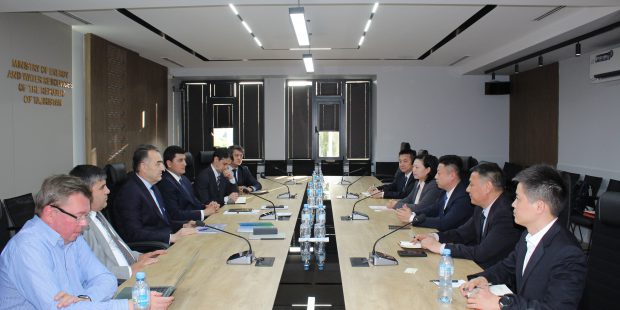
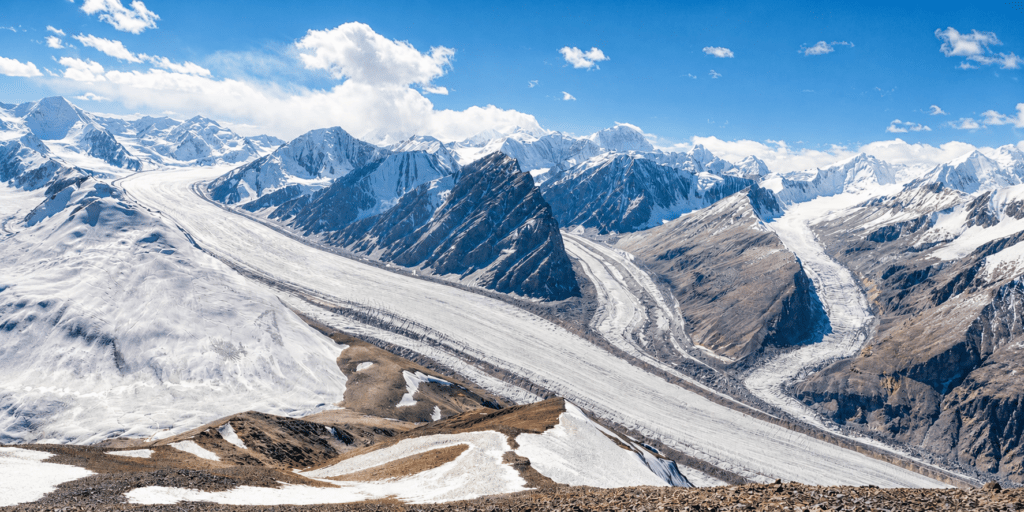
Conference-related events began in Dushanbe on Monday, May 25, as Tajikistan hosts the Fourth High-Level International Conference on the International Decade for Action “Water for Sustainable Development,” 2018-2028. The week gives Tajikistan a fresh stage for a role it has built for years: using water, climate risk, and glacier protection as its clearest route into global diplomacy. President Emomali Rahmon gave the week an early political signal when he met three senior U.N. officials in Dushanbe: Armida Salsiah Alisjahbana, U.N. Under-Secretary-General and Executive Secretary of ESCAP; Retno Marsudi, U.N. Under-Secretary-General and Special Envoy on Water; and Tshilidzi Marwala, Rector of the United Nations University and U.N. Under-Secretary-General. Their arrival tied the conference directly to the Dushanbe Water Process, a platform Tajikistan has used to keep water on the international agenda. The Tajik presidential press service said 14 U.N. resolutions on water resources have been adopted at Tajikistan’s initiative. For a small, mountainous country with limited geopolitical weight, that record has become a useful diplomatic asset. Tajikistan can convene governments, U.N. agencies, development banks, and water experts around a topic shaped by its geography. The conference runs from May 25 to 28, with Monday set aside for forums, side events, and regional consultations. The main high-level sessions are set to take place on May 26 and 27 at the Kohi Somon Complex, followed by field visits on May 28. Asia-Plus reported that more than 2,500 participants were expected, including representatives from 31 countries and 33 international organizations and financial institutions. The agenda links Tajikistan’s national concerns to a wider U.N. timetable. The Dushanbe events are designed as a preparatory step before the 2026 United Nations Water Conference, now scheduled for December 8-10 in Abu Dhabi, and co-hosted by the United Arab Emirates and Senegal. Tajik officials are also presenting the process as a bridge towards 2028, when the Water Action Decade reaches its final year. Tajikistan has spent more than two decades building this diplomatic niche. The International Decade for Action “Water for Sustainable Development,” 2018-2028 began on World Water Day in 2018 and ends on World Water Day in 2028. The Dushanbe Water Process was then shaped as a regular follow-up platform, including for voluntary commitments made under the U.N. Water Action Agenda. That structure has given Tajikistan repeated opportunities to host, frame, and guide discussion rather than appear only as a country seeking aid. Tajikistan’s glaciers, rivers, hydropower system, and mountain communities all face pressure from climate change. The U.N. glaciers initiative has put new attention on glacier retreat, and Tajikistan has pushed glacier preservation as part of its global water agenda. In Central Asia, melting glaciers and shifting river flows affect more than one country; they shape energy supply, irrigation, disaster risk, and food security. Water also connects Tajikistan to its neighbors. The region’s major rivers cross borders, and upstream water use affects downstream farms and cities. Tajikistan and Kyrgyzstan hold much of the mountain headwater geography, while Uzbekistan, Kazakhstan, and Turkmenistan depend heavily on reliable flows for...

Tajikistan and UN to Host Water Crisis Conference in Dushanbe

Tajikistan and the United Nations will co-host the 4th High-Level International Conference on the International Decade for Action "Water for Sustainable Development " 2018-2028 next week, as Central Asia and other regions face increasing water scarcity because of climate change, higher consumption, and other factors. Delegates to the May 25-28 water conference in Dushanbe include government officials, scientists, executives from financial institutions and civil society members from around the world. The goal of creating “sustainable” water resources is especially critical in Central Asia, where there is growing concern that shortages could threaten public health and stir tension between upstream and downstream countries. Kyrgyzstan and Tajikistan, for example, are in mountainous regions and have relatively significant water resources that they share with neighboring countries. However, the resources are under strain. Kazakhstan, Uzbekistan and Turkmenistan, in turn, rely on the cross-border water supply that flows downstream. Central Asian governments have begun joint projects on water infrastructure to avoid the kind of tensions that emerged in the past. The Dushanbe conference is another step in that process, even though the event is global in perspective. Tajik diplomats have held briefings in Azerbaijan, Saudi Arabia and other countries to promote the conference, describing Tajikistan as a leader in “water diplomacy” as the world faces a water crisis that is increasingly evident in floods, droughts, pollution and melting glaciers. Dushanbe has already hosted several international conferences on water. Saidjon Shafizoda, spokesman for Tajikistan’s Ministry of Foreign Affairs, said at a briefing in the Tajik capital on Wednesday that the conference can help accelerate innovation and mobilize funding for the “sustainable and inclusive” management of water, the state Khovar news agency reported. Organizers say more than 2,500 people are expected to participate.