• KGS/USD = 0.01144 0%
  • KZT/USD = 0.00216 0%
  • TJS/USD = 0.10659 0%
  • UZS/USD = 0.00008 0%
  • TMT/USD = 0.28530 0%
  • KGS/USD = 0.01144 0%
  • KZT/USD = 0.00216 0%
  • TJS/USD = 0.10659 0%
  • UZS/USD = 0.00008 0%
  • TMT/USD = 0.28530 0%
  • KGS/USD = 0.01144 0%
  • KZT/USD = 0.00216 0%
  • TJS/USD = 0.10659 0%
  • UZS/USD = 0.00008 0%
  • TMT/USD = 0.28530 0%
  • KGS/USD = 0.01144 0%
  • KZT/USD = 0.00216 0%
  • TJS/USD = 0.10659 0%
  • UZS/USD = 0.00008 0%
  • TMT/USD = 0.28530 0%
  • KGS/USD = 0.01144 0%
  • KZT/USD = 0.00216 0%
  • TJS/USD = 0.10659 0%
  • UZS/USD = 0.00008 0%
  • TMT/USD = 0.28530 0%
  • KGS/USD = 0.01144 0%
  • KZT/USD = 0.00216 0%
  • TJS/USD = 0.10659 0%
  • UZS/USD = 0.00008 0%
  • TMT/USD = 0.28530 0%
  • KGS/USD = 0.01144 0%
  • KZT/USD = 0.00216 0%
  • TJS/USD = 0.10659 0%
  • UZS/USD = 0.00008 0%
  • TMT/USD = 0.28530 0%
  • KGS/USD = 0.01144 0%
  • KZT/USD = 0.00216 0%
  • TJS/USD = 0.10659 0%
  • UZS/USD = 0.00008 0%
  • TMT/USD = 0.28530 0%

Viewing results 205 - 210 of 776

More Than a Quarter of Tajikistan’s Population Lives Below the Poverty Line – World Bank Report

Tajikistan continues to make gradual progress in reducing poverty, but over 25% of the population still lives on less than $3.65 a day, according to the World Bank’s newly released Poverty, Prosperity, and Planet Report 2024. Revised Poverty Line and Structural Vulnerabilities The World Bank recently raised the extreme poverty threshold from $2.15 to $3.00 per day, adjusting for updated purchasing power parity. Under the international poverty line of $3.65 per day, approximately one in four Tajik citizens remains in poverty. Globally, around 700 million people, 8.5% of the world’s population, live on less than $2.15 per day. The report highlights that economies reliant on remittances and imports are particularly vulnerable. Tajikistan fits this profile, with a large portion of its population employed in the informal sector, especially agriculture, and limited coverage by social assistance programs. National statistics show a decline in the domestic poverty rate from 26.3% in 2022 to 23.5% in 2023, with forecasts indicating a possible drop to 21.3% this year. Nonetheless, the country's poverty rate remains high by international standards. Rural Poverty and Social Disparities Poverty in Tajikistan disproportionately affects rural areas, where 80% of the poor reside. Around 70% of adults living in poverty lack vocational education. Vulnerable groups include women, large families, single-parent households, and children, many of whom require sustained, targeted social support. In comparison with its neighbors, Kyrgyzstan has the region’s highest poverty rate by national standards at 29.8%, while Uzbekistan reports 11.2% and Kazakhstan 3.7%. Less than 5% of Kazakhstan’s population lives below the international poverty line. Turkmenistan continues to withhold poverty-related data. Climate Change Adds to Economic Pressures The report warns that climate change further exacerbates poverty risks. From 2000 to 2020, temperatures in Central Asia rose by an average of 1.23°C, and regional glaciers shrank by 30%. For Tajikistan, where glaciers are the primary source of freshwater, these developments pose a growing threat to agricultural sustainability and food security. Nonetheless, the report acknowledges progress in adaptation efforts. Tajikistan is implementing precision farming technologies and modernizing water management practices, which have improved crop yields while reducing water usage in arid regions. The World Bank emphasizes that without structural reforms, including quality job creation, expanded support systems, and sustainable income protection, millions in Tajikistan will remain at risk, despite the appearance of macroeconomic stability.

Tajik Security Forces Thwart Major Cross-Border Drug Smuggling Attempt from Afghanistan

Tajik authorities have disrupted an attempt by an Afghan drug trafficking group to smuggle a significant quantity of narcotics into the country, according to the State Committee for National Security (SCNS) of Tajikistan. The operation unfolded in the Shamsiddin Shohin district of Khatlon region, where four Afghan nationals illegally crossed the border near the village of Kishty. The group, led by 50-year-old Azarkhon waladi Saidumar from Badakhshan province, aimed to transport narcotics into Tajik territory. The SCNS reported that regional security officers, working with border guards from outpost No. 5 of the Hirmandjo unit, tracked the smugglers’ movements and launched a targeted operation. When authorities attempted to apprehend the group, the traffickers opened fire. In the ensuing clash, Azarkhon and another group member, 30-year-old Rozmuhammad Azizi, were killed. The remaining two suspects escaped back across the border into Afghanistan. Security forces recovered two Kalashnikov rifles with 17 rounds of ammunition, a night vision device, a rubber boat, and three sacks containing 59 packages of narcotics. Forensic analysis confirmed the substances included over 57.5 kilograms of opium and 960 grams of methamphetamine, totaling 58.475 kilograms. Criminal proceedings have been initiated under several articles of Tajikistan’s Criminal Code, and authorities are pursuing efforts to identify and apprehend the remaining suspects. In a statement, the SCNS highlighted the critical importance of safeguarding the country's borders and urged residents in border regions to assist law enforcement. “Every citizen has a sacred duty to protect the homeland,” the SCNS said, warning that drug trafficking poses a direct threat to national health and security. The government reaffirmed its commitment to combating drug trafficking, cross-border crime, terrorism, extremism, and the illegal arms trade. As previously reported by The Times of Central Asia, beginning in 2026, the Collective Security Treaty Organization (CSTO) will begin delivering weapons and military equipment to its member states to strengthen the alliance’s southern frontier, with a particular focus on the Tajik-Afghan border.

Unique Artifact from Kushan Era Unearthed in Tajikistan

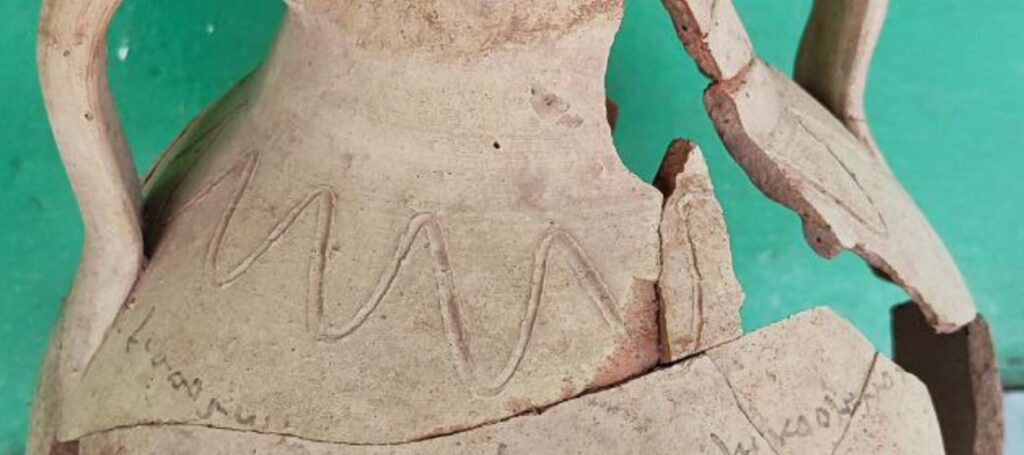
Archaeologists from the National Museum of Tajikistan have unearthed a rare and significant artifact, a clay vessel bearing a complete inscription in the Bactrian language, dating to the Kushan era. The discovery was made at the Khalkhajar archaeological site near the village of Sarband, according to the museum’s announcement. A Jug with a Story Excavations at Khalkhajar began on May 20 under the direction of Mirali Zamon Karimdodzoda, head of the museum’s archaeology and numismatics department. The team uncovered the remains of ancient architectural structures, including clay and brick walls with traces of whitewash and well-preserved sections of interior spaces. Most of the artifacts unearthed date back to the Kushan Empire’s peak between the 1st and 3rd centuries AD. Among the most notable finds is a two-handled clay jug, recovered in fragments and meticulously restored. What makes the vessel exceptional is its intact inscription in Bactrian, written in a distinct broken script, an exceedingly rare occurrence in Tajikistan. Deciphering the Inscription To analyze the text, the museum enlisted the expertise of internationally renowned scholars: Professor Nicholas Sims-Williams, a specialist in ancient Iranian languages, and numismatist Joe Cribb. Based on their interpretation, the inscription reads: “eiado gō(l)z[o ]sido finzo sagkino ol(o) mo(.)” Translation: “This water jug belongs to the woman Sagkina.” This simple phrase is of considerable linguistic and cultural significance. It offers a rare glimpse into everyday life and personal property practices in the Kushan period, shedding light on literacy, gender, and identity in ancient Central Asia. Cultural and Historical Significance The name “Sagkina” provides valuable material for onomastic studies and enriches understanding of female naming conventions in the region during the Kushan era. The presence of such inscriptions suggests a relatively advanced level of literacy and a societal norm of marking personal belongings, an important insight into domestic life and social organization at the time. Experts note that finds of this nature are vital for tracing the evolution of writing systems in Eastern Iran and for better understanding the intersection of language and material culture in ancient societies. Echoes of Empire The Kushan Empire was one of the most expansive and influential states in ancient Central Asia, encompassing areas of present-day Afghanistan, Pakistan, India, southern Uzbekistan, and parts of Tajikistan. The Bactrian language, written in a modified Greek script, served as a key medium for administration and trade, and today remains essential to reconstructing the region’s historical narrative. Archaeological efforts at Khalkhajar are ongoing. All discoveries are being catalogued for future public exhibition at the National Museum of Tajikistan, where the inscribed jug will take pride of place as a symbol of the region’s rich cultural heritage.

Road Deaths of Demining Team Are Remembered in Tajikistan

This week, a Swiss humanitarian group with a leading role in the disposal of unexploded ordnance in Tajikistan is commemorating the deaths of five of its Tajik workers in a 2016 vehicle accident in the Central Asian country. “On this day, we take a moment to honour their memory,” the Geneva-based FSD group said on X on Monday. The five members of FSD’s demining team in Tajikistan – deminers Abdurozik Kurbonov, Gulmurod Choriev and Ilkhomjon Safarov, as well as medic Mashraf Abdurahmonov and driver Ghafor Soliev - died on June 30, 2016 were killed in the accident while on their way to a minefield. The vehicle they were in plunged into the torrents of the River Panj, which forms part of the border between Tajikistan and Afghanistan. Two people in the vehicle survived. The acronym FSD stands for Fondation Suisse de Déminage, or Swiss Federation for Mine Clearance. It has worked to clear landmines and other unexploded ordnance in Tajikistan, where a civil war in the 1990s killed several tens of thousands of people, according to a number of estimates, and displaced many more from their homes. The demining group says much of the explosive material that must be cleared was left behind after the civil war, and that landmines laid by Russian forces along the Tajikistan-Afghanistan border as well as by Uzbek forces along the Tajikistan-Uzbekistan border in the early 2000s has posed concerns for the security of civilians. FSD, which first got involved in Tajikistan in the early 2000s, has also worked to rehabilitate areas affected by Soviet-era pesticides that have caused pollution and health problems. “While the Tajik government is aware of the risks of such substances on health, the environment and the economy, it lacks the legal, financial and institutional resources to solve the problem,” said FSD, which was founded in 1997. The group has received private and public funding. The humanitarian organization had 60 staff members in Tajikistan at the beginning of 2025. Its teams are working to working to clear the remaining 12.5 square kilometers of hazardous land in the country. In a step toward self-sufficiency in demining, 14 officers from Tajikistan’s Ministry of Defense and Border Troops agency completed a two-week training in explosive ordnance disposal in Gharm, Tajikistan in March this year. The training was conducted by Dushanbe-based officers from the Organization for Security and Co-operation in Europe and defense ministry specialists. Following that course, OSCE said expert instructors from Tajikistan led an OSCE-funded regional course in disposal of unexploded ordnance in April and May, “marking a significant step in enhancing Central Asia’s capabilities in mitigating explosive threats.”

From Eurasia to Greater Central Asia: A Region Reclaims Its Voice

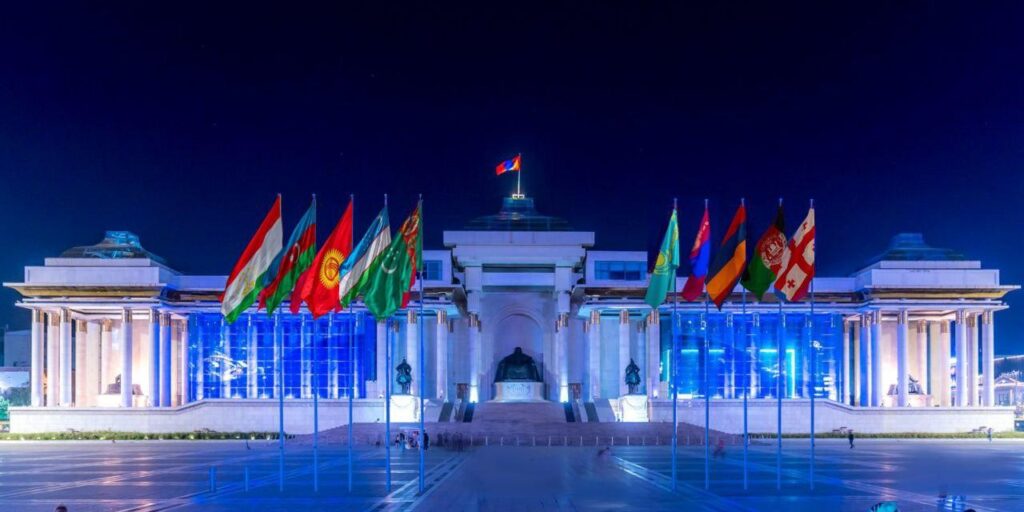
At its most basic, Eurasia refers to the combined landmass of Europe and Asia, stretching from the Atlantic Ocean in the west to the Pacific in the east, and from the Arctic in the north to South and Southeast Asia in the south. Yet when defined in political or economic terms, the concept becomes more complex. This vast region—covering over 36% of the world’s surface area—includes influential Western institutions in the west, such as the European Union and the Council of Europe. In contrast, the east is shaped by post-Soviet and Sino-Russian groupings, including the Commonwealth of Independent States (CIS), the Shanghai Cooperation Organization (SCO), and the Eurasian Economic Union (EAEU). In policy circles, the term "Eurasia" often refers more narrowly to the Caucasus (Armenia, Azerbaijan, Georgia) and Central Asia (Kazakhstan, Kyrgyzstan, Uzbekistan, Tajikistan, Turkmenistan, Mongolia, and Afghanistan). Yet countries in these regions rarely lead the institutions that shape their future. Instead, most regional organizations are dominated by larger powers, primarily Russia and China. One partial exception is the Organization of Turkic States (OTS), though it excludes non-Turkic members such as Tajikistan, Georgia, and Armenia. Many external actors—beginning with Japan's "Central Asia plus Japan" initiative in 2001—have formed dialogue platforms with the five post-Soviet Central Asian republics, often referred to collectively as the "C5." More recently, Turkey, China, the EU, and others have created similar frameworks. While these engagements have value, they are usually shaped by external agendas. The fundamental issue remains: Central Asia lacks strong, self-directed institutions of its own. In response to this institutional vacuum, Professor S. Frederick Starr proposed in 2015 a broader regional framing: Greater Central Asia. He called for moving beyond the Soviet-era definition of Central Asia to include neighboring regions with shared historical, cultural, and strategic ties. He also noted a stark reality: Greater Central Asia is the only region of its kind without its own exclusive institutions—ones not directed by outsiders. That may be starting to change. A more distinct regional identity is emerging, with new frameworks for cooperation gradually taking shape. As countries in the region increasingly define their own development priorities and diversify partnerships beyond Moscow and Beijing, there is growing momentum for a more autonomous and inclusive model of regional integration. One of the clearest examples is CAMCA—an initiative that reflects the full geographic and political scope of Greater Central Asia. Over the past decade, the Central Asia-Caucasus Institute (CACI), founded by Professor Starr, has worked with the Rumsfeld Foundation to support a new generation of regional leaders through the CAMCA Fellowship Program. Originally conceived by alumni of a joint initiative between Starr and former U.S. Secretary of Defense Donald Rumsfeld more than fifteen years ago, the CAMCA Network has become one of the few institutions uniting the entire Greater Central Asia region. Each year, the fellowship culminates in a regional forum hosted by a different CAMCA country. The most recent—held last week in Ulaanbaatar—marked the 11th such gathering and the second time the event has been hosted by CAMCA...

Tajik Asylum Seeker Wins UK Appeal Over Fear of Forced Beard Shaving

A Tajik man has been granted the right to remain in the United Kingdom after successfully arguing that he would face persecution in his home country for refusing to shave his beard. The case, first reported by The Telegraph, underscores how personal religious expression can form the basis of asylum claims. The asylum seeker, whose identity remains undisclosed, had his initial claim rejected by the UK Home Office. On appeal, he argued that Tajik authorities routinely detain bearded men, forcibly shave them, and collect their fingerprints. He maintained that he would only shave his beard out of fear of harm, not due to personal preference or societal expectations. Tajikistan has in recent years pursued an unofficial campaign linking beards to religious extremism. A BBC investigation found that in one region alone, police forcibly shaved nearly 13,000 men as part of an “anti-radicalisation” drive. Human Rights Watch has similarly documented cases of men with beards being detained, fingerprinted, and groomed under duress. The appellant’s legal team contended that his beard is a core element of his religious identity as a practicing Muslim, and that being compelled to shave it under threat would constitute a violation of his human rights. The appeal was evaluated under Article 3 of the European Convention on Human Rights, which prohibits torture and inhuman or degrading treatment. In his ruling, Deputy Judge Parminder Saini of the UK’s Upper Tribunal stated that the initial judge failed to adequately assess the true reasons the man would remove his beard. “If he wears a beard out of religious conviction but will conform for reasons of securing his safety, he may be entitled to international protection,” Saini wrote. The judge also noted that credible background evidence, such as widespread reports of arbitrary detentions and forced grooming, had not been properly considered in the original decision. “Thousands of Tajik men have had their beards forcibly shaved. These examples were relevant and should have informed the tribunal’s decision,” he added. The case has been remanded to the First-tier Tribunal for a fresh hearing. This ruling illustrates how deeply personal expressions of faith, such as maintaining a beard, can warrant legal protection when in conflict with state practices in the country of origin. It also reflects the complex legal and evidentiary hurdles asylum seekers must overcome to prove a credible fear of persecution.