• KGS/USD = 0.01144 0%
  • KZT/USD = 0.00207 0%
  • TJS/USD = 0.10440 -0.19%
  • UZS/USD = 0.00008 0%
  • TMT/USD = 0.28490 0%
  • KGS/USD = 0.01144 0%
  • KZT/USD = 0.00207 0%
  • TJS/USD = 0.10440 -0.19%
  • UZS/USD = 0.00008 0%
  • TMT/USD = 0.28490 0%
  • KGS/USD = 0.01144 0%
  • KZT/USD = 0.00207 0%
  • TJS/USD = 0.10440 -0.19%
  • UZS/USD = 0.00008 0%
  • TMT/USD = 0.28490 0%
  • KGS/USD = 0.01144 0%
  • KZT/USD = 0.00207 0%
  • TJS/USD = 0.10440 -0.19%
  • UZS/USD = 0.00008 0%
  • TMT/USD = 0.28490 0%
  • KGS/USD = 0.01144 0%
  • KZT/USD = 0.00207 0%
  • TJS/USD = 0.10440 -0.19%
  • UZS/USD = 0.00008 0%
  • TMT/USD = 0.28490 0%
  • KGS/USD = 0.01144 0%
  • KZT/USD = 0.00207 0%
  • TJS/USD = 0.10440 -0.19%
  • UZS/USD = 0.00008 0%
  • TMT/USD = 0.28490 0%
  • KGS/USD = 0.01144 0%
  • KZT/USD = 0.00207 0%
  • TJS/USD = 0.10440 -0.19%
  • UZS/USD = 0.00008 0%
  • TMT/USD = 0.28490 0%
  • KGS/USD = 0.01144 0%
  • KZT/USD = 0.00207 0%
  • TJS/USD = 0.10440 -0.19%
  • UZS/USD = 0.00008 0%
  • TMT/USD = 0.28490 0%

Viewing results 175 - 180 of 476

OSCE, European Embassies Concerned About Media Freedom in Tajikistan

A conference was held in Dushanbe to mark World Press Freedom Day, celebrated annually on May 3. Despite Tajikistan's slight rise in the 2025 Press Freedom Index, international observers remain unconvinced that the situation in the country has improved. Official ratings vs. real-world conditions The event was organized by the media unit of the OSCE Office of Programs in Tajikistan, with support from Internews, the EU Delegation, and the embassies of Germany, France, and the United Kingdom. Discussions focused on the state of free speech, prospects for sustainable media development, and the role of women in journalism. According to Reporters Without Borders, Tajikistan ranked 153rd out of 180 countries in 2025, an improvement of two places from the previous year. However, Nuriddin Karshiboev, chairman of the National Association of Independent Media of Tajikistan (NAIMT), argued that the ranking does not reflect the lived reality. “The reality is different. The situation with freedom of expression and freedom of the press remains tense due to the prosecution of journalists, pressure on their relatives, self-censorship, and other factors,” he said. Karshiboev also criticized the ineffectiveness of existing mechanisms to protect journalists and a lack of understanding among some international media-support organizations. Freedom of speech is a right, not a privilege EU Ambassador to Tajikistan Raimundas Karoblis emphasized that journalism should never be grounds for intimidation or imprisonment. “No journalist should be subjected to intimidation or imprisonment for doing their job,” he told forum participants. Karoblis underlined that freedom of expression is not a political stance or cultural nuance, but a universally recognized right. “Freedom of expression in the media is a right, not a crime. The European Union’s protection of media freedom is not an external imposition. It is not a ‘European or Western value’ that can be exported or imposed, it is a universal human right recognized by all who believe in justice, dignity, and responsibility,” he said. He added that independent media do not threaten social stability but rather form its cornerstone. “Dynamic, independent media are not a threat to stability. They are the foundation of peace, democratic and economic progress,” Karoblis said, reaffirming the EU’s commitment to supporting journalists in Tajikistan and globally. High-profile cases against journalists In February 2025, Reporters Without Borders published a report highlighting increased repression of media figures in Tajikistan. One of the most notable cases involved freelance journalist Rukhshona Khakimova, who was sentenced to eight years in prison for treason following a closed trial. Her alleged offense was writing an analytical article on Chinese influence in Tajikistan. Khakimova is also the niece of an opposition politician sentenced to 18 years for an alleged coup attempt. Another case involved Ahmad Ibrohim, editor-in-chief of the weekly Payk, who was arrested in August 2024 on charges of corruption, extortion, and extremism. His trial was also held behind closed doors. According to media reports, the case was triggered by an officer from the State Security Committee demanding a bribe in exchange for renewing the paper’s state registration. Despite prosecution...
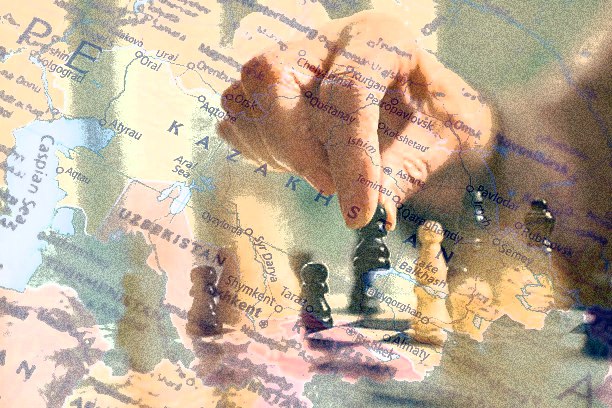

Breaking Old Ties: Central Asia’s Delicate Dance Between Russia and the West

Central Asian countries are increasingly asserting their independence in foreign policy, distancing themselves from traditional centers of global influence. Recent developments highlight a nuanced balancing act as states in the region navigate growing tensions between Russia and the West. Kyrgyzstan Pushes Back In Kyrgyzstan, the recent arrest of Natalya Sekerina, an employee of the Russian House in Osh, marked a notable assertion of sovereignty. Sekerina was detained under Part 1 of Article 416 of the Criminal Code of the Kyrgyz Republic, which pertains to the recruitment, financing, and training of mercenaries for armed conflict or attempts to overthrow state authority. Earlier, Sergei Lapushkin, an employee of Osh city hall, and two others were also detained in connection with the case.  All suspects were later placed under house arrest. Nevertheless, the arrests are seen by observers as a clear signal that Kyrgyzstan is not simply aligning with Russian policy, despite its economic dependence on Moscow, particularly due to labor migration. The move was reportedly a response to the April 17 detention of over 50 Kyrgyz nationals in a Moscow bathhouse, where Russian security forces allegedly used excessive force. The Kyrgyz Ministry of Foreign Affairs issued a formal note of protest. Russia later stated that the detainees were in the country illegally and some were suspected of links to radical groups.  At the same time, Kyrgyzstan is scrutinizing Western influence as well. In February, U.S. President Donald Trump announced funding cuts and a wind-down of the U.S. Agency for International Development (USAID). The announcement triggered debate in Kyrgyzstan, where some voices argued that while USAID had supported civil society, it also fostered instability and economic dependency. Critics claim the agency promoted Western values and helped establish a network of NGOs that played outsized roles in the country’s politics.  Kazakhstan and Uzbekistan Seek Equilibrium In Kazakhstan, USAID also came under fire. Parliamentary Deputy Magherram Magherramov criticized the agency for promoting what he described as values alien to Kazakh society, referencing controversial events such as women’s rights marches and LGBTQ+ parades in Almaty. He called for a formal review of foreign-funded NGOs.  Meanwhile, Uzbekistan witnessed a diplomatic rift during an April visit by Russian Foreign Minister Sergey Lavrov to the “Grieving Mother” memorial in Samarkand. Lavrov commented on the absence of a Russian-language inscription, provoking widespread backlash on Uzbek social media. Sherzodkhon Kudratkhodzha, rector of the University of Journalism and Mass Communications, responded sharply: “We are not their colony.” He also cited ongoing discrimination against Uzbek migrants in Russia, which, he argued, has been met with silence from Russian officials.  A More Independent Foreign Policy Central Asian nations are increasingly holding intra-regional and international meetings, often excluding Russia. On April 25, intelligence chiefs from the region gathered in Tashkent to coordinate on regional security threats.  The following day, a meeting of foreign ministers from Central Asia and China took place in Almaty. It was attended by Kazakh Foreign Minister Murat Nurtleu, Chinese Foreign Minister Wang Yi, and counterparts from Kyrgyzstan, Tajikistan, Uzbekistan, and a...

Tajikistan Abolishes Criminal Prosecution for Social Media ‘Likes’

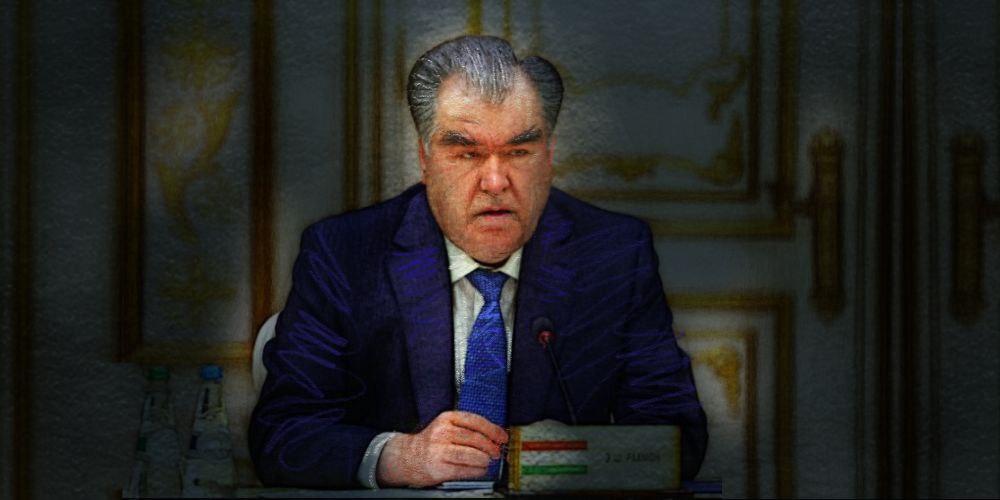
Tajikistan will no longer criminalize the use of “likes” or emoji reactions on social media posts. Amendments to the Criminal Code were unanimously approved on April 10 during the first session of the newly elected lower house of parliament, the Majlisi Namoyandagon. The legislative initiative, introduced by First Deputy Prosecutor General Umed Karimzoda, removes language from Articles 179(3) and 307(1) of the Criminal Code that allowed for punishment for “endorsing” extremist or terrorist content. Specifically, the phrase “liking or other sign of approval” will be eliminated from the law. The reform will take effect after approval by the upper house of parliament, a presidential signature, and official publication. Up to 15 Years for Liking: The Way It Used to Be Previously, Tajikistan’s legislation permitted real prison sentences for online activity. Article 179(3), concerning public incitement to terrorism, carried penalties of 5 to 15 years in prison. Article 307(1), concerning public justification of extremism, allowed for 3 to 12 years behind bars. This justification included simple actions such as liking or reposting flagged content. According to Karimzoda, 1,507 people are currently imprisoned for social media activity involving likes or comments on extremist-designated materials. This figure, cited from the Main Department of Corrections, had not been officially disclosed prior to his statement. The Supreme Court of Tajikistan has also consistently declined to release related statistics to the press or the public. Government Response and Rahmon’s Remarks President Emomali Rahmon had already voiced concern over such judicial practices in October 2024, calling on authorities to end prosecutions based on social media interactions. “Some bodies are bringing cases without grounds and this should be stopped,” Rahmon said at the time. Despite this directive, media reports indicate that security services continued to detain individuals, seize phones, and inspect social media activity. One high-profile example involved the family of journalist Shervon Umriddin. In April 2024, his brother was detained in the town of Penjikent after authorities inspected his phone and discovered likes on opposition-related posts. A similar incident had affected another relative a year earlier. Both were eventually released after paying fines. Legal Experts and Human Rights Concerns Media lawyer Ranget Yatimov recalled that as early as 2018, human rights defenders warned of the risk of abuse stemming from the vague interpretation of anti-extremist legislation. Courts began equating “likes” on controversial content with public justification of terrorism. Yatimov also highlighted that such court hearings are typically held behind closed doors, lacking transparency or external oversight. Following Rahmon’s remarks, lawyers and civil society activists emphasized that rhetorical criticism was insufficient. “If the president has a desire to change the situation, he should officially initiate the legislative abolition of such norms. Otherwise, it will remain in words,” said political migrant Farҳod Odinaev. International human rights organizations have repeatedly condemned Tajikistan for restricting freedom of expression. Criminal penalties for digital activity, including likes and comments, have been widely regarded as a violation of basic human rights. The repeal of this provision could mark a step toward more proportionate law...

Complaint against Tajik Officials Filed with International Criminal Court

For many years now, Tajikistan’s government has been ruling the country as it wishes and ignoring all criticism of the many rights violations being committed in Tajikistan. On April 10, two NGOs -- the Ukrainian Fund of International Volunteers and Freedom for Eurasia -- and the banned Tajik opposition Islamic Renaissance Party of Tajikistan (IRPT) filed a complaint with the international Criminal Court (ICC). The complaint accuses Tajik President Emomali Rahmon and his government of committing crimes against humanity. IRPT leader Muhiddin Kabiri said, “We hope the (ICC), (after considering) our complaint, will begin procedures for opening a criminal case and arresting the perpetrators, including the top leadership of Tajikistan.” A Big Problem That’s Getting Worse Evidence provided in the complaint covers the period from 2002 to 2024, but events only in the last few years tell the story of the impunity with which Tajik authorities have acted toward their citizens inside and outside Tajikistan. In May 2022, the Tajik government responded to peaceful protests in eastern Tajikistan’s Gorno-Badakhshan Autonomous Oblast (GBAO) by implementing a counter-terrorism operation that saw dozens, at least, of locals killed, and hundreds detained. Tajik authorities arrested people who were not involved in the protests: lawyers, activists, artists, and journalists. More than a dozen Pamiris were detained in Russia and forcibly deported back to Tajikistan where they were immediately detained and soon after, convicted and imprisoned. GBAO is home to the Pamiris, a group of more than 200,000 who have been living in the remote Pamir Mountains for centuries. They are Shiite Muslims, not Sunnis as most ethnic Tajiks are. Pamiris have their own languages and a unique culture. GBAO has been a restive area since Tajikistan became independent in late 1991, mainly because the Pamiris prefer to govern their territory according to their own age-old customs and have been resistant to the government’s attempts to exert control over the region. Less than three years since the counter-terrorism operation, Pamiri culture is in danger of disappearing. Pamiris are followers of the Aga Khan. During more than 30 years of Tajikistan’s independence, the recently deceased Aga Khan IV Prince Karim spent more than $1 billion on projects in GBAO, which is the poorest region in Tajikistan.  Since 2022, the government has seized or is currently trying to seize nearly everything the Aga Khan Development Network built or established in GBAO. The hotels, schools, including the University of Central Asia in the GBAO capital Khorog, a medical center, the park in Khorog, and other objects financed by the Aga Khan are all coming under state control. Locals are forbidden from having portraits of the Aga Khan in their homes.  Rahmon is preparing his eldest son, Rustam Emomali, to become Tajikistan’s next president. In advance of the widely-expected transfer of power, Rahmon has been clearing away any potential opposition. The IRPT was banned and declared by a Tajik court to be an extremist group a decade ago, despite the party having been part of the government during the previous 18...

Earthquake in Tajikistan Kills One Child, Damages About 30 Homes

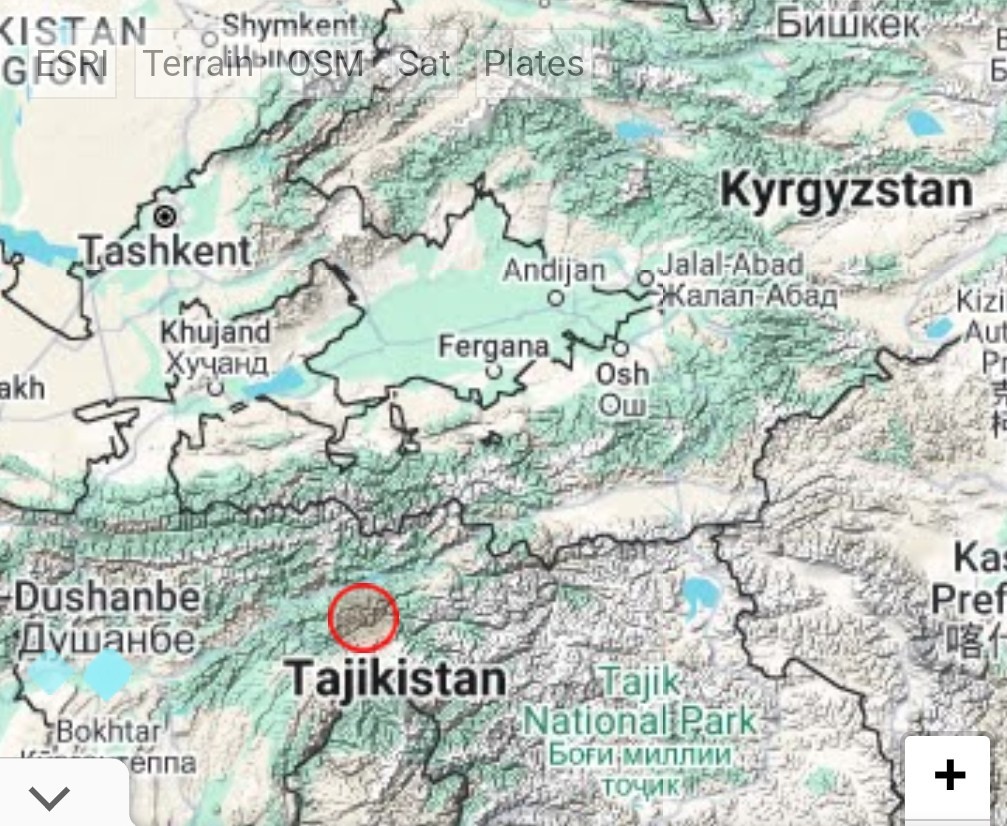
A powerful earthquake struck Tajikistan on Sunday, killing a young child who was trapped under a wall, damaging about 30 houses and alarming people in parts of neighboring countries who felt the impact.     The epicenter of the quake was 25 kilometers east of Rasht, Tajikistan, at a depth of 12.6 kilometers, the U.S. Geological Survey reported. The Euro-Mediterranean Seismological Centre issued a similar report, saying the magnitude was 5.9 and citing the accounts of witnesses who said there was strong shaking in Dushanbe, the capital. The Rasht area is about 150 kilometers northeast of Dushanbe and lies on the border with Kyrgyzstan.  Disaster response authorities in Tajikistan identified the child who died as Abdugani Mashrabov, a resident of the rural village of Ushturpast, who was born in 2022.  At least 29 residential buildings and a school were damaged in the quake, mostly in the Rasht area, according to preliminary information from the government. The Rasht valley, which has picturesque landscapes of gorges and mountains, is relatively remote. It was an opposition stronghold during Tajikistan’s civil war in the 1990s and was the scene of intense fighting. More recently, development had been slowed by tensions between Tajikistan and Kyrgyzstan that sometimes spilled into violence, though a border agreement signed last month between the two countries could open the way to increased trade and transit.

Unpacking the Effects of Trump’s Tariffs on Central Asia

Trade analysts across Central Asia generally agree that the immediate impact of the United States' tariff policy on the export dynamics of their nations will likely be minimal, as observed in past experiences, except for Kazakhstan. However, there is a palpable concern regarding potential unforeseen consequences arising from a broader global trade conflict. Notably, the timing of the Trump administration's announcement regarding global tariffs on imports coincides with a period when Central Asian countries are actively working to enhance their regional trade relationships. This new tariff policy raises significant doubts about the authenticity of recent U.S. efforts to promote increased trade and investment in the region. The mixed signals coming from Washington may lead Central Asian leaders to re-evaluate their current trade partnerships, especially as they consider the benefits of strengthening ties with China and Russia against the attractiveness of expanding commerce with the United States. Similarly, the European Union may find an opportunity to improve its position, while India could leverage the Chabahar route (a multi-modal transportation route connecting India, Iran, Afghanistan, and potentially Central Asia and Europe). It is worth noting that the market is primarily situated in Asia, and this alternative could have adverse long-term effects on the United States. Kazakhstan, acknowledged as the United States’ largest trading partner in Central Asia, is poised to face significant repercussions from introducing new tariffs set at 27%. In 2024, trade relations between the U.S. and Kazakhstan reached an impressive total of $3.4 billion, with $1.1 billion in U.S. exports to Kazakhstan and $2.3 billion in imports from Kazakhstan to the U.S. However, a statement from the Kazakh Trade Ministry indicates that exports to the U.S. primarily consist of crude oil, uranium, silver, and other raw materials, all exempt from these tariffs. In 2024, Kazakhstan exported only $95.2 million worth of goods, which will now incur surcharges – a relatively modest figure compared to the country’s overall foreign trade turnover of $141.4 billion. Trade analysts suggest that Kazakhstan has little cause for concern, viewing this situation more as a psychological impact than a serious economic threat. Resource-driven Central Asian economies, such as Kazakhstan, may even find enhanced opportunities in the expanding Asian market. Trade dynamics in Central Asia reveal a complex landscape, especially concerning the United States. In 2024, Uzbekistan managed to export a modest $42.4 million worth of goods to the US, a small fraction considering its total foreign trade turnover, which reached an impressive $66 billion for that year. This stark contrast highlights the limited engagement of Uzbekistan in the American market. With its total trade turnover of $16 billion in 2024, Kyrgyzstan similarly struggled with exports to the US, which amounted to merely $16.7 million. This reflects a broader trend where Central Asian economies exhibit low volume exports to the US, suggesting significant barriers or challenges in establishing a foothold in this lucrative market. Tajikistan's economic performance presented an even more sobering picture. Recording a total trade turnover of $8.9 billion, the country achieved only $4.6 million...