• KGS/USD = 0.01144 0%
  • KZT/USD = 0.00208 0%
  • TJS/USD = 0.10391 -0.48%
  • UZS/USD = 0.00008 0%
  • TMT/USD = 0.28571 0%
  • KGS/USD = 0.01144 0%
  • KZT/USD = 0.00208 0%
  • TJS/USD = 0.10391 -0.48%
  • UZS/USD = 0.00008 0%
  • TMT/USD = 0.28571 0%
  • KGS/USD = 0.01144 0%
  • KZT/USD = 0.00208 0%
  • TJS/USD = 0.10391 -0.48%
  • UZS/USD = 0.00008 0%
  • TMT/USD = 0.28571 0%
  • KGS/USD = 0.01144 0%
  • KZT/USD = 0.00208 0%
  • TJS/USD = 0.10391 -0.48%
  • UZS/USD = 0.00008 0%
  • TMT/USD = 0.28571 0%
  • KGS/USD = 0.01144 0%
  • KZT/USD = 0.00208 0%
  • TJS/USD = 0.10391 -0.48%
  • UZS/USD = 0.00008 0%
  • TMT/USD = 0.28571 0%
  • KGS/USD = 0.01144 0%
  • KZT/USD = 0.00208 0%
  • TJS/USD = 0.10391 -0.48%
  • UZS/USD = 0.00008 0%
  • TMT/USD = 0.28571 0%
  • KGS/USD = 0.01144 0%
  • KZT/USD = 0.00208 0%
  • TJS/USD = 0.10391 -0.48%
  • UZS/USD = 0.00008 0%
  • TMT/USD = 0.28571 0%
  • KGS/USD = 0.01144 0%
  • KZT/USD = 0.00208 0%
  • TJS/USD = 0.10391 -0.48%
  • UZS/USD = 0.00008 0%
  • TMT/USD = 0.28571 0%

Viewing results 43 - 48 of 310

Organization of Turkic States Discusses Key Eurasian Energy Projects

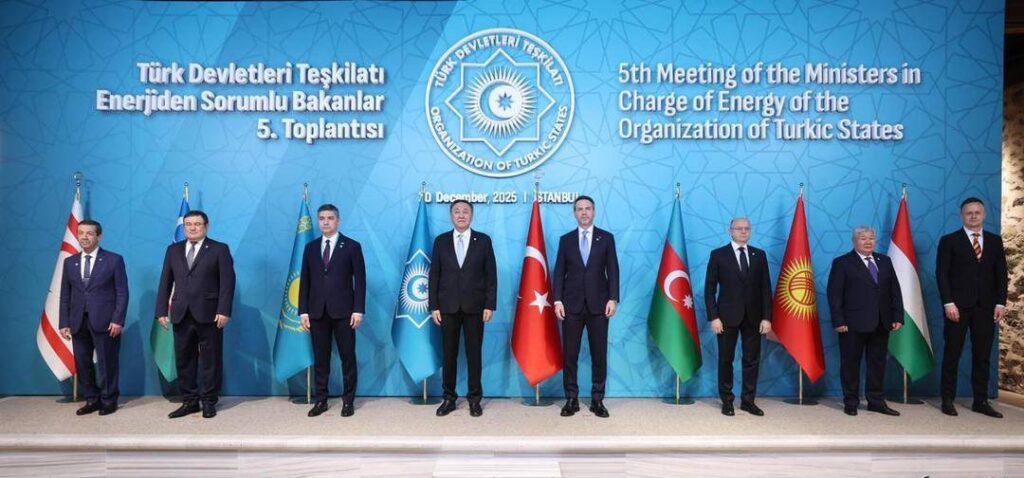
At the 5th meeting of ministers responsible for energy within the Organization of Turkic States (OTS), held on December 10 in Istanbul, OTS Secretary General Kubanychbek Omuraliev outlined major joint energy initiatives underway among member states. Founded in 2009, the OTS comprises Azerbaijan, Kazakhstan, Kyrgyzstan, Turkey, Uzbekistan, and Turkmenistan. Hungary and Northern Cyprus participate as observer states. Omuraliev touched upon the following projects: Major oil and gas routes such as the Baku-Tbilisi-Ceyhan (BTC) oil pipeline, Baku-Tbilisi-Erzurum (BTE) gas pipeline, South Caucasus Pipeline, Trans-Anatolian Natural Gas Pipeline (TANAP), Trans Adriatic Pipeline (TAP), and the Iğdır-Nakhchivan gas pipeline; A strategic partnership between Azerbaijan, Kazakhstan, and Uzbekistan to develop and transmit green energy; The Azerbaijan-Georgia-Turkey-Bulgaria Green Energy Corridor, which extends the Central Asia-Azerbaijan corridor and opens new avenues for energy exports to Europe; Construction of the Kambarata-1 Hydropower Plant in Kyrgyzstan, a project jointly developed with Kazakhstan and Uzbekistan; and A planned Black Sea submarine cable to transmit renewable energy. Omuraliev emphasized that enhanced intra-OTS cooperation bolsters both the economic potential of member states and regional energy security. Ministers at the meeting noted the significant fossil fuel and clean energy resources held by OTS members and observers, describing the region as a strategic energy bridge between Asia and Europe. They stressed that advancing practical cooperation is essential amid growing global energy demand and the accelerating energy transition. Participants agreed to move forward with joint projects under the OTS framework, including the establishment of a Regional Center for Technologies and Green Initiatives. As previously reported by The Times of Central Asia, on December 5, the Board of Governors of the Turkic Investment Fund announced in Bishkek that the fund will begin operations in the first quarter of 2026. The Turkic Investment Fund is the first dedicated financial institution jointly established by OTS member states. Headquartered in Istanbul, its mandate is to promote economic cooperation, boost intra-regional trade, and support sustainable development by financing major joint initiatives across the region.

EDB Establishes Investment Bridge Between Gulf Capital and Central Asian Projects

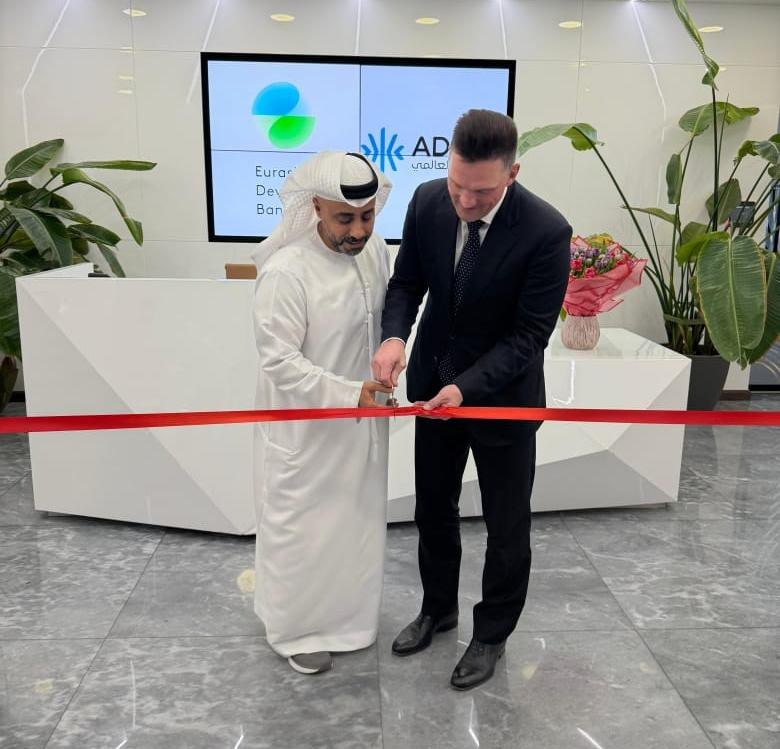
The Eurasian Development Bank (EDB), headquartered in Almaty, has opened a representative office in Abu Dhabi Global Market (ADGM), the United Arab Emirates’ international financial center, marking a strategic move to connect Gulf Cooperation Council (GCC) investors with high-potential projects across Central Asia. According to the Bank, the new platform will offer GCC investors structured investment opportunities backed by EDB analytics, regional expertise, and strong ties with the governments of its member states, Armenia, Belarus, Kazakhstan, Kyrgyzstan, Russia, Tajikistan, and Uzbekistan. Through this initiative, investors will gain access to infrastructure and sustainable development projects with optimized risk-return profiles. At the launch ceremony, EDB Management Board Chairman Nikolai Podguzov underscored the strategic significance of the move. “We are creating an ‘investment highway’ between Gulf capital and opportunities in Central Asia. Our new office in Abu Dhabi reinforces our role as a regional bridge, combining local knowledge with tailored financial instruments. Investors gain access to proven projects with favorable risk-return dynamics, while Central Asian economies unlock new development funding.” A centerpiece of the new platform is a specialized credit fund dedicated to financing infrastructure development in Central Asia. Registered under ADGM jurisdiction, the fund will focus on debt financing for EDB’s infrastructure portfolio. The Bank highlighted ADGM’s regulatory advantages, noting that the fund will offer Middle Eastern and global investors a secure and efficient entry point into the region’s development landscape. EDB will serve as both a structuring partner and co-investor, providing access to a diversified project pipeline. Priority Sectors for Investment Transport and Logistics: The development of the North-South Corridor could boost transit volumes through Central Asia by up to 40%, significantly reducing shipping distances between the Gulf and key Eurasian markets. Water Sector and Agribusiness: The irrigation equipment market in Central Asia is valued at approximately $426 million annually, while the broader water supply sector is worth up to $2 billion. Renewable Energy: The sector continues to attract major players such as the UAE’s Masdar, which has established a growing footprint across Central Asia. Strengthening Gulf-Central Asia Economic Ties In recent years, the Gulf states have become major trading partners and investors in Central Asia. According to EDB data, trade between the Gulf and Central Asia reached $3.3 billion in 2024, a 4.2-fold increase since 2020. Imports from the Gulf made up 80% of the total trade turnover. Top Central Asian trading partners with the Gulf in 2024 were: Turkmenistan - $2 billion (61%) Uzbekistan - $740 million (23%) Kazakhstan - $302 million (9%) The highest trade growth rates were recorded in: Turkmenistan - up 9.9 times Kyrgyzstan - up 9.5 times Uzbekistan - up 8.1 times The UAE accounted for 97% of all Gulf-Central Asia trade. For Turkmenistan, Gulf trade represented around 10% of total foreign commerce, while Kyrgyzstan’s share stood at approximately 1%, with even lower figures across other regional states. The EDB projects continued growth in trade, citing an unrealized potential of $4.9 billion, including $4.4 billion in potential Gulf exports (motor vehicles, electronics, jewelry) and $500...

New CIVICUS Report Warns of Mounting Restrictions on Freedoms in Turkmenistan

The global civil society alliance CIVICUS has published an updated report on the worsening state of rights and freedoms in Turkmenistan. The document, compiled by the International Partnership for Human Rights (IPHR) and the Turkmen Initiative for Human Rights (TIHR), covers the period from June to November 2025 and outlines several disturbing trends. According to the report, Turkmen authorities continue to target individuals they deem politically “inconvenient.” This includes former political prisoners, who, despite their release, remain under tight surveillance and face ongoing restrictions. The report highlights an intensifying crackdown on freedom of expression. While state-controlled media project an image of national prosperity, the country is, in reality, grappling with a prolonged socio-economic crisis and widespread human rights abuses. One section focuses on the growing phenomenon of transnational repression. Human rights groups report that Turkmenistan’s security services have increased pressure on dissidents living abroad. These efforts include attempts to forcibly repatriate activists with the cooperation of foreign governments, most notably in Turkey and Russia. CIVICUS also draws attention to expanding internet restrictions. The report suggests that these limitations are not solely politically driven but are also linked to corruption. Cybersecurity officials are alleged to intentionally disrupt internet access to boost demand for censorship circumvention tools, tools that are often monetized through state-controlled channels. Another concern is the continued practice of compulsory mobilization for public events. Citizens are routinely forced to participate in state-organized gatherings, with those who refuse facing threats of punitive measures. Earlier this year, The Times of Central Asia reported that in the lead-up to Turkmenistan’s celebration of the 30th anniversary of its status as a permanently neutral state on 12 December, international human rights organizations had urged Ashgabat to release civil society activists jailed on politically motivated charges.

Russia Revives Plan to Redirect Siberian Rivers as Central Asia Faces Worsening Water Crisis

The long-contested idea of diverting Siberian rivers to Central Asia has re-emerged after the Russian Academy of Sciences announced on November 14 that it is studying a new version of the project. The updated proposal revives elements of a Soviet-era plan from the 1970s and 1980s that aimed to channel water from the Ob River basin to arid regions of Central Asia. This time, however, the focus is on a closed pipeline system, rather than open canals, to transport large volumes of water to countries facing acute shortages, particularly Uzbekistan, according to Fergana News. Discussions within the Russian Academy had reportedly already begun prior to the announcement. Researchers are now calling on Russia’s Ministry of Science and Higher Education to include a full study of the project in its state research plan. They argue that Central Asia is entering a critical phase of water scarcity that demands long-term strategic solutions. The renewed interest comes amid escalating water stress across the region. Rapid population growth, retreating glaciers, and intensifying irrigation demands have pushed existing water systems to their limits. While some view the proposed pipeline as a potential lifeline for stabilizing regional water supplies, environmental concerns remain central to the debate, echoing the very reasons the original project was shelved. A Long History of Controversy The idea of redirecting northern rivers is not new. It was first proposed in the 19th century by Ukrainian-born engineer Yakov Demchenko, who envisioned transferring water from the Ob and Irtysh rivers to replenish the shrinking Aral Sea. In the Soviet period, the concept gained political traction. By the late 1960s, it had entered official planning discussions, prompting detailed studies by the Academy of Sciences, the State Planning Committee, and the Ministry of Water Resources. In 1970, the project was formally designated a state priority, with plans for transferring up to 25 cubic kilometers of water annually. Extensive technical documentation was produced, and construction began on supporting infrastructure, including the Irtysh-Karaganda canal. Designs for the main channel envisioned a span of more than 2,500 kilometers and a capacity exceeding 1,000 cubic meters per second. However, by 1986, the project was halted due to mounting economic pressures, scientific opposition, and growing awareness of potential environmental risks. Experts warned of large-scale flooding, disruptions to groundwater, damage to fish stocks, displacement of Indigenous communities, and unpredictable impacts on permafrost and regional climate systems. Renewed Debate in a Region Under Stress Though shelved in the late Soviet era, the project has resurfaced multiple times since the collapse of the USSR. Former Moscow mayor Yuri Luzhkov advocated for its revival in 2002, and Russian and Kazakh presidents discussed it publicly in 2010. Yet concerns about environmental and geopolitical ramifications have consistently stalled progress. Meanwhile, the water crisis in Central Asia has only deepened. Glaciers in the Tien Shan and Pamir mountains which feed the Amu Darya and Syr Darya rivers have shrunk by more than 25% in recent decades. The region’s population has grown to approximately 80 million, nearly 50% higher...

Turkmenistan Legalizes Crypto Mining and Exchanges for the First Time

Turkmenistan has officially legalized cryptocurrency mining and the operation of crypto exchanges. A newly adopted law sets strict conditions for market participants while introducing safeguards to protect citizens from the risks associated with virtual assets. Key Provisions of the New Law Coming into force on January 1, 2026, the Law on Virtual Assets, signed by President Serdar Berdymuhamedov and published in the state newspaper Neutral Turkmenistan, legalizes cryptocurrency mining, exchanges, and trading platforms for the first time in Turkmenistan. The law defines the legal framework for the creation, storage, issuance, and circulation of virtual assets. While cryptocurrencies will not be recognized as a means of payment, currency, or security, they are treated as objects of civil law. Virtual assets may be either secured or unsecured. Crucially, the legislation makes clear that the state bears no responsibility for obligations incurred by crypto platforms or for losses in asset value. Mining Regulated by the Central Bank The right to mine cryptocurrencies will be granted to individual entrepreneurs and legal entities, all of whom must register electronically with the Central Bank of Turkmenistan. Hidden mining, the unauthorized use of another party’s computing power, is explicitly banned, targeting illicit mining networks. Crypto exchanges and related service providers must obtain licenses from the Central Bank. Permitted services include the exchange, transfer, storage, and management of virtual assets, as well as initial offerings. Opening a crypto wallet will require full customer identification in line with anti-money laundering protocols. Both Turkmenistan residents and foreign nationals may establish crypto exchanges, but with strict limitations: Individuals and legal entities from offshore jurisdictions are barred from participation; and Founders holding offshore bank accounts are also disqualified. Tight Restrictions on Crypto Advertising The law introduces some of the region’s strictest rules on crypto-related advertising. All promotional materials must include a warning that virtual assets are not backed by the state and that investments carry the risk of financial loss. The following are prohibited in advertising: Promises of profitability; Use of images of minors; Implications of luxury, bonuses, or effortless wealth; References to state affiliation, including the use of “Turkmenistan,” “national,” or “Turkmen”;  and Use of terms like “virtual asset,” “cryptocurrency,” or “digital asset” by companies not directly involved in the sector. These restrictions aim to protect the public from deceptive and aggressive promotion of high-risk financial products. Part of a Regional Regulatory Trend Turkmenistan’s move follows a broader regional trend toward formalizing the crypto sector. In November, Kazakhstan also enacted legislation governing the circulation of unsecured digital assets nationwide. Previously, such activities were only permitted within the Astana International Financial Center source.

Turkmenistan Introduces New 200 Manat Polymer Banknote

Turkmenistan has unveiled a new 200 manat polymer banknote as part of a broader upgrade to its national currency, state news agency TDH reported on December 1. The Central Bank announced that the new note, along with updated polymer versions of the 1, 5, and 10 manat denominations, has entered circulation in honor of the 30th anniversary of Turkmenistan’s recognition as a permanently neutral state. The release also coincides with the 2025 theme: the International Year of Peace and Trust. While the 1, 5, and 10 manat notes retain their existing color schemes and general designs, each now includes the emblem of the International Year of Peace and Trust. The newly introduced 200 manat note depicts the Arkadag Monument on the front and the administrative building of the Arkadag city khyakimlik (mayor’s office) on the reverse. All updated notes bear the year of issue and the facsimile signature of the Central Bank chairperson. The Central Bank emphasized that the new and modified banknotes must be accepted at face value by all institutions and businesses, regardless of ownership or sector. Earlier series issued in 2009, 2012, 2014, 2017, and 2020 remain valid legal tender. To combat counterfeiting, authorities advised the public to verify at least five security features when handling cash. Detailed guidance is available on the Central Bank’s official website. Last year, the Central Bank implemented a range of reforms aimed at improving cash quality and strengthening anti-counterfeiting controls throughout the financial system. In a related regional development, Kyrgyzstan in March began domestic production of its national currency, the som, for the first time since gaining independence. The new Kyrgyz banknotes are printed by the Bishkek-based Open Joint Stock Company Uchkun, replacing previous reliance on European printing facilities.