


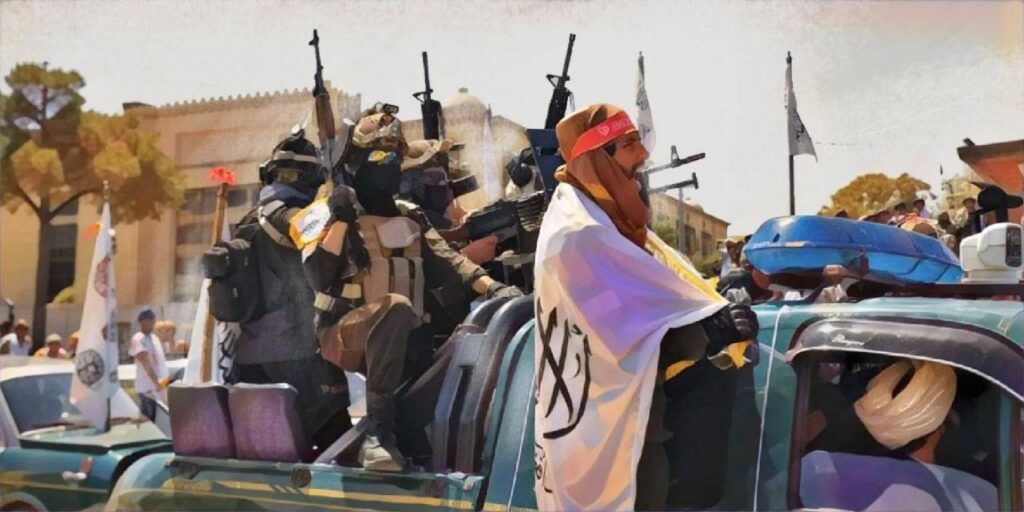
Central Asia’s Afghan Engagement Faces Persistent Security Risks
Central Asian countries are expanding their trade with Kabul despite concerns about armed groups operating from Afghanistan. Russia has renewed warnings about militants seeking to infiltrate the region and is advocating cooperation with the Taliban authorities to contain them. Uzbekistan and Turkmenistan are interested in trade, energy, and transport projects connecting the region with South Asia. Tajikistan has traditionally taken a more critical position toward the Taliban and places particular emphasis on securing its lengthy border with Afghanistan. Meanwhile, Russia and China are seeking guarantees from the Afghan authorities against the activities of armed organizations that threaten their security. Speaking on October 16 at a joint conference of the Collective Security Treaty Organization (CSTO), the Commonwealth of Independent States (CIS), and the Shanghai Cooperation Organization (SCO) in Moscow, Russian Foreign Minister Sergey Lavrov said extremist organizations maintained a significant presence in Afghan provinces bordering Tajikistan, Turkmenistan, and Uzbekistan. According to Lavrov, militants intend to use Afghan territory to expand their activities into Central Asia and Russia. Lavrov identified Islamic State Khorasan Province (ISKP), the Afghan affiliate of the Islamic State terrorist organization, also known as ISIS-K, as the main threat, citing Russian security agencies. The group opposes the Taliban, carries out attacks in Afghanistan, and has struck beyond its borders. The name Khorasan refers to a historical region encompassing parts of present-day Afghanistan, Iran, and Central Asia. ISIS-K’s reach extends beyond Afghanistan’s border regions through propaganda, recruitment, and cross-border networks. As The Times of Central Asia previously reported, people from Central Asia have been implicated in ISIS-K activities beyond the region itself, including within migrant communities. Lavrov claimed that militants in northern Afghanistan included ethnic Uyghurs, alongside fighters from Central Asia and the North Caucasus. His reference to Uyghurs echoes Beijing’s security concerns over Xinjiang, where China has used counterterrorism policies to justify sweeping repression. A 2022 UN assessment found that arbitrary detention and restrictions on the rights of Uyghurs and other predominantly Muslim groups could constitute crimes against humanity. The TASS report provided no evidence supporting his claims about the fighters’ origins. Lavrov also called for joint action against weapons and drug trafficking through Central Asia. The Taliban as a Security Partner Lavrov urged engagement with the Taliban authorities, who returned to power during the U.S. military withdrawal in August 2021. Russia formally recognized their government in July 2025. Moscow argues that the Taliban’s control of Afghan territory makes them responsible for security within the country, and is seeking international support for Kabul’s efforts to improve regional security. While relying on the Taliban to contain armed groups, Moscow is simultaneously questioning their ability to do so. ISIS-K has attacked Taliban officials, giving Kabul a direct reason to confront the organization. That conflict, however, offers no assurance that the Taliban will act against other armed groups operating in Afghanistan. China also favors working with Kabul on security, with concerns extending to the safety of Chinese nationals and regional trade routes. Two attacks launched from Afghan territory killed five Chinese nationals...
