• KZT/USD = 0.00218
  • TJS/USD = 0.10820
  • UZS/USD = 0.00009
  • TMT/USD = 0.29760
  • KZT/USD = 0.00218
  • TJS/USD = 0.10820
  • UZS/USD = 0.00009
  • TMT/USD = 0.29760
  • KZT/USD = 0.00218
  • TJS/USD = 0.10820
  • UZS/USD = 0.00009
  • TMT/USD = 0.29760
  • KZT/USD = 0.00218
  • TJS/USD = 0.10820
  • UZS/USD = 0.00009
  • TMT/USD = 0.29760
  • KZT/USD = 0.00218
  • TJS/USD = 0.10820
  • UZS/USD = 0.00009
  • TMT/USD = 0.29760
  • KZT/USD = 0.00218
  • TJS/USD = 0.10820
  • UZS/USD = 0.00009
  • TMT/USD = 0.29760
  • KZT/USD = 0.00218
  • TJS/USD = 0.10820
  • UZS/USD = 0.00009
  • TMT/USD = 0.29760
  • KZT/USD = 0.00218
  • TJS/USD = 0.10820
  • UZS/USD = 0.00009
  • TMT/USD = 0.29760
24 August 2026

Viewing results 7 - 12 of 47

Opinion: Water Without a Guarantor – Central Asia’s Next Security Test

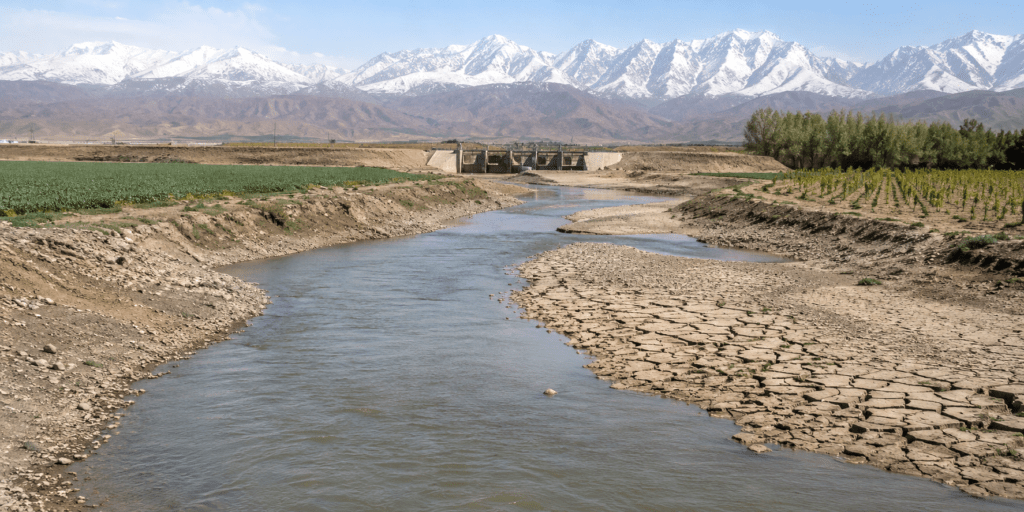
The Fourth High-Level International Conference on the International Decade for Action, “Water for Sustainable Development,“ taking place in Dushanbe on May 25-28, comes at a difficult moment. Central Asia's water problem is no longer only about environmental management; it is moving into the field of regional security. The conference agenda is familiar and necessary: climate, investment, innovation, transboundary cooperation, and the implementation of the Water Action Decade. The harder question is what happens outside the conference hall. Does Central Asia still have a credible way to stop water stress from becoming an interstate crisis? For decades, the region operated in a post-Soviet setting in which Moscow shaped many security calculations, even though it was never a formal water arbiter. That setting has weakened. Russia has not disappeared from Central Asia, and it still retains military, economic, and institutional leverage. But since 2022, its role as the assumed external stabilizer has become less convincing. The result is not a simple vacuum. It is a more awkward reality: a region with many outside actors, but no trusted water-security guarantor. The Old Backdrop Is Weakening Central Asia's water system was built around a Soviet-era division of functions. Upstream republics, Tajikistan and Kyrgyzstan, controlled the mountains, reservoirs, and hydropower potential. Downstream republics, Uzbekistan, Kazakhstan, and Turkmenistan, depended on seasonal water flows for agriculture, food security, and social stability. The Soviet system managed those tensions through central planning. After independence, cooperation became more fragile. Water, energy, borders, electricity, and agriculture were separated into national strategies. The rivers, however, remained transboundary. For many years, Russia remained the largest external power around which regional security calculations were organized. That did not make Moscow an effective water manager, but it helped shape the political environment. Today, that environment has changed. The CSTO did not prevent the Kyrgyz-Tajik border escalations of recent years. Kyrgyzstan and Tajikistan eventually reached a border agreement through direct negotiation rather than outside enforcement. That difference is not academic. Water disputes are rarely settled by conferences alone. They need trusted channels for mediation, compensation, and restraint when pressure builds. Central Asia has plenty of statements about cooperation. It has fewer tools for managing coercion when water becomes scarce. Three Pressure Points The region's water-security stress is already visible in three places. The first is Afghanistan's Qosh-Tepa Canal. The canal draws water from the Amu Darya, a river system critical for Uzbekistan and Turkmenistan. Because Afghanistan was not part of the old Soviet water-allocation arrangements, the Taliban government is creating a new upstream reality outside the inherited regional framework. Estimates of the canal's downstream impact vary widely. Some analyses suggest it could divert between 15 and 30% of the Amu Darya's flow, depending on the completion timeline, irrigation efficiency, and water-management practices. The Times of Central Asia previously reported that reduced Amu Darya flows could indirectly affect Kazakhstan if Uzbekistan compensates by drawing more heavily on the Syr Darya. Carnegie has described the Qosh-Tepa as a serious test for regional water cooperation. The second pressure point...

Opinion: Middle Powers and the “Voice of the Region” – Is Central Asia Becoming a Coordinated Actor?

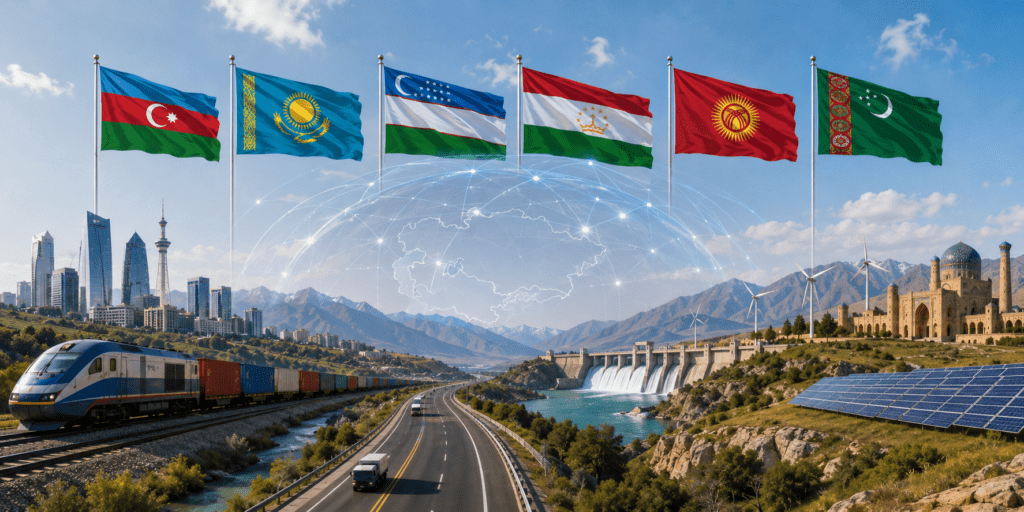
Against the backdrop of growing global fragmentation and the weakening of universal international institutions, the role of so-called middle powers is increasing. These are states able to influence regional agendas without possessing great-power status. In this changing system, Central Asia is gradually moving beyond its long-standing image as a geopolitical periphery and is beginning to act more like a region with shared interests. For decades, the region was viewed mainly as a space where the interests of external powers, including Russia, China, the U.S., and others, intersected. Today, that paradigm is beginning to shift. Central Asia is showing greater signs of agency through what may be described as a cluster effect: individually, the countries have limited influence, but collectively they form an important transit hub between Europe and Asia, a growing market, a significant resource base, and a strategic security zone. This creates the conditions for a more coordinated regional position, even if a single regional voice is still emerging rather than fully formed. C5+Azerbaijan as a Foundation for Regional Architecture The institutional foundation of this process is the Central Asian leaders' consultative format, which is now expanding through Azerbaijan's participation. That is turning what was once a C5 dialogue into a looser C5+Azerbaijan, or C6, framework focused on transport, energy, and practical cooperation. Within this framework, the countries of the region are learning to act in a more coordinated manner without supranational pressure. In practice, this process is developing through three main areas. The first is transport and logistics. Azerbaijan's participation has strengthened efforts to make the Middle Corridor more coherent, though the route still faces bottlenecks in capacity, customs coordination, and Caspian crossings. Through tariff coordination, simplified border procedures, and investment in port and rail infrastructure, Central Asia and the Caucasus are increasingly functioning as parts of a single transport artery. That gives the region a faster option for cargo between China and Europe, even if it remains far smaller than traditional maritime routes. Shipping goods via the Suez Canal or the northern route can take between 35 and 45 days, whereas the Middle Corridor can reduce transit times to around 13-21 days under favorable conditions. According to forecasts cited by BCG, shipping volumes along the route could increase three- to fourfold during the current decade. Beyond logistics, the project is creating a new economic framework for the region. Its status as a crossroads is attracting investment in transport hubs and manufacturing facilities along the route, with the potential to turn transit corridors into zones of economic growth. This gives participating countries not only transit revenue but a stronger basis for long-term strategic resilience. The second major area is energy integration, where historical disputes over water and fuel resources are increasingly being supplemented by models of joint development. The Kambarata HPP-1 hydropower project in Kyrgyzstan, being developed with Kazakhstan and Uzbekistan, has created an important precedent for shared management of water and energy interests. The project is expected to support cleaner electricity generation while helping stabilize irrigation flows...

Opinion: UK’s C6 Engagement and the Opportunity for British Geostrategic Renewal

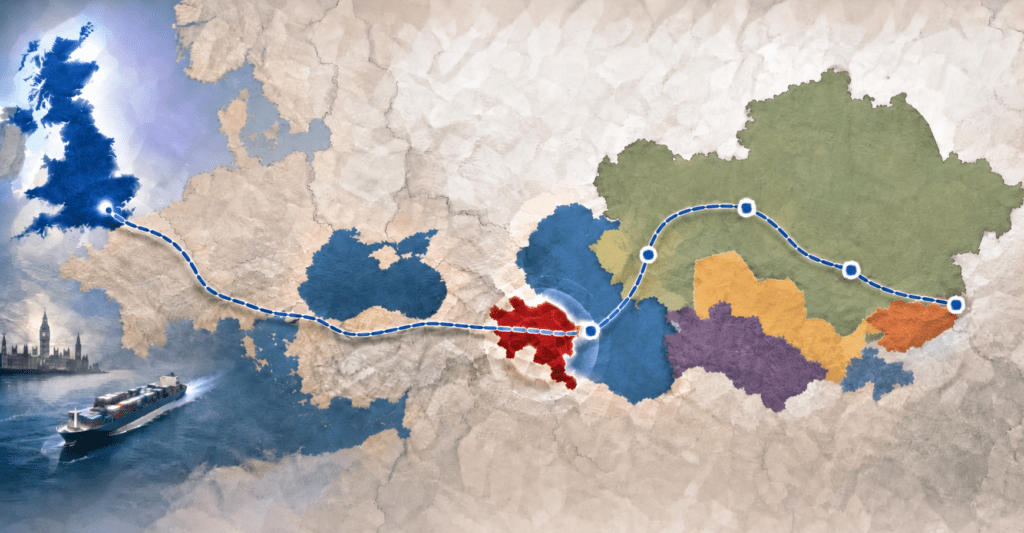
Along with Nicholas Spykman, Sir Halford Mackinder is one of the most pre-eminent thinkers in the field of geopolitics. Whilst today geopolitics is a term used interchangeably with “world affairs,” “international relations,” and “foreign policy,” Spykman and Mackinder used the phrase to describe the narrow academic study of how geography influences international relations and the conduct of states. In the 1904 paper, The Geographical Pivot of History, Mackinder theorized that the key to controlling the balance of power in the world rested in a “heartland” of Eurasia, comprising Eastern Europe and Central Asia. Mackinder described the heartland region as the “pivot region” for regional and global hegemony. The word “pivot” has recently been popularized in international relations, with examples including President Obama’s pivot to the Pacific and Britain’s Indo-Pacific pivot in the 2021 Integrated Review. In 1997, former U.S. National Security Adviser Zbigniew Brzezinski built on Mackinder’s ideas in his work, The Grand Chessboard. Brzezinski defined a geopolitical pivot as being “determined by their geography, which in some cases gives them a special role either in defining access to important areas or in denying resources to a significant player. In some cases, a geopolitical pivot may act as a defensive shield for a vital state or even a region.” To Mackinder and Brzezinski, Central Asia was a crucial geostrategic pivot. Central Asia - comprising the five states of Uzbekistan, Kazakhstan, Tajikistan, Kyrgyzstan, and Turkmenistan, collectively termed the C5 - is located between China, Russia, Iran, and Afghanistan. Thus, the near abroad of the region is defined by conflict between Russia and Ukraine, Iran and Israel/U.S., and between Taliban-run Afghanistan and Pakistan. Pragmatic engagement is a necessity for the C5 but has not stopped them from pursuing greater diversification in security and economic arrangements, and they remain committed to U.S.-led diplomatic initiatives. Faced with a regionally assertive superpower in China, risks created by Russia’s war in Ukraine, theocratic Iran, and the Taliban in Afghanistan, Central Asia has continued to show its desire to build and deepen its economic and security partnerships from beyond traditional powers – such as China and Russia – to states in the Gulf, the Caucasus, Western Europe, and elsewhere. The United Kingdom has emerged as a new and important partner. Russia’s invasion of Ukraine has raised concerns in the Central Asian states about its regional revisionism, territorial ambitions, and Putin’s reconstruction of the Soviet Union. In 2014, Putin credited Nursultan Nazarbayev with having “created a state in a territory that had never had a state before,” adding that “the Kazakhs never had any statehood.” The remarks sparked anger in Kazakhstan and fed concern about Moscow’s view of post-Soviet sovereignty. Finally, Putin said that it would be best for Kazakhstan to “remain in the greater Russian world.” In The Grand Chessboard, Brzezinski predicted that “Russia without Ukraine can still strive for imperial status, but it would then become a predominantly Asian imperial state, more likely to be drawn into debilitating conflicts with aroused Central Asians.” Central Asia has been a...

Opinion: The Southern Dimension of the Middle Corridor – Afghanistan’s Role in Eurasia’s New Logistics Landscape

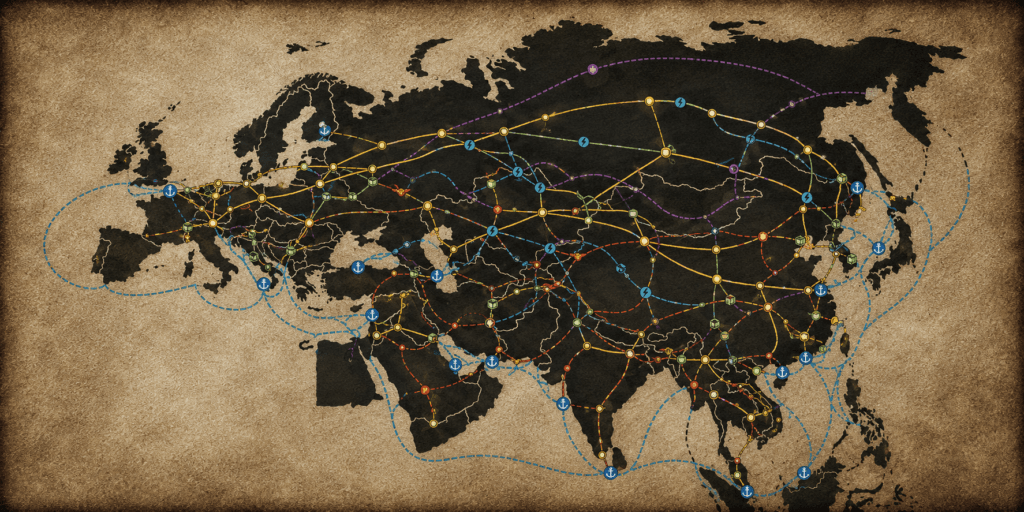
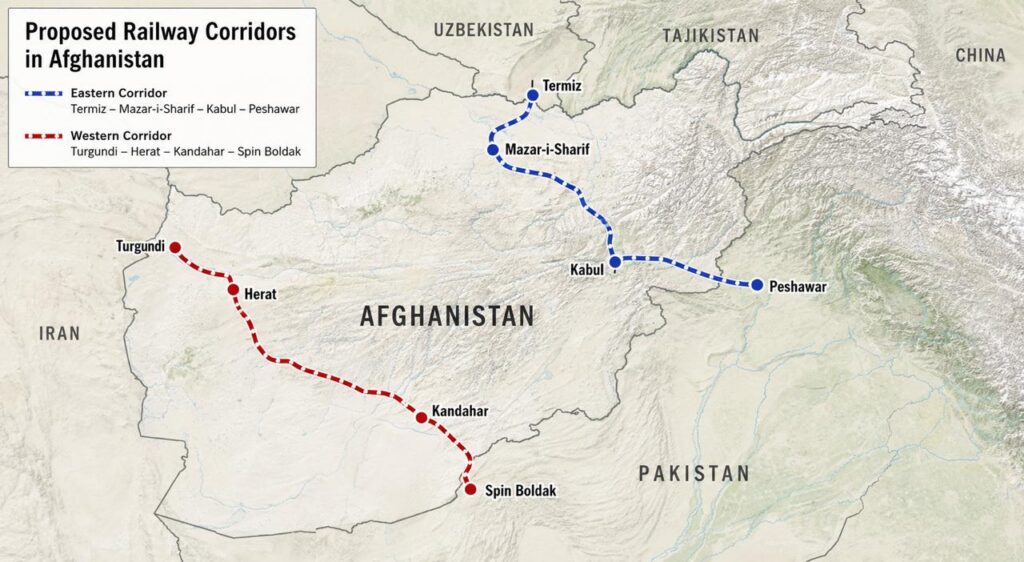
Afghanistan’s integration into the Trans-Caspian International Transport Route (TITR) is extending beyond local logistics and evolving into one of Eurasia’s key geo-economic projects. Amid the global transformation of supply chains, Central Asia has an opportunity to move beyond its role as a transit periphery and become an active participant in shaping new economic corridors, creating a full-fledged “southern dimension” of Eurasian connectivity. Two Routes: Strategic and Operational Two main directions for Afghanistan’s integration into the Eurasian transport system are currently under discussion, each reflecting a distinct development logic: strategic and pragmatic. The “Eastern Branch” (Termez-Mazar-i-Sharif-Kabul-Peshawar) is traditionally viewed as the primary trans-Afghan route. Its key advantage is direct access to the ports of Karachi and Gwadar, providing the shortest connection between Central Asia and the Indian Ocean. At the same time, geography makes the project highly complex. The route passes through the central and eastern regions of Afghanistan, including the Hindu Kush mountain range, where long tunnels and bridges would be required. This would sharply increase construction and maintenance costs, extend implementation timelines, and heighten security and infrastructure risks. According to available estimates, the project could cost around $5 billion and handle 15-20 million tons of cargo annually. However, the lengthy investment cycle and dependence on political stability mean implementation remains a long-term prospect. The “Western Branch” (Turgundi-Herat-Kandahar-Spin Boldak) represents an alternative logistics corridor based on more favorable geography. Western Afghanistan is characterized by predominantly flat, semi-arid terrain, reducing the need for complex engineering structures and allowing the project to be implemented in phases. This significantly lowers capital costs, shortens construction timelines, and reduces infrastructure risks. The western route’s initial capacity is estimated at 7-10 million tons of cargo annually, making it the more realistic option for medium-term planning. An additional advantage is its geo-economic flexibility. Via Herat, the route could be integrated not only southward through Pakistan, but also westward through Iran, providing access to Persian Gulf ports. This would transform it into a multi-directional corridor capable of serving several logistics flows simultaneously. The Eastern Branch, therefore, remains the strategic option offering the shortest route to the ocean but requiring substantial investment and time. The Western Branch, meanwhile, presents a more pragmatic solution: faster to implement and more flexible from a geo-economic standpoint. The Role of Turkmenistan and Kazakhstan in the “Western Maneuver” The implementation of the western trans-Afghan corridor depends on close coordination between two key regional players, Kazakhstan and Turkmenistan, which form the northern foundation of the future route by providing access to the Caspian Sea and, beyond it, global markets. Astana and Ashgabat are effectively creating a new geo-economic framework that could transform Central Asia from an isolated region into a strategic crossroads linking the Caspian Sea with the Indian Ocean. In 2026, Kazakhstan moved toward deeper institutionalization of the initiative, making the route through Herat and Kandahar a government priority. Astana’s strategy is multifaceted. In addition to establishing a permanent interdepartmental commission, Kazakhstan is actively seeking to attract international operators such as the Emirati AD...

Opinion: The U.S. Still Doesn’t Know Where Central Asia Belongs

Washington cannot decide where Central Asia belongs. Is it part of Europe? Asia? The Middle East? The confusion is on full display in how the House of Representatives has reassigned the region across subcommittees in rapid succession. In the 116th Congress, which convened in 2019, Central Asia fell under the Subcommittee on Europe, Eurasia, Energy and the Environment. Two years later, in the 117th Congress, it was moved to the Subcommittee on Asia, the Pacific, Central Asia and Nonproliferation. That arrangement barely settled before the 118th Congress shifted it again—this time to the Subcommittee on the Middle East, North Africa, and Central Asia. Now, in the 119th Congress, it has been relocated to the Subcommittee on South and Central Asia. On the banks of the Potomac, Central Asia has taken on a nomadic life of its own—constantly on the move, never quite settling in one place. At the State Department, Central Asia is grouped under the Bureau of South and Central Asian Affairs alongside Afghanistan, India, Pakistan, and Sri Lanka. At the Pentagon, by contrast, the Middle East team oversees relations with Central Asia, alongside countries like Israel, Saudi Arabia, Iran, and Pakistan. These mismatches are not just clumsy; they are strategically dangerous. By misplacing Central Asia, Washington is misreading the geography of China’s rise. It is time for Washington to stop the bureaucratic musical chairs and place Central Asia within a coherent grand strategy. Far from being an afterthought, the region is one of the most consequential pieces of the geopolitical puzzle facing the United States: how to respond to China’s strategy. This is because Central Asia sits at the heart of China’s decades-long effort to move its critical lifelines away from the Indo-Pacific and onto the Eurasian landmass. Over the past 15 years, China has quietly reoriented its energy routes, reducing reliance on maritime pathways vulnerable to U.S. naval dominance—particularly chokepoints such as the Strait of Hormuz and the Strait of Malacca—and expanded overland imports across Eurasia. Today, China imports significant volumes of natural gas via pipelines from Turkmenistan and Russia, as well as crude oil from Kazakhstan. These continental routes are largely insulated from maritime interdiction, giving Beijing strategic resilience. Central Asia should be understood through this lens. For China, the region is not peripheral—it is essential. The pipelines, railways and trade corridors that underpin China’s resilience all pass through Xinjiang and Central Asia. In this sense, Central Asia is not merely adjacent to China; it is embedded in China’s vision of the future. This is why Washington’s practice of grouping Central Asia with South Asia misses the mark. The two regions operate under fundamentally different strategic logics. South Asia is centered on the Indian subcontinent, shaped by maritime dynamics and the India‑Pakistan rivalry. Central Asia, by contrast, is a continental crossroads—defined by overland connectivity, energy flows and great‑power competition across Eurasia. India, meanwhile, is geographically constrained—lacking direct land access to Central Asia due to territory administered by Pakistan and separated from China by the Himalayas—leaving it...

Opinion: Hormuz Crisis Pushes Afghanistan Aid Routes Toward Central Asia

The crisis surrounding the Strait of Hormuz is usually viewed through the lens of energy security or military escalation. But it also has another, less visible, humanitarian dimension. A recent article in The Guardian, “Calls for humanitarian corridor through Strait of Hormuz as Iran war hits vital aid,” points to a critical shift: because of the conflict involving the United States, Israel, and Iran, along with instability around Hormuz, traditional humanitarian supply routes are beginning to break down. For Afghanistan, this is no longer a theoretical concern but an operational reality. According to the World Food Programme (WFP), cited by The Guardian, the cost of delivering food to Afghanistan has tripled. Cargo that previously moved by sea through Hormuz and onward to Pakistani ports must now travel overland across multiple countries, adding weeks to delivery times. The consequences are felt most acutely by vulnerable populations, particularly children. Predictability is one of the core requirements of any humanitarian system, and that predictability is now disappearing. Some shipments are stranded in regional hubs. Routes are constantly changing. Fuel costs continue to rise. Even modest increases in oil prices significantly raise operational expenses for humanitarian agencies. For Afghanistan, the implications are severe. The country has been in a prolonged food crisis for several years, with millions dependent on external aid. Delays of even one or two weeks can directly affect malnutrition and mortality rates. According to United Nations estimates, around 3.7 million Afghan children are currently suffering from wasting, nearly one million of them from severe wasting, a condition associated with sharply elevated mortality risks. UNICEF estimates that in 2026 alone, 1.304 million children aged 6-59 months will require treatment for acute malnutrition, including severe cases and other high-risk groups. Another 1.2 million pregnant and breastfeeding women are also suffering from acute malnutrition. Under these conditions, even temporary disruptions in aid deliveries become a direct threat to human life. The situation is being compounded by several overlapping factors. First, instability around the Strait of Hormuz has made maritime routes both more expensive and riskier. Second, the Pakistani corridor, previously the main overland route, has become unreliable, as repeated border closures and restrictions have tied humanitarian deliveries to the fluctuating political and security relationship between Kabul and Islamabad. Third, Iran has imposed restrictions on food exports and has itself become part of the conflict zone, undermining its role as both a supplier and transit route for Afghanistan. Together, these developments are creating what can be described as a “triple crisis” for humanitarian logistics into Afghanistan. The previous aid delivery system is effectively ceasing to function. In response, the WFP is restructuring its logistics network. One solution has been increased use of the Lapis Lazuli Corridor: Turkey-Georgia-Azerbaijan via the Caspian Sea-Turkmenistan and Afghanistan. Although this route is longer and more expensive, it offers predictability and an alternative to disrupted maritime pathways. The key issue is no longer which route is cheapest, but which is reliable. This shift places Central Asia increasingly at the center of...