• KGS/USD = 0.01144 0%
  • KZT/USD = 0.00213 0%
  • TJS/USD = 0.10605 0.57%
  • UZS/USD = 0.00008 0%
  • TMT/USD = 0.28530 0%
  • KGS/USD = 0.01144 0%
  • KZT/USD = 0.00213 0%
  • TJS/USD = 0.10605 0.57%
  • UZS/USD = 0.00008 0%
  • TMT/USD = 0.28530 0%
  • KGS/USD = 0.01144 0%
  • KZT/USD = 0.00213 0%
  • TJS/USD = 0.10605 0.57%
  • UZS/USD = 0.00008 0%
  • TMT/USD = 0.28530 0%
  • KGS/USD = 0.01144 0%
  • KZT/USD = 0.00213 0%
  • TJS/USD = 0.10605 0.57%
  • UZS/USD = 0.00008 0%
  • TMT/USD = 0.28530 0%
  • KGS/USD = 0.01144 0%
  • KZT/USD = 0.00213 0%
  • TJS/USD = 0.10605 0.57%
  • UZS/USD = 0.00008 0%
  • TMT/USD = 0.28530 0%
  • KGS/USD = 0.01144 0%
  • KZT/USD = 0.00213 0%
  • TJS/USD = 0.10605 0.57%
  • UZS/USD = 0.00008 0%
  • TMT/USD = 0.28530 0%
  • KGS/USD = 0.01144 0%
  • KZT/USD = 0.00213 0%
  • TJS/USD = 0.10605 0.57%
  • UZS/USD = 0.00008 0%
  • TMT/USD = 0.28530 0%
  • KGS/USD = 0.01144 0%
  • KZT/USD = 0.00213 0%
  • TJS/USD = 0.10605 0.57%
  • UZS/USD = 0.00008 0%
  • TMT/USD = 0.28530 0%

Viewing results 37 - 42 of 2979

Afghanistan Aims to Increase Trade with Central Asia to $10 Billion

Afghanistan aims to increase trade with Central Asian countries to $10 billion over the next three to four years, Foreign Minister Amir Khan Muttaqi said at a meeting in Kabul. According to Muttaqi, Afghanistan’s trade turnover with countries in the region reached approximately $2.7 billion in 2025, marking a significant increase compared to previous years. The statement was made during a consultative dialogue involving representatives from Kazakhstan, Uzbekistan, Kyrgyzstan, Tajikistan, and Turkmenistan, focused on regional cooperation, trade, and the development of transit routes. Muttaqi said Afghanistan intends to leverage its geoeconomic position to connect Central Asia with markets in South and West Asia. Among key projects, he highlighted the TAPI gas pipeline, which is currently under construction. Afghan authorities are seeking to expand economic ties despite ongoing international sanctions affecting the banking sector, which continue to constrain investment inflows. At the same time, Russia remains the only country to have officially recognized the Taliban government that came to power in 2021. Several countries, including China, India, Turkey, and the United Arab Emirates, maintain a diplomatic presence in Kabul. Landlocked Central Asian countries view southern routes through Afghanistan as an alternative to northern corridors via Russia, which have been complicated by sanctions. Afghanistan shares a border of more than 2,300 km with Tajikistan, Uzbekistan, and Turkmenistan, and continues to face security challenges, including threats from extremist groups, drug trafficking, and irregular migration. However, Muttaqi said the situation along the borders remains generally stable. Earlier reports indicated that Kazakhstan is exploring the possibility of investing in rare earth metal mining in Afghanistan. The national company Tau-Ken Samruk is conducting laboratory analysis of samples collected in Afghanistan and Rwanda.

Uzbekistan’s Sindarov Beats American Nakamura, Stays in Lead at FIDE Candidates 

Playing with the black pieces, Javokhir Sindarov defeated Hikaru Nakamura at the FIDE Candidates Tournament on Friday and maintained his lead at the elite chess event underway on the shores of the Mediterranean. The 20-year-old Uzbekistani grandmaster has won four games after five rounds at the tournament near Paphos, Cyprus, in what some commentators have described as the best start seen at the tournament in many years. Sindarov now has 4.5 points, one point ahead of Fabiano Caruana in second place. The winner of the eight-player, 14-round tournament will challenge the current world champion, India’s Gukesh Dommaraju, later this year. Sindarov’s win over Nakamura of the United States came after he defeated Caruana, who is also American, on Wednesday. Nakamura spent about one hour considering one move, and Caruana had also got into time trouble against Sindarov. “Interesting opening choice from Sindarov,” American grandmaster Hans Niemann, who is not playing in the candidates tournament, tweeted during the Sindarov-Nakamura game. “Slight surprise and betting that Hikaru won't have a dangerous counter-surprise prepared. If Sindarov remembers the line, it seems like it will end in a perpetual. Sindarov continues to impress.” In chess, a perpetual is a situation where one player can endlessly check the other player’s king, leading to a draw. Sindarov, however, turned expectations of a perpetual into a victory. Sindarov won the 2025 World Cup in Goa, India, but his wins over Nakamura, ranked second in the world, and third-ranked Caruana indicate that the Uzbekistani is a consistent contender at the very top of men’s chess. After defeating Nakamura, he signed autographs for children at the Cap St Georges Hotel & Resort, where the candidates tournament is being held. While Sindarov is ranked just outside the top ten in classical chess, his performance in Cyprus is expected to boost his ranking. Another player from Uzbekistan, Nodirbek Abdusattorov, has moved up to fourth place in the classical ratings list. Abdusattorov is currently playing in the Freestyle Chess Open in Karlsruhe, Germany. Top-ranked Magnus Carlsen is also playing there.

Russia Ready to Transfer Over 3,000 Uzbek Prisoners

Russia is prepared to facilitate the transfer of more than 3,000 Uzbek citizens convicted on its territory to serve their sentences in Uzbekistan, but the process remains stalled due to legal obstacles, Kommersant reported, citing Russia’s Human Rights Commissioner Tatyana Moskalkova. Speaking at a meeting of the Commonwealth of Independent States (CIS) Human Rights Commission, Moskalkova said Russia is willing to support the transfer mechanism. However, she noted that Uzbekistan cannot currently accept the prisoners because it has not ratified the 1998 Convention on the Transfer of Sentenced Persons. “Russia is ready to assist, but the country of citizenship cannot accept them due to the lack of ratification of the convention,” she said, according to RIA Novosti. The agreement allows individuals convicted in one participating country to serve their sentences in their home country. It is intended to support rehabilitation and improve humanitarian conditions by allowing individuals to remain closer to their families and social environment. Russia ratified the convention in 1998, and it is also in force in several countries in the region, including Belarus, Kazakhstan, Kyrgyzstan, Tajikistan, and Armenia. For Uzbek nationals, however, Uzbekistan’s absence from the treaty has prevented similar transfers. As previously reported by The Times of Central Asia, in 2025, 191 Uzbek citizens applied for asylum in Russia, highlighting shifting migration patterns and increasing pressure on legal and humanitarian systems in the region.

Meeting of the Organization of Turkic States Held in Baku

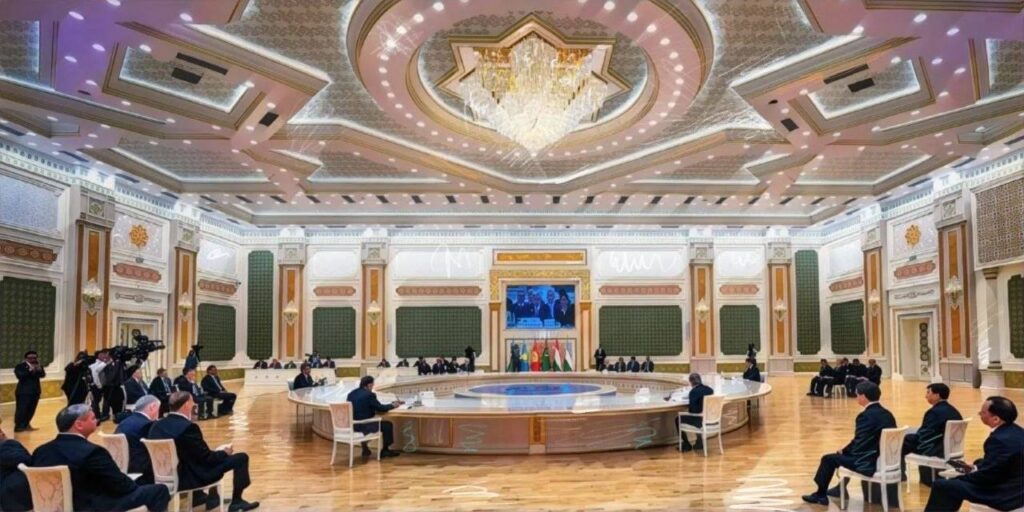
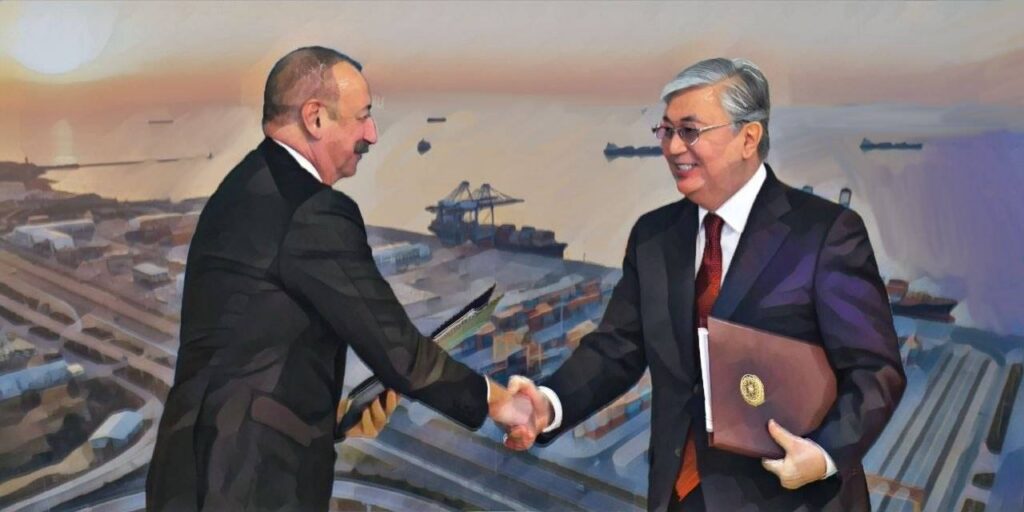
On April 2, Azerbaijani President Ilham Aliyev met with participants of a meeting of the heads of government of the Organization of Turkic States (OTS) in Baku, outlining key areas of cooperation. Among those attending were Turkish Vice President Cevdet Yılmaz, Uzbek Prime Minister Abdulla Aripov, Kazakh Prime Minister Olzhas Bektenov, Kyrgyz Prime Minister Adylbek Kasymaliev, Deputy Chairman of the Cabinet of Ministers of Turkmenistan Nokerguly Atagulyev, Prime Minister of the Turkish Republic of Northern Cyprus Unal Ustel, and OTS Secretary General Kubanychbek Omuraliev. Opening the meeting, Aliyev stressed the importance of dialogue. “This meeting of the heads of government of the Organization of Turkic States is being held in Baku. I warmly welcome you all,” he said. According to Aliyev, such meetings allow not only for the discussion of economic issues but also for reaffirming unity among member states. He noted that cooperation within the organization remains a priority of Azerbaijan’s foreign policy. He also reiterated a key message that ran throughout his speech: “We have repeatedly stated from various platforms that the Turkic world is our family; we have no other family,” Aliyev said. Special attention was devoted to economic cooperation. According to the president, trade between member states is growing, and investment volumes are increasing. He noted that Azerbaijan has invested more than $20 billion in the economies of OTS member states. Most of this has been directed to Turkey, though investment activity is expanding elsewhere. In particular, joint funds have been established with Uzbekistan, Kazakhstan, and Kyrgyzstan to support project implementation. Aliyev also thanked partners for their participation in the reconstruction of Karabakh. Facilities built with the support of OTS countries are already operational in the region, including the Mirza Ulugbek School, the Kurmangazy Children’s Creative Center, and the Manas School. In addition, a garment factory has been opened in Khankendi with the participation of Uzbekistan. He also highlighted mutual support among member states. Following the earthquake in Turkey, Azerbaijan financed the construction of the “Azerbaijani Quarter” in Kahramanmaraş, valued at $100 million. Transport and logistics projects were another key topic. According to the president, infrastructure development remains a top priority. These include the Middle Corridor, the Trans-Caspian route, and the Zangezur Corridor, all of which are gaining importance in the current geopolitical environment. Aliyev said that infrastructure within Azerbaijan is largely complete. Railways, the Baku port, highways, and airports are operational. Construction of the Zangezur Corridor is also progressing, with the highway nearly 90% complete and the railway approximately 70% complete. He also noted the construction of the Kars-Nakhchivan railway line in Turkey, which is expected to enable a new international route with an initial capacity of about 15 million tons of cargo. In conclusion, Aliyev said these projects are aimed not only at serving regional interests but also at expanding international transport connectivity. He expressed confidence that the meeting would contribute to the further development of the OTS and strengthen cooperation among member states.

Central Asia Pushes Back on “Not Free” Label as Debate Over Rankings Grows

According to Freedom House’s Freedom in the World 2026 report, all five countries in Central Asia are classified as “Not Free.” Nevertheless, governments in the region are increasingly questioning the impartiality of such assessments. At the same time, some regional experts point to ongoing political and economic reforms as signs that the region is making progress. A “Not Free” Region In its report released on March 19, 2026, Freedom House classifies all five Central Asian states as "Not Free." The designation is based on Freedom House’s assessment of political rights and civil liberties. According to the report’s authors, the ranking reflects pressure on independent media, tightening control over civil society, and the absence of genuine political competition. Kazakhstan received 23 points out of 100. The report highlights restrictions on opposition groups and civil society activists, pressure on independent journalism, and tightly managed elections that do not ensure genuine political competition. Kyrgyzstan, long considered the most politically open country in the region, scored 25 out of 100 and was also classified as “Not Free.” The organization says the score fell by one point from the previous year, reflecting continued pressure on independent media, the designation of several outlets as ‘extremist,’ and criminal cases against journalists, alongside concerns about election integrity. Uzbekistan scored 12 out of 100. Freedom House points to the concentration of power in the executive branch, the absence of a genuine parliamentary opposition, and severe restrictions on independent human rights defenders and journalists. Since President Shavkat Mirziyoyev took office in 2016, Uzbekistan has pursued a series of controlled political and economic reforms aimed at opening the country after decades of isolation. These have included currency liberalization, efforts to end the use of forced labor in the cotton sector, and steps to ease restrictions on business and foreign investment. While critics say political liberalization remains limited, supporters argue the reforms mark a significant shift from the policies of the previous era. Tajikistan received just 5 points. The report highlights the long rule of President Emomali Rahmon, the elimination of legal opposition, systematic persecution of its members and their families, and a de facto lack of electoral competition. Turkmenistan recorded one of the lowest scores globally, with just 1 point. The report describes the country as one of the most repressive in the world, citing total state control over political life and the media, the absence of opposition participation in elections, and harsh punishment for dissent. Turkmenistan remains one of the most closed countries in the world, with extremely limited access for foreign media and independent observers. Political life is tightly controlled, and reliable information about internal developments is scarce. While the authorities have signaled gradual generational change following the 2022 transfer of power to President Serdar Berdimuhamedov, there has been little visible shift in the country’s political system. Impartiality in Doubt? Trust in international assessments has also been affected by developments in U.S. foreign aid policy and a wider shift in global perceptions about the appropriateness of Western-linked organizations categorising...

Iran Conflict Drives Food Price Pressures Across Central Asia

The war around Iran is beginning to push up food price risks in Central Asia as disruptions to shipping through the Strait of Hormuz raise fertilizer and fuel costs, while Tehran’s halt to some food exports adds pressure in regional markets. The impact is not manifesting as shortages, but as rising costs across the systems that produce, move, and sell food. The United Nations has warned that the crisis is disrupting one of the world’s most important trade corridors for energy and agricultural supplies. A large share of global fertilizer trade passes through the Strait of Hormuz, and reduced shipping traffic is tightening supply and pushing up prices. Higher fuel costs are adding a second layer of pressure on farmers and transport networks. Fertilizer and fuel are among agriculture’s highest costs. Even modest increases can compress margins quickly, forcing farmers to cut usage or pass costs on, with pressure moving through to retail prices. Central Asia is particularly exposed to this shift in costs. The region relies on imported fuel and fertilizers, and depends on long, multi-stage transport routes. When costs increase at any point in that chain, they accumulate before goods reach markets. The second layer of pressure comes from Iran itself. On March 3, Tehran imposed a ban on exports of food products as part of wartime economic measures. Reporting in Tajikistan indicates that the move could affect the availability and pricing of goods such as dairy, sugar, fruit, and spices, particularly in wholesale and lower-cost retail markets. Iran is not a dominant supplier, but plays a role in specific markets. Tajikistan is the clearest example. Tajikistan has also expanded its economic relationship with Iran in recent years, supported by cooperation in industry and transport. Iranian goods are widely present in retail supply chains, and trade between the two countries has grown steadily in recent years. That growth is part of a broader trend. Iran’s economic ties with Central Asia have expanded under new trade arrangements and bilateral initiatives. Kazakhstan and Iran have discussed increasing trade turnover to $3 billion, reflecting the rising use of Caspian routes and port infrastructure, which are now under threat. [caption id="attachment_46480" align="aligncenter" width="1600"] Aralsk Bazaar. Rising transport and fertilizer costs are beginning to push up food prices across the region. Image: Michael J. Bland[/caption] Transport adds a third layer of pressure. As risks rise across the Middle East, airlines and freight operators are avoiding large swathes of Iranian airspace and surrounding routes, forcing rerouting and raising costs across supply chains. European aviation safety authorities have issued conflict-zone bulletins warning of heightened risks in the region, and carriers have adjusted accordingly. Rerouting increases fuel use, extends journey times, and raises insurance costs. Those increases affect cargo as well as passengers, and over time, higher logistics costs feed into the price of imported goods, including food. On land, the same pattern is visible. As southern routes become less predictable, more freight is shifting toward the Trans-Caspian International Transport Route - the Middle Corridor -...