• KGS/USD = 0.01144 0%
  • KZT/USD = 0.00212 0%
  • TJS/USD = 0.10761 -0.09%
  • UZS/USD = 0.00008 0%
  • TMT/USD = 0.28571 0%
  • KGS/USD = 0.01144 0%
  • KZT/USD = 0.00212 0%
  • TJS/USD = 0.10761 -0.09%
  • UZS/USD = 0.00008 0%
  • TMT/USD = 0.28571 0%
  • KGS/USD = 0.01144 0%
  • KZT/USD = 0.00212 0%
  • TJS/USD = 0.10761 -0.09%
  • UZS/USD = 0.00008 0%
  • TMT/USD = 0.28571 0%
  • KGS/USD = 0.01144 0%
  • KZT/USD = 0.00212 0%
  • TJS/USD = 0.10761 -0.09%
  • UZS/USD = 0.00008 0%
  • TMT/USD = 0.28571 0%
  • KGS/USD = 0.01144 0%
  • KZT/USD = 0.00212 0%
  • TJS/USD = 0.10761 -0.09%
  • UZS/USD = 0.00008 0%
  • TMT/USD = 0.28571 0%
  • KGS/USD = 0.01144 0%
  • KZT/USD = 0.00212 0%
  • TJS/USD = 0.10761 -0.09%
  • UZS/USD = 0.00008 0%
  • TMT/USD = 0.28571 0%
  • KGS/USD = 0.01144 0%
  • KZT/USD = 0.00212 0%
  • TJS/USD = 0.10761 -0.09%
  • UZS/USD = 0.00008 0%
  • TMT/USD = 0.28571 0%
  • KGS/USD = 0.01144 0%
  • KZT/USD = 0.00212 0%
  • TJS/USD = 0.10761 -0.09%
  • UZS/USD = 0.00008 0%
  • TMT/USD = 0.28571 0%

Viewing results 37 - 42 of 386

Kazakhstan and Uzbekistan Launch Study to Revise Irrigation Regimes in Syr Darya River Basin

With grant funding from the French Development Agency (AFD), Kazakhstan and Uzbekistan have launched a joint initiative to revise irrigation regimes in the Syr Darya River basin. The project, coordinated by the Executive Committee of the International Fund for Saving the Aral Sea, aims to optimize agricultural water use and improve environmental outcomes, according to Kazakhstan’s Ministry of Water Resources and Irrigation. In Kazakhstan, the study covers 550,000 hectares of irrigated farmland in the Turkestan Region and 254,000 hectares in the Kyzylorda Region. Ground-level measurements are underway alongside satellite-based remote sensing to collect precise and comprehensive data. The findings will inform updated irrigation schedules and help increase crop yields, reduce soil salinization and land degradation, and enhance water-use efficiency across the Syr Darya River basin. The project involves both the Kazakh Research Institute of Water Management and Uzbekistan’s Scientific Information Center of the Interstate Commission for Water Coordination (ICWC) of Central Asian countries. Completion is scheduled for 2026. Talgat Momyshev, Kazakhstan’s Deputy Minister of Water Resources and Irrigation, noted that the Aral-Syr Darya basin supplies water to over 35% of Kazakhstan’s irrigated land, with 98% of withdrawals going to agriculture. He emphasized the urgency of revising hydro modular zoning, which hasn’t been updated in four decades. “The existing zoning does not account for major changes in climate, soil conditions, and land reclamation status over the past 40 years. A revision is essential,” he said. The Syr Darya and Amu Darya rivers are vital for irrigating agricultural land throughout Central Asia. At a November meeting in Ashgabat, ICWC members from Kazakhstan, Kyrgyzstan, Tajikistan, Turkmenistan, and Uzbekistan approved new water distribution quotas for the non-growing season from October 1, 2025, to April 1, 2026. During the non-growing season, water is stored in reservoirs to meet irrigation needs for the following spring and summer. For the Syr Darya River, the total withdrawal quota for this period has been set at 4.219 billion cubic meters, allocated as follows: Uzbekistan: 3.347 billion m³ Kazakhstan: 460 million m³ (via the Dustlik Canal) Tajikistan: 365 million m³ Kyrgyzstan: 47 million m³ In the 2025 growing season, actual usage by country was as follows: Kazakhstan: 644 million m³ (out of a 909 million m³ quota) Uzbekistan: 7.012 billion m³ (of 8.8 billion m³) Tajikistan: 1.454 billion m³ (of 1.9 billion m³) Kyrgyzstan: 191 million m³ (of 270 million m³) The revision effort underscores growing regional cooperation around sustainable water management in one of Central Asia’s most critical river basins.

Turkmenistan and Spain Eye Regional Center to Combat Desertification in Central Asia

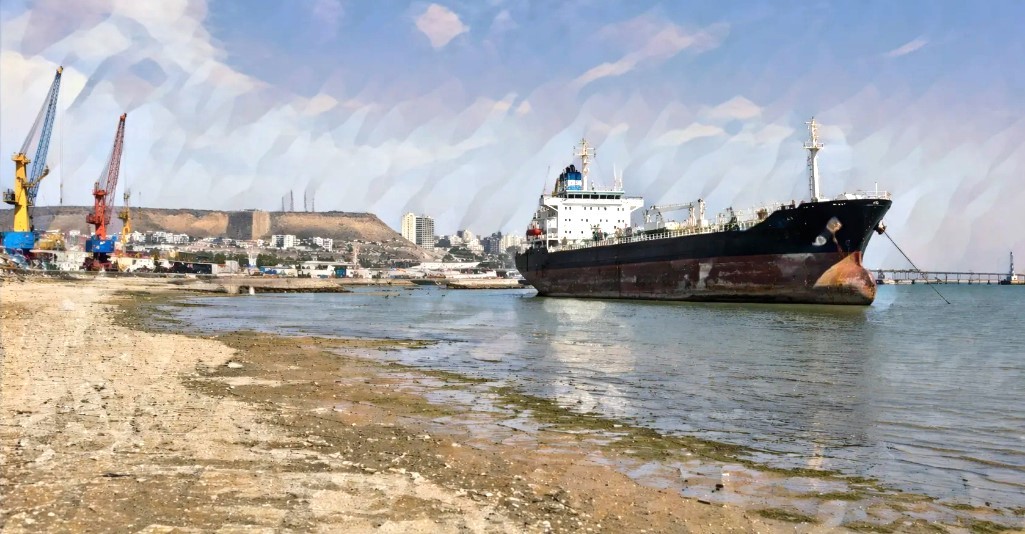
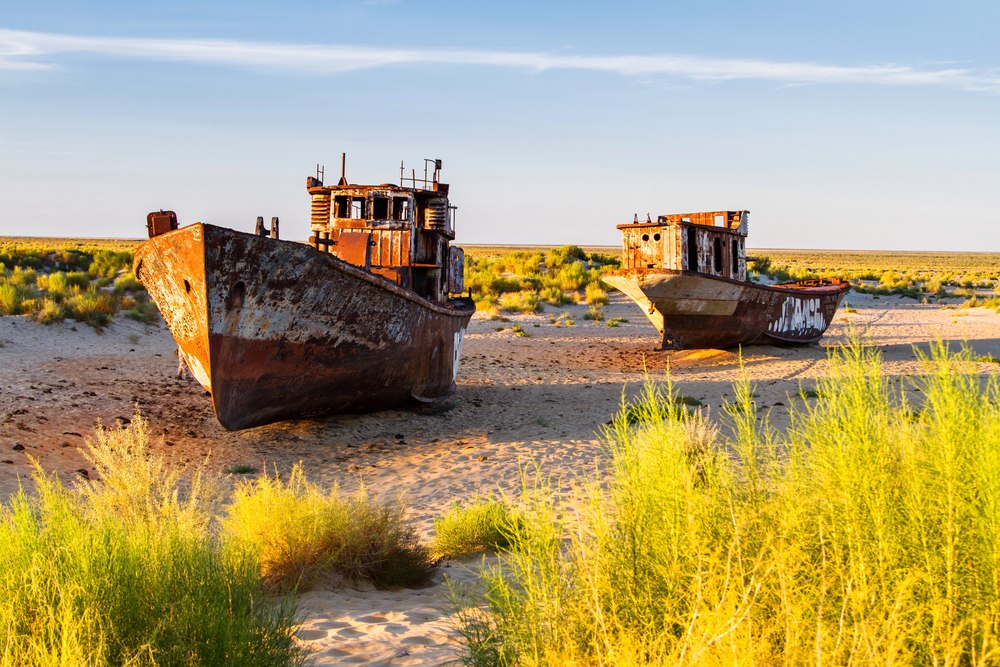
Turkmenistan and Spain have discussed closer cooperation to address desertification in Central Asia, including the possible creation of a regional center focused on land degradation. The talks took place in Ashgabat during a meeting between Turkmenistan’s Minister of Environmental Protection and Spain’s ambassador to Russia, Ricardo Martínez Vázquez, who is also accredited in Turkmenistan. The discussions followed Turkmen President Serdar Berdimuhamedov’s proposal at the United Nations General Assembly to establish a specialized regional center to combat desertification in Central Asia. The initiative is intended to strengthen cooperation among regional states and attract international expertise and funding. [caption id="attachment_41076" align="aligncenter" width="1000"] Image: mineco.gov.tm[/caption] Desertification is a growing concern across Central Asia, a region where arid and semi-arid landscapes dominate much of the territory. The United Nations Convention to Combat Desertification defines desertification as land degradation in dry areas caused by climatic variations and human activities. According to the UNCCD, more than 20% of land in Central Asia is already degraded, affecting around 30% of the population. Much of this damage is linked to unsustainable water use, intensive agriculture, overgrazing, and the long-term effects of climate change. Spain’s interest in desertification in Turkmenistan is rooted in their shared status as nations on the front lines of climate change. As one of the European countries most vulnerable to soil degradation, Spain co-launched the International Drought Resilience Alliance (IDRA) to export its expertise in "dryland" management and water conservation, which is directly applicable to the arid landscapes of Central Asia. This common challenge has fostered a diplomatic partnership focused on the United Nations Convention to Combat Desertification (UNCCD), where countries exchange strategies for land restoration and drought resilience. Beyond environmental solidarity, Spain views Turkmenistan as a critical emerging market for its advanced engineering and agricultural sectors. Major Spanish firms, such as TYPSA, are already active in the region, providing technical assistance for massive infrastructure projects, such as desalination plants on the Caspian Sea, and modernizing irrigation systems for thousands of hectares of farmland. This commercial engagement is bolstered by Spain's support for Turkmenistan’s proposal to host a Regional Center for Climate Change Technologies, which would serve as a hub for Spanish green tech in Central Asia. The bilateral relationship also aligns with the broader EU Strategy for Central Asia, which prioritizes environmental stability as a means of ensuring regional security. By helping Turkmenistan manage its dwindling water resources and combat the encroaching Karakum Desert, Spain contributes to the EU for a Green Turkmenistan initiative. This cooperation helps prevent resource-driven migration and instability, and strengthens trade ties in a region that is becoming increasingly vital for global energy and logistics. One of the most visible examples of desertification in the region is the collapse of the Aral Sea. Once the world’s fourth-largest inland lake, the Aral Sea began shrinking rapidly in the 1960s after its feeder rivers were diverted for large-scale irrigation projects. By the early 2000s, the sea had lost roughly 90% of its volume. [caption id="attachment_13621" align="aligncenter" width="2560"] Desert ships on the former...

Glacier Melt Threatens Central Asia’s Water Security, Experts Warn at Regional Forum

The accelerating retreat of glaciers poses a serious risk to water security across Central and West Asia, scientists and journalists warned during an online media forum jointly hosted by the Asian Development Bank (ADB) and the International Centre for Integrated Mountain Development (ICIMOD) on December 10, according to Asia-Plus. The forum focused on the growing impact of glacial melt in mountain regions, including the Pamirs, Tien Shan, Hindu Kush, and Himalayas, where shrinking ice reserves are increasingly disrupting water supplies for agriculture, energy, and drinking water. A key highlight was the ADB’s Glacier to Farms (G2F) program, presented by senior climate adaptation specialist Chris Dickinson. The initiative, spanning nine countries including Tajikistan, Uzbekistan, Armenia, and Georgia, aims to link glacier monitoring with practical, climate-resilient policy measures. Unlike past approaches that primarily diagnosed the problem, G2F offers technical and financial solutions designed to support communities in adapting to climate change. The $3.5 billion initiative, backed in part by $250 million from the Green Climate Fund, leverages a co-financing model that aims to attract $10 in additional investment for every dollar committed. The program envisions a full climate adaptation chain from satellite-based glacier monitoring and mountain observation stations to downstream interventions such as crop insurance, farmer support, and modernization of water infrastructure. “Glaciers are the origin of the entire food and water system,” Dickinson said. “Their rapid retreat threatens lives and livelihoods far beyond mountain regions.” Tajikistan serves as a pilot site for the program due to its heavy reliance on hydropower and its largely mountainous terrain. One of the project's key goals is to enhance the country’s hydrometeorological services and strengthen monitoring of snow cover, glacier movement, landslides, and related hazards. A modern early warning system is being developed for the Panj River basin, combining data on glacial lakes, mudflows, precipitation, and seismic activity. The alerts will be sent to vulnerable communities via mobile networks, complemented by local training programs to ensure proper responses. Forum participants noted that the effects of glacial retreat are already evident. Glaciers in the Tien Shan and Pamir ranges feed the Amu Darya and Syr Darya rivers, vital water sources for Central Asia’s agriculture, energy, and drinking needs. An estimated 74% of the Amu Darya’s flow comes from snow and glacier melt. In the Indus basin, the figure is about 40%. Yet only a small number of the region’s more than 54,000 glaciers are regularly monitored, leaving gaps in early warning systems and long-term planning. Experts from ICIMOD and ADB described glacier melt as a “cascading crisis.” Rising temperatures are fueling more frequent landslides, floods, and mudflows, while droughts reduce crop yields and damage pastures. Glacial lake outburst floods, sudden and destructive releases of water, pose grave risks to nearby settlements. Since the 19th century, the region has recorded around 500 such incidents, and their frequency could triple by the end of this century. Heatwaves and water quality issues further compound the risks. Recent glacial activity in Tajikistan underscored the forum’s urgency. In October, a massive...

Journal Retracts Climate Study After Discovering Errors in Uzbekistan’s Economic Data

The scientific journal Nature has retracted a high-profile article on the economic impacts of climate change after significant inaccuracies were discovered in economic data related to Uzbekistan. The study, originally published online on April 17, 2024, examined how rising global temperatures could affect economic output by mid-century. According to the retraction notice, the dataset contained serious errors in Uzbekistan’s economic indicators from 1995 to 1999, which substantially altered the study’s findings. The authors acknowledged that the results were highly sensitive to the inclusion of Uzbekistan. Upon review, they found the country’s reported economic figures during that period were inaccurate. They also noted additional complications, including inconsistencies caused by transitions between data sources, and the failure to fully account for long-term economic trends. Another methodological issue, spatial auto-correlation, which affects uncertainty estimates, had not been incorporated into the original analysis. Once the authors corrected the dataset and adjusted their methodology, the study’s conclusions changed significantly. Specifically, the projected range of climate-related economic damages by 2050 shifted from 11-29% to a broader 6-31%. The statistical likelihood that damages would differ significantly under various emissions scenarios by mid-century also fell, from 99% to 90%. Due to the scale of these changes, the authors concluded that a simple correction was insufficient and opted for a full retraction. A revised version of the study, updated with corrected data and improved methodology, has been made publicly available but has not yet undergone peer review. The authors plan to resubmit the article, and Nature has stated it will update the retraction notice if the revised version is accepted for publication. The researchers thanked the members of the scientific community who identified the discrepancies, and emphasized the importance of transparent corrections in climate science.

Russia Revives Plan to Redirect Siberian Rivers as Central Asia Faces Worsening Water Crisis

The long-contested idea of diverting Siberian rivers to Central Asia has re-emerged after the Russian Academy of Sciences announced on November 14 that it is studying a new version of the project. The updated proposal revives elements of a Soviet-era plan from the 1970s and 1980s that aimed to channel water from the Ob River basin to arid regions of Central Asia. This time, however, the focus is on a closed pipeline system, rather than open canals, to transport large volumes of water to countries facing acute shortages, particularly Uzbekistan, according to Fergana News. Discussions within the Russian Academy had reportedly already begun prior to the announcement. Researchers are now calling on Russia’s Ministry of Science and Higher Education to include a full study of the project in its state research plan. They argue that Central Asia is entering a critical phase of water scarcity that demands long-term strategic solutions. The renewed interest comes amid escalating water stress across the region. Rapid population growth, retreating glaciers, and intensifying irrigation demands have pushed existing water systems to their limits. While some view the proposed pipeline as a potential lifeline for stabilizing regional water supplies, environmental concerns remain central to the debate, echoing the very reasons the original project was shelved. A Long History of Controversy The idea of redirecting northern rivers is not new. It was first proposed in the 19th century by Ukrainian-born engineer Yakov Demchenko, who envisioned transferring water from the Ob and Irtysh rivers to replenish the shrinking Aral Sea. In the Soviet period, the concept gained political traction. By the late 1960s, it had entered official planning discussions, prompting detailed studies by the Academy of Sciences, the State Planning Committee, and the Ministry of Water Resources. In 1970, the project was formally designated a state priority, with plans for transferring up to 25 cubic kilometers of water annually. Extensive technical documentation was produced, and construction began on supporting infrastructure, including the Irtysh-Karaganda canal. Designs for the main channel envisioned a span of more than 2,500 kilometers and a capacity exceeding 1,000 cubic meters per second. However, by 1986, the project was halted due to mounting economic pressures, scientific opposition, and growing awareness of potential environmental risks. Experts warned of large-scale flooding, disruptions to groundwater, damage to fish stocks, displacement of Indigenous communities, and unpredictable impacts on permafrost and regional climate systems. Renewed Debate in a Region Under Stress Though shelved in the late Soviet era, the project has resurfaced multiple times since the collapse of the USSR. Former Moscow mayor Yuri Luzhkov advocated for its revival in 2002, and Russian and Kazakh presidents discussed it publicly in 2010. Yet concerns about environmental and geopolitical ramifications have consistently stalled progress. Meanwhile, the water crisis in Central Asia has only deepened. Glaciers in the Tien Shan and Pamir mountains which feed the Amu Darya and Syr Darya rivers have shrunk by more than 25% in recent decades. The region’s population has grown to approximately 80 million, nearly 50% higher...

Mirziyoyev Orders Crackdown on Pollution and Waste

Uzbekistan is intensifying its environmental oversight as President Shavkat Mirziyoyev convened a high-level government meeting on December 1 to address mounting pollution, delays in waste-to-energy infrastructure, and preparedness for the winter season. The session highlighted the rising social and economic risks of air-quality deterioration in Tashkent, and chronic failures in waste management nationwide. Officials attributed recent spikes in air pollution in the capital not only to industrial emissions and construction activity but also to a severe cold anticyclone blanketing much of the country. This weather system caused high atmospheric pressure and temperature inversions, trapping fine particulate matter and inhibiting air circulation. In response, authorities launched inspections of construction sites, greenhouses, and vehicle emissions, while emergency measures, such as watering streets, cleaning canals, and activating fountains, were deployed to stabilize air quality. Mirziyoyev ordered regional officials to enforce stricter environmental compliance, eliminate violations promptly, and take proactive steps to prevent further degradation. He emphasized that growing public frustration demands “decisive and coordinated action” from all levels of government. Stalled Waste-to-Energy Projects Under Scrutiny Waste-to-energy development, a cornerstone of Uzbekistan’s sustainability agenda, also came under fire. Although $933 million in investment has been pledged, several regions have yet to launch projects. Existing facilities in Andijan, Namangan, Ferghana, Samarkand, Kashkadarya, and Tashkent continue to face critical infrastructure deficiencies, including inadequate roads, electricity, and water supply. Mirziyoyev instructed officials to remove these bottlenecks and ensure the nationwide rollout of waste-to-energy projects in 2026. The government has set a target of reducing household waste disposal areas by 50% by 2030. To date, 47 landfill sites have been closed and rehabilitated, restoring over 240 hectares of land for environmental use. Yet the majority of Uzbekistan’s 132 active landfills still lack protective barriers, green belts, and basic safety systems. The president ordered the transformation of these sites into “environmentally safe zones” and called for greater public engagement through environmental education. Starting in 2026, the government will allocate at least 150 billion soums annually from the state budget for this initiative. Hazardous Waste and Digital Tracking Industrial and hazardous waste management also remains underdeveloped. Processing rates have improved but still fall short of international norms. Mirziyoyev demanded a full inventory of hazardous waste generation and storage sites and directed each region to launch its own recycling or disposal initiatives. A unified digital platform will be introduced to monitor hazardous waste nationwide. Winter Readiness and Public Safety Winter preparedness was another major focus. Persistent issues with liquefied gas distribution prompted the president to order operational reforms and faster responses to citizen complaints. Authorities reported substandard repairs along 1,800 kilometers of power lines; the Prosecutor General’s Office will investigate, and the Energy Inspectorate has been tasked with strengthening oversight to ensure stable electricity supply during the winter. Mirziyoyev also called for updated fire-safety standards in residential buildings, including a ban on highly flammable façade materials. Presidential Decree and Long-Term Strategy The December 1 meeting followed a presidential decree issued on November 25 introducing emergency environmental measures and creating a special...