• KGS/USD = 0.01143 0%
  • KZT/USD = 0.00205 0%
  • TJS/USD = 0.10787 0%
  • UZS/USD = 0.00008 0%
  • TMT/USD = 0.28571 0%
  • KGS/USD = 0.01143 0%
  • KZT/USD = 0.00205 0%
  • TJS/USD = 0.10787 0%
  • UZS/USD = 0.00008 0%
  • TMT/USD = 0.28571 0%
  • KGS/USD = 0.01143 0%
  • KZT/USD = 0.00205 0%
  • TJS/USD = 0.10787 0%
  • UZS/USD = 0.00008 0%
  • TMT/USD = 0.28571 0%
  • KGS/USD = 0.01143 0%
  • KZT/USD = 0.00205 0%
  • TJS/USD = 0.10787 0%
  • UZS/USD = 0.00008 0%
  • TMT/USD = 0.28571 0%
  • KGS/USD = 0.01143 0%
  • KZT/USD = 0.00205 0%
  • TJS/USD = 0.10787 0%
  • UZS/USD = 0.00008 0%
  • TMT/USD = 0.28571 0%
  • KGS/USD = 0.01143 0%
  • KZT/USD = 0.00205 0%
  • TJS/USD = 0.10787 0%
  • UZS/USD = 0.00008 0%
  • TMT/USD = 0.28571 0%
  • KGS/USD = 0.01143 0%
  • KZT/USD = 0.00205 0%
  • TJS/USD = 0.10787 0%
  • UZS/USD = 0.00008 0%
  • TMT/USD = 0.28571 0%
  • KGS/USD = 0.01143 0%
  • KZT/USD = 0.00205 0%
  • TJS/USD = 0.10787 0%
  • UZS/USD = 0.00008 0%
  • TMT/USD = 0.28571 0%

Viewing results 31 - 36 of 270

Uzbekistan Launches “Clean Air” Project to Cut Pollution by 2030

Uzbekistan has approved a nationwide environmental initiative aimed at improving air quality and reducing pollution over the next five years, according to a presidential decree published on March 25. The decree outlines the implementation of the “Clean Air” national project for 2026-2030. The program sets a target of reducing harmful emissions into the atmosphere by 10.5% and strengthening environmental monitoring across key industrial sectors. Under the plan, enterprises classified as having a significant environmental impact will be required to install automatic monitoring systems, as well as dust and gas purification equipment. The initiative also aims to reduce the number of days when air pollution levels, particularly fine particulate matter (PM2.5), exceed national safety standards. Special attention is being given to the capital. Authorities have extended the mandate of a government commission tasked with addressing environmental challenges in Tashkent until March 1, 2027. The body has also been elevated to a national-level commission, reflecting its expanded scope of responsibility. From April 1, 2026, a moratorium will be introduced on the creation of new industrial zones in Tashkent, with no specified end date. The measure is intended to limit additional pressure on the city’s already strained air quality. The decree also introduces stricter environmental requirements in the construction sector starting June 1. Developers will be required to equip building sites with environmental monitoring systems linked to a centralized database managed by the Ecology Committee. In addition, construction sites must install online surveillance cameras to ensure compliance with environmental standards. Companies found to be in violation of environmental regulations will face penalties through a rating system within the national “Transparent Construction” platform. Environmental impact assessments will also become mandatory for all major construction and urban planning projects. New building designs exceeding specified size thresholds must allocate at least 30% of land area to green spaces, reflecting a broader effort to expand urban greenery. In recent years, air quality in Tashkent has deteriorated significantly. Experts attribute the problem to industrial emissions, seasonal dust storms, rapid urban development, and the loss of green spaces. Despite a formal ban, an estimated 49,000 trees have been cut down since 2019. According to the Ministry of Ecology, PM2.5 levels in the capital frequently exceed World Health Organization guidelines. During severe smog episodes in early 2024, pollution levels reached up to 22 times the recommended annual limits, posing serious risks to public health.

Melting Glaciers Becoming an Increasing Threat to Central Asia’s Resources

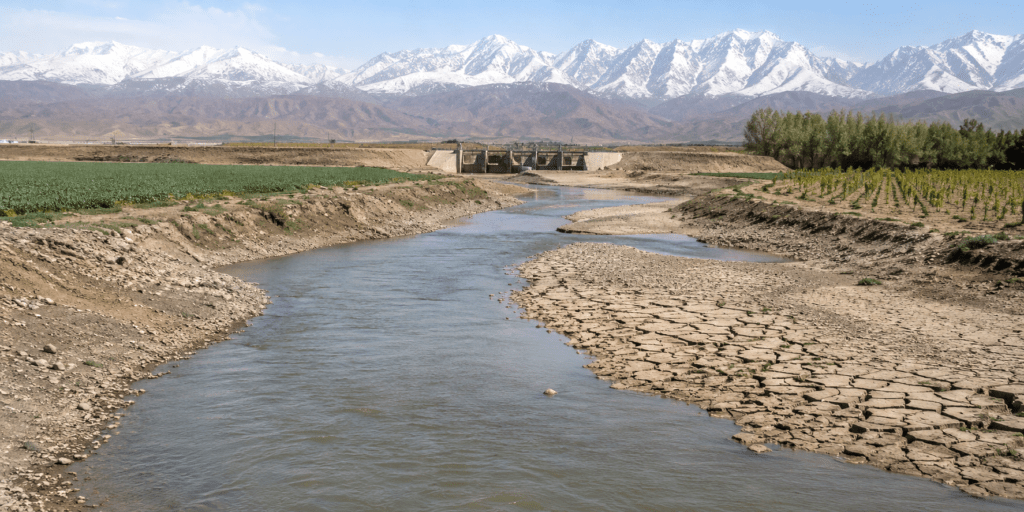
Glacier melt in Central Asia is becoming increasingly critical, posing risks to water resources, economic stability, and regional security. In response, countries in the region are strengthening coordination and launching new scientific and policy initiatives. According to the UN, glaciers in the world’s mountainous regions are shrinking at an unprecedented rate. Rising temperatures are leading to a longer warm season and a shorter winter, accelerating the process of degradation. Glaciers remain a key element of the global water system: they account for about 70% of freshwater reserves, and nearly two billion people depend directly on these resources. In addition, they perform an important climatic function by reflecting solar radiation and limiting the warming of the Earth’s surface. Central Asia is already facing the consequences of climate change. The region is under increasing pressure from rising temperatures, droughts, and dust storms. Tajikistan remains particularly vulnerable. According to President Emomali Rahmon, of the approximately 14,000 glaciers that the country once had, more than 1,000 have already disappeared, and their total volume has shrunk by nearly a third. Yet it is these glaciers that account for over 60% of the region’s water resources. In Kyrgyzstan, the area of glaciers has decreased by approximately 16% over the past 50-70 years. President Sadyr Japarov previously warned that, if current trends continue, a significant portion of them could disappear by the end of the 21st century, posing a threat to millions of residents in the region. In response to the growing crisis, at Tajikistan’s initiative, the UN General Assembly declared 2025 the International Year of Glacier Conservation. The official launch took place on March 21 in New York and coincided with the first World Glacier Day. At an international conference in Dushanbe, the Dushanbe Declaration was adopted, expressing concern over the accelerated loss of glaciers, snow cover, and permafrost. The document highlights the potentially “irreversible consequences” for ecosystems and the economy. The five countries of Central Asia are also developing joint adaptation mechanisms. Key measures include monitoring the condition of glaciers, creating a unified regional registry, and coordinating water policy.

“Great News” for the Striped Hyena at Brazil Meeting, Conservation Group Says

Countries attending a U.N.-backed migratory species conference in Brazil have agreed to increased protections for the striped hyena, whose vast range includes parts of Central Asia, according to an international conservation group. Tajikistan and Uzbekistan had submitted the proposal to upgrade protections for the species during a meeting of the Convention on the Conservation of Migratory Species of Wild Animals in Campo Grande this week. “The Committee agreed by consensus to the proposal to include the striped hyena in Appendices I and II,” and the approval will become official at a plenary meeting on Sunday, said Susan Lieberman, vice president for international policy with the New York-based Wildlife Conservation Society. Appendix I is a designation that would require countries to restore habitats, bar killing or capture except in limited cases and take other robust steps to protect the striped hyena. Appendix II requires governments to coordinate their efforts across the species’ range, which also includes parts of Africa, the Middle East and South Asia. “It’s great news for the species, and will hopefully stimulate action for its conservation and protection across its vast range—it will give this endangered, misunderstood species a chance,” Lieberman told TCA on Friday. The striped hyena is listed as “near threatened” on the global IUCN Red List of Threatened Species, though conservationists warn that its population is steadily dropping. Habitat loss, human-wildlife conflict and illegal hunting and trade are factors in its decline. Delegates at a United Nations wildlife trade conference in Samarkand in 2025 ultimately approved the inclusion of the striped hyena in Appendix II of CITES, introducing controls on international trade after an initial proposal for stricter Appendix I protections failed to pass.

“Acid clouds” from Iran? Kazakhstan and Uzbekistan Weather Agencies Say There is No Threat to Central Asia

Social media has been flooded with claims that a toxic cloud could drift from Iran toward Central Asia following strikes on oil facilities. However, the meteorological services of Kazakhstan and Uzbekistan say those fears are not supported by scientific data. In recent days, posts online have warned of so-called “acid clouds” allegedly forming over Iran after attacks on oil depots and other energy infrastructure. Some of these posts claimed the pollution could be carried by atmospheric currents toward Turkmenistan, Uzbekistan, Kazakhstan, and China. Others cited reports of “black rain” in Tehran and elevated concentrations of sulphur dioxide, nitrogen oxides, and soot. Iranian authorities and international reporting have documented severe local air pollution risks in and around Tehran after the strikes. The Iranian Red Crescent Society warned residents that rainfall following the explosions could be acidic and hazardous to health. Experts said the pollution could irritate the skin, eyes, and lungs and contaminate soil and water near the affected areas. Kazhydromet, Kazakhstan’s national weather service, said reports that “acid clouds” from Iran could reach Central Asia are not confirmed by scientific data or observation results. The agency explained that acid precipitation typically forms near the source of emissions and that the concentration of pollutants decreases significantly over long distances due to natural atmospheric processes. Monitoring data, it said, show no signs of such pollution moving toward Kazakhstan or other Central Asian countries. Uzbekistan’s hydrometeorological service, Uzhydromet, expressed a similar position. It said information circulating on social media about “acid clouds” reaching Central Asian countries has no scientific basis. According to the agency, dangerous concentrations of acid precipitation thousands of kilometres from the source are practically impossible, and current observations show no threat to Uzbekistan or neighbouring states. Experts note that large fires at oil facilities can release substantial amounts of harmful pollutants into the atmosphere. However, such risks are primarily local or regional near the source. By the time emissions travel very long distances, atmospheric dispersion and deposition typically reduce concentrations sharply. As a result, the health concerns reported in Tehran do not support claims of a toxic cloud threatening Central Asia. Both Kazhydromet and Uzhydromet urged the public and media outlets to rely on official information and avoid spreading unverified reports.

Uzbekistan Allocates $49 Million to Prevent Water Shortages and Upgrade Canals

Uzbekistan will allocate 600 billion UZS (about $49 million) this year to improve water management and reduce the risk of shortages, according to a presidential decision issued on March 5. The funding will support additional measures aimed at using water resources more efficiently and preparing for potential water scarcity during the irrigation season. Under the plan, most of the funds will be directed toward modernizing irrigation infrastructure. The government intends to reconstruct and concrete 389 kilometers of irrigation canals that currently experience high levels of water loss. Officials say these improvements could help save an average of 206 million cubic meters of water and 26 million kilowatt-hours of electricity each year. The work is also expected to improve water supply for about 158,400 hectares of irrigated farmland across the country. According to the decision, 480 billion UZS (about $39.5 million) will be allocated specifically for concreting canals and irrigation networks, while the remaining 120 billion UZS (about $9.8 million) will fund other measures aimed at preventing water shortages and improving water management. The initiative will be implemented by the Ministry of Water Resources in cooperation with regional authorities, including the government of the Republic of Karakalpakstan and provincial administrations. The ministry, together with the Ministry of Economy and Finance, has been instructed to prepare a detailed list of priority canal reconstruction projects within one week and submit it to the Cabinet of Ministers for approval. Officials said the irrigation repairs will follow a “one canal - one system” principle, meaning priority will be given to irrigation networks connected to canals that have already been partially modernized or are currently undergoing reconstruction. The funds will be allocated from additional state budget revenues generated during the first quarter of 2026. Water management has become an increasing priority for Uzbekistan as the country seeks to modernize aging infrastructure and address growing pressure on water resources in agriculture. The Times of Central Asia previously reported that the government is also working on a long-term strategy to expand access to clean drinking water nationwide, with a goal of providing 85% of the population with reliable drinking water services by 2030, according to proposals developed by the Agency for Strategic Reforms.

Uzbekistan Introduces Incentives for Major Industrial Polluters to Reduce Environmental Impact

Uzbekistan’s government has approved new measures aimed at encouraging large industrial enterprises to reduce their environmental footprint. Resolution No. 85 establishes regulations to incentivize environmental impact reduction efforts by industrial enterprises classified as Category I and Category II facilities based on their level of environmental impact. These categories include enterprises considered to have significant or moderate effects on the natural environment. Under the new framework, incentives will be introduced in two stages. At the first stage, an enterprise that installs a background air pollution monitoring station will be eligible for relief from previously assessed outstanding compensation payments for environmental damage. In addition, 50% of compensation payments allocated to the state budget for environmental harm will be refunded over a two-year period. At the second stage, if the enterprise installs dust and gas cleaning equipment as well as local wastewater treatment facilities within one year after commissioning the monitoring station, 70% of the compensation payments directed to the state budget will be refunded over two years. Enterprises seeking to benefit from these incentives must notify the Ecology Committee through Public Service Centers or via the government’s online portal. The committee will review submitted documentation within 15 working days and issue a formal conclusion on whether the enterprise qualifies for state support. The Times of Central Asia previously reported, that more than a dozen valuable trees were cut down at the construction site of the Ritz-Carlton Tashkent project in central Tashkent. Environmental damage in that case was officially assessed at 351,230,000 Uzbek sum (approximately $29,000), according to documentation cited by officials.